
When you’ve invested in a home in Dix Hills where median sale prices sit above $1 million every finish in that property carries weight. A polished concrete floor isn’t just a visual upgrade. It’s a surface that performs for 20+ years without waxing, recoating, or replacement. That’s a different conversation than what most flooring contractors are having with you.
Most of the homes in Dix Hills were built between the 1950s and 1980s. Those slabs are aging, and Long Island’s freeze-thaw cycles don’t help. Every winter, water works its way into surface pores, freezes, and forces micro-fractures that slowly break down untreated concrete from the inside out. Densified and polished concrete resists that process at the chemistry level not just on the surface.
For commercial spaces along the Route 110 corridor in adjacent Melville where companies like Canon, Henry Schein, and Estée Lauder operate polished concrete also eliminates the recurring cost of floor maintenance that adds up quietly over a lease cycle. Over ten years, it consistently costs less than VCT, carpet, or epoxy systems that need periodic reapplication. The upfront investment looks different when you run the full math.
We’re a Long Island-based flooring contractor with over 40 years of hands-on experience serving Dix Hills and the surrounding Huntington area. Danny Harmer our owner has been working with concrete since before most of the slabs in Dix Hills were even poured. He holds a Sherwin-Williams High Performance Flooring (HPF) certification and a Res Tech certification, and he’s personally involved in every project. That’s not a selling point dressed up in marketing language it’s just how we run the business.
The most referenced credential is a 1996 White House kitchen project. It’s the kind of job that doesn’t need embellishment. When a project demands that level of precision and accountability, you either deliver or you don’t. We delivered.
We understand the specific building stock, slab conditions, and commercial environment that define Dix Hills and the broader Huntington area from aging residential foundations near Vanderbilt Parkway to high-traffic commercial floors in the Melville corporate corridor just minutes away.
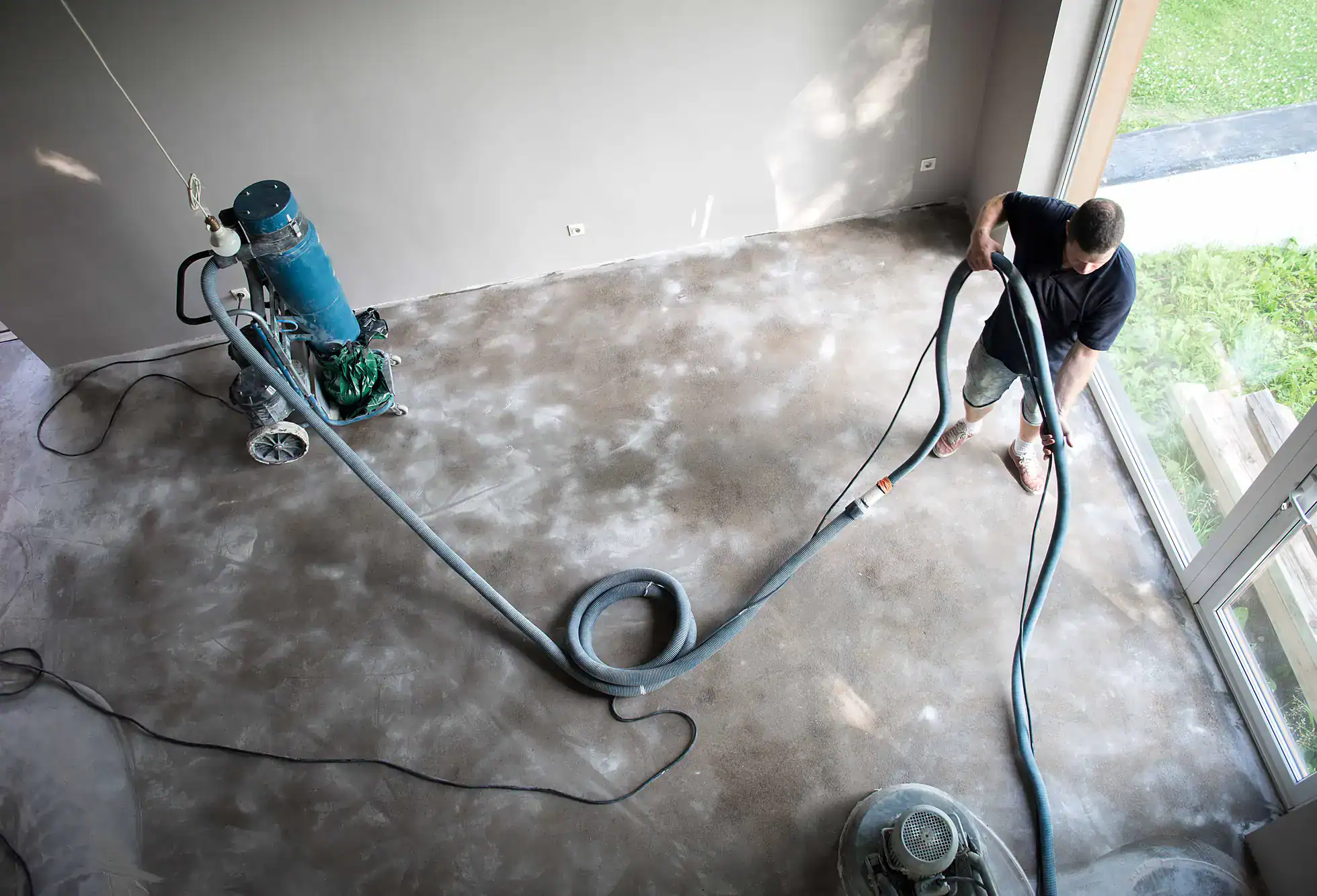
It starts with a slab assessment. Before any equipment touches your floor, we evaluate the condition of the concrete previous coatings, surface contamination, cracks, and any irregularities that need to be addressed first. For Dix Hills homes built in the 1960s and 1970s, this step matters more than most contractors let on. Slabs of that age often have history, and skipping the assessment is how you end up with a result that fails in 18 months.
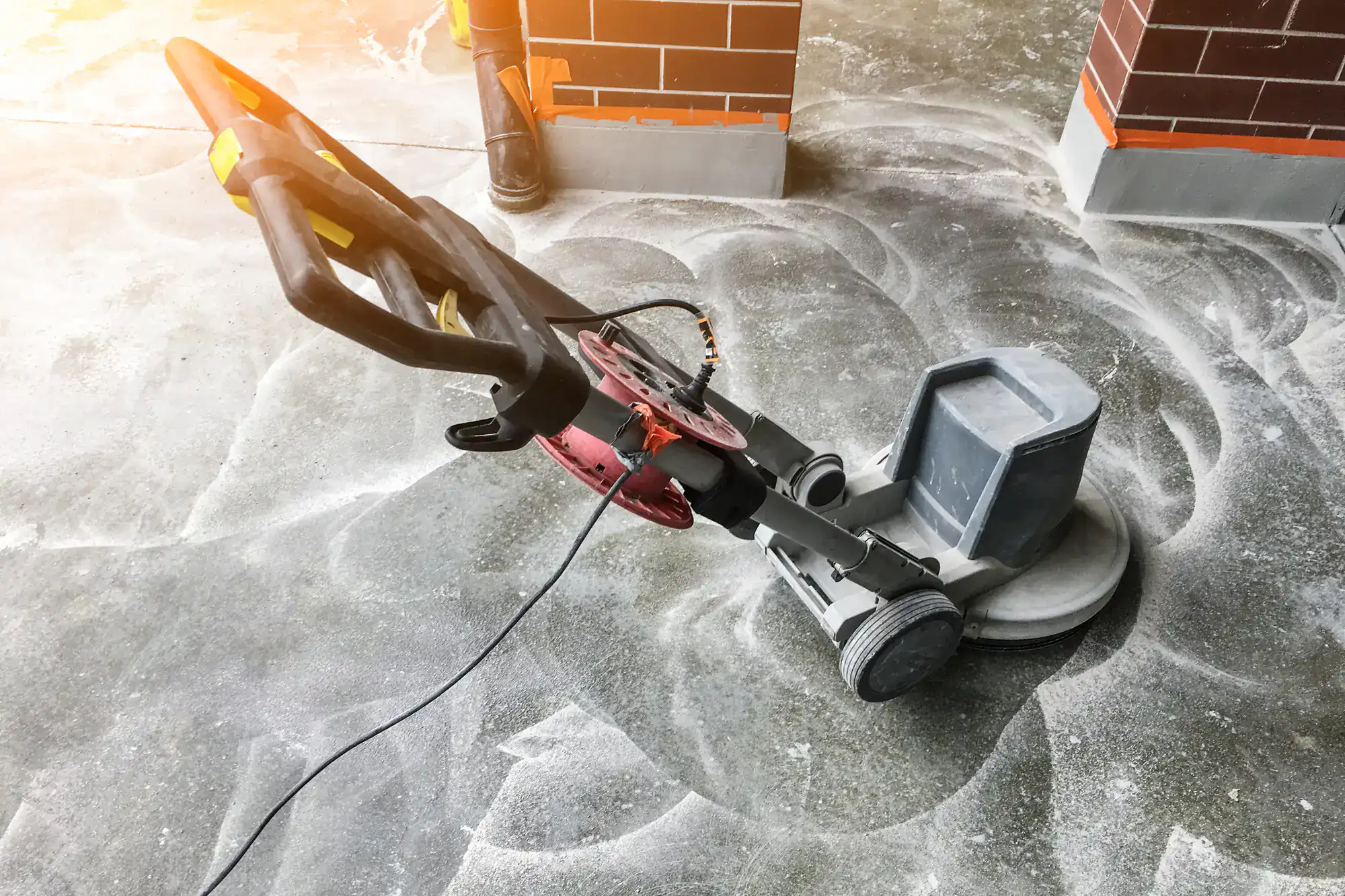
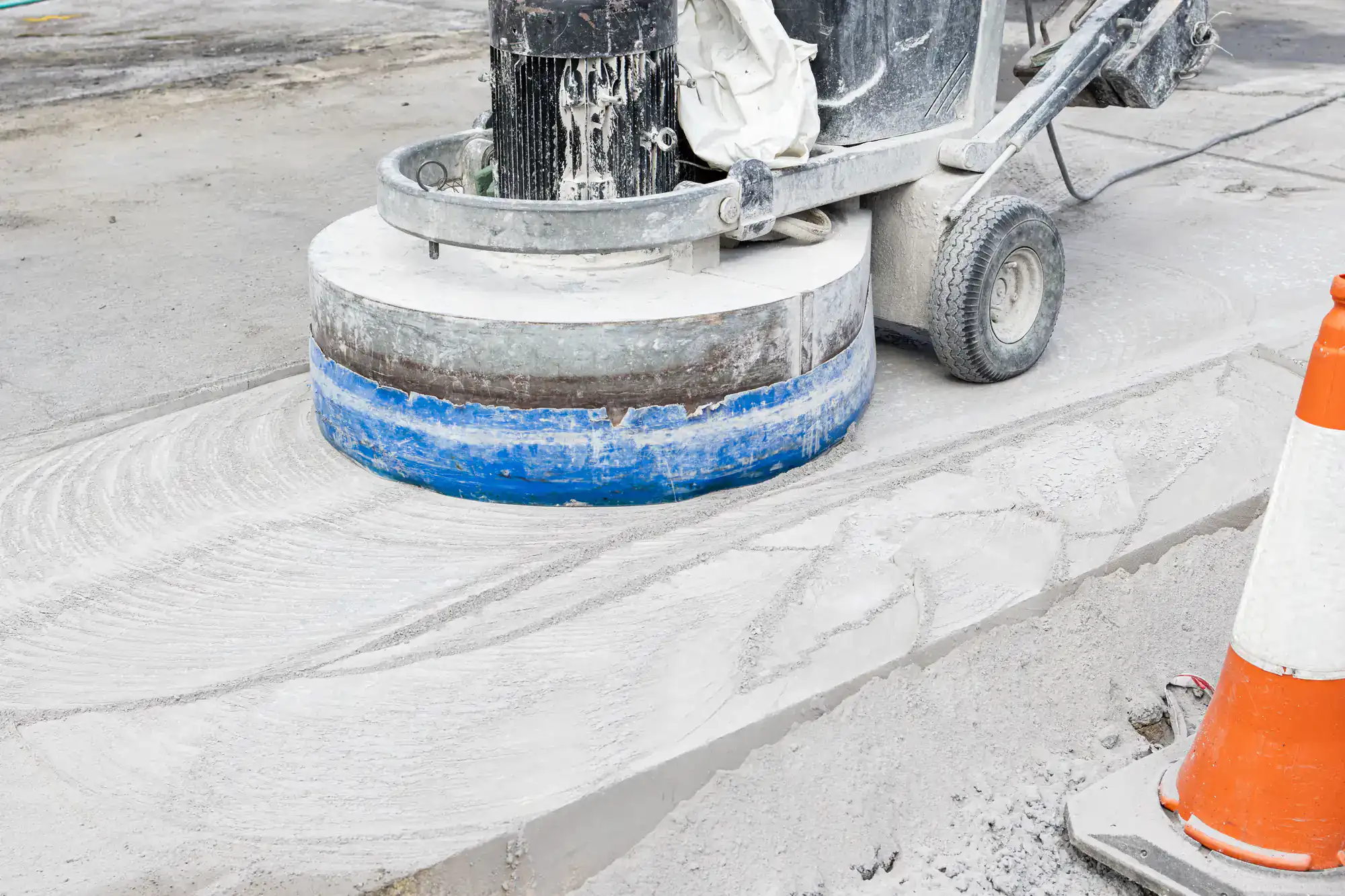
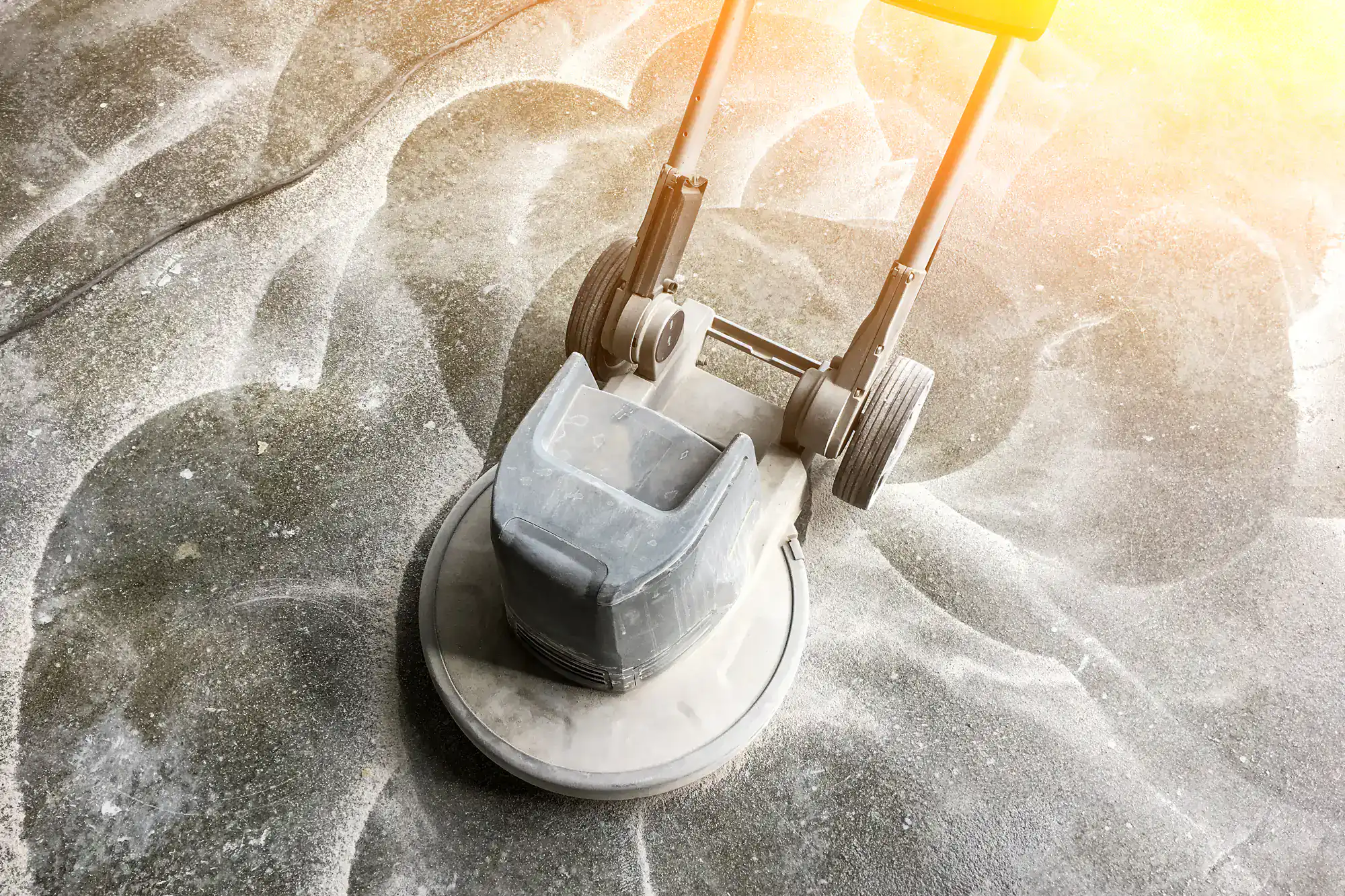
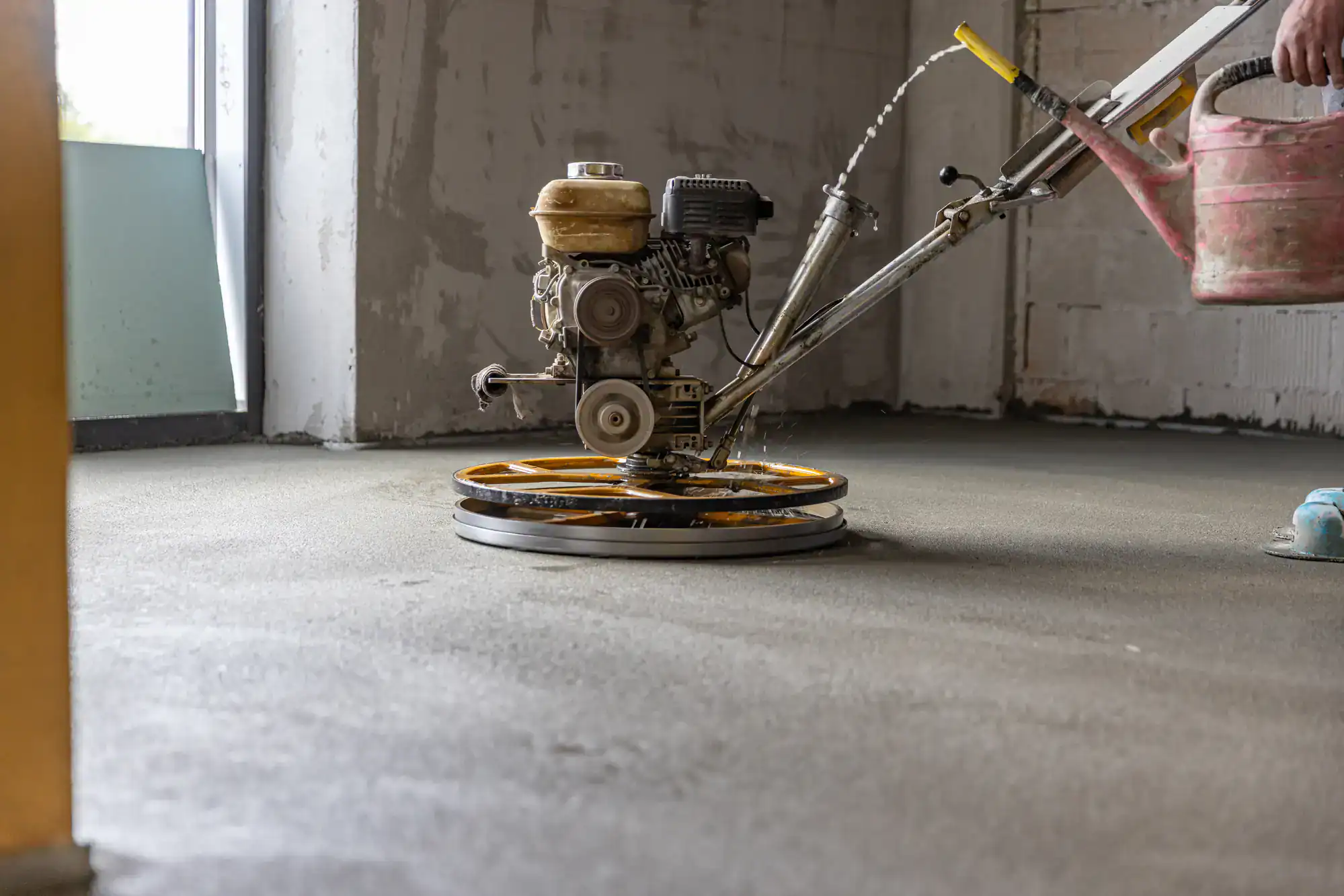
From there, the grinding phase removes old coatings and levels the surface. Then comes densification a lithium silicate compound is applied that penetrates the concrete and reacts chemically with the material itself, hardening the slab from within. This is what makes the floor durable enough to handle Long Island winters, not just look good the week after installation. The polishing sequence follows, working through progressive grits until the specified finish class is reached from a refined matte to a high-gloss surface that reflects light like glass.
Most chemical application requires ambient temperatures above 50°F, which makes spring and fall the natural windows for scheduling in Suffolk County. If you’re planning a project, those seasons book out. Getting on the calendar early is worth it.
Ready to get started?
We handle the full scope of concrete polishing in Dix Hills surface preparation, grinding, densification, and finish polishing to your specified class. The American Concrete Institute defines four finish levels: Class 1 (matte), Class 2 (satin), Class 3 (semi-polished), and Class 4 (high-gloss, 61+ Gloss Units). You choose the finish that fits the space. A Dix Hills garage or finished basement might call for a Class 3 or Class 4. A commercial lobby or retail showroom near Route 110 might want the same, but with different slip-resistance considerations factored in and yes, properly polished concrete meets OSHA’s minimum coefficient of friction standard of 0.5. The slippery floor concern is a misconception, not a real liability.
For commercial clients in the Huntington and Melville area office parks, corporate reception spaces, retail environments we provide a site-specific evaluation that accounts for traffic load, chemical exposure, and any food service or industrial requirements relevant to the space. We use Sherwin-Williams HPF-certified product systems where specified, meaning the application meets manufacturer standards, not just general industry practice.
We handle residential and commercial scopes with the same standard. There’s no junior crew for smaller jobs. The same level of evaluation, preparation, and execution applies whether the project is a 400-square-foot Dix Hills garage or a 10,000-square-foot commercial floor in the Route 110 corridor.
In most cases, yes. The hesitation usually comes from visible issues old paint, staining, minor cracks, or a surface that’s been through decades of use. For Dix Hills homes built in the 1960s through 1980s, those conditions are common, and they’re preparation challenges, not disqualifying ones. Grinding removes old coatings. Crack filling and epoxy injection address surface damage. The assessment process determines exactly what preparation is needed and what finish is achievable on your specific slab.
The one scenario where polishing isn’t the right call is a slab that’s structurally compromised beyond surface-level repair but that’s relatively rare and gets identified in the initial evaluation before any work begins. Most slabs in Dix Hills are viable candidates. The assessment is the right starting point, and it gives you a clear picture before any commitment is made.
For commercial polished concrete in the Northeast, pricing typically ranges from $3 to $12 per square foot depending on the finish class, the condition of the slab, and the square footage of the project. A high-gloss Class 4 finish on a large commercial floor in the Melville corridor will sit toward the upper end of that range. A residential garage or basement in Dix Hills with a mid-range satin finish will generally come in lower.
The more useful frame is total cost of ownership. Polished concrete eliminates the recurring cost of waxing, stripping, recoating, and floor covering replacement. Over a 10 to 15-year period, it consistently outperforms VCT, carpet, and epoxy coatings that need periodic reapplication especially in a climate like Long Island’s where freeze-thaw stress accelerates surface degradation in less durable systems. The upfront number looks different when you account for what you’re not spending over the next decade.
This is one of the most common concerns, and it’s based on a misconception. Gloss and friction are independent properties. A floor can be highly reflective and still meet or exceed OSHA’s minimum coefficient of friction standard of 0.5 for level commercial surfaces. Properly polished concrete does exactly that. The confusion comes from comparing polished concrete to wet tile or waxed VCT surfaces that genuinely are slippery. Polished concrete is not in that category.
For retail and showroom environments along the Route 110 corridor in Melville, or for any customer-facing commercial space in the Huntington area, this matters. You’re getting a premium surface that performs visually and meets the safety standard required for commercial use. If a specific application like a food service environment has additional requirements, those get addressed in the product selection and specification phase before installation begins.
When it’s done right meaning the slab is properly assessed, densified, and polished to the correct specification polished concrete has a functional lifespan of 20 to 25 years or more. The densification step is what makes the difference in a Long Island climate specifically. Lithium silicate densifiers react with the concrete matrix to form calcium silicate hydrate, which hardens the slab from within and dramatically reduces moisture penetration. That’s what protects the floor through the freeze-thaw cycles Suffolk County experiences every winter.
The floors that fail early are almost always ones where the densification was skipped or done incorrectly, or where the slab assessment didn’t catch underlying issues before polishing began. That’s the gap between a contractor who understands the chemistry and one who doesn’t. We were built on that distinction and it’s why the floors we install here hold up over the long term instead of degrading within a couple of years.
They’re fundamentally different systems. Epoxy is a coating applied on top of the concrete it bonds to the surface and creates a protective layer. Polished concrete is the concrete itself, refined through a mechanical and chemical process that hardens and smooths the slab from within. There’s nothing sitting on top that can peel, chip, or delaminate.
For Dix Hills homeowners deciding between the two for a garage or basement, the practical differences come down to durability and maintenance. Epoxy coatings even quality ones have a finite lifespan and will eventually need recoating, especially in spaces with temperature fluctuation or heavy use. Polished concrete doesn’t have that ceiling. It also handles the moisture conditions common in Long Island basements differently a densified slab resists moisture infiltration rather than trapping it beneath a coating layer, which is a real consideration in homes built in this area’s older housing stock.
Project timelines depend on square footage, slab condition, and the finish class being achieved. A residential garage typically takes one to two days. A mid-size commercial floor say, an office lobby or retail space in the Melville area generally runs two to four days depending on preparation requirements. Larger industrial or warehouse floors take longer and are usually phased to minimize operational disruption.
For commercial clients in the Route 110 corridor, scheduling around business operations is a real consideration. Spring and fall are the primary installation seasons in Suffolk County due to temperature requirements for chemical application, and those windows book out. If you’re managing a commercial property and need the work done during a specific period a summer closure, a lease transition, a year-end capital project getting on the calendar early gives you the most flexibility. The assessment call is the right first step to get a realistic timeline scoped for your specific space.