
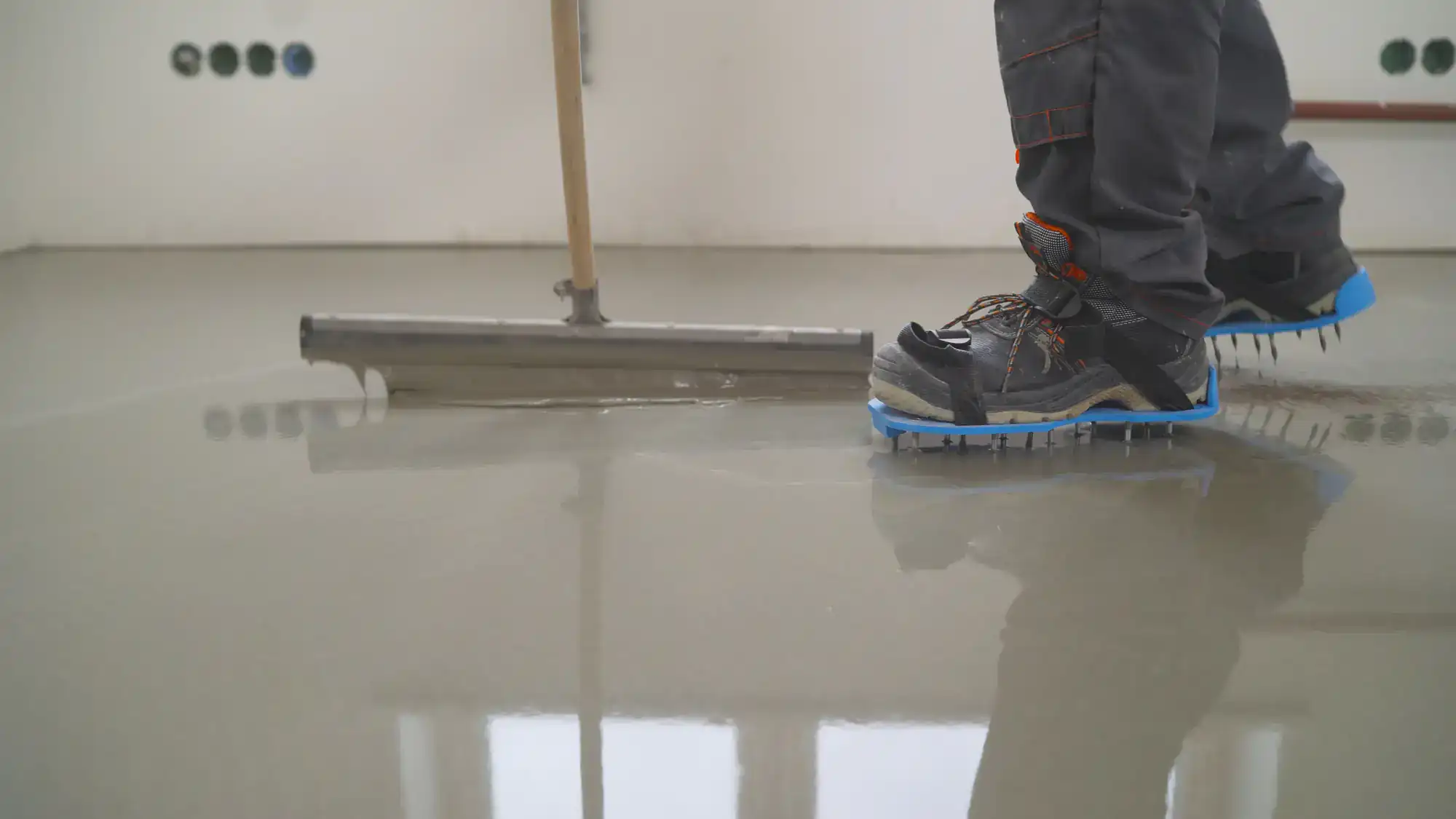
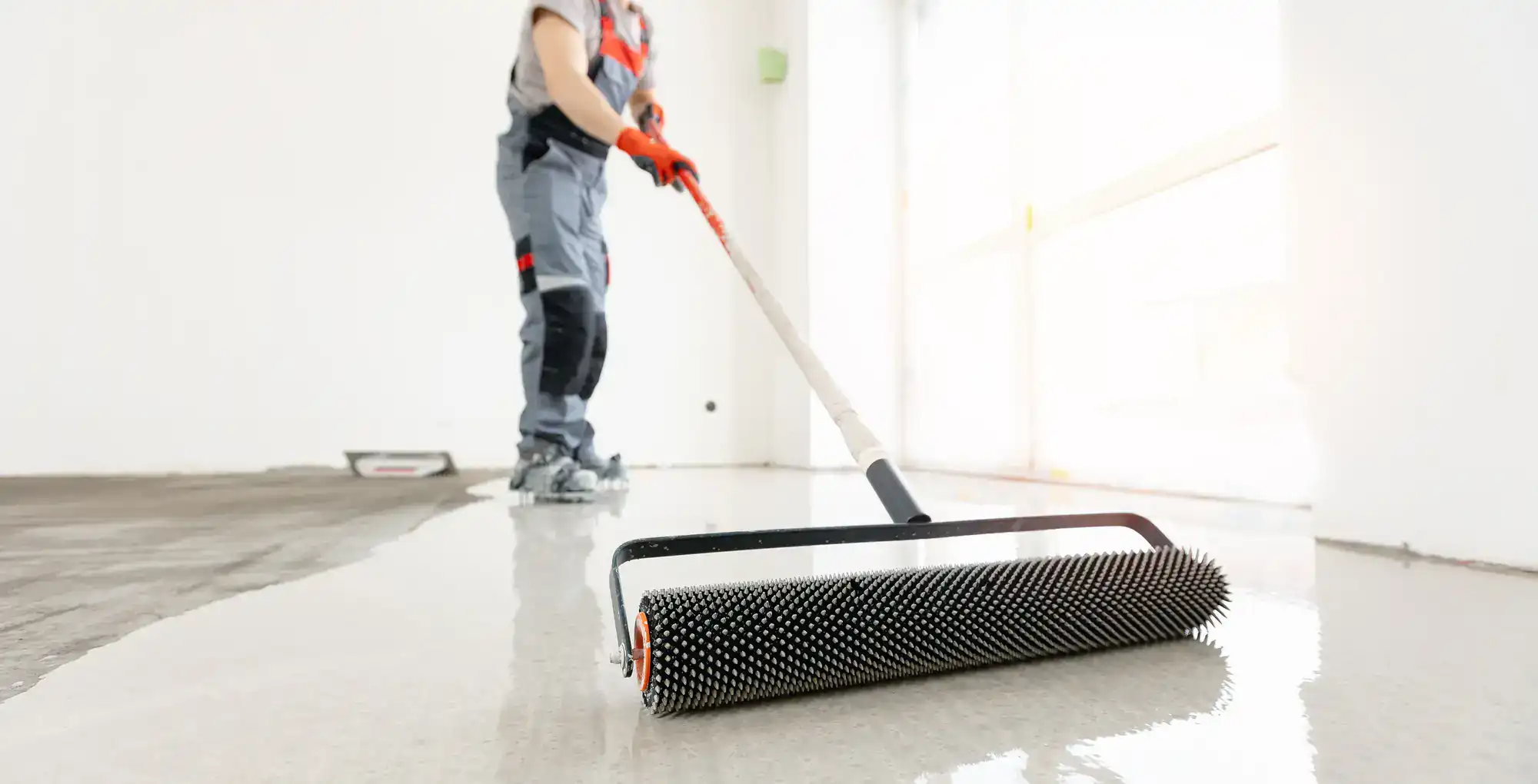
When you’re putting $60,000 into a kitchen renovation in Dix Hills, the last thing you want is a tile installer telling you the slab isn’t flat enough or worse, finding out two years later when grout lines start cracking. Professional concrete floor leveling services give you a substrate that actually meets the tolerances your chosen floor covering requires, whether that’s large-format porcelain, luxury vinyl plank, or engineered hardwood.
Dix Hills homes sit on slabs that have been through 50-plus Long Island winters. That means decades of freeze-thaw cycling temperatures swinging from the teens to the mid-40s within days, water working its way into hairline cracks and expanding when it refreezes. That process doesn’t stop on its own. A properly installed self leveling underlayment addresses what’s already happened and gives the surface the strength and flatness to hold up going forward.
The rolling terrain that defines Dix Hills also creates situations you don’t see in flat south shore communities. Split-level construction, walk-out basements, and sloped foundations are common here and they require a contractor who can handle variable depths and complex pours, not just a straightforward skim coat. When the substrate is right, everything that goes on top of it lasts the way it’s supposed to.
We’ve been installing floors across Long Island and beyond since 1996. Our company is based in Bohemia, NY about 20 miles east on the LIE and our president has been doing this work personally for over 40 years. This isn’t a franchise. It’s not a general contractor who added leveling to the service list. Every job starts with a real diagnosis of the slab, and the same experienced crew that’s been together for over a decade shows up to do the work.
Our project history speaks for itself: commercial kitchens, healthcare facilities, warehouses, high-end residential renovations, and yes the White House kitchen in 1996. Closer to home, we’ve worked throughout Suffolk County, including the communities along the Route 110 corridor in Melville and throughout the Town of Huntington. If you’re in Dix Hills and you’re serious about the renovation you’re investing in, the substrate deserves the same level of attention as everything above it.
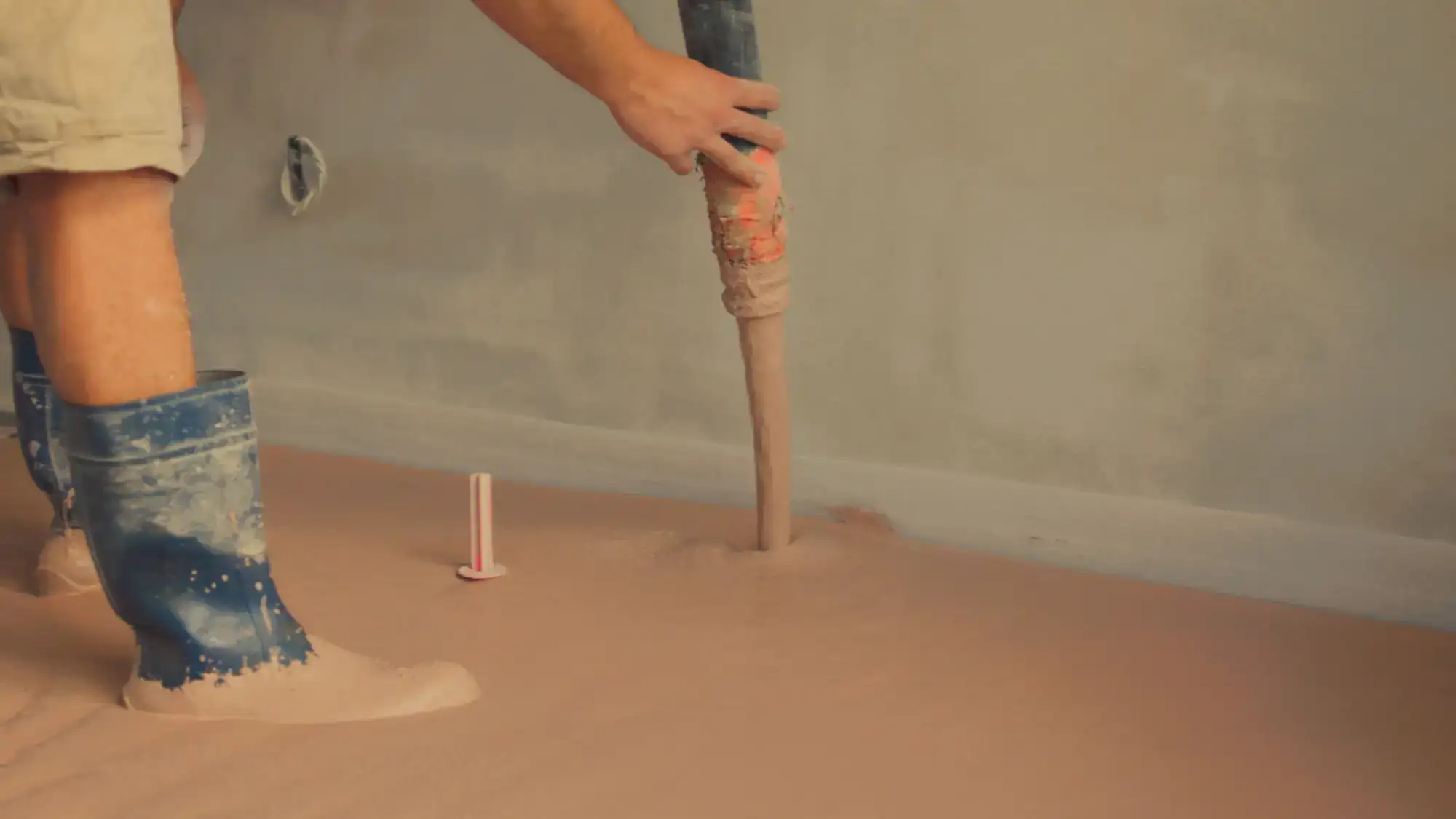
The process starts before any material gets mixed. First comes moisture testing ASTM F2170 relative humidity testing and moisture vapor emission rate evaluation on the existing slab. This step isn’t optional. Long Island’s climate, combined with the age of most Dix Hills slabs and the absence of modern vapor barriers in homes built in the 1960s and 70s, means moisture is a real and present condition in a lot of these foundations. Skipping this step is exactly how a self leveling job fails within a year.
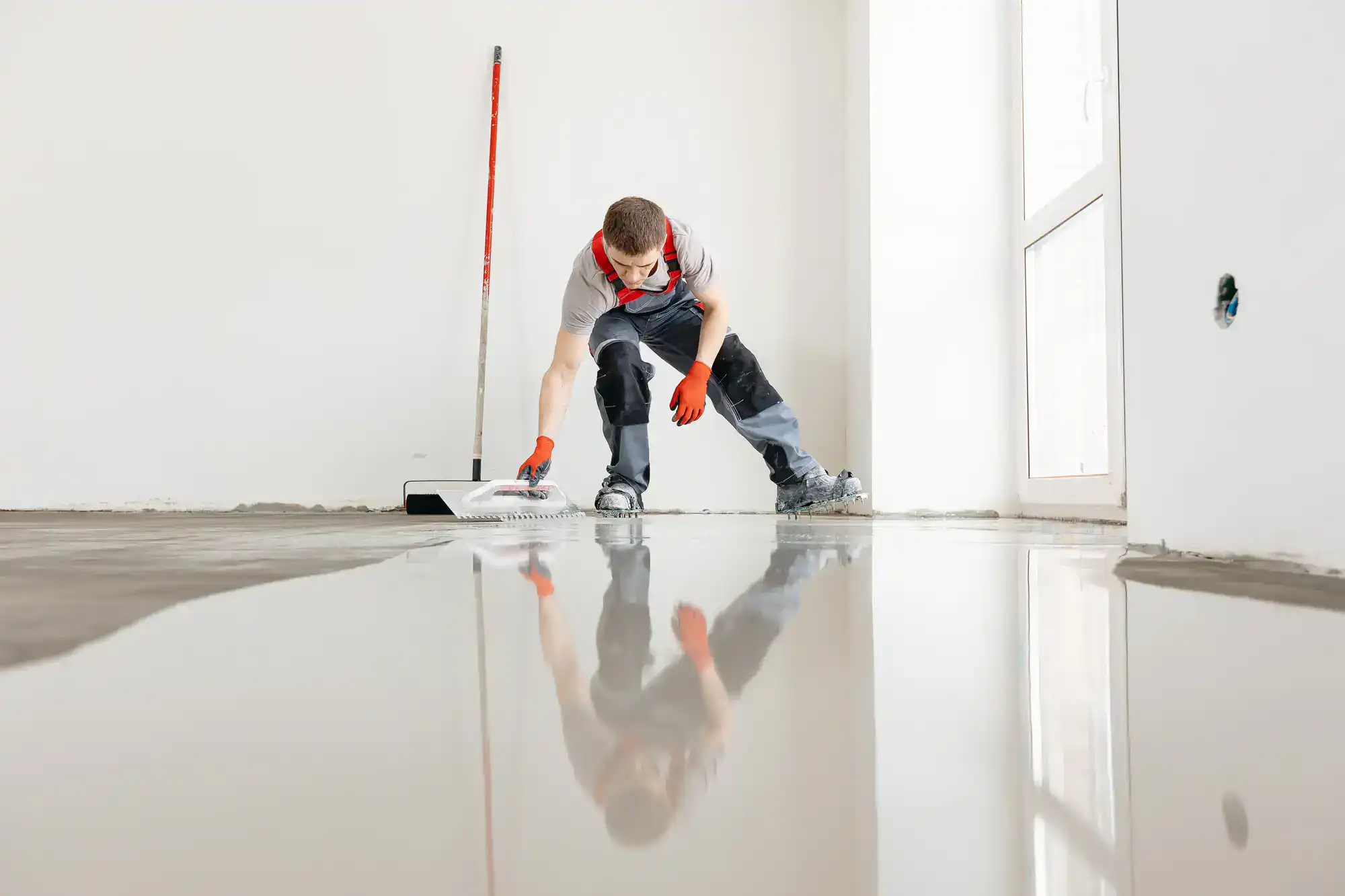
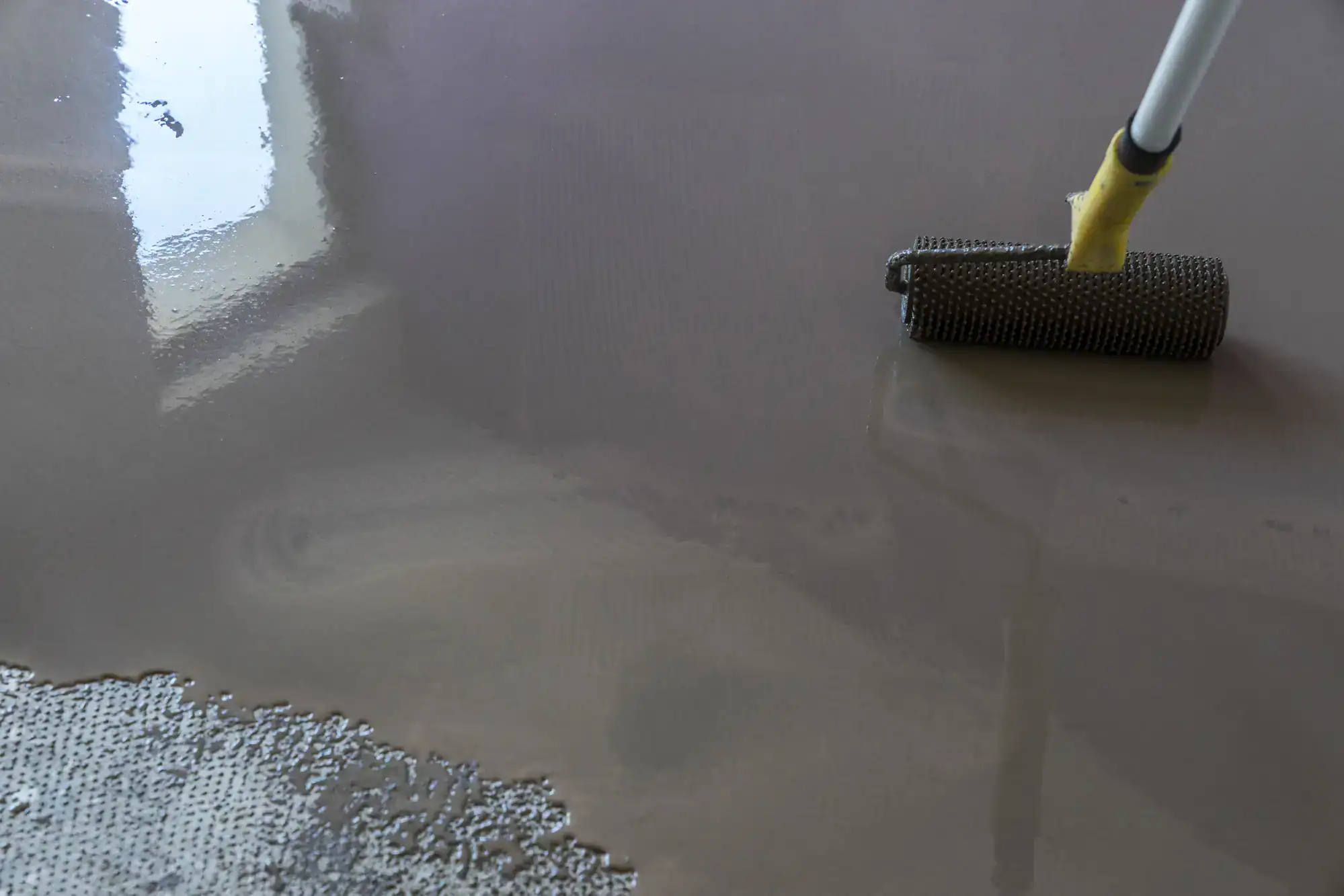
Once the moisture picture is clear, the slab gets prepared. That means grinding, cleaning, and repairing any cracks, voids, or damaged areas before the underlayment goes down. Priming follows a step many contractors skip because it adds time, but one that’s essential for proper bond strength. Then the self leveling material is poured and spread to the specified depth. The system we install can go from a quarter inch up to over two inches neat, and up to five inches with aggregate which matters on the kinds of complex, multi-level foundations common in Dix Hills.
You’re typically looking at foot traffic within four to six hours and full use within 24 to 48 hours. For a home renovation with multiple trades on a schedule, that turnaround keeps the project moving. The tile setter, hardwood installer, or flooring crew can follow almost immediately no lost days waiting on the substrate.
Ready to get started?
What you get here isn’t just a pour. It’s a complete subfloor leveling process moisture testing, surface preparation, crack and void repair, priming, and the self leveling underlayment installation itself. We handle every phase in-house. There’s no handoff to a subcontractor, no gap in accountability, and no scenario where two different crews point fingers at each other if something doesn’t go right.
For Dix Hills homeowners working through a kitchen, bathroom, or basement renovation, this matters more than it might seem. Interior flooring work of this type generally doesn’t require a building permit under Town of Huntington regulations but projects tied to basement finishing that adds habitable square footage, or installations connected to a radiant heat system, may require a permit through the Town of Huntington Building Department. If that’s your situation, it’s worth confirming before work begins.
The commercial floor leveling solutions we deliver are the same standard we bring to residential work high-strength, fast-curing, ASTM-compliant underlayment that meets the flatness specs for commercial tile, carpet, and resilient flooring. For Dix Hills residents who also manage or own commercial space in the adjacent Melville corridor, that consistency across both environments is something you won’t find with most local flooring contractors.
If your home was built in the 1960s or 70s which describes the majority of Dix Hills housing stock there’s a good chance the answer is yes. Large-format tiles, anything 18 inches or larger, require a much flatter substrate than older flooring materials did. The standard tolerance is typically no more than 3/16 of an inch variation over a 10-foot span, and most slabs from that era don’t come close to hitting that number after decades of settling.
The issue isn’t just aesthetics. An uneven substrate causes tiles to crack at the edges, grout lines to fail prematurely, and in some cases, full tiles to pop loose entirely especially in areas with foot traffic. Before any tile installation in a Dix Hills home, the slab should be evaluated for flatness and moisture. If it doesn’t meet the required tolerance, self leveling underlayment is the most reliable way to get it there.
Long Island winters are hard on concrete in a way that’s easy to underestimate. Temperatures regularly swing from below freezing to well above it within the same week sometimes within the same day. When that happens, water that’s worked its way into small cracks or surface pores freezes and expands by roughly nine percent. That expansion creates internal pressure, and over multiple cycles across multiple winters, what starts as a hairline crack becomes something much more significant.
For Dix Hills homes built on the rolling terrain of central Long Island, this degradation is compounded by the natural slope and drainage patterns around split-level and walk-out basement foundations. Slabs that have been through 40 or 50 Long Island winters without any protective treatment have almost certainly experienced some degree of this damage. Self leveling underlayment addresses the existing surface damage and creates a stable, low-shrinkage layer that’s far less vulnerable to the kind of moisture infiltration that drives freeze-thaw deterioration. It’s one of the more practical reasons to handle leveling before it becomes a larger structural issue.
A patch or skim coat is a spot repair you’re filling a specific hole, crack, or low area with a trowel-applied material. It works for isolated damage, but it doesn’t give you a consistently flat surface across a large area. Self leveling underlayment is a flowable cementitious material that spreads across the entire surface and settles into a flat plane on its own. The result is a uniform, level substrate that meets the flatness tolerances required for modern floor coverings.
The compressive strength is also different. High strength self leveling concrete is engineered to handle the load demands of finished flooring, including heavy commercial traffic or the concentrated weight of kitchen appliances and cabinetry. A basic patch compound is not. For Dix Hills homeowners doing a full renovation not just touching up a small area the distinction matters. You want a substrate that performs across the entire floor, not just in the spots that were visibly damaged.
You usually can’t tell by looking at it. A slab can appear completely dry on the surface and still have moisture vapor moving through it at a rate that will compromise the bond of any underlayment or adhesive applied on top. This is especially common in Dix Hills homes built before modern vapor barriers were standard which covers most of the housing stock built before the mid-1980s.
The only reliable way to know is to test. ASTM F2170 in-slab relative humidity testing involves drilling small holes into the concrete and inserting probes that measure moisture levels within the slab itself, not just at the surface. Moisture vapor emission rate testing is a surface-level measurement that adds additional data. Together, these tests give a complete picture before any material is poured. We conduct both as a standard part of the process not as an optional add-on because skipping this step is the single most common reason self leveling jobs fail.
Yes, and this is actually one of the areas where the depth range of the system matters most. Dix Hills was built on rolling terrain the hills are real, and they shaped how homes were constructed here. Split-level layouts, walk-out basements, and sloped foundations are far more common in this community than in flat south shore towns like Levittown or Massapequa. Those configurations often require leveling work at varying depths across a single floor, which a thin-pour system simply can’t handle.
The self leveling systems we install go from a quarter inch up to over two inches neat, and up to five inches when aggregate is added to the mix. That range covers everything from a minor surface correction before a tile installation to a significant depth correction in a basement that’s been settling for decades. The key is proper assessment before the pour knowing the high and low points of the slab, understanding what’s driving the variation, and specifying the right product and depth for the specific conditions on that floor.
Self leveling underlayment cures faster than most people expect. Under typical conditions, the surface is ready for foot traffic within four to six hours. Heavy use including tile installation, flooring adhesive application, or the movement of equipment is generally appropriate within 24 to 48 hours, depending on the product used, the pour depth, and ambient conditions at the time of installation.
In Dix Hills, seasonal timing can affect this. During warmer months roughly April through October ambient temperatures and humidity levels are generally within the range that supports normal cure times. Winter installations require more attention: cold substrates slow the cure of cementitious materials, and if the slab or air temperature drops below 50°F, the mix can be compromised. We account for these conditions when scheduling and specifying products, which is why it’s worth having this conversation before booking a winter installation. For homeowners managing an active renovation with a tile setter or flooring crew on the schedule, the fast return-to-service timeline is one of the more practical advantages of self leveling over other substrate correction methods.