
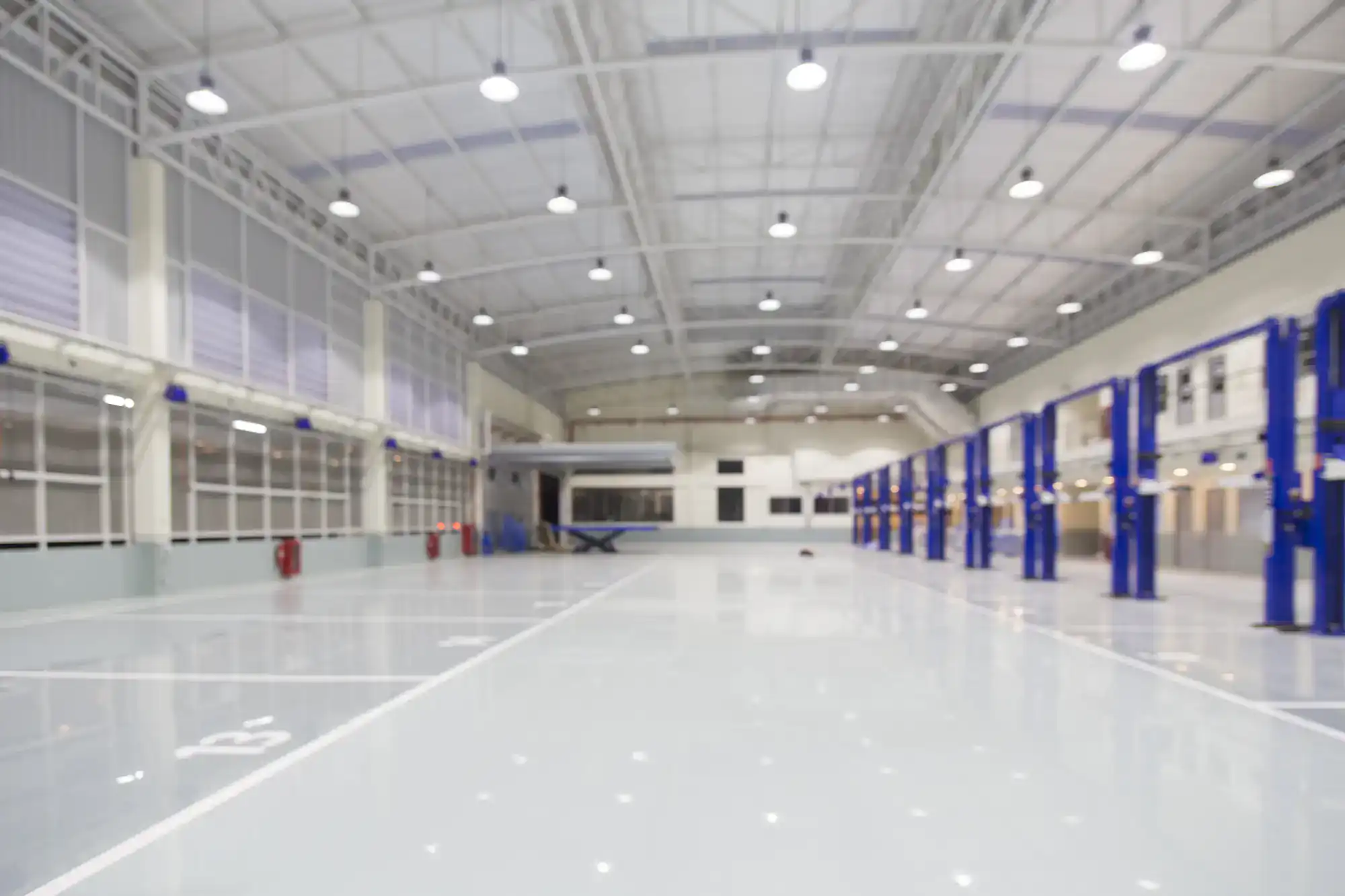
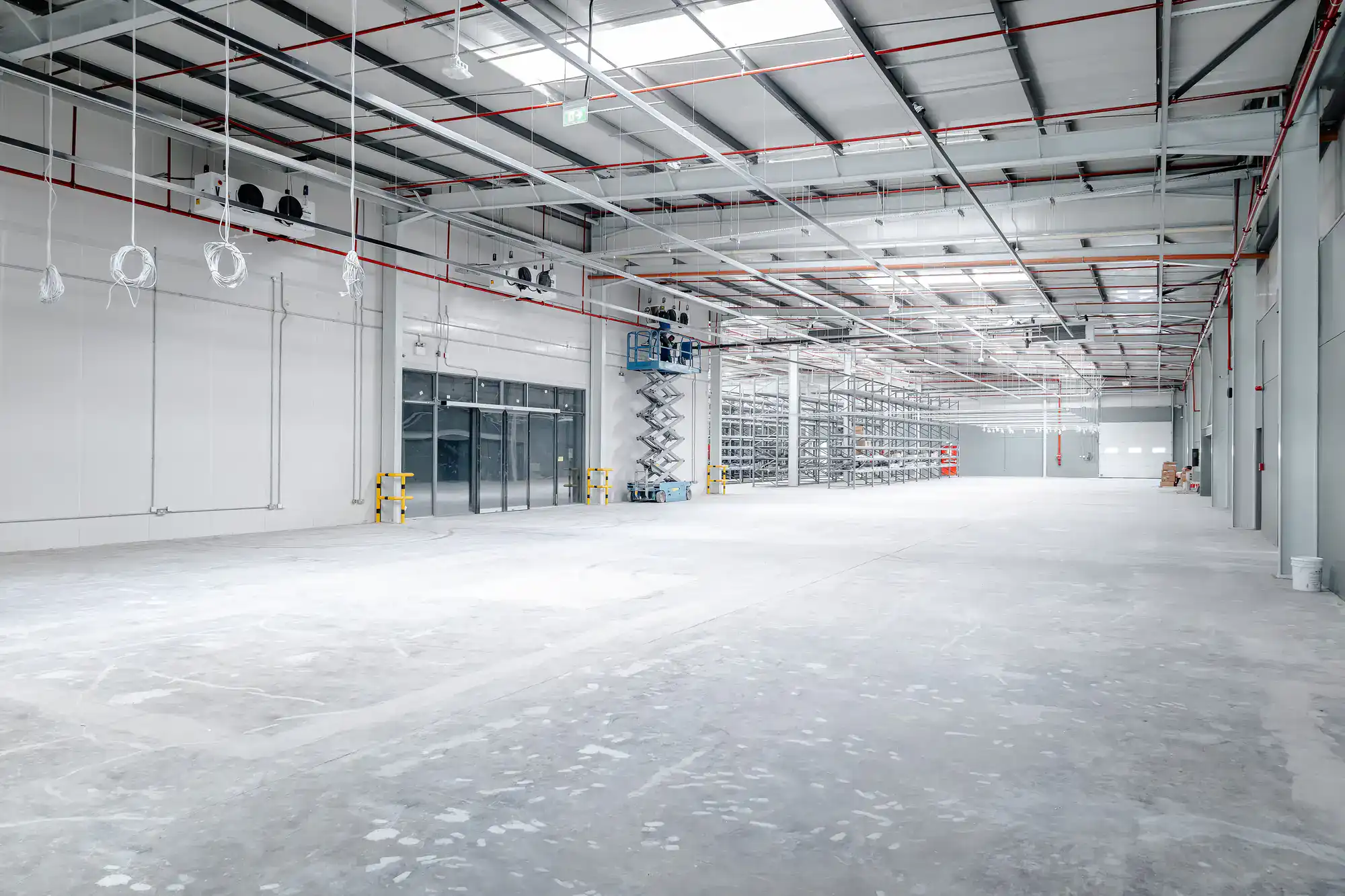
Most hangar floors don’t fail because of the coating. They fail because of what happened before the coating went down. Skipped moisture testing on a central Long Island slab. A grind job that wasn’t deep enough. A product that looked fine in a catalog but was never formulated for aviation chemistry. By the time the floor starts peeling, the contractor is long gone and you’re looking at a full reinstall.
When it’s done right, you get a floor that handles Skydrol hydraulic fluid, jet fuel, and industrial solvents without breaking down. You get a light-reflective finish that makes dropped tools and fluid spills visible before they become a problem. And you get a non-slip surface that stays safe even when something gets spilled which in a working hangar near MacArthur Airport, it will.
Selden’s above-average rainfall and the freeze-thaw cycling that hits unheated or partially heated hangars every winter put real mechanical stress on coating systems. A properly specified, multi-layer system handles that. A garage-grade epoxy from a general contractor does not. The difference shows up around year three either the floor still looks right, or you’re grinding it up and starting over.
We’re based in Bohemia the same county as Selden, not a national brand routing calls through a regional rep. We’ve been installing floors across Long Island for over 30 years, which means our entire installation process was built around the conditions that actually exist here: coastal humidity, concrete slabs that move with the seasons, and clients who need accountability that lasts longer than the invoice.
Danny Harmer, our president and CEO, has over 40 years of hands-on installation experience and has personally installed aircraft hangar floors throughout the Brookhaven Town area. Every field installer we employ carries OSHA 40 certification a credential that matters in commercial hangar environments where workplace safety standards apply on every job. We hold dual elite certifications from Sherwin-Williams High Performance Flooring and Res Tech, which are the most demanding resinous flooring credentials in the industry.
For hangar owners and operators in Selden and the surrounding Brookhaven Town area, that combination local presence, named leadership, and documented aviation credentials is exactly what you need when you’re evaluating a contractor for a floor that has to perform for the next 15 to 20 years.
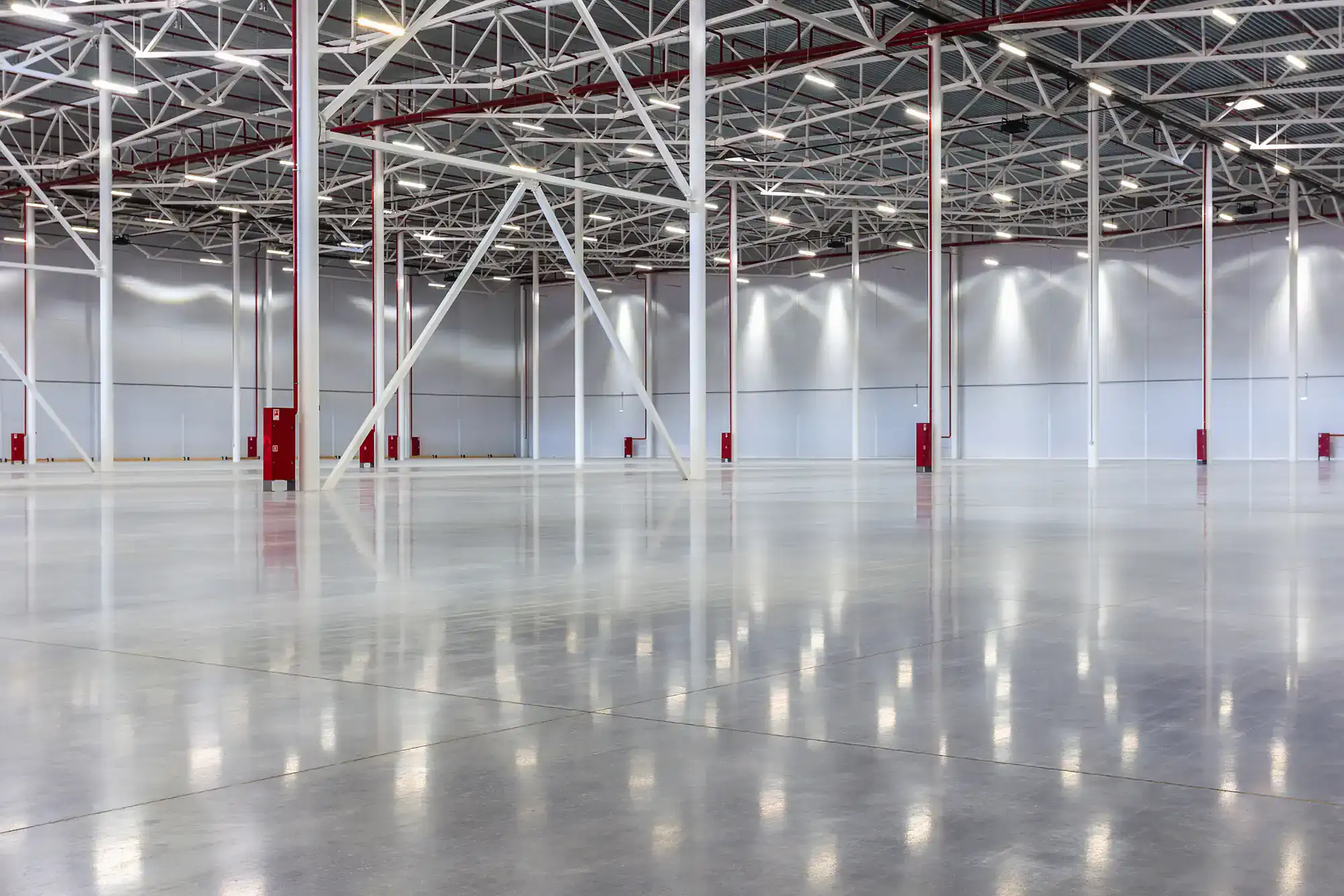
Every job starts with moisture testing no exceptions. On Long Island, where annual rainfall runs nearly 10 inches above the national average, skipping this step is how floors fail. The slab gets tested before anything else happens, and if there’s a moisture issue, we address it before the coating goes down, not after.
From there, the concrete surface gets diamond ground to the correct adhesion profile. This is the step most failed floors skipped. The grinding creates the mechanical bond that holds the entire system together. If the surface isn’t properly prepared, it doesn’t matter how good the coating is it will eventually delaminate. Any concrete damage or cracks found during prep get repaired at this stage.
Then the system goes down in layers: primer, base coat, topcoat each one given the cure time it needs before the next is applied. For hangar operators near MacArthur Airport or Brookhaven Calabro Airport who can’t afford extended downtime, polyaspartic topcoat systems cure fast enough to return aircraft to the hangar within 24 hours. That’s one scheduled day of downtime, not a week. The finished system meets NFPA 409 noncombustibility requirements and carries an NFSI-certified non-slip rating both verifiable standards, not marketing language.
Ready to get started?
The systems we install in aircraft hangars and maintenance bays are not the same products used in residential garages or retail showrooms. Hangar floors need to resist Skydrol hydraulic fluid, jet fuel, lubricants, and the industrial cleaning solvents used in MRO environments. Standard epoxy products break down under that chemical exposure. The aviation-grade systems we install are specifically formulated for it.
For commercial hangar operations in the Town of Brookhaven which governs Selden NFPA 409 compliance is a real code requirement. The standard mandates noncombustible floor surfaces in aircraft storage and servicing areas. A qualified contractor should be able to confirm upfront whether the system they’re proposing meets that standard. Every system we install is specified to comply.
The high-gloss finish options we offer serve a functional purpose beyond aesthetics. In a working hangar, a light-reflective floor improves visibility under and around aircraft during maintenance making foreign object debris and fluid spills easier to spot. Combined with the NFSI-certified non-slip topcoat, the finished floor is both a safety asset and a long-term investment in your facility. Whether you’re coating a private hangar, an FBO bay, or an aircraft maintenance shop in the central Suffolk County area, we build the system to the same standard every time.
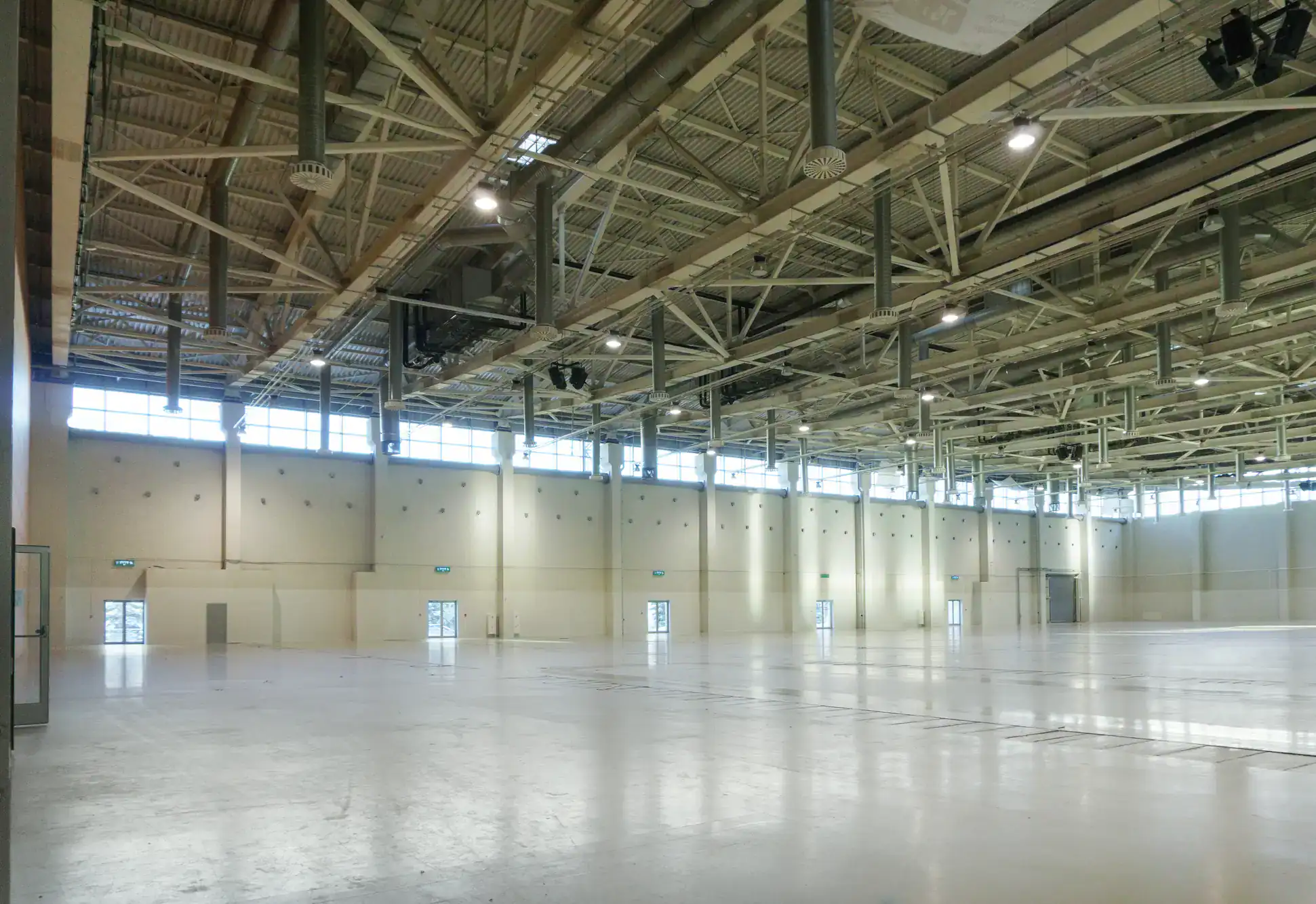
If you’re operating a commercial hangar storing aircraft, running maintenance, or leasing bay space to tenants NFPA 409 applies. The standard requires that floor surfaces in aircraft storage and servicing areas be noncombustible. This isn’t a regional rule specific to Selden or the Town of Brookhaven; it’s a national standard, and it disqualifies most standard residential-grade epoxy products right out of the gate.
For private hangars at general aviation fields like MacArthur Airport in Islip or Brookhaven Calabro in Shirley, the practical application depends on how the facility is classified and what the airport’s lease or operating agreement requires. The safest approach is to confirm with your FBO or airport authority before selecting a coating system. What we can tell you is that every aviation-grade system we install is specified to meet noncombustibility requirements and we can explain exactly how before the job starts.
Selden gets about 47 inches of rain per year well above the national average of 38 inches. That moisture doesn’t just affect the air; it moves through concrete slabs via a process called moisture vapor transmission. When a coating is applied over a slab with elevated moisture content and that moisture testing step was skipped, the vapor pressure builds beneath the coating and eventually forces it up from the surface. That’s what causes bubbling, blistering, and delamination and it typically shows up within two to three years of installation.
Large hangar slabs are especially vulnerable because the sheer square footage means more surface area for moisture migration. On a central Long Island slab in a climate with above-average rainfall and coastal humidity year-round, moisture testing isn’t a precaution it’s a prerequisite. Every job we do on Long Island starts there. If the slab has a moisture problem, we address it before any coating goes down.
Skydrol is a phosphate ester-based hydraulic fluid used in commercial and general aviation aircraft. It’s highly effective as a hydraulic fluid and highly destructive to surfaces it wasn’t designed to contact including most standard epoxy coatings. If your hangar floor sees any aircraft maintenance activity, Skydrol exposure is a real risk. A coating that isn’t specifically formulated to resist it will soften, discolor, and break down over time.
The same applies to jet fuel and the industrial cleaning solvents used to degrease engines and components. These aren’t occasional spills in a working maintenance bay or FBO hangar near MacArthur Airport, they’re routine. Aviation-grade coating systems are formulated with chemical resistance to these specific compounds. When you’re evaluating a contractor, asking directly whether their system is Skydrol-resistant is a reasonable and important question. If they don’t know what Skydrol is, that tells you what you need to know.
It depends on the system specified. Traditional multi-day epoxy systems require the hangar to stay clear of aircraft and heavy equipment for several days while the coating cures in stages. For hangar operators with active flying schedules especially during spring and summer when general aviation traffic near MacArthur Airport is at its highest that kind of extended downtime has a real operational cost.
Polyaspartic topcoat systems cure significantly faster. In most cases, aircraft can return to the hangar within 24 hours of the final coat being applied. The prep work moisture testing, diamond grinding, concrete repair adds time to the front end of the project, but that work happens before the coating goes down, not after. Total project timelines vary based on the size of the hangar and the condition of the existing concrete, but for most private and small commercial hangars in the Selden area, a well-organized installation can be completed with minimal disruption to your schedule.
Both can work well in aviation environments when properly specified, but they perform differently and suit different priorities. Epoxy systems are extremely durable and chemically resistant, but they have longer cure windows and can be sensitive to temperature during application a consideration for unheated or partially heated hangars in Selden during the colder months, when concrete temperatures need to stay above 50°F for proper curing.
Polyaspartic systems cure faster, handle temperature variation better, and are UV-stable meaning they won’t yellow or chalk over time the way some epoxy formulations can. For hangar operators who need fast return-to-service and want a finish that holds its appearance under Long Island’s seasonal light exposure, polyaspartic is often the stronger choice for the topcoat layer. In practice, many aviation-grade installations use both: an epoxy base coat for chemical resistance and build depth, with a polyaspartic topcoat for speed, durability, and UV performance. The right answer depends on your specific hangar conditions, and that’s a conversation worth having before any material is specified.
Technically, any licensed contractor can apply an epoxy coating to a concrete floor. The question is whether they understand what an aviation environment actually demands and most general flooring contractors don’t. A search for hangar floor specialists in Selden turns up residential hardwood installers and general tile contractors. None of the local results that appear for standard flooring searches carry aviation-specific credentials, Skydrol-resistant system knowledge, or NFPA 409 familiarity.
The gap shows up in the details. General contractors typically don’t perform moisture testing before installation. They may not grind to the correct adhesion profile. They’re unlikely to know the difference between a coating that’s chemically compatible with aviation fluids and one that isn’t. And if the floor fails in three years, a contractor without a local base and a 30-year track record in Suffolk County may not be around to stand behind the work. For a hangar floor that needs to perform under real aviation conditions and hold up to Brookhaven Town’s climate and code requirements the contractor’s credentials matter as much as the coating itself.