
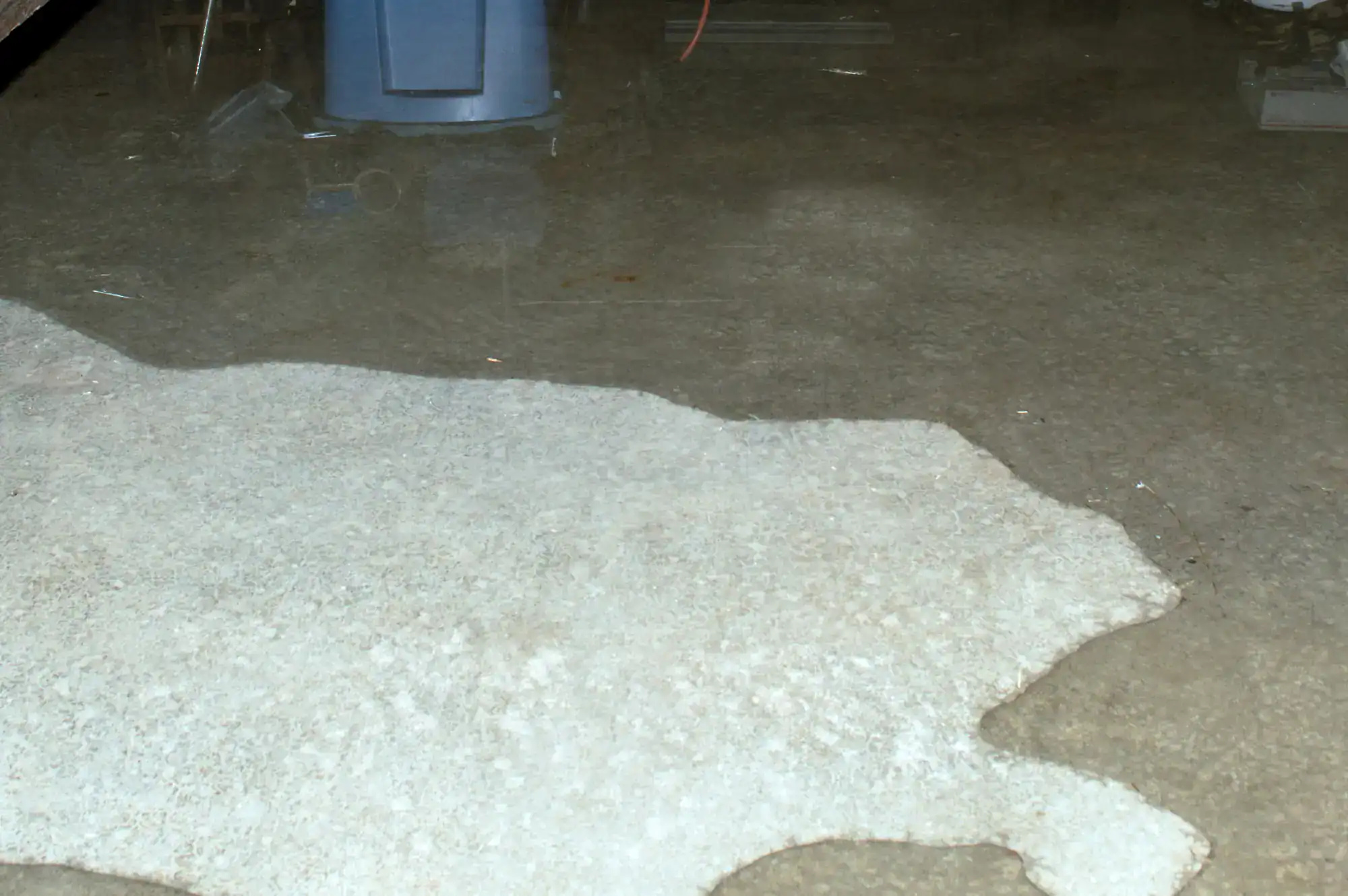
Every winter response along Route 25 or Nicolls Road means road salt, brine, and de-icing chemicals rolling back into your bay on every set of tires. Bare or poorly sealed concrete absorbs all of it and over time, that shows up as spalling, cracking, and a surface that can’t be fully cleaned no matter how hard your crew scrubs. A sealed, non-porous polyaspartic floor changes that completely. Salt, diesel, hydraulic fluid it all sits on top and rinses off instead of soaking in permanently.
Long Island’s freeze-thaw cycles are the other factor most floor contractors don’t talk about honestly. Temperatures in central Suffolk County swing above and below freezing multiple times a week through a typical winter, and coatings that lack real flexibility crack right along with the concrete beneath them. The polyaspartic systems we install are four times more flexible than standard epoxy engineered to move with the slab rather than fight it. That’s the difference between a floor that lasts two or three years and one that’s still performing after twenty.
For a department running two stations and the call volume Selden carries, a floor that fails early isn’t just an inconvenience it’s an unbudgeted expense, an operational disruption, and a surface that can’t support the contamination control your volunteers deserve.
We’re based in Bohemia, NY about 15 miles from Selden via Nicolls Road. That proximity isn’t incidental. It means our crew understands what road salt from Middle Country Road does to a concrete slab over time, knows how Selden’s winters stress coatings that lack real flexibility, and isn’t figuring out Long Island conditions on your dime.
CEO Danny Harmer has over 40 years of hands-on installation experience. Most of our field team has been with us for more than a decade. Our credentials include Sherwin-Williams High Performance Flooring certification one of the most rigorous manufacturer-approved applicator credentials in the commercial coatings industry along with Res Tech certification and OSHA 40 certification for every installer on our crew. That last one matters specifically when the work is happening inside an active volunteer fire station with live apparatus and 120 members who may need to respond at any moment.
Our portfolio includes commercial and institutional projects across the continental U.S. and internationally including the White House kitchen in 1996. The Selden Fire District receives that same standard of work.
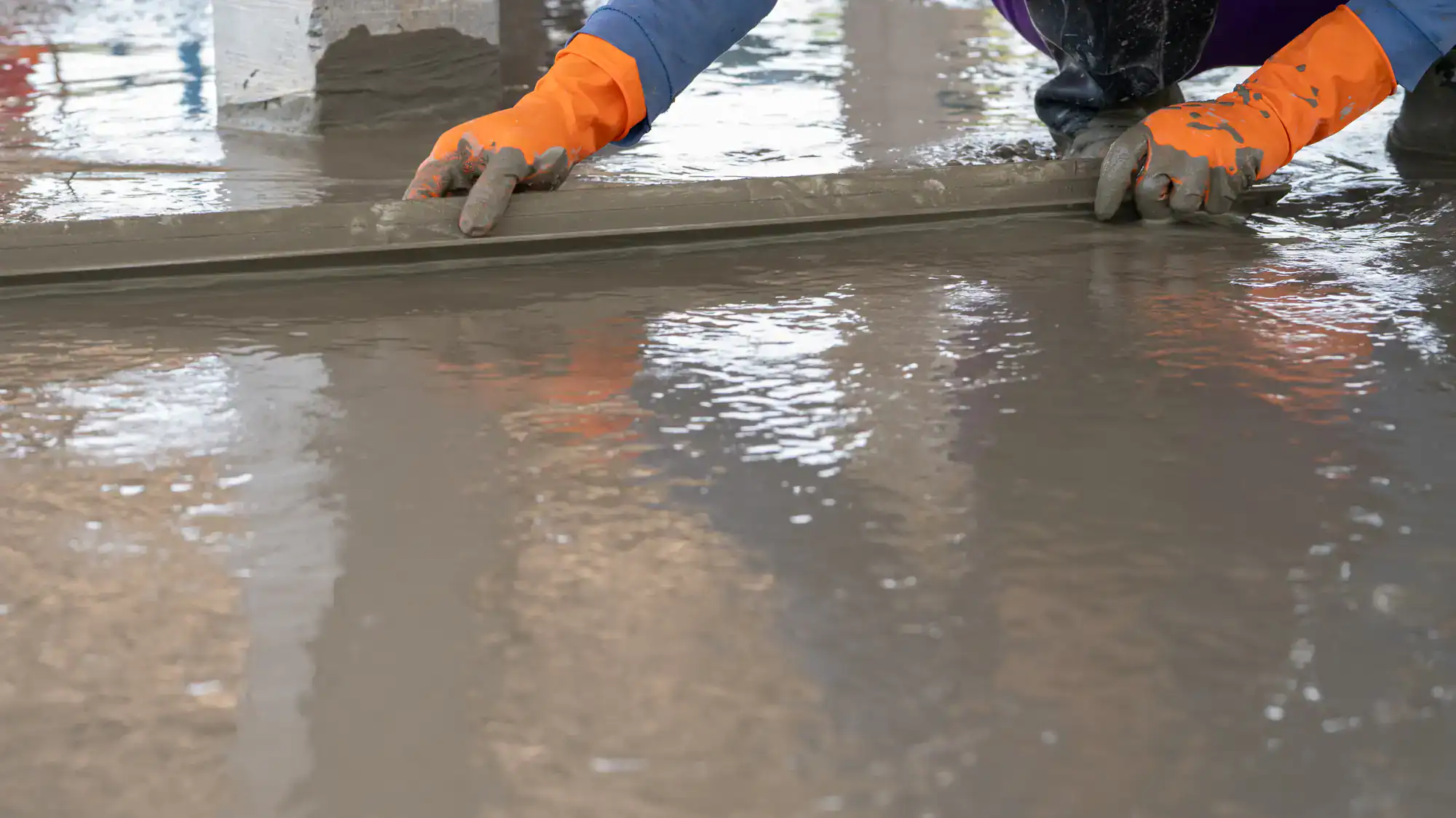
The first thing that happens on every firehouse floor project is diamond grinding not acid etching. This is a non-negotiable part of our process because it mechanically opens the concrete surface and creates a true bond between the slab and the primer. Acid etching introduces moisture into the surface right before you seal it, which is one of the most reliable ways to guarantee delamination bubbles within months. In Long Island’s humid summers when moisture vapor transmission through older concrete slabs is already elevated skipping this step is what separates a three-year floor from a twenty-year one.
After grinding comes moisture testing. This isn’t a formality. Central Suffolk County has a relatively high water table in many areas, and older fire station slabs can transmit significant vapor upward, especially during the summer months. Any coating applied over a slab with elevated moisture content without the right primer will eventually fail. Moisture testing confirms the slab is ready, and penetrating primers designed for high-moisture substrates are used where needed.
From there, the system builds in layers: penetrating primer, high-build epoxy base coat with aggregate broadcast for compressive strength and slip resistance, a second encapsulation coat, and a polyaspartic topcoat. The aggregate broadcast layer specifically raises the friction coefficient of the surface when wet which matters on a bay floor that sees washdowns, rain-soaked apparatus, and the occasional hydraulic fluid spill. The final polyaspartic coat cures in approximately 24 hours, so your apparatus is back in the bay the next day, not three to seven days later.
Ready to get started?
The Selden Fire Department operates a 2020 Pierce Velocity 100-foot mid-mount Ascendant aerial platform. At gross vehicle weight, that apparatus can exceed 40,000 pounds. That’s roughly twelve times the load per square inch of a standard passenger vehicle. The multi-layer system we install is engineered specifically for that weight class the aggregate broadcast base coat adds real compressive strength to the system, and the polyaspartic topcoat delivers twice the abrasion resistance of standard epoxy at approximately 15 mils of thickness. This is not a residential garage product scaled up. It’s a commercial and industrial floor system designed for the heaviest vehicles in municipal service.
The seamless, non-porous surface also directly supports the contamination control requirements that NFPA 1500 and 1585 establish for apparatus bays. Selden’s volunteers respond to structure fires and return to the bay carrying carcinogens on their gear, their boots, and the apparatus itself. A cracked or porous concrete floor or a failed coating with open seams creates harborage points that can’t be fully decontaminated. A sealed resinous surface eliminates those harborage points entirely and allows the floor to be power-washed clean after every return.
With two stations to maintain, the Selden Fire District can use one certified contractor for both apparatus bays, decontamination zones, living quarters, and kitchen areas consistent system, consistent quality, single point of accountability for everything. For a district operating under New York State General Municipal Law bidding requirements, having one qualified, certified contractor simplifies the procurement process considerably.
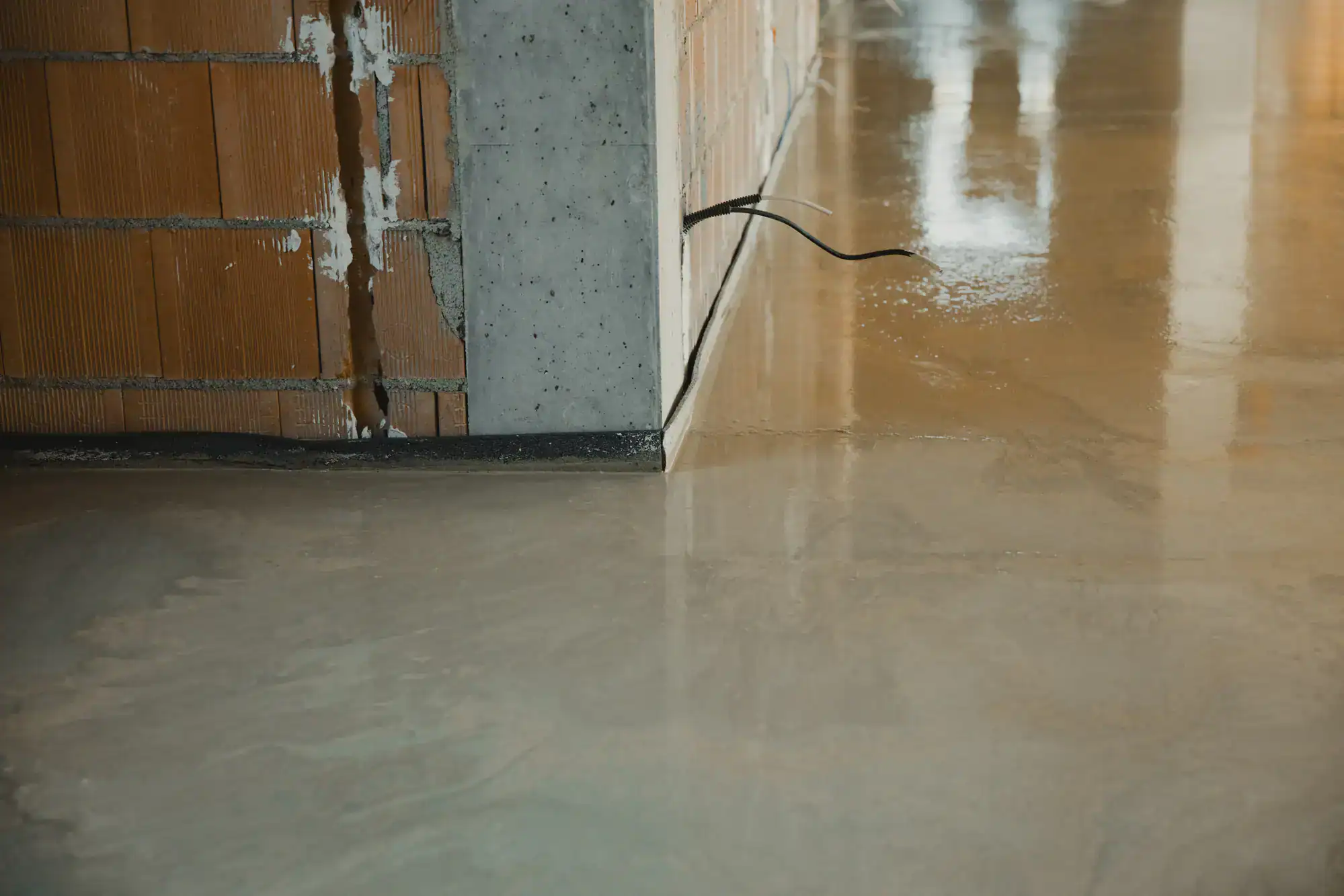
A properly installed polyaspartic system in a firehouse apparatus bay can realistically last 20 or more years but that number depends entirely on how the floor was prepared and what system was used. The two most common failure modes in apparatus bays are hot-tire pickup and delamination from moisture, and both are preventable with the right process. Hot-tire pickup happens when apparatus tires heat up during a response, cool down on the bay floor, bond to the coating surface, and peel it off when the truck backs out. It’s almost exclusively a problem with residential-grade or light commercial epoxy products that weren’t designed for the thermal load of fire apparatus.
In Selden specifically, Long Island’s freeze-thaw cycling adds another layer of stress on coatings that lack flexibility. A polyaspartic topcoat rated for four times the flexibility of standard epoxy, installed over a properly diamond-ground and primed substrate, handles those seasonal temperature swings without cracking or delaminating. The 20-year lifespan isn’t a marketing number it’s what a correctly engineered and correctly installed system delivers in this climate.
Yes and for a department running one of the highest call volumes of any volunteer department in New York State, this is usually the first question that needs a real answer. The polyaspartic systems we use cure in approximately 24 hours, which means apparatus is back in the bay the next day. Traditional epoxy systems require three to seven days of cure time before heavy vehicle traffic that’s simply not workable for the Selden Fire Department’s operational tempo.
The practical approach for a two-station department like Selden’s is to schedule one station at a time. While one bay is being coated and curing, the other station remains fully operational. Installation typically happens in a single day per bay, and the 24-hour return-to-service timeline means the disruption window is as short as possible. Our crew is also OSHA 40 certified, which means we know how to work safely inside an active station environment where a call can come in at any moment and the apparatus needs to move.
The two most common causes are inadequate surface preparation and the wrong product for the application. Surface preparation is where most failures start. Contractors who use acid etching instead of diamond grinding introduce moisture into the concrete surface right before sealing it which creates ideal conditions for delamination bubbles to form, often within the first year. Contractors who skip moisture testing apply coatings over slabs that are actively transmitting vapor upward through the concrete, particularly during Long Island’s humid summer months when moisture vapor transmission through older slabs is at its highest.
The product selection problem is equally common. Residential-grade epoxy the kind sold in big-box home improvement stores is not engineered for the load profile of a fire apparatus. It doesn’t have the compressive strength, the flexibility, or the chemical resistance that an apparatus bay demands. When a 40,000-pound aerial truck sits on a floor coated with the wrong product, hot-tire pickup and surface compression failure are predictable outcomes, not bad luck. The fix isn’t recoating with the same product it’s grinding everything off and starting over with the right system. That’s an expensive lesson, and it’s one the Selden Fire District shouldn’t have to learn twice.
Yes, most likely. As a special district under New York State law, the Selden Fire District is subject to New York State General Municipal Law bidding requirements for public works contracts above specified thresholds. For contracts that meet or exceed the competitive bidding threshold currently in the range of $35,000 for public works in New York State, though this should be verified against current law a formal bid process is typically required. That means the district publishes bid specifications, receives sealed bids from qualified contractors, and awards the contract based on those submissions.
This is actually where our credentials matter most in a practical sense. Sherwin-Williams High Performance Flooring certification, OSHA 40 certification, and a documented commercial and institutional project history are exactly the qualifications that fire district engineers and attorneys write into bid specifications. Being on a bid list and meeting the specification requirements from the start of the process is far better than being a contractor who shows up after the bid is awarded and asks to be considered. If your district is in the planning phase, reaching out early allows for a site visit and a conversation about what a proper specification for this type of project should include.
Standard epoxy is a durable product in the right applications but it has real limitations in an apparatus bay environment. It takes three to seven days to fully cure before heavy vehicle traffic, it’s susceptible to UV yellowing when bay doors are open to sunlight, and it has lower flexibility ratings than polyaspartic, which makes it more prone to cracking under the freeze-thaw cycling that Suffolk County winters produce. It also goes down at four to eight mils of thickness in most commercial applications thinner than what a heavy apparatus bay demands.
Polyaspartic coatings address all of those limitations directly. They cure in approximately 24 hours, they’re UV-stable so they don’t yellow or chalk when exposed to sunlight through open bay doors, and they’re rated at four times the flexibility and twice the abrasion resistance of standard epoxy. They also go down at approximately 15 mils roughly two to four times the thickness of a standard epoxy topcoat. For the Selden apparatus bay, where a 2020 Pierce Velocity aerial platform and older pumpers share the same floor surface, polyaspartic is the appropriate topcoat choice. The base coat system still uses high-build epoxy for compressive strength the two products work together in a multi-layer system, with each layer doing a specific job.
Route 25 Middle Country Road is a state highway that gets heavy salt treatment during winter weather events, and Nicolls Road gets the same treatment as a major county connector. Every apparatus response during winter in Selden means salt, brine, and de-icing chemicals are tracked back into the bay on tires and undercarriage. On bare or inadequately sealed concrete, those chemicals don’t just sit on the surface they penetrate into the capillaries of the slab and begin breaking down the concrete from within. Over time, this accelerates spalling, surface cracking, and the kind of pitting that makes a floor impossible to clean properly and increasingly difficult to coat again without significant repair work first.
A sealed, non-porous polyaspartic surface stops that process entirely. The chemicals have nowhere to go they sit on top of the coating and get rinsed off during the next washdown instead of soaking in permanently. This is a maintenance reality that compounds over years of operation in a department that responds to calls along salted roads all winter long. The cost difference between a properly sealed floor that rinses clean and a deteriorating concrete slab that needs grinding, repair, and full reinstallation every five to seven years is significant and it’s one of the clearest arguments for doing the job right the first time.