
You already know that one in 31 hospital patients contracts a healthcare-associated infection on any given day. What you might not know is how much your floor contributes to that statistic.
Cracks, seams, and porous surfaces trap bacteria, moisture, and contaminants that standard cleaning can’t reach. Even with rigorous protocols, traditional flooring creates hiding spots for pathogens. That’s not a maintenance problem—it’s a patient safety risk.
Seamless medical-grade epoxy in Selden, NY eliminates those risks entirely. No grout lines. No joints. No gaps where bacteria can colonize between cleanings. The surface is 100% impermeable, chemically resistant, and built with antimicrobial protection that works around the clock.
Your staff can disinfect quickly and thoroughly without worrying about what’s lurking underneath. Your facility stays compliant with CDC guidelines. And your patients get the sterile environment they deserve.
We’ve been installing healthcare flooring in Selden, NY and across Long Island for over 30 years. Our installers are OSHA 40 certified, and most have been with us for over a decade—because we don’t cut corners, and we don’t hire people who do.
We’ve worked in hospitals, clinics, laboratories, and senior living facilities from New York to Moscow. We installed flooring in the White House kitchen in 1996. We understand what’s at stake when you’re managing a sterile environment, and we know what regulators look for during inspections.
Selden’s healthcare facilities face the same pressures as any other: tight budgets, constant patient flow, and zero tolerance for compliance failures. You need a floor that works the first time and lasts for years without constant maintenance or replacement costs.
We start with a site assessment to evaluate your substrate, identify moisture issues, and determine which resinous system meets your specific requirements. Not every healthcare space needs the same floor—operating rooms have different demands than outpatient corridors.
Next, we prep the concrete. This step matters more than most people realize. If the substrate isn’t properly cleaned, repaired, and profiled, the coating won’t bond correctly—and you’ll end up with delamination, bubbling, or premature failure. We handle crack repair, moisture mitigation, and surface preparation before any resin goes down.
Then we install the flooring system in phases to minimize downtime. Low-VOC healthcare coatings in Selden, NY cure quickly and emit minimal odor, so you’re not evacuating entire wings or exposing patients to harsh fumes. Depending on the system, you can have full functionality within 24 to 72 hours.
The final result is a seamless, sterile surface that meets USDA and FDA compliance standards. No seams. No weak points. Just a floor that does its job so you can do yours.
Ready to get started?
You’re getting a floor that’s engineered for infection control. Antimicrobial hospital flooring in Selden, NY includes built-in bacteriostatic protection that prevents microbial growth on the surface 24/7. It’s not a topical treatment that wears off—it’s integrated into the resin itself.
You’re also getting chemical resistance that holds up to the harshest disinfectants. Bleach, quaternary ammonium compounds, hydrogen peroxide—your cleaning crew can use whatever protocol your facility requires without degrading the floor. The surface won’t pit, stain, or break down under repeated exposure.
And you’re getting durability that reduces long-term costs. Healthcare flooring takes a beating: gurneys, equipment carts, foot traffic, spills, and constant cleaning. Resinous floors handle all of it without cracking, chipping, or requiring the kind of maintenance that traditional vinyl or tile demands. On Long Island, where labor costs are high and downtime is expensive, that matters.
The system is also designed for indoor air quality. Low-VOC formulations mean you’re not introducing harmful emissions into patient care areas during or after installation. That’s critical in facilities where vulnerable populations are already dealing with compromised immune systems.
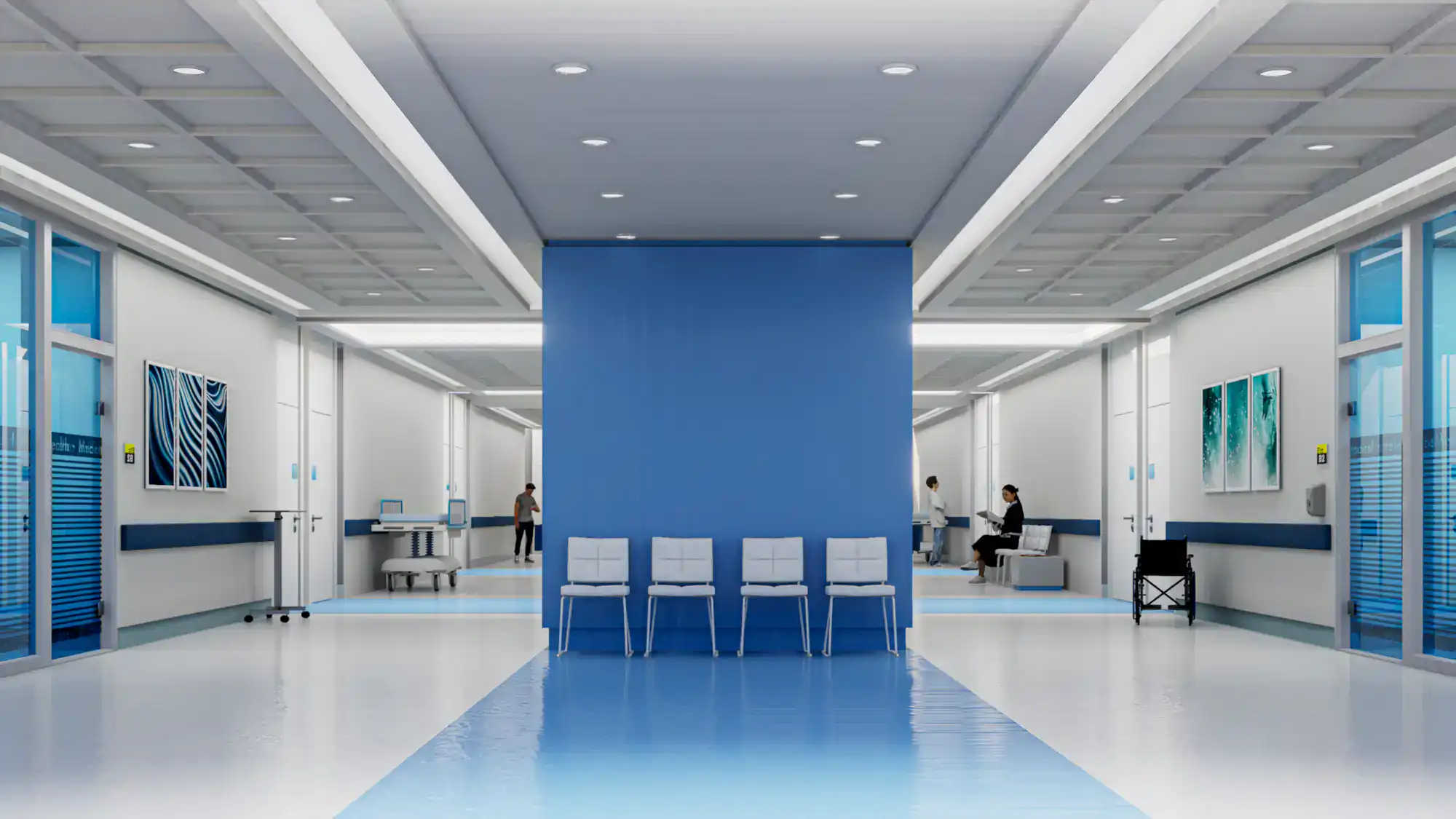
Healthcare-associated infections cost the U.S. healthcare system approximately $28.4 billion annually, and flooring plays a bigger role than most people realize. Traditional flooring materials—vinyl tile, sheet vinyl, even some epoxies—have seams, grout lines, or porous surfaces where bacteria, moisture, and contaminants accumulate.
Even with aggressive cleaning protocols, those gaps create reservoirs for pathogens. Mops and disinfectants can’t reach into cracks or under edges where moisture sits. Over time, biofilms form, and bacteria colonize those areas between cleanings.
Seamless medical-grade epoxy in Selden, NY eliminates that problem entirely. There are no joints, no grout, and no seams where contaminants can hide. The surface is monolithic and impermeable, so disinfectants make full contact with the floor during every cleaning cycle. Add in antimicrobial protection that’s built into the resin, and you’ve got a surface that actively resists microbial growth around the clock—not just when someone’s mopping.
A failed floor can trigger a Form 483 observation, a warning letter, or in severe cases, a forced shutdown until you remediate the issue. That’s not theoretical—regulators are specifically looking for cracked, porous, or improperly sealed floors during inspections because they know those conditions contribute to contamination risks.
If your floor has visible damage, moisture intrusion, or areas where cleaning can’t be effectively performed, you’re not meeting compliance standards. And fixing it after the fact is expensive. You’re looking at removal costs, disposal, downtime, and emergency installation—all while your facility is under scrutiny.
USDA/FDA compliant flooring in Selden, NY is designed to meet those regulatory requirements from day one. The system is seamless, impermeable, and chemically resistant, so it checks the boxes that inspectors are trained to evaluate. You’re not gambling on whether your floor will pass—you’re installing a system that’s built to the standard they’re enforcing.
That depends entirely on the system you choose and how it’s installed. A properly installed resinous floor in a hospital or medical facility can last 15 to 20 years or more with routine maintenance. Compare that to vinyl tile, which might need replacement every 5 to 10 years, or sheet vinyl that starts showing wear in high-traffic areas within a few years.
The key is substrate preparation and system selection. If the concrete underneath isn’t properly prepped—if there’s moisture, contamination, or poor bonding—the floor will fail early no matter what material you use. And if you choose a system that’s not rated for the chemical exposure or traffic load your facility generates, you’ll see premature wear.
Sterile room floor coatings in Selden, NY are built for the kind of abuse healthcare environments dish out: constant foot traffic, heavy equipment, aggressive cleaning chemicals, and thermal shock from spills or steam cleaning. The resin is impact-resistant and flexible enough to handle movement without cracking. You’re not replacing sections every few years—you’re maintaining a floor that holds up decade after decade.
Yes, and that’s one of the main reasons facilities choose resinous systems over traditional flooring. We phase the installation to keep disruption minimal. Depending on the size and layout, we can work in sections so that patient care areas remain operational while we’re installing adjacent spaces.
Low-VOC healthcare coatings in Selden, NY cure faster and emit far less odor than older epoxy formulations. That means you’re not dealing with overwhelming fumes that require evacuation or ventilation shutdowns. In many cases, the floor is ready for light traffic within 24 hours and full traffic within 72 hours.
We also schedule around your facility’s needs. If you need us working nights, weekends, or in tight windows between patient rotations, we make it happen. Our crews are experienced in healthcare environments—they understand infection control protocols, noise restrictions, and the importance of staying out of the way while still getting the job done right.
Regular epoxy is durable and chemically resistant, but it doesn’t actively prevent microbial growth. It’s a passive barrier—it keeps contaminants from penetrating the substrate, but bacteria can still colonize on the surface between cleanings if conditions are right.
Antimicrobial hospital flooring in Selden, NY includes additives that inhibit bacterial growth on the surface itself. The protection is built into the resin, not applied as a topical coating, so it doesn’t wear off over time. It works continuously, even when the floor isn’t being actively cleaned.
That’s critical in healthcare settings where pathogens are constantly introduced through foot traffic, equipment, and patient contact. Standard cleaning protocols remove most contaminants, but antimicrobial flooring adds an extra layer of defense during the hours between cleanings. It’s not a replacement for proper disinfection—it’s a supplement that reduces the window of time bacteria have to spread or colonize. For facilities serious about infection control, it’s not optional.
If you’re seeing cracks, delamination, moisture damage, or areas where the surface is breaking down, replacement is usually the right call. Repairs might buy you time, but they don’t address the underlying issue—and in a healthcare setting, a compromised floor is a compliance risk you can’t afford to ignore.
Look for visible seams that are lifting, grout lines that are stained or eroded, or any areas where water is pooling instead of shedding. Those are signs that the floor is no longer impermeable, which means contaminants are getting underneath. If your cleaning staff is reporting that certain areas won’t come clean no matter what they do, that’s another red flag.
We can assess your current floor and give you a straight answer. Sometimes a repair or overlay makes sense if the substrate is sound and the damage is localized. But if the floor is past its useful life or was never the right system for your environment in the first place, replacement is the smarter investment. You’re not just fixing a cosmetic issue—you’re eliminating a potential source of contamination and bringing your facility back into compliance.