
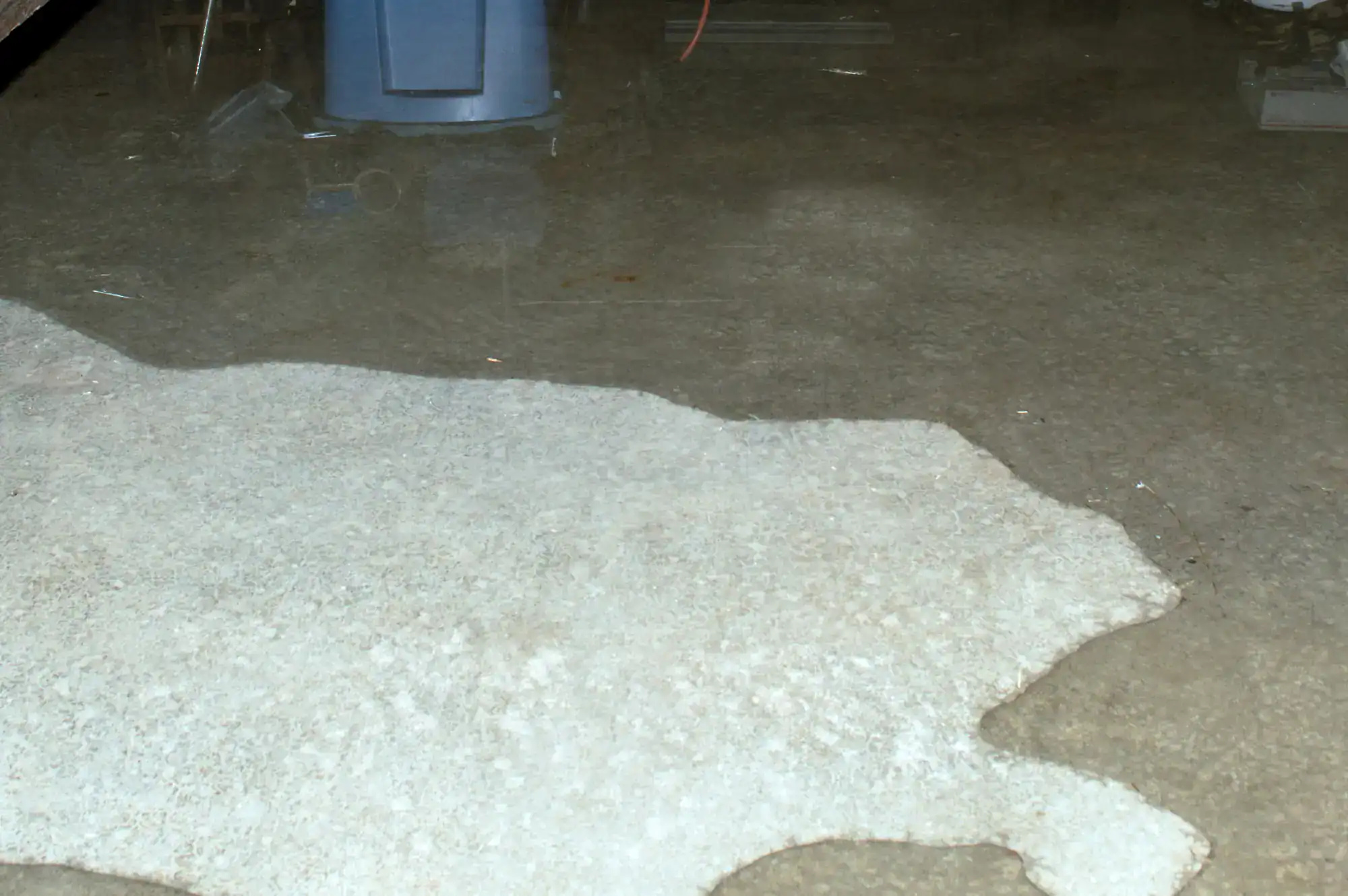
Every time a rig rolls back into the bay after a winter run down Sunrise Highway or the Southern State Parkway, it’s dragging road salt, brine, and slush onto the floor. Bare concrete absorbs all of it. Season after season, that salt works its way into the substrate, pitting the surface and weakening the slab from the inside out. A properly installed, seamless resinous floor stops that cycle completely contamination sits on top and wipes clean instead of soaking in.
West Babylon sits close enough to the Great South Bay that ambient moisture is elevated year-round. That matters more than most fire district boards realize, because moisture trapped beneath a coating is the number one reason apparatus bay floors bubble and peel within a few years of installation. When the prep work is done right and we mean diamond grinding, not acid etching, followed by actual moisture testing you get a floor that bonds the way it’s supposed to and holds up the way it needs to.
The other thing that kills standard epoxy in Long Island apparatus bays is hot-tire pickup. A truck comes back from a summer call with heated tires, parks on a thin-mil coating, and when it pulls out again, it takes a strip of floor with it. The polyaspartic systems we install are thermally resistant and four times more flexible than standard epoxy they move with the concrete instead of cracking, and they don’t bond to hot tires. For a volunteer department running three stations across West Babylon, that kind of durability isn’t a luxury. It’s the baseline.
We’re based in Bohemia, right here in Suffolk County less than 30 miles from West Babylon via the Southern State Parkway. This isn’t a national brand routing calls through a call center and dispatching subcontractors from out of state. We’ve been installing commercial and industrial resinous floors on Long Island for over 30 years, led by Danny Harmer, who brings more than 40 years of hands-on installation experience to every project.
Our credentials aren’t just for the website. Advanced Epoxy Flooring holds the Sherwin-Williams High Performance Flooring certification one of the most rigorous manufacturer-approved applicator credentials in the industry along with Res Tech certification. Every installer is OSHA 40 certified and current with OSHA Training Standards. That matters when the job is happening inside an active fire station where crew members and equipment are still present.
Our project history speaks for itself: installations across the U.S., the Bahamas, Moscow, and the White House kitchen in 1996. If that level of institutional trust means anything to the West Babylon Fire District board when it’s time to justify a capital expenditure to the community, it should.
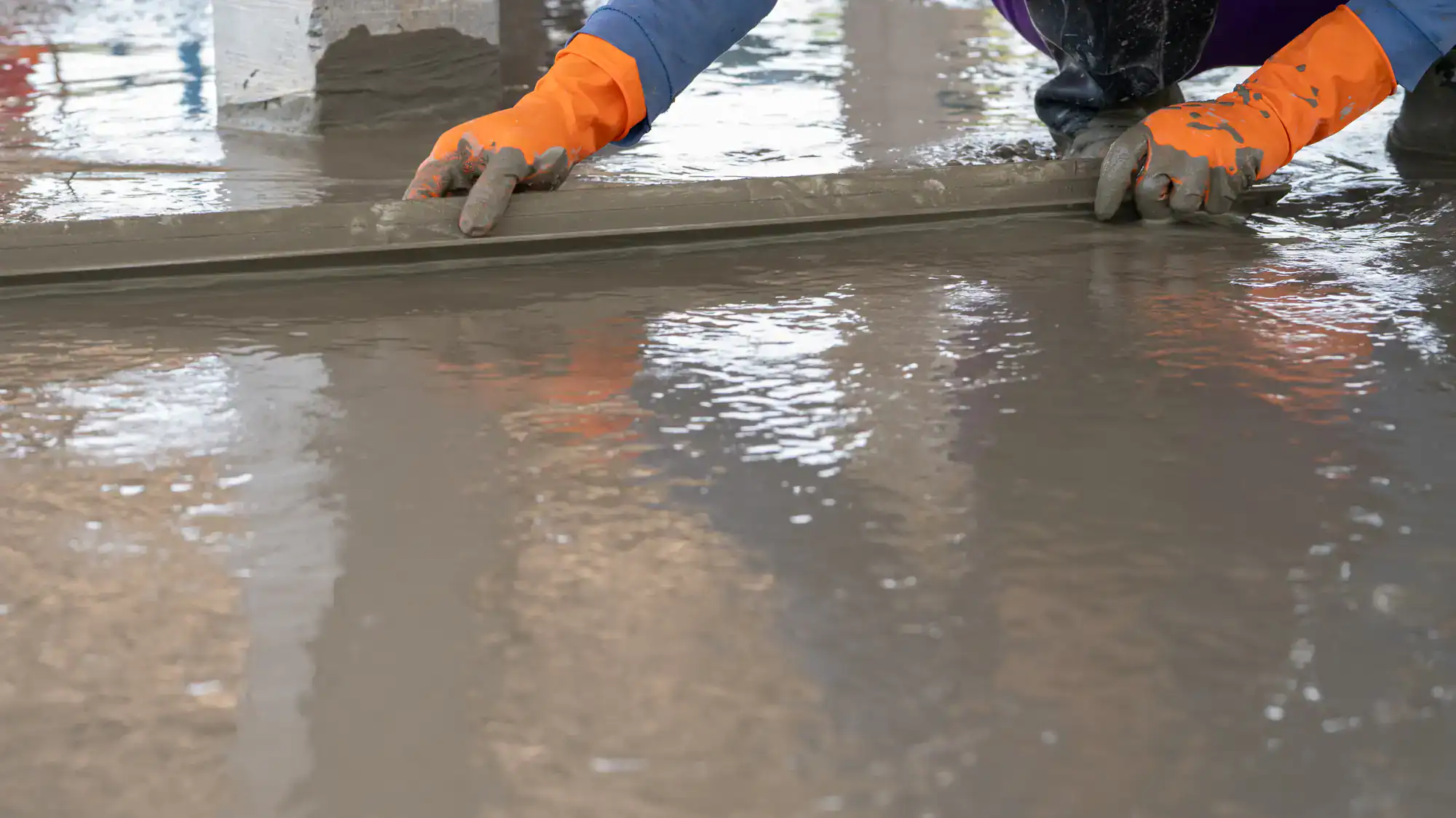
It starts with the concrete. Before any coating goes down, the slab gets diamond ground not acid etched. Diamond grinding mechanically opens the concrete’s surface and creates a true bonding profile without introducing moisture into the substrate. In a place like West Babylon, where coastal humidity is a constant and freeze-thaw cycling stresses slabs every winter, skipping this step is how you end up with a floor that delaminates in year two. After grinding, we test for moisture. If there’s a problem, we address it before it becomes your problem.
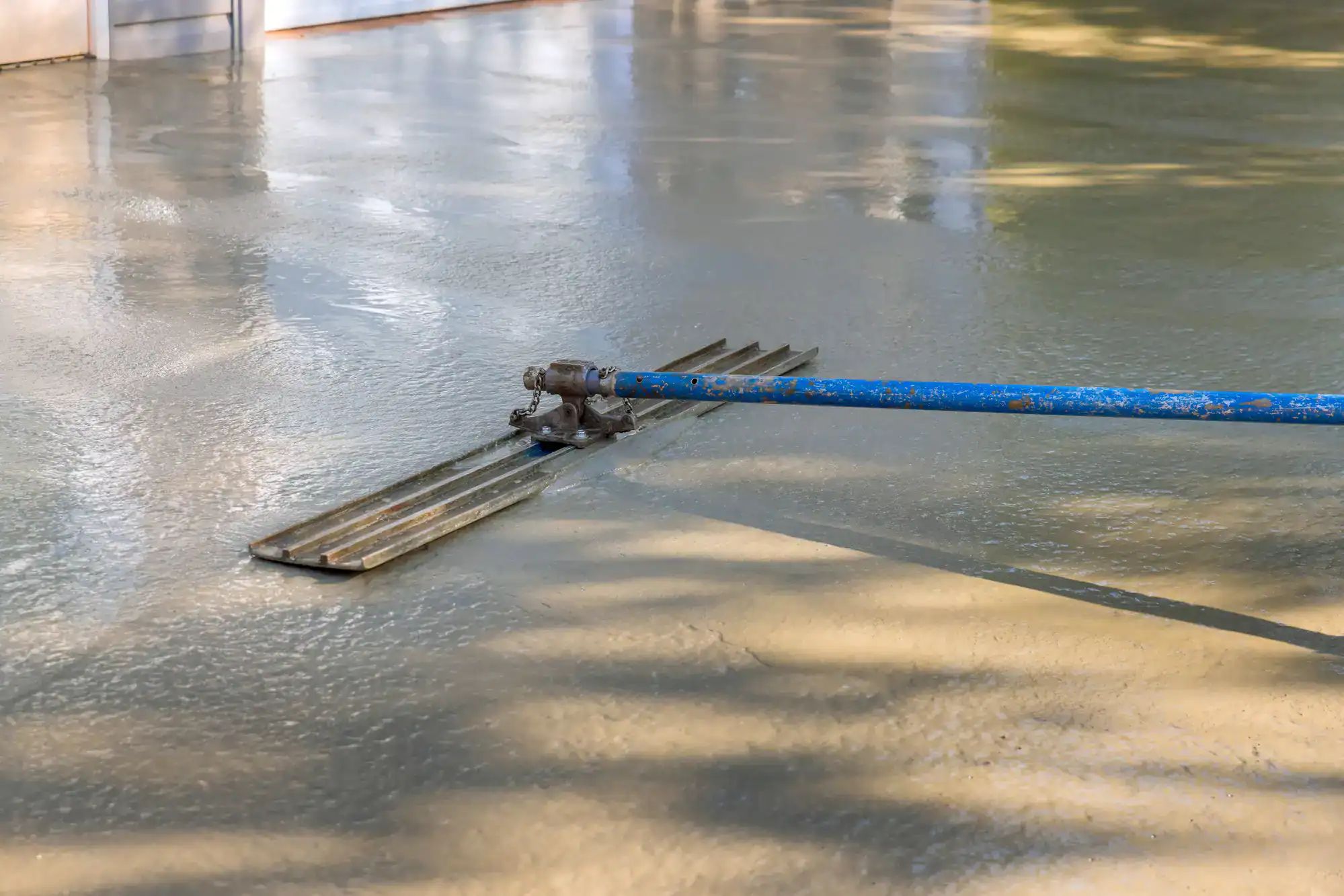
Once the surface is properly prepared, the system goes down in layers. A penetrating primer seals the substrate and locks in the bond. From there, a high-build epoxy base coat goes down with an aggregate broadcast that’s what gives the floor its compressive strength and slip resistance under a 40,000-pound rig. The polyaspartic topcoat finishes the system: UV-stable, thermally resistant, and built to handle the chemical exposure profile of a Long Island apparatus bay.
Cure time is where this system separates itself from standard epoxy. Foot traffic is possible within 2 to 3 hours. Apparatus can return to the bay within 24 hours. For the West Babylon Fire Department’s three-station, 171-volunteer operation, that means the project gets done without parking trucks on Arnold Avenue for a week. Spring and fall are the best installation windows on Long Island temperatures are stable, humidity is manageable, and the timing often lines up with fire district capital planning cycles.
Ready to get started?
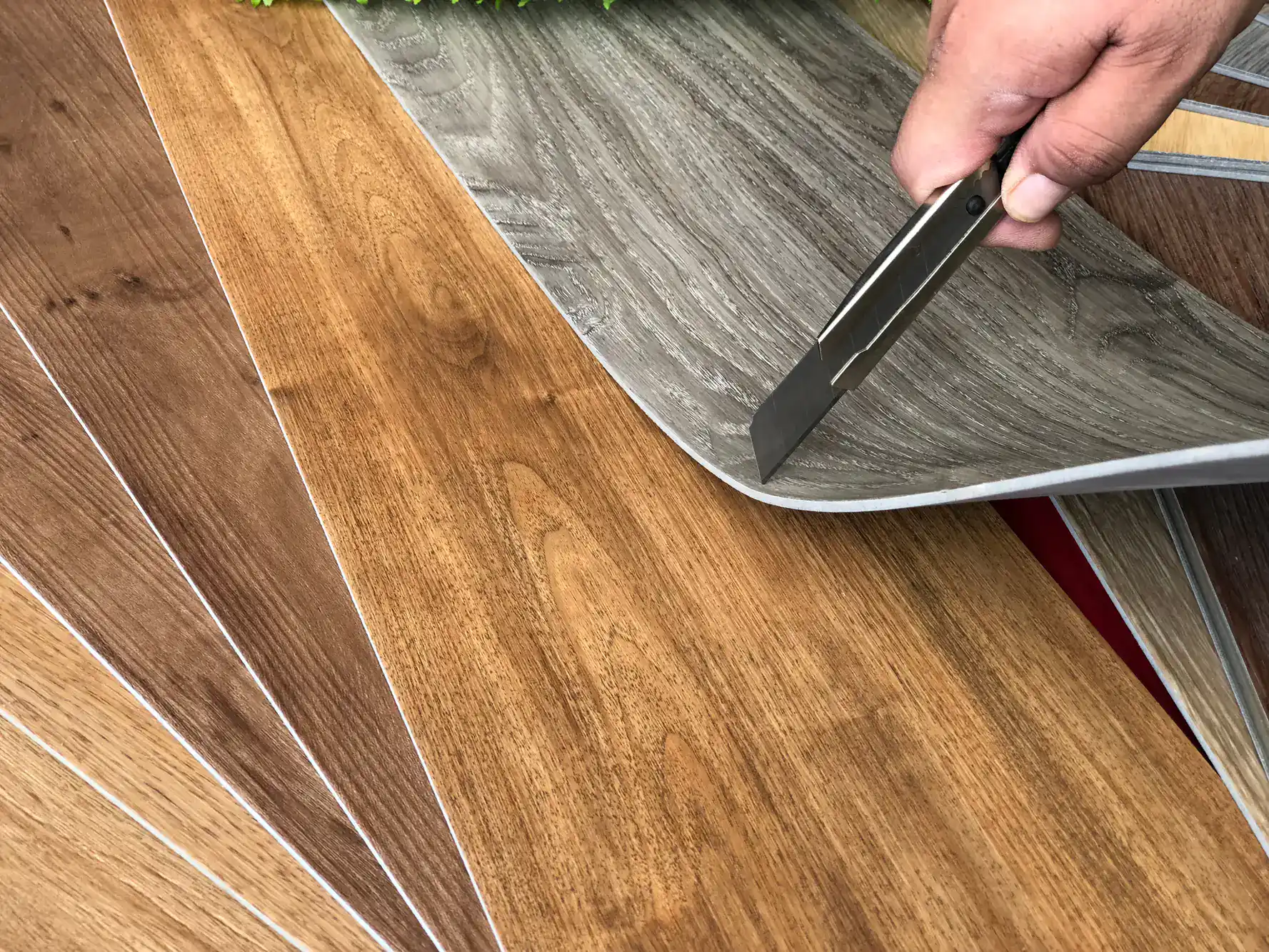
What you’re getting isn’t a garage floor kit dressed up with commercial language. The system we install in West Babylon apparatus bays is a multi-layer, 15-mil polyaspartic coating compared to the 4 to 8 mils you’d get from a standard commercial epoxy or polyurethane product. That thickness difference is structural. It’s what allows the floor to absorb the compressive load of heavy fire apparatus, resist the thermal cycling of a bay that swings between cold winter air and hot returning tires, and hold up for 20 or more years without needing to be ground off and reinstalled.
The seamless, non-porous surface also matters beyond maintenance convenience. NFPA 1500 and NFPA 1581 create contamination control requirements for fire station facilities including apparatus bays that directly affect floor specifications. A floor with cracks, grout lines, or a porous surface creates harborage points for diesel particulates, carcinogens, and other contaminants that firefighters are exposed to during normal bay operations. A properly installed polyaspartic system eliminates those harborage points and supports the decontamination protocols those standards require. For West Babylon’s 171 volunteer firefighters, that’s an occupational health consideration, not just a housekeeping one.
The Town of Babylon Fire Marshal’s Office enforces New York State Fire Prevention laws across all hamlets, including West Babylon. Surface coating work that doesn’t alter the structural slab typically doesn’t require a building permit, but the West Babylon Fire District operates its own capital budget and procurement process independently of town government meaning floor upgrade decisions go through the fire district board. We’re familiar with that process and can help frame the total-cost-of-ownership case when it’s time to present to the board.
A properly installed polyaspartic system lasts 20 or more years in an apparatus bay environment. The key word is “properly” which means diamond ground surface preparation, moisture testing, a penetrating primer, a high-build base coat with aggregate, and a UV-stable polyaspartic topcoat applied at 15 mils of thickness. That’s not what you get from a standard commercial epoxy system, which typically runs 4 to 8 mils and lasts 5 to 10 years under the same conditions.
In West Babylon specifically, the combination of road salt exposure from Sunrise Highway and the Southern State Parkway, coastal humidity from the Great South Bay, and the freeze-thaw cycling of northeastern winters creates a more demanding environment than most inland apparatus bays face. A system that isn’t built for those specific stressors will show it within a few seasons. A system that is built for them will still be performing two decades from now.
The two most common causes of coating failure in apparatus bays are inadequate surface preparation and hot-tire pickup. Inadequate prep specifically, using acid etching instead of diamond grinding introduces moisture into the concrete substrate before sealing it. That trapped moisture has nowhere to go, so it migrates upward and creates delamination bubbles beneath the coating. On Long Island, where ambient humidity is elevated year-round due to proximity to the water, this failure mode is especially common and especially predictable when prep is skipped or rushed.
Hot-tire pickup is the second issue. When a truck returns from a call with heated tires and parks on a thin-mil standard epoxy coating, the coating can bond to the tire surface as it cools. When the truck pulls out, it peels the coating off the floor. The polyaspartic topcoat in our system is thermally resistant and four times more flexible than standard epoxy, which prevents the bonding mechanism that causes this. If the West Babylon Fire Department has experienced peeling floors after a previous coating project, one of these two issues or both is almost certainly the explanation.
Yes and for a volunteer department like the West Babylon Fire Department, running three stations with 171 volunteers, this is usually the first question that needs a real answer before a project can even be considered. Standard epoxy systems require 3 to 7 days before fire apparatus can return to the bay. That’s not a realistic option for a department that can’t park rigs outside for a week and scramble for mutual aid coverage in the meantime.
The polyaspartic systems we install cure for foot traffic in 2 to 3 hours. Apparatus can return to the bay within 24 hours of installation. That timeline makes the project operationally feasible for an active fire station without disrupting coverage. It also means the installation can be staged across stations if needed completing one bay at a time so the department never loses full operational capacity during the project.
It does, and this is a dimension of the flooring decision that a lot of fire district boards in Suffolk County aren’t fully aware of until someone walks them through it. NFPA 1500 the standard on fire department occupational safety and health creates requirements for station design that include contamination control zones. NFPA 1581, which addresses infection control programs, specifies facility requirements for PPE storage and decontamination areas. Both standards create a compliance context for apparatus bay floors that goes beyond aesthetics or ease of cleaning.
A porous concrete floor or a cracked coating creates harborage points for diesel exhaust particulates, carcinogens, and other contaminants that accumulate in apparatus bays during normal operations. A seamless, non-porous resinous floor eliminates those harborage points and can be fully power-washed and decontaminated in a way that bare or poorly coated concrete cannot. As awareness of firefighter occupational cancer risk continues to grow in the Long Island volunteer fire service community, contamination control at the station level including the apparatus bay floor is becoming less of a preference and more of a program requirement.
Professional commercial apparatus bay floor coating typically runs in the range of $5 to $15 per square foot, depending on the system specified, the current condition of the concrete, and the size of the project. A standard single-bay installation in West Babylon will generally fall within that range. Projects requiring significant concrete repair, moisture remediation, or a more complex multi-layer system will land toward the higher end.
The more useful frame for a fire district board evaluating this as a capital expenditure is total cost of ownership over time. A 20-year polyaspartic system installed correctly once costs significantly less over two decades than a 5-year standard epoxy system that gets ground off and reinstalled three or four times each time with the associated labor cost, material cost, and apparatus downtime. When you factor in the cost of repeated failures, the professional installation is almost always the more fiscally responsible choice for a publicly funded facility accountable to West Babylon taxpayers.
It’s a fair question, and the right one to ask before committing a fire district budget to any contractor. The firehouse floor environment is specific heavy apparatus loads, road salt contamination, hot-tire exposure, NFPA contamination control requirements, and the operational reality that trucks cannot be out of service for a week. A contractor who primarily does retail floors or residential garages and occasionally takes on a fire station project is working outside their core experience base, even if their general epoxy credentials look solid on paper.
We’re a commercial and industrial resinous systems specialist not residential, not franchise kits, not a generalist contractor who added epoxy to a service menu. We hold the Sherwin-Williams High Performance Flooring certification and Res Tech certification, and every installer is OSHA 40 certified. Our project history includes institutional-scale installations with zero tolerance for failure including the White House kitchen in 1996. Based in Bohemia, Suffolk County, we’ve been working in this market for over 30 years and understand the specific conditions West Babylon’s apparatus bays deal with every winter.