
Most commercial kitchen floors in West Babylon don’t fail because of bad luck. They fail because whoever installed them skipped the part that matters most figuring out what’s happening in the concrete before anything gets applied. The slabs under most restaurants and diners along Montauk Highway and the Sunrise Highway corridor were poured in the 1950s and 60s, long before vapor barriers were standard. Decades of coastal humidity rolling in off the Great South Bay have been working their way through those slabs ever since. When moisture vapor is moving up through concrete and nobody tests for it, the coating doesn’t bond it bubbles, it lifts, and eventually it peels.
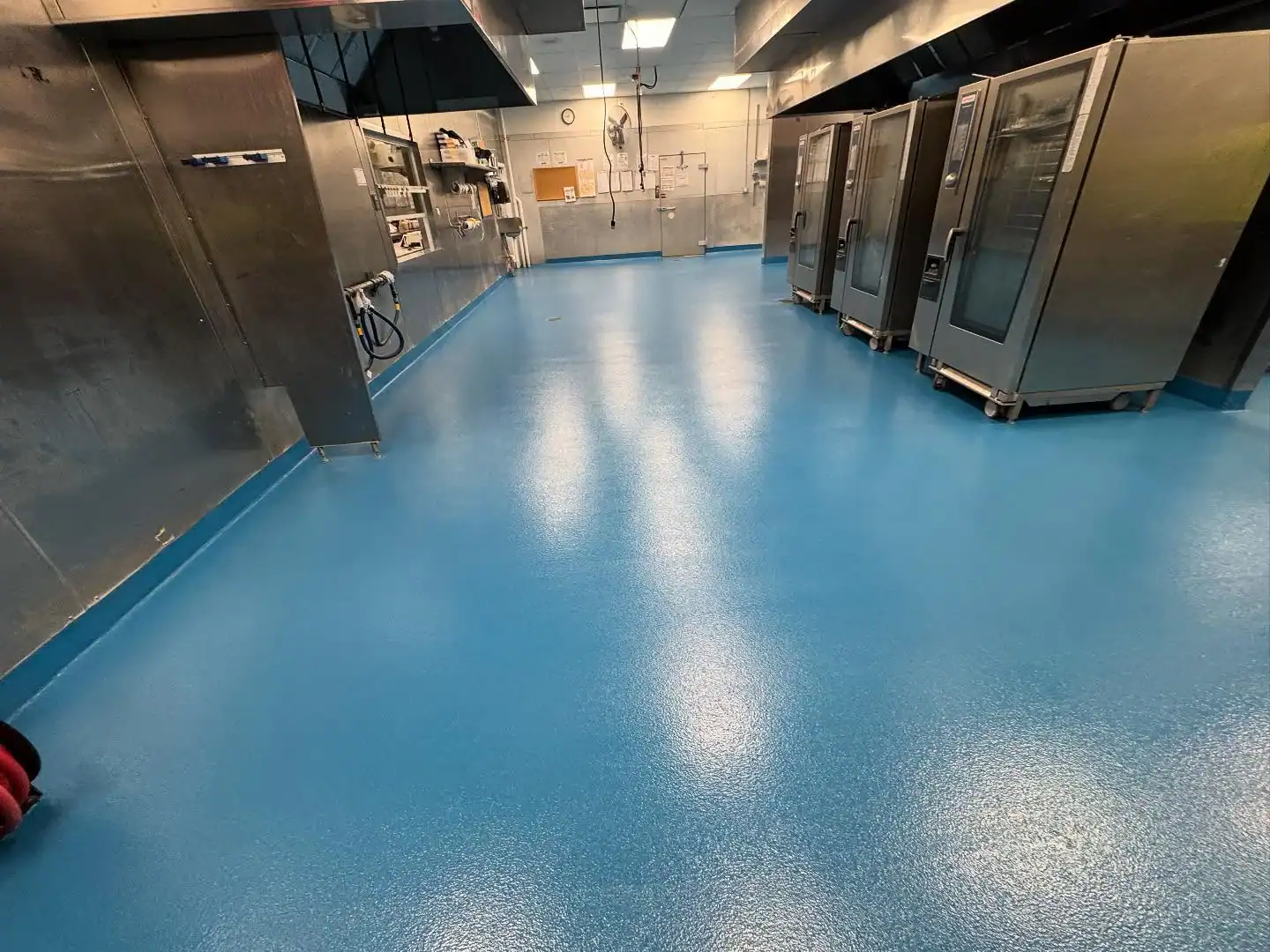
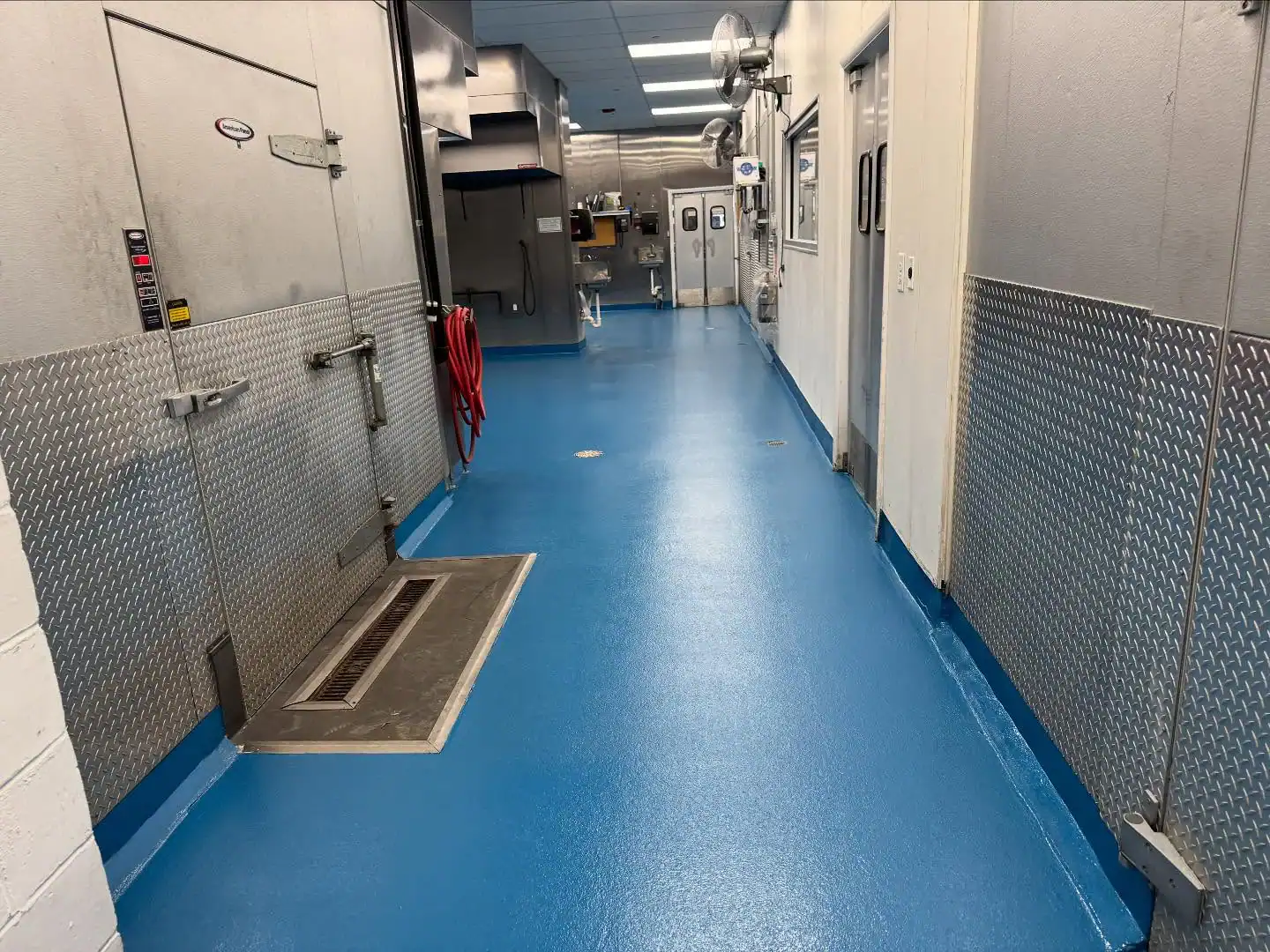
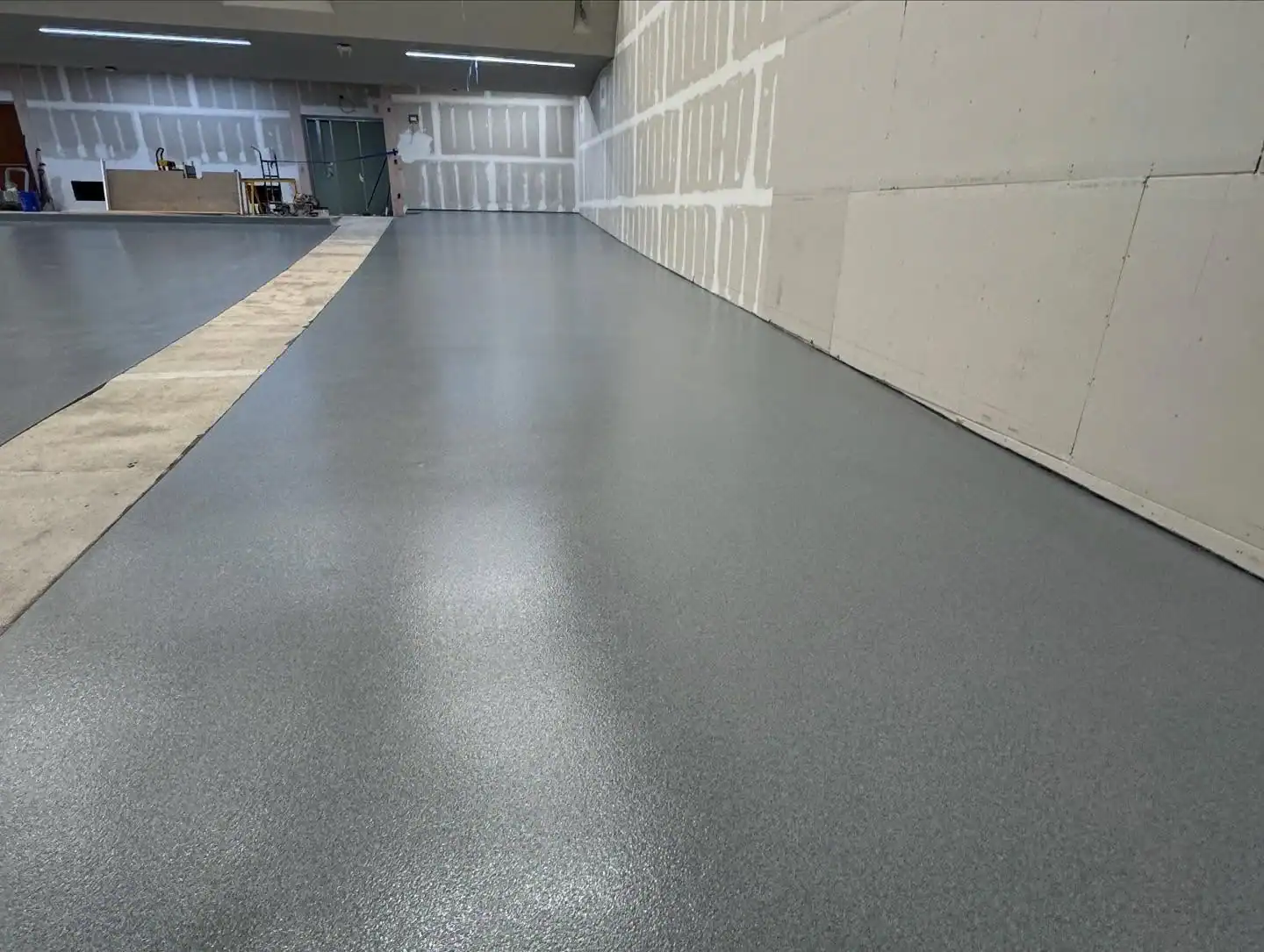
When the floor is done right, you get a seamless, non-porous surface that a Suffolk County health inspector can’t cite. No grout lines trapping grease. No cracks collecting bacteria. No seams where water gets underneath. You also get a floor that can handle steam cleaning, heavy foot traffic, and the temperature swings that come with running a real commercial kitchen. For operators in West Babylon who have already paid for a floor that didn’t last, that difference is worth paying attention to.
We’ve been installing commercial kitchen floors across Long Island for 35 years. That experience means we’ve worked on the same kinds of aging concrete that sits under restaurants, diners, and food service operations throughout West Babylon and the surrounding Suffolk County area, including everything along the Route 109 corridor and the commercial strips that run through town. We hold Sherwin-Williams High Performance Flooring ATP certification and Res Tech certification. Both are manufacturer-backed credentials that require demonstrated technical knowledge not a weekend course. Most contractors in this area hold neither.
We’re based in Bohemia, NY, about 20 miles east of West Babylon on the Southern State Parkway. We’re not driving in from out of state or sending a crew that’s never worked on a South Shore slab. We know what the water table looks like here, we know what Suffolk County health inspectors are looking for in West Babylon establishments, and we know the difference between a floor that was installed correctly and one that’s going to cost you again in two years.
The first thing we do on every commercial kitchen job in West Babylon is test the concrete for moisture vapor transmission. Given the high water table and the age of most slabs in this area, this step isn’t optional it determines which system we specify and how the surface needs to be prepared. If we find elevated moisture, we address it before a single coat goes down.
After testing, we grind the surface to the correct profile for adhesion. We fill cracks, repair damaged areas, and level anything that needs it. On older concrete which is most of what we see in West Babylon’s commercial buildings this prep work takes time, but it’s the foundation everything else depends on. Once the substrate is ready, we apply the system that fits the environment: urethane cement mortar for high-heat cooking zones that see steam cleaning and thermal shock, standard epoxy systems for prep lines and storage areas where conditions are less extreme.
Each coat gets the cure time it needs before the next one goes down. We schedule around your operating hours overnight, on weekends, or in phases because we understand that closing a kitchen for three days isn’t always an option. Most installations allow return to service within 24 to 36 hours.
Ready to get started?
Not every part of a commercial kitchen takes the same abuse, and the floor system should reflect that. The area directly around your cooking line fryers, ranges, steam tables needs a system that can handle thermal shock and boiling spills without cracking. That’s urethane cement mortar territory. Your prep line, walk-in cooler threshold, and dishwashing area have different demands. Applying one product across the entire floor regardless of zone is one of the most common mistakes we see, and it’s a big reason floors fail prematurely.
Every installation we do in West Babylon includes a coved base at floor-to-wall junctions that’s the curved transition that eliminates the crevice where the floor meets the wall. Suffolk County health inspectors look for this specifically. We also ensure proper slope to floor drains and apply a slip-resistant topcoat finish that meets OSHA and ANSI standards for wet commercial kitchen environments. These aren’t add-ons. They’re part of what makes a floor code-compliant and inspectable.
If your current floor has open grout lines, visible cracking, or areas where the coating has already lifted, those aren’t just cosmetic issues under the New York State Sanitary Code and Suffolk County SCDHS enforcement. They’re citable violations. We install food-grade, seamless epoxy systems built specifically to meet those standards so when an inspector walks through your West Babylon kitchen, the floor isn’t what they’re writing down.
The most common reason is moisture vapor coming up through the concrete slab. West Babylon sits on the South Shore of Long Island, where the water table is genuinely high and coastal humidity off the Great South Bay keeps ground moisture elevated for much of the year. Most of the commercial buildings along Montauk Highway and the Sunrise Highway corridor were built in the 1950s and 60s before vapor barriers were standard practice. That means decades of moisture movement through concrete that was never designed to stop it.
When a contractor applies epoxy over a slab with elevated moisture vapor transmission without testing first, the coating can’t bond properly. It looks fine initially, but the bond fails from underneath. You get bubbling, peeling, and delamination sometimes within a single season. The fix isn’t a different product. It’s a different process: test the slab first, address moisture if it’s present, then specify the right system for what the concrete is actually doing. That’s what we do on every job before we touch anything.
The Suffolk County Department of Health Services enforces the New York State Sanitary Code for food service establishments, which follows FDA Food Code standards for floors. What inspectors are looking for is a floor that’s smooth, non-porous, non-absorbent, and free of cracks, chips, and open joints. They also check for a coved base at floor-to-wall junctions that curved transition that eliminates the gap where the floor meets the wall and proper slope to floor drains to prevent standing water.
Seamless epoxy and urethane cement systems are the standard solution because they eliminate every grout line, seam, and joint that tile floors create. There’s nothing for grease, food particles, or bacteria to accumulate in. A properly installed seamless system with a slip-resistant topcoat and coved base is exactly what a Suffolk County health inspector expects to see in a compliant commercial kitchen in West Babylon. If your current floor has quarry tile with open grout lines or visible cracking, those are citable conditions and citations come with required correction timelines.
A properly installed system correct surface prep, appropriate product for the environment, full cure time between coats should last 15 to 20 years in a commercial kitchen under normal use. The key phrase there is “properly installed.” Floors that were rushed, applied over unprepared concrete, or specified with the wrong product for the zone often fail within two to three years.
In West Babylon specifically, the longevity equation includes what’s happening in the slab itself. If moisture vapor transmission isn’t addressed before installation, even a high-quality product will underperform. We’ve seen floors on South Shore slabs fail in under a year because the contractor skipped moisture testing. When the process is done correctly from the start testing, grinding, crack repair, proper system selection, full cure the floor holds up through steam cleaning, heavy traffic, and the temperature cycling that commercial kitchens generate daily.
Yes, and for most West Babylon operators running six or seven days a week, that flexibility matters a lot. We schedule around your kitchen’s operating hours overnight shifts, weekend installations, or phased work that keeps part of your kitchen running while we work on another section. Modern polyaspartic topcoat systems allow return to light foot traffic within hours and full commercial service within 24 to 36 hours of final coat application.
The honest answer is that the timeline depends on the size of the space, the condition of the existing concrete, and how much substrate repair is needed. Older slabs which is most of what we see in West Babylon’s commercial buildings sometimes need more prep work than a newer floor would. We’ll give you a realistic schedule before we start, not an optimistic one that falls apart once we’re on site. The goal is to get your kitchen back in service as fast as the process allows without cutting corners on cure time, because rushing that is exactly how floors fail.
It depends on where in the kitchen you’re talking about. Urethane cement mortar is the right choice for high-heat zones directly around cooking equipment, fryers, steam tables, and anywhere your floor sees steam cleaning or sudden temperature changes. It’s engineered specifically to handle thermal shock, which standard epoxy is not. If you apply standard epoxy in a zone that regularly gets hit with boiling liquid or a steam cleaner, cracking and delamination are predictable outcomes.
For lower-heat areas prep lines, walk-in cooler thresholds, storage rooms, front-of-house a properly specified epoxy system performs well and is typically more cost-effective. The mistake is applying one product across the entire floor without accounting for what each zone actually experiences. We assess the layout of your kitchen and specify the appropriate system for each area. That’s not a premium upsell it’s just the correct way to do the job, and it’s why the floors we install in West Babylon commercial kitchens hold up when others don’t.
Most commercial kitchen floor installations in the West Babylon area run between $7 and $15 per square foot, depending on the size of the space, the condition of the existing concrete, the system specified, and how much substrate repair is needed. A straightforward epoxy installation over sound concrete on the lower end of that range looks very different from a full urethane cement mortar system over an older South Shore slab that needs significant crack repair and moisture mitigation before anything gets applied.
The more useful number to think about is cost over time. A floor installed correctly for $12 per square foot that lasts 15 years costs less annually than a $7 per square foot floor that needs to be replaced in three. For West Babylon operators who have already been through one failed installation paid for the floor, paid for the downtime, and then watched it peel the total cost of ownership argument isn’t abstract. We give you a transparent quote based on what your specific floor actually needs, not a low number designed to win the job and expand later.