
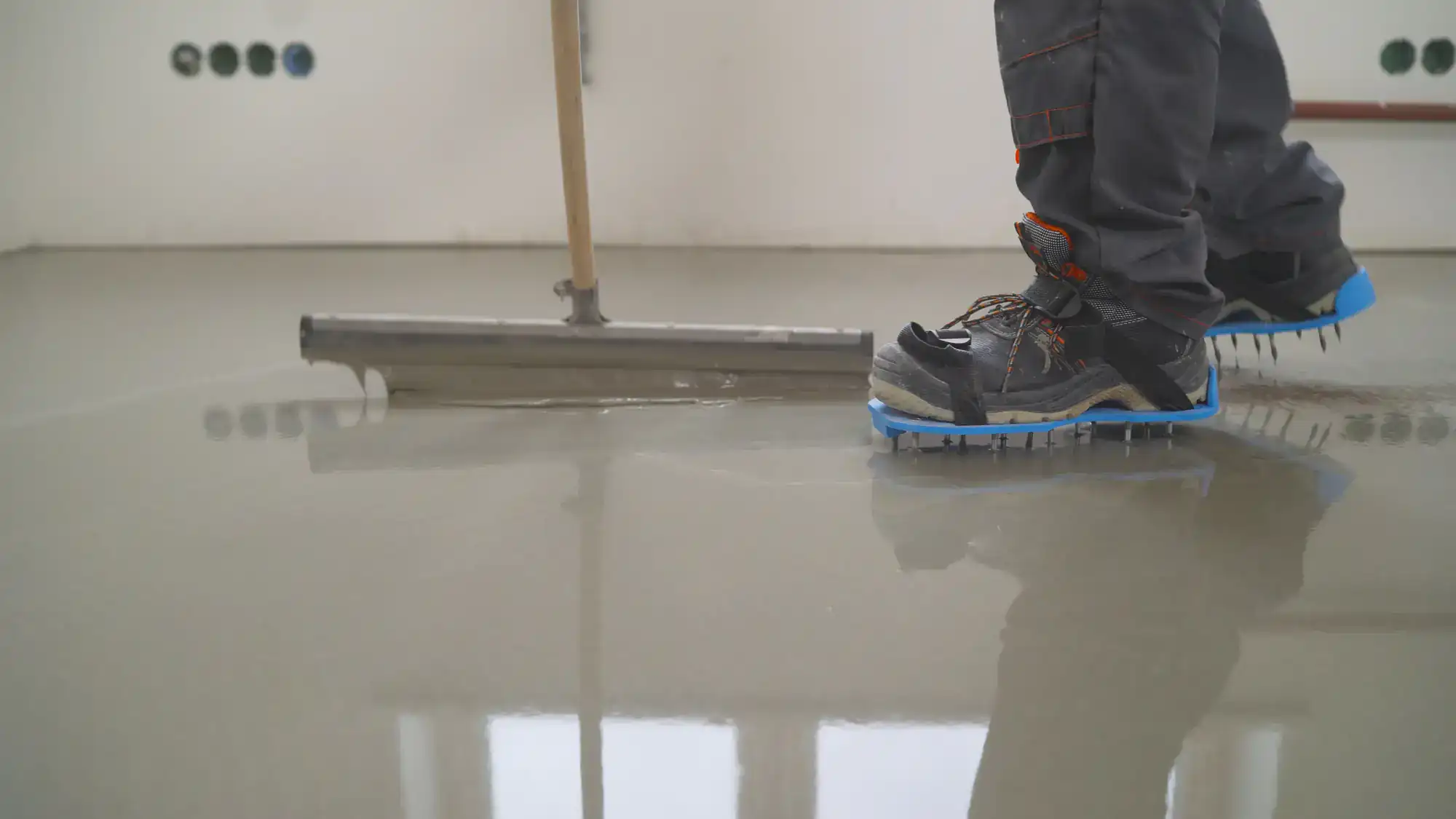
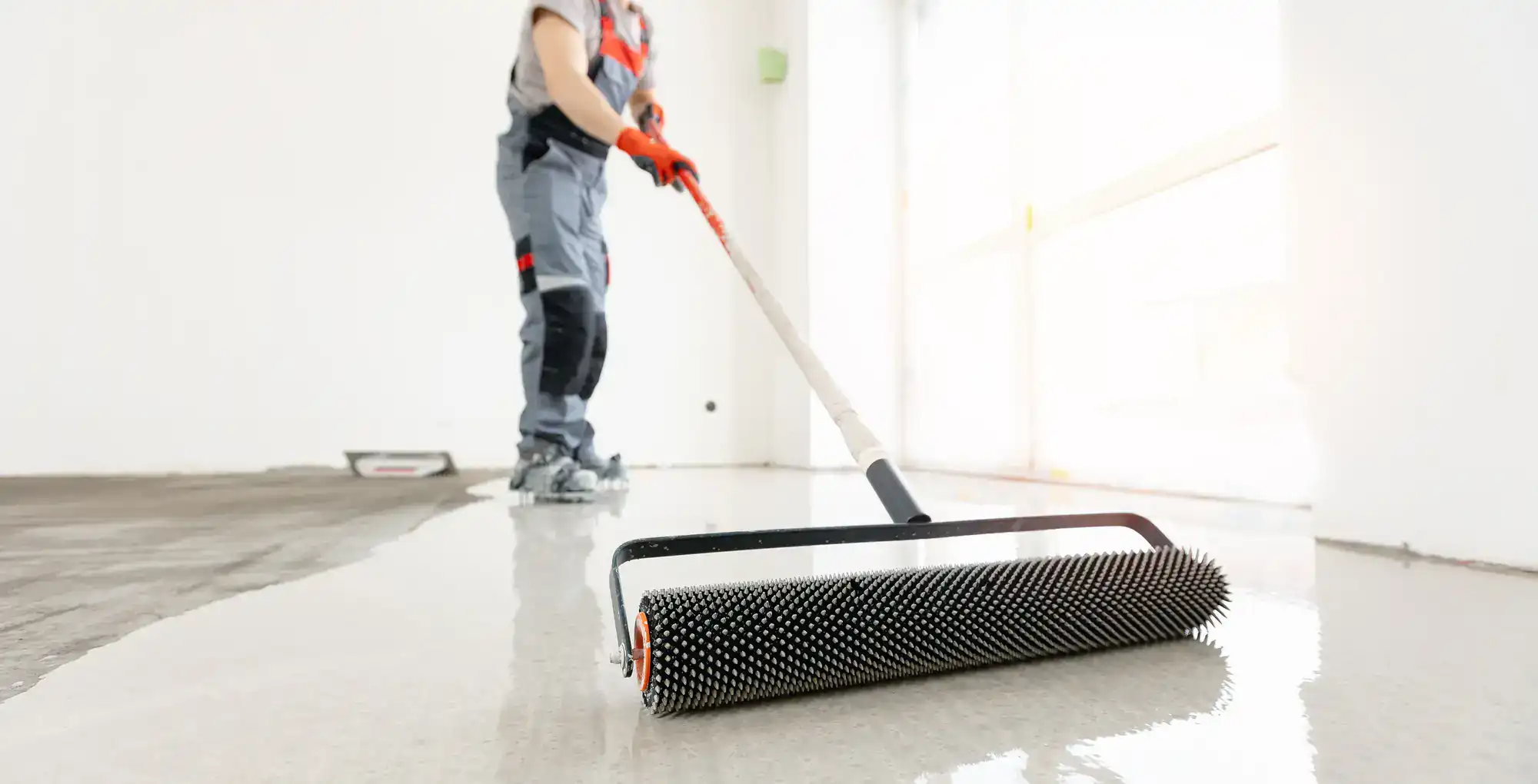
If you’ve pulled up old carpet or tile in a West Babylon home and found a slab that dips, cracks, or shifts, you already know the problem isn’t cosmetic. The floor beneath your floor is what determines whether your new vinyl plank, large-format tile, or commercial surface holds up or starts failing within a year or two. Self leveling concrete fills those low spots, corrects uneven surfaces, and gives the next floor covering something solid and flat to bond to.
What makes this different in West Babylon specifically is the ground underneath you. The South Shore sits on a mix of clay and sand, and that clay traps moisture against concrete slabs year-round. Homes built during the post-war suburban boom the 1950s and ’60s construction that makes up most of this hamlet weren’t poured with the flatness tolerances that today’s flooring products demand. Decades of minor moisture movement leave their mark. By the time you’re ready to renovate, the slab has shifted, and no amount of adhesive or underlayment foam is going to compensate for that.
When the self leveling process is done correctly with moisture testing first, proper surface prep, and the right product for the depth of correction needed you get a floor that performs. No cracking at the seams. No hollow spots under tile. No curling edges on vinyl plank. Just a flat, stable surface that does its job quietly for years.
We’ve been doing this work since 1996 and the crew that shows up to your job has been doing it alongside us for most of that time. Most of our installers have been with Advanced Epoxy Flooring for over a decade. That matters because self leveling concrete isn’t a product that fixes itself. The person mixing it, timing it, and reading the slab makes the difference between a floor that lasts and one that fails.
We operate out of Bohemia, right here in Suffolk County. We know what South Shore slabs look like. We’ve worked on homes throughout the Town of Babylon, and we understand that the ground conditions near the Great South Bay create moisture challenges that contractors from outside this area often miss entirely. We don’t subcontract the work. We don’t hand it off. The same team that assesses your floor is the team that pours it and the same team you can call if anything ever comes up after.
Our A+ BBB rating and OSHA 40-certified crew aren’t talking points. They’re the baseline we hold ourselves to on every job, whether it’s a ranch on Little East Neck Road or a warehouse off Route 109.
The first thing we do is test for moisture every time, without exception. In West Babylon, this step isn’t optional. The area’s proximity to the Great South Bay, combined with the clay-layer soil common throughout the South Shore, means slabs here carry a real moisture risk. We use ASTM F2170 relative humidity testing and MVER evaluation to get a clear picture of what’s happening beneath the surface. If moisture is elevated, we address it before anything else goes down. Skipping this step is how pours delaminate.
Once the slab is cleared, we move into surface preparation. That means grinding, cleaning, and repairing any cracks or damaged areas in the existing concrete. The self leveling material won’t perform over a surface that isn’t properly prepped it needs a clean, sound substrate to flow into and bond with. We handle all of this in-house. No separate prep crew, no scheduling gap between prep and pour.
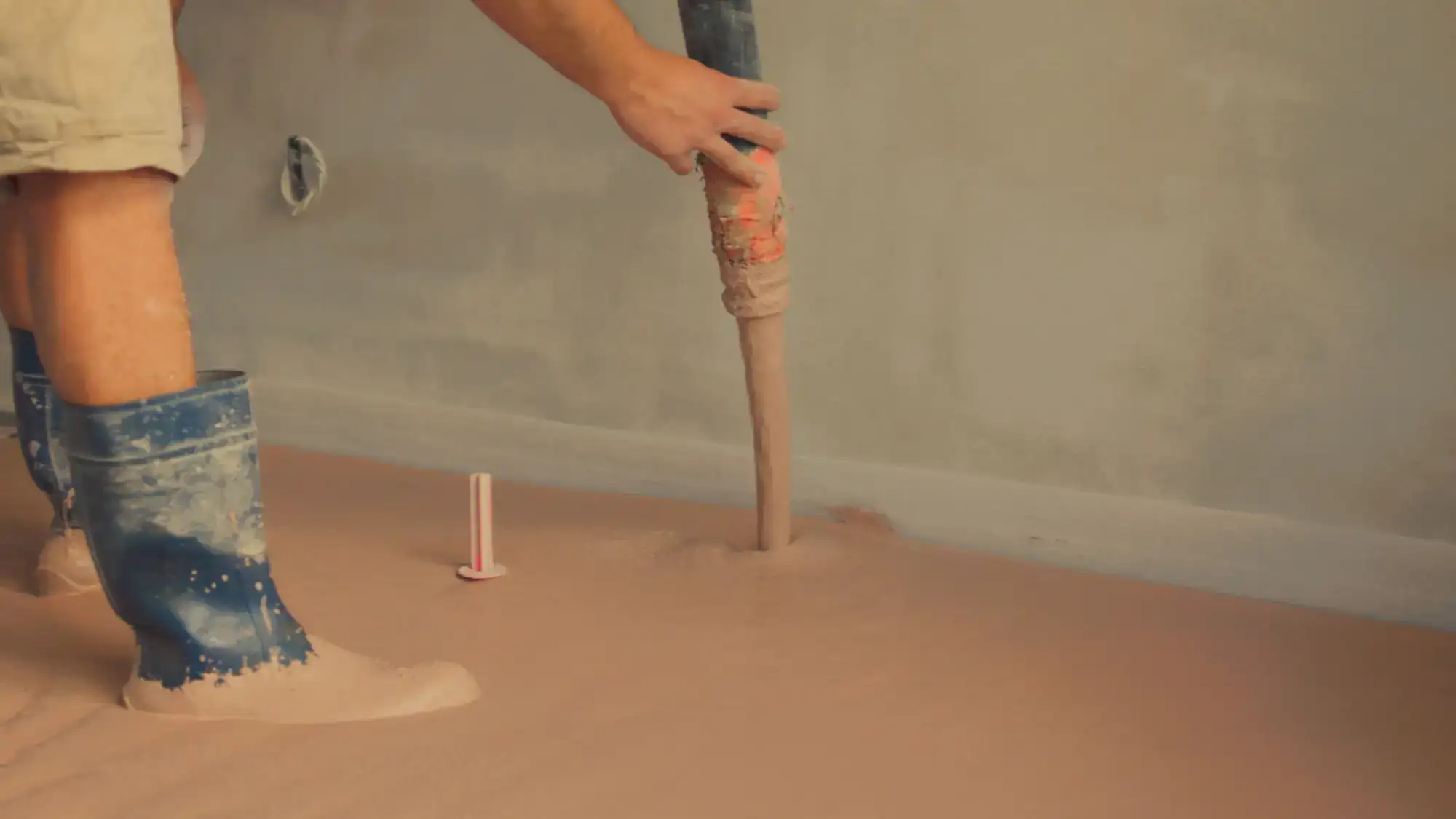
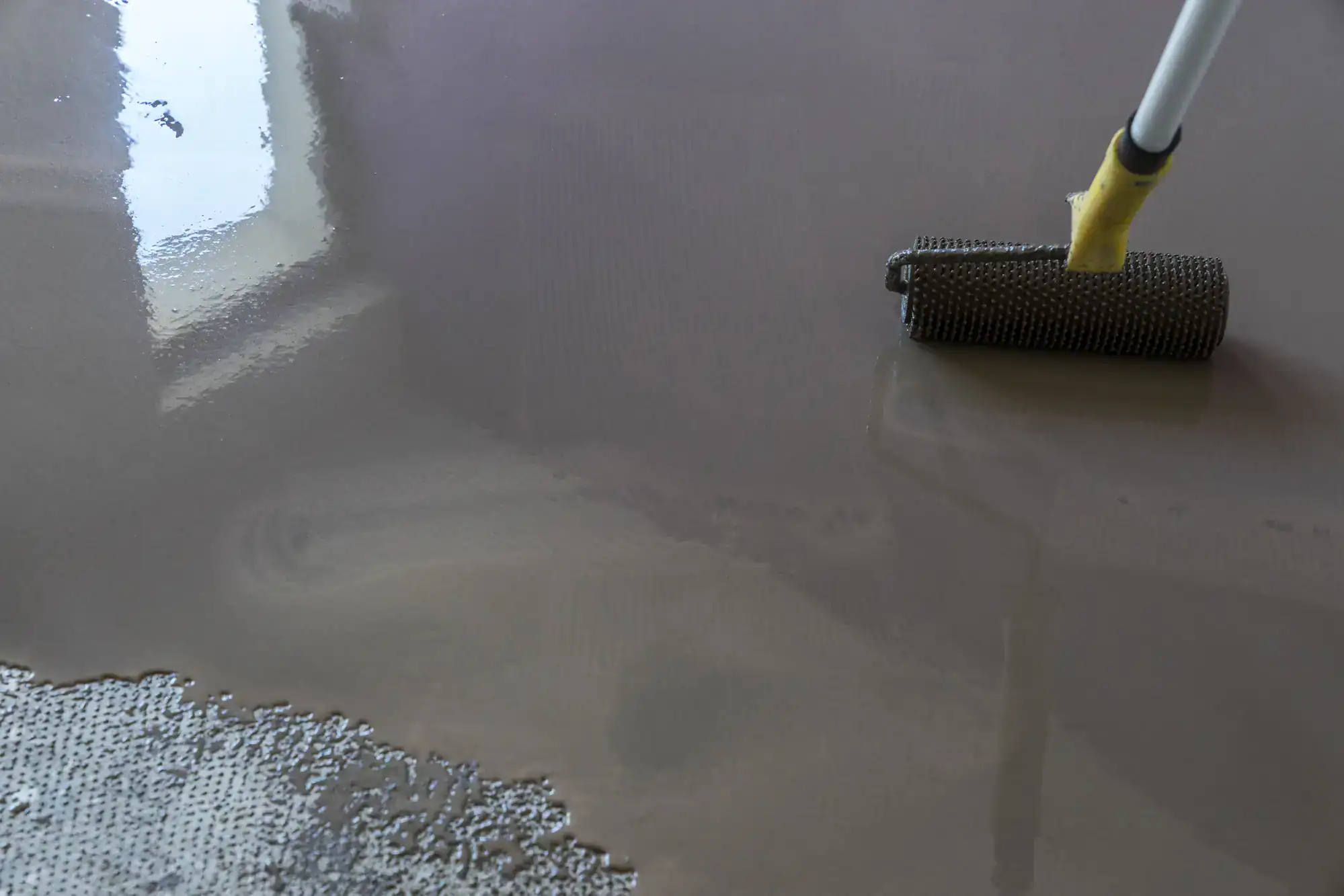
Then we pour. Our cementitious self leveling underlayment installs from a quarter inch up to two inches neat, and up to five inches with aggregate so whether you have a minor low spot or a significantly settled section of slab, we have the right system for the depth of correction you actually need. Foot traffic is typically possible within four to six hours. Commercial loads within twenty-four to forty-eight. Interior flooring work in West Babylon generally doesn’t require a Town of Babylon building permit, but if your project involves any structural element, we’ll tell you upfront what’s needed before work begins.
Ready to get started?
The self leveling underlayment system we use is a high-strength, polymer-modified cementitious material not a bag-mix from a big box store, and not a feather-edge skim coat applied over a problem that runs deeper. It’s a commercial-grade system with the compressive strength and flow characteristics to correct real floor issues, on grade, above grade, or below grade. That flexibility matters in West Babylon, where you might be leveling a basement slab in a 1960s ranch, a retail floor on Sunrise Highway, or a warehouse section off Route 109.
For residential projects, the most common scenario we see in this area is homeowners replacing old carpet or vinyl and discovering the slab beneath is out of level sometimes by a quarter inch, sometimes significantly more. Large-format porcelain tile and luxury vinyl plank are completely unforgiving of substrate variation. If the floor isn’t flat, those products will crack, curl, or hollow out. The self leveling process solves that before the new floor goes down, not after it fails.
For commercial clients, we bring the same OSHA 40-certified crew and the same in-house process with the added capacity to work within your schedule. West Babylon businesses along the Sunrise Highway and Route 109 corridors can’t shut down for a week. Fast-curing commercial floor leveling solutions mean you’re back in operation quickly, without cutting corners on the pour itself.
Most of West Babylon’s housing stock was built during the post-war suburban boom the late 1940s through the 1960s and those slabs weren’t poured to the flatness tolerances that modern flooring products require. Over fifty to seventy years, minor moisture movement, soil settlement, and the natural behavior of concrete under load all contribute to a slab that shifts, dips, or develops low spots. The South Shore’s clay-layer soil is particularly relevant here. Clay traps moisture against the underside of a slab and expands and contracts seasonally, which causes gradual, uneven movement over time.
This isn’t a sign that something went catastrophically wrong. It’s what happens to concrete in this environment over decades. The good news is that self leveling concrete is specifically designed to correct this kind of differential settlement filling the low areas, creating a flat plane, and giving your new floor covering the stable substrate it needs to perform. The key is making sure moisture is properly tested and managed before anything is poured, which is especially important given West Babylon’s proximity to the Great South Bay and its documented high water table conditions.
Self leveling underlayment and concrete repair often go together they’re not always an either/or decision. If your slab has low spots, uneven areas, or a surface that isn’t flat enough for your new floor covering, self leveling is the right tool. If there are active cracks, damaged sections, or areas where the concrete has deteriorated structurally, those need to be addressed first before any leveling material goes down. Pouring self leveling over a compromised substrate doesn’t fix the underlying issue it just covers it temporarily.
The way we approach it is straightforward: we assess the slab, identify what’s a surface-level correction issue and what’s a structural or moisture issue, and give you a clear picture of what’s actually needed. In many West Babylon homes, the answer is both some targeted concrete repair followed by self leveling underlayment across the area being prepped for new flooring. We handle both in-house, so there’s no gap between the repair phase and the leveling phase, and no finger-pointing between separate crews if something doesn’t go right.
It can but moisture has to be properly evaluated and addressed before anything is poured. This is one of the most important questions to get right, especially in West Babylon. The area’s high water table and South Shore clay-soil conditions mean that basement slabs here are frequently dealing with elevated moisture vapor emissions, even when the floor looks and feels dry on the surface. A slab can appear completely fine and still have relative humidity levels that will cause a self leveling pour to delaminate or a floor covering to fail within months.
We test every slab using ASTM F2170 relative humidity testing before we pour. If moisture is elevated, we determine the appropriate course of action whether that’s a moisture mitigation treatment, a vapor barrier system, or a product selection that accounts for the moisture conditions present. Skipping this step is exactly how self leveling failures happen, and it’s one of the most common mistakes made by contractors who treat every slab the same regardless of where it’s located or what the ground beneath it is doing.
For most residential applications, foot traffic is safe within four to six hours of the pour. That’s enough time to walk across the surface without damaging it. However, installing flooring especially tile, which requires a fully cured substrate typically requires waiting twenty-four hours or more, depending on the product used, the depth of the pour, and the ambient conditions in the space. Thicker pours take longer to cure fully, and cooler temperatures slow the process down.
In West Babylon, this is worth thinking about seasonally. During the colder months November through March unheated spaces like garages, basements, or commercial buildings that aren’t climate-controlled can slow cure times significantly. Cold concrete and cold ambient air both affect how the material flows and how quickly it reaches full strength. We account for this during scheduling and, when needed, take steps to manage temperature conditions during and after the pour. We’ll always give you a realistic timeline based on your specific project and the conditions present not a generic number pulled off a product data sheet.
The bags you find at home improvement stores are typically designed for small repairs and minor corrections a quarter inch or less, in limited areas, applied by hand. They’re workable for a very specific, small-scale scenario. For anything beyond that, the limitations become apparent quickly. Consumer-grade self leveling compounds often have shorter working times, lower compressive strengths, and less forgiving mix ratios than commercial-grade systems. If you over-water the mix which is easy to do without experience the material weakens significantly and becomes prone to cracking and surface dusting.
Commercial self leveling underlayment systems, like what we use, are polymer-modified cementitious products with higher compressive strengths, longer working times, and better flow characteristics. They’re designed to be applied over larger areas, at greater depths, and in conditions that require real performance not just a cosmetic fix. For a West Babylon homeowner prepping a slab for large-format tile or luxury vinyl plank, or a commercial operator on Route 109 correcting a warehouse floor, the difference between a consumer bag-mix and a professional-grade system is the difference between a floor that holds and one that you’re redoing in two years.
For most self leveling projects surface preparation and floor leveling as part of a residential or commercial renovation a building permit from the Town of Babylon is not required. Interior flooring work that doesn’t alter the structure, footprint, or load-bearing elements of the building generally falls outside the permit requirement. That covers the vast majority of self leveling jobs: correcting a slab before new tile or vinyl plank installation, leveling a basement floor, or prepping a commercial space for a new floor covering.
Where it gets more nuanced is if your project involves structural concrete work, changes to the subfloor system, or anything that touches the building’s structural elements. In those cases, the Town of Babylon Building Department does require a permit, and work done without one can create problems when you go to sell or refinance the property. Because we assess every project before we pour, we can tell you clearly whether your specific job falls into permit territory or not and we’ll give you that answer upfront, before any work begins, so there are no surprises on either end.