
You’re not dealing with light foot traffic. Your floors see constant forklift movement, pallet jacks dragging across joints, and the kind of weight that turns untreated concrete into dust and cracks within months.
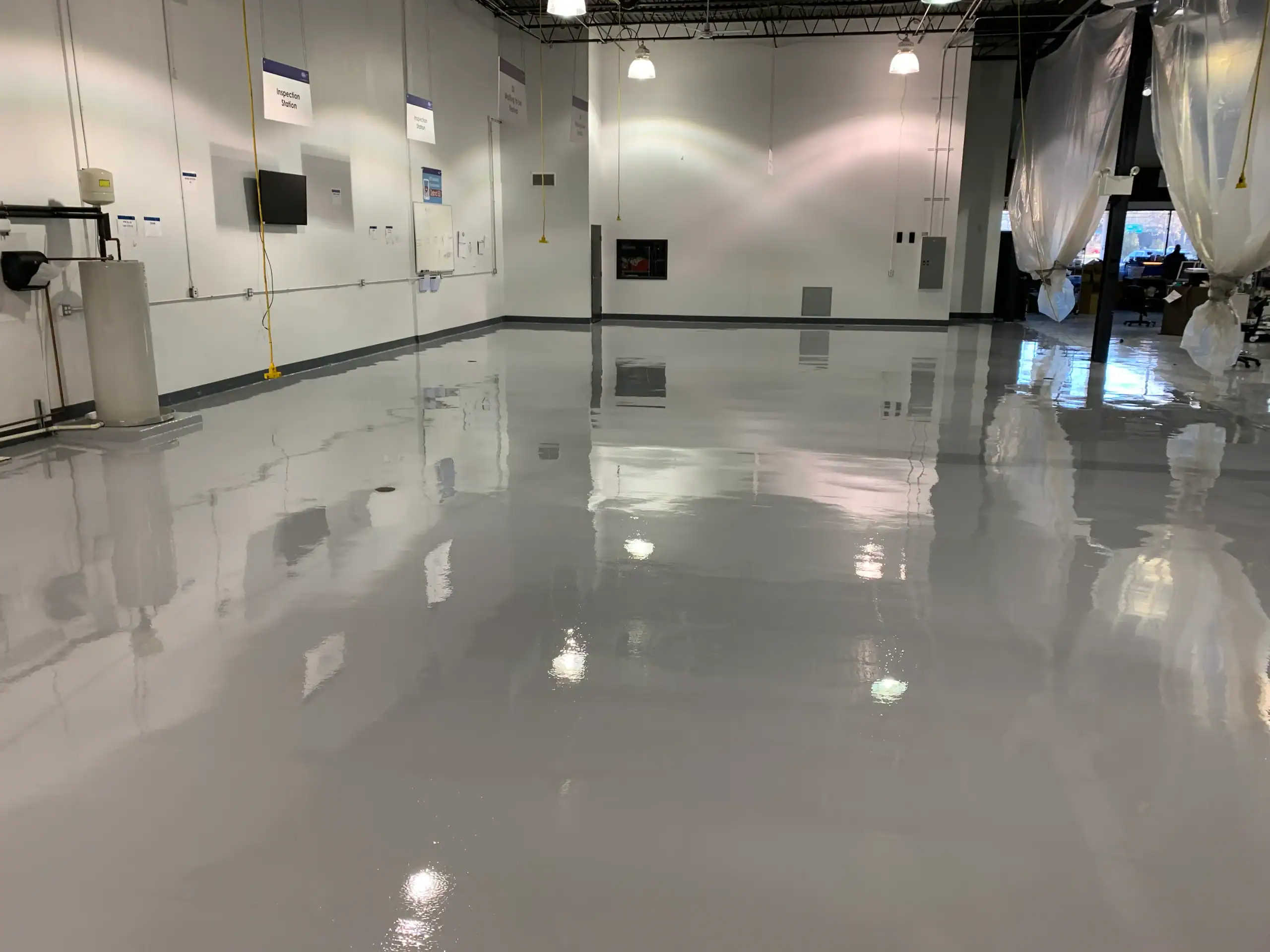
When you install a forklift traffic resistant coating in West Babylon, NY, you’re looking at a monolithic surface that doesn’t crack under pressure. The seamless finish means no joints to break down, no edges to chip, and no concrete dust settling on your inventory or clogging your equipment.
Your maintenance costs drop because the floor doesn’t need constant patching. Your safety incidents decrease because there are no uneven surfaces or trip hazards. And when you need to clean up spills—whether it’s oil, chemicals, or anything else your operation handles—the surface wipes clean instead of absorbing stains into porous concrete.
We’ve been installing industrial floors since before epoxy was the standard in warehouse operations. Our president has over 40 years of hands-on experience, and most of our installation team has been with us for more than a decade.
We’ve worked across Long Island’s industrial corridor, including multiple facilities in West Babylon and surrounding Suffolk County areas. We know the soil conditions here, the moisture issues that affect concrete in this region, and exactly what it takes to prep a floor that will bond correctly and perform under your specific load requirements.
Every installer on your job is OSHA 40 certified. We handle the moisture testing, concrete prep, any repair work, and the complete installation of your high-traffic concrete sealer in West Babylon, NY from start to finish.
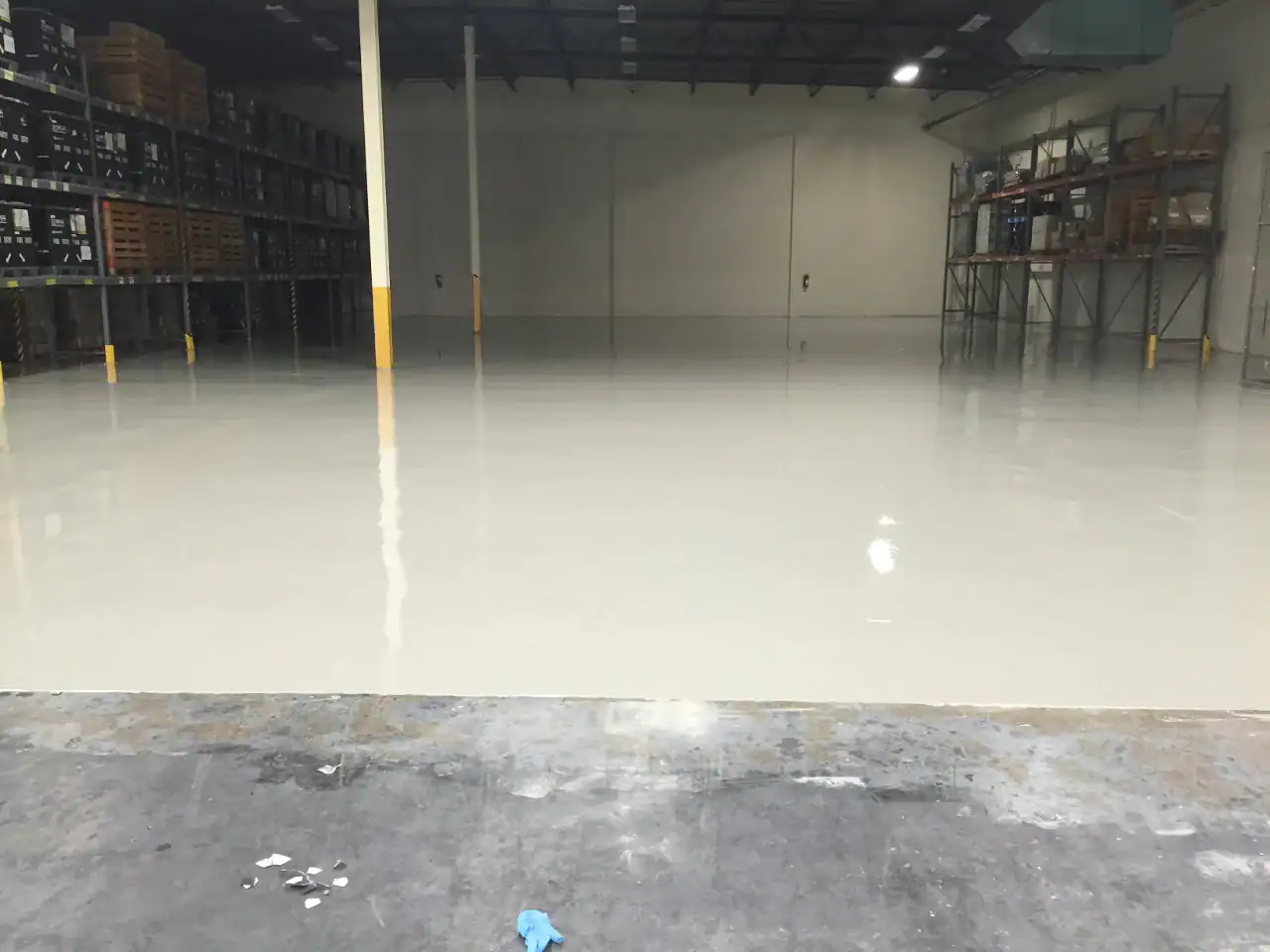
We start with moisture testing because even new concrete can have vapor issues that will cause coatings to fail. If your slab isn’t ready, we address it before any coating goes down.
Next comes surface preparation—usually diamond grinding for warehouses in West Babylon, NY. This opens the concrete pores for proper adhesion and removes any existing coatings, oils, or contaminants. If there are cracks or spalled areas, we repair them with structural fillers that match the strength of your existing slab.
Then we apply the epoxy system in layers. The primer coat penetrates deep into the concrete. The body coats build thickness and impact resistance. If you need line striping for traffic lanes, pallet zones, or safety areas, we integrate that into the system. The topcoat seals everything with a finish that resists abrasion from metal wheels and chemical exposure from whatever your operation handles.
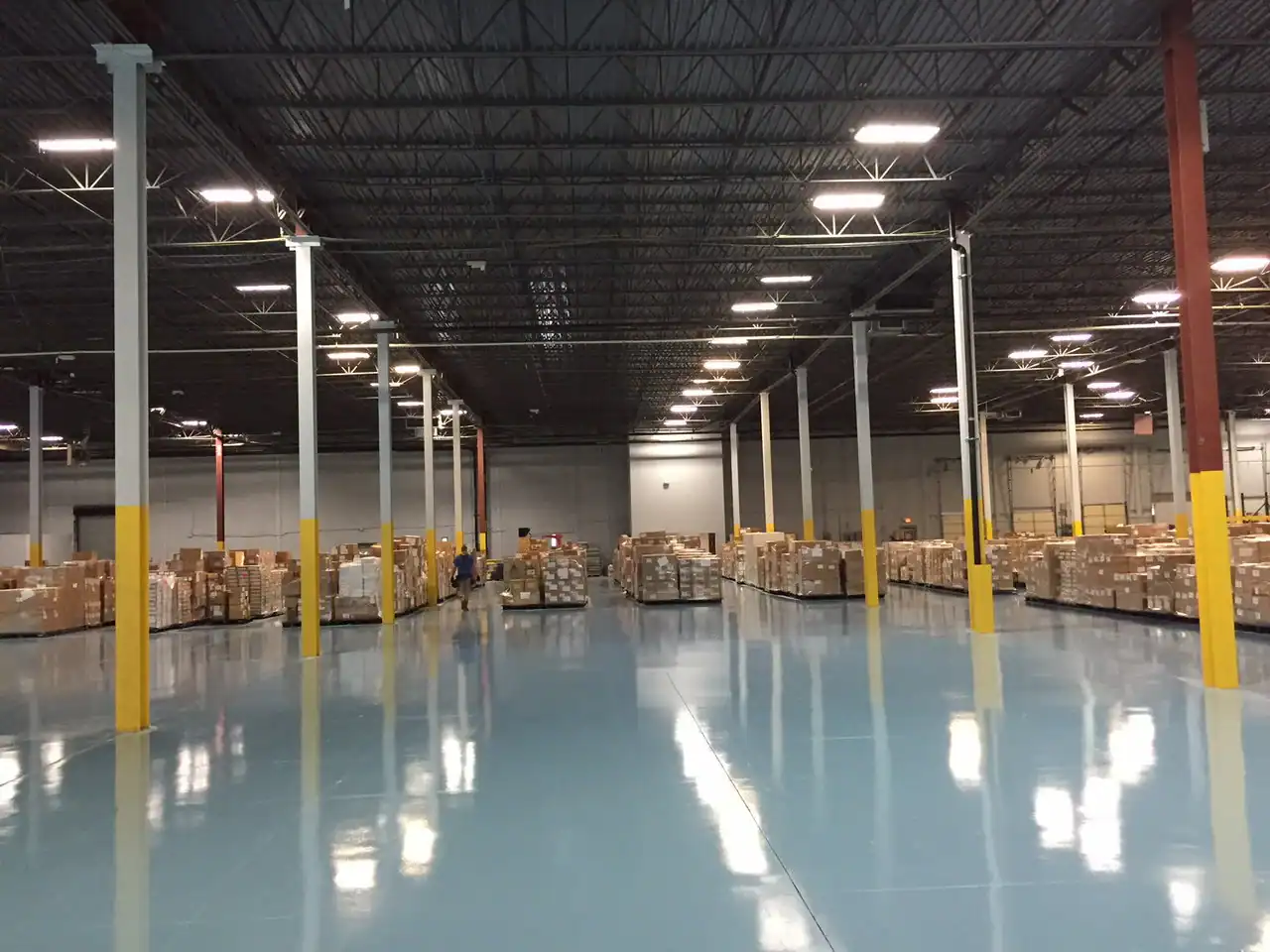
The entire process is scheduled around your operations to minimize downtime. Most large scale warehouse flooring in West Babylon, NY can be installed in sections so you’re never completely shut down.
Ready to get started?
You’re getting a full system designed for your specific traffic patterns and load requirements. That includes all moisture testing, complete surface preparation with diamond grinding, crack and joint repairs, and a multi-layer epoxy system with the abrasion rating your operation needs.
West Babylon’s industrial facilities range from distribution centers near the Southern State Parkway to manufacturing operations in the Route 109 corridor. Each facility has different requirements based on what you’re moving, how often, and what kind of equipment you’re running. We spec the system based on your actual conditions, not a one-size-fits-all approach.
If you need custom line striping, color-coded zones, or specific safety markings, that’s built into the installation. The floor can be re-topcoated down the road without tearing anything out, which means you can refresh the surface for a fraction of the original cost when you eventually need it.
The industrial warehouse floor epoxy in West Babylon, NY that we install comes with chemical resistance for cleaning solvents, oils, and whatever else hits your floor during normal operations. It’s slip-resistant even when wet, and the seamless surface means you’re not dealing with debris catching in cracks or joints.
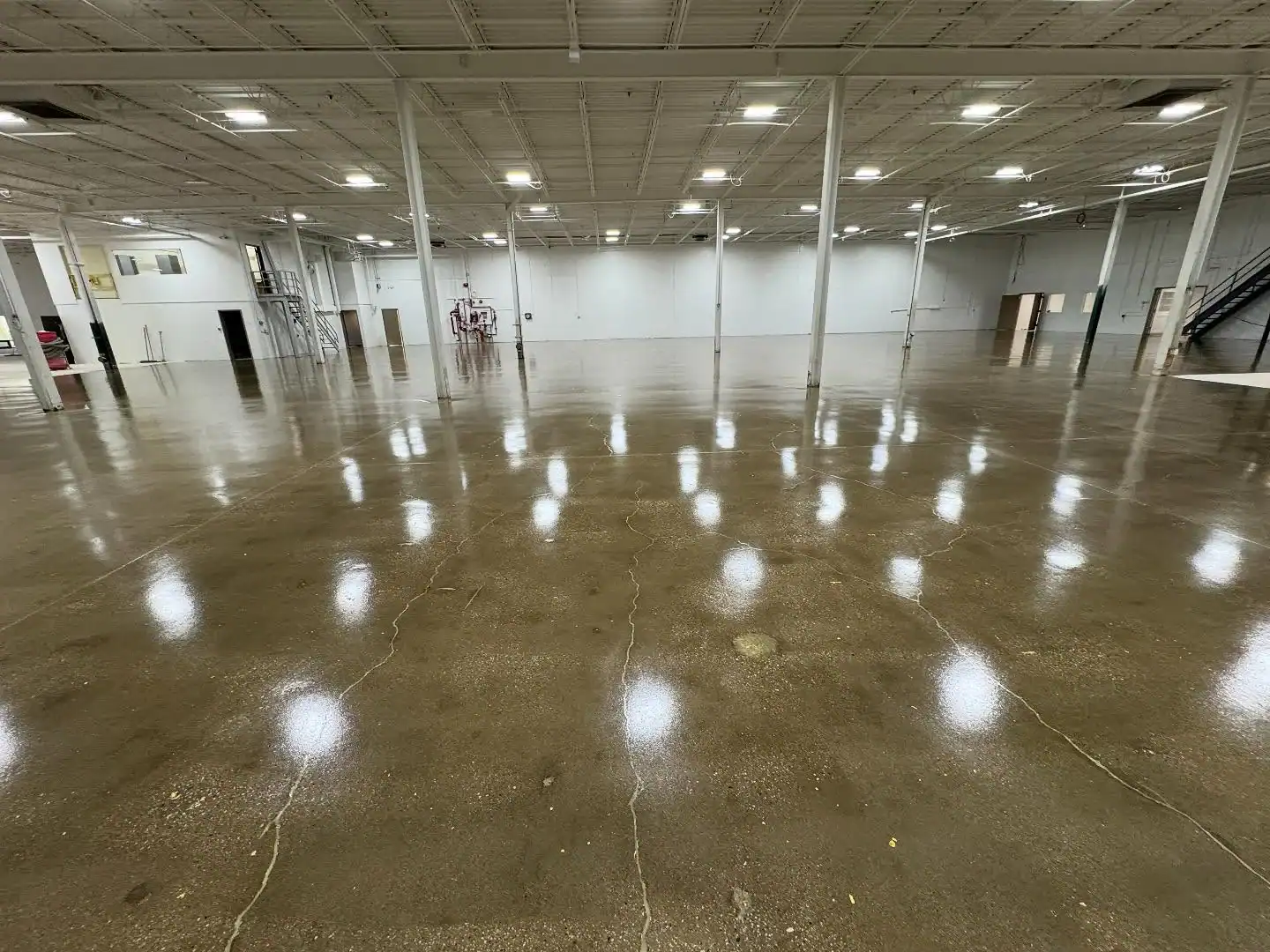
If it’s installed correctly with proper prep and the right system for your load requirements, you’re looking at 10 to 15 years or more before you need anything beyond a topcoat refresh. The key is in the preparation and the abrasion rating of the coating itself.
Cheap floor paints or DIY epoxy kits will fail in months under the kind of traffic you’re running. A properly specified industrial system with the right mil thickness and a hard topcoat will handle years of forklifts, pallet jacks, and heavy wheeled carts without breaking down. The floors we installed in Long Island warehouses 15 years ago are still performing because they were done right from the start.
When you do eventually need maintenance, you’re not ripping anything out. We can clean, lightly prep, and recoat the surface to bring it back to new condition. That’s the advantage of a quality system—it’s repairable without starting over.
Yes, and that’s how most large facilities handle it. We map out your floor into sections based on your traffic patterns and operational needs, then install one area at a time so you can keep running.
Epoxy cures fast enough that you can have light traffic back on it within 24 hours and full traffic within 48 to 72 hours depending on the system. That means we can do one section over a weekend or during your slower shifts, let it cure, then move to the next section the following week.
The sections blend together seamlessly, so you don’t end up with visible lines or weak points where one area meets another. We’ve done this in active distribution centers where stopping operations wasn’t an option. It takes a bit more planning and coordination, but it keeps your business moving while you get a floor that will actually last.
We fix it before any coating goes down. Epoxy won’t hide structural problems—it will just fail faster if the concrete underneath isn’t sound.
For hairline cracks, we route them out and fill them with flexible crack fillers that move with the slab. For larger cracks or spalled areas where chunks of concrete have broken away, we use structural repair mortars that match the compressive strength of your existing floor. If you have joint damage from forklift traffic, we rebuild those edges so they can handle the load again.
Once the repairs cure, we grind the entire surface to create a uniform profile for the epoxy to bond to. This also removes any weak surface concrete that would cause adhesion problems later. The goal is to give the epoxy coating a solid foundation so it performs the way it’s supposed to for the next decade or more.
Industrial-grade epoxy systems are built to resist the chemicals you’re actually using in your operation. That includes oils, solvents, acids, and the heavy-duty cleaners you need for warehouse maintenance.
The coating creates a non-porous barrier that doesn’t absorb liquids the way bare concrete does. When something spills, it sits on the surface instead of soaking in and causing stains or deterioration. You wipe it up and move on. Even if a spill sits for a while, the epoxy won’t break down or discolor the way concrete or cheaper coatings will.
That chemical resistance also means your floor won’t degrade from repeated cleaning. You can use industrial scrubbers and strong cleaning solutions without worrying about wearing through the coating. The topcoat is specifically formulated to handle that kind of exposure, which is why these systems last so much longer than standard floor paints in warehouse environments.
Most concrete sealers are thin topical coatings that sit on the surface and wear off quickly under traffic. Epoxy is a thick, bonded system that becomes part of the floor structure and can handle serious abuse.
A typical sealer might be a few mils thick and needs reapplication every year or two. An industrial epoxy system is 20 to 60 mils thick depending on your requirements, and it’s chemically bonded to the concrete at a molecular level. That thickness gives you impact resistance, abrasion resistance, and the ability to handle point loads from forklifts and heavy equipment.
Sealers also don’t repair damage or create a seamless surface. They just coat whatever’s there, which means cracks and joints are still vulnerable. Epoxy systems fill and seal those problem areas, giving you a monolithic surface that distributes loads evenly and doesn’t have weak points where damage starts. If you’re running forklifts daily, a sealer won’t cut it. You need the thickness and bond strength that epoxy provides.
For a full warehouse floor, plan on 48 to 72 hours per section before you can run full operations on it. If we’re doing the entire floor at once, you’re looking at about a week from start to finish including prep and cure time.
The actual installation moves quickly—surface prep and coating application usually happen over two to three days. The cure time is what determines when you can load the floor. You can walk on it within 24 hours, but you want to wait for full cure before running loaded forklifts or stacking pallets.
If downtime is a major concern, we section the work so you’re only losing access to part of your floor at a time. We’ve installed floors in 24-hour distribution operations by working in zones during off-shifts and weekends. It takes longer overall, but it keeps your operation running. The key is planning it out ahead of time so everyone knows what to expect and when each area will be back in service.