
When a firehouse floor starts peeling or cracking, it’s not just an eyesore it’s a liability. Delamination bubbles catch boots. Peeled coating sticks to hot tires and pulls up in chunks when the truck backs out. For Medford’s 110 volunteer firefighters responding from home with apparatus that needs to be ready around the clock, there’s no good time for the bay to be out of commission.
The floors we install are polyaspartic systems not standard epoxy. That distinction matters more here than people realize. Central Suffolk County sees real temperature swings, especially in winter when a bay door opens at 2 a.m. and cold air floods a warm space. Standard epoxy is rigid. It cracks under that thermal cycling. Polyaspartic is four times more flexible, which means it moves with the slab instead of fighting it.
Every apparatus that rolls back in from a call on Route 112 or Horseblock Road in January brings road salt, brine, and deicing chemicals into the bay. A sealed, seamless polyaspartic surface stops that contamination from soaking into the concrete. It wipes clean. It doesn’t absorb. That’s what protects your slab long-term and what makes the floor easier to decontaminate after every response.
We’ve been installing commercial and industrial resinous floor systems for over 30 years, based out of Bohemia just down Route 112 from Medford. Our CEO Danny Harmer has over 40 years of hands-on installation experience, and most of our crew has been with us for more than a decade. This isn’t a franchise operation sending a rotating cast of subcontractors. It’s a stable, experienced team that shows up, does the work, and stands behind it.
We hold the Sherwin-Williams High Performance Flooring certification one of the more rigorous manufacturer-approved credentials in the commercial flooring industry along with Res Tech certification. Every field installer we send to Medford is OSHA 40 certified, which matters when you’re working inside an active fire station where members may be present and apparatus may need to move. That’s not a standard credential for most flooring contractors. For a Medford fire chief or commissioner evaluating bids, it’s a meaningful difference.
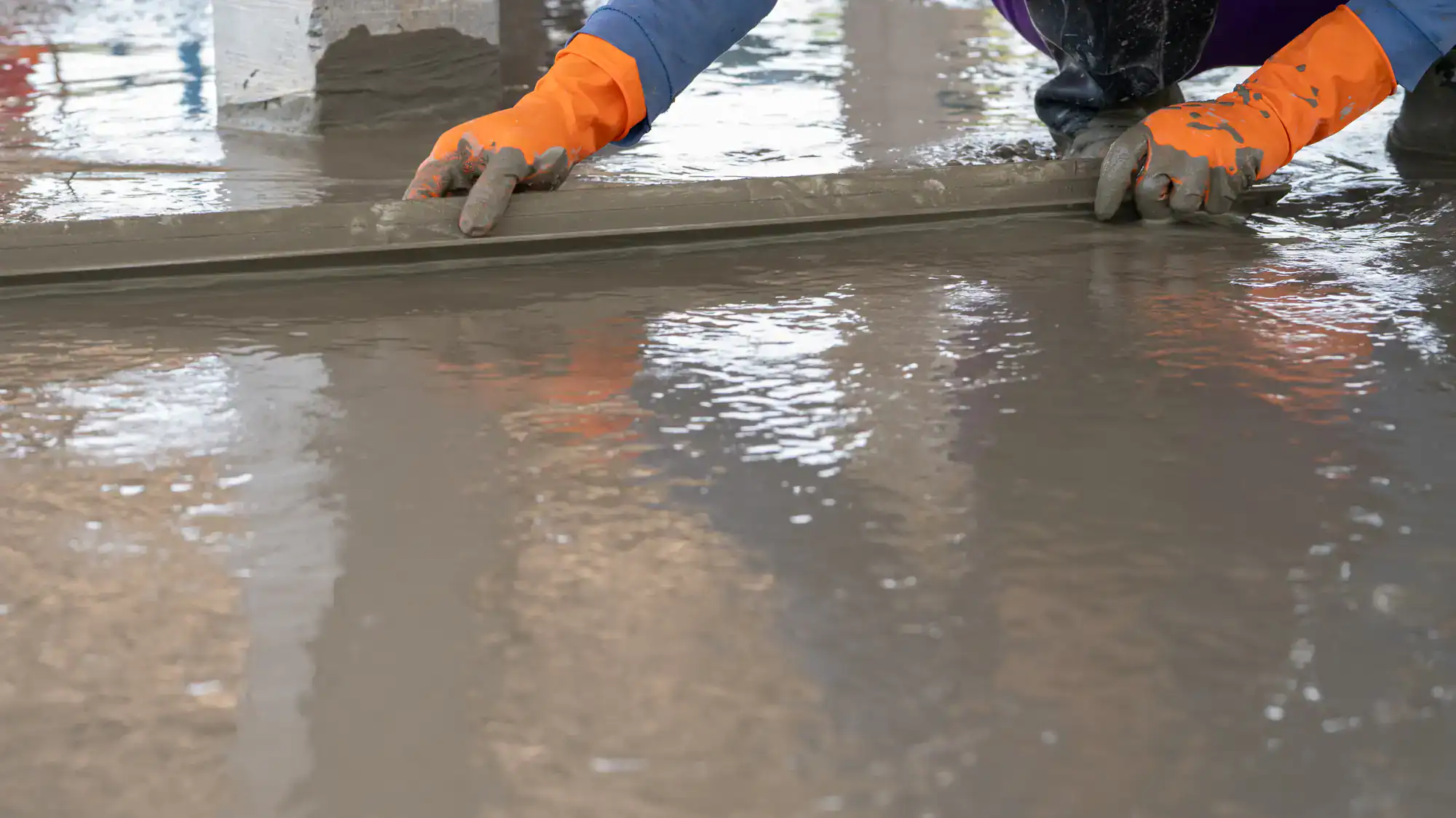
The most common reason firehouse floors fail in Suffolk County isn’t the coating it’s the preparation. Contractors who skip diamond grinding in favor of acid etching introduce moisture into the concrete right before sealing it. That moisture has nowhere to go. It builds pressure under the coating and creates the delamination bubbles that show up six months later. We’ve seen it repeatedly on Long Island, and it’s entirely preventable.
Every project starts with multi-head diamond grinding. That’s what creates a true mechanical bond between the coating system and the concrete not a chemical etch that leaves the surface looking open but doesn’t actually create the profile needed for adhesion. After grinding, we test for moisture. No coating goes down until the slab passes. Suffolk County’s humid summers and the thermal cycling of Long Island winters both affect moisture vapor transmission in concrete slabs, and skipping that test is how you end up with a floor that fails before the next fiscal year.
From there, it’s a multi-layer system: penetrating primer, a high-build epoxy base coat with aggregate broadcast for slip resistance, then a polyaspartic topcoat at approximately 15 mils thick. That’s two to four times the thickness of a standard system. The whole process is designed around the weight loads of real fire apparatus Pierce and E-One trucks that push 40,000 pounds or more. When the work is done, your apparatus is back in the bay the next day.
Ready to get started?
The apparatus bay takes the heaviest abuse, but it’s not the only floor in the building that needs to perform. The decontamination zone increasingly required under NFPA 1500 and 1585 contamination control protocols needs a seamless, chemical-resistant surface that can be fully sanitized after a response. That’s a different specification than the bay floor, and it matters. Using the wrong system in that zone creates a contamination risk that no department should accept.
Beyond the decon area, we install compatible systems in station kitchens, locker rooms, and common areas. Every zone gets a coating matched to its actual use thermal-shock resistance in the kitchen, slip resistance in wet areas, easy-clean surfaces where members spend time off-call. Using one contractor for the entire facility means the systems are compatible, the quality is consistent, and there’s one point of accountability if anything needs attention later.
For the Medford Fire Department specifically, the Southaven Avenue Substation’s recently added fourth apparatus bay the one recognized in the 2021 Firehouse Station Design Awards represents exactly the kind of facility investment that deserves a floor system built to the same standard. New construction quality means a properly specified, properly installed, 20-plus-year floor. Not a patch job. Not a consumer-grade product rolled on over a weekend. A commercial-grade system installed by our certified crew that’s been doing this work across Long Island for three decades.
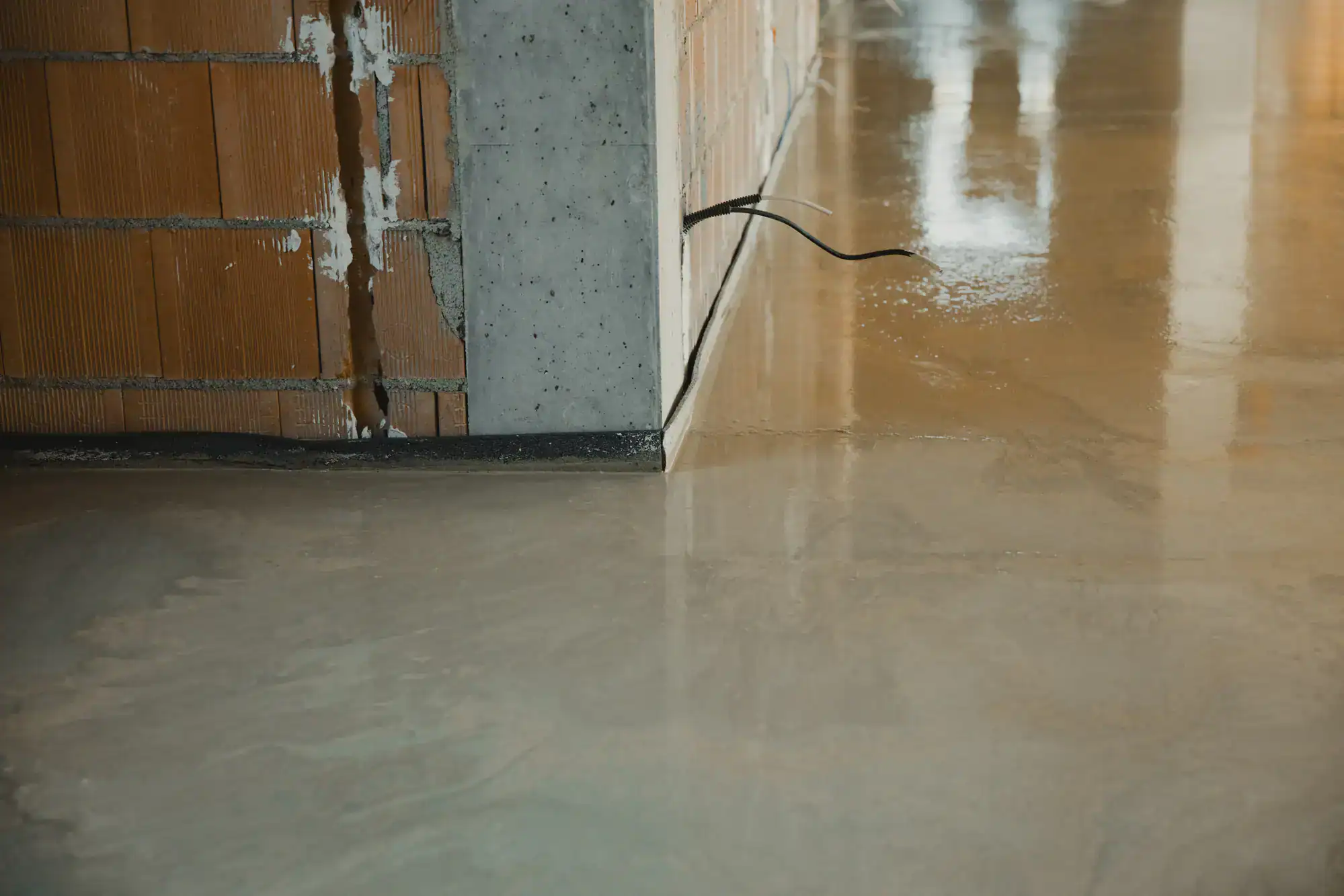
For most apparatus bays, the installation itself takes one to two days depending on square footage and the number of zones being coated. The more important number for a volunteer department is cure time and with a polyaspartic topcoat, that’s 24 hours. Your apparatus can return to the bay the next morning. That’s the core reason we use polyaspartic systems for firehouse work rather than traditional epoxy, which requires three to seven days before vehicles can re-enter. For the Medford Fire Department, which runs three stations with zero career staff and apparatus that needs to be ready around the clock, a week of bay downtime simply isn’t a realistic option.
We also schedule around your department’s operational needs. If there’s a specific time of week when call volume is lower, or a window after a major event season, we can plan accordingly. The goal is to get the work done with the least possible disruption to your response capability.
Peeling almost always comes back to one of two things: inadequate surface preparation or the wrong product for the application. The most common scenario is a contractor who used acid etching instead of diamond grinding. Acid etching opens the pores of the concrete, but it doesn’t create the mechanical profile needed for a coating to truly bond especially under the thermal stress of a Medford apparatus bay. When a hot tire from a Pierce or E-One truck sits on that surface and then pulls away, it takes the coating with it. That’s called hot-tire pickup, and it’s entirely a preparation and product failure.
The other common cause is moisture. If the concrete slab wasn’t tested before coating which is common with contractors who are moving fast or cutting costs moisture vapor transmitting through the slab will push the coating up from underneath. Suffolk County’s climate, with humid summers and significant freeze-thaw cycling in winter, makes this especially likely. The fix is diamond grinding to the right profile, mandatory moisture testing before any product goes down, and a polyaspartic topcoat that’s thermally resistant and applied thick enough to handle the load. Done right, you won’t be having this conversation again for 20-plus years.
Medford is an unincorporated hamlet within the Town of Brookhaven, so building permits and construction oversight fall under the Town of Brookhaven Building Division. Whether a floor coating installation requires a permit depends on the scope of work specifically, whether the project involves structural modifications, significant chemical applications in a commercial occupancy, or work that triggers a building inspection under New York State’s Uniform Fire Prevention and Building Code. Surface preparation and coating installation in an existing apparatus bay typically don’t require a standalone permit, but it’s worth confirming with the Building Division before work begins, particularly for a municipal facility.
It’s also worth noting that the Town of Brookhaven Fire Prevention Headquarters is located right on Route 112 in Medford, which means fire safety compliance oversight is local and accessible. If your department’s insurance carrier has requirements around floor surface friction coefficients or slip resistance documentation which some carriers do for apparatus bays we can provide that documentation as part of the project closeout package. We’ve navigated municipal compliance requirements on Long Island before and can help you understand what applies to your specific situation.
The weight load of a fully loaded fire apparatus a Pierce Impel or an E-One engine, for example can exceed 40,000 pounds. Standard residential or light commercial epoxy systems are not engineered for that compressive load. They’re designed for cars, not trucks. The coating system that handles fire apparatus weight is a multi-layer commercial system: a penetrating primer that bonds to the concrete at a molecular level, a high-build epoxy base coat that provides the compressive strength, and a polyaspartic topcoat applied at approximately 15 mils thick for surface durability and chemical resistance.
That 15-mil topcoat thickness matters. Most standard systems run four to eight mils. The additional thickness isn’t cosmetic it’s structural. It’s what allows the surface to take repeated point loads from apparatus tires without cracking or delaminating over time. Combined with the four-times-greater flexibility of polyaspartic versus standard epoxy, you get a system that handles both the weight and the thermal cycling that comes with a Suffolk County winter. The floor we install is rated for the actual loads in your bay not the loads in a residential garage.
Yes, and it’s one of the more practical reasons departments are upgrading their floors beyond just aesthetics. A seamless, non-porous polyaspartic surface has no grout lines, no cracks, and no open concrete pores for contamination to settle into. After a structure fire response, diesel exhaust, soot, and carcinogenic particulates come back into the bay on apparatus, gear, and boots. On a bare concrete floor or a cracked epoxy surface, those contaminants absorb into the substrate and are nearly impossible to fully remove. On a sealed polyaspartic surface, they sit on top and wash off.
NFPA 1500 and 1585 have been pushing departments toward more formal contamination control protocols, and the decontamination zone floor is a critical part of that. We specify a different system for the decon zone than for the apparatus bay same seamless, chemical-resistant base, but with a surface profile and drainage integration suited to wet decon work. For the Medford Fire Department, which responds to a full range of structural, vehicle, and wildland-interface calls given its proximity to the Long Island Pine Barrens, having a floor that supports proper decontamination isn’t just a best practice. It’s a health and safety issue for your members.
Long Island winters create a specific combination of stressors that most floor coatings aren’t designed to handle simultaneously. You’ve got freeze-thaw cycling that causes concrete slabs to expand and contract, road salt and brine coming in on apparatus tires after every winter response, large bay doors opening repeatedly and exposing the floor to rapid temperature changes, and hot tires from returning apparatus contacting a cold surface. Standard epoxy is rigid and relatively thin it cracks under thermal cycling and peels under the hot-tire contact that comes with every return from a call.
Polyaspartic handles this environment because it’s formulated differently. It’s four times more flexible than standard epoxy, which means it accommodates the movement of the concrete slab without cracking. It’s UV-stable, so the frequent exposure from open bay doors doesn’t degrade the surface. And it’s applied thick enough around 15 mils that the road salt, brine, and deicing chemicals that come in off Route 112 and Horseblock Road every winter sit on the surface rather than penetrating it. Medford’s inland position in central Suffolk County means it sees more extreme temperature swings than coastal communities closer to the water. That makes the flexibility and thermal resistance of polyaspartic even more relevant here than it would be in a milder climate.