
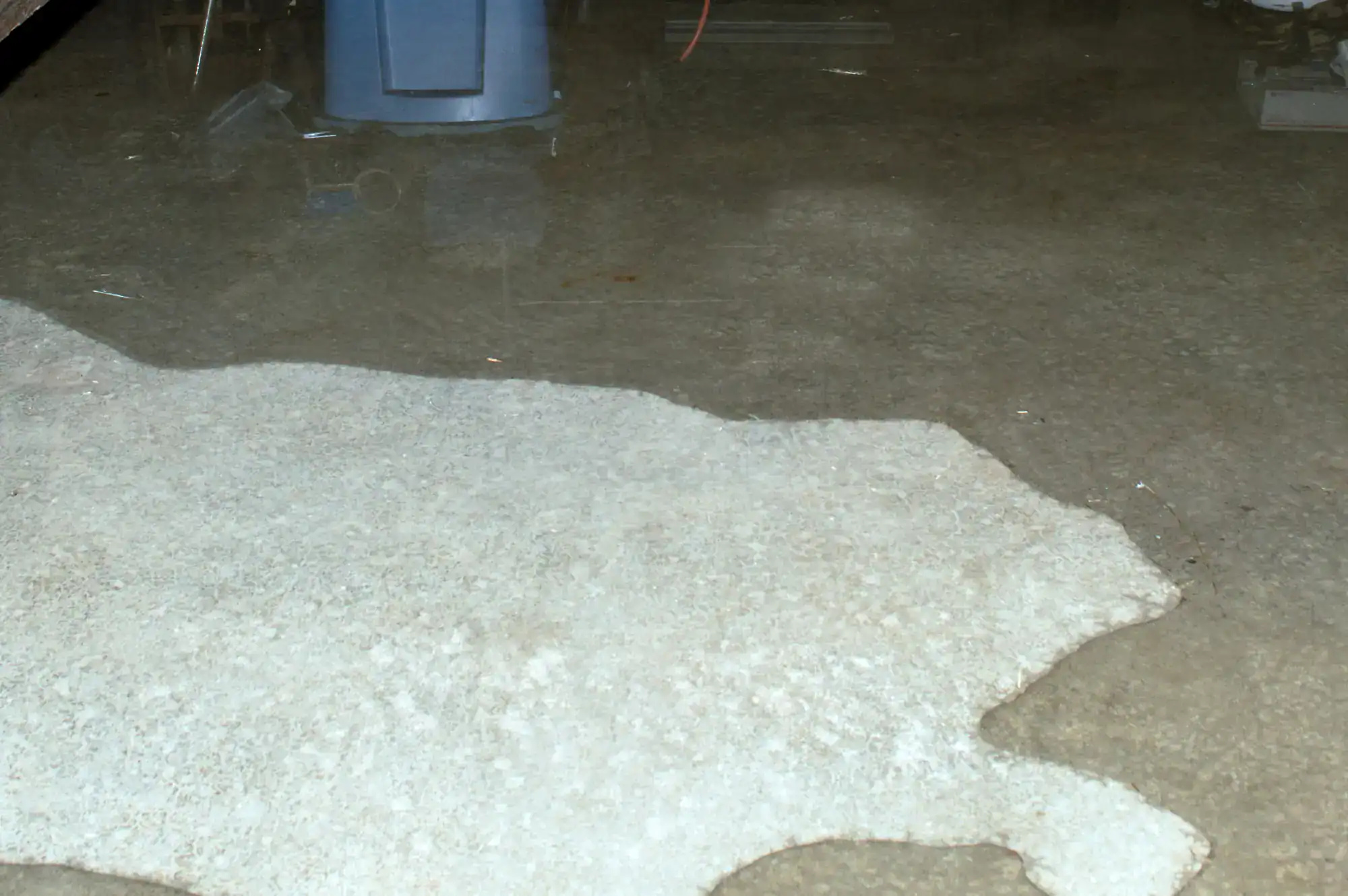
Every winter in Coram, apparatus rolls back into the bay from a call on Middle Country Road with tires loaded with road salt, brine, and ice melt. On bare concrete or a failing thin-mil coating, those chlorides don’t sit on the surface they absorb into the slab, work into the aggregate, and start breaking the floor down from underneath. You don’t notice it right away. Then one spring you’ve got spalling, cracking, and a surface that looks like it aged ten years overnight.
A properly installed resinous floor system changes that equation completely. The surface becomes seamless and non-porous, so whatever comes in off Route 25 stays on top where it can be hosed down in minutes. The thermal shock cycle cold air rushing in when the bay doors open, engine heat and hot tires coming back gets absorbed by a system that’s built flexible enough to handle it. Standard thin-mil epoxy isn’t. That’s why it peels.
There’s also an occupational health dimension that’s easy to overlook. NFPA standards require fire station floors to support real decontamination seamless, cleanable, no crevices where combustion byproducts and carcinogens can accumulate after a working fire. A cracked or porous floor can’t meet that standard. A properly sealed resinous floor can. For Coram’s volunteers, that’s not a regulatory checkbox it’s a health protection measure.
We’re based in Bohemia about 15 minutes from Coram on the LIE. This isn’t a national brand dispatching a crew from out of state or a general contractor who added epoxy to their service list last year. We’ve been doing commercial and industrial resinous flooring across Suffolk County for over 30 years, founded by Danny Harmer, who has more than 40 years of hands-on installation experience.
Our field supervisors Javier, Eduardo, and Fredith have a combined 40-plus years of installation experience between them. Most of our crew has been with us for over a decade. When we show up to your station on Middle Country Road or out at Station 3 on Coram-Mount Sinai Road, we’ve done this before. Many times.
We hold the Sherwin-Williams High Performance Flooring certification and Res Tech certification. Every installer is OSHA 40 certified. These aren’t credentials pulled off a wall they’re the reason a company like ours was trusted to install the floor in the White House kitchen in 1996.
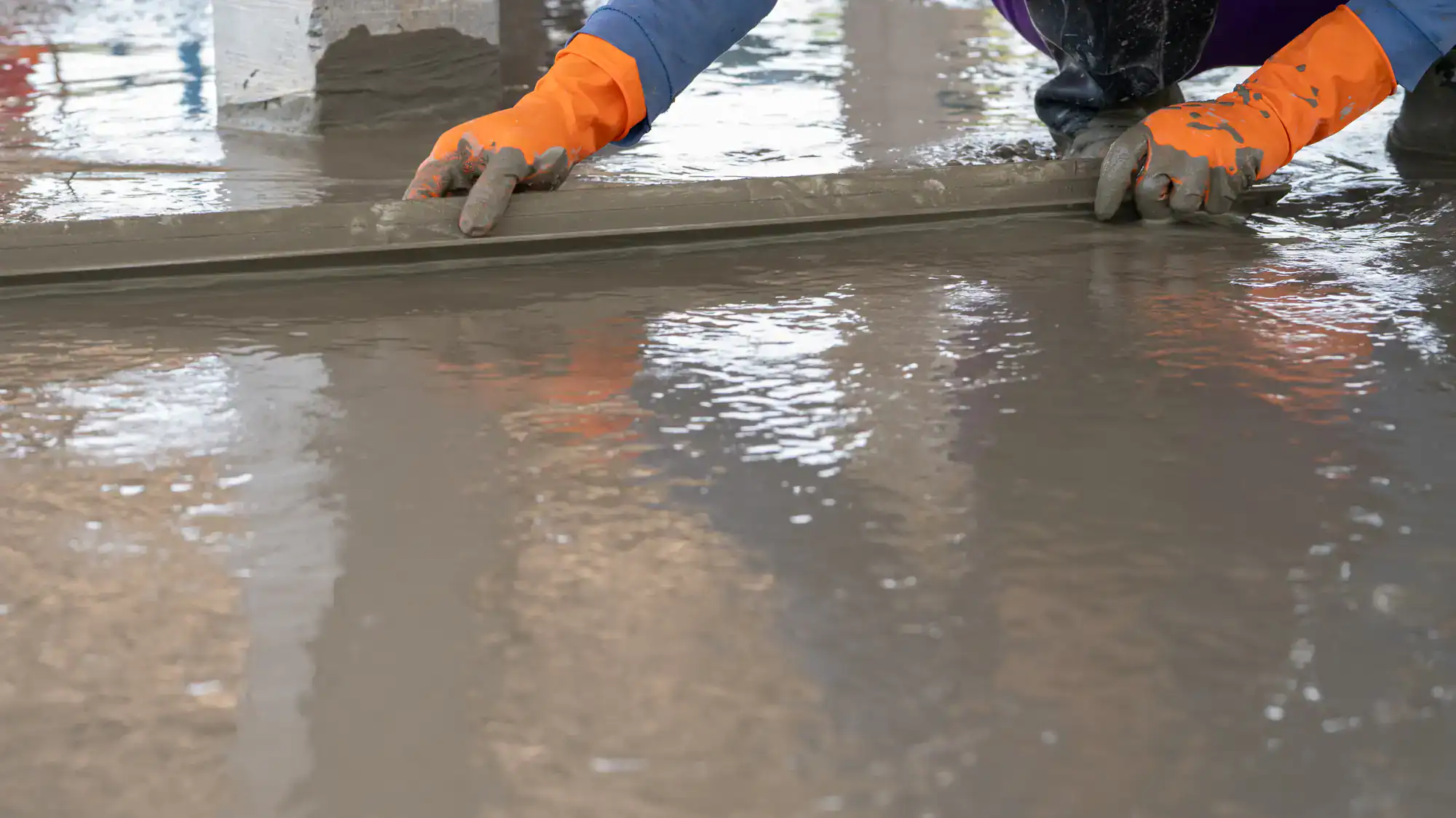
The first thing that happens on any firehouse floor project in Coram is a concrete assessment. We evaluate the slab for moisture content, surface profile, existing coatings, and any cracking or spalling that needs to be addressed before anything else. This step matters more than most people realize. Central Suffolk County’s climate with its freeze-thaw cycles, humid summers, and the water table sitting under the Pine Barrens means moisture in concrete slabs is a real variable. Skipping this step is how floors fail in year two.
Once the slab is assessed, we diamond-grind it to open the concrete profile and ensure the coating system bonds at the mechanical level, not just the surface. Any cracks or damaged areas are repaired at this stage. Then the primer goes down, followed by the base coat and broadcast layer, and finished with a polyaspartic topcoat at 15 mils roughly twice the thickness of a standard commercial epoxy application. That topcoat is what provides the thermal stability, chemical resistance, and hot-tire release that apparatus bay floors actually need.
The polyaspartic system cures in 24 hours. For a three-station volunteer department like Coram’s, that means apparatus is back in the bay the next day. The Town of Brookhaven’s building permit requirements apply to renovation work in fire district facilities, and we factor any necessary permitting into the project timeline upfront no surprises after the job starts.
Ready to get started?
The system we install in firehouse apparatus bays is not the same product sold in home improvement stores or marketed as a residential garage upgrade. Our materials are commercial-grade, our prep process is industrial-grade, and our installation is performed by a Sherwin-Williams HP Flooring certified crew not a general labor team following a manufacturer’s consumer guide.
For Coram’s fire stations, our standard apparatus bay system includes diamond grinding for surface profile, moisture barrier primer, a broadcast aggregate mid-coat for slip resistance and impact absorption, and a polyaspartic topcoat rated for chemical resistance, UV stability, and thermal flexibility. The result is a floor that handles diesel, hydraulic fluid, engine oil, road salt, and the constant thermal cycling of a working apparatus bay without peeling, cracking, or staining. It’s also seamless, which means it supports the decontamination protocols required under NFPA 1500 and NFPA 1581 for occupational health compliance.
The system carries a meaningful service life. A properly installed polyaspartic floor in a fire station environment lasts 20-plus years. When you run that against the cost of a thin-mil system that fails in three to five years including grinding, disposal, and reinstallation the math is straightforward for a fire district board that answers to Coram taxpayers carrying a median property tax bill over $10,000 a year.
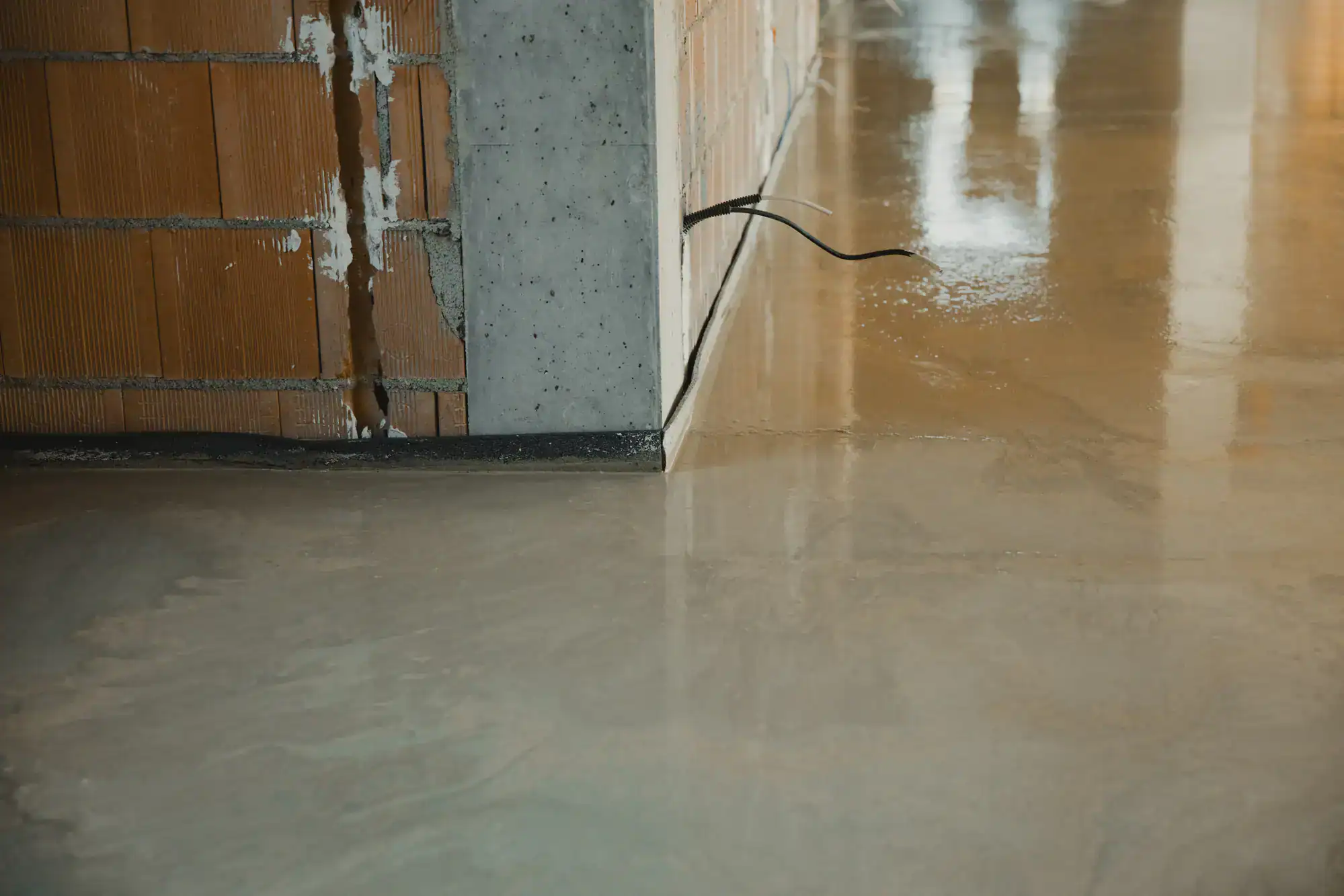
With a polyaspartic system, the answer is essentially one day per bay. The coating cures fast enough that apparatus can return to the bay within 24 hours of the topcoat going down. That’s a fundamentally different timeline than traditional epoxy, which requires three to seven days of cure time before it can handle vehicle traffic.
For a volunteer department like Coram’s with zero career staff and approximately 120 volunteers responding from home and work keeping trucks out of service for a week isn’t operationally realistic. The 24-hour cure window is what makes this project feasible without staging apparatus outside or temporarily relocating coverage. If the project spans multiple bays across more than one station, we build the schedule around the department’s operational calendar so that at least one apparatus is always available and in position.
The most common failure mode is hot-tire pickup and it’s exactly what it sounds like. When a truck returns from a call, its tires are hot from road friction. Standard thin-mil epoxy bonds to those hot tires and pulls off the surface when the vehicle backs out. On a high-traffic corridor like Route 25 in Coram, where apparatus responds frequently, this failure happens faster than in a low-activity rural station.
The second major cause is thermal shock. Every time the bay doors open in a Coram winter, cold air floods in. When the apparatus returns, it brings heat. That rapid temperature cycling stresses a rigid coating system until it cracks or delaminates. Polyaspartic systems are four times more flexible than standard epoxy, which is why they absorb that cycling rather than fail under it. Thickness matters too 15 mils versus the 4 to 8 mils of a standard commercial epoxy means there’s simply more material doing the work of protecting the slab.
Yes and this is one of the most relevant performance factors for a fire station on Route 25. Middle Country Road gets heavy salt and brine treatment from Suffolk County during winter events, and every apparatus response means tires picking that up and tracking it directly into the bay. On bare or failing concrete, chlorides from road salt penetrate the slab surface and accelerate freeze-thaw cracking, surface spalling, and corrosion of embedded rebar over time.
The seamless, non-porous surface of a properly installed resinous floor system keeps those chemicals on top of the coating where they can be rinsed off with a hose. Nothing penetrates. There’s no absorption, no migration into the slab, no accelerated deterioration. This matters not just for the floor’s lifespan but for the concrete slab itself replacing a damaged slab is a significantly larger project than resurfacing a floor. Protecting the slab is the long-term play.
Polyaspartic and epoxy are both resinous coating systems, but they perform very differently in the conditions an apparatus bay actually creates. Standard epoxy is rigid, slower to cure, and more vulnerable to thermal stress and hot-tire contact all three of which are everyday realities in a working fire station. Polyaspartic is more flexible, UV-stable, and cures in a fraction of the time.
In practical terms for a firehouse: polyaspartic handles the freeze-thaw cycles and temperature swings of a central Suffolk County winter without cracking. It releases from hot tires rather than bonding to them. It cures in 24 hours instead of three to seven days. And it carries a significantly longer service life 20-plus years for a properly installed system versus three to five years for a standard epoxy application in the same environment. For a fire district board in Coram that’s accountable to taxpayers, the total cost of ownership argument for polyaspartic is not subtle.
NFPA 1500 and NFPA 1581 set the occupational health and infection control standards that directly affect what a fire station floor needs to do. These standards require that apparatus bay floors be seamless, non-porous, and capable of supporting effective decontamination meaning contaminants from fire scenes can be fully removed from the surface without residue accumulating in cracks, grout lines, or porous concrete.
In New York State, fire districts operate as independent taxing districts under Town of Brookhaven jurisdiction for building and renovation permits. Any significant floor resurfacing project at a Coram Fire Department station would be subject to standard commercial renovation permitting through the Town of Brookhaven Building Department. The NFPA compliance angle is worth noting for fire commissioners: a seamless resinous floor is not just a maintenance upgrade it’s a documented step toward meeting occupational health standards that protect volunteers from long-term cancer risk associated with fire scene contamination.
Pricing is based on the square footage of the apparatus bay or bays, the condition of the existing concrete slab, and whether any crack repair or surface remediation is needed before coating can begin. A single apparatus bay in a fire station typically runs in the range of several thousand dollars depending on those variables the assessment before installation determines exactly what the slab needs, and that drives the final number.
For Coram’s fire district, it’s worth framing this against the full cost picture. A properly installed polyaspartic system at a higher upfront cost lasts 20-plus years. A thin-mil commercial epoxy that fails in three to five years has to be ground off, disposed of, and reinstalled and that cycle, repeated over 20 years, costs more than the premium system ever would have. Fire commissioners presenting a capital expenditure to their board have a straightforward total cost of ownership argument to make. We can walk through the numbers with you before any commitment is made.