
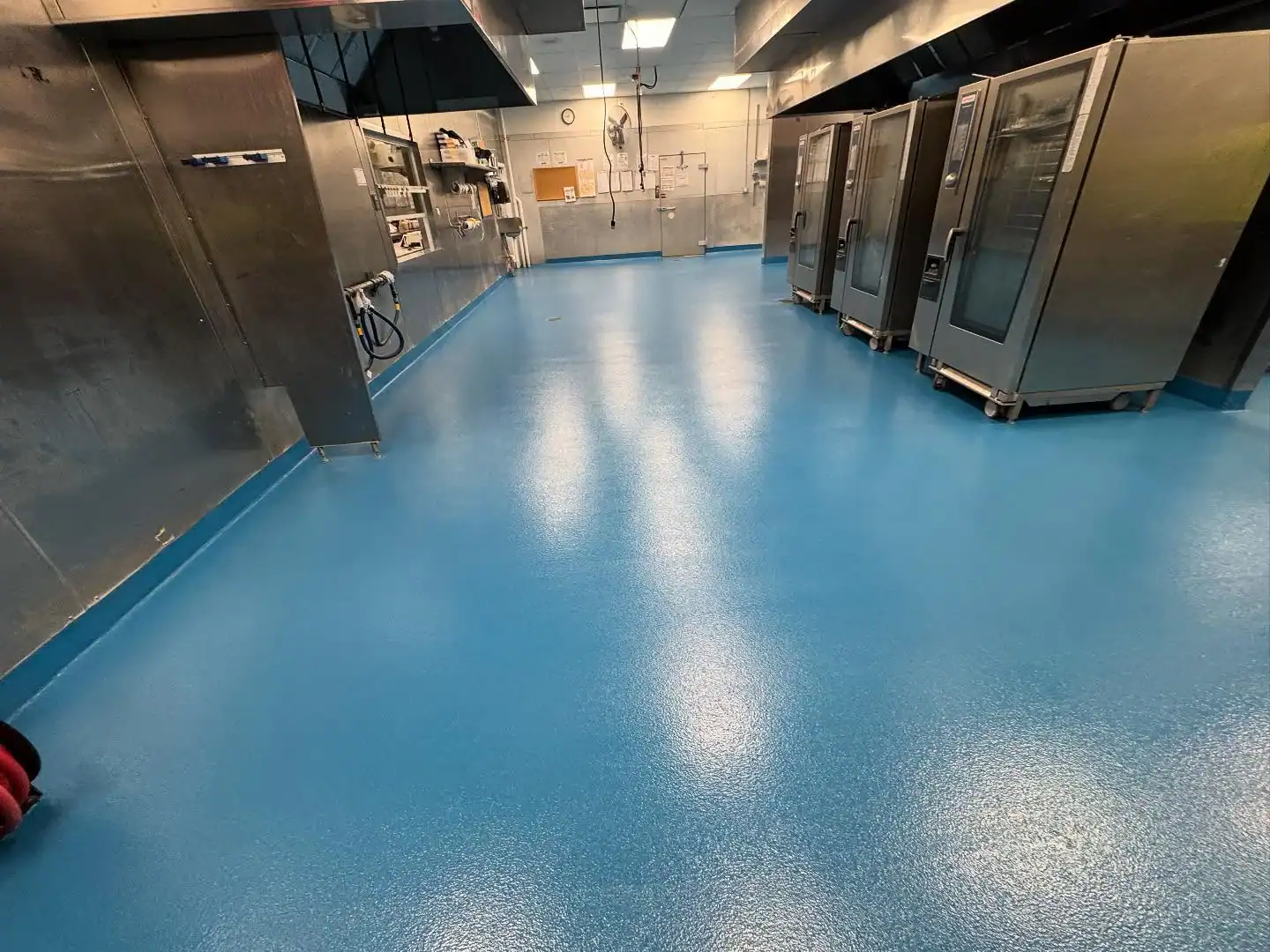
Your kitchen floor takes more abuse in a week than most floors see in a year. Boiling water. Hot oil splashes. Caustic cleaners. Heavy equipment dragged across wet surfaces. Then you steam clean it all and do it again tomorrow.
Most floors crack under that kind of punishment. The epoxy delaminates. Grout lines trap bacteria. Your health inspector starts asking questions you don’t want to answer.
A commercial kitchen epoxy floor in Dix Hills, NY that’s built for thermal shock resistance changes that. You get a seamless, waterproof surface that handles 375°F oil spills and 185°F washdowns without flinching. No grout lines for bacteria to hide in. No cracks for moisture to seep through. Just a floor that keeps working while you focus on running your operation.
We’ve been installing commercial kitchen floors across Long Island since 1990. Our field supervisors have over 40 years of combined experience, and most of our installation team has been with us for more than a decade.
We’re OSHA 40 certified, ICRI certified for concrete testing, and we’ve seen what works in Dix Hills kitchens and what fails. That matters when you’re choosing between a standard epoxy that’ll need replacement in three years and a urethane cement system that’ll last 15.
We handle everything from moisture testing to concrete prep to final installation. You’re not coordinating multiple contractors or hoping the prep work was done right. One team. One point of contact. One floor that works.
We start with moisture testing. Concrete holds water, and if we don’t address that before installation, your floor will fail regardless of the coating system. We test, document, and either proceed or recommend moisture mitigation.
Next comes surface prep. We’re grinding or shot blasting your concrete to create the profile needed for proper adhesion. Any cracks, spalls, or damaged areas get repaired with structural materials that match your floor’s performance requirements.
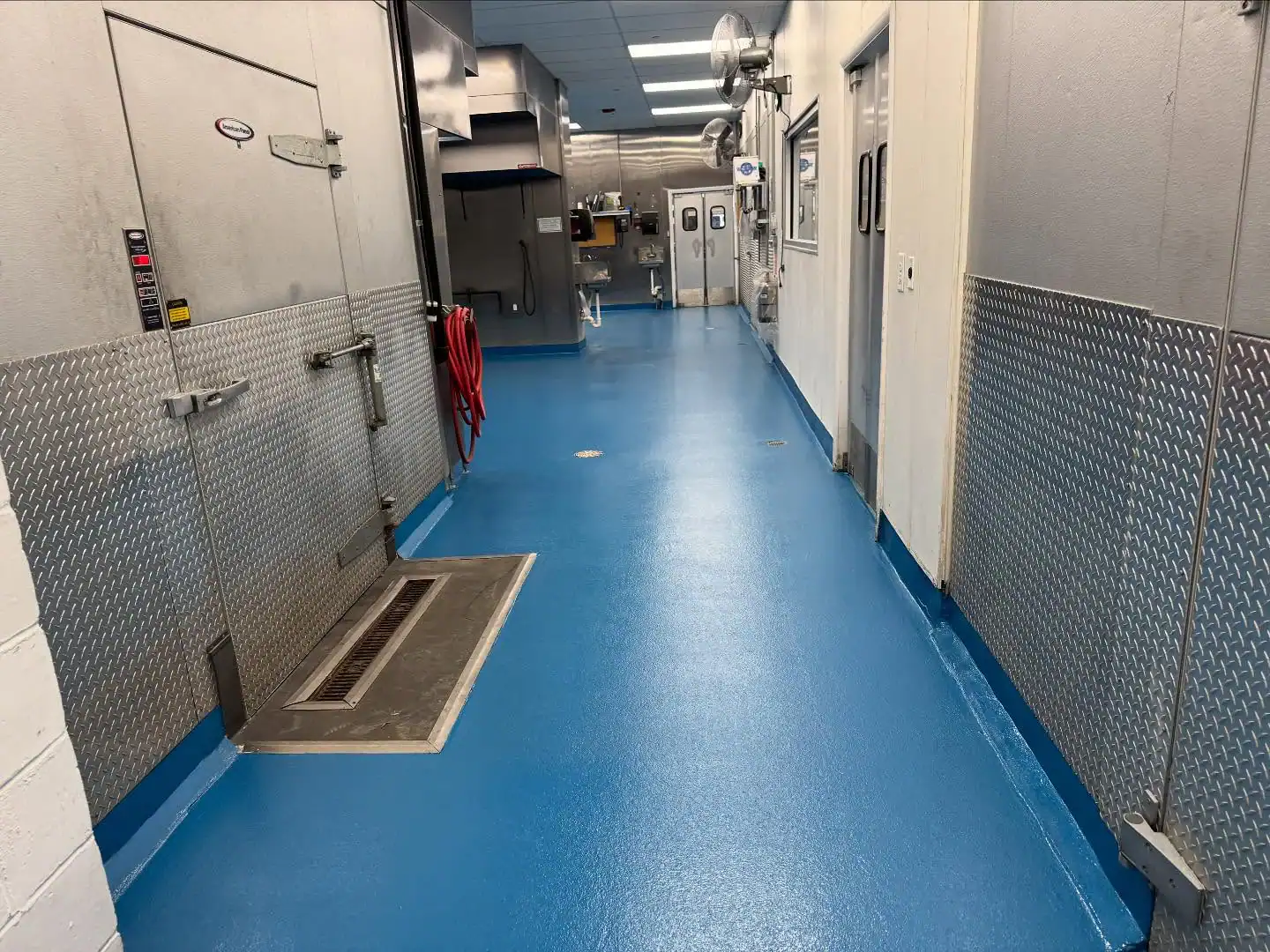
Then we install your waterproof restaurant flooring in Dix Hills, NY as a complete system. Base coat for adhesion and moisture blocking. Build coat for thickness and impact resistance. Topcoat for chemical resistance and slip control. If you need it, we integrate a hygienic cove base installation in Dix Hills, NY that runs up your walls to create a seamless, washable surface with no corners for debris to collect.
Most installations cure fast enough for overnight work. You close, we install, you open. For systems requiring longer cure times, we coordinate scheduling to minimize your downtime.
Ready to get started?
You’re getting a USDA-approved floor that meets food service sanitation standards. That means seamless. No grout lines. No seams where bacteria can colonize. Health inspectors see a professional installation that checks every box.
The system handles thermal shock because we’re using urethane cement formulations, not standard epoxy. When hot pans hit your floor or you’re steam cleaning at 185°F after working in near-freezing temperatures, the floor flexes instead of cracking. It’s engineered for rapid temperature swings that destroy conventional coatings.
Your slip-resistant kitchen floor in Dix Hills, NY gets its traction from aggregate we broadcast into the topcoat. You’re not relying on a texture that wears smooth in six months. The slip resistance is built into the floor’s structure and lasts as long as the coating itself.
Chemical resistance covers everything from organic acids to animal fats to the harsh alkaline cleaners you’re using daily. Impact resistance means dropped equipment and heavy rolling loads don’t chip or crack the surface. And because the system is fully waterproof with integrated cove base, you can wash down your entire kitchen without worrying about water infiltration or edge failures.
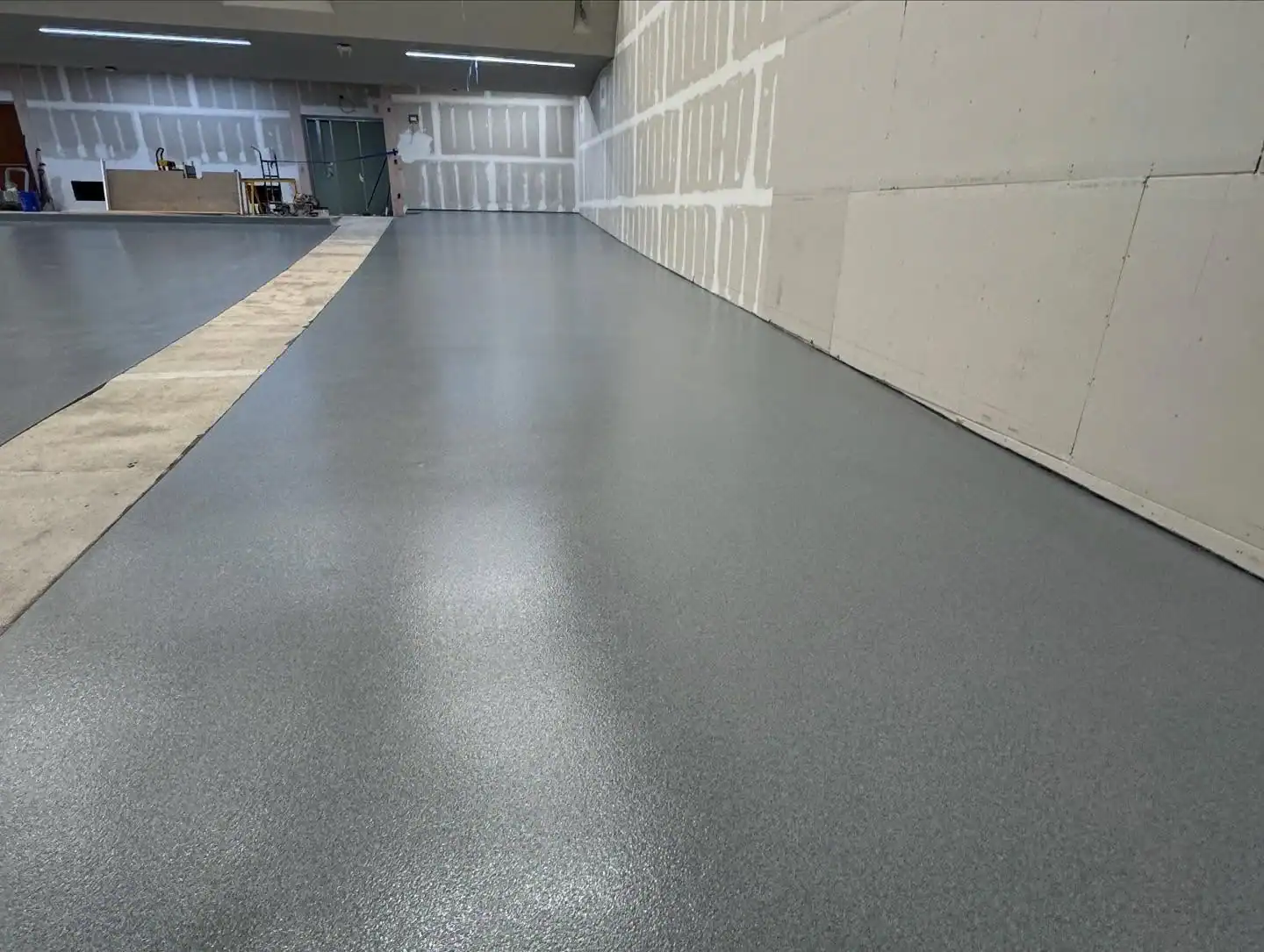
Standard broadcast epoxy in a commercial kitchen typically needs replacement in three to seven years. It can’t handle the thermal shock and constant chemical exposure, so it cracks, delaminates, and fails.
Urethane cement systems last 15 to 20 years in the same environment. The difference is how the material responds to heat and impact. Urethane cement flexes. It tolerates rapid temperature changes without cracking. It handles the daily abuse of a working kitchen without breaking down.
Your actual lifespan depends on traffic volume and maintenance, but you’re looking at five times the service life compared to standard epoxy. That’s fewer shutdowns for floor replacement, lower long-term costs, and one less thing to worry about when you’re trying to run a food service operation.
Thermal shock is what happens when your floor experiences rapid temperature swings. A 375°F oil spill on cold concrete. Steam cleaning at 185°F after your kitchen has been sitting at 40°F overnight. Standard epoxy is rigid, so it cracks under that stress.
Thermal shock resistant coatings in Dix Hills, NY use urethane cement chemistry that has some flex built in. The material expands and contracts with temperature changes instead of fracturing. It’s specifically formulated for environments where hot and cold happen fast and often.
This isn’t a minor upgrade. It’s the difference between a floor that fails in three years and one that lasts 15. If you’re running a commercial kitchen, a bakery, a meat processing facility, or any food service operation with temperature extremes, thermal shock resistance isn’t optional. It’s the baseline for a floor that actually works.
Grout lines and seams create pockets where food particles and bacteria accumulate. You can scrub them, but you’re never getting them completely clean. Health inspectors know this, which is why seamless floors are the preferred standard for commercial kitchens.
A seamless epoxy floor eliminates those hiding spots entirely. There’s nowhere for contamination to build up. When you wash down your kitchen, everything goes down the drain instead of sitting in grout lines breeding bacteria.
The same principle applies to your wall-to-floor transition. A hygienic cove base installation in Dix Hills, NY runs your floor material up the wall in a smooth curve with no corner or seam. You’re creating a waterproof tub that’s as easy to clean as a shower. That’s what health inspectors want to see, and it’s what actually keeps your kitchen sanitary between deep cleans.
Slip resistance comes from texture, and texture comes from aggregate. We broadcast silica sand or aluminum oxide into the topcoat while it’s still wet, then seal over it. The aggregate becomes part of the floor structure, not a coating that wears off.
You can adjust the texture based on your needs. Light texture for areas that stay relatively dry. Heavier texture for zones around dishwashing stations or anywhere water and grease combine. The goal is enough traction to prevent slips without creating a surface that’s impossible to clean.
A slip-resistant kitchen floor in Dix Hills, NY needs to balance safety with sanitation. Too smooth and you’re creating a liability. Too rough and you’re creating crevices that trap contamination. We dial in the texture during installation based on your specific operation, and because it’s locked into the floor, it doesn’t degrade over time like textured paints or temporary treatments.
Standard epoxy works great for warehouses, retail spaces, and light commercial use. It’s durable, chemical resistant, and cost-effective. But it’s not designed for thermal shock, which is why it fails in commercial kitchens.
Urethane cement is a different material entirely. It’s a hybrid system that combines the durability of concrete with the flexibility and chemical resistance of urethane. It handles rapid temperature changes without cracking. It tolerates heavy impact. It resists the specific chemicals found in food service environments, including organic acids and animal fats that break down standard epoxy.
The cost difference is real but not dramatic, and the performance gap is massive. If you’re installing a floor in a commercial kitchen, a food processing facility, or anywhere that sees extreme conditions, urethane cement is the standard. Epoxy is what you use when you don’t know better or you’re trying to save money upfront and willing to pay for it later.
That depends on the system and the size of your space. MMA (methyl methacrylate) systems cure in about an hour, which means we can install overnight and you’re open for business in the morning. Urethane cement typically needs four to six hours of cure time before light foot traffic.
Full chemical resistance and heavy use take longer. Most systems reach full cure in 24 to 48 hours. We schedule installations to minimize your operational impact, usually working overnight or during your slowest days.
Surface prep adds time. If your concrete needs significant repair or we’re removing a failed coating, that’s additional work before we can install the new system. We’ll walk your space, assess the existing conditions, and give you a realistic timeline before we start. No surprises. No “just one more day” extensions. You’ll know exactly when you’re back in operation before we ever show up with equipment.