

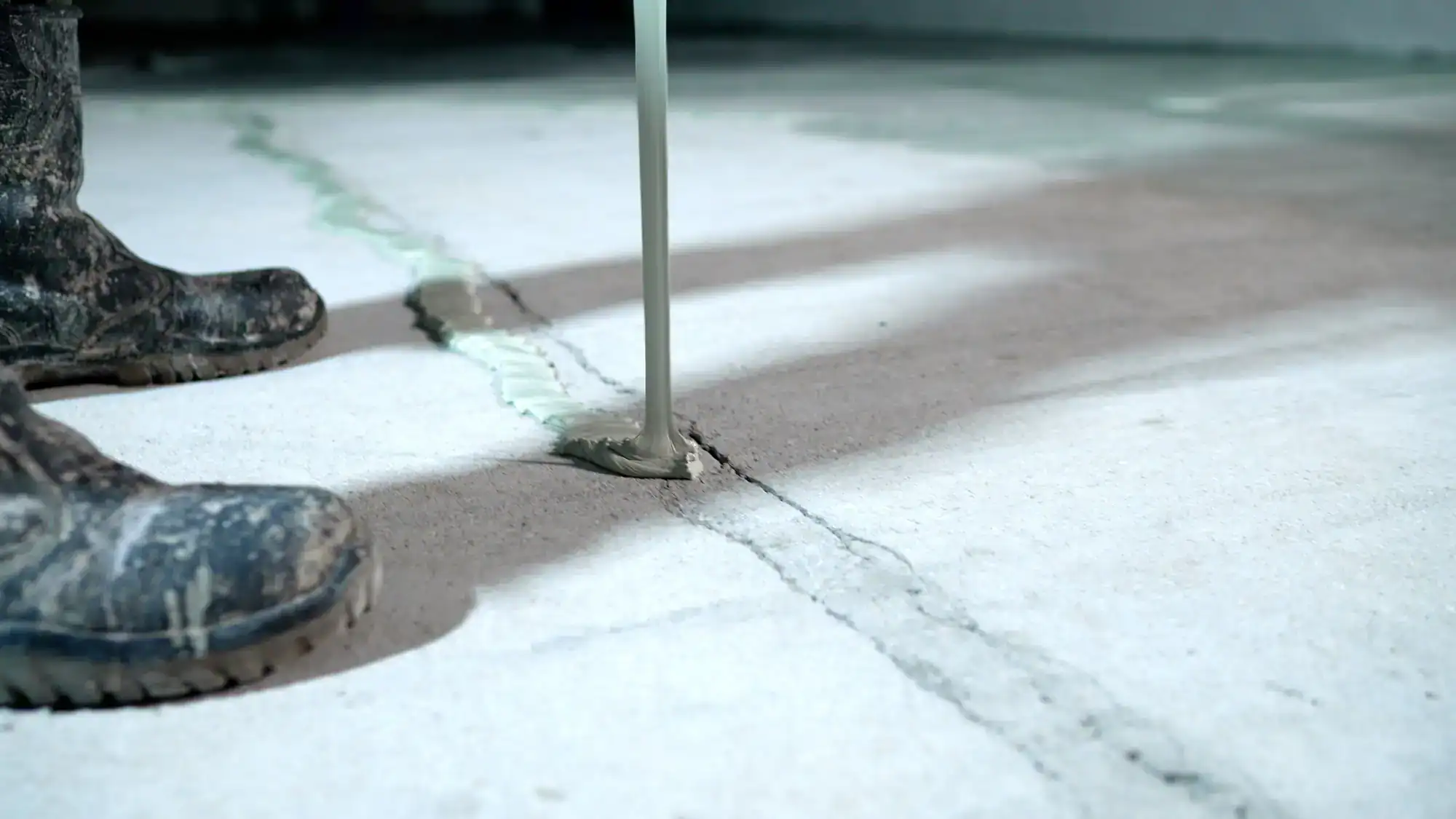
Selden’s building stock tells a story. Most of the commercial slabs along Middle Country Road and the side streets off Boyle Road were poured in the 1960s through the 1980s. That’s 40 to 60 years of freeze-thaw cycles, ground moisture, and daily use and concrete that old doesn’t behave the way new concrete does. It holds moisture differently, it has micro-cracks you can’t always see, and it needs to be properly assessed before anything goes on top of it.
That’s where most floors fail. Not because epoxy is a bad product, but because whoever installed it skipped the part that matters most: understanding what’s happening underneath. Local water damage companies serving central Suffolk County explicitly flag Selden’s humid climate and ground moisture conditions as active drivers of flooring problems in this area. A floor that isn’t specified for those conditions will bubble, delaminate, or peel sometimes within a year.
When it’s done right, you get a seamless resinous floor coating that handles whatever your business puts it through. Chemical spills, forklift traffic, commercial kitchen heat cycles, heavy foot traffic the floor doesn’t flinch. And for a business owner in Selden who’s already managing Suffolk County property taxes north of $10,000 a year, a floor that lasts 20 years instead of 18 months isn’t a luxury. It’s just math.
We’re based in Bohemia, NY about 12 to 15 miles from Selden via Nicolls Road and the LIE. That’s not a detail we mention to sound local. It means the crew showing up to your Selden job site knows central Suffolk County. We’ve worked in the same humidity, on the same aging slabs, under the same seasonal conditions that every Selden business owner deals with.
Danny Harmer, our president, has over 40 years of hands-on installation experience. He installed the epoxy floor in the White House kitchen in 1996. He’s worked in the Bahamas, Moscow, and across the country. The reason that matters for your Selden project isn’t the prestige it’s the depth of experience behind every system we specify.
Our team holds factory-trained certifications from Sherwin-Williams High Performance Flooring and Res Tech, our installers are OSHA 40 certified, and we carry an A+ BBB rating with zero complaints on record across more than 30 years in business. Most installers have been with us for over a decade. You’re not getting a rotating subcontractor crew. You’re getting people who’ve done this thousands of times.
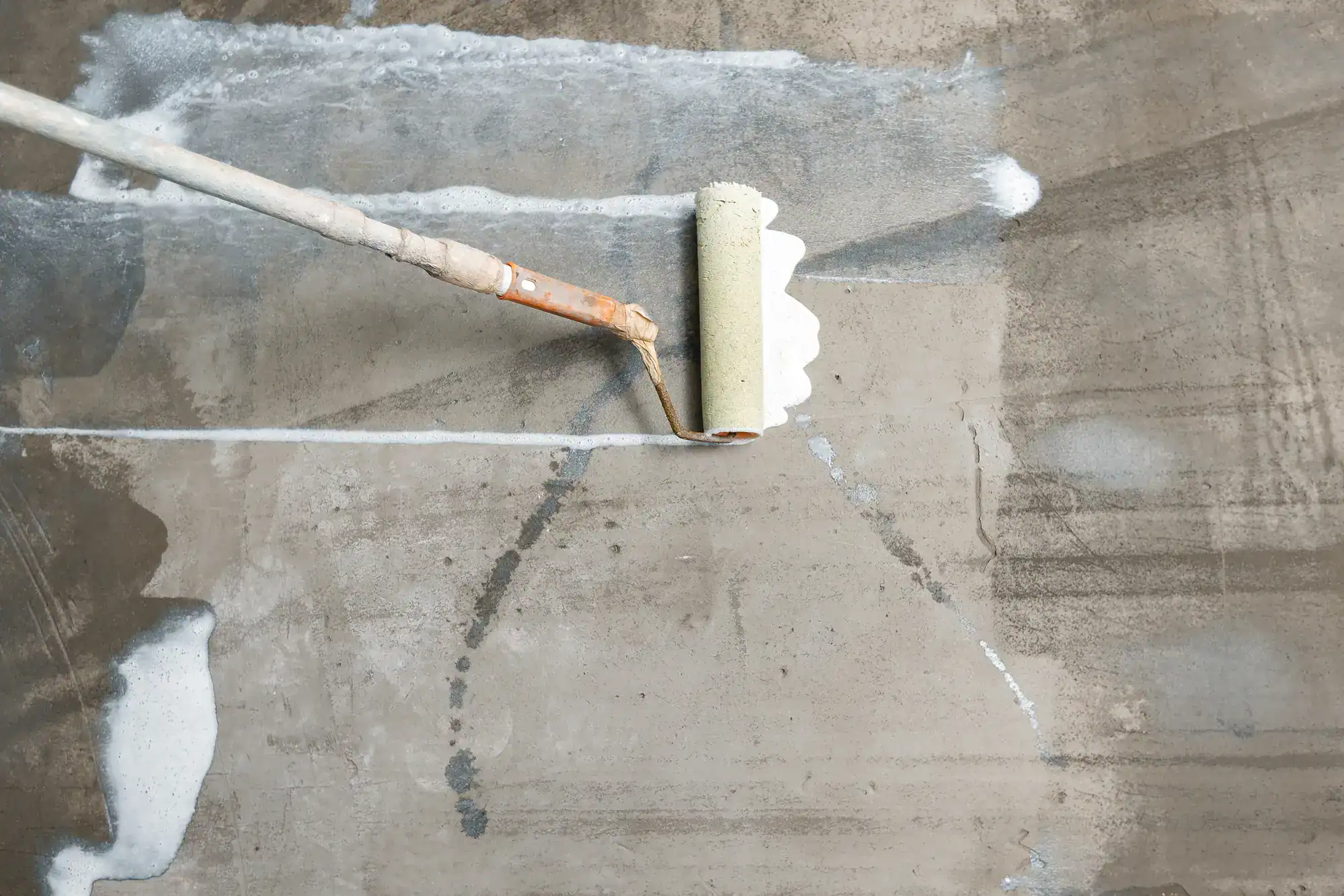
It starts before a single product gets opened. The first thing that happens on any job in Selden is a slab assessment moisture testing, surface profile evaluation, and a close look at the condition of the concrete. Given the age of most commercial buildings in this area and the ground moisture conditions that central Suffolk County is known for, this step isn’t optional. It’s what determines which system we specify and whether the floor will actually hold.
Once the slab is assessed, surface preparation begins. That means diamond grinding not acid etching, not a light scuff with a rented machine. Diamond grinding opens the concrete’s pores, removes contaminants, and creates the mechanical profile that industrial-grade epoxy needs to bond properly. This is the step most budget contractors skip or rush, and it’s the reason floors fail. After prep, the system goes down in layers: primer, base coat, broadcast aggregate if the application calls for it, and a topcoat engineered for the specific environment whether that’s a chemical-resistant finish for an auto shop, a USDA-compliant seamless coating for a commercial kitchen, or a heavy-duty system rated for forklift traffic in a warehouse.
For most commercial clients along Middle Country Road in Selden, installation happens overnight or on weekends. Your business opens on schedule. There’s no week-long closure, no lost revenue, no explaining to customers why the door is locked. We work around your hours not the other way around.
Ready to get started?
Not every floor in Selden needs the same solution. An auto service bay on Middle Country Road faces oil, hydraulic fluid, chemical exposure, and the weight of vehicles sitting in place for hours. A commercial kitchen at one of Selden’s growing number of food service operations needs a USDA-compliant, seamless, coved floor that passes Suffolk County Health Department inspections and handles thermal shock from commercial dishwashing and cooking equipment. A warehouse or light industrial space needs a high-traffic commercial epoxy system rated for real load not something that looks good in photos but cracks under a loaded pallet jack.
The systems we install are 100% solids industrial-grade not the water-based products available at the Home Depot in Independence Plaza. Dry film thickness runs 14 to 30 mils depending on the application, compared to 3 to 8 mils for consumer-grade products. For environments that qualify, we specify chemical resistant epoxy finishes with topcoats designed to hold up against the specific chemicals present in that space. Automotive shops, firehouse apparatus bays, healthcare and medical office facilities, and food service kitchens each get a system built around what they actually do not a one-size-fits-all coating.
If you’re operating near the Suffolk County Community College Ammerman Campus or managing a commercial property anywhere in Selden, NY, the scope of what’s available goes well beyond a standard garage floor. The conversation starts with what your floor is up against and the system follows from there.
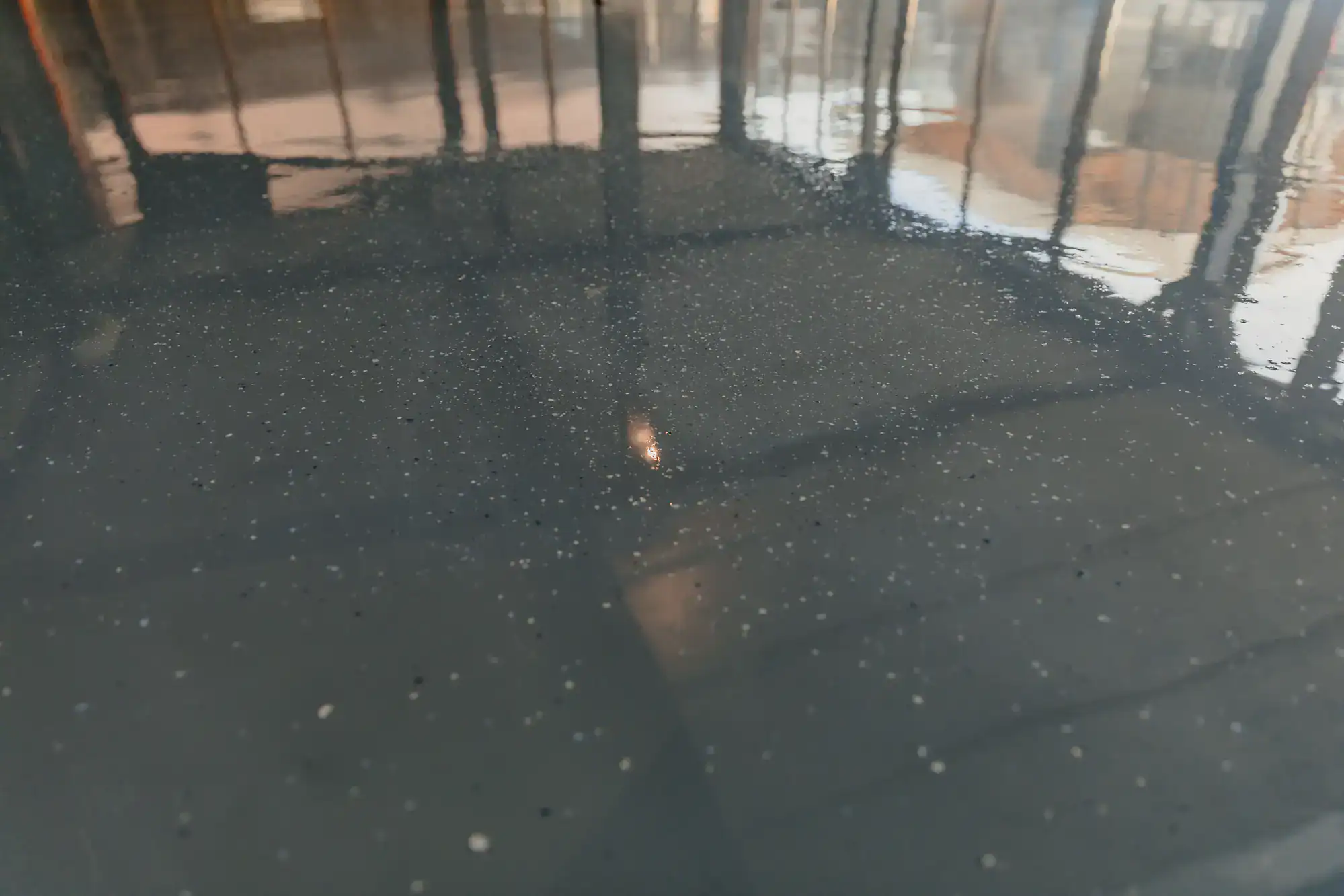
This is the most common complaint we hear from business owners in Selden who’ve already been through a bad installation. The short answer is moisture specifically, moisture vapor transmitting up through the concrete slab and getting trapped beneath the coating. Selden and the broader central Suffolk County area have documented ground moisture and humidity conditions that make this a real and active risk, not a theoretical one. Local restoration companies serving this area explicitly flag the humid climate as a driver of flooring failures in commercial buildings here.
The longer answer involves surface preparation. If the slab wasn’t diamond ground before installation if the contractor used acid etching or a light mechanical scuff instead the epoxy never bonded properly in the first place. Add undetected moisture vapor transmission to a weak bond, and the floor starts failing the moment conditions are right. The fix isn’t a different brand of epoxy. It’s proper moisture testing, correct surface preparation, and a system specified for the actual conditions of that slab. That’s what separates an installation that lasts 20 years from one that needs to be redone in 18 months.
For commercial and industrial epoxy flooring in Selden, NY, you’re generally looking at a range of $7 to $12 per square foot for a properly specified, professionally installed system. The final number depends on the size of the space, the condition of the existing slab, the system required for the application, and any prep work needed to address moisture or surface profile issues. A heavily worn slab in a 40-year-old building off Boyle Road will require more preparation than a newer concrete pour, and that affects cost.
What’s worth understanding is the lifecycle comparison. A consumer-grade epoxy kit from the Home Depot at Independence Plaza runs roughly $3 per square foot installed but it’s a water-based product curing to 3 to 8 mils of dry film thickness. An industrial system runs 14 to 30 mils and is engineered for the load, chemical exposure, and moisture conditions your floor actually faces. If the cheap system fails in a year and has to be removed and replaced, you’ve already spent more than the professional installation would have cost. The math on this isn’t complicated once you factor in the full lifecycle.
Yes and for most commercial kitchen projects along Middle Country Road in Selden, that’s exactly how we handle it. The installation happens overnight or over a weekend, and the kitchen opens on schedule the next business day. The systems we use in food service environments are engineered with fast-cure chemistry that allows the floor to reach full operational hardness within the required timeframe without cutting corners on the cure process itself.
For Selden restaurant operators, this matters for a specific reason: the Suffolk County Health Department includes flooring condition as part of food service facility inspections. A cracked, stained, or non-seamless kitchen floor is a compliance issue not just an aesthetic one. The systems we install in commercial kitchens here are USDA-compliant, seamless, and include a coved base that meets health code requirements. If you’ve recently received a notice from the Health Department about your kitchen floor, or you’re preparing for an upcoming inspection, getting the work scheduled around your operating hours is entirely workable.
The Home Depot at 401 Independence Plaza in Selden carries consumer-grade epoxy floor kits water-based products that cure to roughly 3 to 8 mils of dry film thickness. They’re designed for light residential use: a garage floor that sees a couple of cars and occasional foot traffic. They’re not rated for forklift axle loads, they’re not engineered for chemical resistance, and they’re not specified for the moisture conditions present in the aging concrete slabs that make up most of Selden’s commercial building stock.
The industrial systems we use on commercial and industrial projects are 100% solids epoxy no water content, no off-gassing of solvents that reduce final film thickness. They cure to 14 to 30 mils depending on the application, they’re rated for loads exceeding 10,000 lbs per axle, and they’re available in formulations specifically engineered for chemical resistance, thermal shock, antimicrobial performance, and high-traffic commercial environments. The gap between the two isn’t a matter of brand preference. It’s a fundamental difference in chemistry, load capacity, and how long the floor will actually perform under real conditions.
For interior commercial work, no we can proceed with installations year-round with proper climate control in place. For any application that’s semi-exterior or exposed to outdoor conditions (loading dock aprons, covered parking areas, outdoor service bays), the temperature and humidity window matters more. Epoxy shouldn’t be applied below 50°F or above 90°F, and relative humidity above 85% creates moisture-trapping risks during the application and cure window.
In Selden, the practical implication is that late spring and early fall tend to be the optimal windows for any work that isn’t in a fully climate-controlled interior. Long Island summers push humidity well above 70 to 80% regularly, which affects open-air applications. That said, most commercial clients in Selden are working with interior spaces restaurant kitchens, auto service bays, warehouse floors where temperature and humidity can be managed regardless of the season. Many business owners in this area also use the post-holiday January and February slowdown to schedule flooring work, since interior installations are fully viable in winter and the business disruption during that period tends to be lower.
Most concrete slabs are viable candidates for a properly specified epoxy system including slabs that look rough, stained, or heavily worn. The real question isn’t whether the slab can be coated. It’s what condition the slab is in, what preparation it needs, and which system is appropriate given those conditions. That’s what the initial assessment is for.
In Selden specifically, the slabs most likely to need extra attention are the ones in commercial buildings constructed during the 1960s through 1980s which is a large portion of the commercial inventory along and off Middle Country Road. These slabs have had decades to develop micro-cracks, absorb contaminants, and accumulate moisture-related issues. None of that disqualifies a slab from being coated. It just means the prep work has to account for what’s actually there. Moisture testing, crack evaluation, and surface profile assessment done before the first coat goes down is what separates a floor that holds for 20 years from one that fails in the first season. If you’re not sure what condition your slab is in, that’s exactly what the initial walkthrough is designed to answer.