
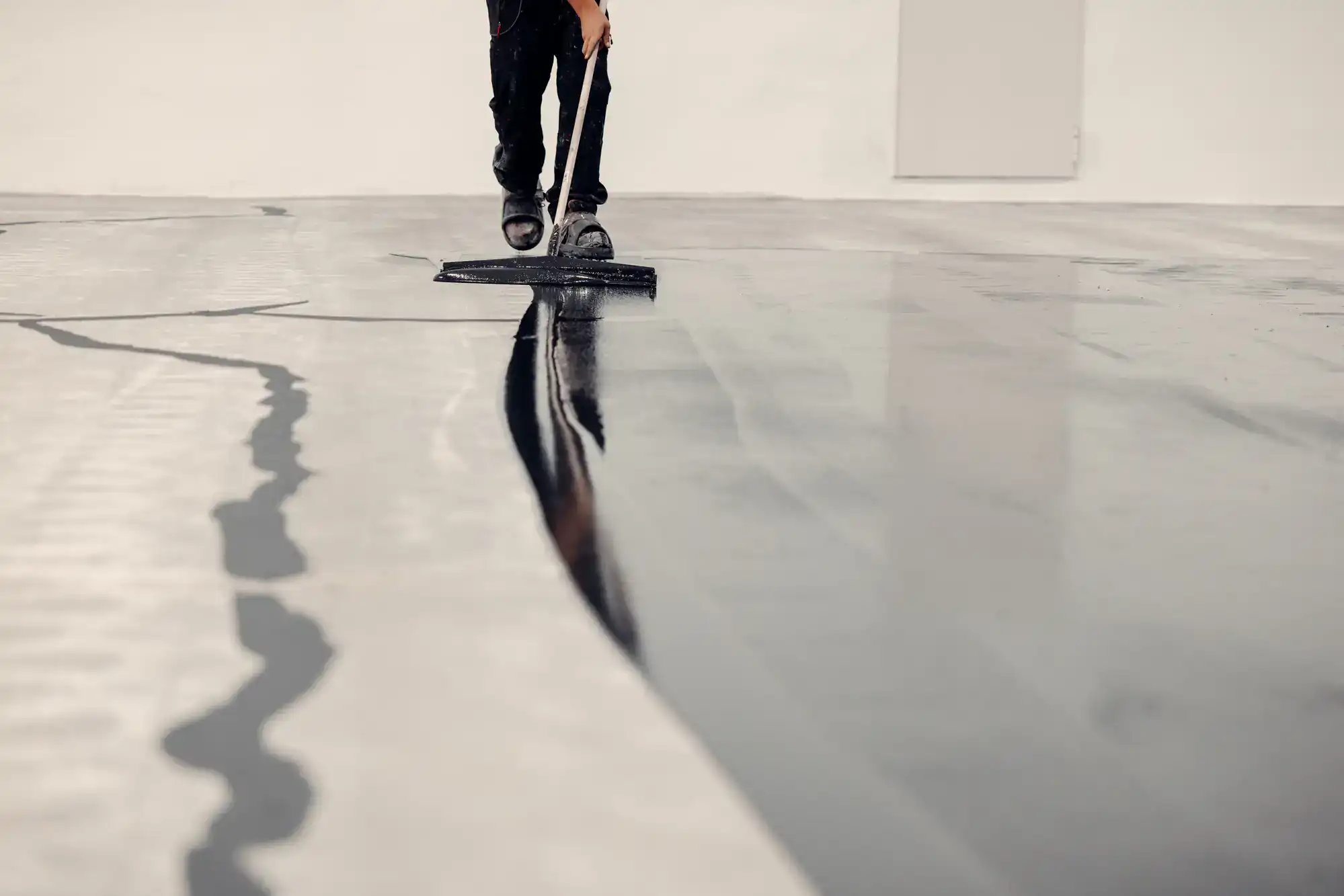
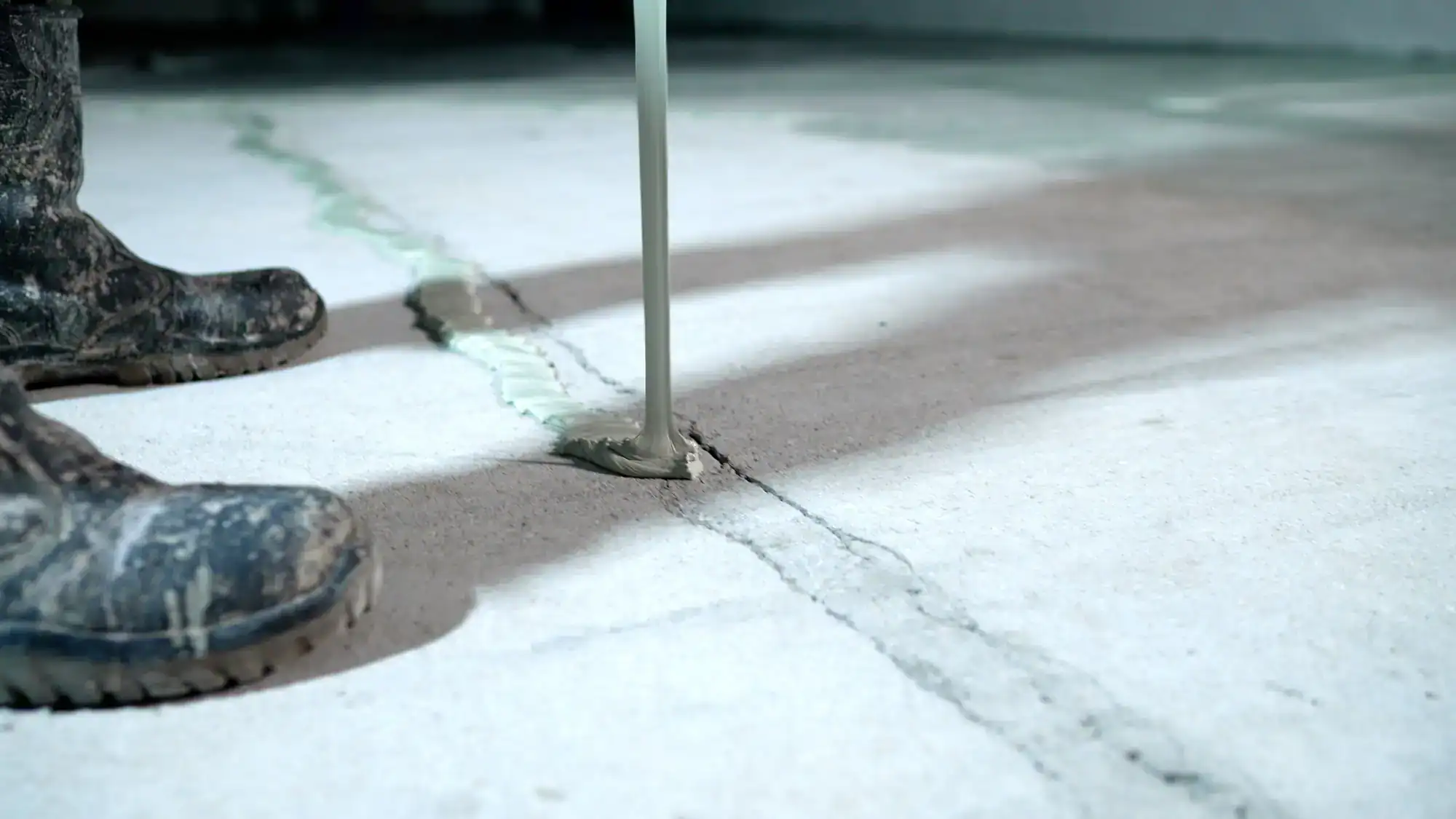
Most epoxy floors don’t fail because of the coating. They fail because of what happened or didn’t happen before the coating went down. In Medford, that usually comes down to moisture. The Long Island Central Pine Barrens sits underneath this hamlet, and the sandy, permeable soil here lets groundwater move freely. That means concrete slabs in Medford are under constant pressure from moisture vapor rising from below, especially after a wet spring or a heavy rain event on already-saturated ground. A floor installed without a proper moisture assessment in this area isn’t a matter of if it fails it’s when.
When the prep is done right, the difference is immediate and lasting. You get a floor that doesn’t bubble, doesn’t peel after the first winter, and doesn’t turn into a liability six months after installation. For homeowners in Eagle Estates and the neighborhoods along Horseblock Road, that means a garage or basement floor that actually looks the way it’s supposed to for years, not months. For warehouse and distribution operators running product through facilities off the LIE at Exit 64, it means a surface that handles forklift traffic, chemical exposure, and daily punishment without breaking down.
Medford gets roughly 25 inches of snow a year, and the freeze-thaw cycles that come with Long Island winters are hard on any concrete surface. Road salt tracked in from Route 112 and the expressway accelerates the damage. A properly specified epoxy system diamond ground, primed, built up in layers to the right mil thickness, and finished with a flexible polyaspartic topcoat holds up through all of it. That’s not a sales pitch. That’s just what the process looks like when it’s done correctly.
We’re based in Bohemia, NY about 10 miles from Medford’s center. This isn’t a national franchise routing calls through a local number. The crew that shows up to your facility is the same team that has been working commercial and industrial floors across Suffolk County for over three decades. Our president, Danny Harmer, has more than 40 years of hands-on installation experience and personally installed the epoxy floor in the White House kitchen in 1996. That’s not a detail we throw in for effect it’s the clearest possible answer to the question of whether we know what we’re doing.
We hold factory-trained certifications from Sherwin-Williams High Performance Flooring and Res Tech, carry an A+ BBB rating with zero complaints on record, and every installer on our crew is OSHA 40 certified. The Patchogue-Medford area has specific conditions Pine Barrens moisture, hard winters, a heavy industrial base and we’ve been navigating those exact conditions in this market longer than most of our current competitors have been in business.
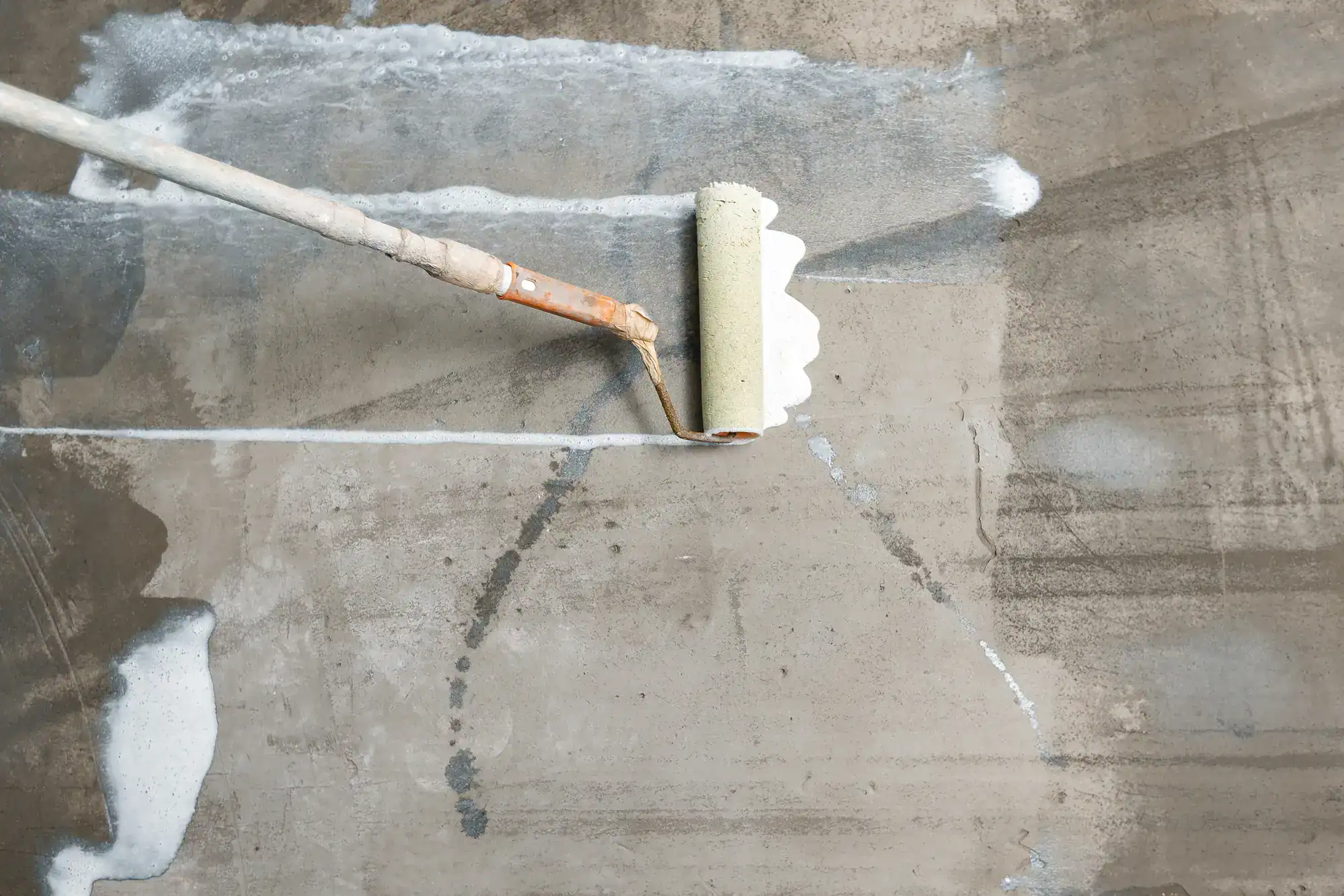
The first thing that happens on any Medford job isn’t mixing product it’s testing the slab. Given the ground conditions here, moisture vapor transmission testing is non-negotiable before anything else moves forward. If the slab is holding moisture, the system gets specified accordingly. Skipping that step is the single most common reason epoxy floors fail in this area, and it’s a step a lot of contractors skip because it adds time. We don’t.
Once the slab assessment is complete, surface preparation begins with diamond grinding. This opens the concrete’s pores, removes any existing coatings or contaminants, and creates the mechanical profile the epoxy needs to bond properly. This isn’t optional it’s the foundation of everything that follows. A floor that’s been acid-etched or pressure-washed instead of diamond ground is a floor that’s already compromised before the first coat goes down.
From there, the system goes on in layers: penetrating primer, base coat, and topcoat, each given the time it needs to cure properly before the next layer is applied. For commercial kitchens along the Route 112 corridor, that full installation can happen overnight so you’re open the next morning. For warehouses and industrial facilities near the expressway, we can work in phases around your operation so there’s no full shutdown. When the job is done, you get a floor that’s been built correctly from the ground up not rushed, not cut short, and not going to surprise you six months later.
Ready to get started?
The commercial and industrial side of Medford’s market is substantial. There’s over 2.4 million square feet of warehouse, distribution, and manufacturing space in this hamlet much of it concentrated along the LIE corridor at Exit 64. These floors take real punishment: forklift axle loads, pallet jacks, chemical spills, and years of continuous traffic. The heavy-duty industrial epoxy floor systems we install are specified at 14 to 30 mils of dry film thickness using 100% solids systems not the consumer-grade water-based products that get passed off as commercial-grade by less experienced operators. For facilities that handle food, chemicals, or regulated materials, we offer chemical-resistant epoxy finishes and USDA-compliant systems installed to meet every applicable Suffolk County and New York State standard.
On the residential side, Medford’s post-WWII housing stock the ranch homes and cape-style houses throughout Eagle Estates and the surrounding neighborhoods means a lot of aging concrete slabs that have never been properly coated or were coated with a consumer kit years ago. These are ideal candidates for a professional diamond-ground and resinous-coated floor that will actually hold up. Garage floors, basement floors, and utility spaces all fall within the scope of what we install for Medford homeowners.
Healthcare and education facilities in the Patchogue-Medford area have their own set of requirements antimicrobial additives, ADA-compliant slip resistance, seamless cove base installations that meet hygiene standards. These systems are part of our standard offering, not an upgrade. Whether it’s a high-traffic commercial epoxy installation for a distribution center or a residential garage floor in a Medford neighborhood, the process and the standards stay the same.
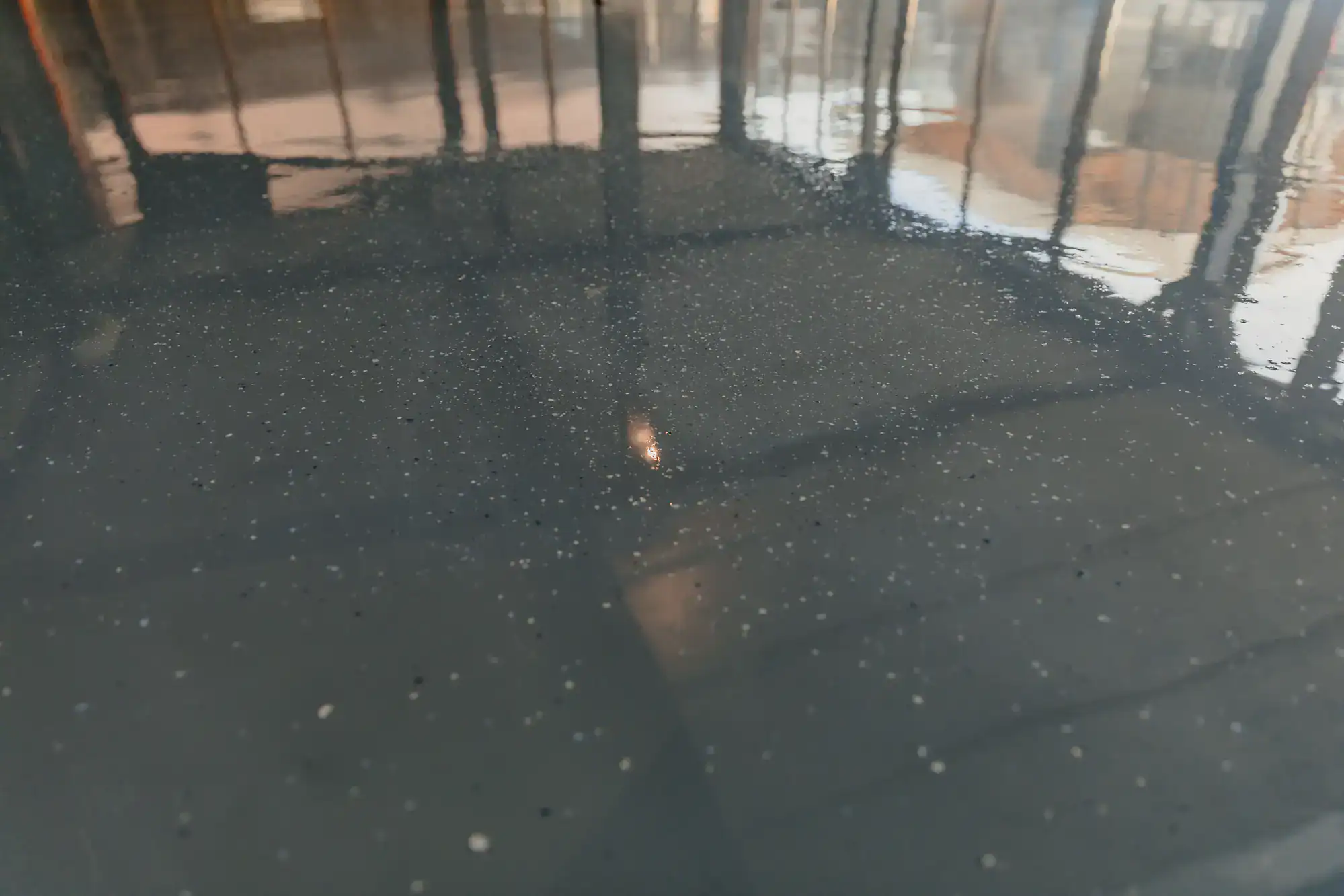
Yes and it’s one of the most important things to understand before any epoxy installation in this area. The Long Island Central Pine Barrens is characterized by sandy, highly permeable soil and a relatively shallow water table. That combination means groundwater moves freely beneath Medford’s concrete slabs, and moisture vapor transmission from below is a persistent issue especially in the spring when snowmelt saturates the ground, and after heavy rains when the area’s flat terrain limits drainage.
When moisture vapor pushes up through a concrete slab at a rate that exceeds what the coating system can handle, the result is blistering, bubbling, and delamination. The floor lifts from the slab because the bond has been broken from underneath. The fix isn’t a better topcoat it’s proper moisture testing before installation and a system specified to address what the test reveals. Every installation we do in Medford starts with that assessment. It’s not an add-on. It’s the baseline.
A properly installed epoxy floor in Medford should last 15 to 20 years in a residential setting and 10 to 15 years in a high-traffic commercial or industrial environment before any significant maintenance is needed. The key word is properly installed and Long Island winters are where shortcuts show up fast. Medford averages around 25 inches of snow annually, and the freeze-thaw cycles that come with that put real stress on any concrete surface. Road salt tracked in from Route 112 and the Long Island Expressway is chemically aggressive and will break down a coating that wasn’t specified for it.
The systems we install use polyaspartic topcoats that are roughly four times more flexible than standard epoxy, which means they move with the slab during temperature swings rather than cracking. They’re also significantly more abrasion-resistant and maintain slip resistance when wet which matters in a Medford garage or warehouse entry in February. A floor that was diamond ground, properly primed, and built to the correct mil thickness before winter hits is a floor that comes out the other side intact.
For most residential epoxy flooring projects in Medford a garage floor, a basement, a utility room no permit is required. You’re applying a coating over an existing concrete slab, and that typically falls outside the scope of what the Town of Brookhaven Building Department requires a permit for. That said, it’s always worth confirming with Brookhaven directly if your project involves any structural concrete repair or modification, since that can change the picture.
Commercial and industrial projects are a different conversation. If you’re operating a food service facility, a healthcare space, or an industrial building in Medford and the scope of work goes beyond a surface coating say, a full floor repair, a cove base installation, or work that ties into drainage there may be inspection requirements depending on the nature of the project. Our team is familiar with what commercial work in the Town of Brookhaven typically triggers, and we’ll flag anything relevant during the assessment phase so there are no surprises.
In most cases, yes. The industrial facilities along Medford’s LIE Exit 64 corridor run on tight schedules, and a full operational shutdown for a floor project isn’t realistic for most of them. We routinely work in phases sectioning off portions of a warehouse or distribution floor, completing and curing one zone before moving to the next so the rest of the facility stays active throughout the project.
For smaller commercial spaces, overnight installation is standard. A commercial kitchen floor on the Route 112 corridor, for example, can typically be completed between close and the next morning’s opening. The polyaspartic topcoats used in these systems reach functional cure significantly faster than traditional epoxy, which is part of what makes the timeline work. The scheduling conversation happens during the initial site assessment, and the installation plan gets built around your operation not the other way around.
The gap is significant, and it’s not just about brand names. Consumer-grade epoxy kits sold at retail stores are typically water-based systems with 40 to 55 percent solids content. When they cure, you’re left with 3 to 8 mils of dry film thickness a thin layer that looks fine at first but doesn’t have the structural integrity to hold up under real conditions. In Medford’s climate, with moisture pressure from below and freeze-thaw cycling above, those systems tend to start failing within the first year or two.
The industrial epoxy floor systems we install are 100% solids or high-solids commercial-grade products, applied at 14 to 30 mils of dry film thickness across a properly diamond-ground surface. That’s not a marginal improvement it’s a fundamentally different product category. Beyond the coating itself, the preparation process is what makes the real difference. No consumer kit includes diamond grinding, moisture testing, and a multi-layer primer-base-topcoat system. That’s the part that determines whether a floor lasts two years or twenty.
Epoxy flooring looks straightforward from the outside, which is exactly why it gets handed off to general handymen or unlicensed operators more often than it should. The problem is that the steps that actually determine whether the floor holds moisture testing, diamond grinding, proper primer selection, correct mil thickness, and cure time management require specific training and equipment that most handymen don’t have. In Medford specifically, where Pine Barrens ground moisture is a real and documented factor, skipping moisture assessment before installation is a near-guarantee of early failure.
For a Medford homeowner with a property now valued near $476,000, a floor that fails and needs to be ground off and reinstalled costs more than doing it right the first time both in money and in disruption. We hold factory-trained certifications from Sherwin-Williams High Performance Flooring and Res Tech, and every installer on our crew carries OSHA 40 certification. That’s not a credential a general handyman carries. It reflects a level of training and accountability that shows up directly in the quality and longevity of the finished floor.