
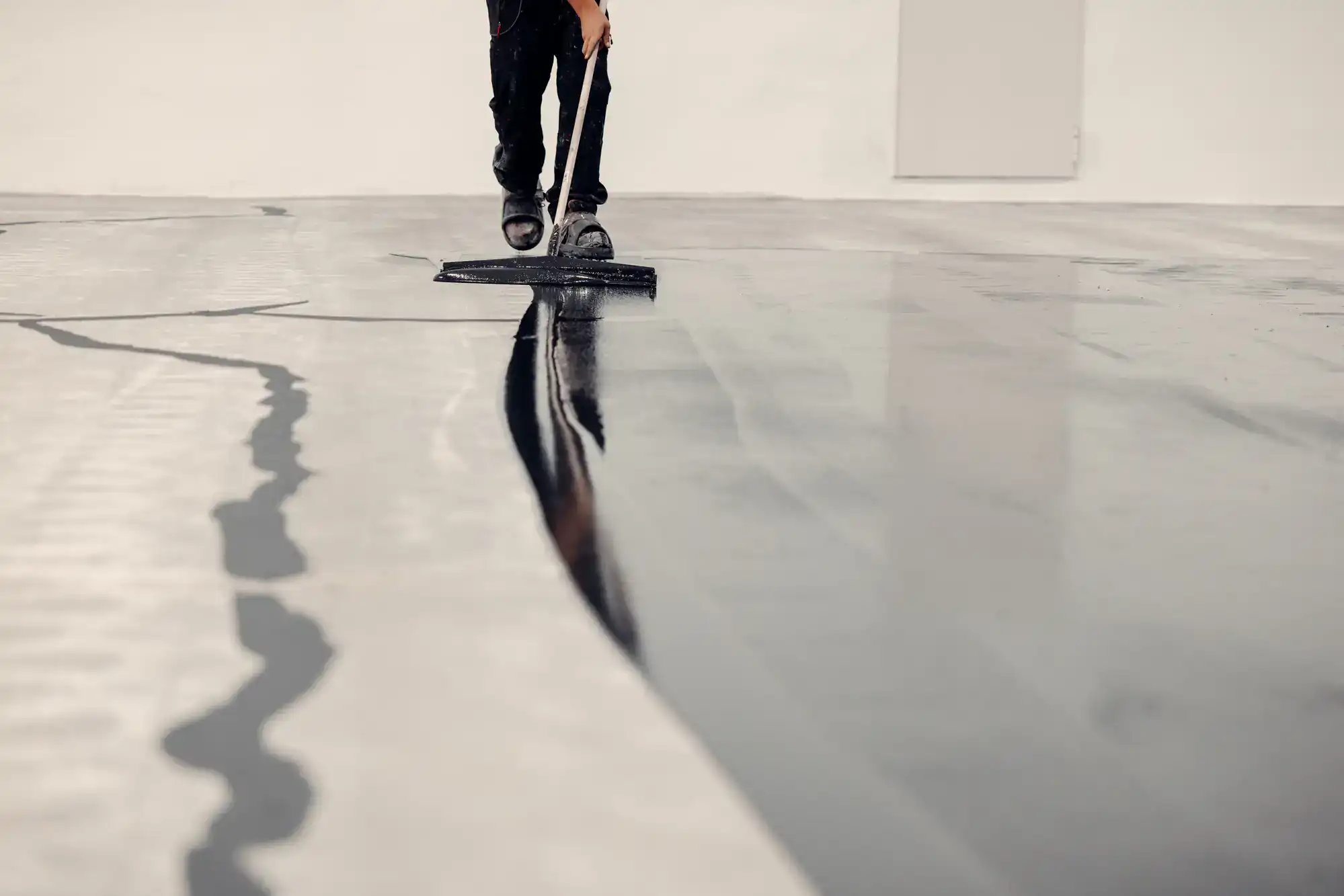
East Hampton is not a forgiving market. Your restaurant on Main Street, your boutique near Newton Lane, your medical office serving year-round patients none of them can afford a floor that starts peeling before next summer. When a commercial epoxy floor is installed correctly, you stop thinking about the floor entirely. No bubbling. No delamination. No slipping hazard during a dinner rush. Just a surface that does its job, season after season.
What makes East Hampton different from most of Long Island is the environment itself. The South Fork sits surrounded by water on three sides, and the humidity here runs between 72% and 82% year-round. Salt air off the Atlantic accelerates concrete degradation faster than most people realize, and moisture vapor pushing up through a slab is the number one reason epoxy floors fail prematurely. A properly installed system one that starts with moisture testing, not just a quick grind and coat is what separates a floor that lasts 15 to 20 years from one that embarrasses you by year two.
The other reality of this market is the seasonal intensity. When summer hits, your floor goes from low traffic to hundreds of people a day, often overnight. Getting the installation done during the off-season October through April means the system is fully cured and performing before that first wave of Memorial Day traffic comes through the door.
Advanced Epoxy Flooring has been installing commercial and industrial epoxy floors across Nassau and Suffolk Counties for over 35 years. We are led by Danny Harmer, who has more than 40 years of hands-on installation experience including the White House kitchen in 1996, which still holds. That is not a marketing line. It is a reference point for the standard we hold ourselves to on every job in East Hampton and across Long Island, whether it is a firehouse apparatus bay in Riverhead or a commercial kitchen in Amagansett.
The crew that shows up to your facility in East Hampton has been with us for over a decade in most cases. No rotating subcontractors. No franchise playbook. We hold factory-backed certifications from Sherwin-Williams High Performance Flooring and Res Tech, and every installer is OSHA 40 certified. Advanced Epoxy Flooring carries BBB Accreditation with an A+ rating and a clean complaint record across more than 30 years of operation in Suffolk County.
When you are investing in a floor for a property in one of the most recognized markets on Long Island, the contractor’s track record matters. Ours is verifiable.
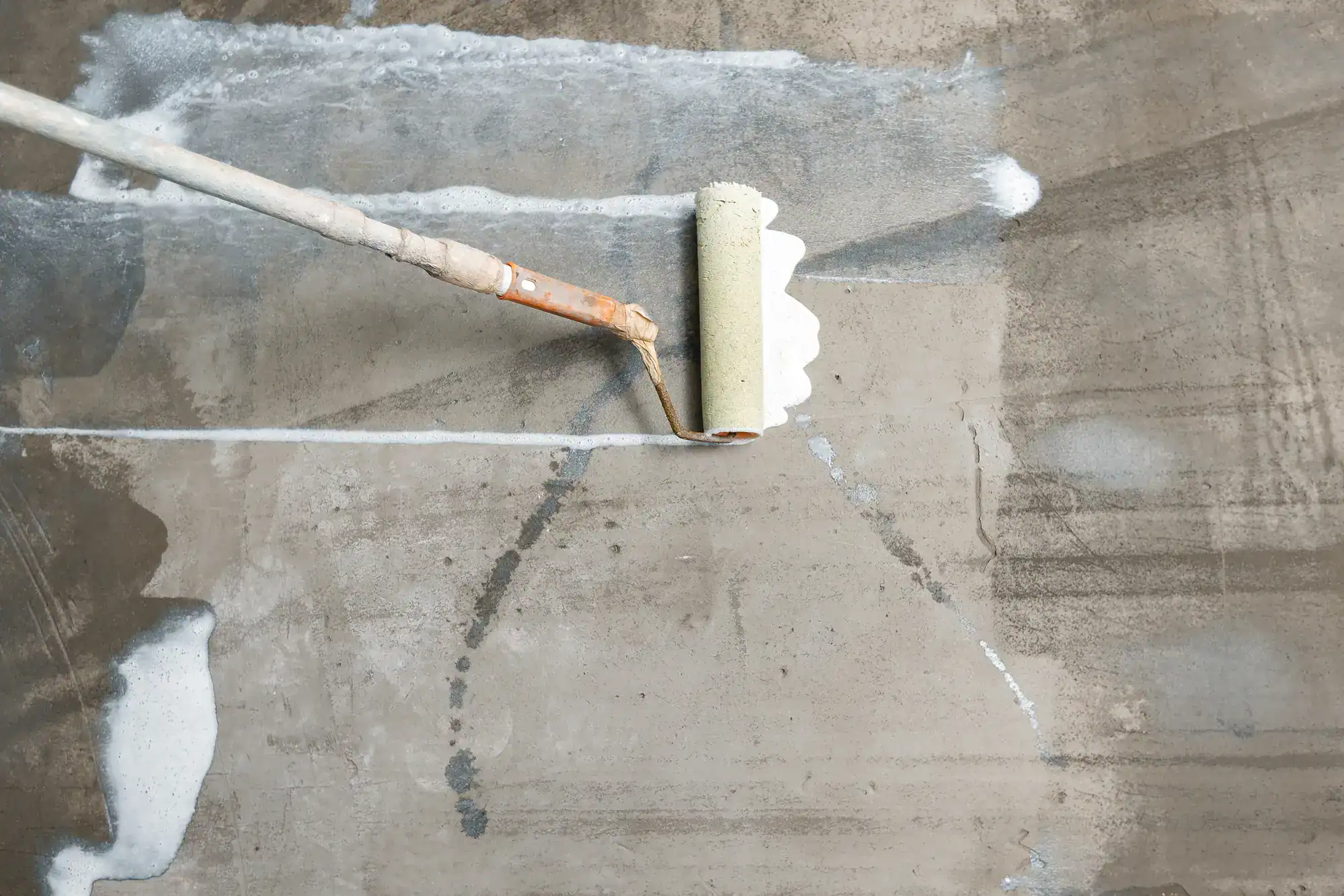
The first thing that happens before any product touches your floor is an assessment of the slab. In East Hampton, that means moisture testing is non-negotiable. The coastal humidity on the South Fork creates moisture vapor conditions that will cause an epoxy system to delaminate if they are not identified and addressed before installation begins. This step alone is what separates a floor that performs from one that fails.
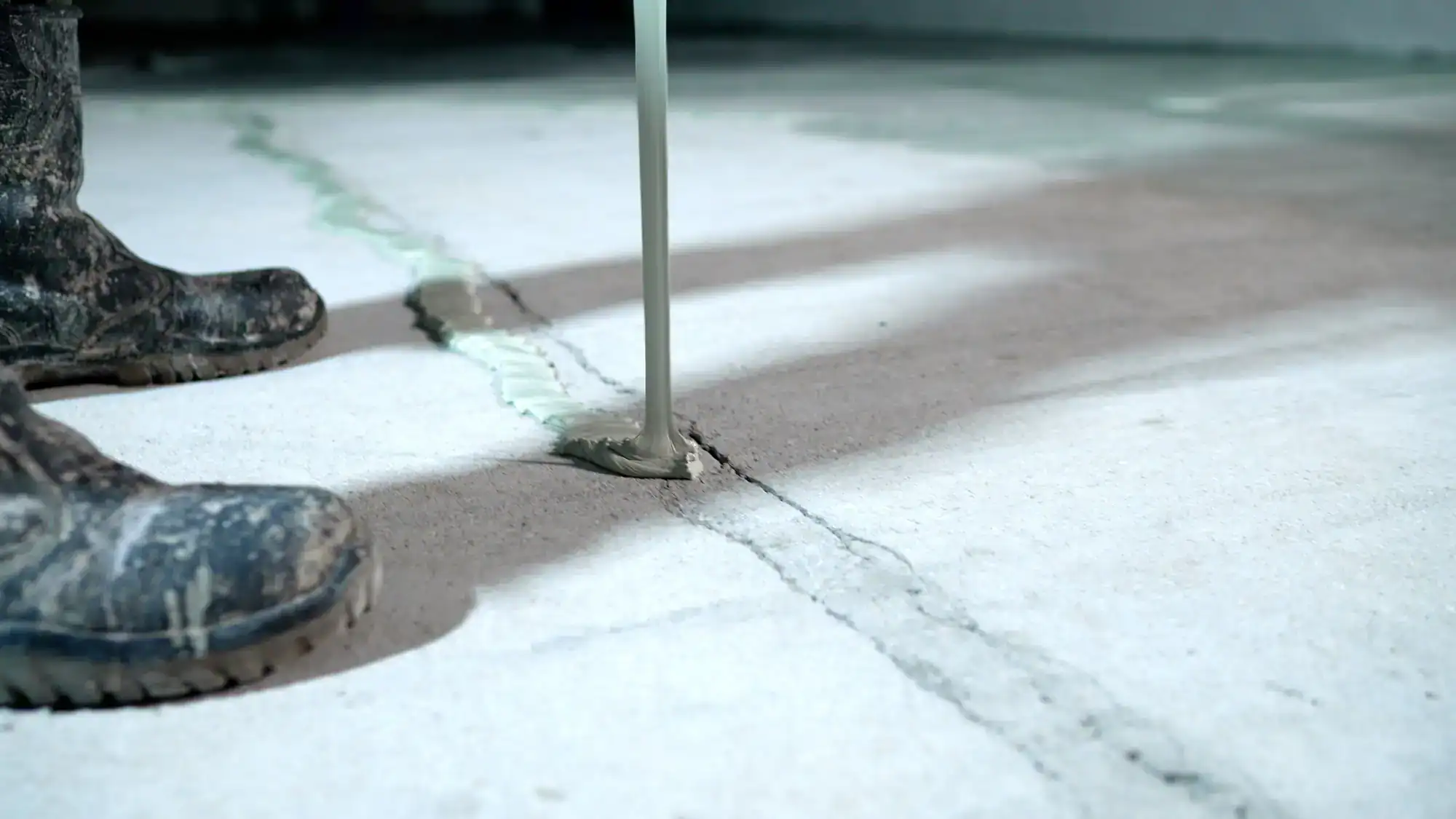
Once the slab is assessed, surface preparation begins with diamond grinding not acid etching, which is the shortcut operators use when they want to move faster than they should. Diamond grinding creates the surface profile that allows a high-build industrial system to bond correctly. Any cracks or surface irregularities are repaired at this stage. Then the system goes down in layers: primer coat, base coat, topcoat each given the cure time it needs before the next layer is applied. Rushing the recoat window is one of the most common causes of intercoat adhesion failure, and it is how floors end up peeling within the first year.
For restaurant and hospitality clients in East Hampton, we schedule installations overnight so your operation does not lose a day of service. The system is ready for foot traffic within 24 to 72 hours depending on the product specified. The whole process is built around your schedule and your environment not a one-size approach that ignores what the South Fork actually does to a concrete slab.
Ready to get started?
Not every East Hampton business needs the same floor. A boutique on Main Street has different demands than a commercial kitchen in Amagansett or a service bay near Montauk. The system we specify for your facility is based on what that space actually experiences foot traffic volume, chemical exposure, thermal cycling, moisture conditions, and aesthetic requirements.
For commercial kitchens and food service operations, we install USDA-compliant, food-grade systems with hygienic cove base installation that meets Suffolk County Department of Health requirements. For healthcare and medical office environments, we provide seamless, antimicrobial coatings that meet ADA and CDC compliance standards. High-traffic retail and hospitality spaces get seamless resinous floor coatings with finish options that hold up under heavy use without sacrificing the look. Automotive and marine service facilities serving East Hampton’s high-value vehicle owners receive chemical-resistant epoxy systems rated for oil, hydraulic fluid, and the physical load of vehicle traffic. Firehouse and municipal facilities get the same heavy-duty 100% solids mortar trowel system with polyaspartic topcoat that we have installed across Long Island for decades.
Every installation uses industrial-grade 100% solids systems that cure to 14 to 30 mils of dry film thickness not the consumer-grade water-based products that top out at 8 mils and are not built for commercial demands. The system is matched to your space, your environment, and your operational schedule.
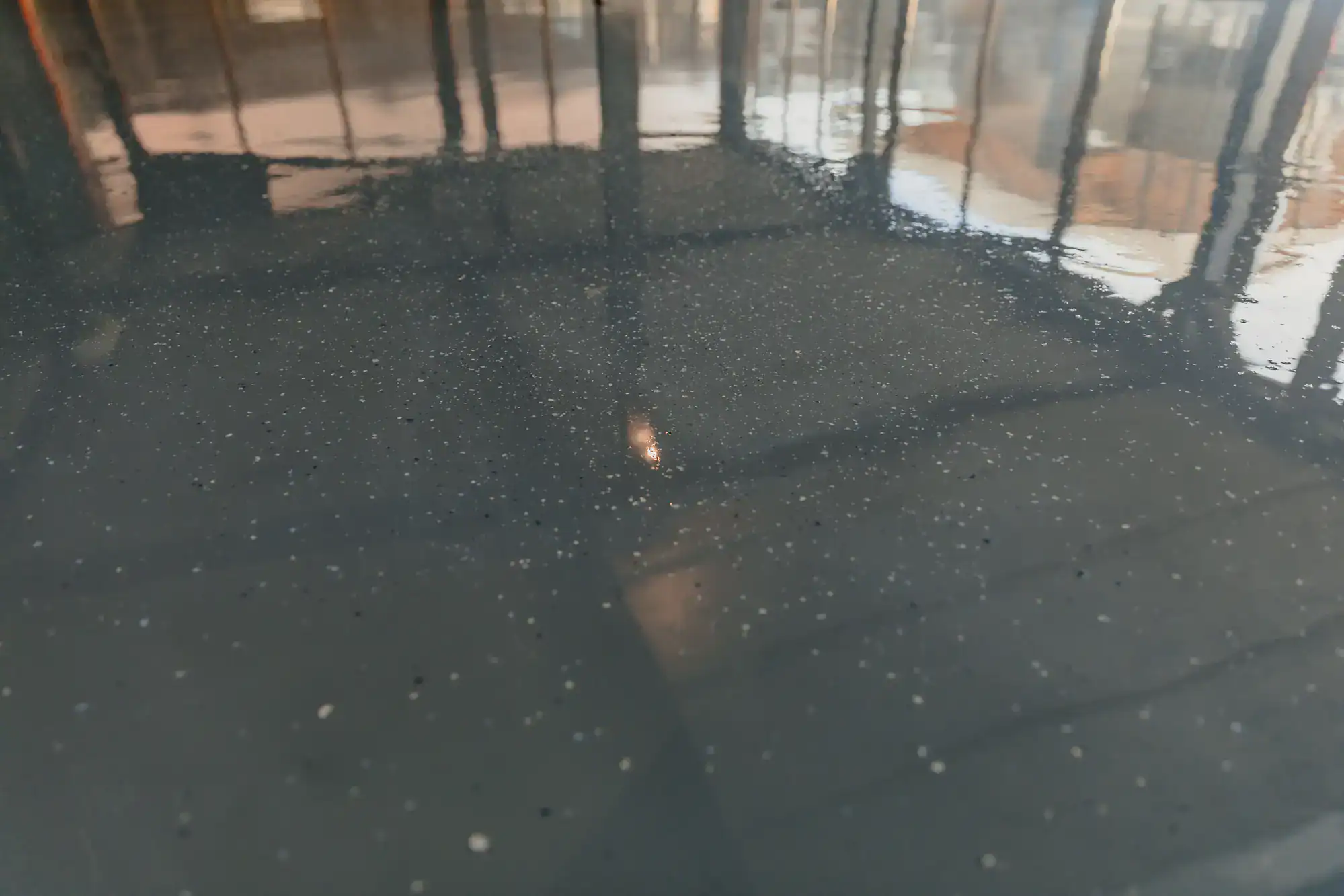
Yes, and it is one of the most important factors to account for before any installation begins. East Hampton sits on the South Fork of Long Island, surrounded by the Atlantic Ocean, Gardiner’s Bay, and the Peconic Bay system. Relative humidity here runs between 72% and 82% year-round, peaking in late spring and early summer exactly when many businesses are ramping up for the season.
That moisture does not just sit in the air. It moves through concrete slabs as vapor, and if a contractor does not test for moisture vapor transmission before specifying a system, the epoxy can delaminate from the slab within months. This is the most common cause of premature epoxy floor failure in coastal environments like East Hampton. The fix is straightforward: moisture testing before any product is specified, and a system selected to handle the conditions present in your specific slab. Skipping that step is how you end up with a floor that looks fine in October and starts bubbling by July.
A properly installed commercial epoxy floor in a high-traffic environment typically lasts between 10 and 20 years. The range depends on the system specified, the quality of surface preparation, and how the floor is maintained. In East Hampton’s hospitality and retail environment where a restaurant might serve hundreds of covers a night during peak summer the system needs to be built for that intensity from the start.
The key variable is surface preparation. Diamond grinding the slab to the correct concrete surface profile, testing for moisture, and applying each coat with proper cure time between layers is what determines how long the floor holds. A system that was rushed through installation to save a day of labor will not perform the same as one that was built correctly. For East Hampton businesses that operate at full capacity from Memorial Day through Labor Day, the floor installed in the off-season is the one that will still be performing when the next summer rush arrives.
Commercial kitchens in East Hampton need a food-grade, seamless epoxy system that meets USDA compliance standards and the requirements of the Suffolk County Department of Health. The floor cannot have grout lines, seams, or surface irregularities where bacteria and moisture can accumulate which is why seamless resinous systems are the standard for food service environments.
The installation also includes hygienic cove base, which creates a sealed, cleanable transition between the floor and the wall. This is not optional in a commercial kitchen it is a health code requirement. The system needs to handle thermal shock from industrial dishwashers and steam cleaning equipment, chemical exposure from commercial cleaning products, and the constant foot traffic of a working kitchen. For East Hampton restaurants that operate at peak intensity during the summer season, the floor also needs to be installed on a schedule that does not take the kitchen offline during service hours. Overnight installation is the standard approach for active food service operations.
The slab assessment happens before any system is specified or any product is purchased. The key things being evaluated are moisture vapor transmission, surface profile, existing coating or contaminant presence, and structural integrity cracks, spalling, or areas where the concrete has degraded.
In East Hampton, older commercial buildings and structures near the water are particularly likely to have moisture issues in the slab. Salt air exposure over time can degrade concrete surfaces, and slabs in buildings that have gone through multiple renovation cycles may have residual adhesives, sealers, or previous coating failures that need to be addressed before a new system will bond correctly. If moisture levels are too high for a standard epoxy system, there are moisture mitigation primers and cementitious urethane systems that can be specified instead. The assessment tells you what the slab actually needs not what is easiest or fastest to install.
For most commercial operations in East Hampton, yes and for restaurant and hospitality clients specifically, overnight installation is the standard approach. We arrive after you close, complete the installation, and the floor is ready for foot traffic within 24 to 72 hours depending on the system specified. You do not lose a day of service.
The scheduling conversation matters as much as the installation itself for East Hampton businesses. The off-season window October through April is the ideal time to complete a floor project. The humidity is lower, the application conditions are more controlled, and the floor has time to fully cure before the summer season begins. Trying to schedule a floor installation in June or July, when your business is operating at full capacity and ambient humidity is at its peak, creates unnecessary risk on both the operational and technical side. Planning ahead during the slower months is how you avoid the situation where your floor needs work right when you can least afford the disruption.
Commercial epoxy flooring in East Hampton typically ranges from $7 to $12 per square foot for a professionally installed industrial-grade system, depending on the size of the space, the condition of the existing slab, the system specified, and any surface preparation or repair work required. Larger spaces generally bring the per-square-foot cost down. Spaces with significant moisture issues, existing coating failures, or slab damage that needs remediation will carry additional costs for that prep work.
The more useful number for East Hampton business owners is the lifecycle cost. A system installed at $10 per square foot that performs for 20 years costs $0.50 per square foot per year. A cheaper system installed at $4 per square foot that fails in three years costs over $1.30 per square foot per year plus the cost of removing the failed coating, preparing the slab again, and reinstalling. In a market where the surrounding investment in your facility is measured in hundreds of thousands or millions of dollars, the floor is not where the lifecycle math works in favor of cutting corners. The goal is a system that does not need to be thought about again for the next decade or two.