
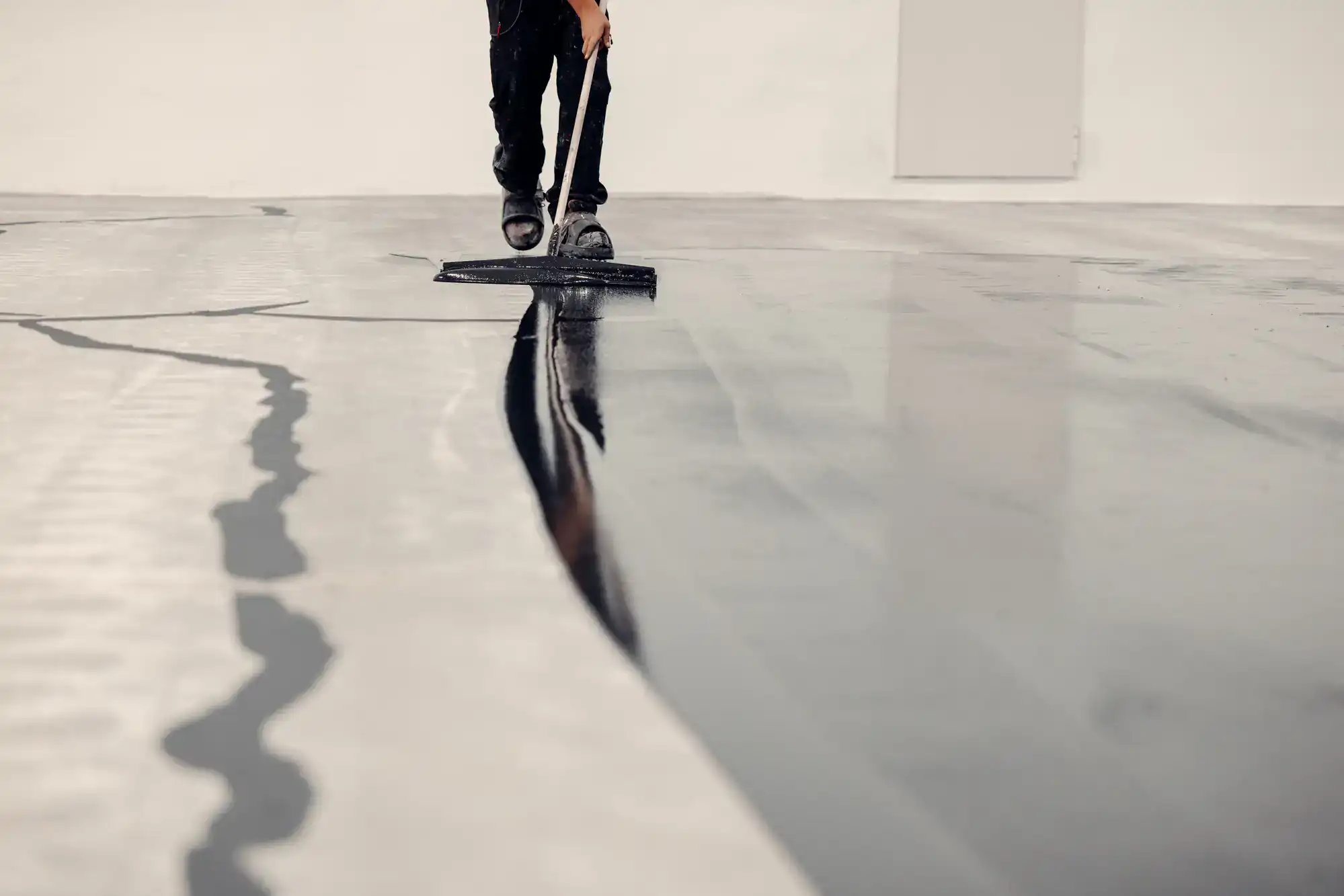
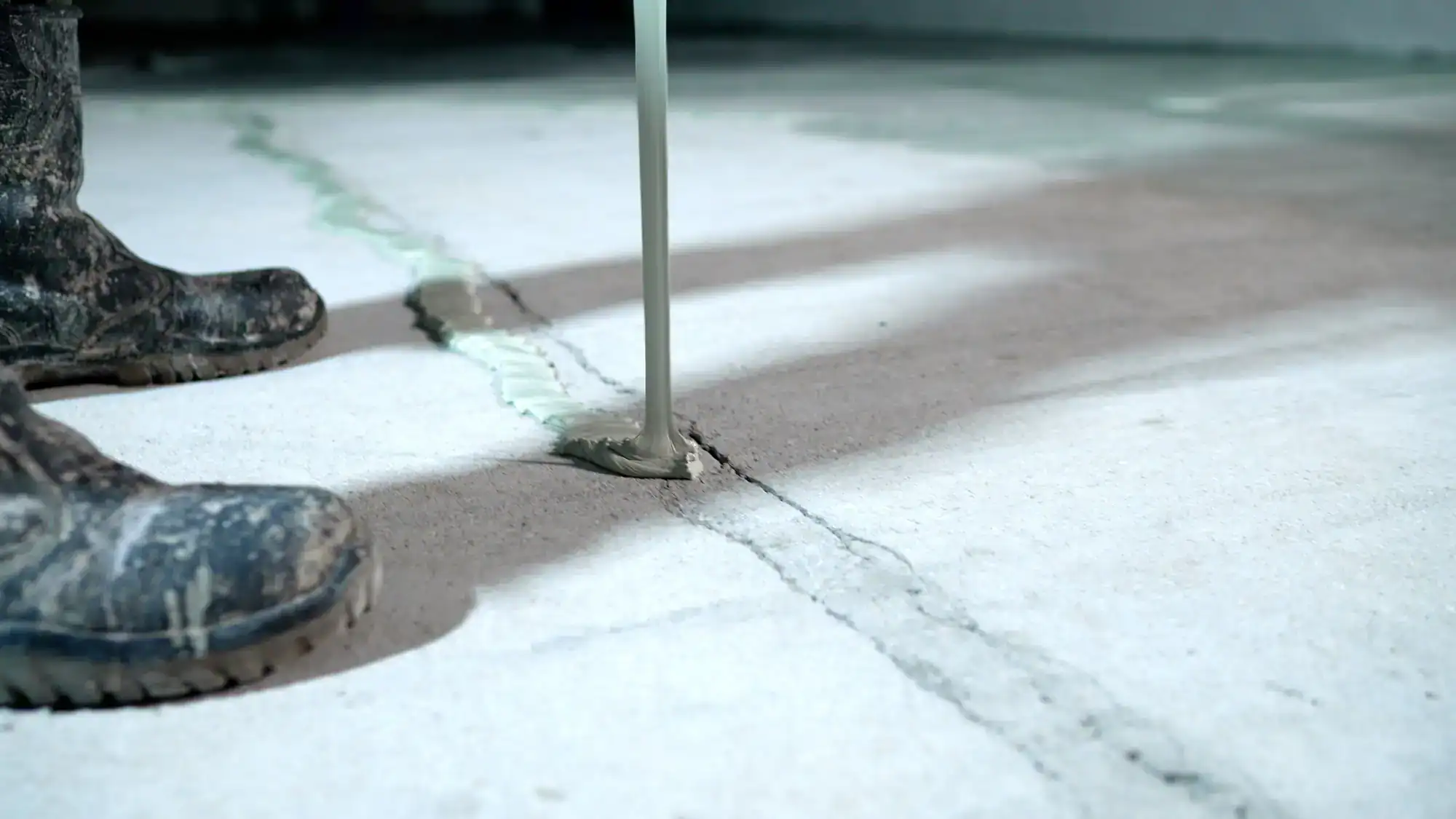
Most epoxy floors that fail in Dix Hills don’t fail because of bad luck. They fail because whoever installed them skipped the part that matters most surface preparation. When the concrete under a 50-year-old home on the north side of the LIE hasn’t been properly ground, tested for moisture, and primed, no coating is going to stick long-term. That’s not an opinion. It’s what happens when you cut corners on a slab that’s been absorbing Long Island humidity for half a century.
When the job is done right, you get a floor that doesn’t peel after the first winter, doesn’t bubble when summer humidity pushes past 80%, and doesn’t crack when your garage swings from 20°F in February to 90°F in July. That thermal range is real here, and it’s exactly why the system we specify includes a polyaspartic topcoat that’s four times more flexible than standard epoxy not because it sounds impressive, but because Dix Hills weather demands it.
For homeowners with large garages, finished basements, or utility spaces in older homes, the difference between a professional installation and a DIY kit shows up within the first year. For facility managers working in the Melville corridor right off Route 110, the difference shows up in downtime, liability, and how long before you’re calling someone to redo it.
We’ve been operating in Suffolk County since the early 1990s, and that means we’ve worked through every type of Long Island slab condition, every season, and every scenario that comes with installing floors in older homes and commercial buildings across Nassau and Suffolk. We know what a 1970s concrete slab in a Dix Hills garage looks like before the grinder touches it, and we know what it needs to hold a floor for the next 20 years.
Danny Harmer, our president, has been installing epoxy floors personally for over 40 years. He’s worked in warehouses, healthcare facilities, commercial kitchens, and firehouses and in 1996, he installed the epoxy floor in the White House kitchen. That’s not a credential you earn from a weekend training seminar.
Our installers are OSHA 40-certified, factory-trained through Sherwin-Williams High Performance Flooring and Res Tech, and most of them have been with us for over a decade. When we show up to your property in Dix Hills, you’re getting a crew that has done this work in this region, in these conditions, for years.
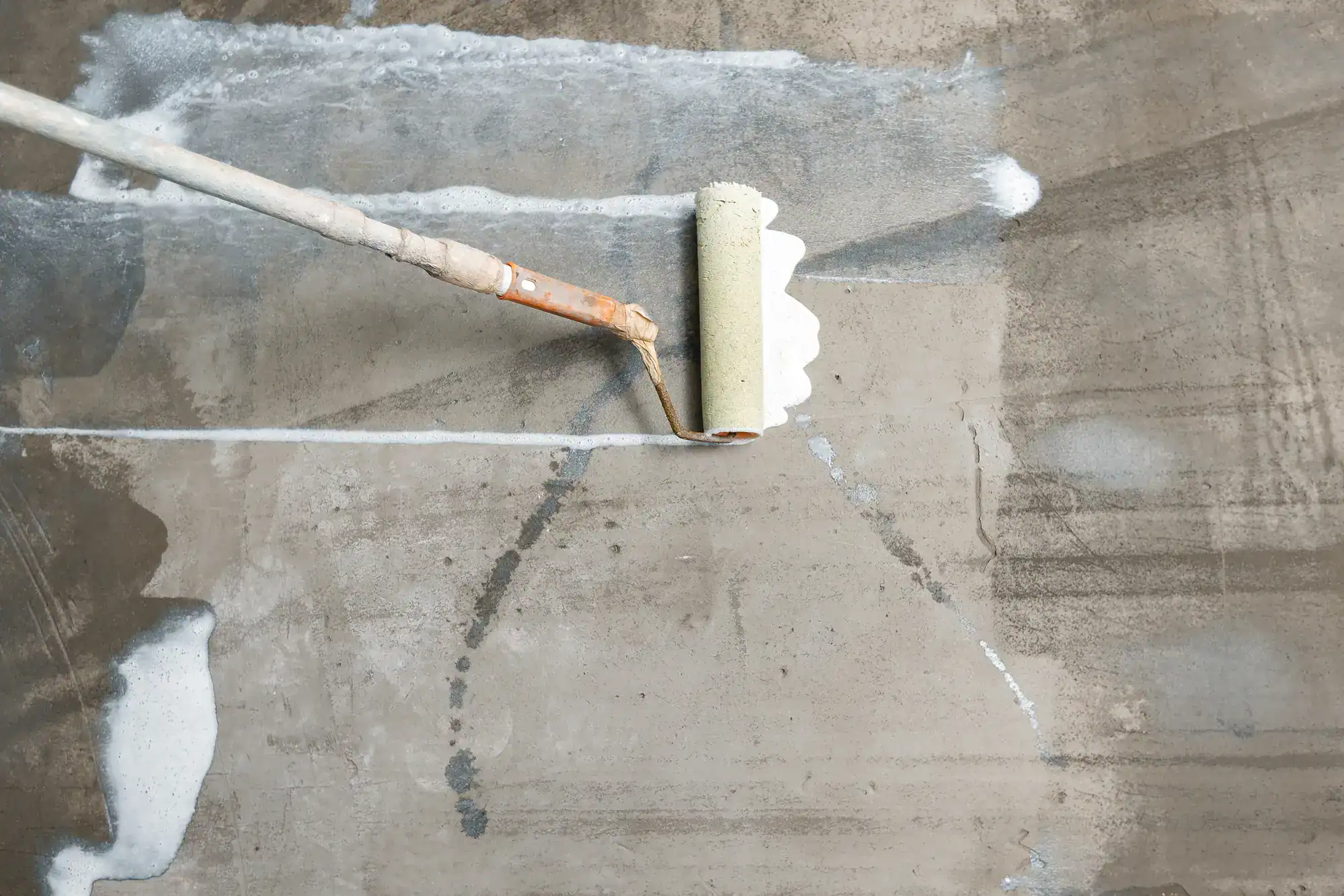
Before anything goes on your floor, we test the slab. Moisture vapor transmission is one of the most common causes of epoxy failure on Long Island, and with Dix Hills humidity regularly running between 66% and 87%, skipping that step isn’t an option. We use professional-grade moisture testing equipment to determine what your slab is actually doing before we specify a system because the product selection depends on what we find, not what we assume.
Once we know what we’re working with, we grind the surface using diamond grinding equipment. This is not acid etching. Diamond grinding removes decades of contamination, oil penetration, and old coating residue and it creates the concrete surface profile that industrial-grade epoxy needs to bond permanently. For homes in Dix Hills where slabs are often 50+ years old and may have had prior DIY coating attempts, this step is critical.
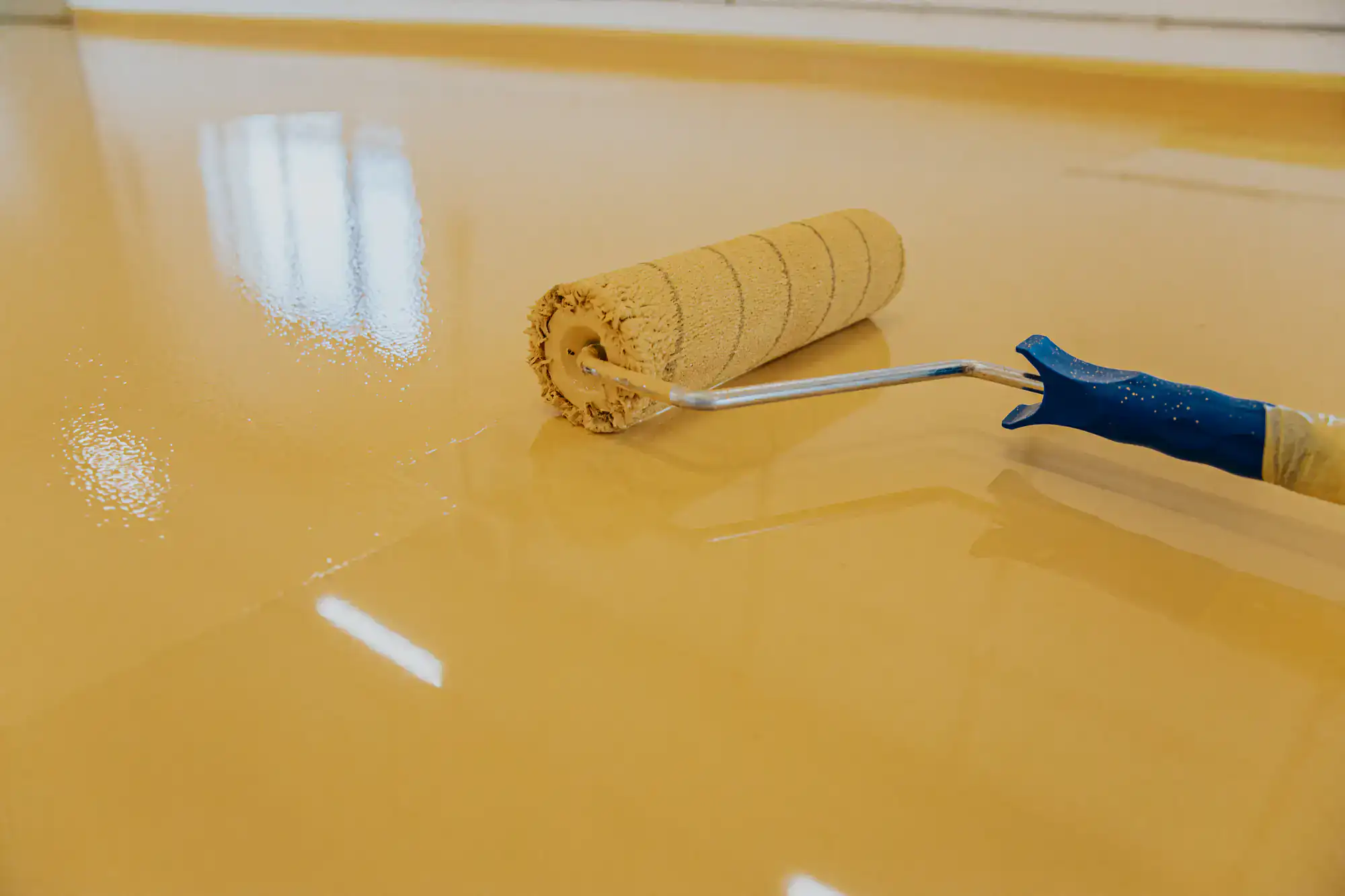
From there, we apply a multi-layer system: primer, base coat, and topcoat with proper cure time between each layer. For residential garages and basements, most installations are complete within one to two days. For commercial kitchens and food service facilities in the area, we can work overnight so you’re open the next morning. Every system is specified for the environment it’s going into not a one-size-fits-all product pulled off a shelf.
Ready to get started?
A garage floor in a Dix Hills home has different demands than a warehouse floor near the Route 110 corridor in Melville and both are different from a commercial kitchen, a firehouse apparatus bay, or a healthcare facility. We don’t install the same system everywhere. What you get depends on your traffic load, chemical exposure, moisture conditions, and how the space is actually used.
For residential properties large garages, basements, and utility spaces common in Dix Hills’s older, oversized housing stock we install high-solids or 100% solids epoxy systems with polyaspartic topcoats. These are not consumer-grade products. They’re specified at 14 to 30 mils for systems that need to handle vehicle traffic, thermal cycling, and the kind of long-term wear a home in this price range should be able to handle without a second thought.
For commercial and industrial clients including facility managers serving the corporate campuses along Route 110, food service operators, and institutional facilities like those at Five Towns College or the Dix Hills Fire Department we install chemical resistant epoxy finishes, seamless resinous floor coatings rated for forklift loads, and USDA-compliant kitchen systems with cove base and slip-resistant topcoats. Every installation meets the applicable New York State building code and Suffolk County Department of Health requirements for regulated environments. You get documentation, certifications, and a floor that holds up to inspection not just to foot traffic.
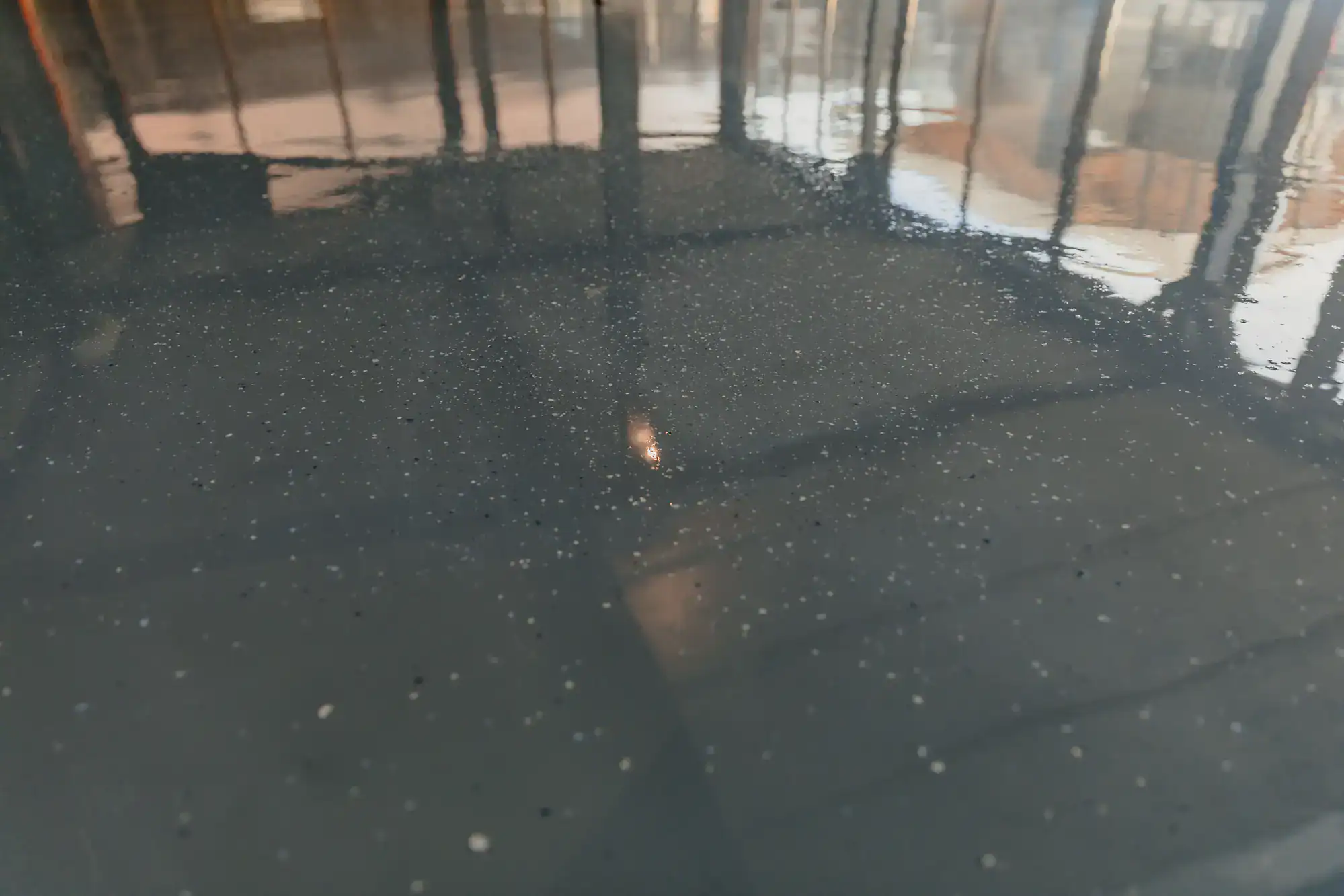
The short answer is moisture and surface prep and in Dix Hills, both are working against you if the installer doesn’t take them seriously. Long Island’s humidity regularly runs between 66% and 87%, and that moisture doesn’t just stay in the air. It works its way into concrete slabs over time through a process called moisture vapor transmission. When a coating is applied over a slab that hasn’t been tested and properly prepared, the moisture underneath creates pressure that eventually breaks the bond between the epoxy and the concrete. That’s where peeling starts.
The other factor is surface preparation. Most of the homes in Dix Hills were built around 1970, which means the concrete slabs are over 50 years old. That concrete has absorbed oil, chemicals, and contaminants over decades and if a contractor uses acid etching instead of diamond grinding, they’re not removing that contamination. They’re just roughing up the surface. Diamond grinding is the only method that creates the clean, profiled surface that industrial-grade epoxy needs to bond correctly and stay bonded through Long Island’s full range of seasonal conditions.
A properly installed industrial-grade epoxy floor in Dix Hills should last 10 to 20 years under normal residential or commercial use. The key word is “properly.” That means the slab was moisture-tested, diamond-ground, primed, and coated with a high-solids system not a water-based or consumer-grade product applied over a minimally prepared surface. Systems that are installed correctly and specified for Long Island’s climate including a flexible polyaspartic topcoat that handles the thermal swing from 20°F winters to 90°F summers hold up significantly longer than systems that cut corners on any one of those steps.
For high-traffic commercial environments like warehouses, kitchens, or facilities near the Melville corporate corridor, longevity also depends on specifying the right system for the load. A floor rated for pedestrian traffic won’t hold up under forklift use. When the system is matched to the actual demands of the space, 15 to 20 years of performance is realistic. When it isn’t, you’re looking at a replacement conversation within two to three years.
Yes, and it’s one of the first things we account for on every job in this area. The median construction year for homes in Dix Hills is 1970, which puts most residential slabs at 50 years or older. Older concrete tends to have more surface contamination from years of use oil penetration, chemical residue, micro-cracking, and in some cases previous coating attempts that need to be fully removed before anything new will adhere. None of that disqualifies a slab from being coated, but it does mean the preparation process is more involved than it would be on a newer pour.
The other thing that comes up frequently in older Dix Hills homes is prior DIY epoxy applications. Big-box store kits have become popular over the years, and when they fail which they typically do within one to three years the old coating has to be fully ground off before a professional system can go down. That adds time and cost to the job, but it’s not optional. Applying a new coating over a failed one is how you get another failed one. We assess all of this during the initial evaluation and give you a straight answer on what your slab needs before we quote the job.
The demand in and around Dix Hills comes from a few distinct categories. On the commercial side, the corporate campuses along Route 110 in neighboring Melville home to companies like Canon, Nikon, and Henry Schein have real industrial flooring needs: warehouse floors rated for forklift traffic, mechanical rooms, and loading areas that take daily abuse. These environments need heavy duty industrial epoxy floor systems that are specified for the actual load and chemical exposure they’ll see, not a generic coating.
Food service facilities and commercial kitchens in the area require a different system entirely USDA-compliant, seamless, with cove base installed at the wall-floor junction and a slip-resistant topcoat that meets Suffolk County Department of Health requirements. Firehouses, like the three stations operated by the Dix Hills Fire Department, need apparatus bay floors that handle diesel exposure, thermal shock from temperature swings, and the weight of heavy trucks. Institutional facilities like Five Towns College at 305 North Service Road have high-traffic corridors and support spaces that need durable, seamless floors that are easy to maintain. Each of these environments gets a system built for it not the same product applied to every square foot.
For a residential garage in Dix Hills, a professional industrial-grade epoxy installation typically runs between $3,000 and $8,000 depending on the size of the space, the condition of the existing slab, and the system specified. Larger three-car garages which are common in Dix Hills given the average home size of nearly 4,000 square feet will be toward the higher end of that range. If the slab requires significant prep work, such as removal of a prior failed coating or remediation of moisture issues, that affects the final number.
What’s worth understanding is what that investment includes versus what a cheaper quote might leave out. A contractor who quotes significantly less is almost always cutting somewhere thinner product, acid etching instead of diamond grinding, skipping moisture testing, or using a water-based system that won’t hold up through a Long Island winter. In a community where the average home is worth over a million dollars, the cost of redoing a floor that failed in two years plus the disruption is far more expensive than getting it right the first time. We give you a detailed, transparent quote upfront so you know exactly what’s included and why.
The most reliable indicators are documented credentials not just years in business, but manufacturer-backed certifications from companies like Sherwin-Williams High Performance Flooring or Res Tech, which require demonstrated technical competency. OSHA certification for installers matters too, especially for commercial jobs in the Melville corridor where facility access often requires documented safety training. A BBB Accreditation with a clean complaint history is another signal worth checking it’s public record and easy to verify.
Beyond credentials, ask specific questions about our process: Do we test for moisture before specifying a system? Do we use diamond grinding or acid etching? What mil thickness will the finished system be? What product line are we using, and is it 100% solids or water-based? A contractor who can answer those questions clearly and specifically without deflecting or getting vague knows what they’re doing. One who pivots to price or availability without addressing the technical questions probably learned epoxy as an add-on to another trade, which is common in this market. In Dix Hills, where the properties are high-value and the expectations are high, those distinctions matter more than they might somewhere else.