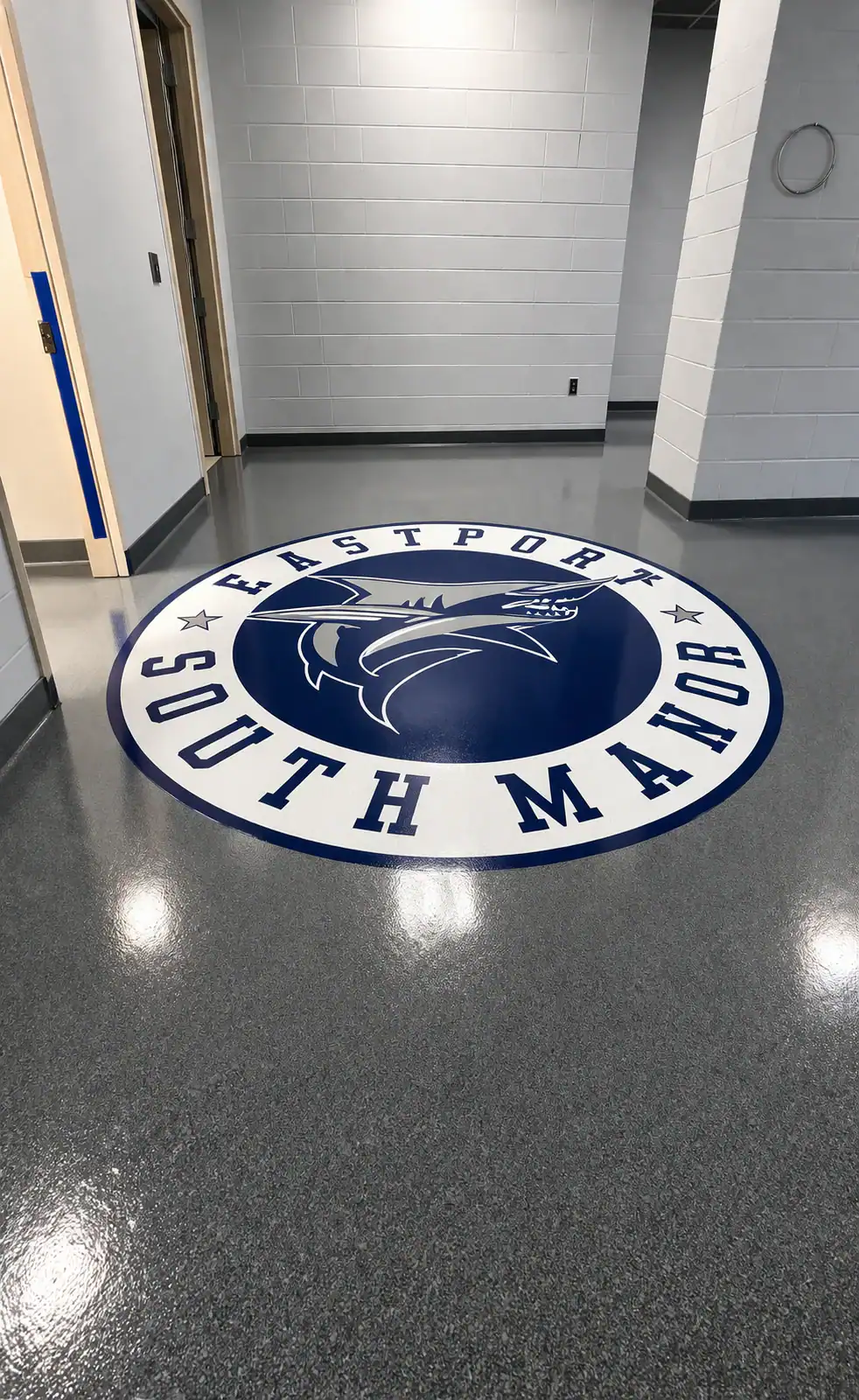
From dull warehouse slabs to high-gloss retail floors, concrete polishing does more than most people expect — here's what you need to know before you start.
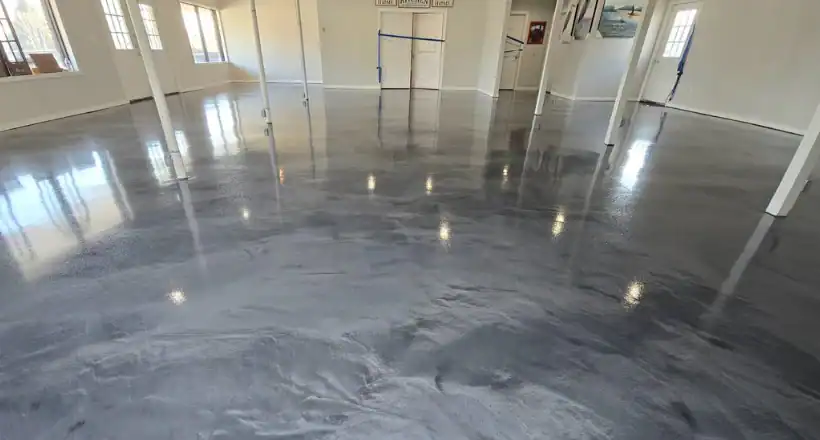
Most people don’t think about their floors until something goes wrong. A customer slips. A crack spreads. The surface starts peeling, dusting, or just looks embarrassing compared to the competition down the street. By then, the question isn’t whether to do something — it’s who to trust with it and what to actually do.
Concrete polishing is one of the most misunderstood upgrades in commercial flooring. It looks simple from the outside, but the difference between a floor that lasts twenty years and one that fails in three comes down entirely to what happens before the shine. This guide walks you through the real process, the real questions, and what to look for when choosing a contractor in Bohemia, NY and the surrounding area.
Concrete polishing is not a coating. Nothing is applied on top of your existing slab to make it look better. Instead, the surface itself is mechanically refined using industrial diamond abrasives — progressively finer grits that cut, smooth, and ultimately bring out a genuine sheen from within the concrete. A chemical densifier is worked into the surface partway through the process, hardening the concrete from the inside and filling the microscopic pores that cause dusting and surface degradation over time.
The result is a floor that’s harder, denser, and more reflective than what you started with. It handles heavy foot traffic without wearing down. It’s easy to clean. And in a retail or commercial setting, it makes the space look noticeably more professional without the cost of tile, stone, or any material layered on top of what you already have.
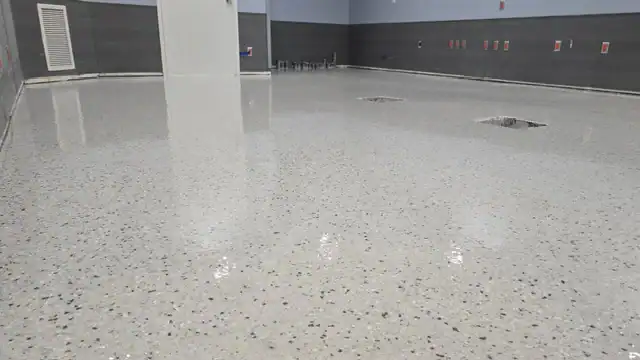
This is where most buyers get surprised — and where most low-budget contractors cut corners. A proper polished concrete floor requires anywhere from six to twelve passes with an industrial grinding machine, moving through progressively finer diamond grits at each stage. You start coarse to flatten the surface and open the concrete, then work through medium grits for honing, and finish with fine polishing passes that produce the actual sheen. Skip a grit stage to save time and you end up with a floor that looks flat instead of deep, or one that shows swirl marks under certain lighting.
Before any of that begins, the concrete has to be assessed. The slab needs to be hard enough — generally 4,000 PSI or higher — to hold a polish without cracking under the grinder’s pressure. Cracks, pits, and surface damage need to be patched and allowed to cure. And in a coastal market like Long Island, moisture testing is not optional. Ground moisture and ambient humidity in Nassau and Suffolk County are real variables that affect how any flooring system performs. We make moisture assessment a required conversation before every project, because skipping it is one of the most common reasons floors fail within a few years of installation.
The densifier application happens mid-process, typically after the initial honing passes. It needs time to penetrate and react with the calcium hydroxide in the concrete before the fine polishing begins. Rush that stage and the densifier doesn’t fully do its job, which means the floor looks polished initially but loses its hardness and sheen faster than it should. After the final polishing passes, a penetrating guard or sealer is applied to protect the surface against staining and chemical exposure. The specific sealer matters — what works in a dry showroom is different from what you’d use in a retail environment where wet shoes, cleaning chemicals, and daily mopping are part of life.
Done right, this process produces a floor that can last ten to twenty years or more with minimal maintenance. Done fast, it produces a floor that looks fine on day one and becomes a problem within a few years.
This question comes up in almost every initial conversation we have with commercial clients, and the honest answer is: it depends on what the space actually demands. Polished concrete and epoxy are fundamentally different systems, and treating them as interchangeable is a mistake that leads to the wrong floor in the wrong environment.
Polished concrete works with your existing slab. It’s a mechanical process — no coating, no film on the surface. That makes it ideal for spaces where aesthetics matter alongside performance: retail stores, school hallways, showrooms, airport-adjacent commercial facilities, and any environment where a clean, modern look needs to hold up under real use. It’s also a genuinely sustainable choice. Because it uses the concrete that’s already there and relies on lithium-based densifiers, it qualifies as a green flooring system and can contribute to LEED certification for schools, healthcare facilities, and institutional buildings pursuing those credentials.
Epoxy, on the other hand, is a coating applied on top of the concrete. It excels in environments with heavy chemical exposure, extreme load requirements, or specific hygiene needs — think commercial kitchens, auto service bays, aircraft hangars, and healthcare facilities. Epoxy can be formulated to handle thermal shock, caustic cleaning agents, and the kind of mechanical stress that would wear through a polished surface over time.
For retail spaces, schools, and commercial offices, polished concrete is typically the stronger long-term choice. For industrial environments, automotive shops, or anywhere that sees serious chemical or mechanical stress, epoxy is usually the better answer. We install both, and we’ll tell you which one actually makes sense for your situation rather than defaulting to whichever is easier to sell.
One thing that applies to both systems equally: the concrete preparation underneath has to be done correctly. A beautiful epoxy coating over unprepared concrete will fail just as predictably as a polished surface that skipped proper densification. The prep work is the floor.
Want live answers?
Connect with an Advanced Epoxy Flooring expert for fast, friendly support.
Polished concrete has moved well beyond warehouses and industrial spaces. Today we specify it in retail stores, school buildings, healthcare facilities, automotive showrooms, hangars, and residential basements — and for good reason. The performance requirements are different in each environment, but the core advantages carry across all of them: durability, low maintenance, and a professional appearance that holds up under real use.
What changes from one application to the next is the finish level, the sealer type, and the prep requirements. A school hallway needs controlled slip resistance and the ability to handle daily mopping with institutional cleaning products. A retail showroom might prioritize a higher-gloss finish that reflects light and makes the space feel larger. A hangar floor near MacArthur Airport needs to handle rolling loads, fuel exposure, and the kind of mechanical stress that would destroy a residential-grade system in weeks.
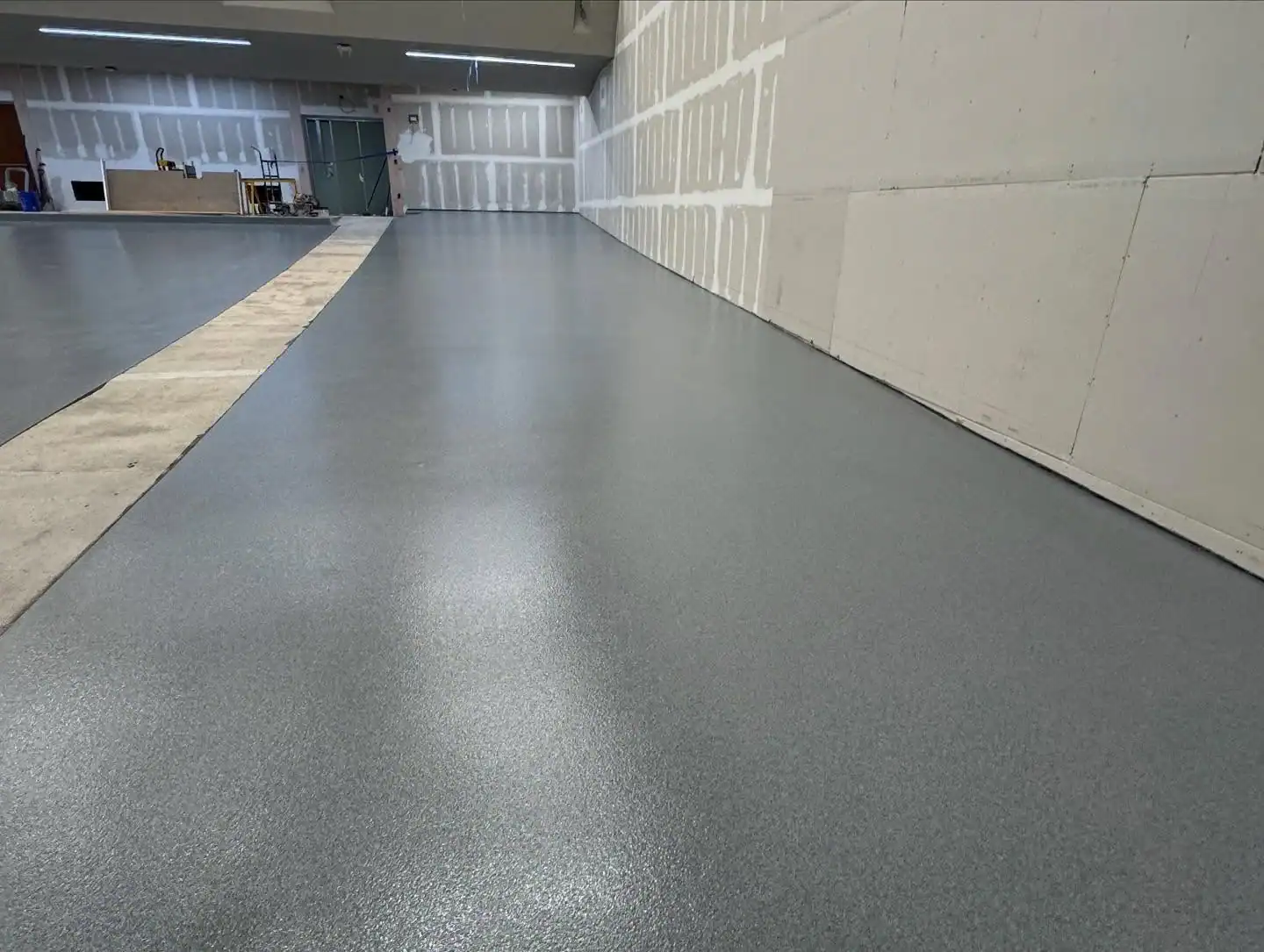
Retail is a visual business. Customers form an impression of a store within seconds of walking in, and the floor is one of the first things they register — not consciously, but it’s there. A clean, high-gloss polished concrete floor signals that the business is serious, well-maintained, and worth their time. A dull, stained, or cracking floor signals the opposite, regardless of what’s on the shelves.
For retail businesses along Sunrise Highway and throughout the South Shore commercial corridor in Bohemia and beyond, polished concrete delivers something that tile, vinyl, and carpet simply can’t match at the same price point: a floor that looks genuinely high-end, handles heavy daily foot traffic without showing wear, and costs almost nothing to maintain year over year. No waxing. No stripping. No replacing individual tiles when a section chips. A neutral pH cleaner and a mop — that’s the maintenance program.
Slip resistance is a real concern in any retail environment, and it’s worth addressing directly. Polished concrete is not inherently slippery. The finish level and sealer selection control the coefficient of friction, and for retail environments where wet shoes and tracked-in moisture are a daily reality, we specify finishes that meet appropriate slip resistance standards without sacrificing the aesthetic. Customer safety and brand presentation are not competing priorities here — both are achievable in the same floor.
The other factor retail clients care about is downtime. A flooring project means your space is out of commission, and every day closed is revenue you’re not making. Our installations are typically completed in days, with floors ready for traffic within 24 to 72 hours depending on the system. That’s what comes from 35 years of doing this work efficiently without cutting corners on the chemistry.
Schools and institutional facilities have specific demands that consumer-grade flooring products simply aren’t built to meet. Hallways, cafeterias, and common areas take punishment from hundreds of students daily, get mopped with commercial cleaning solutions, and need to look presentable for years without major intervention. Polished concrete handles all of that. It’s hard, seamless, easy to clean, and doesn’t harbor the bacteria and allergens that carpet accumulates over time. For school districts in the Connetquot Central School District and across Suffolk County, it’s also a smart capital investment — a floor installed correctly can last the better part of two decades, which changes the math on total cost of ownership significantly.
Healthcare and animal wellness environments have a different set of requirements. The priority there is hygiene and seamlessness — no grout lines, no seams, no places for bacteria to accumulate. Polished concrete can be finished and sealed to meet those demands, and in veterinary clinics and animal wellness facilities, it holds up to the cleaning protocols and chemical exposure that those environments require without degrading the surface over time.
For hangar flooring near MacArthur Airport, the requirements shift again. Aircraft hangars deal with rolling loads, fuel and hydraulic fluid exposure, and the kind of mechanical stress that rules out most standard flooring options. Our team is factory-trained in advanced resinous systems including polyaspartic coatings and cementitious urethanes — specialty systems that most general contractors don’t work with and that are specifically engineered for aviation and heavy industrial environments.
Automotive shops and residential basements each have their own set of variables, but the common thread is the same: the right system for the environment, installed correctly from the ground up. We’ve been doing this work out of Bohemia, NY since 1990, and that depth of local experience — understanding the ground moisture conditions, the freeze-thaw cycles, the specific demands of Suffolk County commercial buildings — is something that shows up in the finished floor.
The process behind a great polished concrete floor is not complicated to understand, but it is unforgiving when steps get skipped. Moisture testing, proper diamond grinding, densifier timing, sealer selection — each of these matters, and the contractors who cut corners on them produce floors that look fine at first and become expensive problems within a few years. You’ve probably seen it, or heard about it from someone who has.
What you’re looking for is a contractor who understands your specific environment, asks the right questions before quoting, and has the track record to back up what they’re telling you. For commercial and industrial clients throughout Bohemia, Islip, and the broader Suffolk County area, that combination is rarer than it should be.
We’ve been based in Bohemia since 1990. If you’re ready to talk through what your space actually needs, reach out and we’ll start there.
Summary:
The 2026 Shift: Why High-Performance Self-Leveling Systems are Trending in Modern Residential Design
Article details:
Share: