
School floors take a beating. Here's what actually holds up — and why more Long Island districts are making the switch to epoxy and polished concrete.
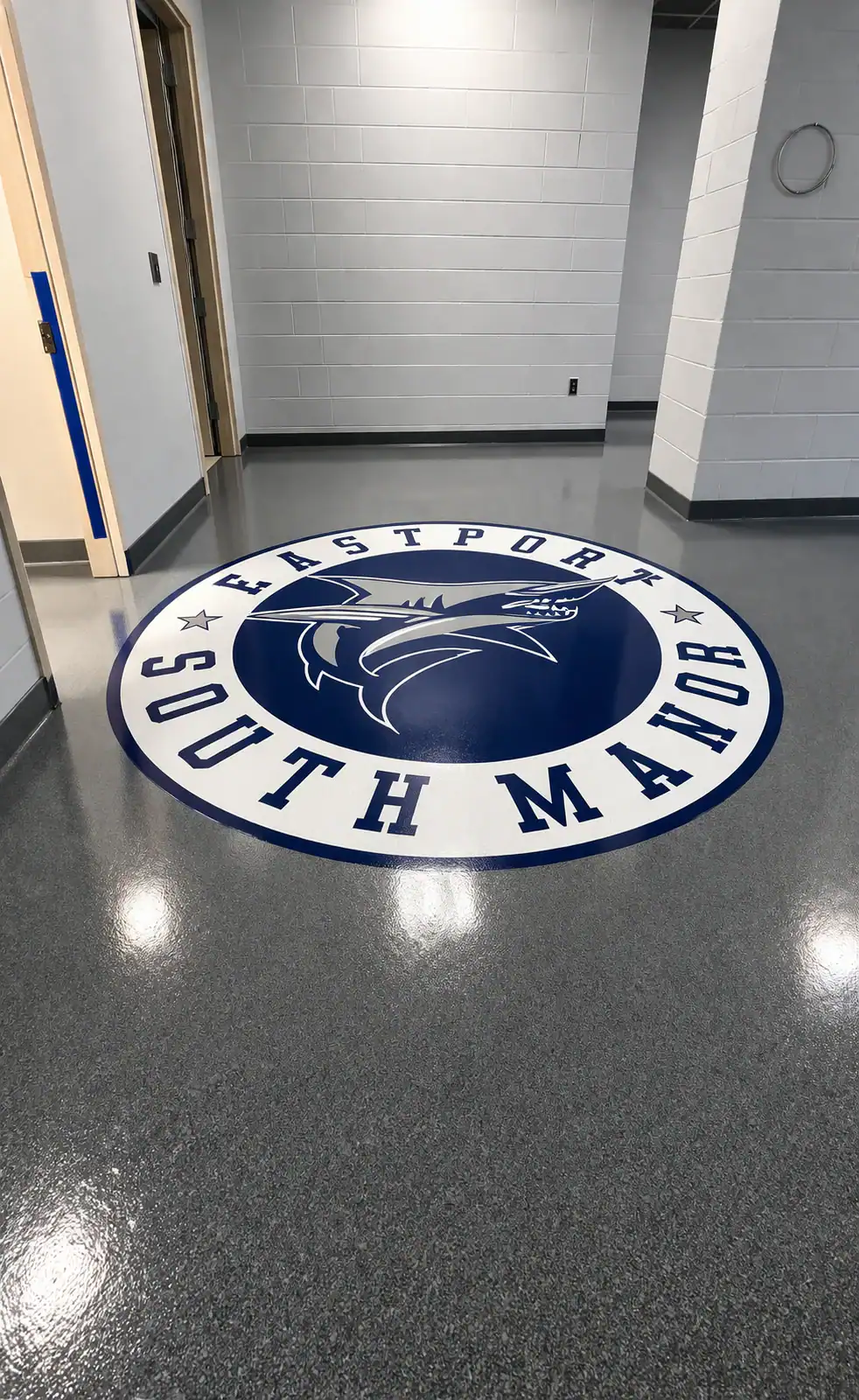
School floors don’t get much sympathy. Thousands of students, rolling carts, cafeteria spills, custodial chemicals, and daily cleaning cycles — year after year. Most flooring systems aren’t built for that kind of punishment, which is why so many districts end up replacing floors far sooner than they should.
If you’re a facility manager or district administrator trying to figure out what actually works — and what’s worth the investment — you’re in the right place. We’re going to walk through the most common questions we hear about school flooring, explain what separates a good installation from a failed one, and help you understand why epoxy and polished concrete have become the go-to choice for modern educational facilities.
Vinyl composition tile — VCT — has been the default in school buildings for decades. It’s familiar, it’s relatively inexpensive to install, and it’s everywhere. It’s also a maintenance nightmare. Strip-and-wax cycles, scuff marks that never fully disappear, tiles that crack or lift at the seams, and a floor that looks tired within a few years of installation.
Many of the school buildings in Suffolk County were built during the post-war suburban expansion of the 1950s through the 1970s. Those buildings are now carrying 50 to 70-year-old concrete slabs, and the flooring on top of them has been replaced multiple times over. At some point, the math stops working. Replacing a floor every seven to twelve years, plus the annual labor cost of maintaining it, adds up fast — and it never really solves the problem.
Epoxy and polished concrete change that equation entirely. They’re not a patch on an old system. They’re a fundamentally different approach to what a school floor can be.
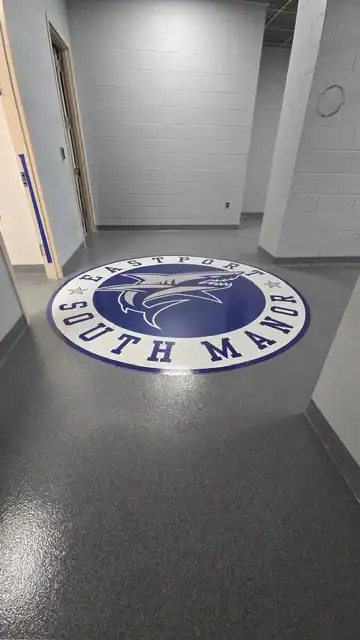
Epoxy flooring is a resinous coating system applied directly to a prepared concrete substrate. When it cures, it bonds to the slab and creates a seamless, non-porous surface that’s hard, smooth, and resistant to the kind of daily abuse a school floor endures. There are no grout lines, no seams, no places for bacteria or moisture to hide.
The process starts well before any coating touches the floor. We grind the concrete surface using diamond tooling to create what’s called a surface profile — essentially a microscopic texture that allows the epoxy to bond properly. Then we test for moisture. This step is non-negotiable, especially on Long Island where coastal humidity can push moisture vapor up through a concrete slab and cause a coating to delaminate from underneath. It’s the most common reason epoxy floors fail, and it’s entirely preventable when you test first.
After preparation and any necessary concrete repairs, we apply a primer coat, then the base coat, then a topcoat. In school environments, we incorporate anti-slip additives — typically aluminum oxide or quartz aggregate — directly into the system. Slip resistance isn’t an afterthought. It’s built in.
The result is a floor that handles thousands of daily foot-traffic cycles, cleans up with a dry sweep and a light mop, and doesn’t require stripping, waxing, or any of the chemical-heavy maintenance routines that burn through custodial budgets. In high-traffic areas like hallways and cafeterias, a properly installed commercial epoxy system can last ten to twenty years or more. That’s what we’ve seen from our own installations over more than three decades in this business.
One thing worth noting: not every space in a school needs the same system. A gymnasium floor has different demands than a science lab. A cafeteria that deals with hot water and grease requires a cementitious urethane system that can handle thermal shock — something a standard epoxy coating isn’t designed for. We match the right system to the right space, rather than applying one product across an entire building and hoping for the best.
Polished concrete gets underestimated. People see the glossy finish and assume it’s decorative — a design trend borrowed from retail or hospitality. In schools, it’s actually one of the most practical flooring decisions a district can make.
The process involves mechanically grinding the existing concrete slab through a series of progressively finer diamond tooling passes, then treating it with a densifier that hardens the surface and closes the pores. The result is a floor that’s denser, harder, and more resistant to wear than the raw concrete underneath it. When sealed and maintained properly, polished concrete can last the lifetime of the building. There’s no replacement cycle. No recurring capital expenditure. Just a floor that keeps performing.
From a maintenance standpoint, it’s about as low-effort as flooring gets. Dry sweep regularly, damp mop as needed, and apply a periodic re-coat of sealer every few years. No stripping. No waxing. No specialized chemical treatments. For a district managing a tight custodial budget across multiple buildings, that matters.
There’s also a lighting benefit that doesn’t get talked about enough. Polished concrete reflects both natural and artificial light throughout a space, which brightens hallways and classrooms without additional fixtures. For school districts in New York pursuing LEED certification or working toward state sustainability benchmarks, polished concrete contributes to green building points in a way that VCT simply can’t.
One concern we hear often is that polished concrete looks cold or industrial — not appropriate for a school environment. That’s a fair reaction based on older installations, but modern polished concrete can be customized with dyes, color treatments, and aggregate selections. It can incorporate school colors. It can look sharp and professional without feeling sterile. Several Suffolk County schools have aging building stock that could genuinely be transformed by a well-executed polished concrete installation — not just functionally, but visually.
The honest answer to whether polished concrete is right for your school is: it depends on the space and the substrate. In hallways, common areas, and cafeterias with sound concrete underneath, it’s often the best long-term choice. In areas with heavily deteriorated slabs or specific chemical exposure requirements, epoxy may be the better fit. We help you figure out which is which before any work begins.
Want live answers?
Connect with an Advanced Epoxy Flooring expert for fast, friendly support.
Most of the questions we get from school administrators and facility directors come down to the same core concerns: Will it hold up? Can it be done over the summer? What happens if something goes wrong? These are the right questions to ask, and they deserve straight answers.
We’ve been doing this since 1990, operating out of Bohemia, NY — right here in Suffolk County. Over that time, we’ve seen what happens when the answers aren’t given honestly upfront. So here’s how we actually respond when these come up.

Yes — and for most projects, summer is exactly when it should happen. The challenge is the window. From the end of the school year to the first day back in September, you’re typically working with six to ten weeks. That’s enough time for most school flooring projects, but it requires planning well before June.
The districts that run into trouble are the ones that start looking for a contractor in July. By that point, reputable contractors in the Bohemia area are already committed. If you want a summer installation, the conversation needs to happen in the spring — ideally March through May, when school district budgets are being finalized and capital improvement projects are being scoped for the year ahead.
For areas where the timeline is especially tight, we use polyaspartic coating systems that cure in hours rather than days. This is particularly useful for phased projects where different wings or floors of a building need to be completed in sequence, or when a summer program is running in part of the building while work is happening elsewhere. Fast cure times also reduce the window of fume exposure, which is a real consideration in school environments even with proper ventilation.
Here in Bohemia and across Long Island, summer humidity adds a layer of complexity that contractors from outside the region sometimes underestimate. High ambient moisture affects cure times and can elevate vapor emission from concrete slabs — which is exactly why we test every slab before we coat it, regardless of how the concrete looks on the surface. A floor that passes a visual inspection can still fail within a year if moisture isn’t properly addressed. We’ve been brought in to fix work done by others, and that’s not a situation any district wants to be in two weeks before school starts.
Public school projects in New York also carry prevailing wage requirements under state labor law. We bid on prevailing wage projects and handle the certified payroll documentation that public contracts require. If you’re a procurement officer managing a district contract, that’s not a minor detail — it’s a legal requirement, and it’s something we’re fully set up for.
This is probably the most important question a school facility manager can ask, because it gets at the real reason epoxy has a mixed reputation in some districts. The floors that failed weren’t a product problem. They were an installation problem — almost always traced back to one of two things: inadequate surface preparation or skipped moisture testing.
Epoxy needs something to grip. If the concrete surface isn’t properly ground to the right profile before coating, the epoxy sits on top of the slab rather than bonding to it. It looks fine initially. Then foot traffic, cleaning cycles, and the natural movement of the slab start working on it, and within a year or two you’re seeing bubbles, peeling edges, or sections that lift entirely. By that point, the contractor who installed it may be difficult to reach — if they’re still in business at all.
Moisture is the other culprit. Concrete slabs breathe. Moisture vapor moves upward through the slab, and if the coating above doesn’t allow for that or if the moisture level exceeds the system’s tolerance, the bond breaks from underneath. You can’t see it happening until the floor starts to fail. This is especially relevant in older Suffolk County school buildings where waterproofing systems have degraded over decades and where Long Island’s coastal climate pushes humidity levels higher than inland markets.
The fix isn’t complicated, but it does require discipline. We grind the surface to the correct profile using diamond tooling — not acid etching, which is inconsistent. We test for moisture vapor emission before we select a system, and we choose products that are appropriate for the readings we get. If the slab needs repair work — cracks, spalls, deteriorated sections — we address that before any coating goes down, not after. We apply multi-coat systems: primer, base coat, topcoat. Not a single thin application that looks good on the invoice but won’t hold up to real use.
We’ve been doing commercial flooring since 1990, and Danny Harmer — who founded this company and still leads it — has over 40 years of personal installation experience. That means when something unusual shows up in a slab, he’s likely seen it before and knows how to handle it. That kind of experience is what separates a floor that lasts twenty years from one that’s being replaced in three.
If your district has had a bad experience with epoxy in the past, we’d encourage you not to write off the material. The right installation, done properly, performs exactly as promised. Suffolk County schools have aging buildings that deserve floors built to last — and that’s what a correctly specified and correctly installed system delivers.
At the end of the day, the flooring system matters — but so does who installs it. Epoxy and polished concrete are only as good as the preparation behind them and the experience of the crew putting them down.
If you’re managing facilities for a school district in Suffolk County, or overseeing a renovation at a career institute or community college on Long Island, the questions you’re asking are the right ones. How long will it last? Can it be done on our schedule? What happens if something goes wrong? Those aren’t unreasonable demands. They’re exactly what a contractor with 35 years of experience should be able to answer clearly and specifically.
We’re based in Bohemia, we know this market, and we’ve been doing this work long enough to stand behind it. Reach out to us to talk through your project — before the summer window closes.
Summary:
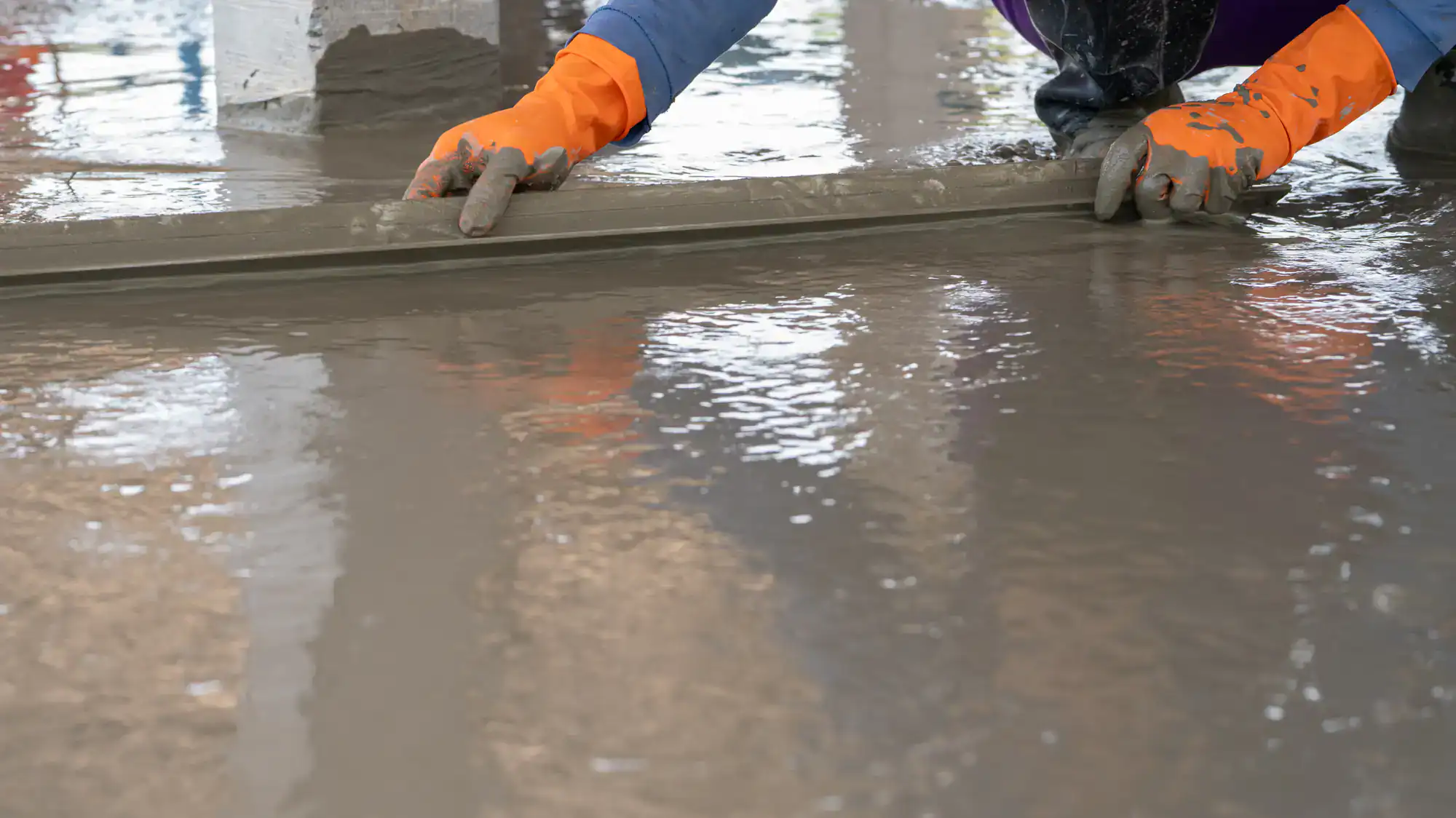
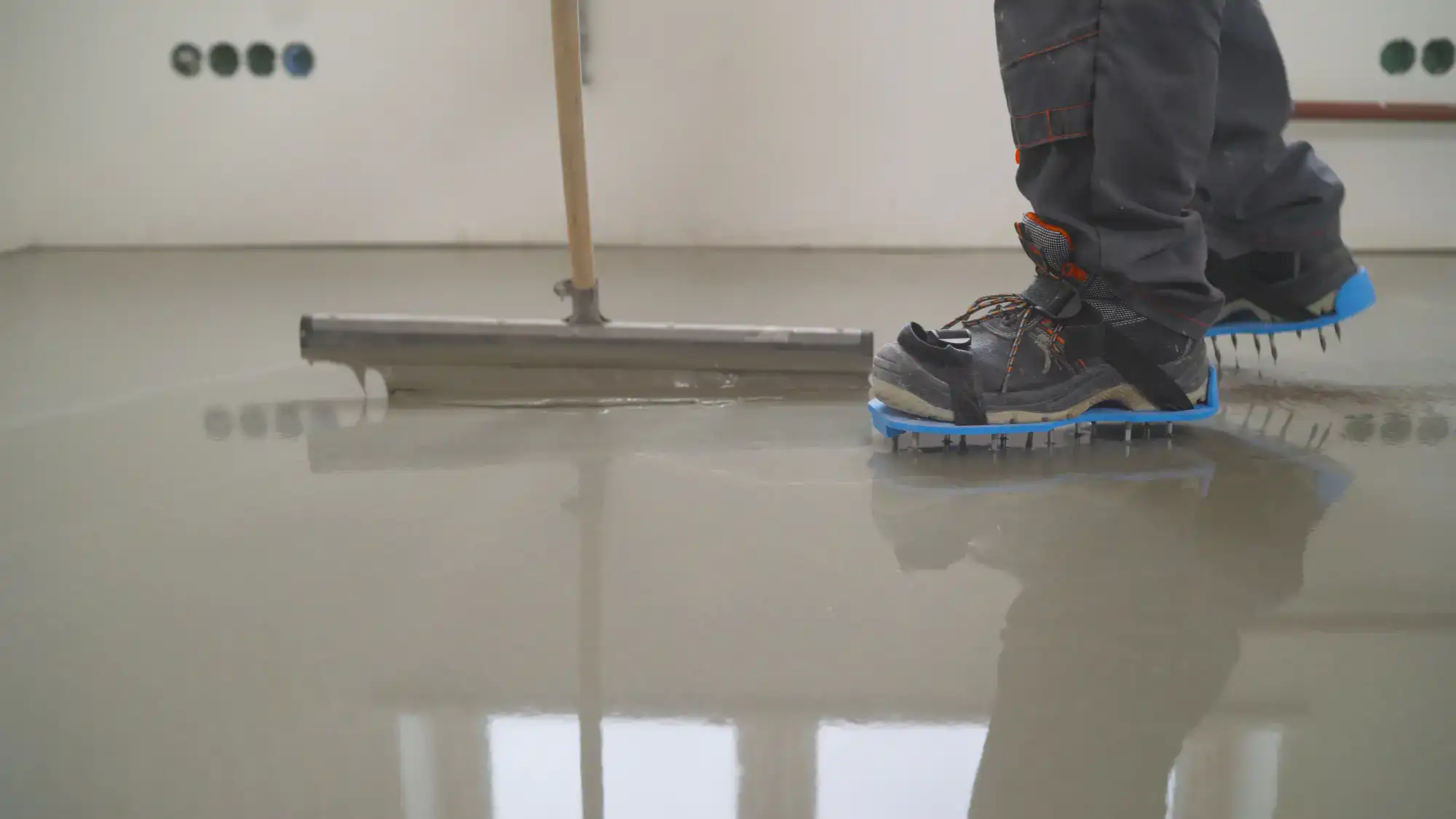
The 2026 Shift: Why High-Performance Self-Leveling Systems are Trending in Modern Residential Design
Article details:
Share: