Tile has been the default for commercial kitchens for decades. But it's failing operators in ways that are hard to ignore — and epoxy is quickly taking its place.
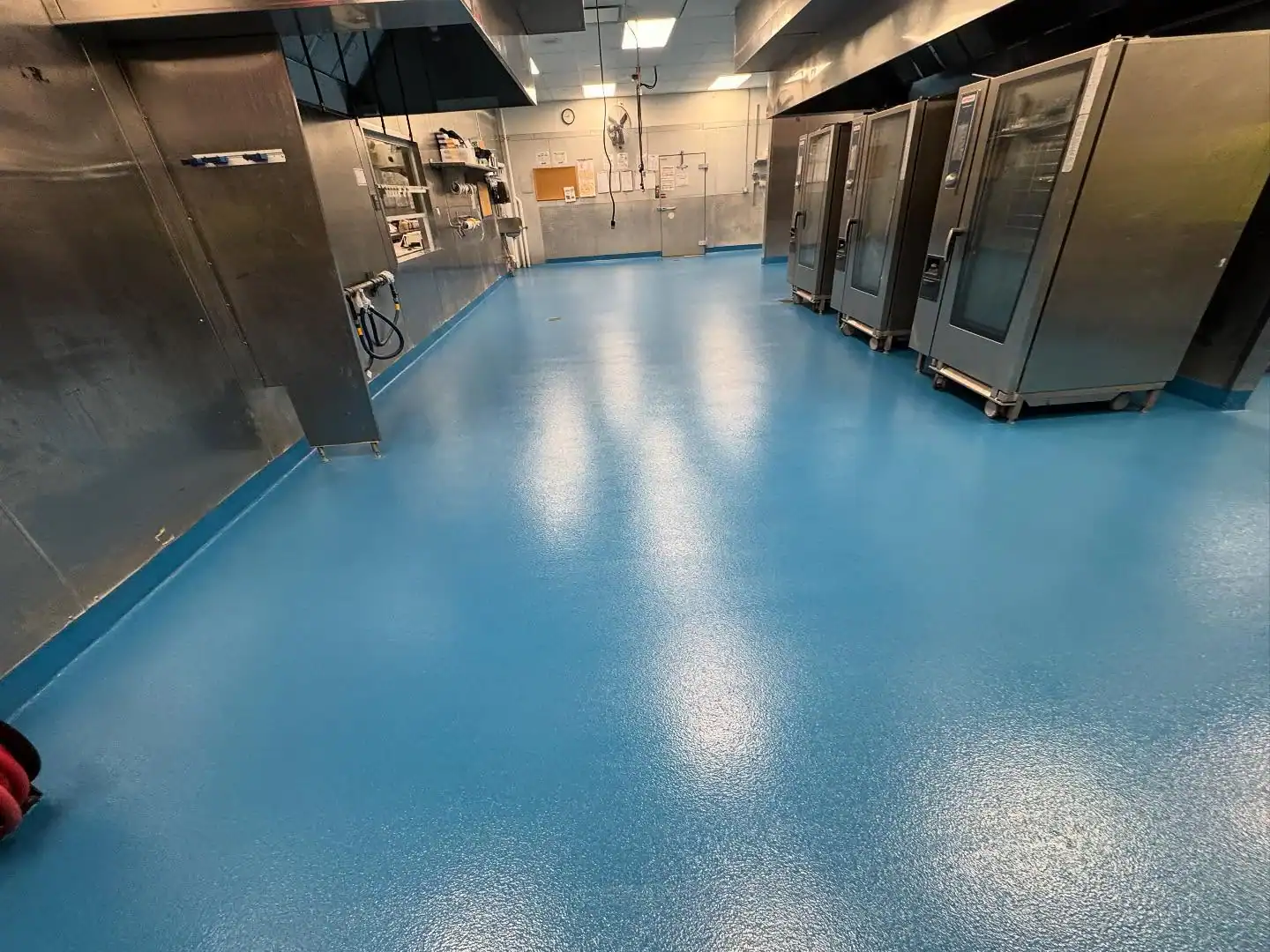
If your commercial kitchen floor is cracked, stained, or impossible to keep clean no matter how hard your staff scrubs, you’re not alone. Tile has been the go-to for decades, but it has a fundamental problem that no amount of cleaning can fix: the grout lines. They collect grease, harbor bacteria, degrade under chemical cleaners, and eventually become a health code issue. At some point, a patch job stops being enough. This page walks you through what’s actually changed in commercial kitchen flooring, why more operators are switching to epoxy, and what that process looks like from start to finish.
Tile made sense when it was the best available option. It’s hard, it handles moisture reasonably well, and it’s familiar. But in a working commercial kitchen — one dealing with steam cleaning, boiling water, constant foot traffic, and daily chemical washdowns — tile has a ceiling. Grout degrades. Tiles crack under thermal stress. Edges lift and become trip hazards. And once the grout starts going, you’re fighting a losing battle with your health inspector.
High-performance epoxy and urethane cement systems were developed specifically for environments where tile falls short. Seamless, non-porous, and engineered to handle chemical exposure and thermal cycling, these systems are now the standard in food processing plants, hospital kitchens, and commercial food service operations. The shift isn’t a trend — it’s been happening steadily for years as operators realize that tile’s long-term costs outpace its upfront familiarity.
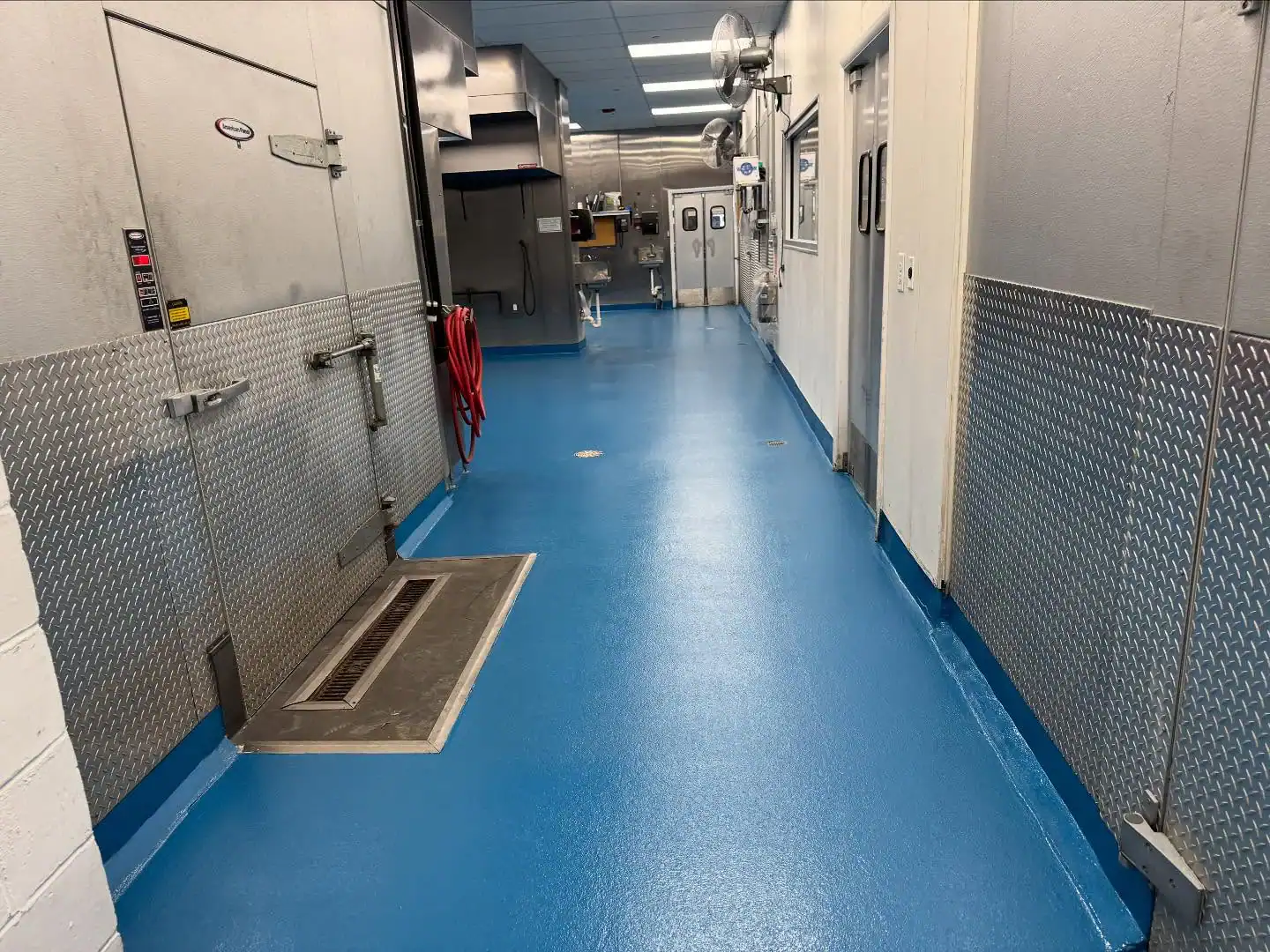
A commercial kitchen floor isn’t just a surface people walk on. It’s exposed to boiling water, steam cleaning equipment, grease, sanitizing chemicals, and the constant movement of staff carrying heavy loads. That combination creates conditions that most flooring systems — including standard epoxy — aren’t built to handle without the right specification.
The biggest issue most people don’t think about is thermal shock. When you steam clean a floor or rinse it with hot water and then the surface cools rapidly, that temperature swing puts stress on the flooring material. Standard epoxy can crack or delaminate under repeated thermal cycling. That’s why the preferred system for commercial kitchens is cementitious urethane — a hybrid material that handles temperature swings, bonds tightly to concrete, and resists the chemical exposure that comes with daily kitchen cleaning. We’re factory-trained in these systems, which matters more than it might sound. Cementitious urethane isn’t something you can apply correctly without manufacturer-level training in the product’s mixing ratios, pot life, and environmental requirements.
Slip resistance is the other major factor. The FDA Food Code recommends a minimum static coefficient of friction of 0.6 for commercial kitchen floors — a standard that accounts for wet, greasy conditions. The way we achieve that with a resinous system is by broadcasting anti-slip aggregate into the topcoat while it’s still wet, creating a surface that grips underfoot without feeling rough or being hard to clean. It’s a specific step that has to be done correctly, and it’s one of the things that separates a properly specified commercial kitchen floor from a generic coating job.
Grout lines, by contrast, can’t be made slip-resistant, can’t be made truly non-porous, and can’t be made to last under the chemical and thermal load of a working kitchen. They’re a structural weakness in the system, not just a maintenance inconvenience. That’s the core reason operators are replacing tile — not because epoxy is newer or flashier, but because it solves problems that tile can’t.
The quality of a kitchen floor installation is determined before a single drop of epoxy goes down. Surface preparation is everything. If the concrete isn’t properly profiled — meaning mechanically ground to create the texture the epoxy needs to bond to — the coating will eventually delaminate, no matter how good the product is. We use diamond grinding, not acid etching, because diamond grinding creates the surface profile that industrial systems require. It’s not a shortcut-friendly step.
Before any prep begins, we test for moisture. This is something a lot of contractors skip, and it’s one of the primary reasons epoxy floors fail on Long Island. Coastal humidity and the relatively shallow water table across Nassau and Suffolk County mean that concrete slabs here often have elevated moisture vapor transmission rates. If you don’t address that with a moisture-mitigating primer, the moisture pushes up through the slab and breaks the bond between the concrete and the coating. You end up with bubbling and peeling — usually within the first year. We’ve seen it happen with floors that were installed by contractors who didn’t test first. It’s an avoidable failure, and we don’t skip that step.
Once the substrate is prepared and primed, the system goes down in multiple coats — base coat, build coat, and a topcoat with anti-slip aggregate broadcast in. For commercial kitchens, we also install an integral cove base, which is a seamless curved transition from the floor up the wall. It eliminates the gap where bacteria and moisture accumulate at the wall-floor junction — a detail that health inspectors notice and that makes the kitchen genuinely easier to clean. Most installations are complete in one to two days, with the floor ready for traffic within 24 to 72 hours depending on the system. For an operating food service business, that’s the difference between a weekend shutdown and a week of lost revenue.
Want live answers?
Connect with an Advanced Epoxy Flooring expert for fast, friendly support.
We hear a lot of the same questions from restaurant owners, facility managers, and kitchen operators across Bohemia and Suffolk County before they commit to a floor replacement. Most of them come in skeptical — either because they’ve seen a cheap epoxy job fail, or because they’ve been putting off the decision and aren’t sure what they’re actually getting into. These are fair concerns, and they deserve straight answers.
The questions below are the ones that come up most often. If you’ve been wondering about any of them, this is where we address them directly.

For most commercial kitchen environments, yes — but the honest answer is that it depends on the system and the installer. A properly specified, properly installed cementitious urethane or high-build epoxy system outperforms tile in almost every category that matters in a working kitchen: hygiene, slip resistance, chemical resistance, thermal durability, and long-term maintenance cost. A poorly installed system using the wrong product fails fast and leaves operators worse off than they started.
The tile comparison isn’t really about materials in the abstract — it’s about what tile does over time in a high-demand kitchen. Grout starts clean and becomes a problem. It stains permanently, harbors bacteria that cleaning chemicals can’t fully reach, and degrades under the acidic and alkaline cleaners used in commercial kitchens. Once the grout starts breaking down, you’re either regrouting repeatedly or facing a full floor replacement. Either way, the kitchen is out of service and the cost adds up. A well-installed epoxy system is designed to last 10 to 20 years with proper care and routine cleaning.
The other comparison people don’t always think about is liability. Cracked tile and lifting edges are slip hazards. Degraded grout is a health code violation waiting to happen. We’ve worked with operators across Long Island who came to us after a failed inspection or a workers’ comp claim tied to a floor-related injury. Those situations are expensive in ways that go well beyond the cost of a new floor. A seamless, slip-resistant surface eliminates a category of risk that tile floors carry by design.
One more thing worth saying: the perception that epoxy is slippery comes from residential garage floors — smooth, high-gloss coatings with no anti-slip treatment. Commercial kitchen epoxy is a completely different product applied in a completely different way. The anti-slip aggregate broadcast into the topcoat creates a surface that meets FDA slip resistance standards and holds up under wet, greasy conditions. It’s not comparable to what you’ve seen in a garage.
This is probably the most important question to ask, and most buyers don’t know what to look for. The flooring industry has a low barrier to entry. Anyone can buy epoxy and call themselves an installer. The difference between a qualified commercial kitchen flooring contractor and a generalist with a bucket of coating comes down to a few specific things.
First, ask what product they’re using and why. A contractor who can’t explain why they’re specifying a particular system for your kitchen environment — or who gives you a vague answer about “commercial-grade epoxy” without being able to describe the product’s thermal resistance, chemical resistance, and DCOF rating — is not the right choice for a food service floor. The product specification should match the specific demands of your kitchen, not just be whatever they have on the truck.
Second, ask about surface preparation. If they’re not diamond grinding and moisture testing before installation, walk away. These aren’t optional steps — they’re the foundation of a floor that actually holds. Skipping them is how you end up with a floor that looks fine for six months and then starts peeling.
Third, look at their track record in commercial environments specifically. Garage floors and commercial kitchens are not the same job. We’ve been installing industrial and commercial floors across Suffolk County since 1996, and our president Danny Harmer has been doing this work personally for over 40 years. In 1996, we installed a kitchen floor in the White House — which is a project that doesn’t happen without a verifiable level of precision and accountability. That’s the standard we bring to every commercial kitchen we floor in Bohemia and across Long Island.
For operators in Bohemia and the surrounding area, there’s also the moisture question. The coastal environment here — the humidity, the proximity to the water table — creates conditions that out-of-area contractors often don’t account for. We’ve been working in this specific environment for nearly three decades. We know what the slabs here do, and we test for it every time.
If your kitchen floor is giving you problems — whether it’s a health inspection concern, a slip hazard, or tile that’s simply past its useful life — the decision to replace it comes down to finding someone who actually understands what your floor is up against every day. Not someone who does garages on the weekends and kitchens when the opportunity comes up.
A properly installed commercial kitchen floor should last 10 to 20 years, meet health code requirements, and require nothing more than routine cleaning to maintain. That’s what you should expect. If a contractor can’t explain how they’re going to get you there — what system they’re using, why, and how they’re preparing the substrate — that’s worth paying attention to.
We’re based in Bohemia, we’ve been serving Long Island’s commercial and industrial market since 1996, and we’re happy to walk you through what your specific kitchen needs before you make any decisions. Reach out to Advanced Epoxy Flooring and let’s talk about what’s actually going on with your floor.
Summary:
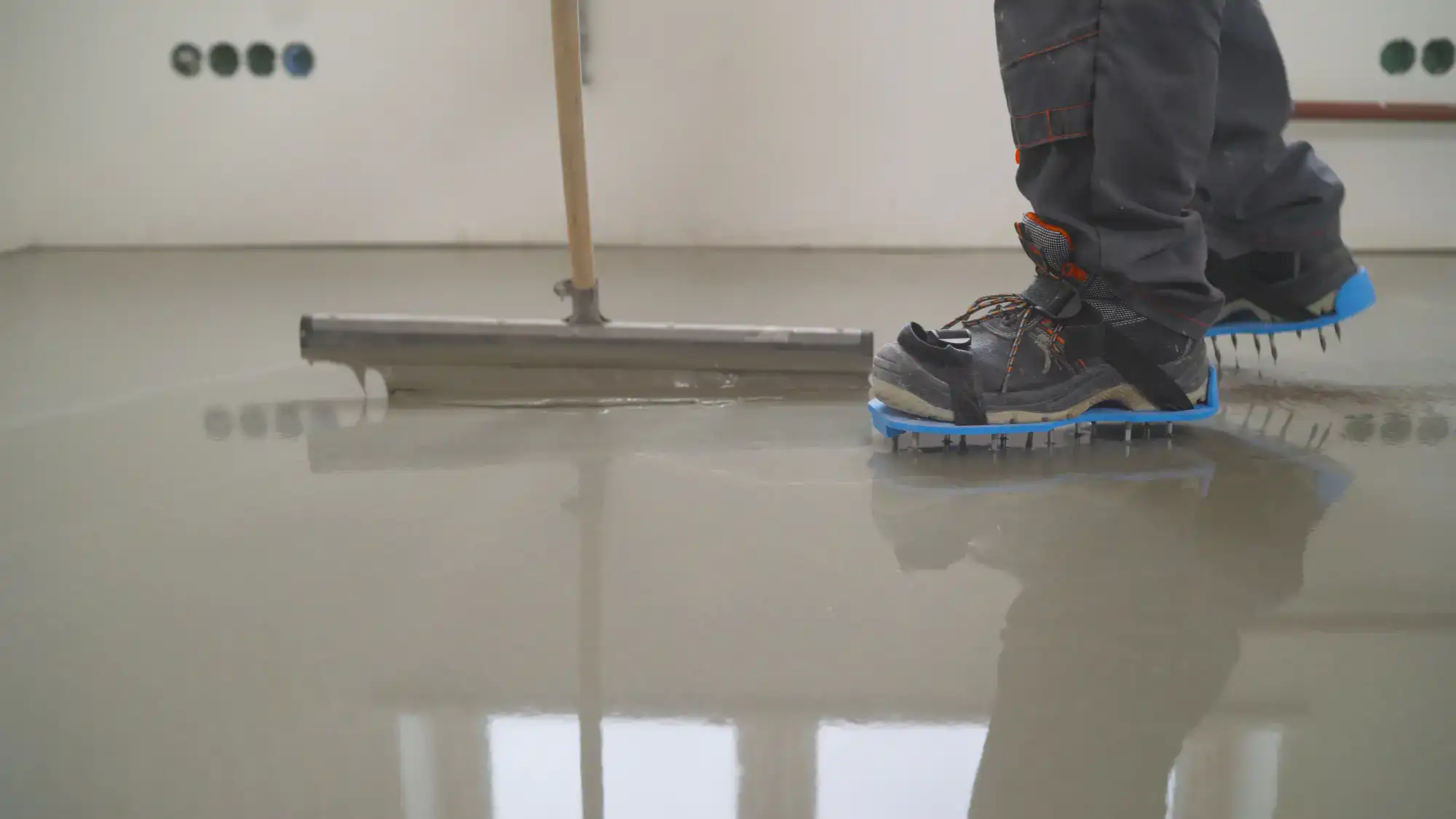
The 2026 Shift: Why High-Performance Self-Leveling Systems are Trending in Modern Residential Design
Article details:
Share: