If you manage a healthcare facility and your floors are making infection control harder than it needs to be, this is worth a read.
If you manage a medical facility — a clinic, surgical center, outpatient office, or hospital wing — your floors are doing more work than most people realize. They’re being hit with aggressive disinfectants, heavy rolling equipment, constant foot traffic, and the unforgiving scrutiny of accreditation inspectors. And if they’re made of tile or vinyl, there’s a decent chance they’re losing that fight quietly, one grout line at a time.
Epoxy flooring keeps coming up in these conversations for a reason. This page answers the questions we hear most from healthcare facility managers across Long Island — plainly, without the sales pitch.
The short answer is that epoxy creates a surface with nowhere for contamination to hide. No grout lines. No seams. No joints where moisture and organic material accumulate between cleanings. That’s not a marketing angle — it’s the reason the Facility Guidelines Institute’s 2018 guidelines for hospital construction specifically require monolithic, seamless flooring with an integral coved wall base in operating rooms and other high-acuity spaces.
Beyond the seamless surface, healthcare-grade epoxy is formulated to hold up against the actual chemicals your environmental services team uses — bleach, quaternary ammonium compounds, peroxide-based disinfectants, surgical scrubs. Standard flooring degrades under repeated exposure to those agents. A properly specified epoxy system doesn’t.
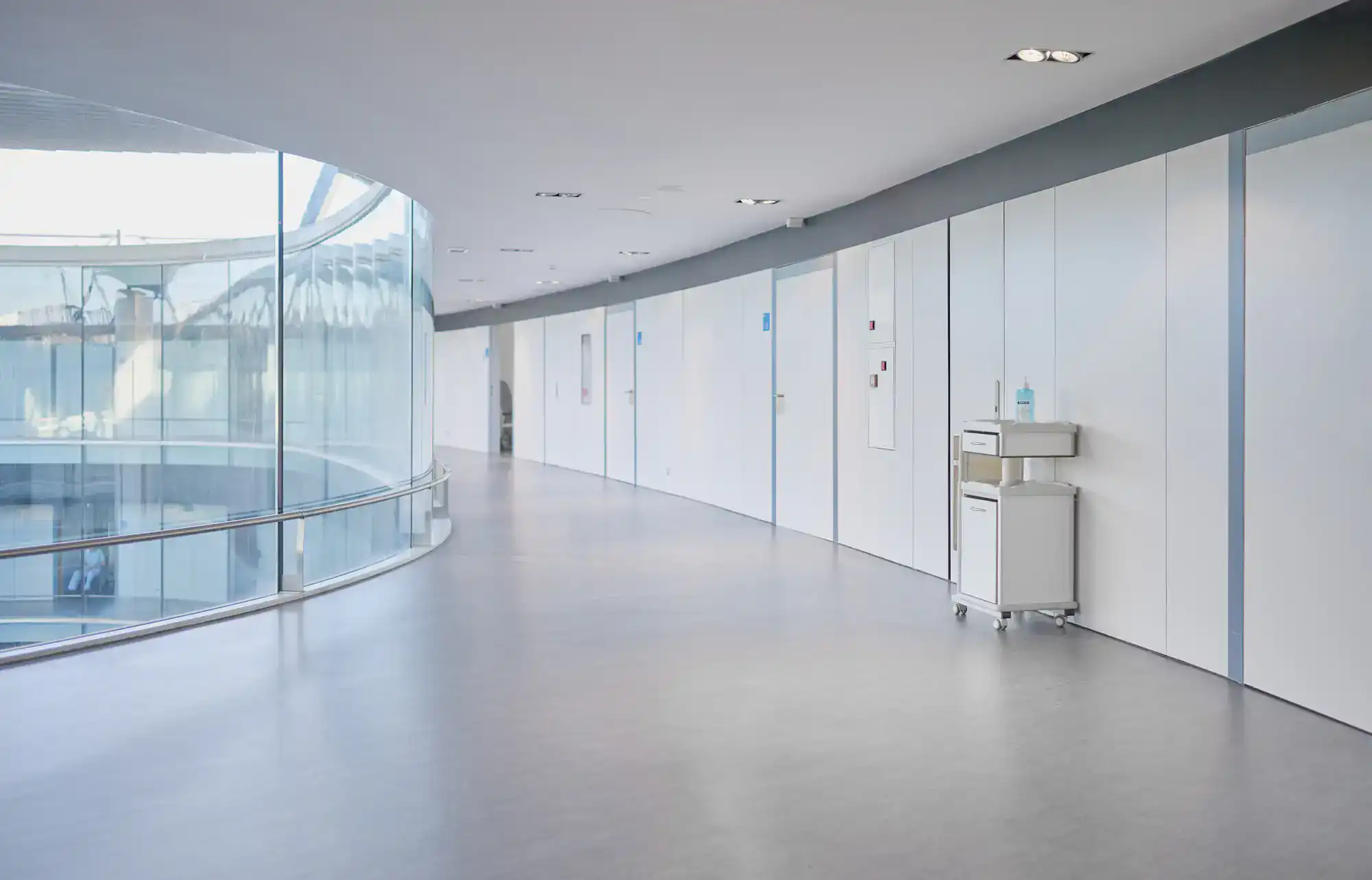
Cleanability is a big part of it, but it’s not the whole story. When your floor has no seams or grout lines, your cleaning staff is working on a single continuous surface. There’s no place for bacteria to establish a foothold between disinfection cycles. That alone is a meaningful infection control advantage over tile or sheet vinyl with heat-welded seams that eventually open.
We also integrate EPA-registered antimicrobial compounds directly into the epoxy system — not just the topcoat. That distinction matters more than it sounds. A lot of flooring products advertise antimicrobial properties, but if that additive only lives in the surface layer, it disappears as the floor wears. When it’s mixed throughout the system, the protection lasts as long as the floor does. These compounds work by disrupting the cell structure of bacteria and other pathogens that land on the surface, which is a meaningful layer of defense in any sterile environment.
Then there’s the cove base. The junction between your floor and wall is one of the most overlooked contamination points in any facility. Dirt, moisture, and biological material collect in that corner and are nearly impossible to fully clean with a standard 90-degree joint. We install an integral coved base that runs up the wall at least six inches, creating a continuous, sealed surface from floor to wall. Your cleaning team can actually disinfect that transition completely — which sounds simple, but it’s something most flooring systems don’t allow for.
This is one of the first questions facility managers ask, and it’s the right one to start with. The short answer is yes — when it’s installed correctly and with the right system for your specific space.
Healthcare flooring in New York has to satisfy a layered set of standards. ADA requirements set a minimum Dynamic Coefficient of Friction of 0.42, but most healthcare accreditation bodies expect 0.50 or higher, and that rating has to hold throughout the floor’s service life — not just on day one. Our topcoats meet National Flooring Safety Institute standards and maintain their slip resistance over time, which is something worth confirming with any contractor you speak to.
Beyond slip resistance, Joint Commission surveyors and New York State Department of Health inspectors look at whether your flooring supports your infection control protocols — whether it’s cleanable, non-porous, and free of the kinds of surface defects that harbor contamination. A properly installed epoxy system checks every one of those boxes. We also understand what the documentation side of compliance looks like, which matters when you’re preparing for a survey and need your floors to be the least of your concerns.
One thing that surprises some facility managers: the compliance requirements vary by room type. An operating room has different specifications than a patient corridor, which is different again from a pharmacy or sterile processing department. We assess each space individually rather than applying a single system across the board, because the right floor for a surgical suite isn’t necessarily the right floor for a high-traffic hallway. That specificity is what makes the difference between a floor that passes inspection and one that creates a finding.
Want live answers?
Connect with an Advanced Epoxy Flooring expert for fast, friendly support.
Most of the hesitation we hear from healthcare facility managers isn’t about whether epoxy is the right material — it’s about the process. How long will it take? Who will be in the building? What happens to patient care while the work is going on? These are fair questions, and they deserve straight answers.
We’ve been installing floors in occupied commercial and healthcare facilities across Long Island since 1990. The logistics of working in a live medical environment aren’t new to us. Every installer on our team is OSHA 40 certified, we don’t subcontract, and we plan every healthcare project in phases so your facility stays operational throughout.

Yes, and this is something we plan for from the start. Healthcare facilities can’t close for a week, and we don’t ask them to. We work in sections, completing one area at a time so the rest of your facility stays in operation. Depending on the system, sections can return to light foot traffic in as little as 24 hours. Full cure for heavy rolling equipment — gurneys, mobile imaging units, supply carts — typically takes around 72 hours.
For facilities that need to minimize any disruption during business hours, we can schedule work in the evenings or on weekends. We’ve done this in medical offices, outpatient surgery centers, and clinical spaces throughout Bohemia and the surrounding Suffolk County area, and the approach is the same every time: your patients and staff come first, and the installation schedule works around that.
One thing that’s specific to Long Island and worth mentioning: before any epoxy system goes down, we test the concrete for moisture vapor emission. This isn’t optional, and it’s not something every contractor does. Long Island’s humidity — and the proximity to the Great South Bay and the Atlantic — means concrete slabs here tend to hold more moisture than inland markets. If you skip that testing and apply epoxy over a slab with high moisture vapor emission, the floor will bubble and delaminate. We’ve seen it happen to floors installed by other contractors, and it’s expensive to fix. Mandatory moisture testing before installation is how we make sure that doesn’t happen to yours.
The installation itself follows a defined sequence: moisture testing, surface preparation through diamond grinding or shot blasting, crack and spalling repair, primer, base coat, and topcoat — applied at 160-mil thickness, not a thin surface coating. Each layer gets the time it needs to cure before the next one goes on. Rushing that process is how floors fail, and we don’t rush it.
When healthcare managers hear that epoxy failed somewhere, it’s almost always a preparation problem, not a material problem. The two most common culprits are skipped moisture testing and inadequate surface prep. When moisture vapor from the concrete pushes up through a system that wasn’t designed to handle it, the floor bubbles and lifts. When the concrete surface wasn’t properly ground or shot-blasted before application, adhesion fails and the coating peels. Neither of those is a flaw in epoxy — they’re the result of cutting corners on the front end.
The other common failure point is using the wrong product for the environment. Residential or light-commercial epoxy coatings — the kind marketed for garage floors — don’t have the chemical resistance, thickness, or load-bearing capacity that a healthcare environment demands. They look similar when they’re first applied, but they don’t hold up to medical-grade disinfectants or the constant rolling load of clinical equipment. We use industrial-grade systems specified for the actual conditions of each space, not whatever’s most convenient or least expensive to source.
Here in Bohemia, we’ve assessed plenty of floors that failed because a contractor didn’t account for Long Island’s humidity or used a system that wasn’t appropriate for the facility. The fix is usually more involved than the original installation would have been. Getting it right the first time — proper moisture testing, correct surface profile, the right system for the room — is always the less expensive path.
If you’re talking to multiple contractors, ask each one how they handle moisture testing, what surface preparation method they use, and what specific system they’re recommending for your space. The answers will tell you quickly whether they understand healthcare flooring or whether they’re applying a standard approach to a specialized environment. A contractor who can’t answer those questions in detail probably shouldn’t be working in your facility.
The floor in a healthcare facility isn’t a cosmetic decision. It’s an infection control surface, a compliance checkpoint, and a long-term operational asset — and it needs to be treated like all three.
Epoxy gets chosen in sterile environments because it earns it: seamless, chemically resistant, durable under real clinical loads, and maintainable without excessive labor. But the material is only as good as the installation behind it. Proper prep, the right system for the space, and a team that understands what healthcare compliance actually requires — that’s what separates a floor that lasts decades from one that creates problems inside of two years.
We’ve been doing this work across Long Island since 1990, and we’re based right here in Bohemia. If you’re managing a medical facility in Suffolk County and you have questions about what your floors actually need, Advanced Epoxy Flooring is a straightforward call or message away.
Summary:
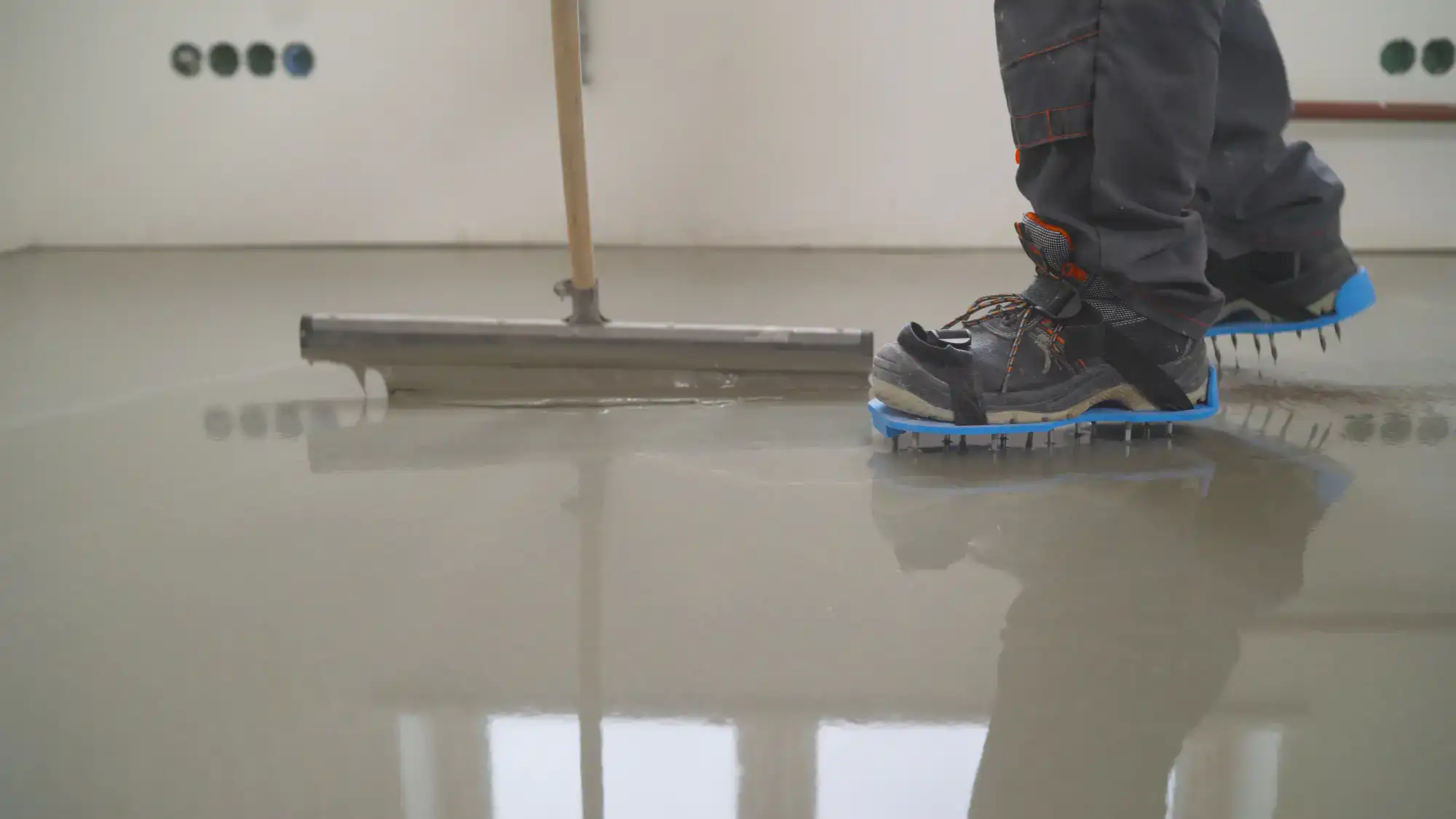
The 2026 Shift: Why High-Performance Self-Leveling Systems are Trending in Modern Residential Design
Article details:
Share: