Skipping moisture testing before metallic epoxy is the fastest way to end up with a peeling floor. Here's what the process actually looks like — and why it matters more on Long Island.
If you’ve ever seen an epoxy floor bubble, peel, or go cloudy within a year of installation, moisture is almost always the reason. The slab looked dry. The contractor moved forward. And a few months later, the floor started failing in ways that are expensive to fix and impossible to ignore — especially with metallic epoxy, where every imperfection shows.
This guide covers what moisture testing actually involves, which methods matter, and why getting this right is especially important for properties across Nassau County, NY. By the end, you’ll know exactly what to expect from a professional installation — and what to ask if a contractor skips this step entirely.
Concrete looks solid, but it’s porous. Even a slab that feels completely dry on the surface can be actively transmitting moisture vapor from below — and that vapor is what destroys epoxy adhesion over time. The only way to know what you’re actually working with is to test.
We use several concrete moisture testing methods in professional flooring installations, and each one serves a different purpose. No single test tells the full story. Our most reliable approach uses multiple methods together, because moisture levels can vary significantly across a slab — and a single test point in one corner doesn’t represent what’s happening in the middle of the room or near an exterior wall.
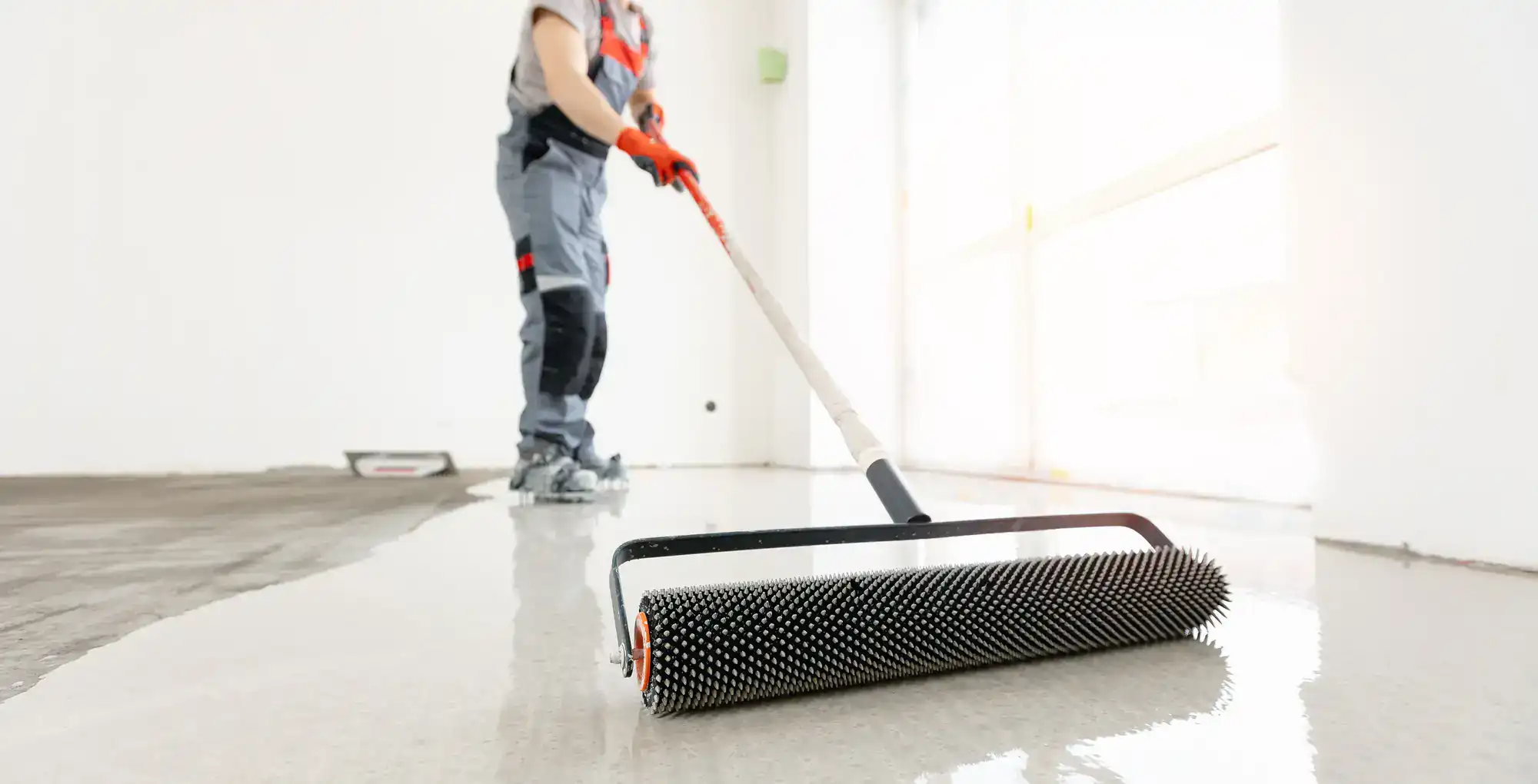
The process starts before any grinding or surface prep begins. That sequencing matters — opening up a slab through diamond grinding before you know its moisture condition can accelerate vapor emission and complicate the picture. Testing first gives us an accurate baseline.
The first step is typically a non-destructive scan using an electrical impedance meter. This handheld tool uses electromagnetic waves to flag areas of elevated moisture without damaging the surface. It’s a fast way to identify problem zones before committing to more involved testing, and it helps determine where to focus the quantitative methods that follow.
From there, the two standard ASTM methods come into play. The calcium chloride test — formally ASTM F1869 — involves placing a sealed dish of calcium chloride on a cleaned section of concrete for 60 to 72 hours. The weight gain of the calcium chloride is then measured and converted into a moisture vapor emission rate, expressed as pounds per 1,000 square feet per 24 hours. The acceptable threshold for most epoxy systems is no more than 3 lbs. This test measures surface-level vapor emission, which makes it useful but limited on its own.
The more comprehensive test is ASTM F2170, which uses in-situ relative humidity probes drilled directly into the slab — typically to 40% of the slab’s depth. The probes are sealed and left to equilibrate for at least 24 hours before a reading is recorded. This method captures what’s happening inside the slab, not just at the surface, which is why it’s now the preferred standard among flooring professionals and most major coating manufacturers. A reading above 75% relative humidity inside the slab is generally considered too high for epoxy installation to proceed safely.
Using all three methods together — impedance scanning, calcium chloride, and in-situ RH probes — gives a complete, defensible picture of the slab’s moisture condition. That’s what we require before any metallic epoxy project moves forward.
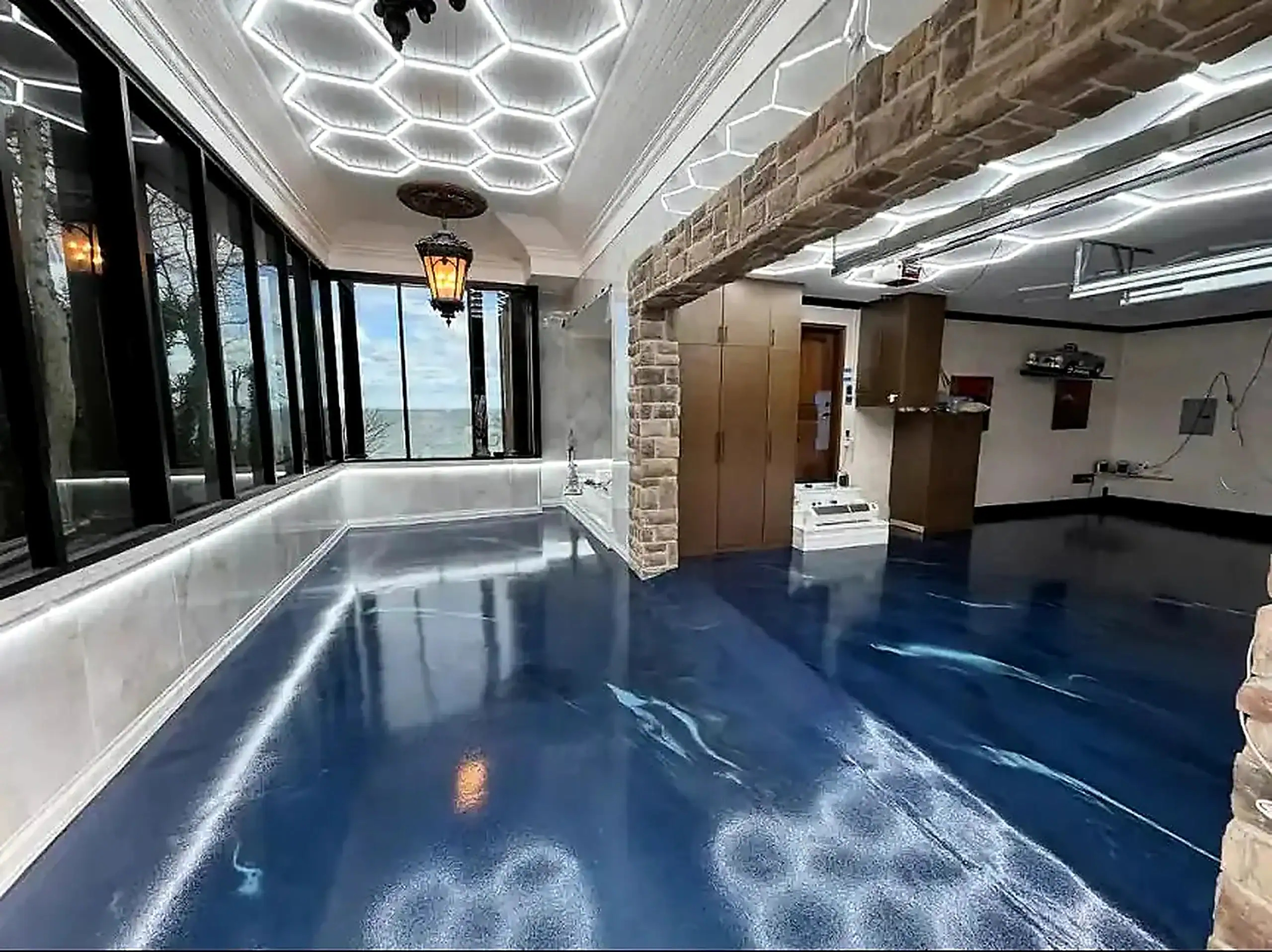
Every epoxy system is sensitive to moisture, but metallic epoxy raises the stakes considerably. It’s a self-leveling, high-gloss coating that creates a continuous, impermeable film across the entire slab. That’s part of what makes it look so striking — but it also means any moisture vapor building beneath it has nowhere to go except up through the coating itself.
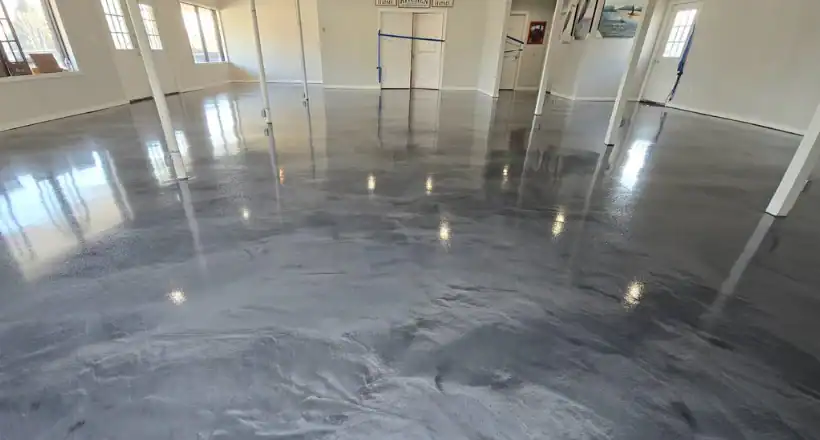
The result is blistering, bubbling, hazing, or delamination — and with metallic epoxy, these failures are immediately and dramatically visible. There’s no hiding a bubble in a high-gloss marble-effect floor. The aesthetic investment is significant, which means the cost of getting the moisture step wrong is proportionally higher than it would be with a utilitarian gray coating in a warehouse.
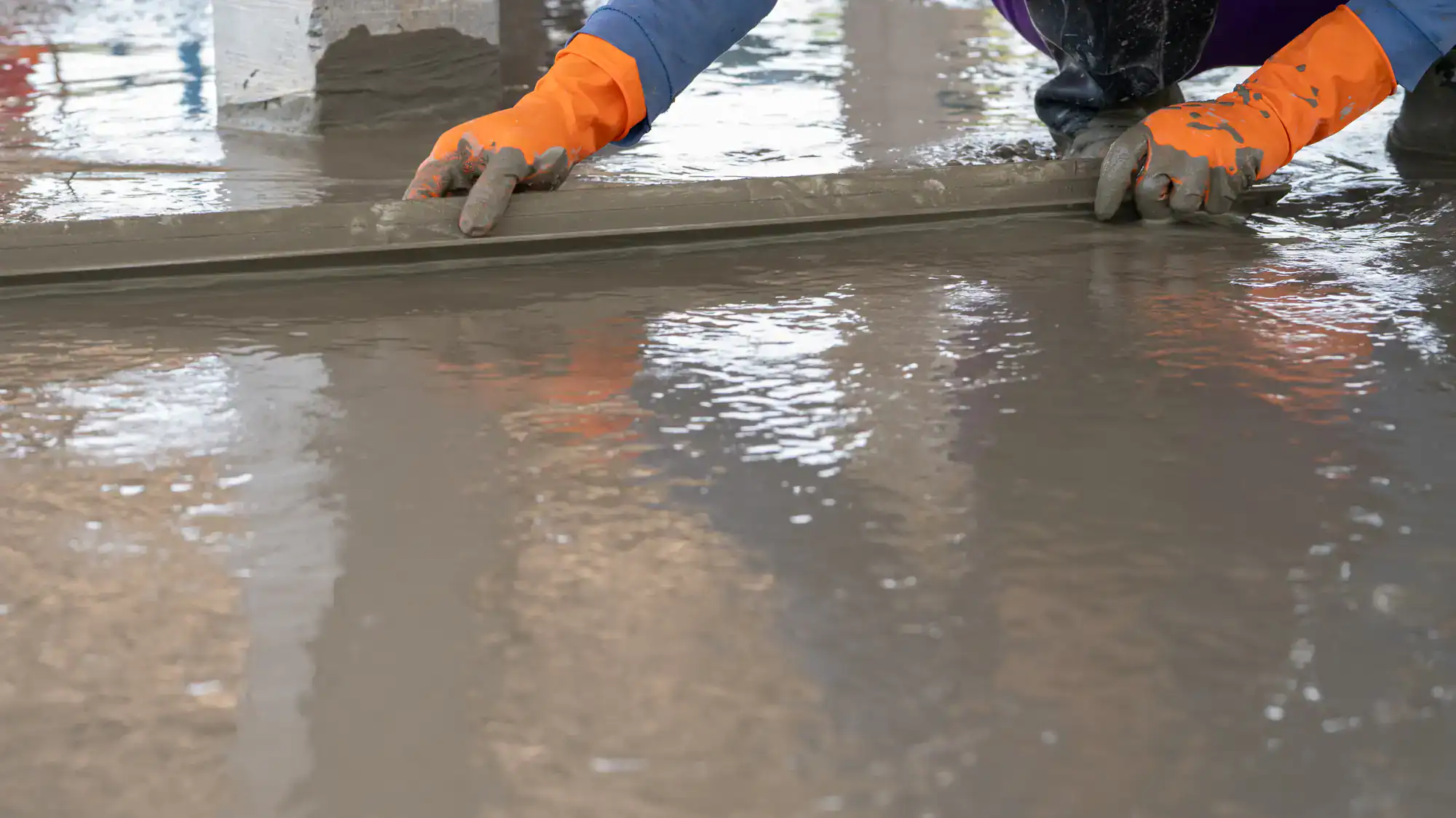
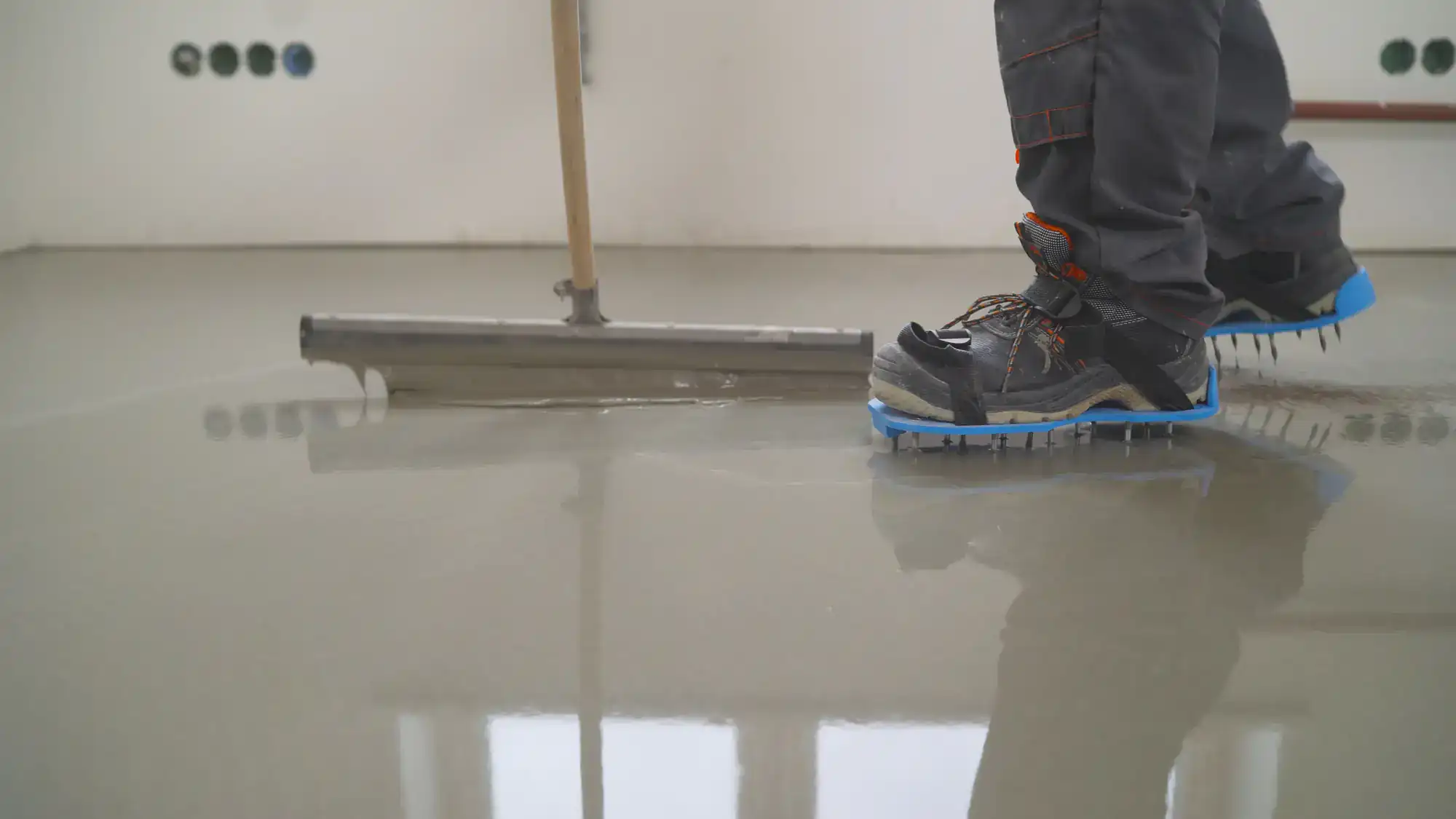
Metallic epoxy also requires a flat, level surface to install correctly. It pools in low spots and creates uneven color and thickness when the substrate isn’t perfectly prepared. Moisture-damaged concrete is more likely to have surface irregularities, efflorescence, or soft spots that affect how the coating lays down and bonds. Catching moisture problems before installation begins isn’t just about preventing delamination — it’s about ensuring the finished floor actually looks the way it’s supposed to.
This is why we don’t treat moisture testing as a formality or a checkbox. It’s the step that determines whether everything that follows will hold up — or fail and require a full removal and reinstallation. When you’re investing in a premium decorative floor, that distinction matters.
Want live answers?
Connect with an Advanced Epoxy Flooring expert for fast, friendly support.
Long Island’s geography is genuinely different from most markets, and it affects every concrete slab in Nassau County. The county sits between Long Island Sound to the north and the Atlantic Ocean to the south, with tidal waterways, bays, and inlets running throughout the South Shore communities. That proximity to open water creates a persistently humid environment that accelerates moisture vapor emission from concrete — particularly in properties near Freeport, Oceanside, Long Beach, Merrick, Bellmore, and Wantagh.
The county’s glacial geology compounds the issue. Nassau County’s soil is largely sand and gravel — glacial outwash deposits that allow groundwater to move freely beneath the built environment. That means hydrostatic pressure from below is a real and ongoing factor for many on-grade and below-grade slabs, regardless of how old the building is or how dry the surface looks.
This is one of the most common questions we get from property owners across Nassau County, and the honest answer is that both systems require proper moisture testing before installation. That part doesn’t change. But the differences between epoxy and polyaspartic coatings become meaningful in Long Island’s coastal environment, and understanding them helps you make a smarter decision about your floor.
Standard epoxy is sensitive to ambient humidity during the application window. If conditions are too humid when the coating is being installed, it can affect adhesion, cure time, and the final appearance. In Nassau County’s summer months — when ambient relative humidity frequently climbs above 70% — that’s a real variable that has to be managed carefully.
Polyaspartic topcoats are more tolerant of elevated humidity during application. They also cure significantly faster than standard epoxy, sometimes within hours rather than days, which reduces the window during which ambient moisture can interfere with the installation. That faster cure time is a practical advantage in a coastal environment where conditions can shift quickly.
Our standard approach for metallic epoxy installations uses epoxy as the base and body coat — which provides the depth, movement, and visual character that makes metallic floors distinctive — and a polyaspartic topcoat as the final protective layer. This combination gives you the aesthetics of metallic epoxy with the humidity-tolerant durability of polyaspartic on top. Most contractors in Nassau County aren’t factory-trained in polyaspartic application. We are, and it’s one of the reasons our floors hold up in conditions that cause other installations to fail.
If you’re comparing quotes and one contractor is proposing a straight epoxy system with no polyaspartic topcoat for a Long Island property, it’s worth asking why — and whether they’ve accounted for the coastal humidity environment your slab is actually sitting in.
Stained concrete comes up frequently as an alternative to metallic epoxy, usually because the upfront cost is lower. That’s true. But the comparison looks different when you factor in what each system actually does to the slab — and what it costs to maintain over time in Nassau County’s moisture-heavy environment.
Stained concrete penetrates the surface of the concrete but doesn’t create a protective coating layer above it. It changes the color and appearance of the slab, but it doesn’t seal it. That means moisture can still move through, contaminants can still stain it, and the surface still needs to be resealed every three to five years to maintain its appearance. In a coastal environment where humidity and groundwater pressure are ongoing factors, a stained concrete floor without adequate sealing is particularly vulnerable — efflorescence (the white salt deposits that rise through concrete as moisture moves upward) can disfigure the surface, and there’s no coating layer to protect against it.
Metallic epoxy creates a hard, impermeable film that seals the slab completely. Chemical spills, moisture vapor, abrasion from foot and vehicle traffic — the coating handles all of it without the surface underneath being exposed. A properly installed metallic epoxy system, on a slab that passed moisture testing and was prepared correctly, is designed to last 10 to 20 years with routine care. There are no recurring resealing costs, no annual maintenance windows, and no seasonal vulnerability to Nassau County’s humidity cycles.
For commercial properties along Nassau County’s busiest corridors — the restaurants on Sunrise Highway, the automotive shops on Hempstead Turnpike, the showrooms and medical offices throughout the county — the floor is a visible business asset. The upfront difference in cost between stained concrete and metallic epoxy is real. The difference in what you get for that investment over a decade is larger. When you account for the maintenance costs of stained concrete and the risk of moisture-related failure in this specific market, metallic epoxy is frequently the more economical choice over the life of the floor.
The short version: a contractor who skips moisture testing isn’t cutting a corner — they’re skipping the step that determines whether the entire installation succeeds or fails. In Nassau County’s coastal environment, where groundwater pressure and ambient humidity are persistent variables, that risk is higher than in most markets.
A professional installation starts with testing, uses multiple methods to get an accurate reading, and doesn’t move forward until the slab is confirmed ready. Surface preparation — diamond grinding, not acid etching — comes next, followed by primer, base coat, and topcoat, each given proper cure time before the next layer goes down.
If you’re planning a metallic epoxy project anywhere in Nassau County and want to talk through what the process looks like for your specific space, we’ve been doing this work on Long Island for over 35 years. Reach out and let’s start with the conversation that should always come first.
Summary:
Article details:
Share: