Not all epoxy floors are created equal. Here's what 3D epoxy flooring actually involves — and what separates a floor that lasts from one that doesn't.
You’ve seen the photos — floors that look like you’re walking on water, marble, or open sky. It’s a real effect, and it’s more durable than it looks. But there’s a wide gap between what a professional 3D epoxy floor looks like and what a rushed or under-qualified installation produces. If you’re a Nassau County homeowner or business owner trying to figure out whether this is worth the investment, this page gives you the honest picture: how it works, what to expect, and what actually determines whether the floor holds up long-term.
The effect isn’t magic — it’s layers. A high-resolution image is installed over a prepared concrete surface and then encapsulated under a clear epoxy coating that’s typically a quarter to three-eighths of an inch thick. That depth is what creates the illusion. The image appears to exist below the surface rather than on it, which is why the effect reads as genuinely three-dimensional rather than like a printed decal.
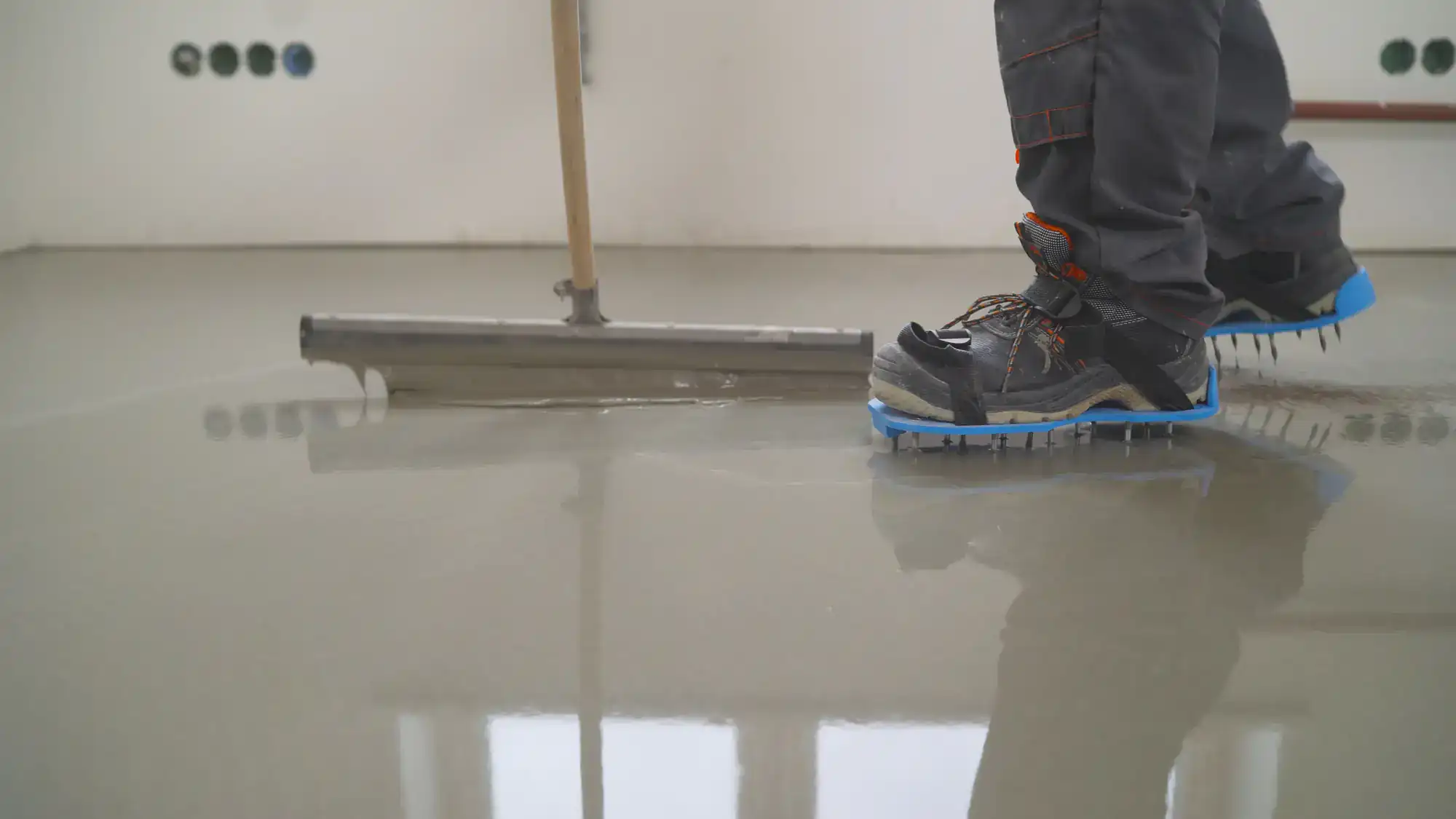
What makes or breaks the result is everything that happens before and after the image goes down. The concrete has to be properly ground and profiled so the epoxy bonds at a molecular level. The clear coat has to be applied evenly to maintain consistent depth across the entire floor. And the topcoat — typically a polyaspartic or urethane finish — has to be UV-stable so the image doesn’t yellow or haze over time. Skip any of those steps, and the floor tells on itself fast.
Metallic epoxy flooring is the decorative system we get asked about most, and for good reason. The visual effect is hard to describe until you’ve seen it in person — a swirling, flowing pattern that shifts depending on the light and the angle you’re viewing it from. No two floors look the same. That’s not a selling point we invented; it’s a physical property of how metallic pigment powders move through wet epoxy during application. Once it cures, that pattern is locked in permanently.
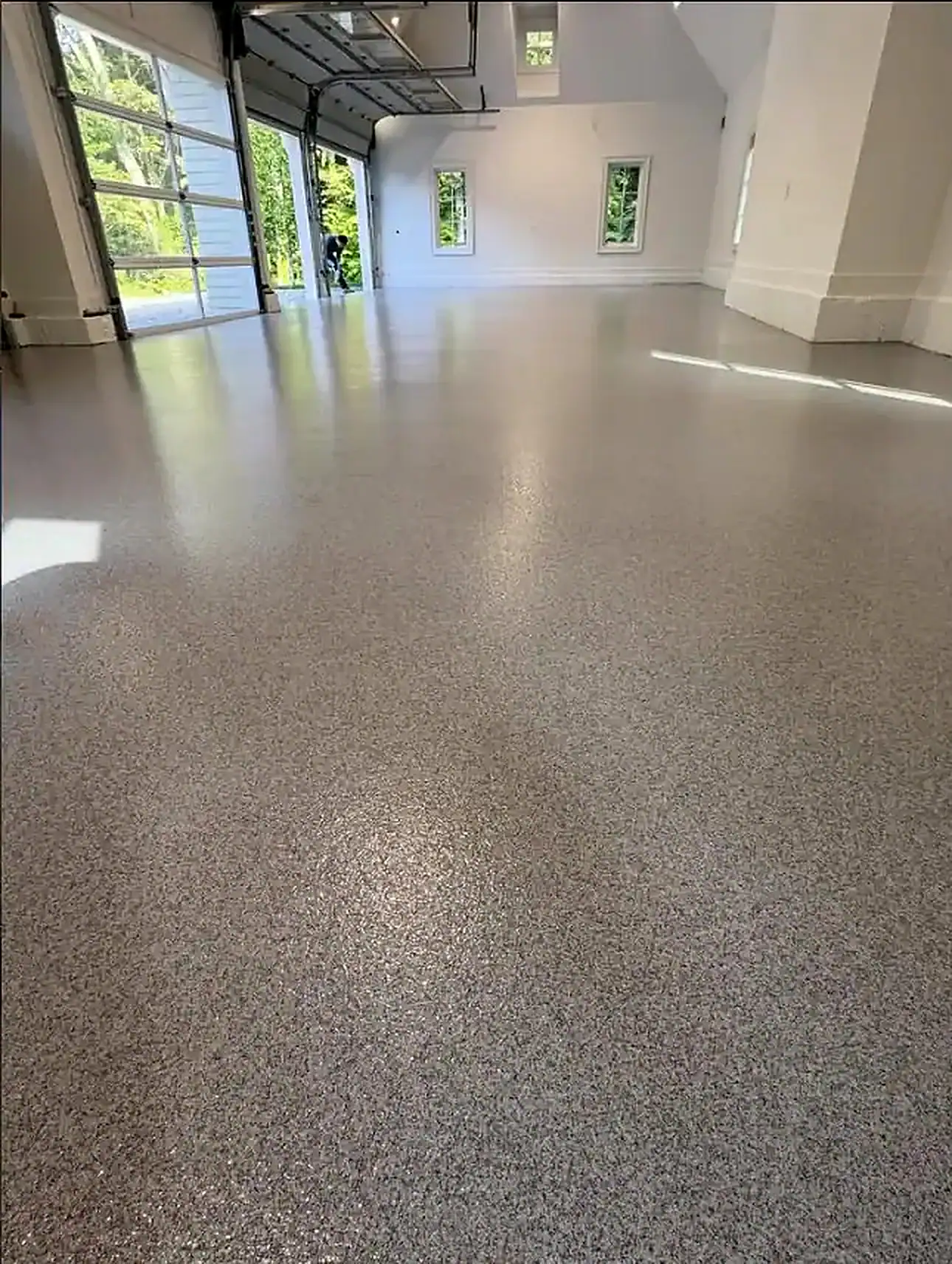
The system itself is built in layers. It starts with a pigmented primer that seals the concrete and gives the metallic coat a consistent base to work with. From there, a 100% solids epoxy coating is applied with metallic powder mixed in. We work the material to guide the flow and create the pattern — this is where experience matters, because you’re making real-time decisions about how the floor will look. A final urethane or polyaspartic topcoat goes on last, providing UV resistance, chemical resistance, and a surface that’s genuinely easy to maintain.
For Nassau County businesses — automotive showrooms along Northern Boulevard, medical spas in Garden City, restaurants in Rockville Centre and Great Neck — metallic epoxy does something that tile and hardwood can’t. It makes the space memorable. Customers notice it, photograph it, and remember it. That’s not a small thing if your physical space is part of your brand.
On the residential side, homeowners in communities like Merrick, Bellmore, and Massapequa are using metallic epoxy in garages and basements to transform spaces that used to feel like storage areas into rooms they’re actually proud of. The floor that looked like cracked, stained concrete last year can look like a high-end showroom this year — and hold up that way for the next decade or two.
The color range is broad. Pearl whites, deep charcoals, ocean blues, warm bronzes — the palette is wide enough to work with almost any interior direction. And because the system is seamless, there are no grout lines, no seams, no places for moisture or bacteria to collect. That matters in Nassau County’s coastal climate, where humidity is a constant and moisture management isn’t optional.
Marble epoxy takes the same metallic application technique and directs it toward mimicking the look of natural stone. We control the flow of the material to create veining patterns that read as genuine marble — without the cost, the weight, or the maintenance that real stone demands. For reception areas, retail entrances, or any space where you want the visual weight of marble without committing to it structurally, marble epoxy is a practical and visually compelling alternative.
It works particularly well in medical and wellness settings — think aesthetic medicine practices or physical therapy offices in the Mineola or Garden City medical corridors — where the look of natural stone signals quality but the seamless, non-porous surface is also a functional requirement. You get the aesthetic and the hygiene standard in the same system.
Epoxy terrazzo is a different animal, though it often gets grouped with decorative epoxy in general conversation. Traditional terrazzo uses cement as a binder and requires significant thickness and substrate loading. Epoxy terrazzo uses resin as the binder instead, which means it can be installed at roughly a quarter of an inch — a fraction of the traditional system’s depth. That makes it viable in spaces where traditional terrazzo would be too heavy or too disruptive to install.
The design flexibility with epoxy terrazzo is significant. Aggregate colors, chip sizes, and divider strip patterns can be customized to create floors that are genuinely one-of-a-kind. Schools, commercial lobbies, and healthcare facilities have been using epoxy terrazzo for years because it holds up under heavy foot traffic, cleans easily, and looks as good at year fifteen as it did at installation. For Nassau County commercial properties that want a floor with both visual character and serious longevity, it’s an option that deserves a real conversation.
Both systems — marble epoxy and epoxy terrazzo — require the same foundational commitment to surface preparation that any quality epoxy installation demands. Diamond grinding, moisture testing, proper primer application. The decorative layer is the part that gets photographed, but the prep work underneath is what determines whether any of it lasts.
Want live answers?
Connect with an Advanced Epoxy Flooring expert for fast, friendly support.
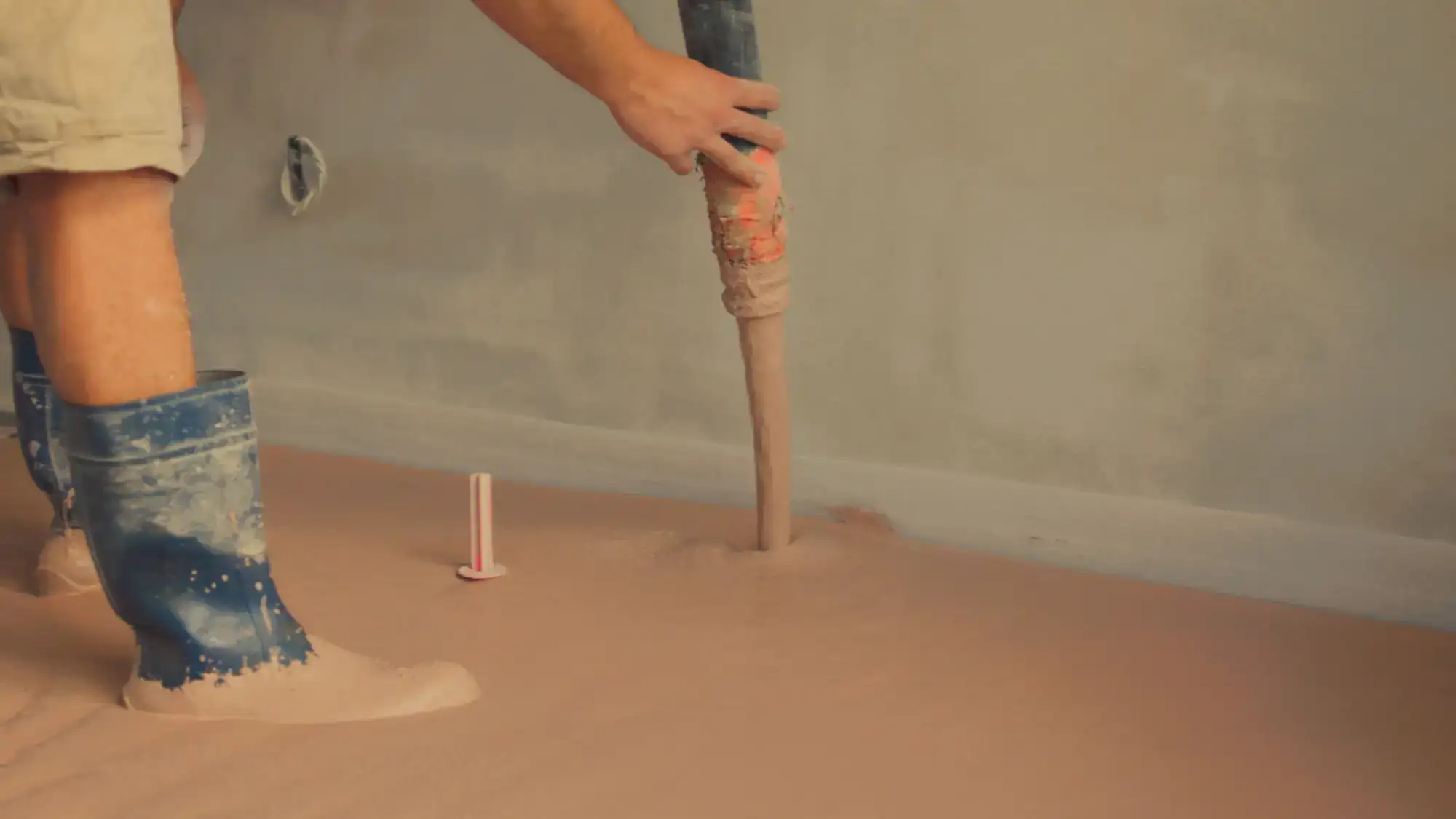
The installation process for 3D and decorative epoxy follows a consistent sequence, and every step in that sequence exists for a reason. It starts with diamond grinding the concrete surface to create the right profile for adhesion. This isn’t optional — it’s the step that determines whether the floor bonds properly or eventually separates from the slab. Acid etching, which some contractors use as a shortcut, is inconsistent and leaves residue that compromises the bond. Diamond grinding is the standard for a reason.
What makes Nassau County installations different from a lot of other markets is moisture. Long Island’s coastal position — bounded by the Sound to the north and the Atlantic to the south — means concrete slabs in this area deal with higher ambient humidity and more moisture vapor transmission than inland markets. We test for moisture on every project before any coating goes down. That single step is responsible for more long-term installation success than almost anything else we do.
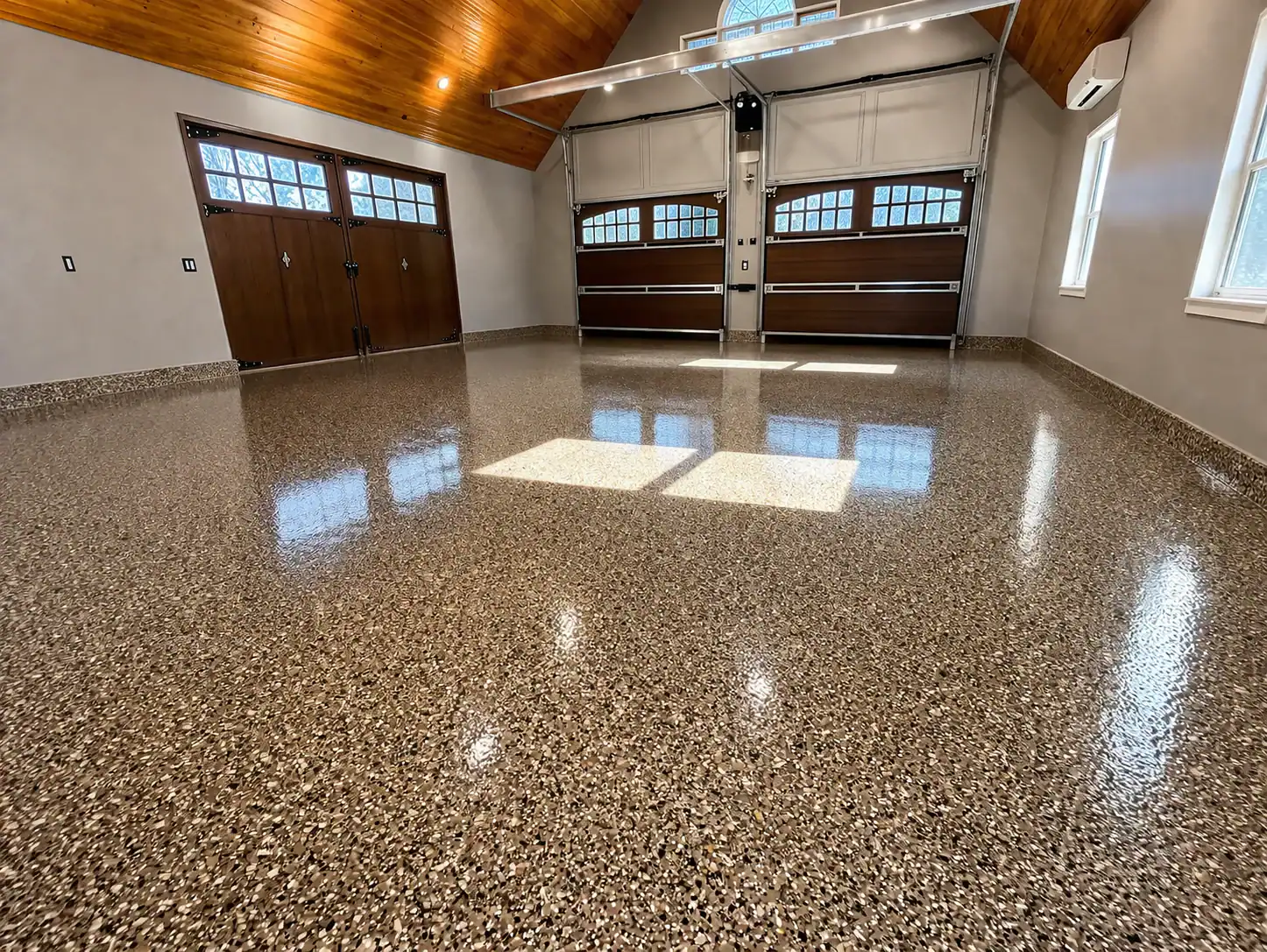
One of the most common questions we hear from Nassau County homeowners and business owners is how long the process takes and how long before the space is usable again. The honest answer depends on the system, the size of the space, and the condition of the existing concrete — but for most projects, we’re talking about days, not weeks.
Surface preparation typically happens on day one. Grinding, crack repair, moisture testing, and primer application. For a standard residential garage or commercial space, that’s usually a full day of work. The decorative layers — whether that’s a metallic system, a 3D image encapsulation, or an epoxy terrazzo design — go down once the primer has cured properly. The topcoat follows, and with a polyaspartic finish, you’re typically looking at foot traffic within a few hours and full vehicle or equipment traffic within 24 hours.
For commercial clients in Nassau County — a restaurant in Port Washington closing for a weekend renovation, a fitness studio in Westbury scheduling a brief closure between sessions, a retail shop in Garden City working around store hours — that timeline is genuinely workable. We’ve done installations where a business closed Friday evening and reopened Monday morning with a completely transformed floor.
For residential projects, the timeline is similarly efficient. A two-car garage in Levittown or a basement in Rockville Centre can typically be completed in one to two days, with the space ready for normal use within 24 to 48 hours of the final topcoat. The key is not rushing the cure between layers — each coat needs the time it needs to bond correctly before the next one goes on. We don’t cut that short.
With 14 installers on staff, we can mobilize quickly and keep projects moving without the delays that come with smaller operations that are stretched across too many jobs at once. That matters when your timeline is real and your space can’t sit idle for a week.
If your property is in Long Beach, Freeport, Oceanside, Merrick, Wantagh, or anywhere else along Nassau County’s South Shore, your concrete slab is dealing with conditions that most flooring contractors aren’t equipped to handle well. Moisture vapor coming up through the slab is the primary cause of epoxy delamination — the floor bubbles, peels, and separates from the concrete — and in coastal communities, that moisture pressure is significantly higher than what you’d find in an inland suburb.
We’ve been working in Nassau and Suffolk County for 35 years. We understand what the ground moisture situation looks like in these communities because we’ve tested it thousands of times. Before any coating goes down on a South Shore property, we perform moisture testing to establish the vapor emission rate of the slab. If the rate is elevated, we address it with a moisture-mitigation primer before moving forward. That’s not an upsell — it’s a necessary step that protects the investment you’re making in the floor.
This is also where the difference between commercial-grade materials and consumer products becomes most visible. A DIY epoxy kit or a contractor using water-based, low-solids products on a high-moisture slab is a failure waiting to happen. The chemistry doesn’t support it. Commercial-grade 100% solids epoxy, properly primed and topcoated with a polyaspartic finish, is engineered to handle the conditions Nassau County actually presents.
Beyond moisture, South Shore properties deal with salt air exposure that’s corrosive to unprotected concrete over time. A properly installed epoxy system seals the slab completely, blocking salt air penetration and protecting the structural integrity of the concrete beneath. For homeowners in these communities who have watched their driveways, garage floors, and basement slabs degrade faster than they expected, a quality epoxy installation isn’t just an aesthetic upgrade — it’s a protective measure that extends the life of the concrete itself.
The post-WWII housing stock in communities like Levittown, Hicksville, and Uniondale adds another layer to this. These slabs are old. They’ve absorbed decades of moisture, road salt, and general wear. Getting them properly prepared for an epoxy coating requires experience with aged concrete — knowing how to address existing damage, how to stabilize the surface profile, and how to ensure the new system bonds to a substrate that’s seen a lot of years. That’s not something you learn from a product data sheet. It comes from doing this work, in this market, for a long time.
A 3D or decorative epoxy floor is a long-term investment. The visual impact is immediate, but the real value is in a system that holds up for ten to twenty years without peeling, yellowing, or requiring constant maintenance. Getting there means working with a contractor who understands surface preparation, moisture management, and material selection — not just one who can make a floor look good in photos on installation day.
Nassau County’s coastal environment, aging housing stock, and demanding commercial spaces require a level of expertise that not every contractor brings to the table. The combination of diamond grinding, moisture testing, commercial-grade 100% solids materials, and UV-stable topcoats isn’t optional here — it’s what the conditions demand.
If you’re ready to talk through what’s possible for your space, Advanced Epoxy Flooring has been doing this work on Long Island for 35 years. Reach out and let’s start with a real conversation about your floor.
Summary:
Article details:
Share: