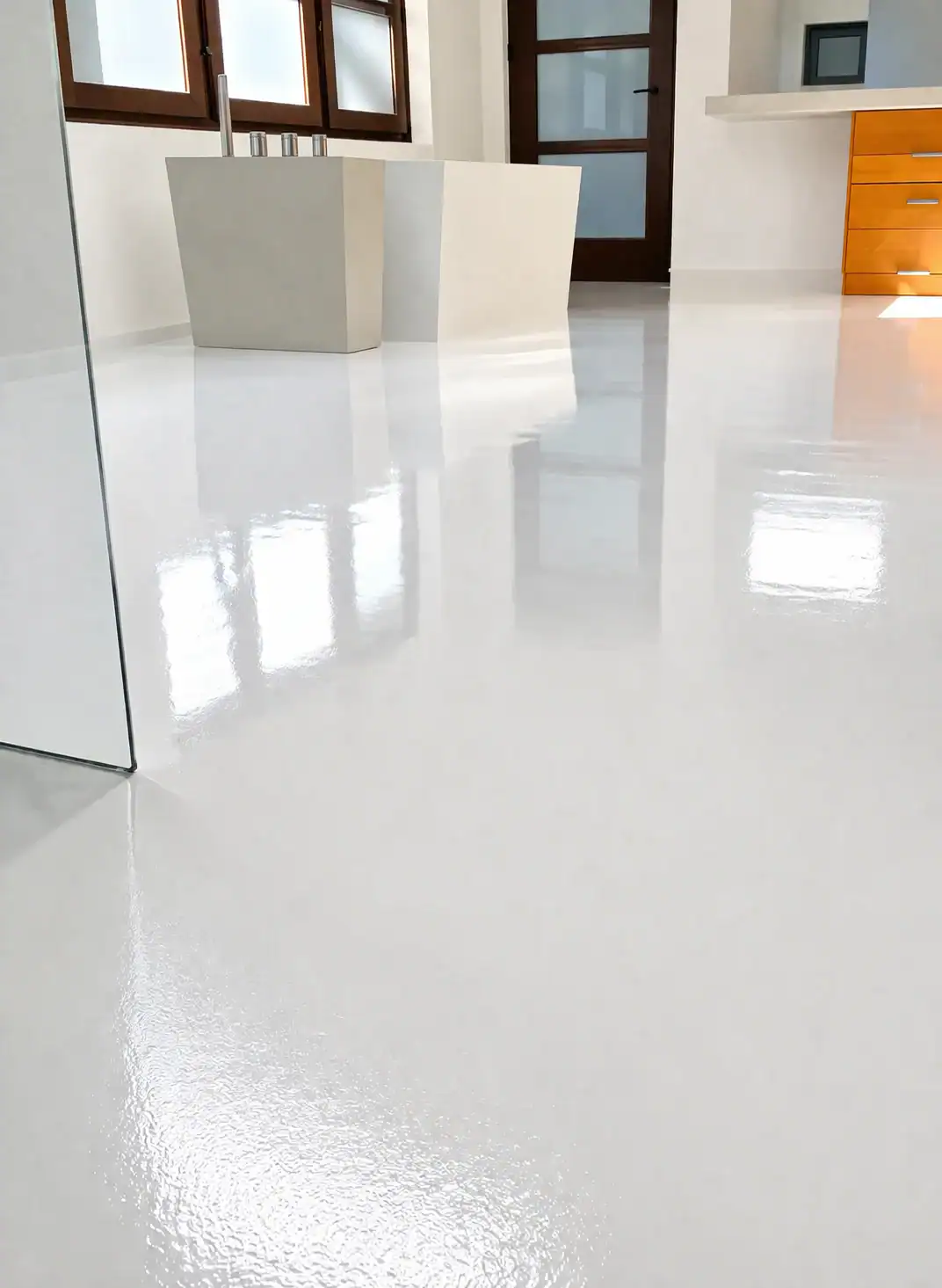
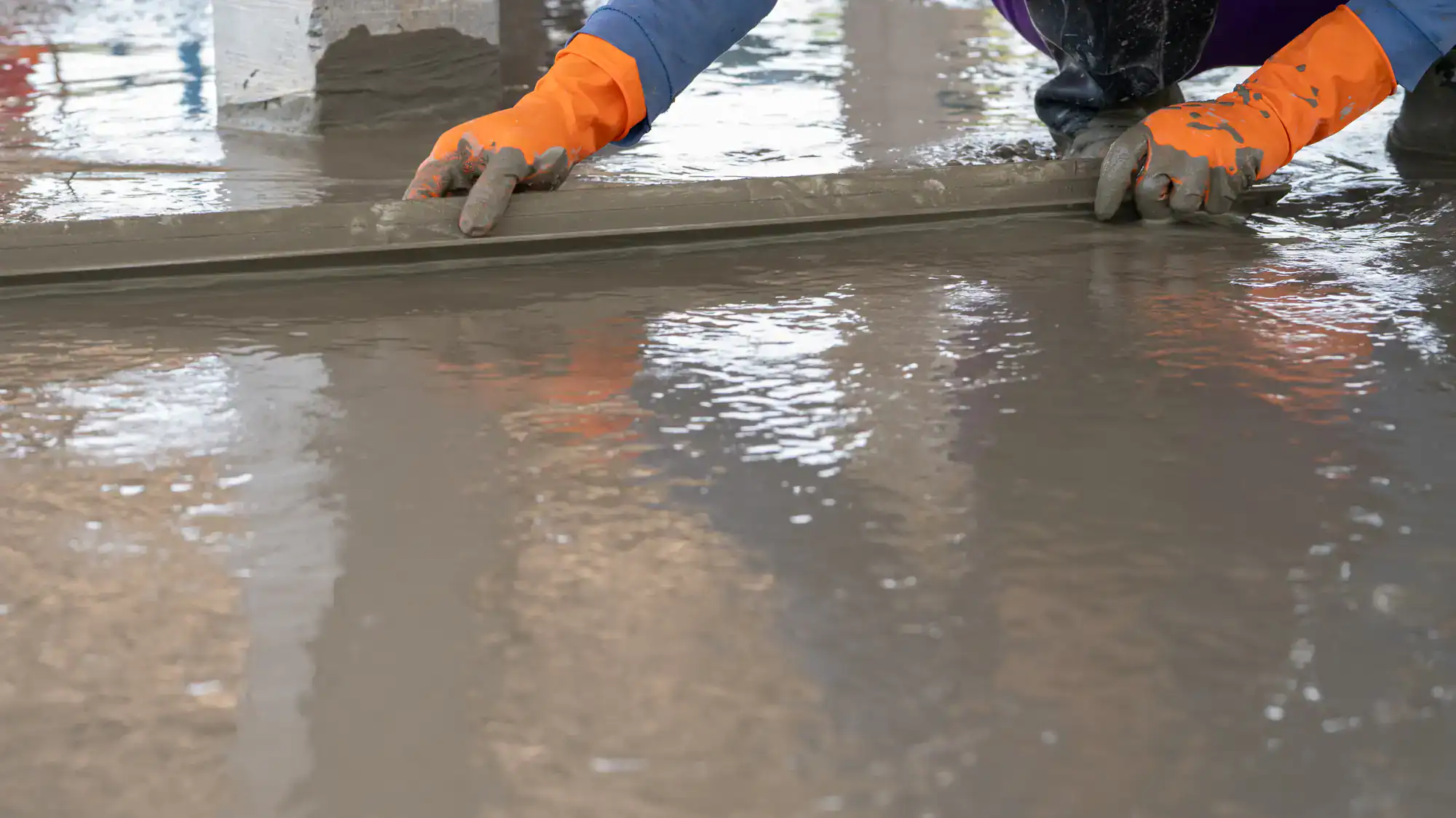
Most concrete floor repairs fail before they should — not because of bad materials, but because of what happens before the first coat goes down.
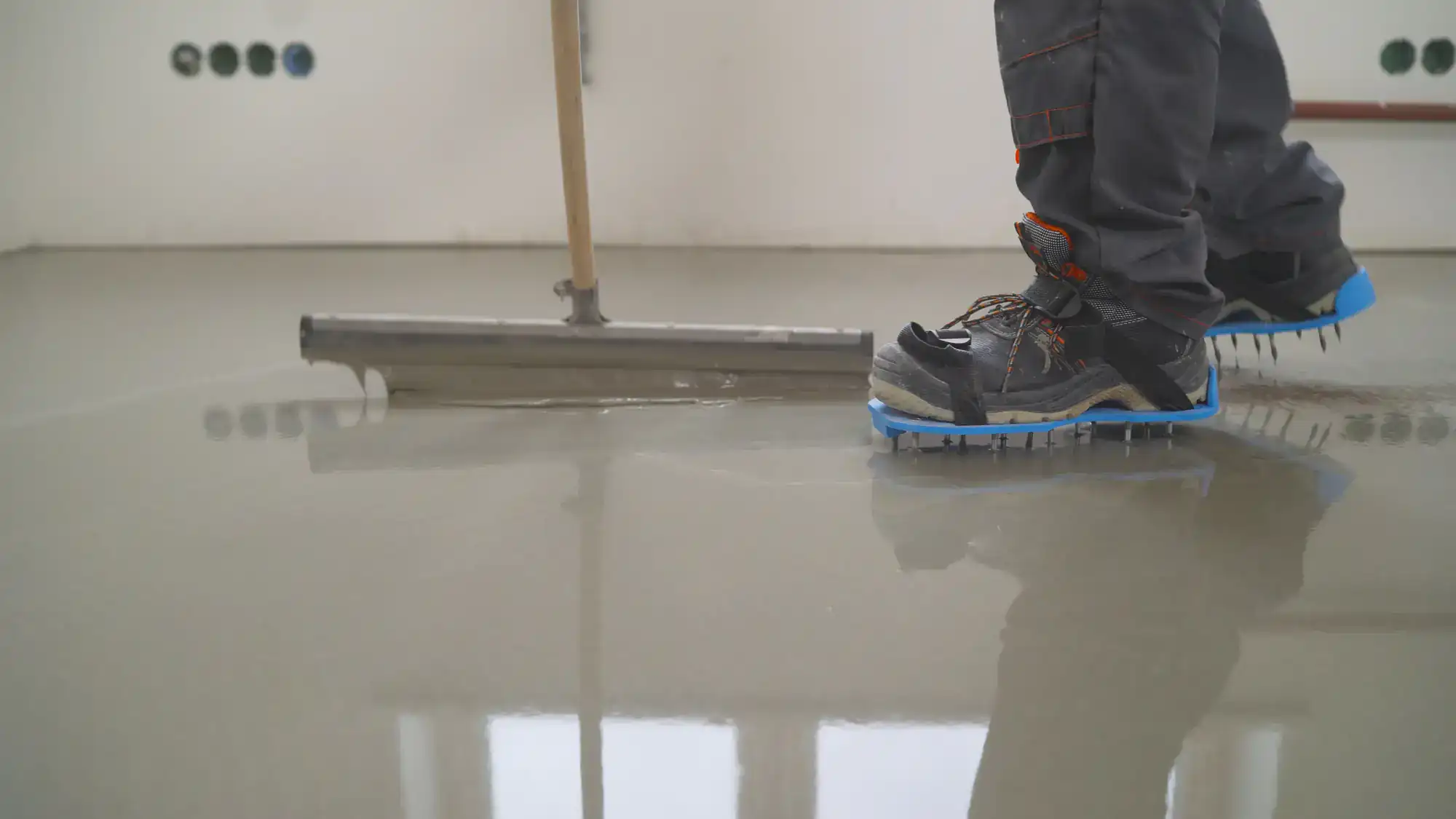
You paid for a floor that was supposed to last. A year later, it’s peeling at the edges, bubbling near the drain, or delaminating in patches. The contractor who installed it has moved on, and now you’re looking at the same problem — except this time it’s going to cost more to fix because someone has to remove what’s already there before starting over.
This isn’t bad luck. It’s a preparation problem. Industry data consistently shows that 80% of epoxy floor failures trace back to inadequate surface prep — not the coating itself. If you’re a business owner or facility manager in Nassau County, understanding what proper concrete floor repair actually involves could save you from going through this twice.
The coating is the part everyone sees, so it’s the part most contractors focus on. But the coating is only as good as what’s underneath it. Concrete that hasn’t been properly profiled, tested for moisture, or cleared of contamination will reject an epoxy system — not immediately, not visibly at first, but eventually and often dramatically.
The problem is that cutting prep corners saves time and money for the contractor in the short term, and the failure usually doesn’t show up until after the job is paid and closed. By then, you’re dealing with it alone. Understanding what good prep looks like is the best way to protect yourself before you hire anyone.
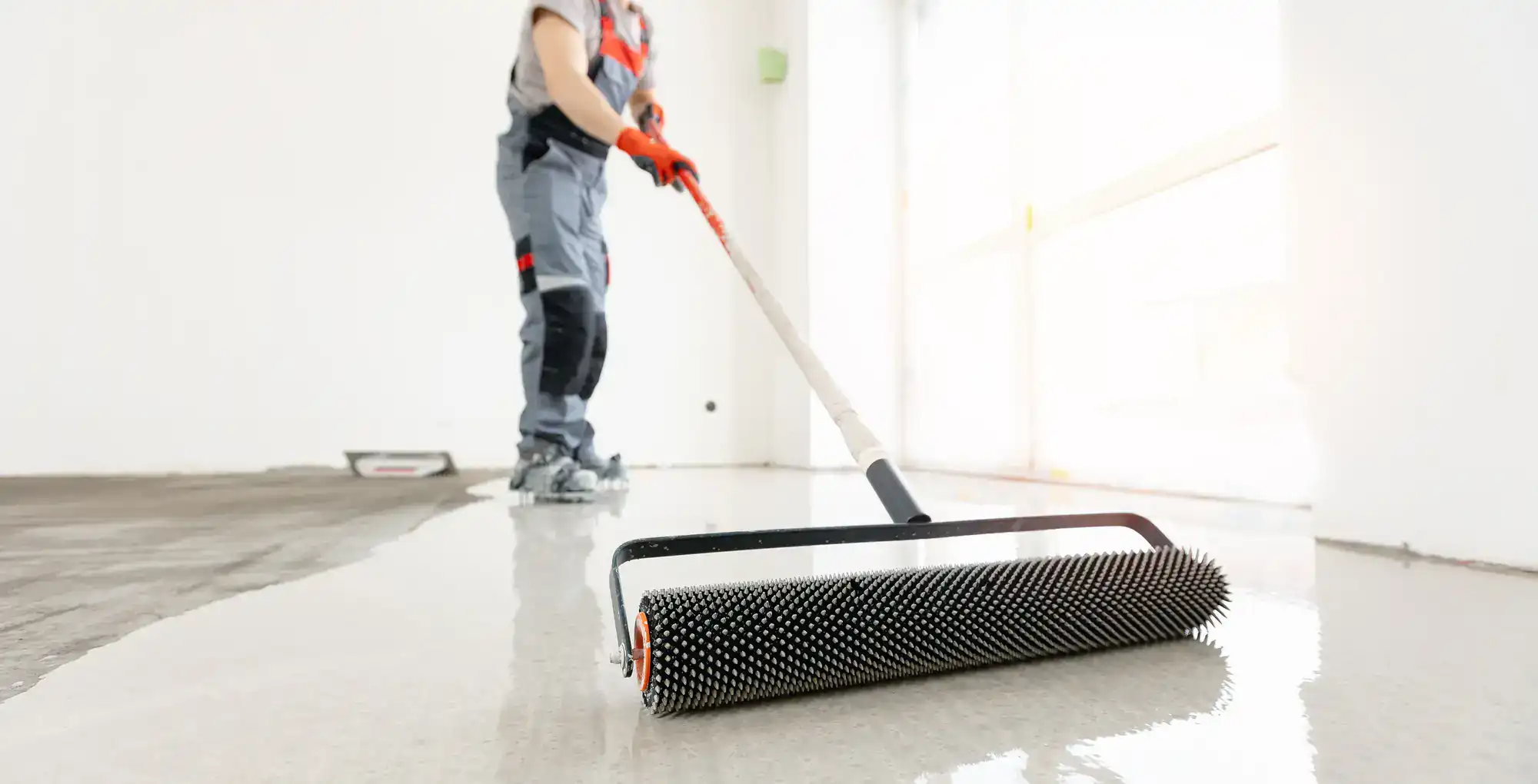
A lot of contractors prep a floor by sweeping it, maybe running a mop or a pressure washer, and calling it ready. That approach might look fine to the eye. It is not fine for epoxy adhesion.
For a coating to bond properly, the concrete surface needs a specific texture — what the industry calls a Concrete Surface Profile, or CSP. Think of it like the difference between trying to glue something to a sheet of glass versus a piece of sandpaper. Smooth surfaces don’t hold. Profiled surfaces do. For commercial and industrial applications, the required CSP typically falls in the range of 3 to 5 on a scale developed by the International Concrete Repair Institute — a texture that looks almost like fine sandpaper and can only be achieved through mechanical preparation.
Shot blasting concrete is one of the most effective ways to reach that profile in commercial settings. The process propels small steel beads at high velocity across the slab surface, stripping away weak material, removing contaminants, and creating a consistent mechanical profile in a single pass. It doesn’t just clean the surface — it opens it up so the coating has something real to grip. For heavy-duty industrial floors, shot blasting can achieve a CSP of 3 to 7, which is the range required for thick-build epoxy systems, self-leveling coatings, and multi-coat resinous floors.
Diamond grinding is another method we use regularly, particularly for medium-build systems and decorative applications. It creates a CSP of roughly 2 to 4, which is appropriate for many commercial environments. The choice between methods depends on the existing condition of the concrete, the coating system being applied, and the specific demands of the environment.
What matters most is that this step happens at all — and that it’s done to the right standard for the system going on top. Skipping it, or doing a surface clean and calling it prep, is the single most common reason floors fail early. Proper surface profiling can extend coating lifespan from two years to nine or more, particularly in humid coastal environments like Nassau County’s South Shore.
Epoxy is not forgiving of imperfections. Where a painted surface might hide a small crack or low spot, a clear or semi-gloss epoxy system will highlight every flaw — and more importantly, every unrepaired crack becomes a structural failure point once the coating is under load.
Concrete patch epoxy — epoxy-based patching compounds used to fill cracks, spalls, and voids before the coating is applied — is a non-negotiable step in any serious repair process. The depth and nature of the damage determines what product we use. Shallow surface pitting can often be addressed with an epoxy paste or skim coat. Cracks with active movement or significant depth typically require epoxy resin injection or a polymer-modified mortar that can flex slightly with the slab. Using the wrong product for the wrong situation is just as problematic as skipping the step entirely.
This matters for Nassau County facilities in particular. Freeze-thaw cycles on Long Island cause concrete to crack and spall in ways that don’t happen in warmer climates. Road salt applied during winter months penetrates those cracks and creates contamination that has to be mechanically removed before any patch material will bond. Buildings near Long Beach, Freeport, or Oceanside that experienced flooding during Hurricane Sandy in 2012 often have saltwater damage embedded in the slab — damage that isn’t always visible on the surface but will cause adhesion failures if it’s not addressed.
The repair sequence matters too. Cracks should be repaired after surface profiling, not before — because grinding and shot blasting can open up hairline cracks that weren’t visible initially. Applying patch material before profiling means you may be grinding into your own repair. The correct order is: profile first, assess damage, repair, then prime and coat. It sounds straightforward, but a surprising number of contractors reverse or skip steps in that sequence when they’re trying to move quickly.
Want live answers?
Connect with an Advanced Epoxy Flooring expert for fast, friendly support.
Moisture is the leading cause of epoxy floor failure in coastal markets, and Nassau County sits between the Atlantic Ocean and the Long Island Sound. That’s not a minor detail — it’s the defining environmental factor for any flooring installation in this county.
Concrete breathes. Moisture vapor moves up through the slab from the ground below, and if it hits an epoxy barrier before it can escape, pressure builds. That pressure causes blistering, bubbling, and delamination — sometimes within weeks of installation. A floor can look and feel completely dry on the surface and still have internal relative humidity levels high enough to guarantee failure.
ASTM F2170 is the current industry standard for in-situ relative humidity testing in concrete slabs. It works by drilling holes into the slab, inserting calibrated probes, and measuring the RH level from inside the concrete — where the moisture that actually affects coating adhesion lives.
This replaced the older calcium chloride test, which had been used since the 1940s and measured surface moisture emission rather than internal slab conditions. The problem with surface-only testing is that it repeatedly produced passing results on slabs that later caused floor failures. The concrete looked fine at the surface. The moisture was moving up from below, and no one tested for it at depth. ASTM F2170 was developed specifically because the old method wasn’t catching the problem.
For epoxy and resinous flooring systems, most manufacturers require moisture levels below 75% RH and below 3 lbs per 1,000 square feet per 24 hours before installation. If those thresholds aren’t met, the coating system needs to be adjusted — either with a moisture-mitigating primer or a system specifically engineered for high-moisture environments. Ignoring the numbers and coating anyway is a gamble that almost always loses.
In Nassau County, this step is more critical than in inland markets. The South Shore communities — Long Beach, Freeport, Oceanside, Massapequa — sit on a relatively high water table. Facilities in East Meadow, near the county’s healthcare corridor, and along the commercial strips on Hempstead Turnpike and Merrick Road are dealing with ground conditions that drive moisture vapor transmission at rates that would surprise anyone who’s only worked in drier markets. We’ve seen slabs in this county that looked installation-ready fail testing badly enough to require a full mitigation system before any coating could go down.
Concrete moisture testing using ASTM F2170 is a standard part of our process on every project. We talk about it upfront with every client, because the results sometimes change the scope of the job — and it’s far better to know that before the coating goes on than after.
**How do I know if my contractor is actually testing for moisture?** Ask them directly what moisture testing method they use and whether they test to ASTM F2170. A contractor doing it correctly can show you the probes, the equipment, and the readings. If they say they “checked it” without being able to describe the process, that’s a surface test at best — and a guess at worst. In Nassau County, where ground moisture levels are elevated year-round due to the coastal water table, skipping this step is one of the most reliable ways to end up with a failed floor.
**Why is my epoxy floor peeling if it looked fine at first?** Because most moisture-related and adhesion failures don’t show up immediately. The coating bonds initially, but if the surface wasn’t properly profiled or moisture wasn’t tested and managed, the failure develops over weeks or months as conditions stress the bond. By the time you see bubbling or peeling, the underlying problem has usually been building for a while. Proper surface preparation — grinding, profiling, crack repair, moisture testing — is what prevents this from happening in the first place.
**Can new epoxy be applied over an existing failed coating?** In most cases, no. Applying a new coating over a failed or compromised existing one bonds to the old coating, not the concrete. When the old coating continues to fail, it takes the new one with it. The correct approach is to remove the existing coating, re-profile the concrete, retest for moisture, and start clean. It costs more than coating over the problem, but it’s the only approach that actually works.
**How long should a properly installed commercial epoxy floor last?** A well-installed commercial floor system — one that started with proper surface prep, moisture testing, crack repair, and the right coating system for the environment — should last 10 to 20 years or more with routine maintenance. The floors that fail in a year or two almost always have a preparation problem at the root. The coating itself rarely fails. What fails is the bond between the coating and a substrate that wasn’t ready for it.
**Does the time of year affect concrete floor installation on Long Island?** It does. Temperature and humidity during application affect how epoxy cures, and Nassau County winters create additional challenges — cold slabs, freeze-thaw-damaged concrete, and road salt contamination that has to be removed before any coating will bond. Spring and summer are generally better conditions for installation, though Nassau County’s coastal humidity means moisture management is a year-round consideration, not just a winter one.
Most flooring problems aren’t product problems. They’re process problems — specifically, what happened before the first coat went down. Surface profiling, moisture testing, crack repair, contamination removal: these are the steps that determine whether a floor lasts two years or twenty. They take time, they require the right equipment, and they’re exactly what gets cut when a contractor is trying to win a job on price.
Nassau County’s coastal conditions — the humidity, the water table, the freeze-thaw cycles, the road salt — make proper preparation more important here than in most markets. A contractor who understands that, tests for it, and adjusts their process accordingly is a fundamentally different hire than one who shows up with a grinder and a bucket of epoxy.
If you’re dealing with a failed floor or planning a new installation, we’ve been doing this work on Long Island for over 30 years. Reach out to talk through what your floor actually needs — before anyone touches it.
Summary:

Article details:
Share: