
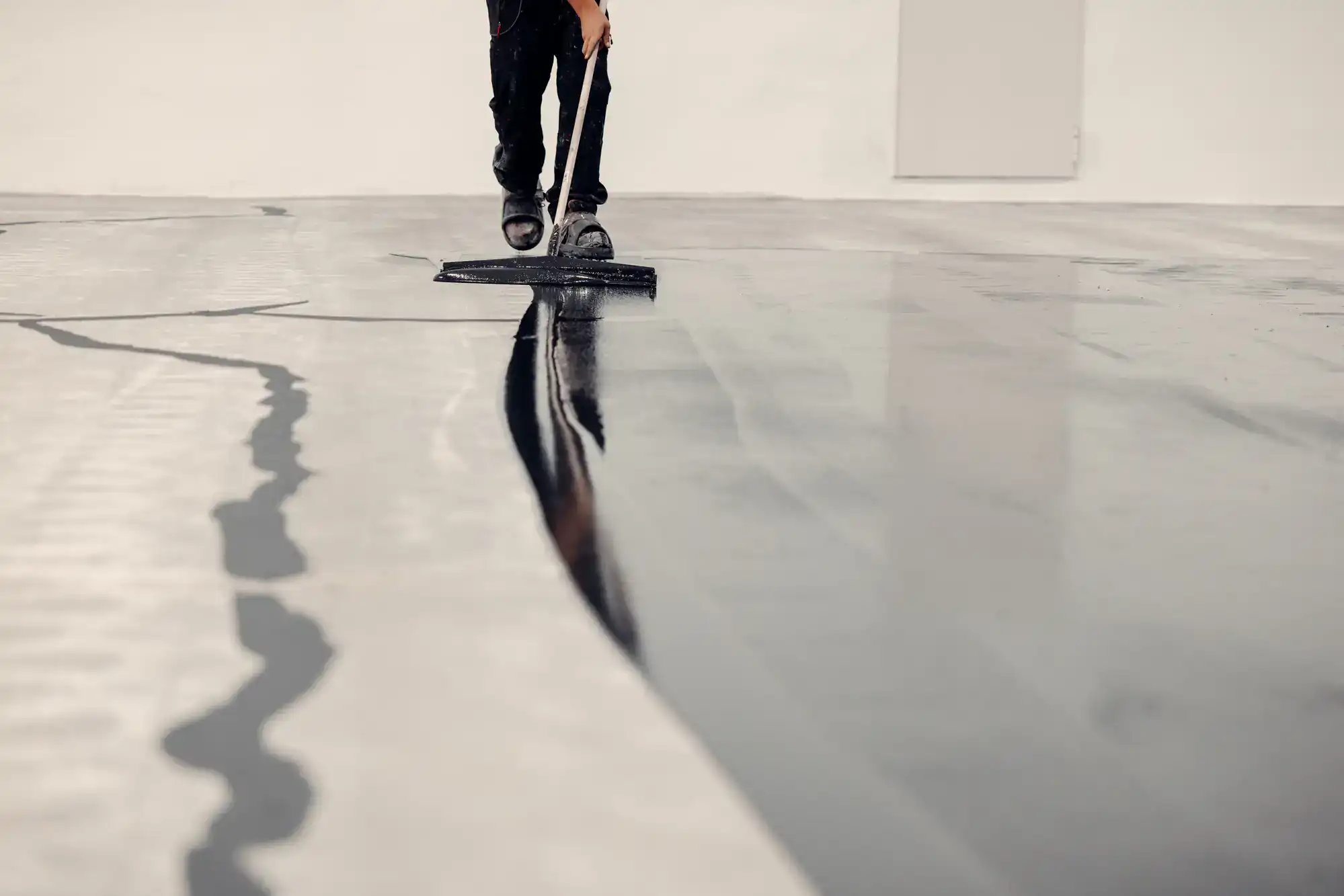
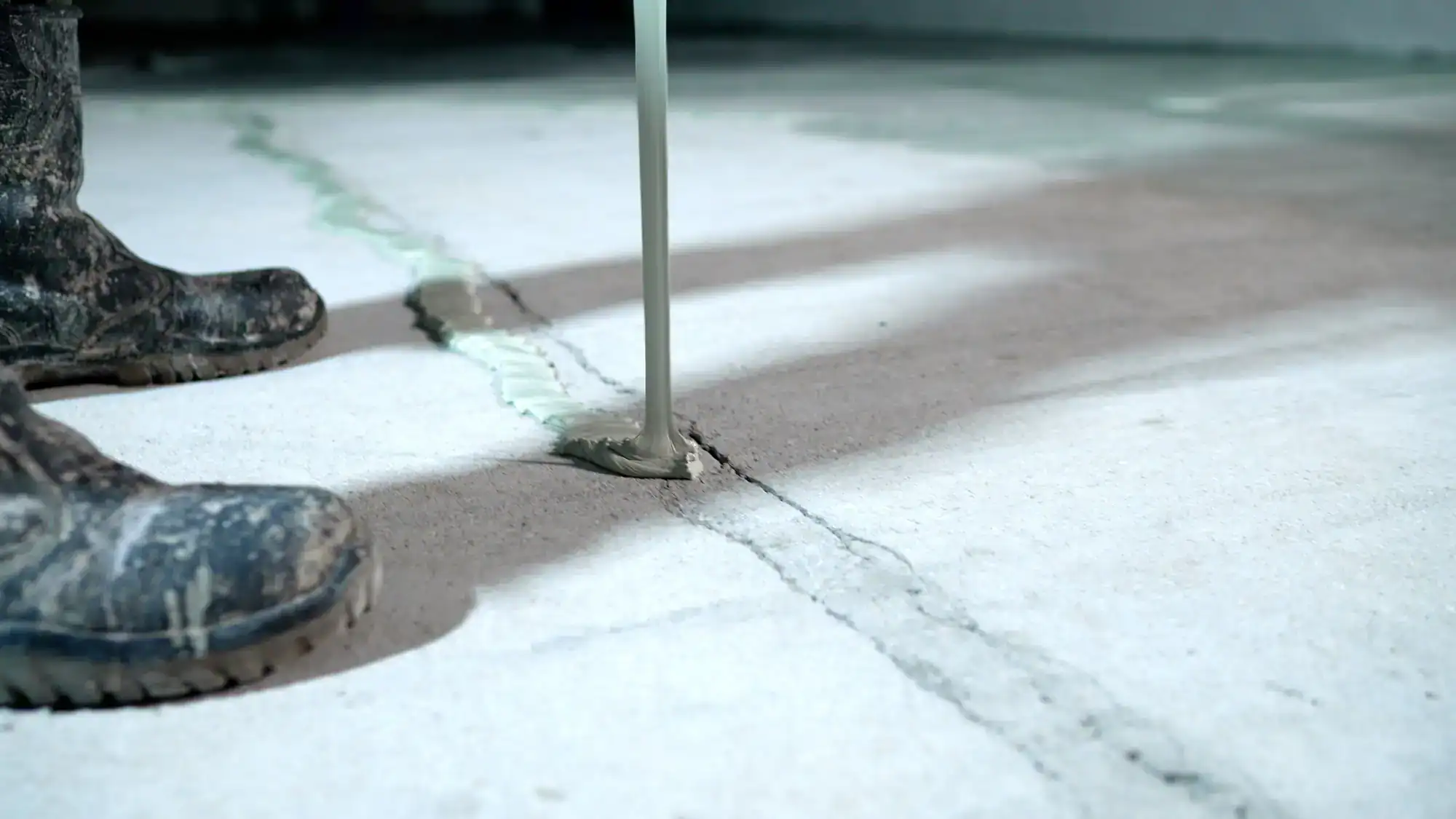
If you’ve had an epoxy floor bubble, peel, or lift within a few years of installation, moisture vapor is almost certainly the reason. It’s the most common cause of epoxy failure on Long Island’s South Shore and it’s more prevalent in Lindenhurst than most people realize. The water table in this area is naturally high, and in the southern parts of the village closest to the bay, concrete slabs push moisture upward constantly. A floor installed without moisture testing isn’t just a bad investment it’s a floor that’s already failing before the job is finished.
When we install epoxy flooring in Lindenhurst, NY the right way, you get a surface that handles real commercial and industrial use without cracking, staining, or degrading. That means forklift traffic, commercial cleaning chemicals, heavy foot traffic on Wellwood Avenue, or the kind of daily abuse a busy kitchen puts on a floor handled without issue for years, not months. The post-war commercial building stock throughout Lindenhurst is aging, and those concrete slabs need proper surface preparation before any coating goes down. Diamond grinding, crack repair, moisture assessment that’s the foundation of a floor that actually performs.
For businesses along Sunrise Highway or in the downtown commercial corridor, the practical outcome is simple: you stop replacing your floor every few years and start thinking about it once every decade or two. That’s what industrial-grade epoxy flooring in Lindenhurst looks like when it’s installed by someone who knows what they’re doing.
We’re based in Bohemia, NY about 15 miles east of Lindenhurst on Sunrise Highway and have been serving commercial and industrial clients throughout Lindenhurst and across Suffolk County for over 35 years. This isn’t a franchise operation or a general contractor who added epoxy to the menu. Danny Harmer, our president, has personally installed floors for over four decades. His portfolio includes commercial kitchens, healthcare facilities, warehouses, and aircraft hangars across the country including the White House kitchen in 1996. That kind of track record doesn’t come from reading a manual.
We hold factory-trained certifications from Sherwin-Williams High Performance Flooring and Res Tech, and every installer on our crew is OSHA 40 certified. Most of our installation team has been with us for over ten years, which means the person working on your Lindenhurst facility isn’t learning on the job. We carry an A+ BBB rating with zero complaints on record across three-plus decades of commercial work a detail that speaks louder than any sales pitch.
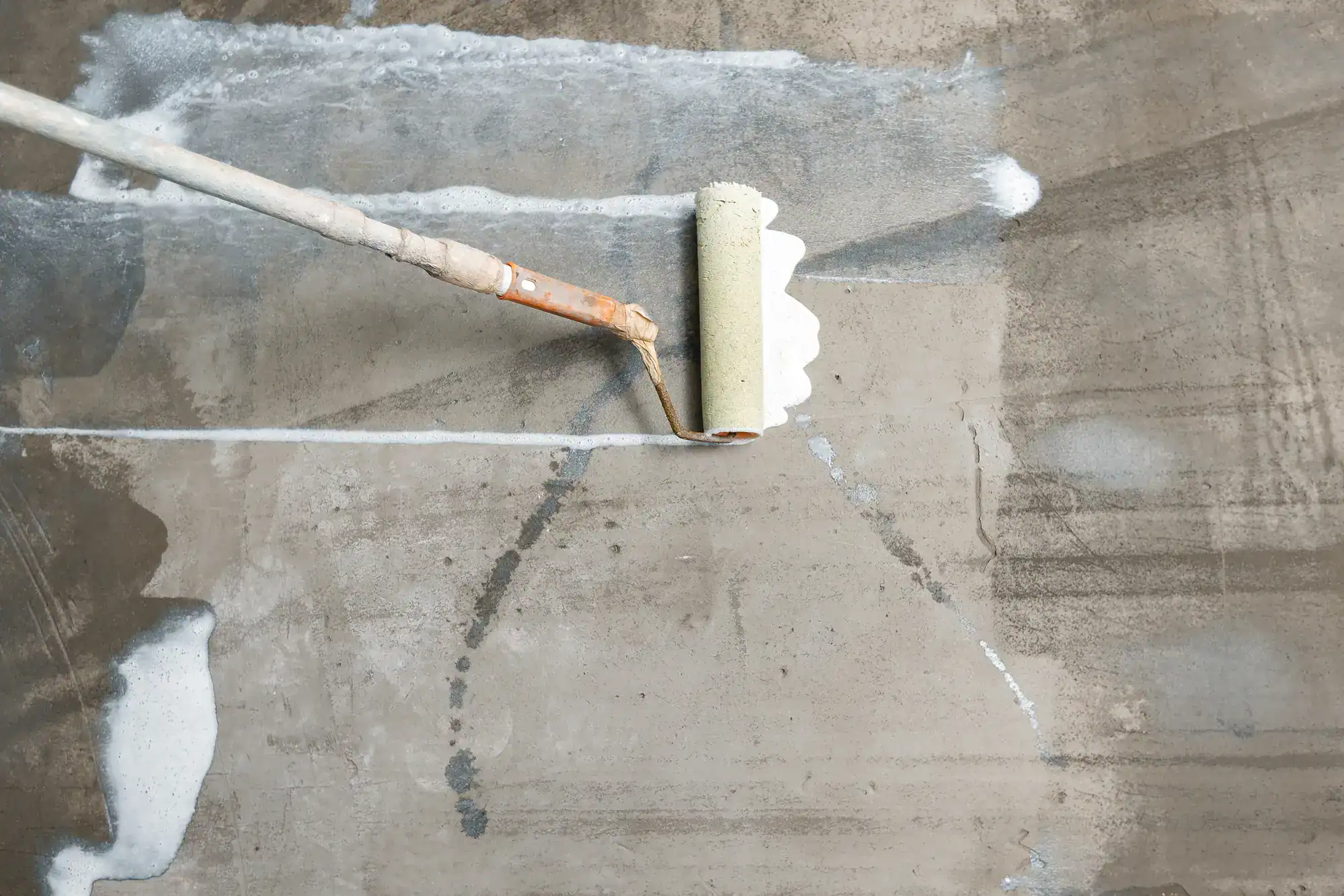
Before any product touches your floor, the slab gets evaluated. For Lindenhurst properties especially those south of Montauk Highway or in areas with documented flood history we start with moisture testing. Calcium chloride tests or relative humidity probe testing per ASTM standards tell us exactly what the slab is doing before we commit to a system. If moisture vapor emission is elevated, we address it with a moisture-mitigation primer. Skipping this step is the reason most epoxy floors on the South Shore fail prematurely, and it’s a step that most local operators don’t take.
Once the slab is assessed, surface preparation begins. Diamond grinding opens the concrete to the correct surface profile this is the step that determines whether the coating bonds properly or peels within a year. Any cracks or surface damage get repaired before anything is applied. On the aged commercial slabs common throughout Lindenhurst’s post-war building stock, this phase takes time and isn’t optional.
From there, the system goes down in layers: primer coat, base coat, and topcoat each allowed to cure properly before the next is applied. The specific system depends on your environment. A commercial kitchen near Wellwood Avenue gets a different spec than a warehouse off Sunrise Highway. Cure time, return-to-service windows, and scheduling around your operation are all discussed upfront. For most commercial clients, the goal is minimal downtime and for many, that means overnight installation so you open on schedule.
Ready to get started?
The system we install isn’t a one-size solution. For commercial kitchens and food service businesses in Lindenhurst’s downtown corridor, that means a USDA-compliant, food-grade epoxy with thermal shock resistance built to handle steam cleaning, commercial cooking equipment, and Suffolk County Department of Health inspections without degrading. Hygienic cove base installation is included where required, eliminating the gap between floor and wall where bacteria accumulate.
For light industrial and warehouse operations near the Sunrise Highway commercial zone, we specify heavy duty industrial epoxy floor systems based on actual load profiles forklift traffic, pallet jack loads, chemical exposure. A chemical resistant epoxy finish for an auto service shop has a different formulation than the high traffic commercial epoxy going into a retail space on Wellwood Avenue. The right spec matters, and getting it wrong costs more than getting it right the first time.
Healthcare and medical office facilities in and around Lindenhurst a community where health care and social assistance is the largest employment sector require seamless resinous floor coatings with antimicrobial additives, ADA compliance, and installation windows that don’t disrupt patient care. Every project is scoped to the actual conditions of the facility, the slab, and the use case. Suffolk County commercial work is performed by our licensed, insured crews in compliance with New York State contractor requirements and applicable Village of Lindenhurst building standards.
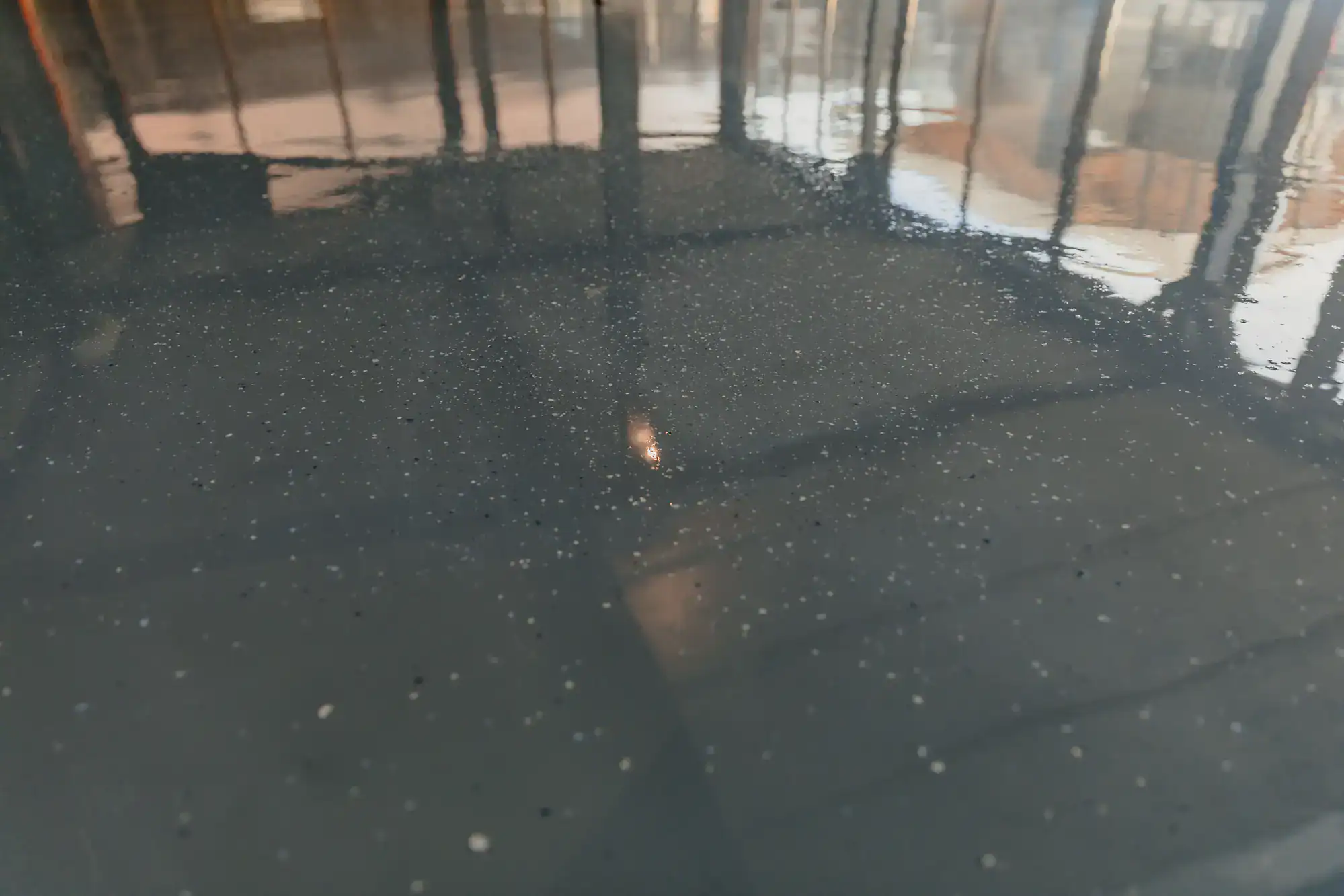
The short answer is moisture. Lindenhurst sits directly on the Great South Bay, and the water table throughout the village particularly south of Montauk Highway is naturally high. Concrete slabs in this area are subject to persistent upward moisture vapor transmission, meaning water vapor migrates through the slab from below and pushes against the underside of the coating. If the epoxy wasn’t installed with a moisture-mitigation primer, or if the slab wasn’t tested for vapor emission rates before installation, that pressure eventually wins. The coating bubbles, lifts at the edges, or delaminates entirely.
This problem is more acute in Lindenhurst than in inland Suffolk County communities, and it was made worse by Hurricane Sandy. Properties that were re-floored quickly after the 2012 storm surge without proper moisture remediation are now seeing second-generation failures. If your floor was replaced between 2013 and 2016 and it’s starting to show problems, this is almost certainly why. The fix isn’t another coat of epoxy over the damage. It’s testing the slab, addressing the moisture source, and installing the right system from the ground up.
The product thickness and solids content are the biggest differences, and they determine how long the floor actually lasts. Consumer-grade epoxy kits from hardware stores are typically water-based, low-solids formulations that go down at around 2–4 mils of thickness. They’re fine for a light-use residential garage with a clean, dry slab. Put one in a commercial kitchen, a warehouse with forklift traffic, or a retail space with heavy daily foot traffic, and you’ll be replacing it within a couple of years.
Industrial epoxy flooring systems the kind we use in commercial and industrial applications across Lindenhurst’s Sunrise Highway corridor are 100% solids or high-solids formulations applied at 14–30 mils or more, depending on the system. They’re engineered for real load profiles, chemical exposure, and the kind of daily abuse that commercial environments produce. The products we install are Sherwin-Williams High Performance Flooring systems and Res Tech-certified coatings not box-store materials repackaged with commercial language. If a quote looks significantly cheaper than ours, the product spec is almost always the reason.
A properly installed industrial-grade epoxy system in a commercial or light industrial facility should last 15–20 years with routine maintenance. The operative phrase is “properly installed” which, in Lindenhurst’s coastal environment, means moisture testing before installation, diamond grinding to the correct surface profile, and a multi-layer system with appropriate cure time between coats. Floors that skip any of those steps in a high-moisture environment like Lindenhurst’s South Shore will not reach that lifespan.
Maintenance matters too. Commercial epoxy floors benefit from regular cleaning with pH-neutral cleaners and periodic inspection of high-traffic areas for surface wear. In facilities subject to heavy chemical exposure auto shops, commercial kitchens, industrial operations the topcoat formulation also affects longevity. A polyaspartic topcoat over an epoxy base, for example, provides significantly better UV stability and abrasion resistance than an epoxy-only system. For Lindenhurst facilities near the waterfront or in areas with documented flood risk, the moisture-mitigation primer layer is the single most important factor in determining how long the floor holds up.
Yes and for most restaurant and food service businesses in Lindenhurst’s commercial district, that’s exactly how we schedule it. We offer overnight installation for commercial kitchens, which means our crew comes in after your last service, works through the night, and the floor is ready for your morning opening. The specific return-to-service window depends on the system specified and the ambient conditions temperature and humidity both affect cure time, and South Shore summers can push humidity above the threshold that affects epoxy application.
For larger food service operations or facilities with complex layouts, we phase the project one section at a time so the business stays operational throughout. Suffolk County Department of Health Services has flooring standards for food service establishments, and the systems we install are specified to meet those requirements, including USDA-compliant, food-grade formulations and hygienic cove base installation. The scheduling conversation happens upfront, before any work is scoped, so there are no surprises about downtime.
For commercial and industrial epoxy flooring in Lindenhurst, NY, installed pricing typically runs between $7 and $14 per square foot depending on the system, the condition of the existing slab, and the scope of surface preparation required. A straightforward commercial retail space with a clean, dry slab falls on the lower end. A commercial kitchen requiring a urethane mortar system, cove base, and moisture mitigation falls on the higher end. Specialty systems broadcast quartz, decorative flake, or heavy-duty chemical-resistant finishes for industrial use will fall within or above that range depending on the specification.
The most important cost context is lifecycle math. A system at $10 per square foot that lasts 20 years costs $0.50 per square foot per year of service. A cheaper system at $4 per square foot that fails in three years plus the cost of removal and reinstallation costs more per year and more in total disruption. For Lindenhurst commercial property owners who have already dealt with post-Sandy rebuilding costs, that calculation tends to land clearly. Every project gets a detailed written estimate based on the actual scope, not a ballpark number over the phone.
Start with certifications and ask specifically about moisture testing protocol. In Lindenhurst a South Shore community with documented high water table conditions and significant flood history a contractor who doesn’t test for moisture vapor emission before installation is taking a risk with your floor, not theirs. Ask whether they use calcium chloride testing or ASTM-standard relative humidity probes, and whether moisture mitigation is part of their standard process or an add-on they recommend only when problems are obvious.
Beyond moisture competence, look for manufacturer-backed credentials rather than self-reported claims. Factory-trained certifications from companies like Sherwin-Williams High Performance Flooring or Res Tech mean the contractor has been vetted by the manufacturer of the system they’re installing not just someone who completed an online course. OSHA 40 certification for installers matters on commercial job sites where safety compliance is a real concern. Finally, longevity counts. A contractor who has been operating in Suffolk County for 35-plus years is accountable in a way that a newer or out-of-area operator simply isn’t.