
Every time apparatus rolls back into a Lindenhurst bay from a call on Sunrise Highway or Wellwood Avenue in winter, it’s tracking road salt directly onto the floor. That chloride-based material doesn’t just sit there it works its way into the concrete, accelerates spalling, and destroys inadequate coatings from the inside out. A properly installed polyaspartic system creates a sealed, chemically resistant surface that road salt simply cannot penetrate. The difference shows up fast, and it compounds over years.
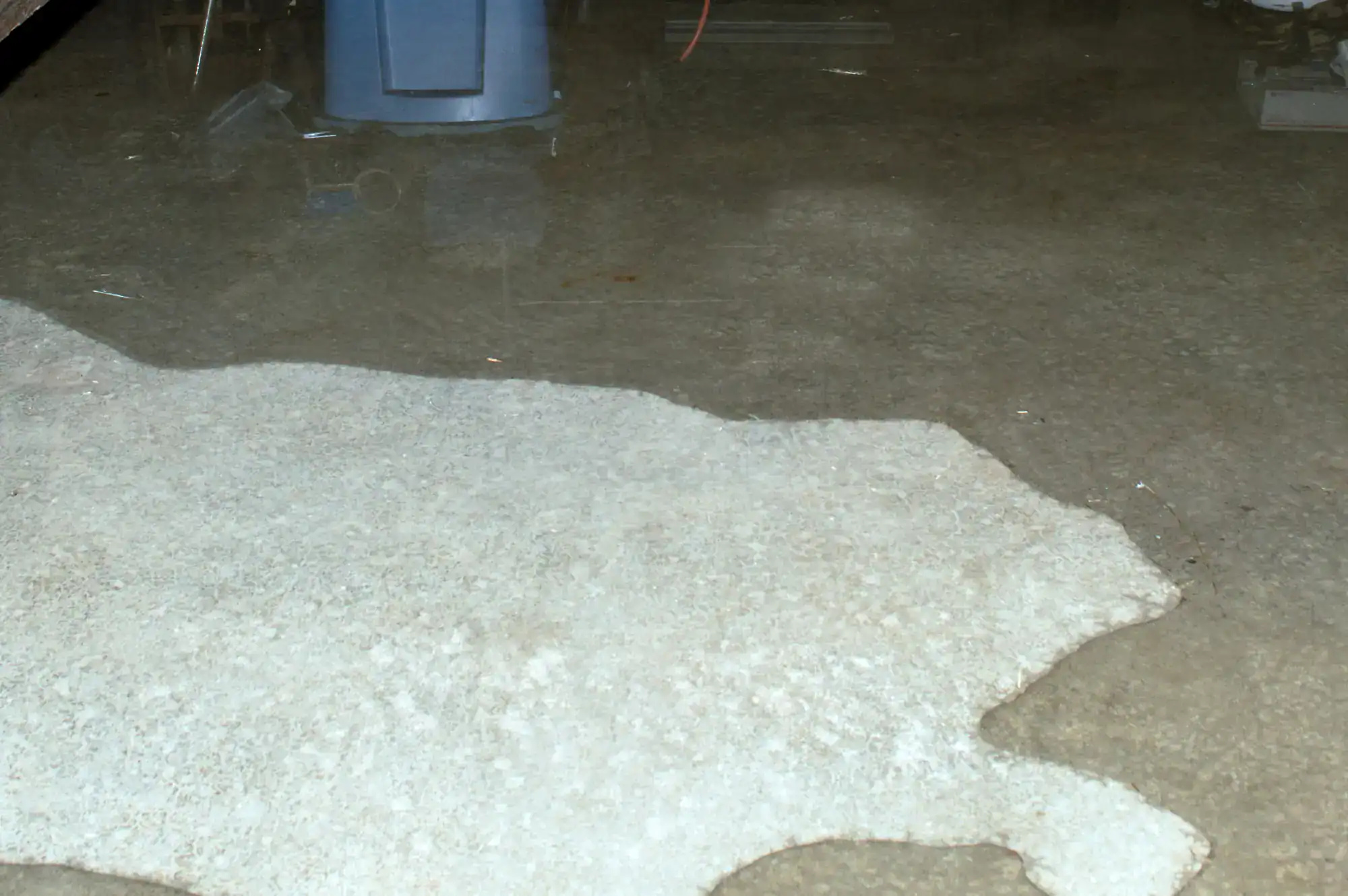
Then there’s the moisture. Lindenhurst sits on flat, sandy terrain threaded with canals that connect directly to the Great South Bay. That keeps the water table close to the surface throughout much of the village which means the concrete slab in your apparatus bay is under constant pressure from moisture vapor rising from below. That’s the condition that causes epoxy floors to bubble and peel, and it’s not rare here. It’s structural. A floor system that doesn’t account for it won’t last.
Get this right and you’re looking at a bay floor that handles 40,000-pound apparatus, power-washes clean after marine debris calls, resists the thermal shock of cold bay-door air meeting hot tires in January, and holds up for 20 years without needing to be ripped out and redone. That’s the outcome not a floor that looks good on day one, but one that still performs on year fifteen.
We’re based in Bohemia, NY about 20 miles east of Lindenhurst along Sunrise Highway, entirely within Suffolk County. This isn’t a national chain dispatching a crew that’s never worked in a South Shore coastal environment. Our team understands what Lindenhurst’s bay humidity, high water tables, and freeze-thaw winters actually do to concrete because we’ve been working in these conditions for decades.
Our CEO Danny Harmer brings over 40 years of hands-on installation experience. Not management experience installation experience. Field supervisors Javier, Eduardo, and Fredith add over 40 more years between them, and most of our crew has been with us for over a decade. That kind of continuity doesn’t happen at franchise operations or general contractors who added epoxy to their service list last year.
We hold the Sherwin-Williams High Performance Flooring certification, Res Tech certification, and every field installer is OSHA 40 certified which matters when the work is happening inside an active fire station where crews are still responding to calls. The credentials aren’t decoration. They’re the reason this work holds up.
The first thing that happens on a Lindenhurst installation is concrete assessment and moisture testing. This step is non-negotiable here. With the water table as close to the surface as it is throughout much of the village particularly in areas near the canal system moisture vapor transmission is one of the most common reasons floors fail. Testing tells us exactly what we’re working with before anything goes down.
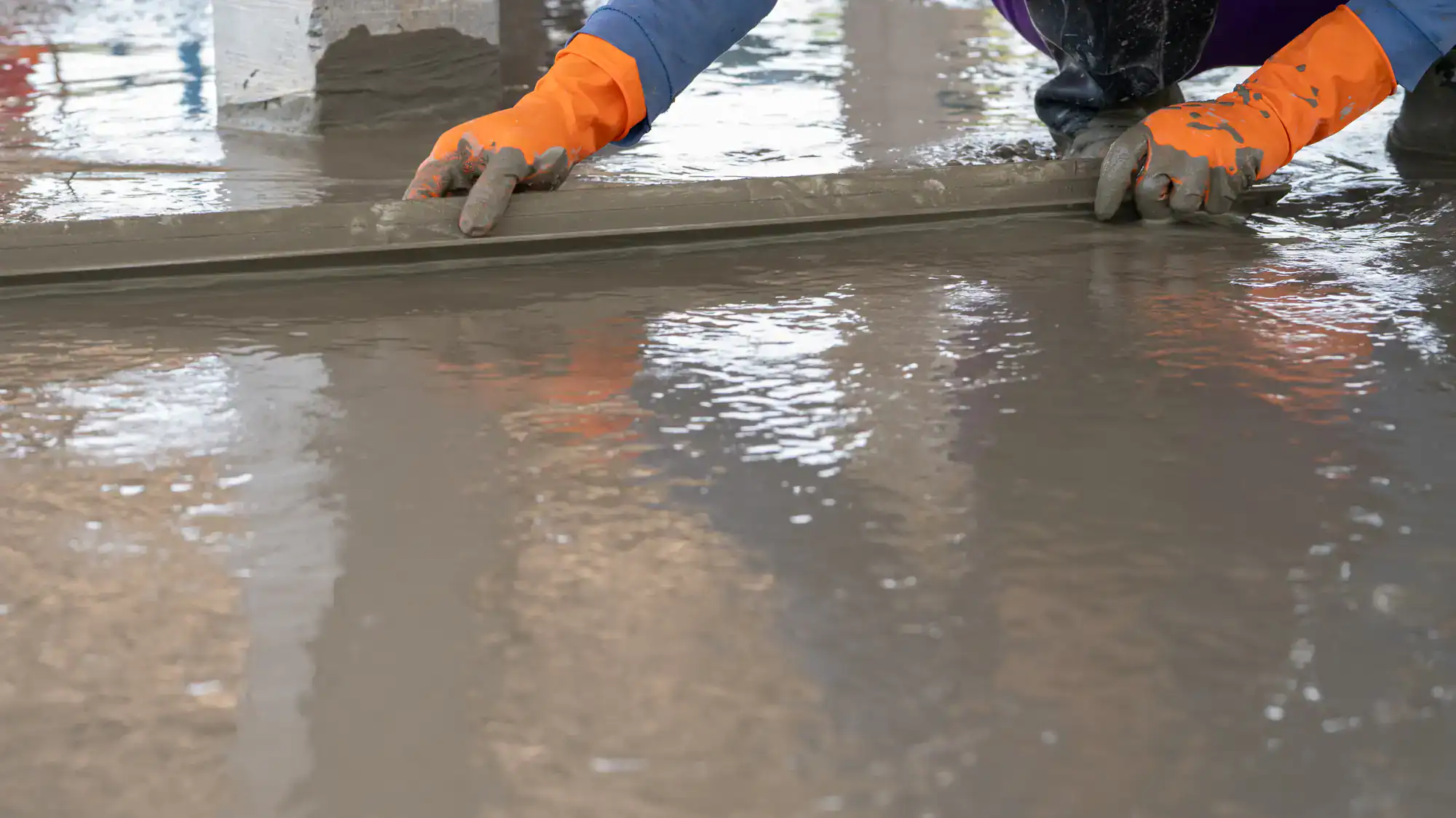
From there, the concrete gets diamond ground. Not acid etched diamond ground. Acid etching introduces water into the surface before you seal it, which is the wrong move in a high-moisture environment like Lindenhurst. Diamond grinding opens the concrete’s capillaries mechanically, creating a surface profile that allows the penetrating primer to bond at the molecular level. That primer seals against moisture vapor from below. It’s the foundation everything else depends on.
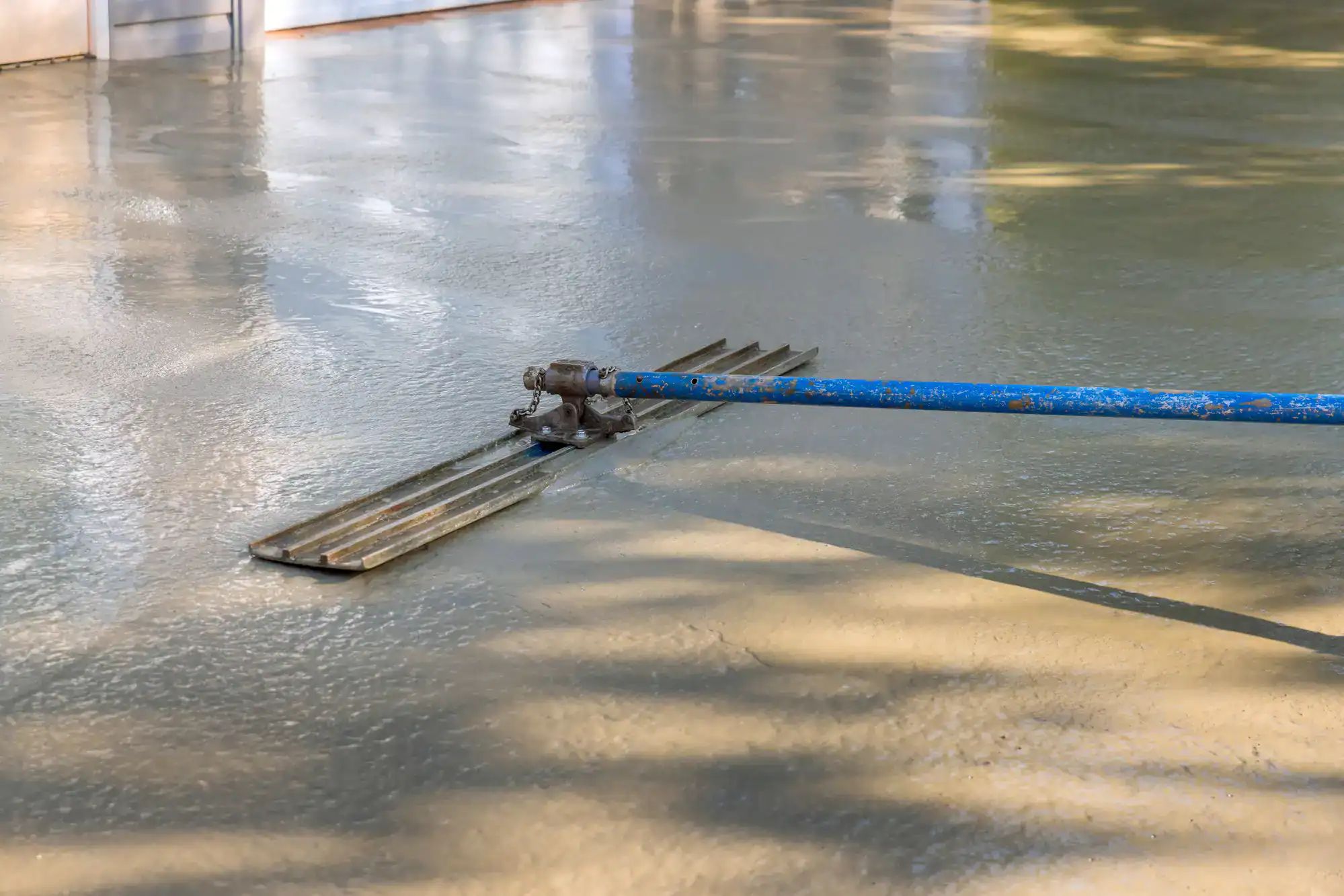
Then comes the high-build epoxy base coat with aggregate broadcast silica or quartz broadcast into the wet coat for compressive strength and wet-surface traction, which matters for a department that responds to Great South Bay water rescues and brings marine debris back into the bay. The polyaspartic topcoat goes on last. It cures in hours, not days. Your apparatus is back inside within 24 hours of completion, and the floor is rated for decades of heavy use from the moment it’s done.
Ready to get started?
The apparatus bay is the main event, but it’s not the only floor in the building that needs to perform. Lindenhurst’s fire stations including the North Lindenhurst Volunteer Fire Department firehouse on Straight Path and the Lindenhurst Fire Department’s facilities have decontamination zones, living quarters, and kitchens that each have their own demands. Using one certified contractor across the entire station means system compatibility, consistent quality, and one point of accountability when the board asks questions.
The apparatus bay system is built around a rapid-cure polyaspartic topcoat applied at 15 mils four times more flexible than standard epoxy, twice the abrasion resistance, UV-stable, and thermally resistant to the hot-tire pickup that’s one of the most common failure modes in firehouse floors. The decontamination zone gets a seamless, non-porous surface that can be power-washed completely clean directly supporting NFPA contamination control protocols that protect firefighters from carcinogenic residue brought back from structure fires. The kitchen gets a thermal-shock-resistant, seamless surface appropriate for commercial food service environments.
For a fire district board or village trustee approving this as a capital expenditure, the math is straightforward. A professionally installed polyaspartic system lasts 20-plus years. A consumer-grade kit or an under-qualified installation lasts three to five years before it needs to be ground out and redone. One right decision now is less expensive than two or three wrong ones over the same period.
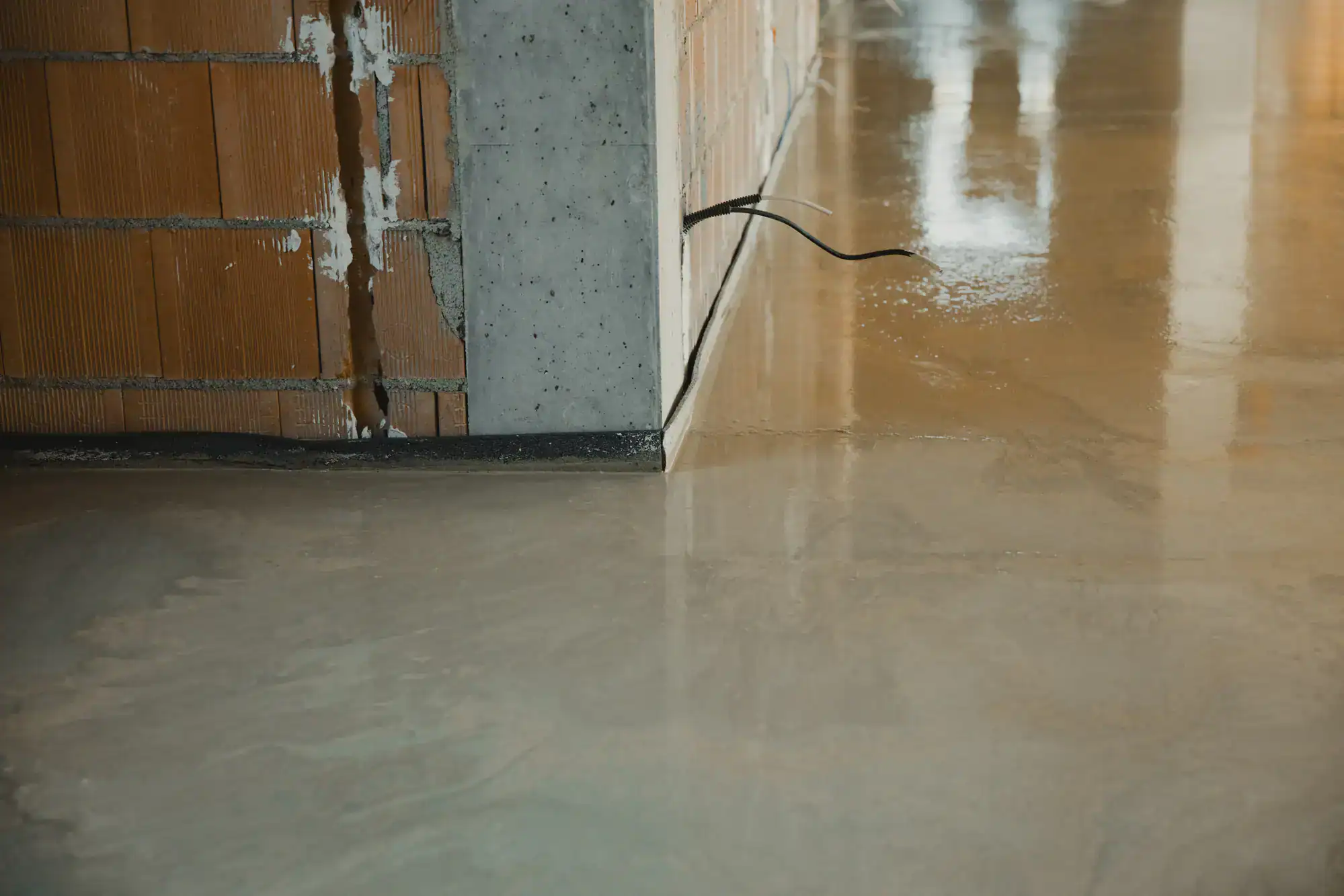
With a rapid-cure polyaspartic system, apparatus is typically back in the bay within 24 hours of installation completion. This is one of the most important practical differences between a polyaspartic system and a traditional epoxy standard epoxy requires three to seven days of cure time before heavy equipment can return to the floor. For departments like the North Lindenhurst Volunteer Fire Department, which responds to over 900 rescue calls and 300 fire calls per year, parking apparatus outside on Straight Path for a week isn’t a real option.
The 24-hour return window applies under normal conditions. If the concrete requires significant prep work heavy grinding, crack repair, or moisture mitigation the timeline may extend slightly, but that’s determined during the initial assessment before any work begins. You’ll know the full schedule upfront, not after the crew is already on-site.
Lindenhurst is built on flat, sandy terrain crossed by canals that connect to the Great South Bay. That geography keeps the water table close to the surface throughout much of the village and that moisture doesn’t stop at the surface. It moves upward through concrete slabs as vapor, and when it hits a coating that wasn’t properly sealed against it, the result is bubbling, delamination, and a floor that peels within a few years of installation.
Moisture vapor transmission is the second leading cause of epoxy floor failure, and it’s not a rare edge case in Lindenhurst it’s a predictable condition of the local environment. Before any coating goes down, moisture testing is performed to measure what the slab is actually doing. A penetrating primer is then applied to seal against vapor transmission from below. Skipping those steps in this community isn’t a shortcut it’s a guarantee of early failure. Any contractor who doesn’t bring up moisture testing before you do is telling you something important about their process.
Road salt is chloride-based, and chlorides are one of the most aggressive chemical stressors on both bare concrete and inadequately sealed floor coatings. Apparatus rolling back in from calls on Sunrise Highway or Wellwood Avenue in winter tracks that material directly into the bay on every response. Over time, it penetrates unsealed or thin-coated concrete, accelerates surface spalling, and corrodes the rebar underneath.
A properly installed polyaspartic topcoat creates a chemically resistant barrier that road salt cannot penetrate. The key word is “properly installed” the topcoat has to be bonded to a surface that was diamond ground and primed correctly, or the salt will find its way under the edges and lift the coating from below. The full multi-layer system penetrating primer, high-build base coat, polyaspartic topcoat works as a unit. Each layer has a function. The topcoat handles chemical resistance. The base coat handles compressive load. The primer handles moisture and adhesion. You need all three working together, not just a surface coat.
Long Island winters cycle through freezing and thawing multiple times per season, and apparatus bays on the South Shore take the full force of it. Every time the bay doors open for a winter response, cold outdoor air rushes in and meets the relatively warm concrete slab. When the apparatus returns and heated tires make contact with the floor, that’s direct thermal shock applied to the coating surface. Standard thin-mil epoxy coatings aren’t engineered for that kind of repeated thermal movement they crack, they delaminate, and they fail.
Polyaspartic topcoats are four times more flexible than standard epoxy. That flexibility is what allows the coating to absorb thermal expansion and contraction without cracking. It’s not a minor technical detail it’s the reason a polyaspartic floor survives Long Island winters while a standard epoxy floor doesn’t. Combined with UV stability for bays with frequent door openings and resistance to hot-tire pickup, the polyaspartic system is specifically suited to the conditions Lindenhurst apparatus bays deal with from November through March every year.
Yes, and it’s worth understanding why. Apparatus returning from structure fires carries carcinogenic residue combustion byproducts, soot, and chemical compounds that settle on surfaces throughout the bay. A porous concrete floor or a failed epoxy coating with cracks and voids harbors those contaminants. They don’t wash out completely, and every time someone walks through the bay, that material gets redistributed. For volunteer firefighters who spend significant time in the apparatus bay, that’s ongoing occupational exposure.
A seamless, non-porous resinous floor can be power-washed completely clean. No cracks, no grout lines, no voids where residue accumulates. This directly supports the contamination control protocols outlined in NFPA 1500 and NFPA 1585 standards that govern occupational safety in fire stations and have become increasingly central to the fire service’s response to elevated cancer rates among firefighters. The decontamination zone, in particular, needs a surface that can handle repeated washing with decontamination agents without degrading. That’s a different specification than the apparatus bay, and it’s one of the reasons having a single experienced contractor handle the full station matters.
Commercial polyaspartic floor systems in the New York market generally run in the range of $7 to $12 per square foot installed for a full multi-layer system penetrating primer, high-build base coat with aggregate broadcast, and polyaspartic topcoat. A typical two-bay apparatus bay might run 2,000 to 3,500 square feet, which puts a professional installation somewhere between $14,000 and $42,000 depending on bay size, concrete condition, and system complexity. Concrete that needs significant repair or moisture mitigation work before coating will add to that range.
For a fire district board or village trustee in Lindenhurst reviewing a capital budget, the relevant comparison isn’t the upfront cost alone it’s what that cost looks like against the alternative. A properly installed polyaspartic system lasts 20 or more years. A consumer-grade kit or an under-qualified installation typically fails in three to five years, at which point the failed coating has to be ground off, the concrete reassessed, and the whole job done again. Over a 20-year period, doing it right once is substantially less expensive than doing it wrong two or three times. That’s the framing that tends to make sense to a board, because it’s accurate.