

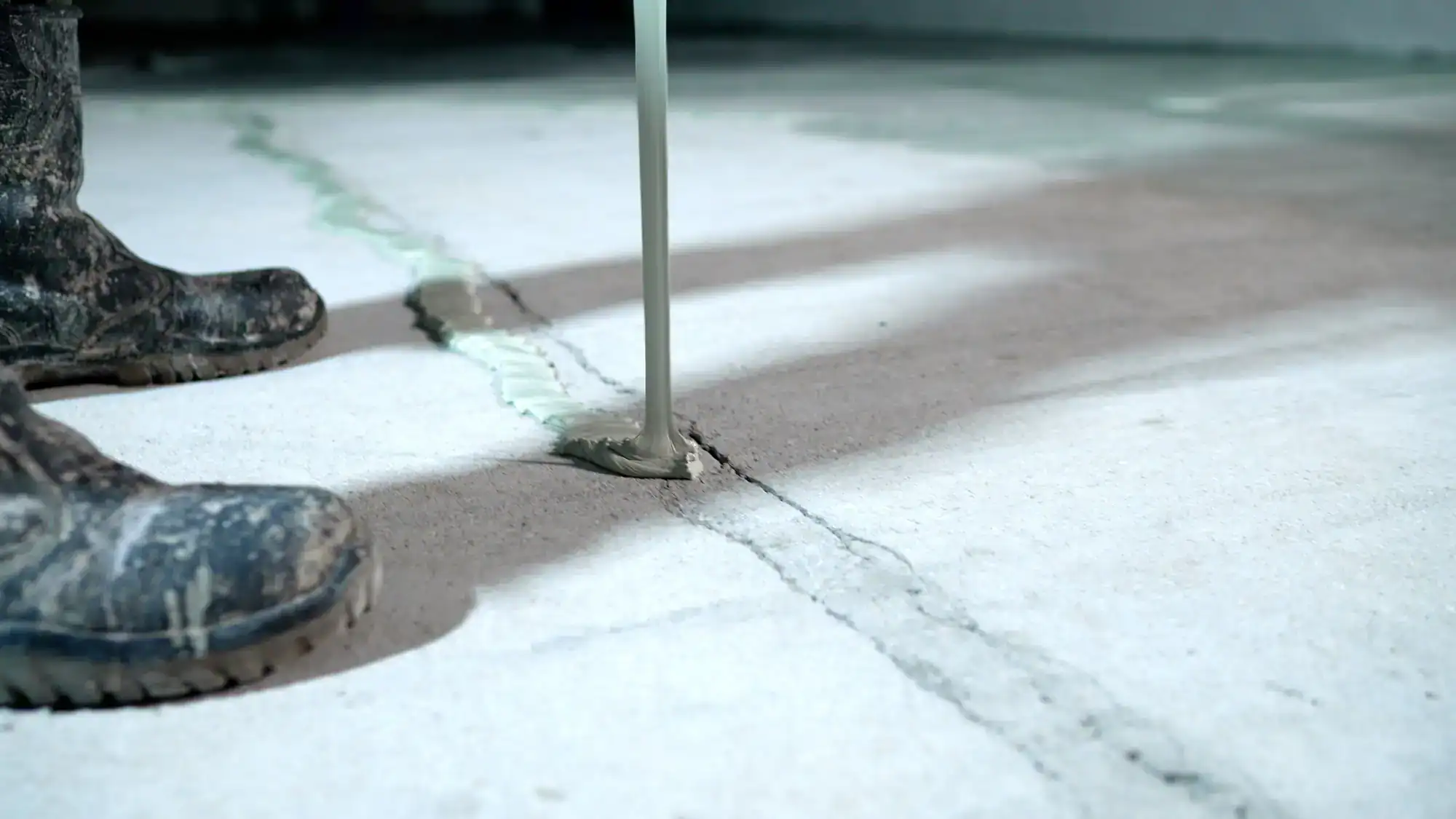
If your floor is cracking, peeling, or failing health inspection, it’s not just an eyesore it’s a liability. Whether you’re running a kitchen off Fulton Avenue, managing a facility near Nassau University Medical Center, or operating out of one of Hempstead’s older commercial buildings, the floor underneath your business takes a beating every single day. Grease, chemicals, heavy foot traffic, overnight cleaning most coatings aren’t built for that. A properly installed commercial epoxy flooring system in Hempstead, NY changes that picture entirely.
The right system gives you a seamless, non-porous surface that doesn’t absorb spills, doesn’t harbor bacteria, and doesn’t crack under the weight of daily operations. For food service operators, that means passing Nassau County Department of Health inspections without the stress. For facility managers near Hofstra University or NUMC, it means a floor that meets compliance standards and doesn’t need to be replaced every few years.
Here’s something most contractors won’t tell you upfront: Hempstead’s older commercial building stock a lot of it built in the mid-20th century sits on slabs that have absorbed decades of use. Moisture vapor moving up through those slabs is the number-one reason epoxy floors fail on Long Island. The coastal proximity doesn’t help. A floor installed without proper moisture testing and surface preparation will bubble, blister, and delaminate sometimes within months. Getting that part right isn’t optional. It’s the whole job.
We’ve been installing commercial and industrial epoxy floors across Nassau and Suffolk Counties since the early 1990s. That’s not a tagline it’s a track record you can verify. Our company is led by Danny Harmer, who has over 40 years of hands-on installation experience and personally installed the epoxy floor in the White House kitchen in 1996. That floor is still standing. When someone with that kind of history shows up to assess your facility in Hempstead, you’re not getting a sales pitch you’re getting a real evaluation.
Our team holds factory-trained certifications from Sherwin-Williams High Performance Flooring and Res Tech, and every installer carries OSHA 40 certification a step above the baseline most contractors carry. Most of our crew has been with us for over a decade. That kind of consistency matters when the job is in a working commercial space near the Hempstead Turnpike corridor and the timeline is tight.
BBB Accredited, A+ rated, zero complaints on file across 30-plus years in business. That record speaks for itself.
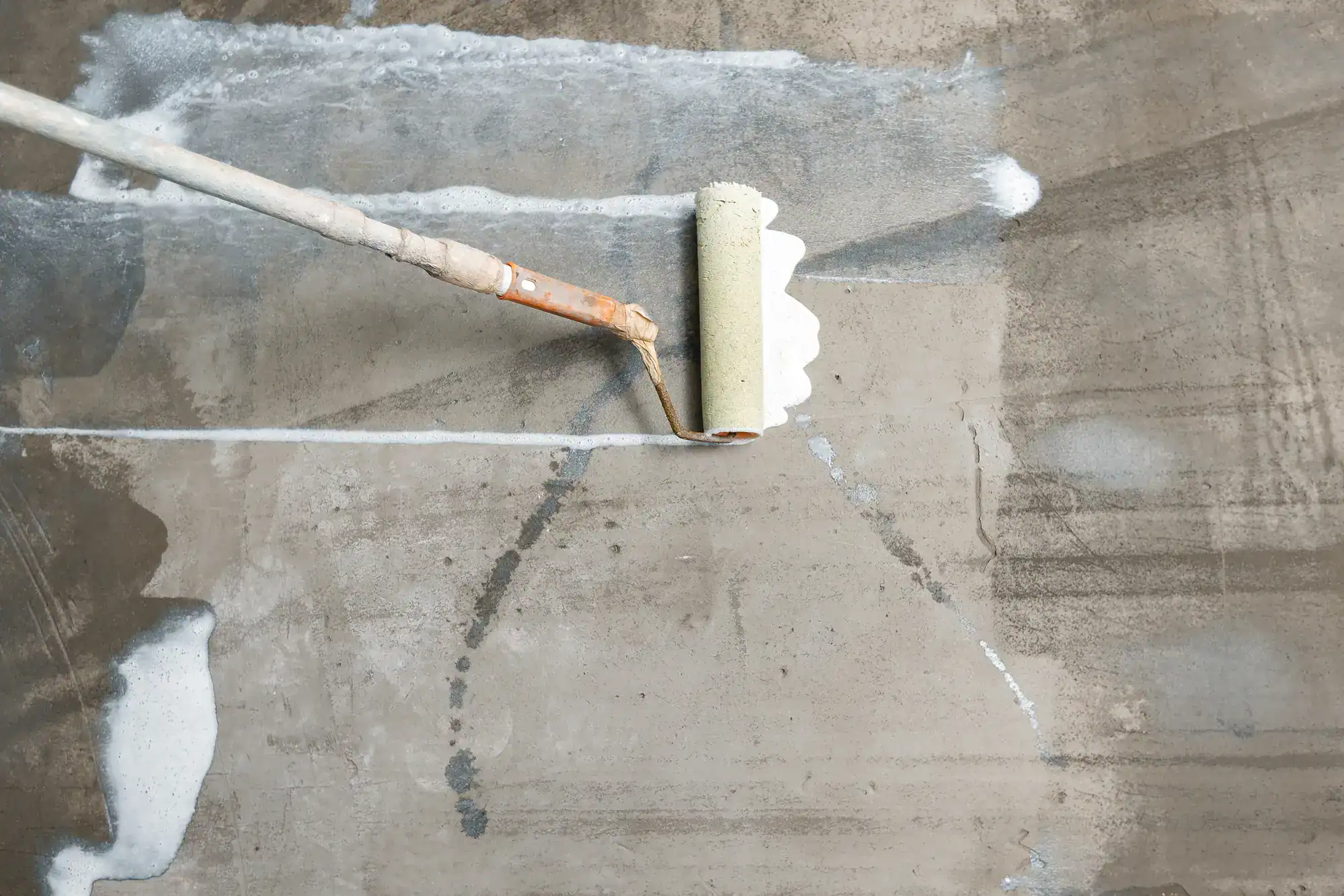
Every project starts with an honest assessment of the slab. For commercial properties in Hempstead especially along Fulton Avenue and the surrounding corridors where buildings date back to the 1940s through 1970s that means checking for moisture vapor transmission, surface contamination, prior coating residue, and any structural concerns before a single product is mixed. This step alone separates a floor that lasts 20 years from one that fails before the lease renews.
Once the slab clears inspection, we diamond-grind it to a clean, profiled surface. That’s the industry gold standard for surface preparation, and it’s not optional it’s what the coating actually bonds to. If moisture is present, the appropriate mitigation primer goes down first. No coating over problems. No hoping for the best. The system gets specified for the actual environment: a commercial kitchen gets a USDA-compliant, thermal-shock-resistant system; a healthcare space gets an antimicrobial seamless coating; a warehouse or service bay gets a heavy duty industrial epoxy floor built for chemical exposure and load.
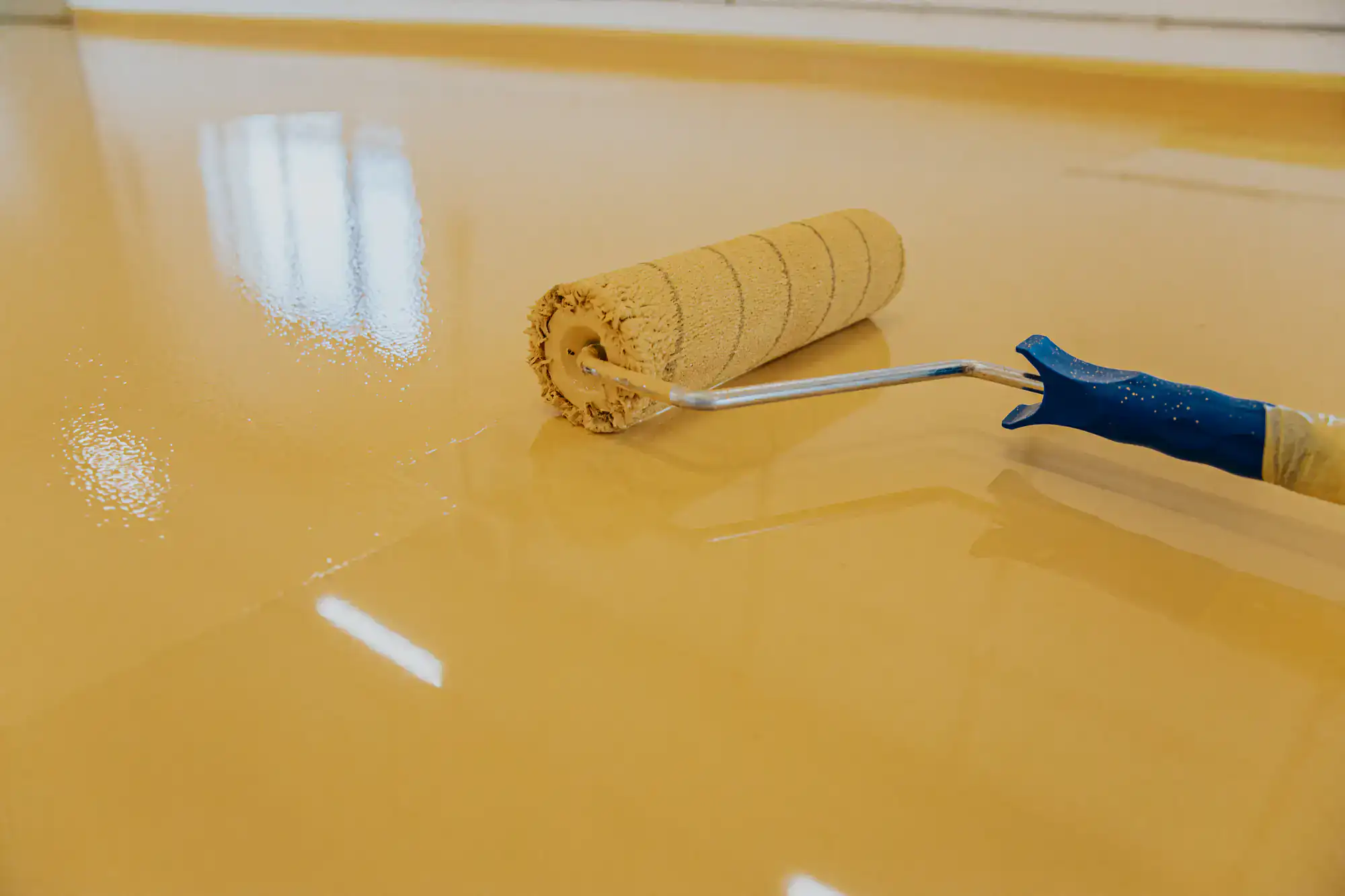
From there, it’s a disciplined multi-layer process primer, base coat, topcoat with proper cure time between each layer. That cure window is what most budget contractors skip to finish faster. Skipping it causes intercoat adhesion failure, which is just a technical way of saying the floor peels. For food service operators in Hempstead who need to be open the next morning, the schedule is built around your hours not ours. Overnight installs are standard for commercial kitchen projects.
Ready to get started?
The commercial environments along Hempstead’s Fulton Avenue corridor restaurants, auto service bays, retail spaces, institutional facilities don’t all need the same floor. What works in a food service kitchen won’t hold up the same way in a healthcare space, and what’s right for a warehouse isn’t what you want under a medical office. We install 100% solids and high-solids epoxy systems, cementitious urethane mortars, and polyaspartic topcoats each matched to the specific demands of the space. These aren’t consumer-grade kits scaled up. Industrial systems cure to 14–30 mils of dry film thickness. That’s the difference between a floor that handles real operational loads and one that looks fine until it doesn’t.
For food service operators in Hempstead, the system includes USDA-compliant seamless surfaces, chemical resistant epoxy finishes rated for the cleaning agents your kitchen actually uses, cove base installation, and sealed transitions everything Nassau County’s health department wants to see. For healthcare and institutional facilities near NUMC or Hofstra, the system meets ADA requirements, FGI guidelines, and antimicrobial surface standards. For auto service and light industrial spaces, chemical and oil resistance is built into the specification from the start.
High traffic commercial epoxy in Hempstead, NY also means accounting for the Village’s active downtown redevelopment. New commercial ground-floor spaces in mixed-use buildings like those coming online near Main Street need a floor system that’s right from day one not something that gets replaced mid-lease. Whatever the environment, the system is specified for it. That’s not a sales pitch. It’s just how we work.
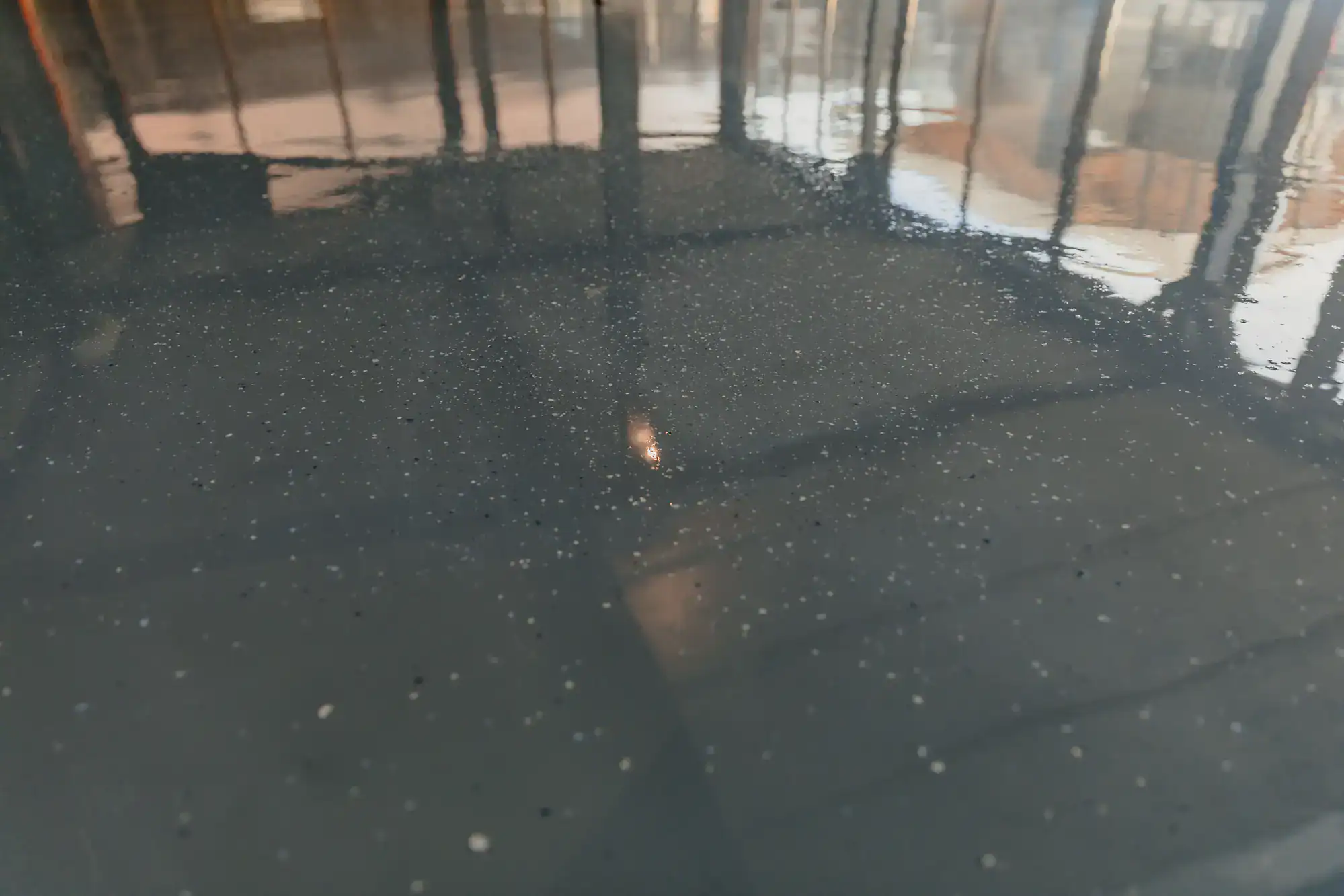
A properly installed commercial epoxy system in Hempstead can last 15 to 20 years or more but that number depends almost entirely on surface preparation and system selection. The contractors who quote low and finish fast are usually cutting corners on the prep work, and those floors start showing failure within 18 to 24 months. Bubbling, peeling, and delamination are almost always the result of inadequate surface prep or skipped moisture testing, not the epoxy itself.
In Hempstead specifically, the age of the commercial building stock matters. A lot of the slabs along Fulton Avenue and the surrounding corridors have been in service for 50-plus years. They carry contamination, prior coating residue, and moisture that a fresh slab wouldn’t have. Getting those slabs properly diamond-ground and moisture-tested before coating is what separates a 20-year floor from a 2-year problem. When the prep is done right and the system is matched to the environment, the floor holds.
Almost every time a commercial epoxy floor fails prematurely, it comes down to one of two things: moisture vapor transmission or inadequate surface preparation. Moisture vapor is exactly what it sounds like water moving up through the concrete slab and getting trapped beneath the coating. On Long Island, where Hempstead sits roughly 5 to 7 miles from the Atlantic coastline, year-round humidity and older slab construction make this a real and recurring issue. If the contractor didn’t test for moisture before coating, that’s likely your answer.
The second culprit is surface prep. Epoxy needs a clean, profiled surface to bond to. If the slab wasn’t diamond-ground, if there was grease or residue left behind, or if a prior coating wasn’t fully removed, the new system is essentially floating on contamination. It will eventually let go. The fix isn’t just recoating it’s stripping back to bare concrete, addressing the moisture if it’s present, and starting the process correctly. That’s the only way to get a floor that actually stays down.
Yes, and for most commercial kitchen and food service projects in Hempstead, overnight installation is exactly how we do it. Closing a restaurant on Fulton Avenue for two or three days isn’t a minor inconvenience it’s a real revenue loss. We build the installation schedule around your operating hours. Our crew comes in after you close, completes the work during the overnight window, and the floor is ready for foot traffic and morning service.
The key factor is the system selected. Polyaspartic topcoats, for example, cure significantly faster than standard epoxy and are well-suited for tight turnaround situations. The system gets specified with your timeline in mind, not just your floor type. For larger commercial spaces or facilities with more complex prep requirements, the timeline gets discussed honestly upfront so there are no surprises on the morning you need to reopen.
A commercial kitchen floor in Hempstead needs to meet Nassau County Department of Health requirements for non-porous, cleanable surfaces and it needs to hold up to the specific abuse a working kitchen delivers every day. That means thermal shock from hot water cleaning, chemical exposure from degreasers and sanitizers, constant foot traffic, and dropped equipment. Standard epoxy won’t cut it in that environment. The right system for a commercial kitchen is typically a cementitious urethane mortar base which handles thermal cycling better than straight epoxy topped with a chemical resistant epoxy finish and sealed with a polyaspartic or urethane topcoat.
The cove base matters too. A seamless transition from floor to wall is what health inspectors look for, and it’s what prevents moisture and bacteria from collecting in corners. Every commercial kitchen installation we do includes cove base and sealed transitions as part of the system not as an add-on. If a contractor is quoting you a kitchen floor without discussing cove base, thermal shock resistance, and chemical compatibility, they’re missing critical pieces of what that environment actually requires.
Commercial epoxy flooring in Hempstead, NY typically runs between $5 and $12 per square foot installed, depending on the system specified, the condition of the existing slab, and the scope of the prep work required. A basic high-build epoxy system on a clean slab sits at the lower end of that range. A cementitious urethane mortar system for a commercial kitchen, or a multi-layer industrial system with moisture mitigation, moves toward the higher end.
The number that actually matters is cost per year of service life. A $6 per square foot floor that lasts 3 years costs $2 per square foot per year. A $10 per square foot floor that lasts 20 years costs $0.50. For commercial operators in Hempstead running on tight margins, replacing a floor twice in a decade is far more expensive than getting the right system installed once. The prep work and system specification that drive the price up are also exactly what makes the floor last. That’s not a justification it’s just the math.
For most standard commercial epoxy flooring installations where you’re coating an existing slab without structural changes a building permit is typically not required. However, if the project is part of a broader commercial renovation or buildout, the Village of Hempstead Building Department (which operates separately from the Town of Hempstead at 516-489-3400) may require a permit depending on the scope of work involved. This is especially relevant given Hempstead’s active Downtown Overlay Zone, where new commercial buildouts and tenant improvements are happening regularly along Main Street and the surrounding redevelopment corridors.
For healthcare facilities or food service establishments, the floor specification itself may need to meet Nassau County Department of Health standards regardless of permit status and having documentation of the system installed, including product data sheets and compliance certifications, is something inspectors may request. We provide that documentation as a standard part of every commercial project. If there’s any question about whether your specific project requires a permit, the Village Building Department is the right first call, and it’s a conversation worth having before work starts rather than after.