
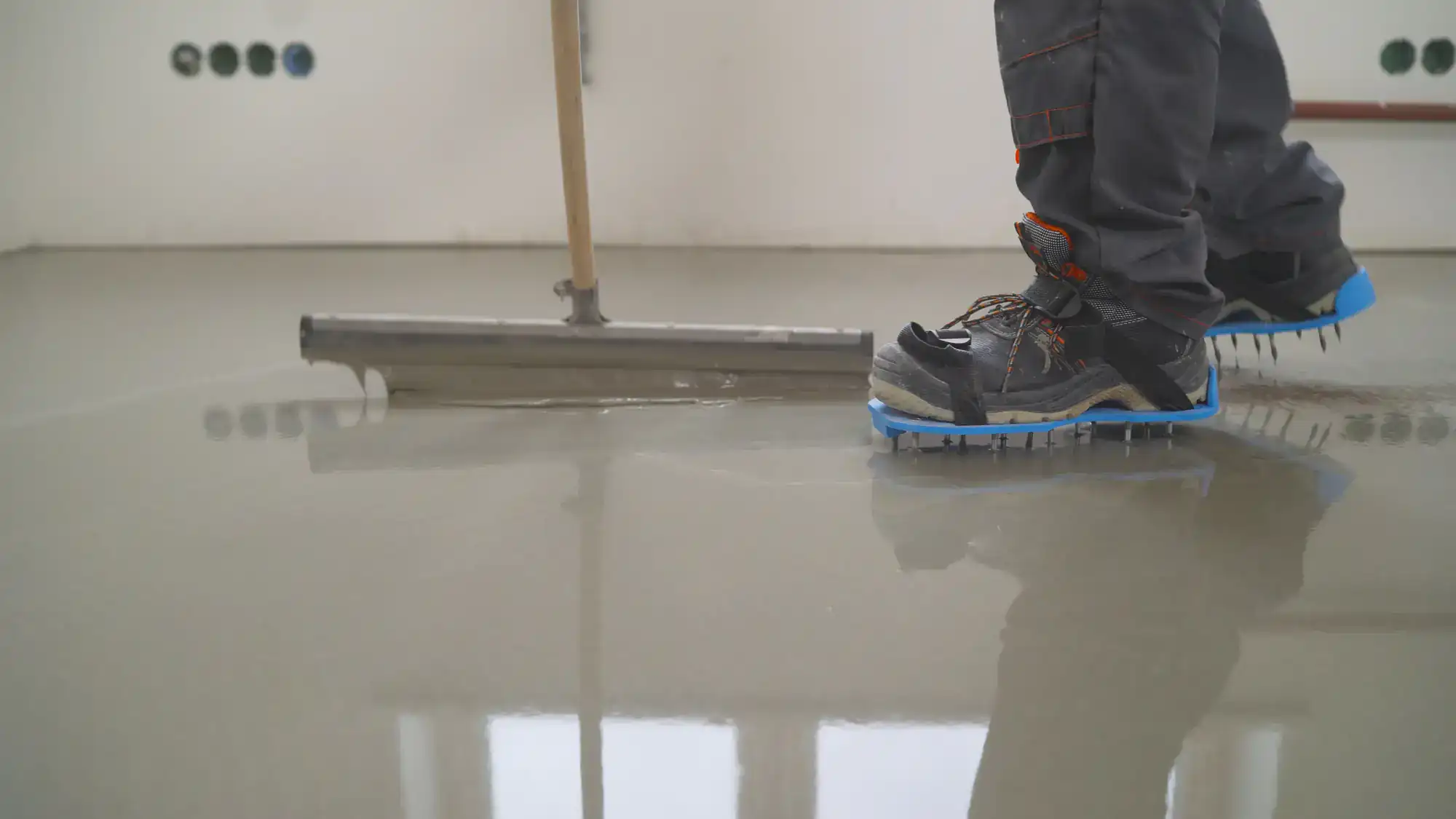
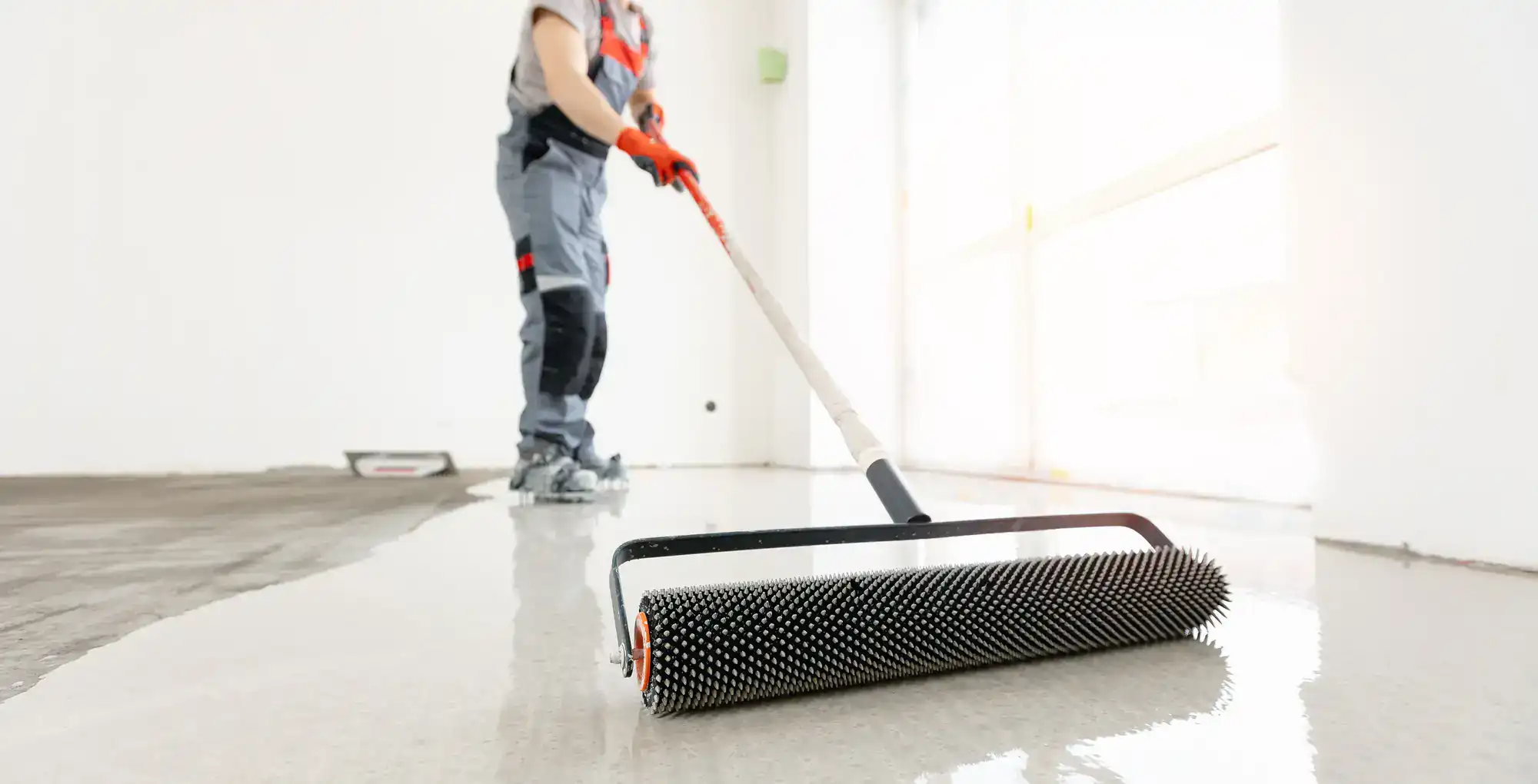
When self leveling is done correctly, you stop dealing with the same problem twice. Tiles stop cracking. Vinyl stops lifting. The floor you install on top actually stays there because the base underneath it was built to last, not just smoothed over.
That matters especially here in Hempstead. The Town of Hempstead sits at roughly 10 feet above sea level on the flat, low-lying Hempstead Plain. Drainage is poor in a lot of areas, the water table is shallow, and a significant portion of the commercial and residential building stock was constructed between 1945 and 1975 before moisture barriers were standard practice. What that means in real terms is that a lot of concrete slabs in this area have been absorbing ground moisture for decades. If that’s not tested and addressed before anything gets poured, the new floor fails the same way the last one did.
The other thing that changes after a proper installation is downtime. Whether you’re running a restaurant on Hempstead Turnpike, managing a medical office near Nassau University Medical Center, or renovating a commercial space in Garden City, you’re not closing for days. A professionally installed self leveling system allows foot traffic within hours and gets you back to full commercial use the following day.
We’ve been installing commercial-grade flooring systems for over 30 years, and our president has more than 40 years of hands-on installation experience. That’s not a number thrown into a bio it’s the difference between a crew that knows what a Nassau County slab looks like after five decades of freeze-thaw cycles and one that’s figuring it out on your job.
Our team is OSHA 40 certified, factory-trained in cementitious and resinous systems, and most of our crew has been with us for over a decade. For institutional clients across Hempstead whether that’s a Hofstra University building, a Northwell Health facility, or a municipal property those credentials aren’t optional. They’re what gets a contractor through procurement.
We’ve brought our standard to projects across the country, the Bahamas, and internationally including the White House kitchen in 1996. We bring that same standard to every floor in Nassau County and throughout Hempstead.
The process starts with assessment, not installation. Before any material touches your floor, we evaluate the concrete surface condition, existing damage, and critically, moisture. In Hempstead, that last part is non-negotiable. ASTM F2170 relative humidity testing and Moisture Vapor Emission Rate testing are standard steps, because the low elevation and drainage conditions in this area mean moisture infiltration is a real and common problem. Pouring over a slab that hasn’t been tested is how floors fail.
Once the substrate is cleared, we prepare the surface grinding, repairing cracks or damaged sections, and making sure the concrete is ready to accept the underlayment properly. This is where a lot of contractors cut corners, and it’s exactly where the difference between a floor that lasts and one that doesn’t gets decided.
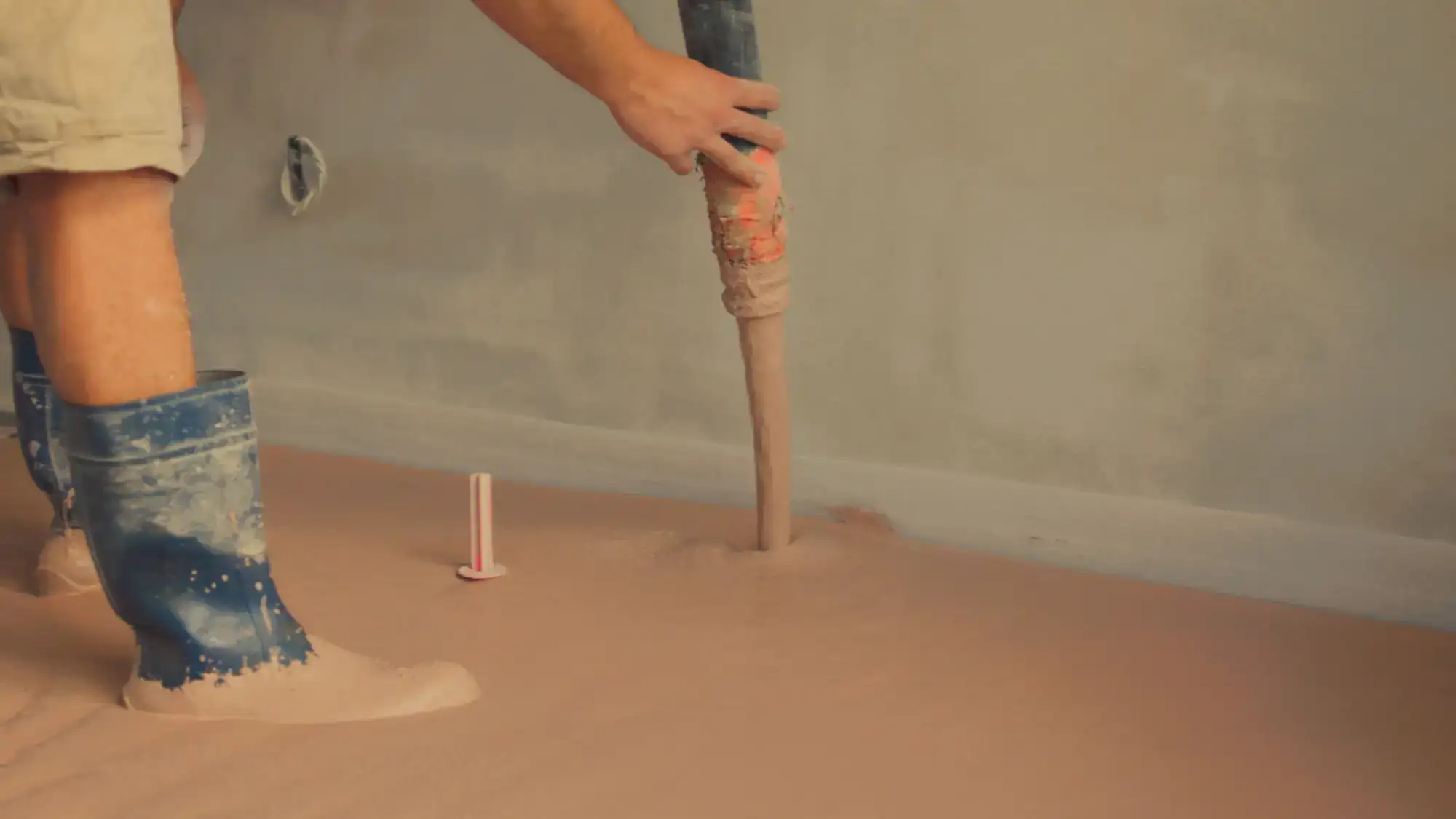
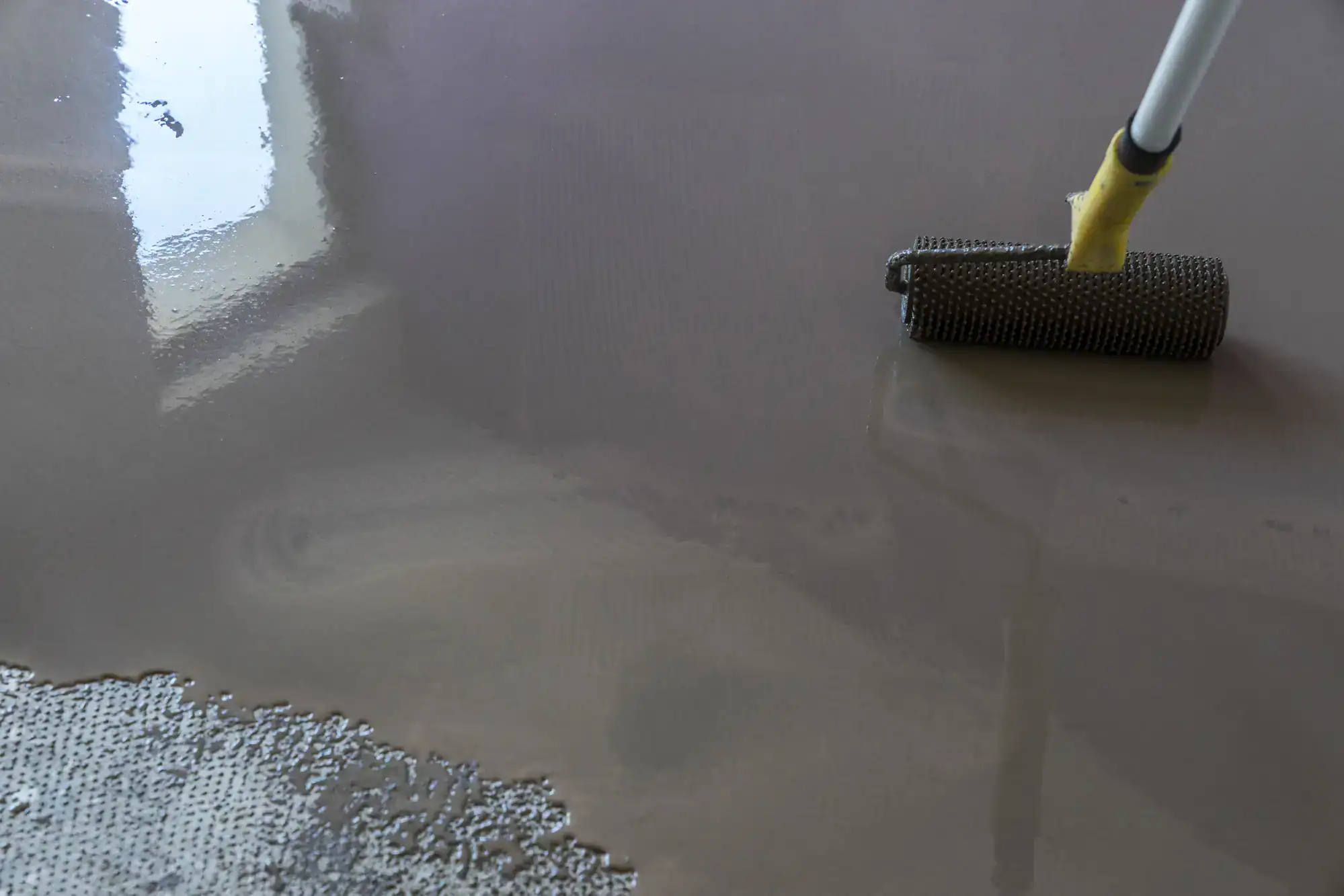
Then the self leveling material goes down. We use a commercial-grade, high-strength cementitious polymer-modified system that installs from a quarter inch up to over two inches neat and up to five inches with aggregate added. That range matters in buildings across Hempstead where decades of settlement mean you’re not always dealing with a minor surface correction. You might be dealing with significant depth variation across the slab. One system, one contractor, handled start to finish. If the Town of Hempstead Building Department requires permits for your scope of work, we factor that in from the beginning not discovered after the job starts.
Ready to get started?
The self leveling underlayment work we do for commercial projects is not a consumer product applied by a general contractor. We use a high-flow, polymer-modified cementitious system designed for the demands of commercial and institutional environments the kind of environments that make up a significant portion of the Hempstead market.
For healthcare facilities, the floor needs to be seamless, hygienic, and ASTM-compliant. For food service operations along Hempstead Turnpike, it needs to handle moisture, thermal cycling, and constant heavy traffic without breaking down. For multi-family housing renovations and there’s no shortage of aging residential stock in Hempstead it needs to perform quietly and durably for years without callbacks. Every one of those use cases gets handled the same way: moisture testing first, full surface preparation, correct product selection for the specific environment, and a fast curing concrete leveler system that gets the space back in service fast.
We handle everything from initial concrete assessment through the completed underlayment installation. Moisture mitigation, crack repair, surface grinding, and the pour itself are all part of one integrated process. There’s no handoff to a second contractor, no gap in accountability, and no moment where someone else’s work becomes your problem. What you get at the end is a flat, strong, properly prepared substrate ready for whatever floor covering goes on top of it.
In most cases, yes and in Hempstead specifically, it’s one of the more important steps in the process. The town sits at roughly 10 feet above sea level on the Hempstead Plain, which means low elevation, shallow water tables, and drainage challenges that create real moisture risk. A lot of the commercial building stock here was constructed between 1945 and 1975, before modern moisture barriers were standard. Those slabs have been exposed to ground moisture for decades.
If moisture vapor emission exceeds 5 lbs. per 1,000 square feet per 24 hours, or if relative humidity in the slab reads above 80% per ASTM F2170 standards, the self leveling underlayment won’t bond correctly and the floor covering installed on top of it will eventually fail. Testing takes the guesswork out of it. You find out exactly what you’re working with before anything gets poured, and the installation is designed around those actual conditions rather than a best guess.
For most commercial applications, foot traffic is possible within four to six hours of installation. Heavy commercial traffic forklifts, equipment, high-volume foot traffic is typically safe within 24 to 48 hours. Full cure to maximum compressive strength takes around 28 days, but that doesn’t mean the space is out of commission for a month.
For businesses operating along Hempstead Turnpike or in the institutional facilities that anchor this market, that turnaround is critical. A restaurant, medical office, or retail space that loses a full week to a floor installation loses real revenue. We select fast curing concrete leveler systems specifically because they match the pace of commercial operations in a dense market like Nassau County not because they’re the easiest option, but because they’re the right one for environments where downtime has a direct cost.
The products available at a hardware store or big-box retailer are consumer-grade materials designed for small surface repairs. They’re not engineered for the flow characteristics, compressive strength, or depth range that a commercial self leveling underlayment system delivers. A bag of leveling compound from a retail store and a commercial-grade polymer-modified cementitious underlayment are not the same product and the difference shows up not in the first few months, but in years three, five, and ten.
Beyond the material itself, the preparation work is what most DIY attempts skip entirely. Grinding the surface, repairing existing cracks, testing for moisture none of that happens when someone pours a bag of compound over an unprepped slab. In Hempstead’s older building stock, where slabs have been settling and absorbing moisture for decades, skipping prep is exactly how you end up with a floor that looks fine for six months and then starts failing at the seams. The product is only as good as what’s underneath it.
Yes, but the cracks need to be addressed before the pour, not after. Active cracks ones that are still moving due to ongoing settlement or moisture movement can telegraph through the new underlayment if they’re not properly treated first. Dormant cracks can typically be repaired and stabilized as part of the prep process.
In a town where most of the commercial building stock dates to the postwar era, cracked slabs are the norm, not the exception. The freeze-thaw cycles that hit Nassau County every winter temperatures regularly dropping into the low 30s, with periodic hard freezes work on existing cracks year after year. Water gets in, freezes, expands, and the crack gets wider. A proper installation accounts for all of that: the cracks get repaired, the surface gets prepared, moisture gets tested, and then the self leveling material goes down over a substrate that’s actually ready for it.
It depends entirely on the condition of the slab. For minor surface irregularities small dips, slight unevenness a quarter-inch application is often sufficient. For more significant correction, the system can be installed over two inches neat, and up to five inches when aggregate is added to the mix.
That range matters in Hempstead’s commercial and institutional buildings. A building constructed in 1958 on the Hempstead Plain may have a slab that has settled unevenly across a large area not just a surface blemish, but meaningful depth variation that a thin pour won’t correct. Getting the thickness right requires measuring the actual low points of the floor, not estimating. That assessment happens before any material is ordered or mixed, so the installation is built around what the floor actually needs rather than a standard application depth that may or may not be appropriate.
It depends on the scope of the project and the property type. The Town of Hempstead Building Department located at One Washington Street in Hempstead and reachable at 516-538-8500 enforces the New York State Building Code alongside the town’s own building zone ordinance. For commercial renovation projects, interior work that goes beyond minor repairs can trigger permit requirements depending on what’s being done and what the final floor covering will be.
It’s also worth noting that if your property is within one of the town’s 22 incorporated villages Hempstead village itself, Garden City, Valley Stream, Rockville Centre, and others the village maintains its own building department and code enforcement separate from the town. That means permit requirements can vary depending on exactly where the property sits. The straightforward approach is to confirm requirements with the relevant department before work begins, which is part of how a properly managed commercial project in Nassau County gets done without surprises mid-job.