
West Islip sits right on the South Shore, and that matters more than most contractors will tell you. The tidal canals, the bay proximity, the water table all of it puts moisture pressure on concrete slabs that most homeowners don’t think about until a floor starts bubbling or a new tile installation starts cracking. Getting the floor level is only half the job. Making sure the slab is ready to hold it is the other half.
The homes in West Islip were largely built between the 1940s and 1960s, and those slabs have been through decades of freeze-thaw cycling, moisture infiltration, and general wear. By the time you’re ready to install new LVP, tile, or hardwood, the surface underneath often has pits, height variations, and old adhesive residue that need real attention not a bag of patch compound from the hardware store. Our concrete floor leveling services in West Islip, NY address the actual condition of the slab, not just what’s visible on the surface.
When the work is done right, you get a floor that performs the way it was designed to flat, stable, and moisture-managed from the ground up. That matters whether you’re renovating a ranch off Higbie Lane or finishing out a commercial space along Sunrise Highway.
We’ve been doing this work since 1996, based out of Bohemia about fifteen miles up Sunrise Highway from West Islip. That’s not a coincidence. Suffolk County’s South Shore is where a significant portion of our work lives, and the conditions here coastal soil, aging housing stock, elevated moisture are conditions we know well.
Danny Harmer, who leads the company, has over 40 years of hands-on installation experience. Our crew is OSHA 40 certified, factory-trained in cementitious self leveling underlayment systems, and most of them have been with us for more than a decade. That kind of continuity matters when you’re trusting someone to get your subfloor right before a major renovation.
We hold an A+ rating with the BBB and have completed projects ranging from residential homes in West Islip to institutional facilities across the country including the White House kitchen floor in 1996. The range of that experience shows up in how we approach every job, regardless of size.
The first thing that happens on any self leveling job in West Islip isn’t mixing or pouring it’s testing. Before anything goes down, the slab gets evaluated for moisture using ASTM F2170 relative humidity testing and MVER testing. In a coastal community like West Islip, where groundwater tables are elevated and homes sit near the Great South Bay and its canal network, this step is non-negotiable. Skipping it is exactly how a new floor ends up delaminating within a year.
Once moisture is measured and addressed, the surface goes through proper mechanical preparation grinding, shot blasting, or scarifying depending on what the slab needs. Old adhesive, surface contamination, and any existing coating that could prevent bonding gets removed. The goal is a clean, open concrete profile that gives the self leveling underlayment something real to grip.
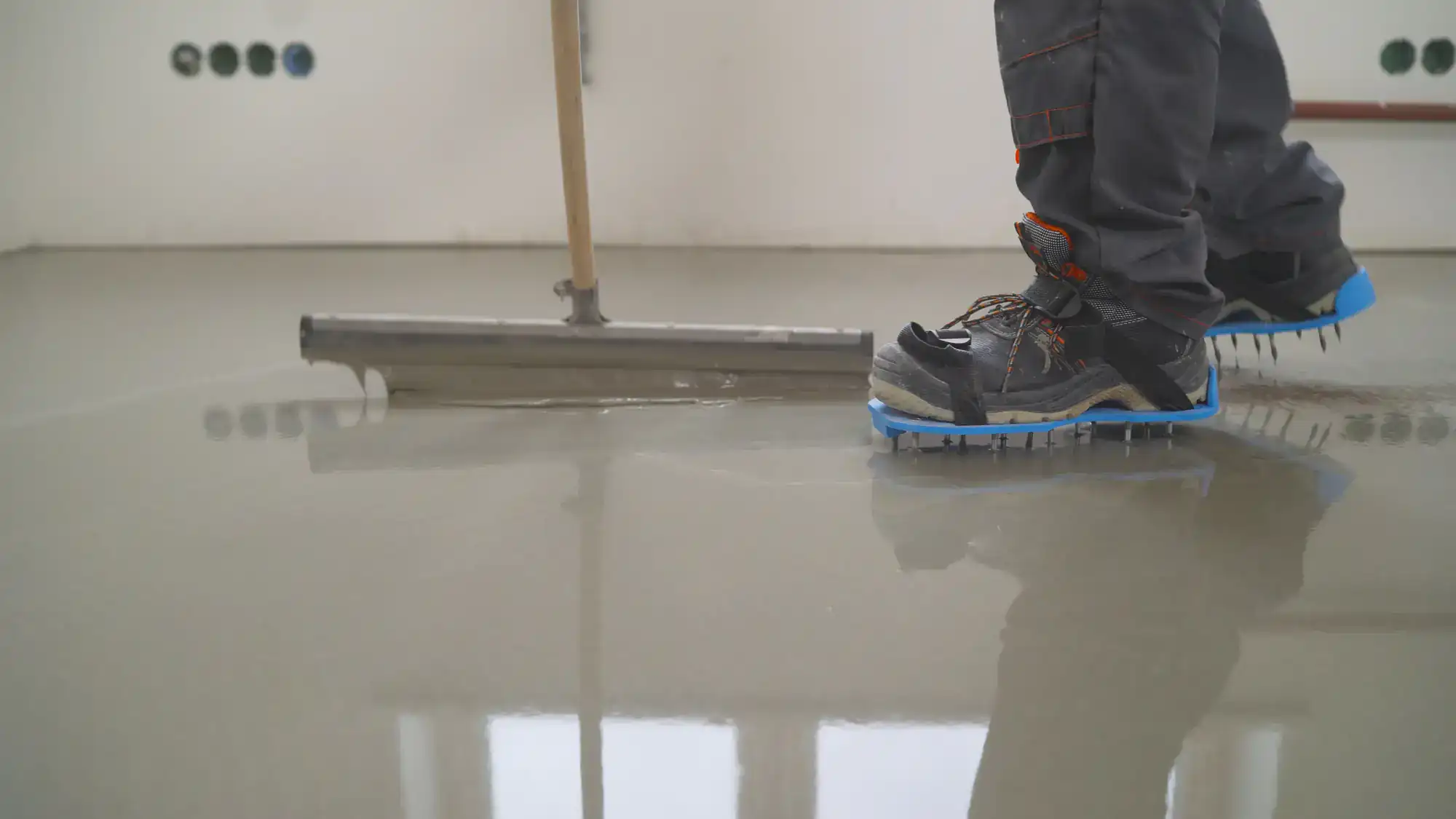
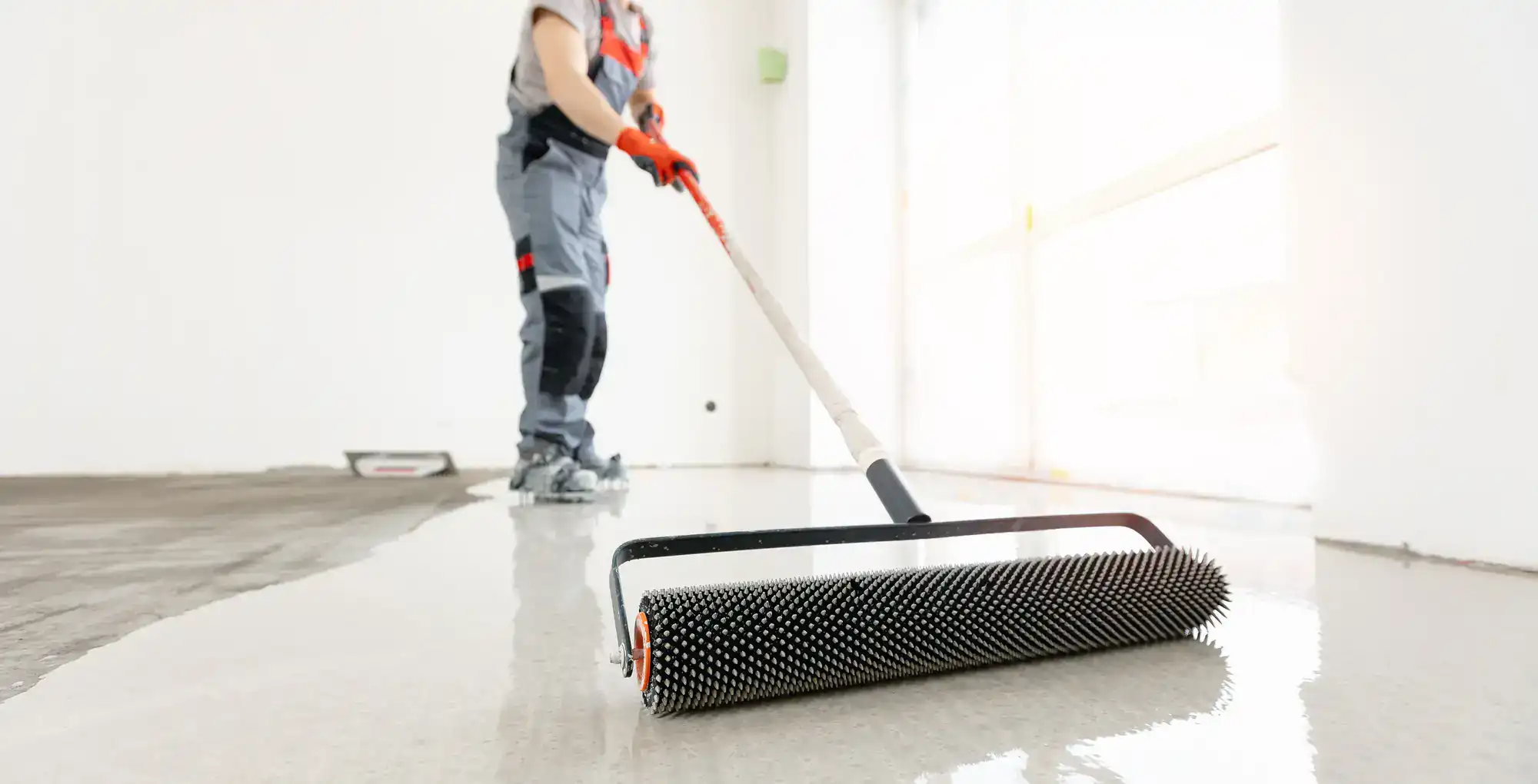
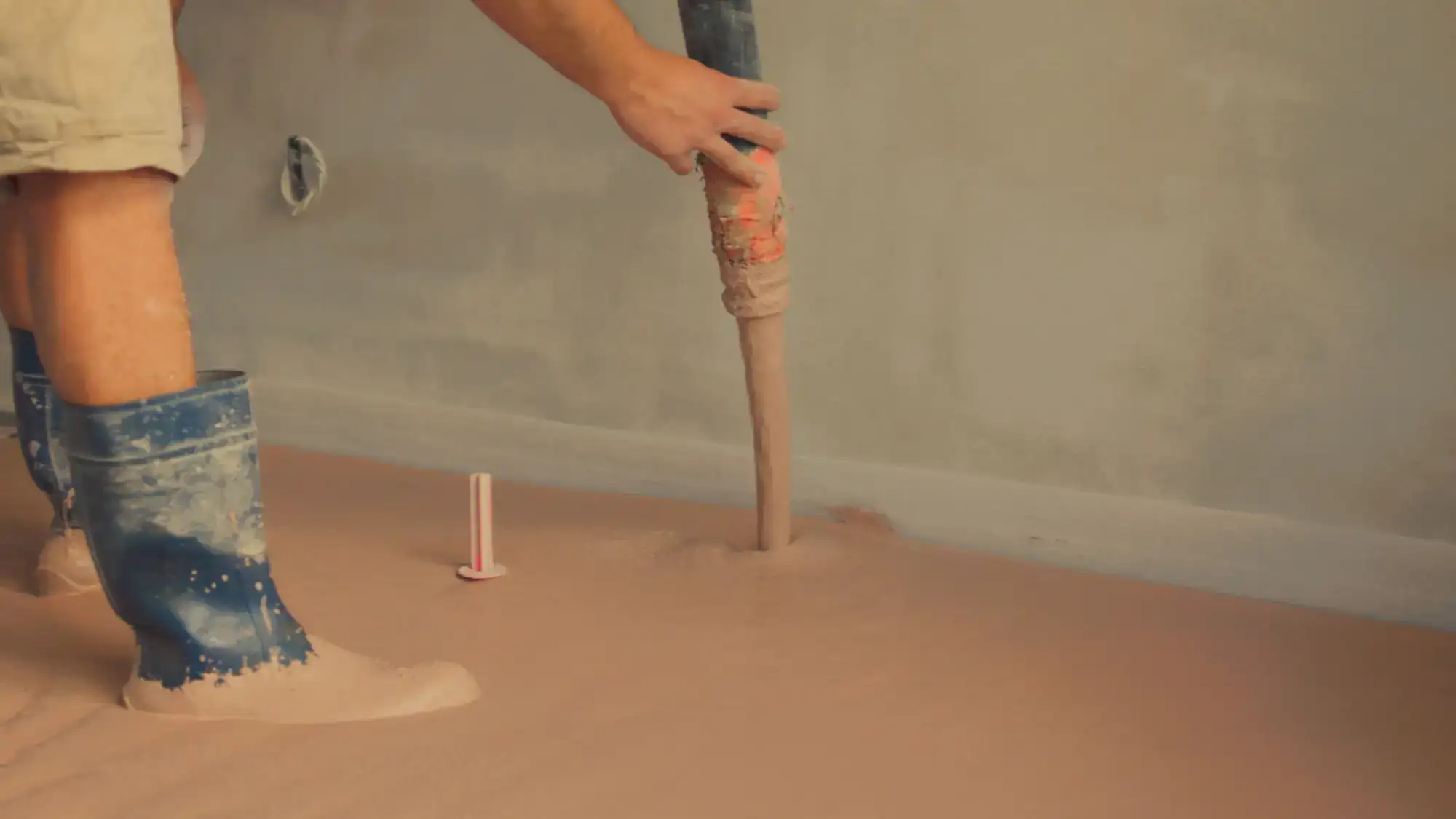
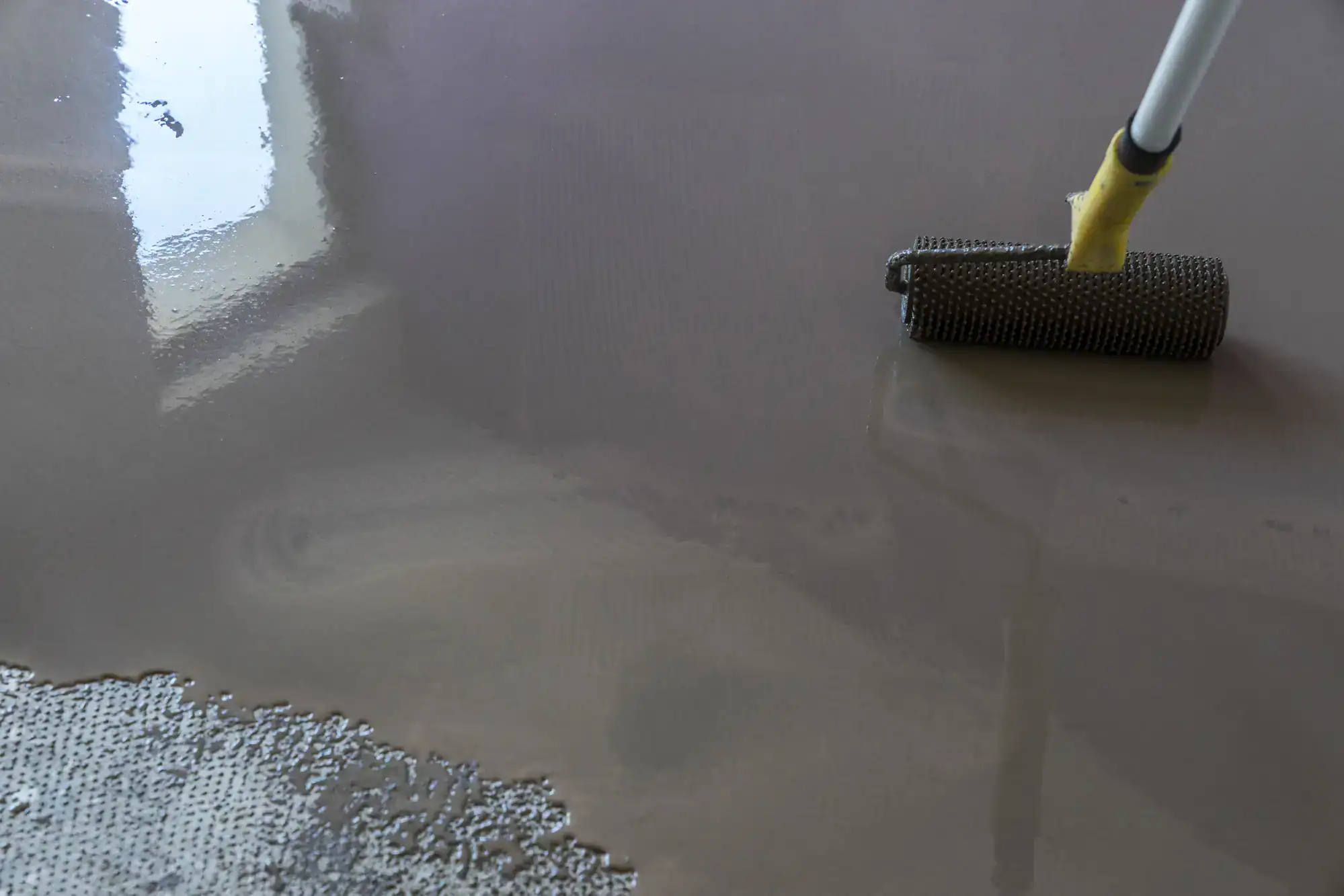
Then comes the pour. The high strength self leveling concrete we use in West Islip, NY jobs can be installed from a quarter inch up to two inches neat, and up to five inches with aggregate for more significant leveling needs. It flows to a flat, smooth plane on its own, and once it cures, it’s ready for whatever finish floor is going on top tile, LVP, hardwood, or a full resinous coating system. Foot traffic is typically possible within four to six hours, and the floor is ready for heavy use within twenty-four to forty-eight hours.
Ready to get started?
Our self leveling underlayment work in West Islip, NY covers both residential and commercial applications and the approach is calibrated to each. For homeowners in West Islip’s aging housing stock, that typically means addressing slabs that have settled unevenly over sixty-plus years, with surface conditions that range from minor inconsistencies to significant height variations. For commercial properties along Montauk Highway or Sunrise Highway including medical offices near Good Samaritan Hospital it means meeting the flatness and compressive strength requirements that commercial floor coverings demand.
The cementitious self leveling underlayment system we use is polymer-modified, high-flow, and high-strength. It handles the full depth range most West Islip jobs require without needing multiple pours or multiple contractors. Moisture mitigation is built into the process where the slab calls for it, not treated as an add-on. And because we handle everything from slab prep through final floor installation, there’s no handoff gap between the leveling work and the finish floor crew one team, one outcome, one point of accountability.
For waterfront properties in West Islip’s southern canal zone, where salt air and tidal moisture create chronic vapor transmission challenges, the diagnostic process goes deeper. The testing, the material selection, and the application method are all adjusted based on what the slab is actually dealing with not what a generic spec sheet assumes.
It’s one of the most common reasons self leveling jobs fail, and it’s especially relevant in West Islip. The South Shore’s proximity to the Great South Bay, the tidal canal network in the southern part of the community, and the generally elevated groundwater table in this area all contribute to vapor transmission through concrete slabs particularly in homes built in the 1950s and 60s where moisture barriers were minimal or nonexistent.
Before any self leveling underlayment goes down, the slab needs to be tested using ASTM F2170 relative humidity probes and MVER calcium chloride testing. If moisture levels exceed the product’s tolerance and in waterfront-adjacent West Islip homes, they often do a moisture mitigation system goes in first. Skipping this step and pouring anyway is how you end up with a floor that looks fine for six months and then starts lifting, bubbling, or growing mold underneath. The testing adds time upfront, but it’s what separates a floor that holds for twenty years from one that needs to be redone.
It depends on what the slab looks like, and West Islip slabs vary more than most people expect. A home built in 1958 in the neighborhood off Casamento Park might have minor surface inconsistencies that a quarter-inch pour corrects easily. A home closer to the canal zone in West Islip South, where settling and moisture damage have been more active over the decades, might need an inch or more in certain areas.
The system we use can be installed from a quarter inch up to two inches neat, and up to five inches with the addition of aggregate for more significant leveling needs. That range means you’re not stuck choosing between a light skim coat that doesn’t fix the problem and a full slab replacement that’s overkill. The right depth gets determined during the assessment phase, based on what the slab actually measures not a guess. Most residential jobs in West Islip fall in the quarter-inch to one-inch range, but the commercial floor leveling solutions we apply to larger spaces along the Sunrise Highway corridor often require more.
For most jobs, foot traffic is possible within four to six hours of the pour. Heavy use including the installation of tile, LVP, or hardwood on top is typically ready within twenty-four to forty-eight hours depending on the product, the depth of the pour, and the ambient conditions in the space.
One thing worth noting for West Islip specifically: the humidity levels here, particularly in summer months when the bay air is heavy, can affect cure times. A well-ventilated, climate-controlled space cures predictably. A basement or first-floor slab in a home that’s been closed up and is running high ambient humidity may need a bit more time. That’s not a problem it’s just something to account for in scheduling. For commercial operators on Montauk Highway or Sunrise Highway who need to minimize downtime, the fast-curing concrete leveler systems we use are selected specifically for their return-to-service speed, and we coordinate the pour timing to work around your business hours where possible.
Not without proper surface preparation first. Self leveling underlayment needs to bond directly to clean, open concrete and old adhesive, existing coatings, paint, or sealers will prevent that bond from forming correctly. If the self leveling material can’t grip the substrate, it will eventually delaminate, regardless of how well the pour itself went.
The preparation process involves mechanically opening the concrete surface typically through shot blasting, grinding, or scarifying to remove whatever is preventing adhesion. In older West Islip homes where vinyl composition tile from the 1960s or 70s was glued directly to the slab, that adhesive residue is almost always present and needs to be addressed before anything goes down. The same applies to commercial spaces being converted or renovated along West Islip’s business corridors, where previous tenants may have left behind adhesive, paint, or sealers. Surface prep isn’t a shortcut step it’s what makes the rest of the job work.
Grinding is a removal process it takes down high spots in the concrete to bring them closer to the surrounding level. Self leveling underlayment is an addition process it fills in low areas and creates a new, flat surface plane. Which one you need depends on whether your floor’s problem is high spots, low spots, or both.
In most West Islip homes, the issue is a combination: decades of settlement create areas where the slab has dropped, while other areas may have minor high points from old repairs or surface buildup. A complete floor preparation process often involves both grinding down the high points first, then applying self leveling underlayment to bring the low areas up to a consistent plane. Doing only one or the other leaves you with a floor that’s better but still not truly flat. For finish floors like large-format tile or thin LVP both increasingly common in West Islip renovations even small variations in flatness show up as lippage or flexing over time, so getting the substrate right before installation matters more than most people realize.
It can be, but basements in West Islip require a more careful evaluation than above-grade slabs. The combination of below-grade construction and South Shore groundwater conditions means basement slabs here are among the most moisture-exposed in the region. Before self leveling underlayment goes into a West Islip basement, the moisture situation needs to be fully understood not estimated.
If the slab tests within acceptable moisture limits, self leveling is an excellent option for creating a flat, smooth base for tile, LVP, or a full epoxy floor system. If moisture levels are elevated, a mitigation system typically an epoxy moisture barrier applied to the prepared concrete goes in first. Trying to pour self leveling underlayment over a basement slab that’s actively transmitting vapor is one of the most reliable ways to end up with a failed floor. The good news is that the diagnostic process is straightforward, and knowing what you’re dealing with before the pour starts is exactly what makes the difference between a basement renovation that holds up and one that doesn’t.