
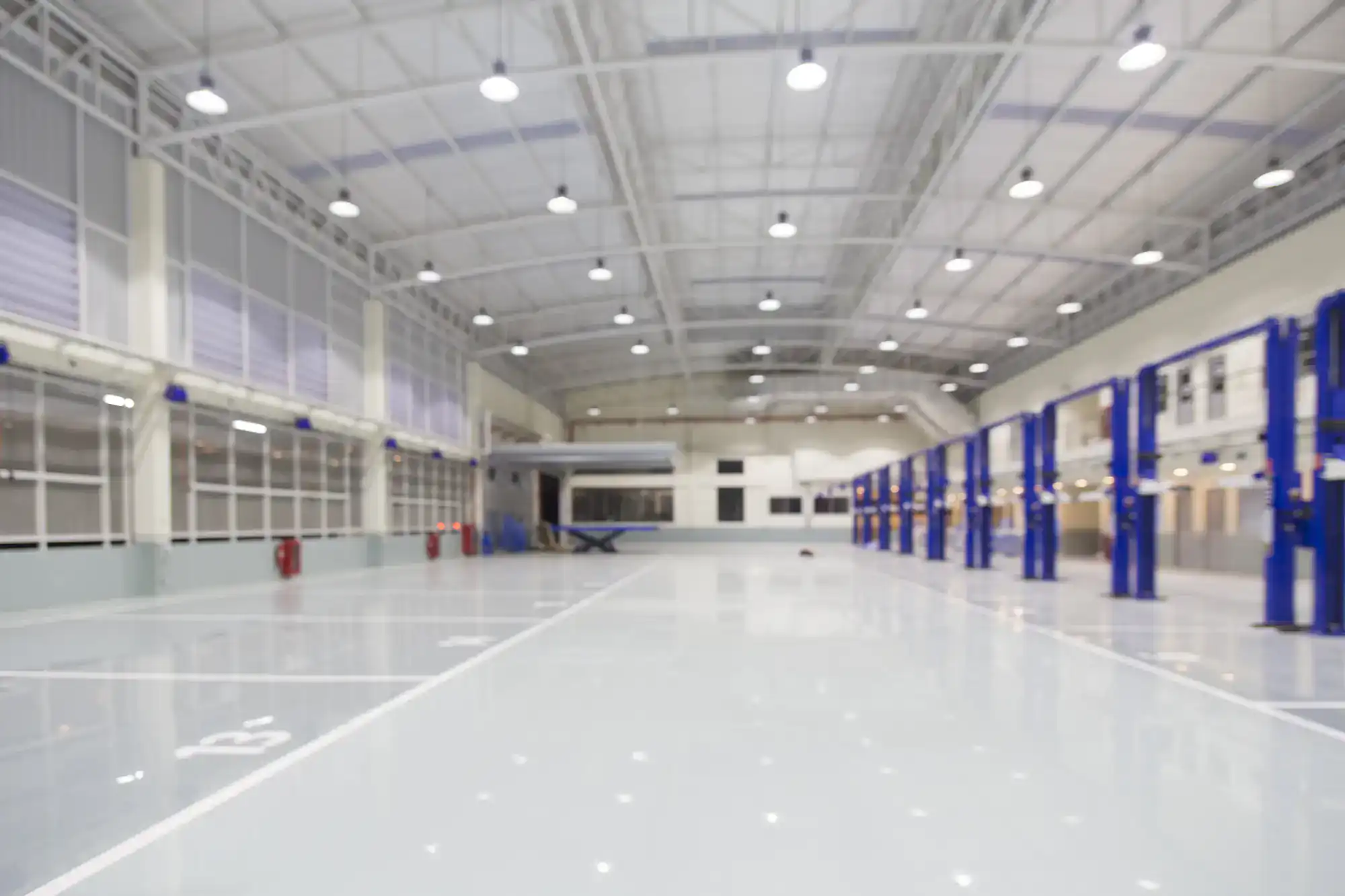
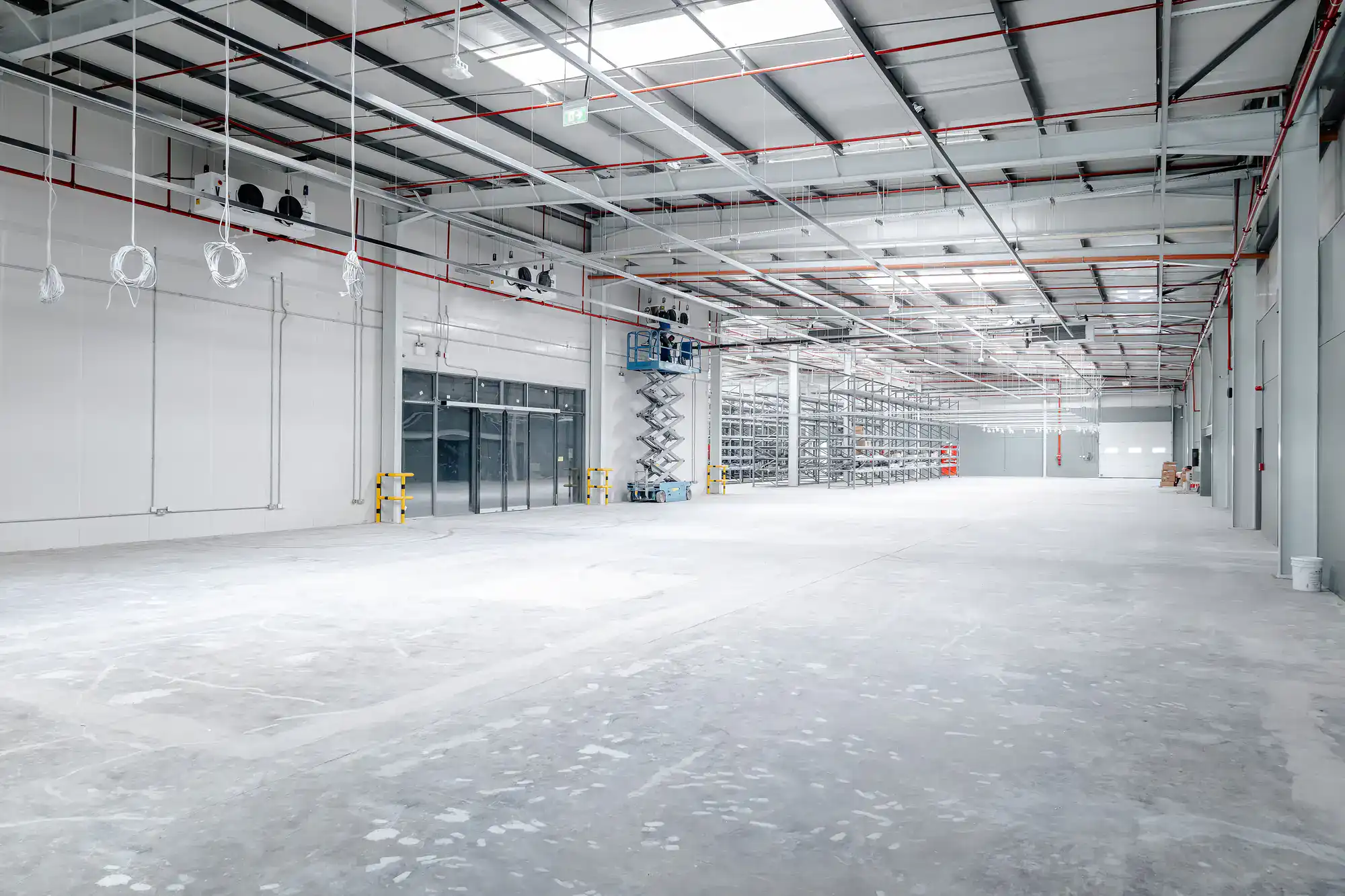
West Islip sits inside the Town of Islip the same municipality that owns and operates Long Island MacArthur Airport. That matters when you’re choosing a hangar floor, because the facilities in this corridor deal with real operational loads: aircraft maintenance, hydraulic fluid changes, ground support equipment, and the kind of foot traffic that exposes every weak point in a coating within the first year.
When the floor is done right, you stop chasing problems. We provide aviation facility epoxy flooring systems in West Islip, NY that give you a surface reflecting overhead light clearly enough to spot a dropped fastener before it becomes a FOD hazard and holding up to Skydrol and jet fuel without softening or peeling at the edges. That’s not a luxury. In a working hangar, it’s a baseline.
The coastal humidity here adds a layer that inland contractors often miss entirely. West Islip’s position on Babylon Cove and the Great South Bay means moisture vapor builds up under large concrete slabs year-round not just in summer. A coating applied over an untested slab in this environment will delaminate. We test first, prime for vapor transmission, and select chemistry that bonds at the molecular level rather than sitting on top of the concrete hoping for the best.
We’re based in Bohemia, NY about 15 miles northeast of West Islip, well within Suffolk County and the Town of Islip corridor. This isn’t a national brand routing calls through a call center. We’ve worked in this region for over 30 years, with a crew where most installers have been on the team for more than a decade.
Danny Harmer, our president, has 40-plus years of hands-on installation experience not project management experience, not sales experience. He has personally installed floors in demanding environments across the U.S. and internationally, including the White House kitchen in 1996. That track record shapes how every job gets approached, including yours.
We hold dual elite certifications through Sherwin-Williams High Performance Flooring and Res Tech, and every installer on our crew carries OSHA 40 certification. For hangar operators in the MacArthur Airport corridor where OSHA compliance isn’t optional that’s not a minor detail. It’s the difference between a contractor who understands your environment and one who doesn’t.
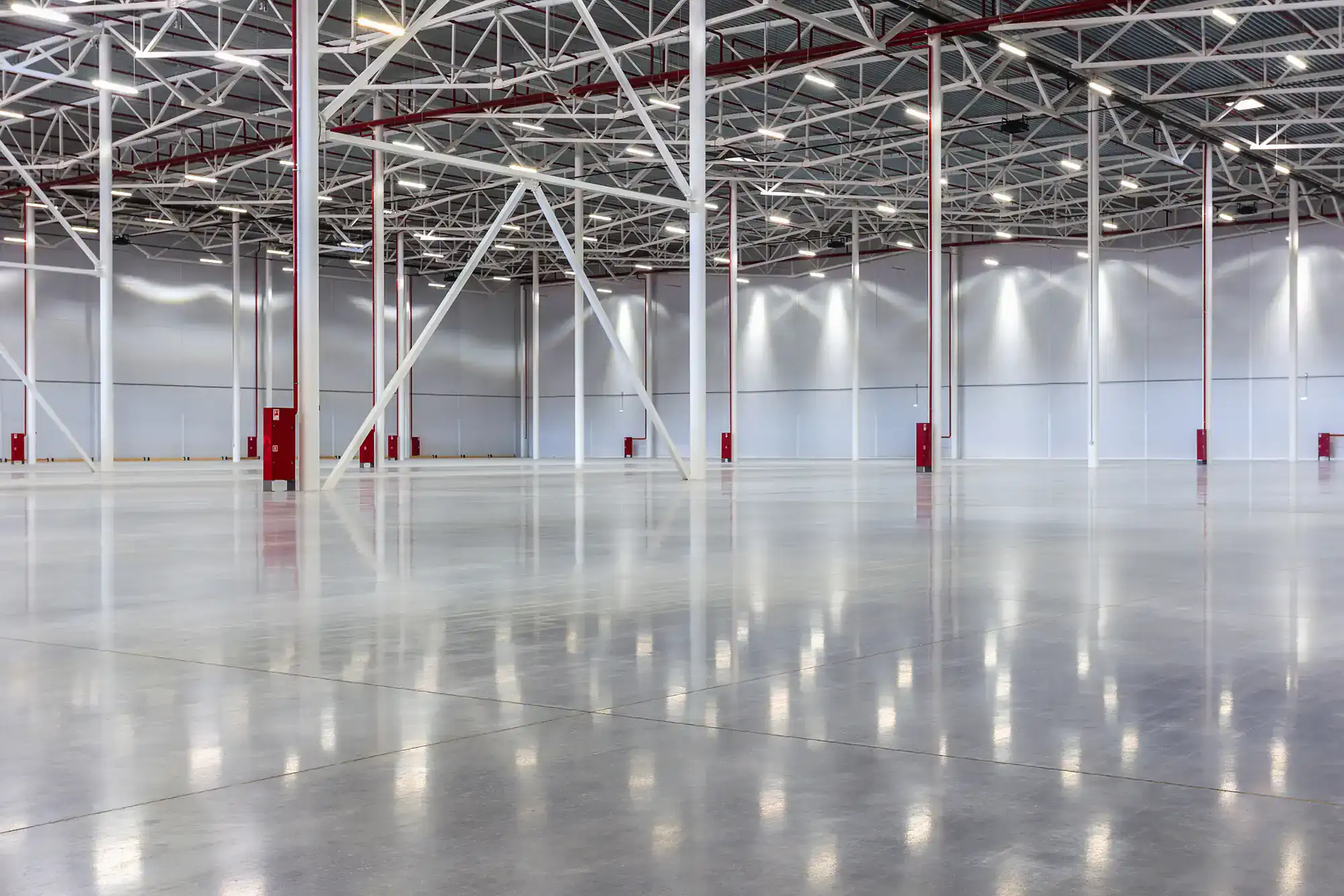
The first thing that happens on a West Islip hangar floor project isn’t mixing product it’s assessing the concrete. Large hangar slabs in coastal Suffolk County hold moisture differently than inland slabs, and skipping the moisture test here is the single most common reason coatings fail prematurely on the South Shore. We test the slab, document the readings, and select the primer system that addresses what’s actually there not what’s typical for a generic job.
Once the slab is assessed, surface preparation begins with diamond grinding. This isn’t optional and it isn’t a shortcut step it’s what creates the mechanical bond that keeps the coating in place through Long Island’s freeze-thaw cycles, from 26-degree January nights to August humidity. Any existing cracks, spalls, or surface damage get repaired before anything is applied. You’re not getting a coating over a compromised slab.
From there, the system goes down in the sequence it was engineered for primer, base coat, and topcoat, with the non-slip finish applied last. For active hangars that can’t afford extended downtime, our airplane hangar polyaspartic floors in West Islip, NY cure fast enough to return aircraft to the space within 24 hours. For facilities with more scheduling flexibility, a traditional high-build epoxy system may be the better long-term call. We’ll tell you which one fits your operation not which one is easier for us to install.
Ready to get started?
Not every hangar in West Islip has the same demands. A private aircraft owner storing a single-engine plane has different floor requirements than an FBO maintenance bay that sees business jets, hydraulic servicing, and daily ground support traffic. The system we specify depends on what your floor actually faces and we don’t apply the same product to every job regardless of what the slab or the operation calls for.
For commercial and FBO hangars throughout the Town of Islip, NFPA 409 requires that hangar floor surfaces be noncombustible. Most standard epoxy products don’t meet that standard. Our aviation-grade systems do and we can document it. The same goes for Skydrol resistance. If your hangar sees hydraulic fluid on a regular basis, the coating chemistry has to be formulated to handle it. A product that wasn’t designed for that exposure will show failure within months, not years.
Every installation includes our NFSI-certified non-slip topcoat tested against the National Flooring Safety Institute’s standard, not just textured and labeled slip-resistant. For private hangars, we offer high-gloss light-reflective finishes that make the floor a functional safety tool, not just a cosmetic upgrade. For active aircraft maintenance bay flooring in West Islip, NY, the full system includes concrete repair, moisture-appropriate primer, high-build base coat, and a topcoat rated for the chemical exposure your operation actually produces.
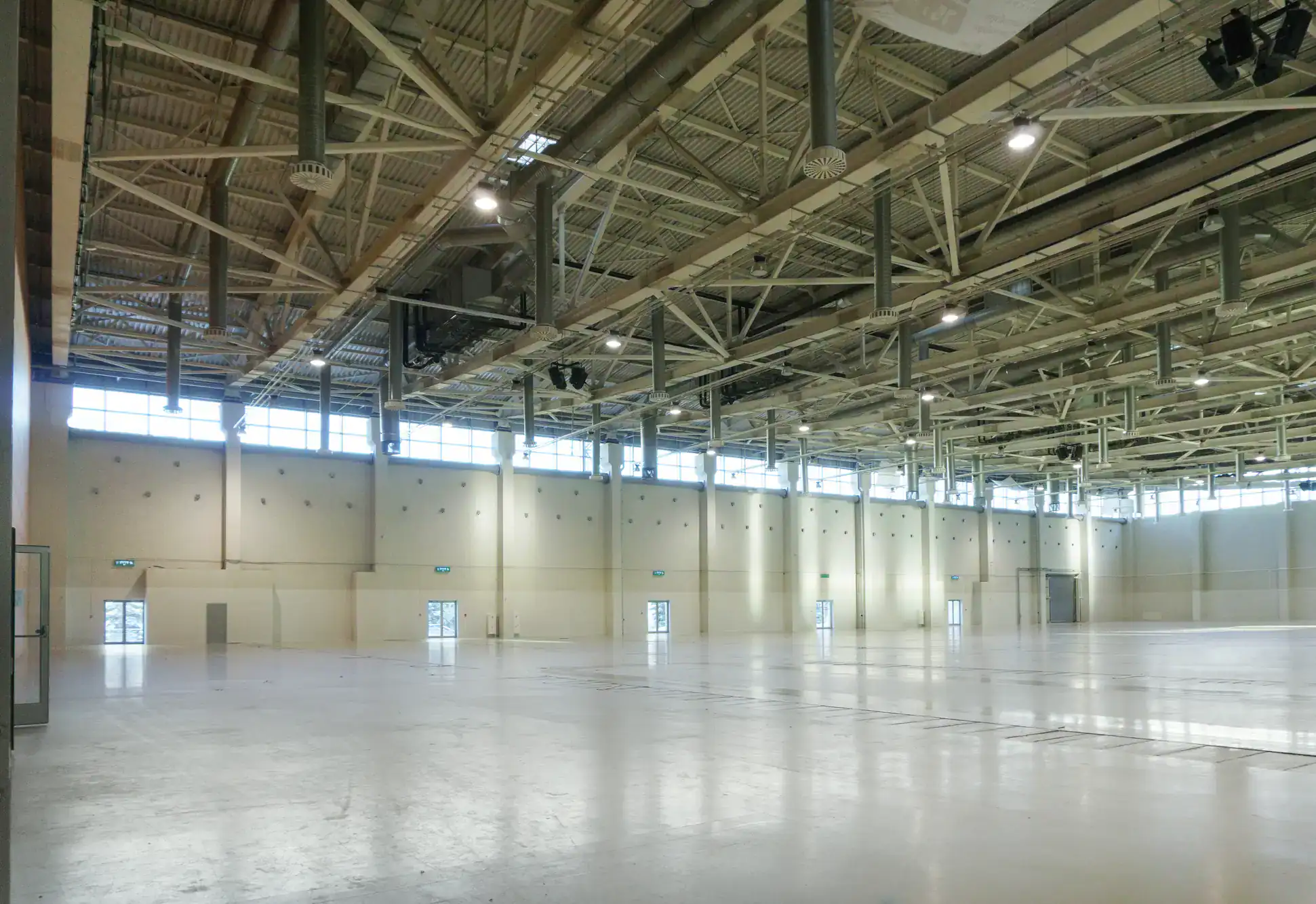
If your hangar is a commercial facility, an FBO operation, or part of an aviation maintenance environment yes, NFPA 409 applies. The standard requires that hangar floor surfaces be noncombustible, and it governs facilities throughout the Town of Islip, which includes the MacArthur Airport corridor and the surrounding area. This isn’t a technicality that gets overlooked during inspections. It’s a code requirement that affects your insurance coverage, your facility compliance standing, and your liability if something goes wrong.
The challenge is that most general flooring contractors don’t know what NFPA 409 is, let alone which products meet it. We provide aviation-grade high-build systems that are formulated specifically to meet this standard. When you’re evaluating contractors for aircraft hangar floor coatings in West Islip, NY, ask directly whether the system they’re proposing is NFPA 409-compliant and whether they can provide documentation. If they hesitate, that’s your answer.
It’s one of the most underestimated factors in any South Shore flooring project. West Islip’s position on Babylon Cove and the Great South Bay creates year-round ambient humidity that builds up moisture vapor pressure beneath large concrete slabs especially in hangars where the slab footprint is significant. When that vapor has nowhere to go, it pushes upward through the concrete and breaks the bond between the slab and the coating. The result is bubbling, delamination, and a floor that looks like it’s peeling from the inside out, usually within the first year.
The fix isn’t complicated, but it has to happen before installation begins. Moisture testing specifically quantifying the vapor emission rate from the slab tells us which primer system to use and whether any additional vapor mitigation is needed. Contractors who skip this step on South Shore projects are setting their clients up for a callback they won’t want to make. We test every slab before any product goes down, and we document the results.
The core difference comes down to cure time and build thickness. Traditional epoxy systems are high-build they go down in multiple coats and can reach 45 mils or more of total thickness, which gives you excellent impact resistance against aircraft landing gear loads, maintenance jacks, and ground support equipment. The tradeoff is cure time. A full epoxy system typically requires several days before you can return aircraft to the space, which means operational downtime for active hangars.
Polyaspartic systems cure significantly faster most airplane hangar polyaspartic floors in West Islip, NY are ready for aircraft return within 24 hours. They’re also UV-stable, which matters for hangars with large door openings that let in direct sunlight. The tradeoff is that polyaspartic systems are generally applied at a lower build thickness than high-build epoxy. For private storage hangars or facilities where downtime is the primary concern, polyaspartic is often the right call. For heavy MRO environments with significant chemical exposure and point load demands, a high-build epoxy system may serve you better long-term. We’ll give you a straight recommendation based on your specific hangar not a sales pitch for whichever product has better margins.
Yes and it happens faster than most people expect. Skydrol is a phosphate ester-based hydraulic fluid, and it’s specifically aggressive toward standard epoxy chemistry. It causes the coating to soften, swell, and eventually delaminate from the substrate. A garage-grade or decorative epoxy product that wasn’t formulated for aviation chemical exposure can show visible degradation within a few months of regular Skydrol contact. Once the coating starts breaking down, you’re looking at bare concrete in high-traffic areas, which creates both a safety hazard and a maintenance problem.
Aviation-grade systems use chemistry that’s been formulated and tested for Skydrol resistance. This is one of the clearest examples of why the product specification matters as much as the installation quality. If your hangar sees any hydraulic servicing, fluid changes, or MRO activity even occasionally the coating needs to be rated for that exposure. For aircraft maintenance bay flooring in West Islip, NY, we specify Skydrol-resistant systems as a baseline for any facility where fluid contact is possible.
For most hangar floors in West Islip, the installation itself runs one to two days depending on the square footage and the system being applied. The moisture testing and concrete prep work happen first, and those steps can’t be rushed without compromising the bond. If there’s significant crack repair or surface damage to address, that adds time before the coating phase begins.
In terms of timing, spring is generally the best window for hangar floor projects on Long Island temperatures are moderate, humidity is manageable, and you’re getting the floor done before the active flying season rather than shutting down during it. Fall works well too, particularly for commercial facilities looking to close out capital budgets before year-end. Winter installations are possible but require more careful moisture management, since snowmelt can temporarily elevate slab moisture levels on the South Shore. Summer is doable for active hangars specifically because polyaspartic systems return the space to service within 24 hours but it’s worth planning ahead rather than scheduling during your busiest operational period.
Start with the technical credentials, because this is a category where the gap between a qualified contractor and an unqualified one is significant. Ask whether their systems meet NFPA 409 for noncombustibility that’s the baseline for any commercial or FBO hangar in the Town of Islip. Ask whether the product is Skydrol-resistant and whether they can provide documentation. Ask what surface preparation process they use and whether moisture testing is included. If they’re vague on any of those points, they’re probably not working in aviation environments regularly.
Beyond the technical side, look for contractor accountability. In Suffolk County’s aviation flooring market, there are general epoxy contractors who will take the job but have never worked in an aviation environment. The difference shows up in material selection, prep protocol, and whether they understand the operational constraints of a working hangar things like FOD management during installation, working around aircraft movements, and minimizing downtime. A contractor based in the area, with documented aviation project experience, OSHA-certified crew, and verifiable certifications, is worth the investment. A floor failure in an active hangar costs far more than the price difference between a qualified contractor and one who watched a training video.