


You’re running a warehouse, not babysitting a floor. When your concrete starts cracking under forklift traffic, dusting up your inventory, or chipping at the dock doors, your whole operation slows down. Pallet jacks hit rough spots and jar your product. Forklifts wear faster. Your team works around problem areas instead of through them.
A proper industrial warehouse floor epoxy in West Islip, NY changes that. The surface becomes seamless, dense, and built to absorb impact without breaking down. Forklifts move faster because the floor is level and smooth. Spills wipe clean instead of soaking into porous concrete. Dust stops circulating through your air.
Your maintenance costs drop because you’re not patching, sealing, or replacing sections every few months. Downtime shrinks because the floor isn’t creating problems that halt operations. You get a workspace that keeps pace with your demands instead of holding you back.
We’ve been handling large scale warehouse flooring in West Islip, NY and across Long Island for over 30 years. Our CEO Danny Harmer brings more than 40 years of epoxy installation experience to every project. We’ve installed floors from the White House kitchen to facilities in Moscow, Russia and the Bahamas.
West Islip’s coastal environment adds salt air and humidity to the usual warehouse stresses. We account for that in our prep work and material selection. Our installers are OSHA 40 certified, and most have been with us for over a decade because we don’t cut corners or rush jobs.
When you’re dealing with constant forklift traffic and heavy loads in Suffolk County’s industrial corridor, the floor either holds up or it doesn’t. We make sure it does.

We start with moisture testing because concrete that looks dry can still have vapor issues that destroy coatings from underneath. If your slab passes, we move to diamond grinding for warehouses in West Islip, NY. This removes the top layer of concrete evenly, opening the pores so our epoxy bonds at a molecular level instead of just sitting on top.
Any cracks, spalls, or damaged areas get repaired before we apply anything. We’re not covering up problems. We’re fixing them so they don’t come back. Then we apply a high-build industrial epoxy system designed specifically for the loads and traffic your facility handles. This isn’t a thin decorative coating. It’s a thick, impact-resistant surface that becomes part of your concrete.
The topcoat determines how your floor performs long-term. We select it based on your specific operation—chemical exposure, tire traffic patterns, temperature fluctuations. Once cured, you get a monolithic surface with no weak points, no seams for moisture to penetrate, and no soft spots that break down under load. The floor is ready for your heaviest equipment and toughest shifts.

Ready to get started?
You get a forklift traffic resistant coating in West Islip, NY that doesn’t show tire marks or wear paths after three months. The surface resists the constant turning, braking, and load stress that destroys standard concrete or cheap coatings. It’s built with compressive strength that matches your operational reality, not just minimum standards.
The coating is also a high-traffic concrete sealer in West Islip, NY that stops moisture, chemicals, and contaminants from penetrating your slab. Oil spills, cleaning agents, and hydraulic fluid sit on the surface instead of soaking in. That means easier cleanup and no long-term degradation of your concrete underneath.
Long Island’s warehouse and distribution facilities deal with year-round humidity and temperature swings. Our systems account for that. The reflective finish also improves your lighting efficiency, which matters when you’re running second and third shifts. Better visibility means safer operations and lower energy costs. You’re not just getting a floor. You’re getting a surface that makes your entire operation run smoother.
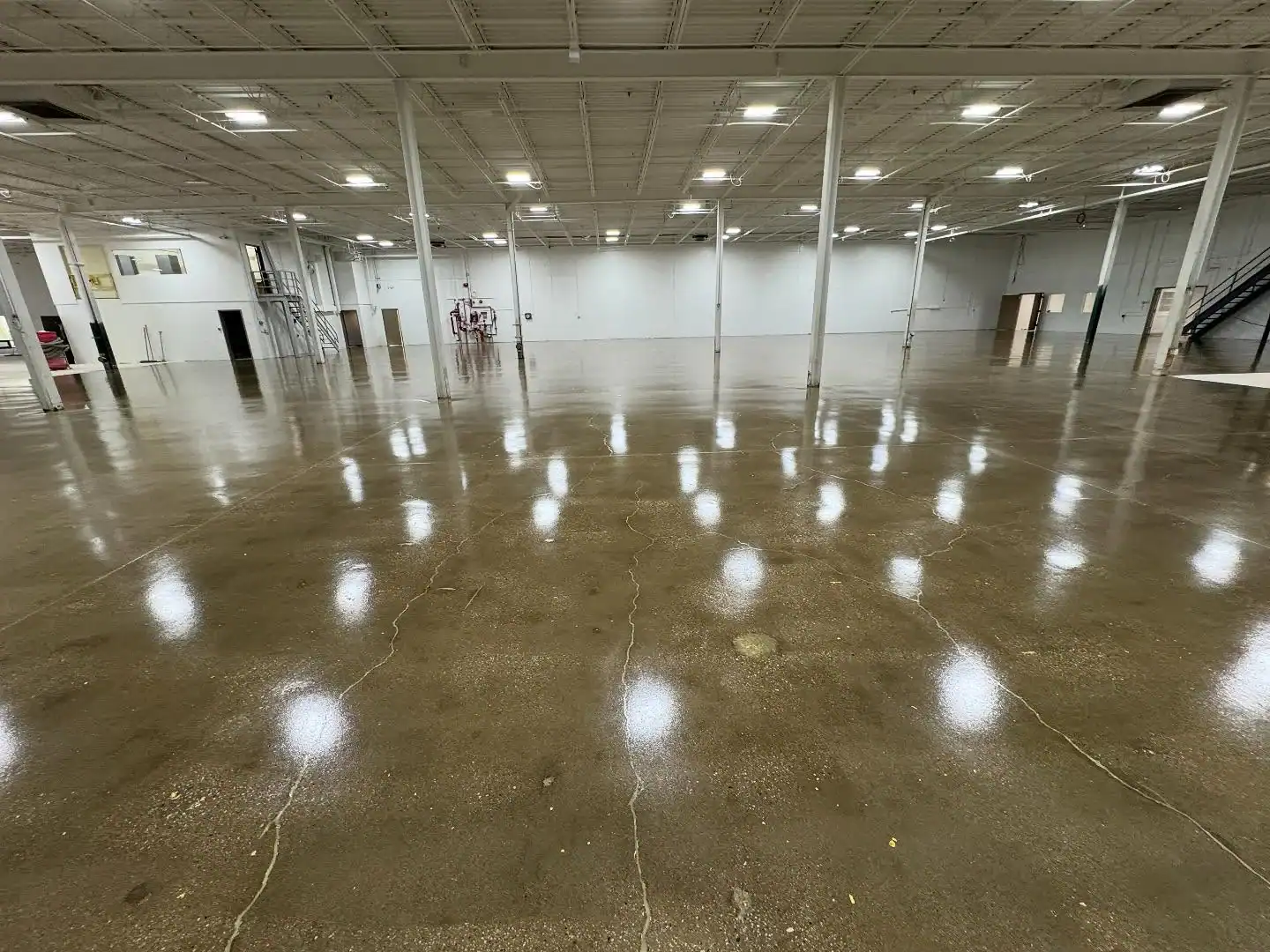
A properly installed industrial warehouse floor epoxy in West Islip, NY typically lasts 10 to 20 years in high-traffic environments, depending on your specific operation. That lifespan assumes you’re running forklifts, pallet jacks, and heavy machinery daily. The key factors are prep quality and system thickness.
If the concrete isn’t diamond ground and moisture tested before installation, the coating can fail in under a year. If it’s too thin for your load requirements, you’ll see wear paths and breakdown within a few years. We install high-build systems specifically because they’re designed to absorb impact and resist abrasion over the long term.
Your maintenance practices also matter. Keeping the floor clean and addressing spills promptly extends its life. But the floor itself shouldn’t require constant attention or repairs if it’s installed right from the start.
Yes, but only if you’re using a forklift traffic resistant coating in West Islip, NY that’s actually designed for that abuse. Standard garage epoxies or thin decorative coatings will fail quickly under forklift traffic. You need a high-build industrial system with the right hardness and flexibility to absorb impact without cracking or wearing through.
The areas that take the most stress—loading docks, tight turning zones, high-traffic aisles—need extra attention during installation. We often increase thickness in those spots or use a more aggressive topcoat. The epoxy has to bond completely to the concrete underneath, which is why diamond grinding matters so much.
Forklifts create three types of stress: impact from loads, friction from tires, and torque from turning. A proper system handles all three without showing wear patterns or surface damage. If your current floor is already showing tire marks or chipping, that’s a sign the coating wasn’t built for your operation.
A concrete sealer penetrates the surface and provides basic protection against moisture and light wear. It’s fine for low-traffic areas but won’t hold up under forklifts or heavy machinery. A high-traffic concrete sealer in West Islip, NY is thicker and more durable than standard sealers, but it’s still not the same as epoxy.
Epoxy creates a thick, bonded layer on top of your concrete that becomes part of the floor structure. It adds impact resistance, chemical resistance, and abrasion resistance that sealers can’t match. Epoxy also fills small cracks and imperfections, creating a smooth, level surface. Sealers don’t do that.
For warehouse applications, you need epoxy. Sealers are a temporary fix that will require reapplication and won’t protect your concrete from the kind of daily abuse a distribution or manufacturing facility creates. If you’re trying to extend the life of your slab and reduce maintenance, epoxy is the only real solution.
For large scale warehouse flooring in West Islip, NY, plan on three to seven days depending on your square footage and the condition of your existing concrete. That includes prep, application, and full cure time. We can often work in phases so you don’t have to shut down your entire operation at once.
The prep work—diamond grinding, crack repair, cleaning—takes the most time but it’s also the most important part. Rushing this phase leads to failures down the road. The epoxy application itself is faster, but the cure time is non-negotiable. You can’t put forklifts on the floor before it’s fully cured or you’ll damage the coating.
We schedule around your operational needs whenever possible. Some facilities prefer weekend installations. Others can section off areas and keep running. The key is planning it right so you’re not scrambling or extending downtime because something wasn’t ready. We’ll walk through your specific timeline before we start so you know exactly what to expect.
Yes, industrial epoxy systems are designed to handle temperature changes, but the installation has to account for your facility’s specific conditions. West Islip warehouses deal with humid summers and cold winters, plus temperature swings if you’re opening dock doors constantly. The epoxy needs flexibility to expand and contract with your concrete without cracking or delaminating.
We test your concrete’s temperature and moisture levels before installation because both affect how the epoxy cures and bonds. If your facility isn’t climate controlled, we select materials that perform well across a wider temperature range. Some epoxies get brittle in cold or soft in heat. We avoid those for warehouse applications.
The substrate temperature during installation also matters. If the concrete is too cold, the epoxy won’t cure properly. Too hot, and it cures too fast, creating weak spots. We monitor conditions throughout the process to make sure the floor performs the way it should once your operation is back to full speed.
Very little compared to bare concrete or other coatings. Regular sweeping or scrubbing to remove dirt and debris is the main requirement. The seamless surface doesn’t trap dust or grime the way concrete does, so cleaning is faster and easier. Spills should be wiped up promptly, but the epoxy won’t stain or absorb them if they sit for a bit.
You don’t need to reseal or recoat the floor every year like you would with other systems. A properly installed industrial warehouse floor epoxy in West Islip, NY should go years without needing any major maintenance. If you do see damage—maybe from a dropped load or a forklift accident—those spots can be repaired without redoing the entire floor.
Avoid using harsh acidic cleaners that can dull the finish over time. A neutral pH cleaner and a standard floor scrubber are all you need. The floor’s durability means you’re spending less time and money on upkeep and more time running your operation. That’s the whole point.