
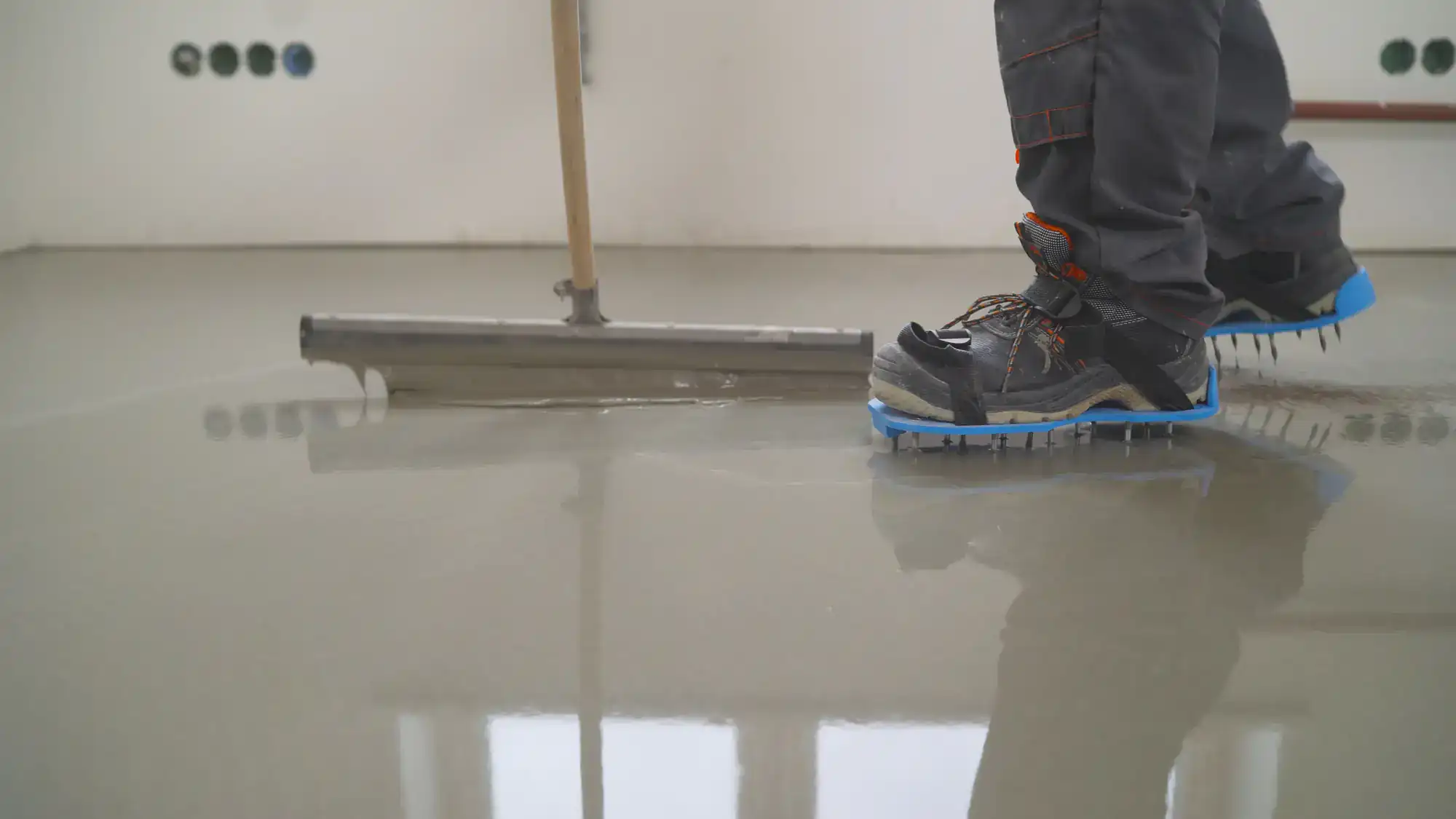
Most flooring failures in Levittown don’t start with the tile or the LVP. They start underneath with a slab that was never properly addressed before the new floor went down. Once the subfloor is level, stable, and moisture-tested, everything installed on top of it performs the way it’s supposed to. That means no cracked grout lines six months later, no rippling vinyl after the first winter, and no flooring contractor pointing fingers at the prep work.
Levittown’s original Ranch and Cape Cod homes were built between 1947 and 1951 and a lot of those concrete slabs are still the original pour. Decades of freeze-thaw cycles from Nassau County winters, combined with the thermal stress of embedded radiant heat systems in the Ranch models, have left many of these surfaces uneven, cracked, and moisture-compromised in ways that aren’t always visible until a new floor starts failing. Proper self leveling addresses all of that not just the surface.
The result is a floor you don’t think about anymore. It doesn’t shift. It doesn’t telegraph every crack through your new tile. It doesn’t make your LVP look like it was installed on a hill. You get a flat, stable base that supports whatever goes on top of it and stays that way.
We’ve been working on Long Island floors since 1996. That’s not a number thrown out to impress you it means we’ve been installing floors longer than most of Levittown’s current renovation projects have been on anyone’s radar. Danny Harmer, our president and CEO, brings over 40 years of hands-on installation experience to every job, and most of our crew has been with us for more than a decade. That kind of continuity matters when something goes wrong and you need someone who actually answers the phone.
Operating out of Bohemia, NY, we work regularly across Nassau County including the dense residential neighborhoods along Jerusalem Avenue and the commercial corridor on Hempstead Turnpike. We hold an A+ BBB rating, OSHA 40 certification, and factory-trained credentials in cementitious urethane and polyaspartic systems. These aren’t decorative credentials. They’re what separate a contractor who knows what they’re doing from one who’s learning on your floor.
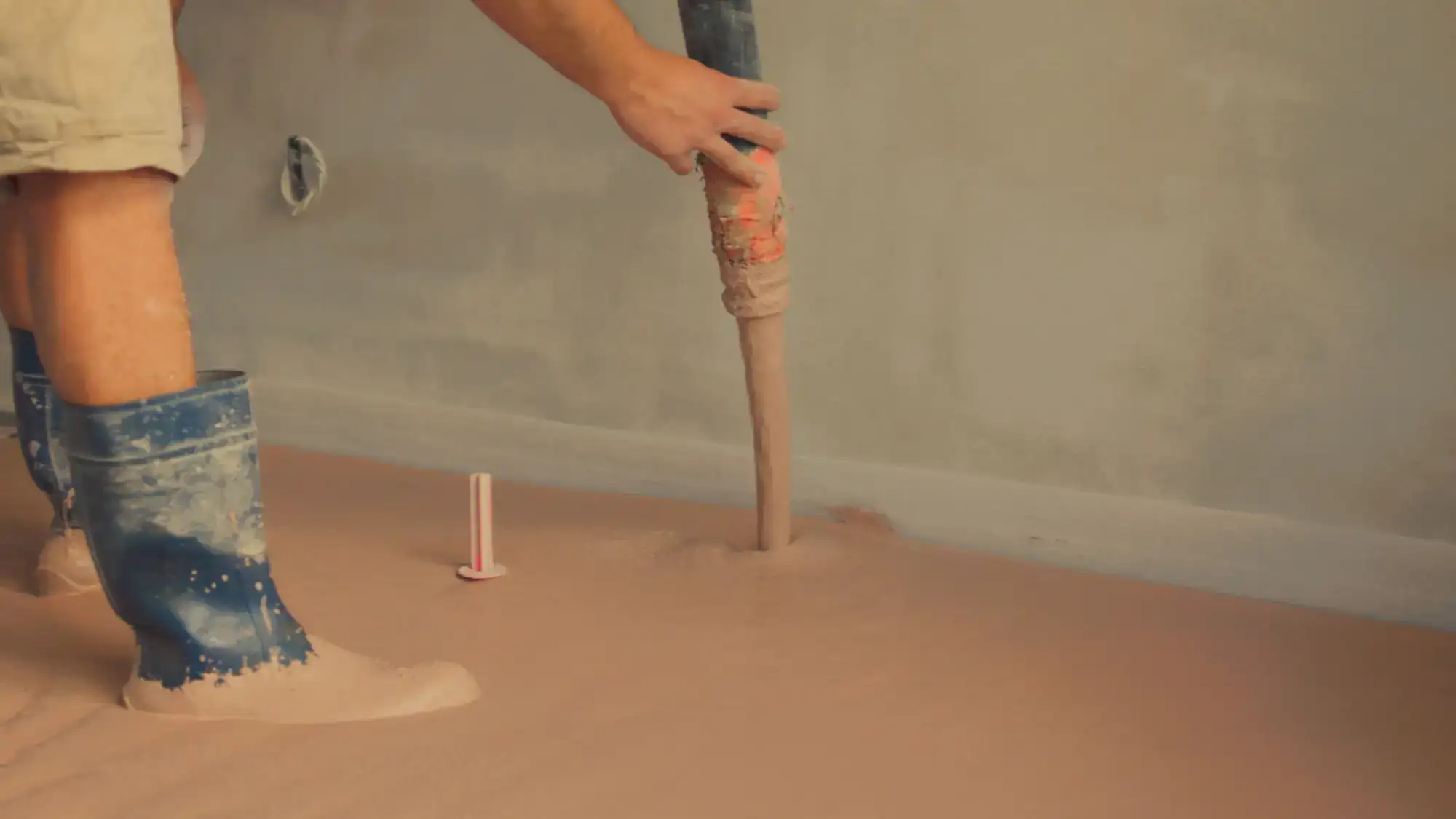
It starts with moisture testing every time, no exceptions. Levittown’s original slab-on-grade construction was typically poured without the vapor barriers that modern builds require, which means moisture vapor transmission is one of the most common hidden problems in the community’s housing stock. Before any material is mixed, we run ASTM F2170 relative humidity testing and MVER testing to understand exactly what the slab is doing. If moisture is elevated, we address it before the pour not after the floor fails.
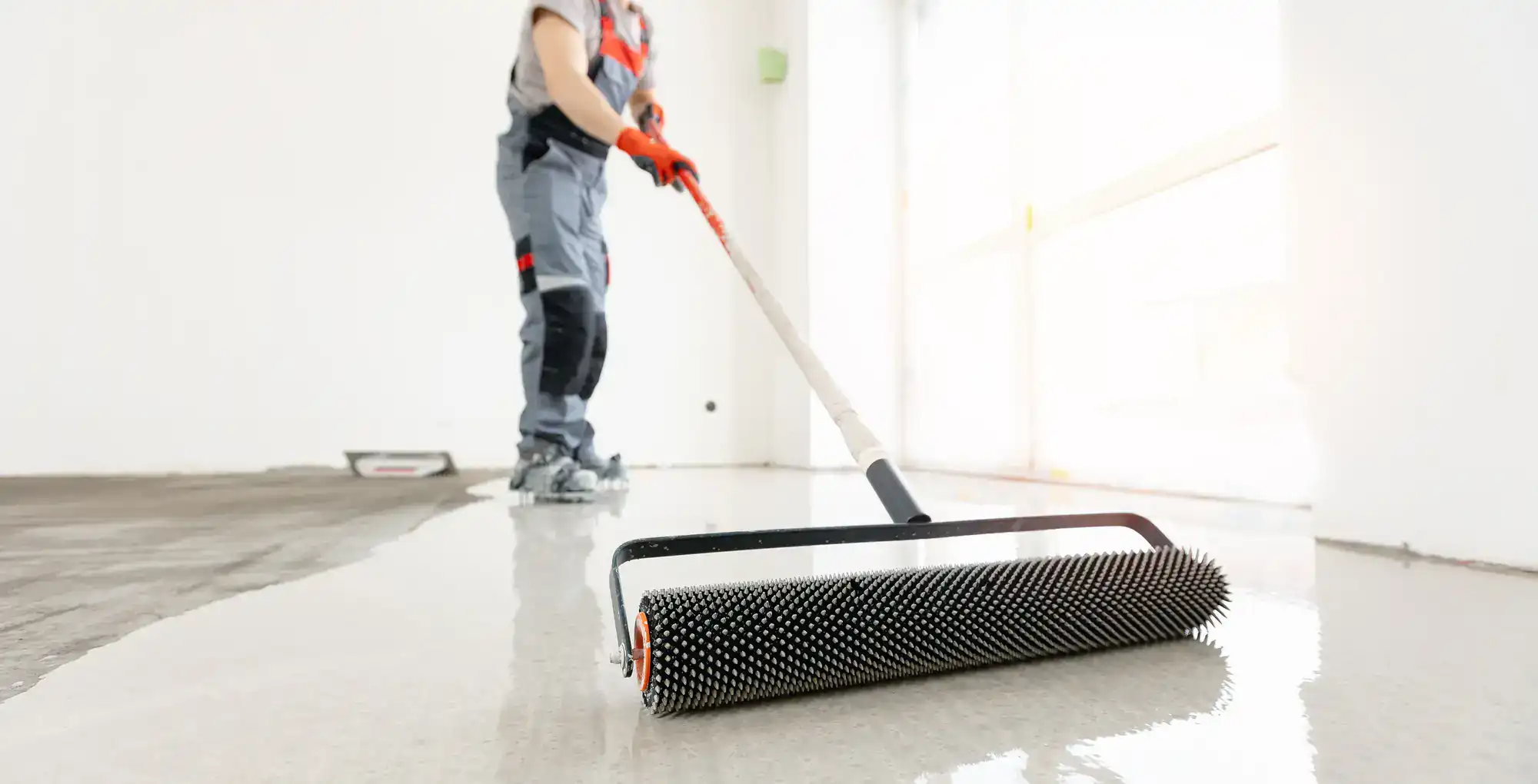
Once the slab condition is confirmed, surface preparation comes next. That means grinding, cleaning, and priming the substrate so the self leveling compound bonds correctly and doesn’t delaminate down the road. The self leveling material we use is a high-strength, cement-based polymer-modified compound with high flow characteristics it can be installed from a quarter inch to over two inches neat, and up to five inches with aggregate added. That range covers virtually every correction scenario you’ll find in a Levittown home or commercial space.
After the pour, foot traffic is typically possible within four to six hours. Most flooring installations can follow within 24 to 48 hours. If you’re renovating a kitchen on Gardiners Avenue or prepping a retail space along the Turnpike, that turnaround keeps the project moving without the household or business sitting in limbo for days.
Ready to get started?
Self leveling in Levittown, NY isn’t a one-size pour. What’s included depends on what the slab actually needs and that assessment happens before any proposal is made. Our process covers moisture diagnostics, surface prep, priming, and the self leveling installation itself. For Levittown Ranch homes with embedded radiant heat pipes in the slab, we work carefully around those systems understanding the construction is part of the job, not a surprise discovered mid-project.
For residential work, our focus is typically on getting the subfloor flat and stable before new tile, LVP, or engineered hardwood goes down. For commercial properties along Hempstead Turnpike medical offices, service businesses, retail spaces the same technical standards apply, with the added layer of OSHA 40-certified crew conduct and the ability to meet commercial flatness tolerances that general flooring contractors often can’t match.
Nassau County Home Improvement Licensing requirements apply to contractors working in this area, and we operate in full compliance. If your project involves a broader renovation that touches structural elements or existing mechanical systems, the Town of Hempstead Building Department is the relevant permitting authority for most of Levittown. We can speak to what typically requires a permit and what doesn’t so you’re not navigating that blind.
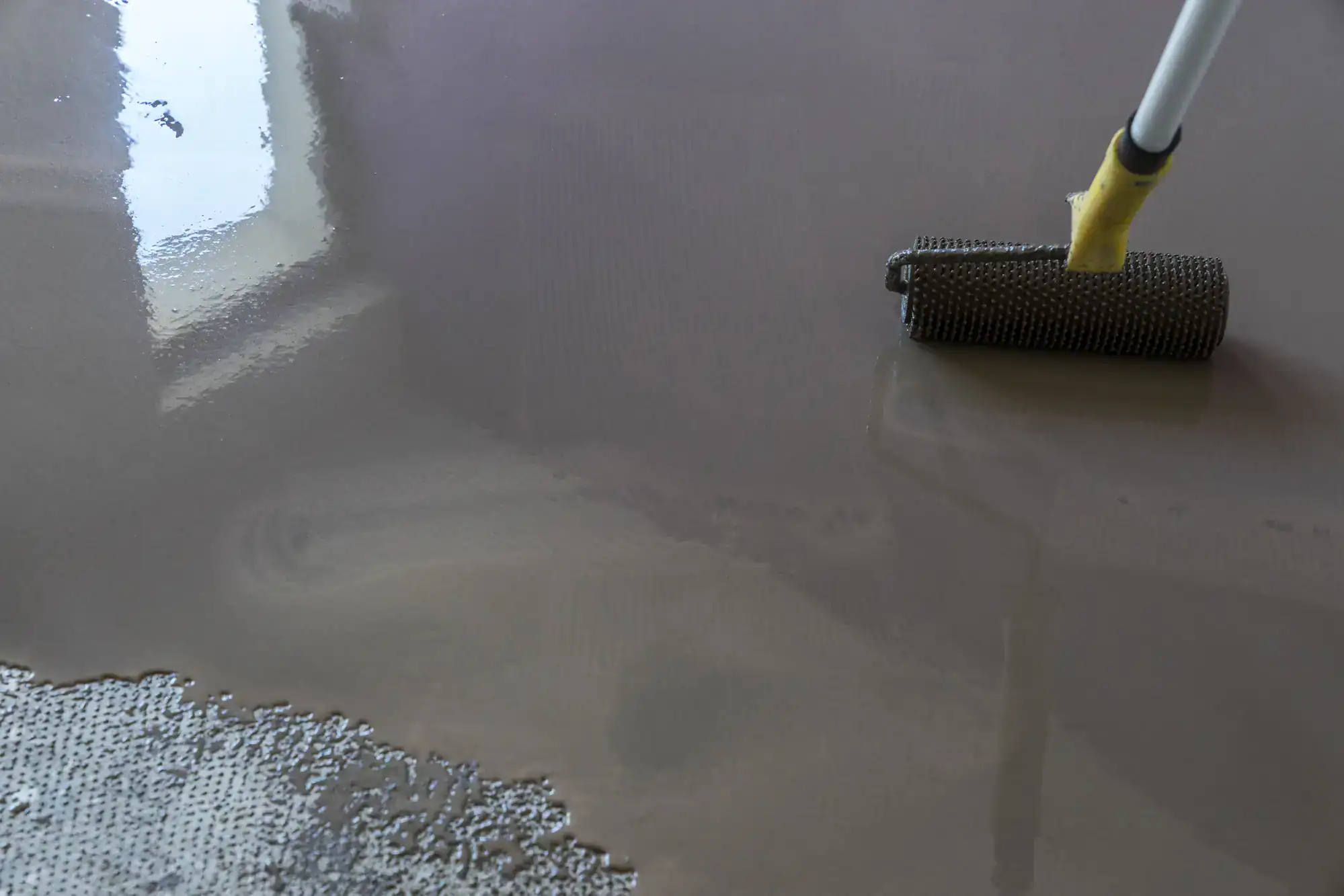
Yes but it requires a contractor who actually knows those pipes are there and understands how to work around them. Many of Levittown’s original Ranch model homes were built with hot-water radiant heating pipes embedded directly in the concrete slab. These systems are now 70-plus years old, and they’re still running in a lot of homes. The concern with self leveling over a radiant slab is two-fold: you don’t want to damage the pipes during surface prep, and you need a material with the right thermal compatibility so repeated heating cycles don’t cause the overlay to delaminate over time.
The cementitious polymer-modified compounds we use are appropriate for these applications when installed correctly over a properly prepared and primed surface. The key is knowing what you’re working with before we start which is why the assessment phase matters as much as the pour itself. A contractor who walks in without asking about the heating system is a contractor you don’t want grinding your slab.
The honest answer is that you may not know until someone tests it. A floor can look flat to the eye and still have enough variation across a span to cause problems with large-format tile or rigid LVP. The industry standard for most flooring installations is no more than three-sixteenths of an inch of variation over a ten-foot span and many older Levittown slabs don’t meet that threshold without some correction.
The most common triggers are cracked grout lines in existing tile, LVP that shows rippling or feels springy underfoot, doors that have started scraping the floor, or a flooring contractor who told you the subfloor needs work before they’ll install. Any of those signs are worth taking seriously. A proper assessment which includes moisture testing, not just a visual check will tell you exactly what’s needed and whether self leveling is the right fix or whether something else is going on underneath.
For most standard installations, foot traffic is possible within four to six hours of the pour. Flooring installation tile, LVP, engineered hardwood can typically follow within 24 to 48 hours, depending on the depth of the pour, the ambient temperature, and the moisture conditions in the space.
In Levittown, cold-weather renovations add a variable worth knowing about. Self leveling compounds require ambient temperatures above 50 degrees Fahrenheit and substrate temperatures above 40 degrees to cure correctly. During Nassau County winters, that means interior climate control is essential especially in older homes with drafty windows or recently opened renovation areas. We manage this as a standard part of the job. If you’re planning a renovation in late fall or winter, it’s worth asking the contractor directly how they handle temperature management on the job.
Absolutely and commercial applications are actually where the technical standards matter most. Retail spaces, medical offices, and service businesses along Hempstead Turnpike see consistent foot traffic, which means the floor needs to be flat enough to meet commercial flooring tolerances and strong enough to hold up under daily use without cracking or shifting.
The self leveling systems we use are high-strength, cement-based polymer-modified materials the same category of product used in commercial and institutional environments, not a diluted residential version. We hold OSHA 40 certification, which is relevant for commercial property owners who require safety compliance documentation before a contractor steps on site. If you’re managing a tenant buildout or a flooring replacement in a commercial space, the combination of technical capability and safety credentials matters more than it does in a residential setting and it’s worth verifying that your contractor has both before the job starts.
The most common cause of self leveling failure is moisture specifically, moisture vapor transmitting up through the slab that wasn’t tested or addressed before the pour. When vapor pressure builds beneath a self leveling compound that wasn’t applied over a properly moisture-mitigated surface, it causes delamination, bubbling, and eventually complete bond failure. This is a particular risk in Levittown’s older slab-on-grade homes, which were typically poured without vapor barriers and have had decades of ground moisture exposure.
The second most common cause is inadequate surface preparation. If the slab isn’t properly ground, cleaned, and primed before the pour, the self leveling material doesn’t bond correctly and no amount of product quality compensates for a bad substrate. We run ASTM F2170 and MVER moisture testing before every job, and surface preparation is treated as a non-negotiable step, not an optional add-on. Skipping either of those steps is how a self leveling job that looks fine at day one becomes a flooring failure at month six.
Cost depends on square footage, the depth of correction needed, and whether moisture mitigation is required before the pour. For a typical residential room in a Levittown Cape Cod or Ranch say, a kitchen or main living area you’re generally looking at a range that reflects the full process: moisture testing, surface prep, priming, and the self leveling installation itself. Shallow corrections over a well-prepared slab cost less than deep fills or jobs where moisture mitigation adds a step before anything else can happen.
What’s worth understanding is that the cost of doing it right is almost always less than the cost of doing it twice. In Nassau County’s housing market, where median home values sit around $577,000, a flooring failure that requires tear-out and reinstallation because the subfloor wasn’t properly addressed the first time is a significantly more expensive problem than the self leveling work itself. The assessment is the starting point. Once the slab condition is understood, you’ll have a clear picture of what the job actually requires and what it will cost no vague estimates, no surprises mid-pour.