
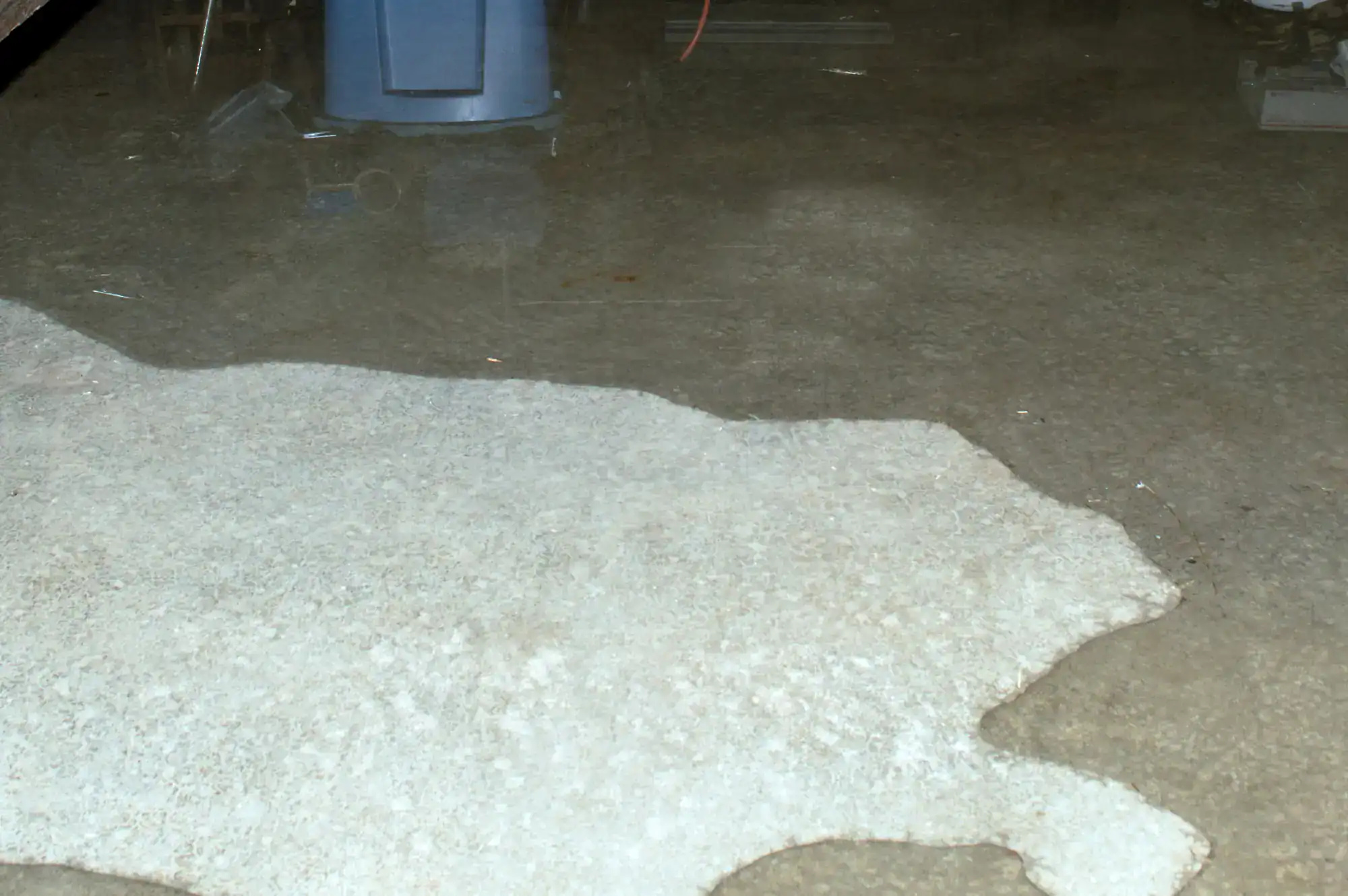
When your apparatus bay floor is installed correctly, the first thing you notice is what stops happening. No more peeling strips where the truck backed out. No more bubbling near the bay doors after a cold winter night. No more gritty concrete dust that never fully cleans up after a call. The floor just holds and keeps holding.
For a department like Levittown’s, that matters more than most. You’re running three stations across one of the most densely populated communities in Nassau County. Your apparatus is in and out constantly, tracking road salt and brine from Hempstead Turnpike and the Southern State Parkway back onto that bay floor every winter. Standard thin-mil epoxy was never built for that combination of chemical exposure and thermal stress. It fails, and it fails predictably.
The right system properly ground concrete, moisture-tested substrate, high-build epoxy base, aggregate broadcast, and a 15-mil polyaspartic topcoat is built to take everything a Nassau County winter and a high-volume volunteer department can throw at it. It cleans up in minutes after a call, it doesn’t harbor the combustion byproducts your crews track back in, and it’s still performing 20 years from now when a cheaper floor would’ve been replaced three times over.
We’re based in Bohemia, NY and have been installing commercial and industrial resinous flooring systems across Long Island for over 30 years. Our CEO Danny Harmer has been doing this work personally for over 40 years which means he was installing floors before most of Levittown’s current apparatus bays were last resurfaced.
Our field team supervised by Javier, Eduardo, and Fredith, who collectively bring 40-plus years of hands-on installation experience has worked in active municipal facilities across Nassau and Suffolk Counties. Most of our crew has been with us for more than a decade. That kind of continuity shows up in the work.
We hold the Sherwin-Williams High Performance Flooring certification, Res Tech certification, and employ OSHA 40-certified installers on every job. Our project history includes the White House kitchen in 1996, international projects in Moscow and the Bahamas, and decades of commercial and industrial installations across Long Island. When Nassau County fire districts need a floor done right the first time, we’re the team they call.
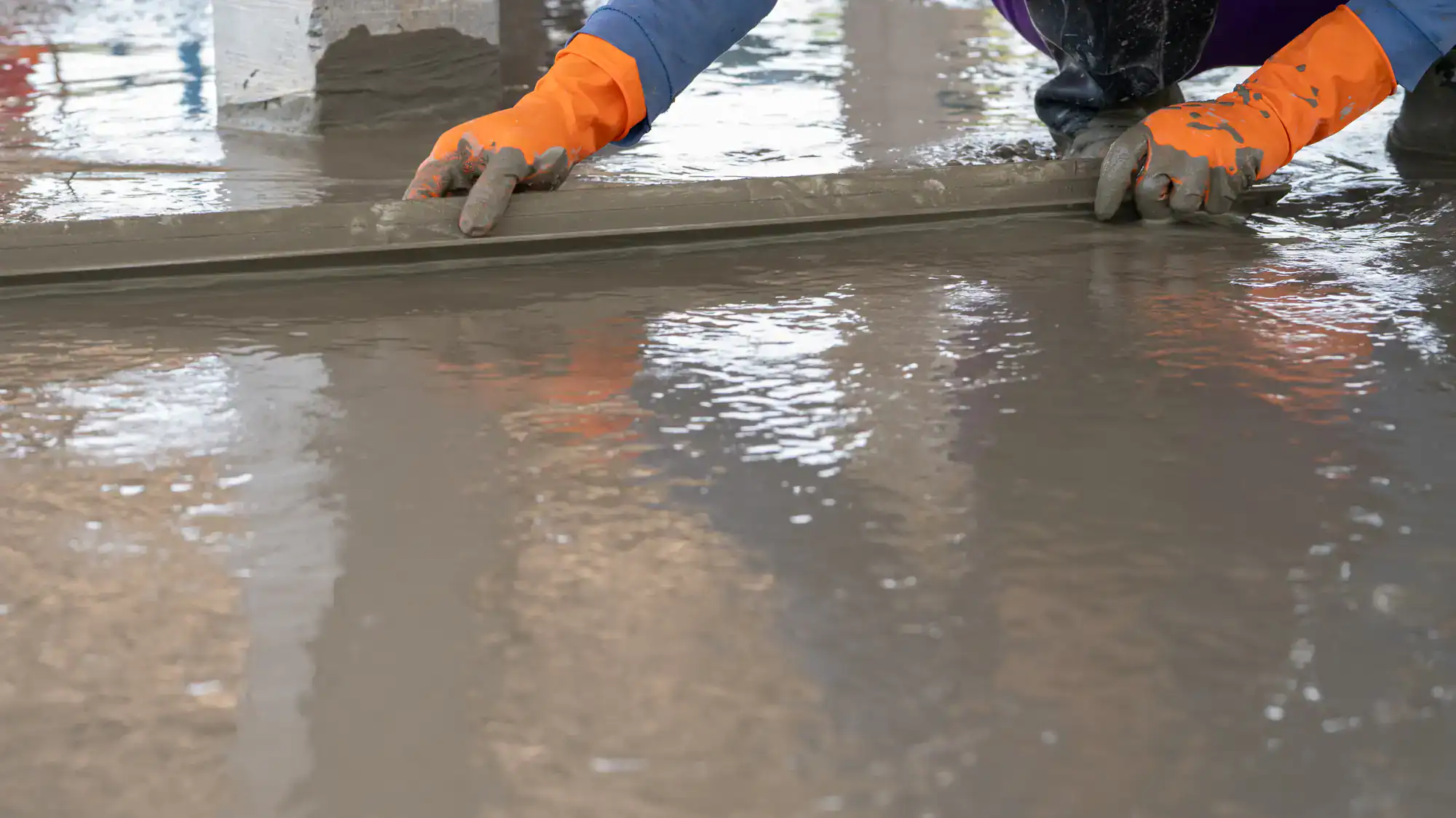
Every apparatus bay floor installation starts with concrete assessment. Before anything goes down, we evaluate the substrate its condition, its age, its moisture content. This step matters especially in Levittown, where some fire station infrastructure dates back to the community’s original buildout in the late 1940s and early 1950s. Older concrete has its own profile of cracks, porosity, and moisture behavior, and skipping this step is exactly how floors fail six months after installation.
From there, we diamond grind the concrete not acid etch it. Diamond grinding mechanically opens the concrete surface so the primer bonds at a structural level. Acid etching introduces moisture before you seal the floor, which is the direct cause of the delamination bubbles you’ve probably already seen on a floor that was done the wrong way. After grinding, we confirm moisture levels before the first coat ever touches it.
Then the system goes down in layers: penetrating primer, high-build epoxy base coat, aggregate broadcast for compressive strength and slip resistance, and a rapid-cure polyaspartic topcoat at 15 mils. That topcoat cures in 24 hours. Your apparatus is back in the bay the next day not parked outside on Gardiners Avenue for a week while a standard epoxy cures. For a volunteer department running active emergency coverage in a community of 50,000-plus residents, that turnaround isn’t a perk. It’s the whole ballgame.
Ready to get started?
What we install in a Levittown fire station apparatus bay is a full commercial resinous system not a consumer-grade epoxy kit scaled up. The distinction matters because the failure modes are completely different. Hot-tire pickup where heated fire truck tires bond to a standard epoxy coating and peel it off when the truck pulls out is the most common way apparatus bay floors fail. It doesn’t happen with a properly specified polyaspartic topcoat. The thermal resistance is built into the chemistry.
The system is also seamless, which directly supports the contamination control protocols that Nassau County fire departments are increasingly implementing under NFPA 1500 and 1585. A seamless, non-porous floor can be power-washed and chemically decontaminated after every call. Bare concrete or cracked coatings can’t be they hold onto the carcinogenic combustion byproducts that your crews bring back in on apparatus and gear. That’s not a minor operational detail. It’s an occupational health issue that a proper floor helps address.
Every installation we do includes concrete assessment, diamond grinding, moisture testing, primer application, high-build epoxy base coat with aggregate broadcast, and the polyaspartic topcoat. The system is rated for heavy apparatus loads, resistant to road salt and de-icing compounds, and carries the backing of Sherwin-Williams High Performance Flooring certification a manufacturer-approved credential that no local Levittown-area competitor we’ve identified currently holds. You get a floor that was specified for this environment, installed by a team that has done this work for decades.
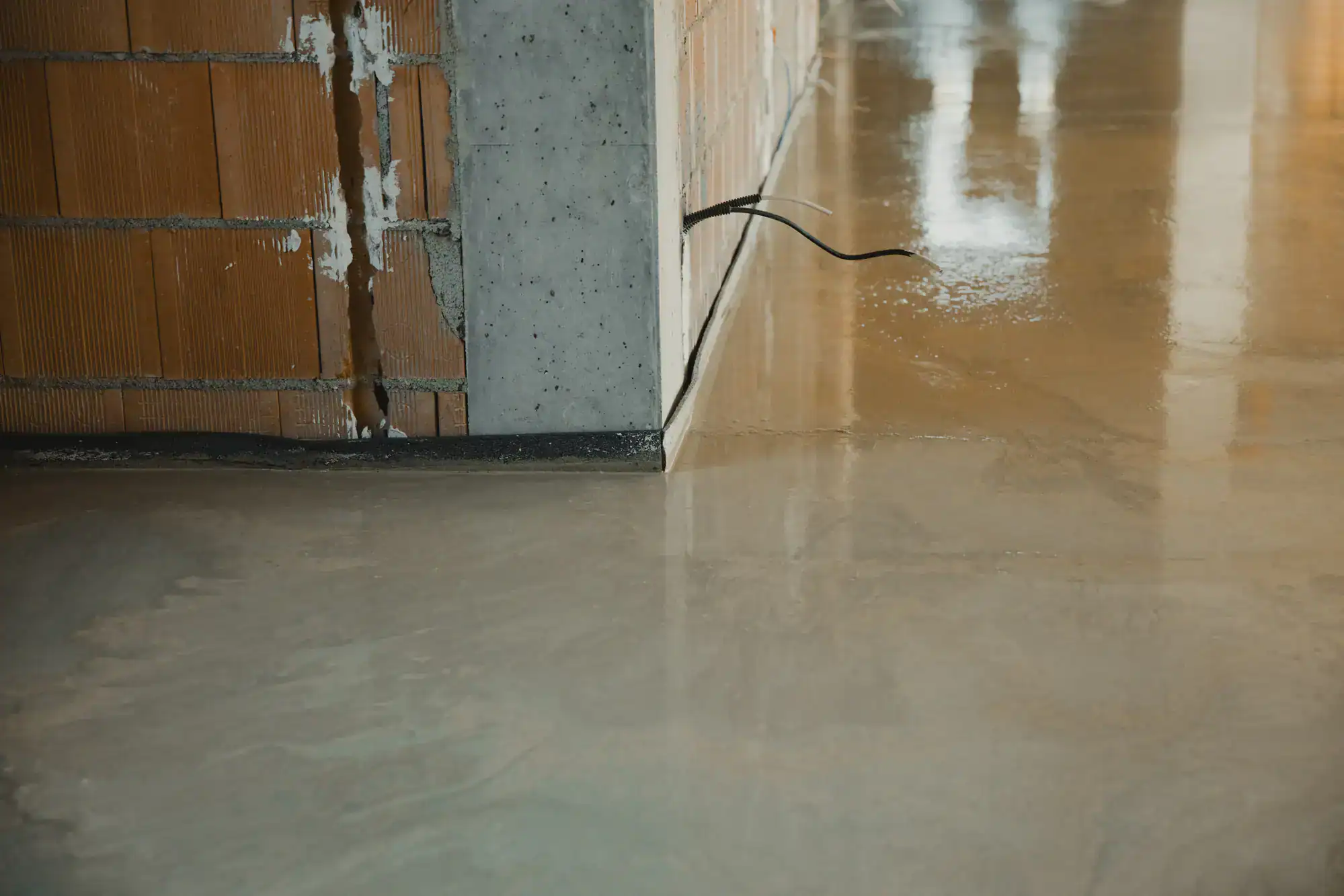
For most apparatus bay installations in Levittown, the active installation work takes one to two days depending on bay size and concrete condition. The more important number for a volunteer department is the cure time and with a polyaspartic topcoat, that’s 24 hours. Your apparatus can return to the bay the following day.
That’s a meaningful difference from traditional epoxy systems, which require three to seven days of cure time before the floor can handle vehicle traffic. For a department covering a community of 50,000-plus residents across three stations, parking apparatus outside on Gardiners Avenue for a week isn’t a realistic option. We chose the rapid-cure system specifically because it works within the operational constraints of an active fire department not around them.
The two most common failure modes are hot-tire pickup and moisture-driven delamination and both are caused by the wrong product or the wrong process, not by the environment itself. Hot-tire pickup happens when a standard thin-mil epoxy coating bonds to heated fire truck tires as the apparatus cools after a call. When the truck pulls out next time, the coating comes with it. Delamination bubbles form when a contractor skips proper moisture testing and seals moisture into the concrete before the coating goes down.
Nassau County’s conditions accelerate both problems. The road salt and brine that Levittown fire trucks track in from winter responses is chemically aggressive it attacks inadequate coatings from the surface and attacks the concrete substrate from within. The freeze-thaw cycling that comes with a Nassau County winter stresses any coating that lacks sufficient flexibility. A properly specified system with a thermally resistant polyaspartic topcoat and a diamond-ground, moisture-tested substrate eliminates both failure modes before they start.
Polyaspartic and epoxy are both resinous flooring systems, but they perform very differently in apparatus bay conditions. Polyaspartic cures in 24 hours versus three to seven days for standard epoxy. It’s four times more flexible, which means it moves with the concrete during Nassau County’s freeze-thaw cycles instead of cracking against it. It’s also significantly more abrasion-resistant and thermally stable which is why it doesn’t bond to heated fire truck tires the way standard epoxy does.
The other factor is mil thickness. A consumer-grade or thin-mil epoxy system goes down at four to eight mils. The polyaspartic topcoat in a properly specified apparatus bay system goes down at 15 mils. That additional thickness translates directly to load-bearing capacity and longevity under the kind of heavy, repeated stress that a Pierce Enforcer or Pierce Impel engine produces every time it rolls in and out of the bay. For a department that needs a floor to last 20 years not five the system choice matters as much as the installation quality.
Floor coating installation in an existing fire station is typically classified as a maintenance or renovation activity rather than new construction, which generally simplifies the permitting process compared to a full facility buildout. That said, any work on a Levittown Fire District facility should be coordinated with the fire district commissioners and, where applicable, the Town of Hempstead’s building department since Levittown is an unincorporated hamlet governed at the town level rather than through a village government.
Our installers are OSHA 40 certified, which means we’re equipped to work in active municipal facilities in compliance with applicable occupational safety requirements. The installation process is managed to minimize disruption to station operations ventilation, work zone safety, and chemical handling are all addressed before work begins. If there are specific permitting questions for your district, that’s a conversation worth having early in the planning process, and we can walk you through what’s typically required for this type of project in Nassau County.
Road salt and the brine solutions used for pre-treatment on Nassau County roads are chloride-based compounds and chlorides are chemically aggressive to both concrete and inadequate floor coatings. Every time a Levittown fire truck returns from a winter call, it brings those compounds directly into the apparatus bay on its undercarriage and tires. On bare concrete or a compromised coating, those chlorides penetrate the surface and begin attacking the concrete substrate from within, accelerating cracking and spalling over time.
A properly specified polyaspartic system is chemically resistant to road salt, brine, and de-icing compounds. The seamless, non-porous surface means there’s nowhere for chlorides to penetrate they sit on the surface until you wash them off, which takes minutes. The 15-mil topcoat also provides enough material thickness to resist the surface abrasion that comes from repeated heavy vehicle traffic through a contaminated bay. For a department running active winter coverage in Nassau County, that chemical resistance isn’t a bonus feature. It’s a baseline requirement for a floor that’s going to hold up.
The most straightforward argument is total cost of ownership over time. A properly installed polyaspartic apparatus bay floor has a realistic service life of 20-plus years. A thin-mil or improperly installed epoxy floor fails in three to five years and when it fails, you’re not patching it. You’re grinding off the failed coating, re-preparing the substrate, and paying for a full reinstallation. Over a 20-year period, that cycle can cost three to four times more than doing it correctly the first time.
For a Levittown Fire District board that’s accountable to taxpayers and to a community with a strong civic identity and genuine expectations around how public funds are spent that math is the argument. The right floor also reduces the ongoing maintenance burden on the department: easier decontamination after calls, no peeling or bubbling to manage, no concrete dust. Those operational savings add up over time. If it helps to have the technical specifications and system details documented for a board presentation, we can support that our team has worked through this process with municipal fire districts before and understands what a board needs to see to make a confident decision.