
Huntington Station has some of the most varied building stock in Suffolk County post-WWII Cape Cods and ranches from the 1940s and 50s sitting alongside newer commercial builds along Route 110. Concrete that old has been through decades of freeze-thaw cycles, moisture infiltration, and gradual settling. When you pull up old vinyl tile or carpet in a home like that, what you find underneath is rarely flat enough for modern flooring. A proper self leveling underlayment corrects that before the new floor goes in so you’re not dealing with cracked tile, buckled planks, or a failed installation six months later.
For commercial properties along the New York Avenue corridor, the stakes are even more direct. With Huntington Station’s $10 million Downtown Revitalization Initiative grant and a $66 million sewer project beginning in 2025, business owners are investing in renovated spaces right now. Every one of those renovations needs a level substrate before any finish flooring can go down. A floor that’s out of tolerance doesn’t just look bad it voids manufacturer warranties, accelerates wear, and creates liability in high-traffic commercial environments.
The result of doing this correctly is straightforward: a flat, strong, properly bonded surface that your finished floor can actually perform on. No callbacks. No surprises under the tile six months from now. Just a floor that works.
We’ve been installing commercial and residential floor systems across Suffolk County for over 30 years, operating out of Bohemia, NY close enough to Huntington Station to be on your job site fast, experienced enough to know what North Shore Long Island slabs actually look like after decades of coastal moisture and hard winters.
Danny Harmer, our president, brings over 40 years of hands-on installation experience to every project. That’s not a title it’s the person who understands why a slab in a 1950s ranch off Jericho Turnpike behaves differently than a commercial pour on New York Avenue, and who knows which product system belongs on which substrate. Most of our crew has been with us for over a decade, so the experience you’re hiring doesn’t walk out the door between jobs.
We hold an A+ BBB rating, OSHA 40 certification, and factory training in advanced resinous and cementitious systems. Our project history includes demanding commercial environments across the U.S. and internationally including the White House kitchen in 1996. That’s the kind of track record that doesn’t need a sales pitch.
The first step isn’t mixing it’s testing. Before any product touches your slab, we perform ASTM F2170 relative humidity testing on the concrete. This matters more in Huntington Station than a lot of people realize. The moisture-retaining soils common to this part of Suffolk County, combined with the coastal proximity to the Long Island Sound, create elevated vapor emission rates in older slabs. If that moisture isn’t measured and addressed before the pour, the underlayment will fail it’ll crack, delaminate, or lose bond. That’s the most common reason self leveling fails, and it’s the step most contractors skip.
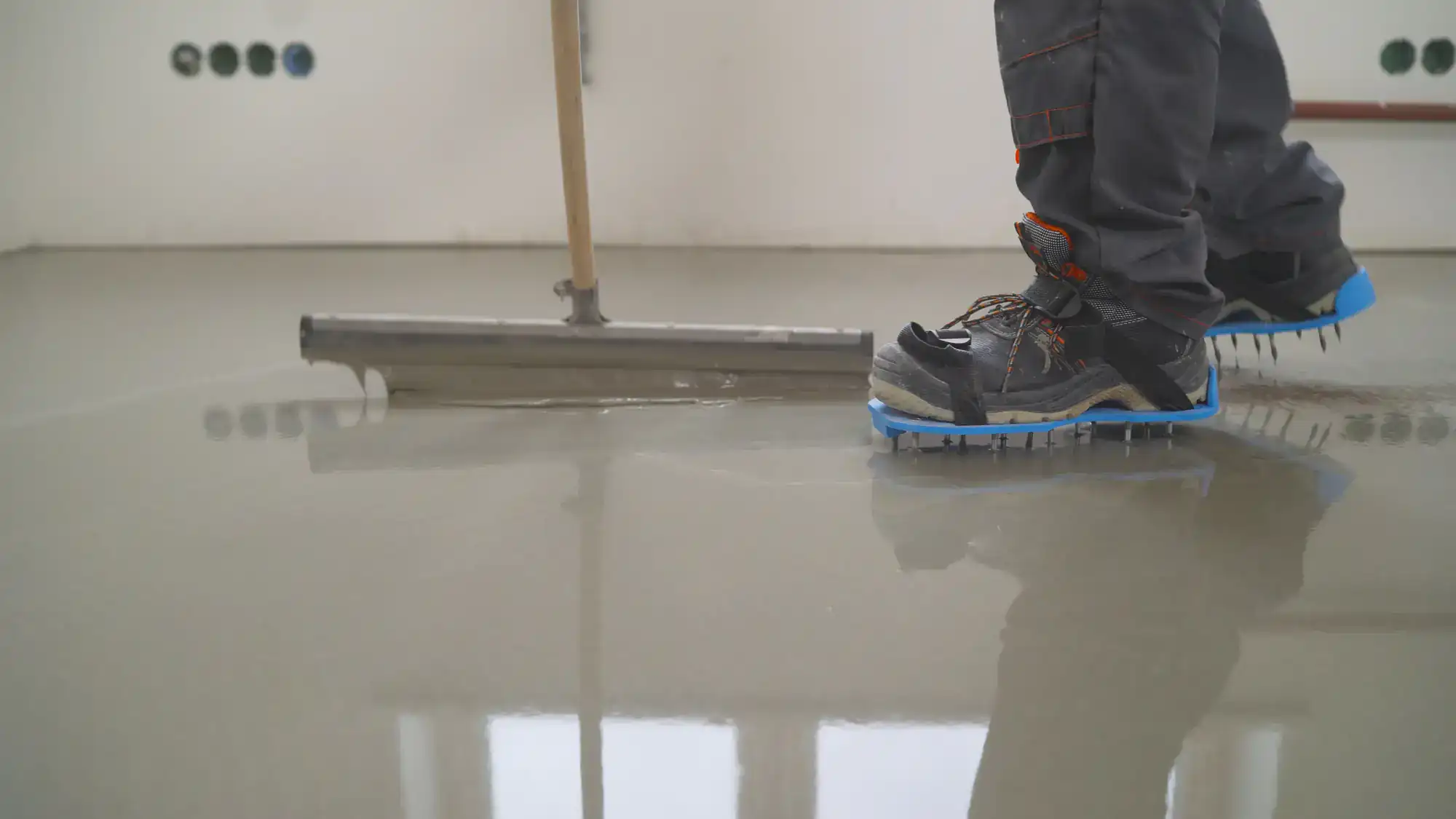
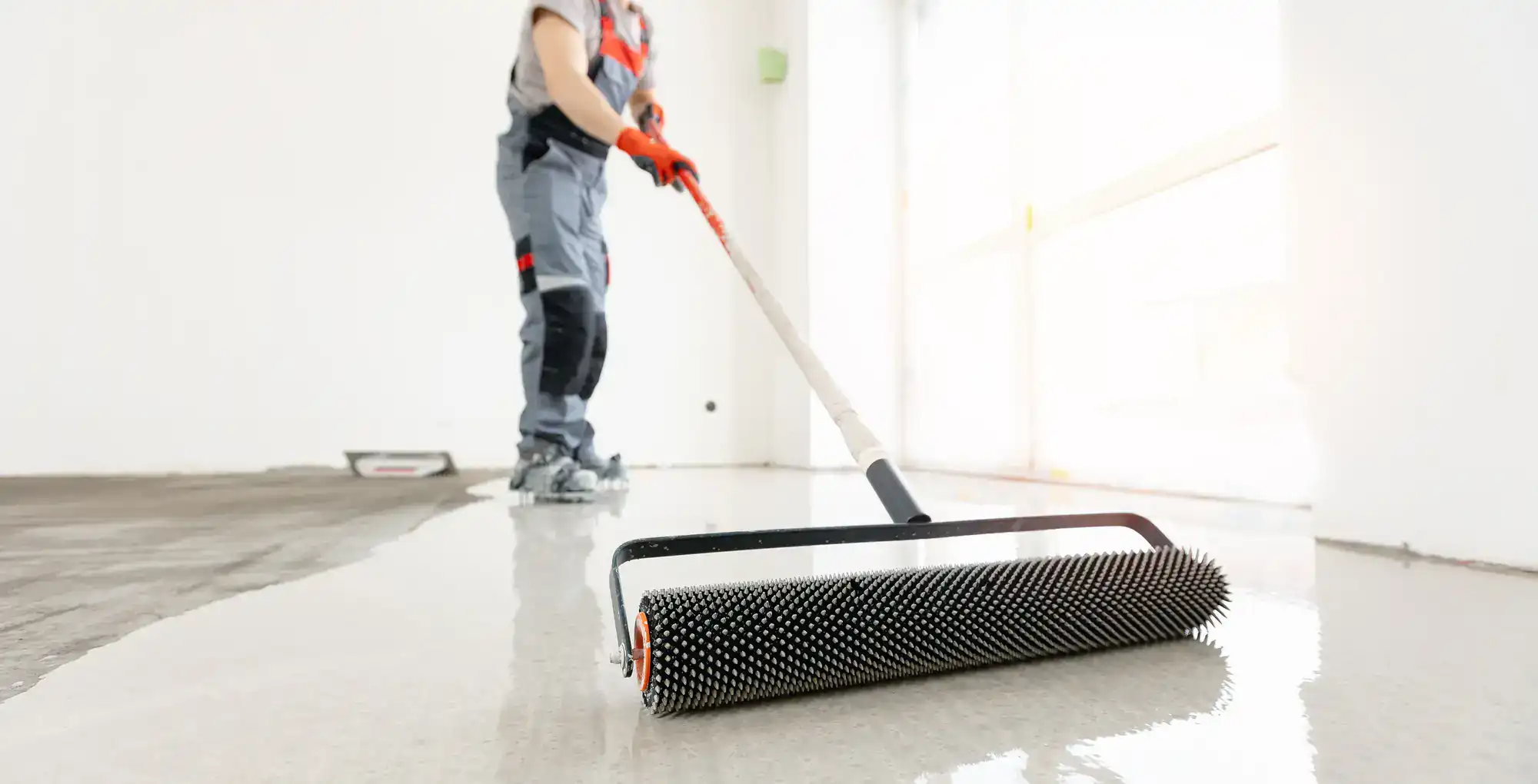
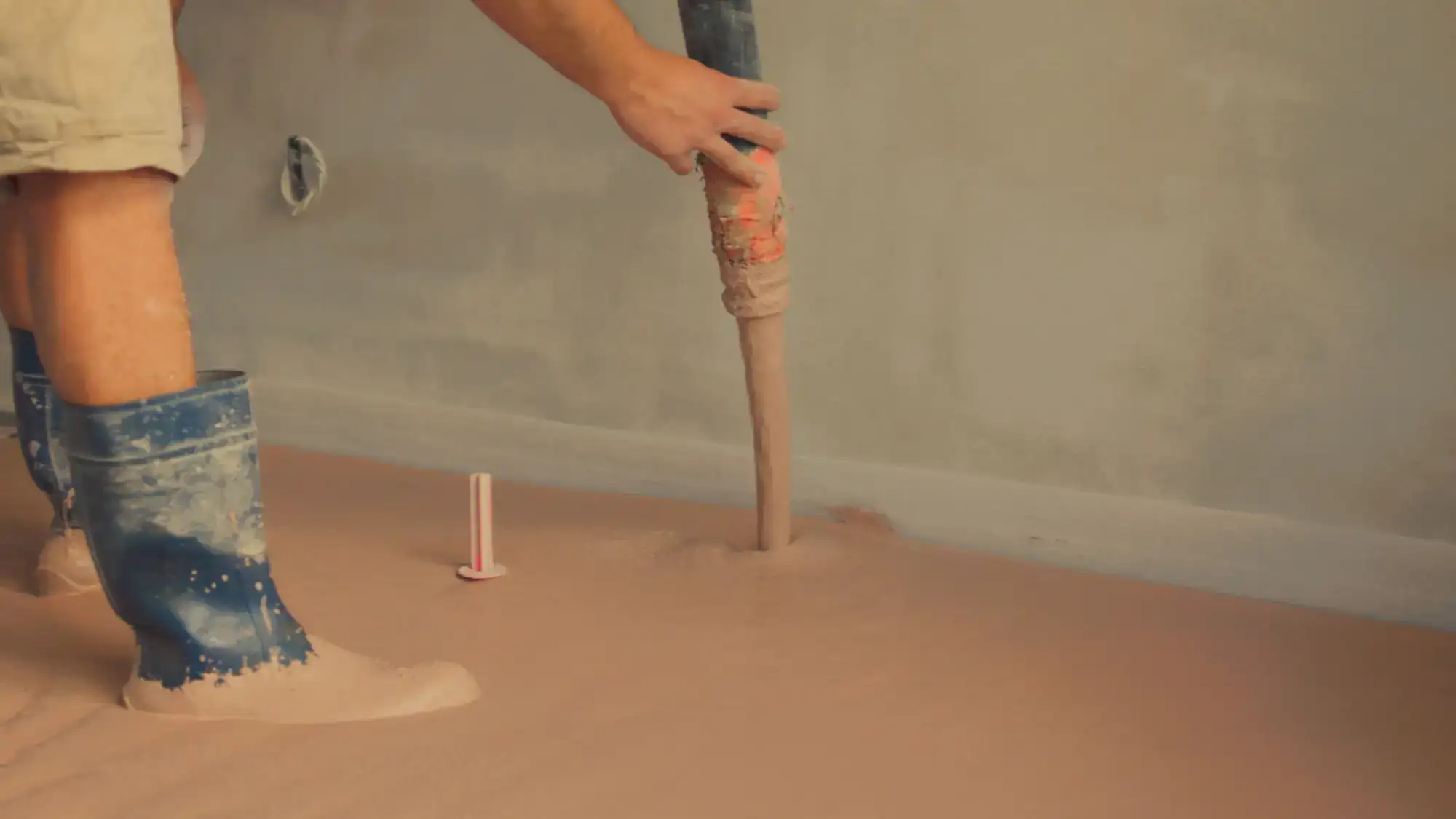
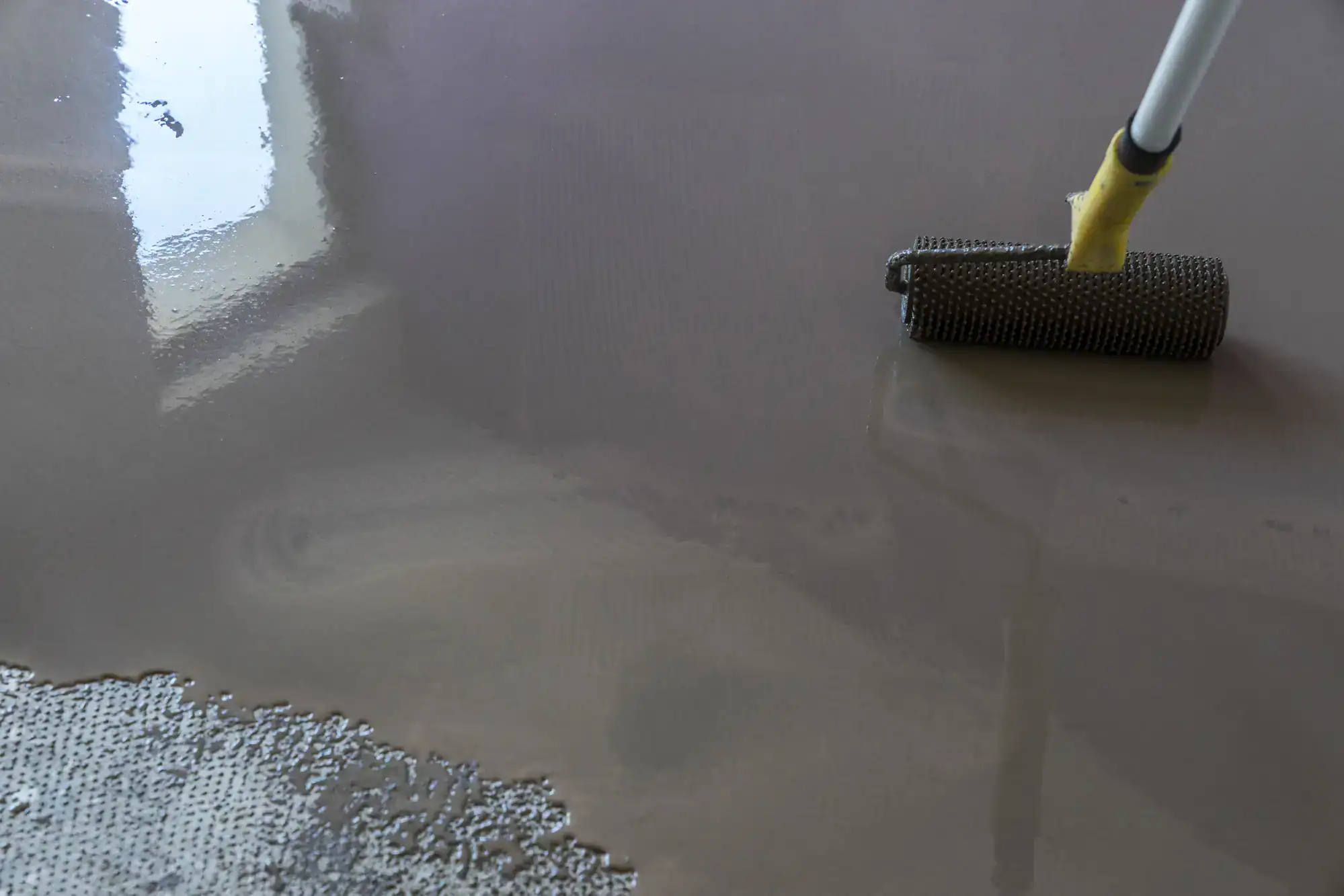
Once the slab passes moisture thresholds, the surface is mechanically prepared grinding, profiling, and cleaning to ensure proper adhesion. Any significant cracks or voids are addressed before the pour begins. The self leveling compound is then mixed and poured, flowing across the surface and self-consolidating to a flat plane. Depending on the application, pours can range from a quarter inch for minor residential corrections up to five inches with aggregate for more significant commercial work.
Cure times for foot traffic typically run four to six hours. Commercial traffic including restaurant service, retail, and light industrial use is generally safe within 24 to 48 hours. For business owners managing renovations during the active Route 110 sewer project disruption, that timeline matters. The Town of Huntington Building Department may require permits depending on the scope of your project, and we can advise on that before work begins.
Ready to get started?
Our self leveling underlayment is a polymer-modified, high-flow cementitious system with long working time, low shrinkage, and strong bond characteristics. It’s rated for use on, above, and below grade which covers the full range of conditions you’ll find in Huntington Station, from basement slabs in older residential homes to ground-floor commercial spaces along the New York Avenue corridor.
The system installs from a quarter inch up to two inches neat, and up to five inches when aggregate is added. That range handles everything from a minor subfloor correction in a South Huntington Cape Cod to a significant commercial pour in a retail space being renovated as part of the DRI-funded revitalization district. The product’s high-flow characteristics mean it self-consolidates without manual spreading on most applications, which reduces labor time and minimizes the risk of installation error.
For commercial projects restaurants, retail, mixed-use ground-floor spaces the underlayment is designed to accept epoxy coatings, polished concrete, large-format tile, and commercial vinyl plank. OSHA 40-certified installers handle every job, which matters for commercial sites in occupied or multi-tenant buildings. If your project is part of the Town of Huntington’s Economic Development Corporation grant program or the broader DRI initiative, we have the commercial credentials insurance, certification, and documented project history to meet those requirements.
The most common reason is moisture and it’s almost always moisture that wasn’t tested before the pour. Huntington Station’s older housing stock, much of it built between the 1940s and 1960s, sits on concrete slabs that were never designed with modern vapor barriers. The moisture-retaining soils on the North Shore of Long Island, combined with decades of freeze-thaw cycling, mean those slabs are often releasing vapor at rates that will destroy a self leveling underlayment if the surface isn’t properly tested and prepared first.
The second most common cause is inadequate surface preparation. Self leveling compound needs a mechanically prepared, clean, profiled surface to bond correctly. Pouring over a dusty, contaminated, or unsealed slab even a flat one leads to delamination. A contractor who skips moisture testing or surface prep is setting up a failure, not a floor. That’s why ASTM F2170 relative humidity testing is the first step on every job we do, not an optional add-on.
It depends entirely on how far out of level the slab is and what finish floor is going on top. For most commercial applications retail, restaurant, office a pour between a quarter inch and an inch and a half handles the majority of corrections. If the slab has significant low spots or has settled unevenly over time, which is common in older commercial buildings along Route 110 that have seen decades of heavy foot traffic and minor structural movement, you may need a deeper pour with aggregate added to reach the right plane.
The finish floor matters too. Large-format tile and luxury vinyl plank have tighter flatness tolerances than carpet or sheet vinyl, so the underlayment needs to hit a higher standard of levelness. Polished concrete and epoxy coatings are even less forgiving any variation in the substrate will telegraph through the finish. The right pour depth is determined by a site assessment, not a standard spec, which is why a proper evaluation before the quote matters more than a number pulled from a product sheet.
For most commercial self leveling underlayment systems, foot traffic is safe within four to six hours of the pour. Light commercial use employees walking the floor, staging furniture is typically fine within that window. Heavy commercial traffic, including restaurant service, retail customer flow, and light industrial or delivery equipment, is generally cleared within 24 to 48 hours depending on ambient temperature and the specific product used.
Temperature is a real factor in Huntington Station, particularly for projects scheduled in fall or early winter before the sewer project construction season winds down. Cementitious underlayment requires a minimum ambient and substrate temperature of 50°F during the pour and for at least 24 hours afterward. If the space isn’t conditioned to that threshold, cure time extends and the risk of surface defects increases. We account for this on every commercial job the space is evaluated before scheduling, not after the product is already mixed.
For standalone self leveling underlayment as a subfloor preparation step particularly in a residential setting a permit is often not required. However, when the floor leveling is part of a broader commercial renovation, a tenant fit-out, or a project tied to the Town of Huntington’s Downtown Revitalization Initiative grant program, permit requirements depend on the full scope of work being performed, not just the underlayment portion.
The Town of Huntington Building Department operates an online permit portal, and requirements can vary based on whether the space is residential or commercial, whether structural work is involved, and how the project is classified. If you’re renovating a commercial space along the New York Avenue corridor or near the LIRR station as part of the DRI revitalization, it’s worth confirming permit requirements before any interior work begins. We’ve worked on commercial projects across Suffolk County and can help you understand what documentation is typically required for your project type before the job starts.
Yes, but the cracks need to be addressed before the pour not covered over by it. Self leveling compound is not a structural repair product. If you pour over active cracks, those cracks will reflect through the underlayment and eventually through your finished floor. The preparation step involves routing and filling cracks with an appropriate patching compound or epoxy filler, then allowing that repair to cure fully before the self leveling pour begins.
For Huntington Station slabs specifically, crack patterns in older concrete often indicate one of two things: shrinkage cracking from the original pour decades ago, which is largely stable, or movement cracking from freeze-thaw cycling or minor settlement, which may still be active. Active cracks require a different repair approach than dormant ones. That distinction is made during the site evaluation it’s one of the reasons a proper assessment before the quote matters more than a phone estimate. Covering a crack that’s still moving is how you end up with the same problem in a year.
They solve different problems. Mudjacking also called slabjacking is used to lift a sunken concrete slab by pumping a slurry mixture underneath it. It’s a structural repair for slabs that have dropped due to soil erosion or settlement beneath them. Self leveling underlayment is a topping product applied on top of an existing slab to create a flat, smooth surface for a finished floor. It doesn’t lift anything it fills low spots and corrects surface irregularities.
In Huntington Station, where a significant portion of the housing stock was built on soils that have had decades to settle and compact, you sometimes need both: a structural repair to stabilize a slab that has actually sunk, followed by a self leveling pour to bring the surface to the flatness tolerance required by the finish floor. Trying to use self leveling underlayment to compensate for a slab that’s structurally compromised will fail the underlayment will crack as the slab continues to move. The site evaluation determines which problem you actually have, which is why that step happens before any product recommendation is made.
Other Services we provide in Huntington Station