
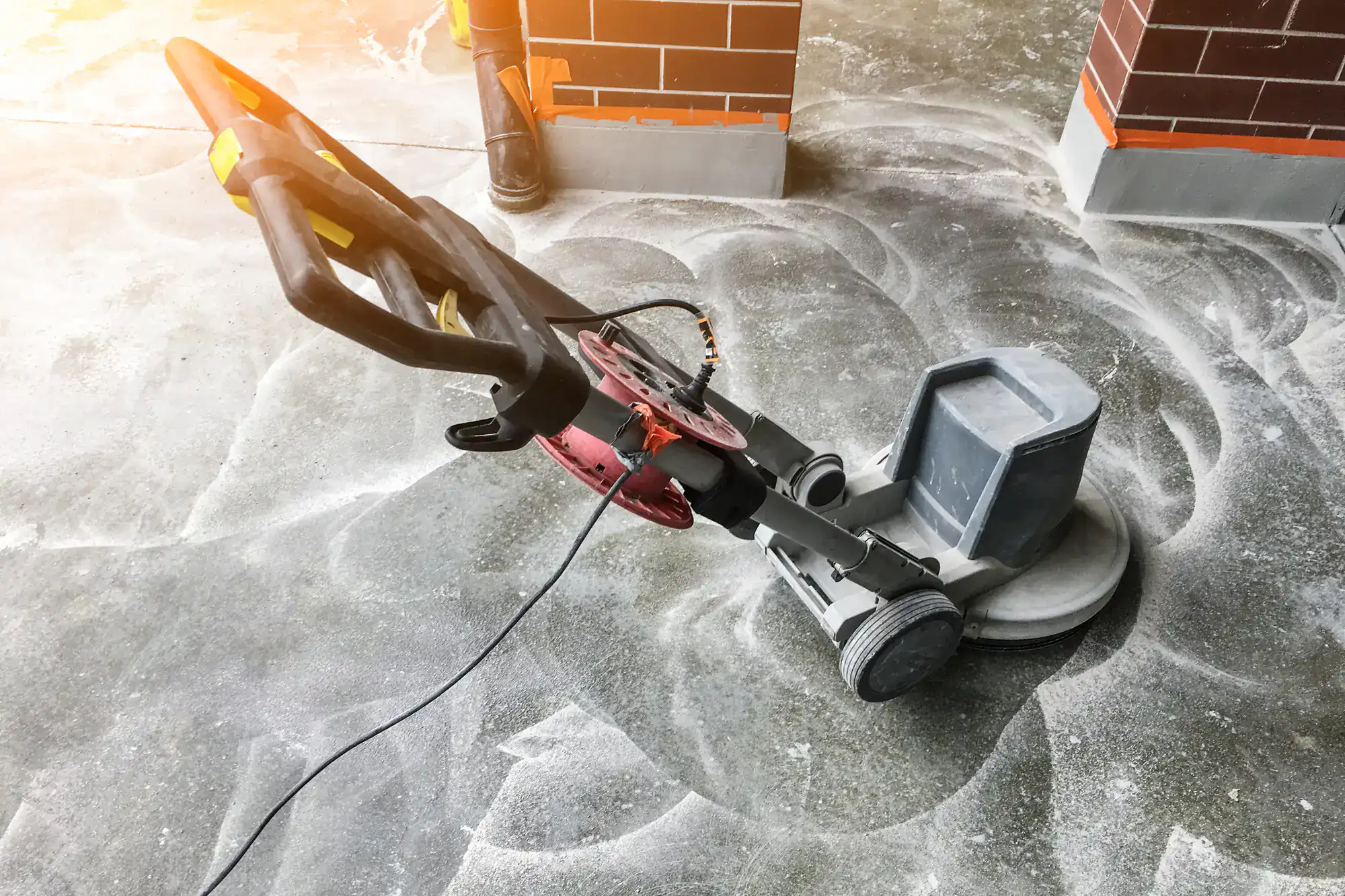
If your commercial or industrial floor is dusting, degrading, or just plain worn out, you already know the maintenance cycle it creates. You sweep it, you clean it, and it still looks rough a week later. That is not a cleaning problem that is a surface problem. Polished and densified concrete addresses it at the structural level, not the cosmetic one.
Huntington Station’s commercial building stock along New York Avenue and the Route 110 corridor is mostly mid-century construction. A lot of those slabs are 50 to 70 years old, and Long Island’s freeze-thaw winters have not been kind to them. Untreated concrete surfaces develop micro-cracks over time, and those cracks accelerate dusting, surface spalling, and general breakdown. A properly polished and densified floor hardens the surface from within chemically and mechanically so it stops deteriorating and starts performing.
For retail spaces in the New York Avenue revitalization corridor or near Walt Whitman Shops, the outcome is different but equally practical. A Class 3 or Class 4 polished concrete finish gives your space a clean, high-end look that holds up under real foot traffic without the waxing cycles that VCT demands or the delamination risk that epoxy coatings carry in older Suffolk County buildings with moisture vapor issues. You get a floor that looks the way you need it to look and keeps looking that way.
Advanced Epoxy Flooring is owned and operated by Danny Harmer, who has been working with commercial and industrial concrete floors for over 40 years. That is not a company number that is one person’s accumulated experience reading slabs, diagnosing surface conditions, and understanding what a floor actually needs before anything gets applied to it.
We hold a Sherwin-Williams High Performance Flooring certification and a Res Tech certification both named, manufacturer-level credentials that require demonstrated knowledge of product chemistry and application standards. In 1996, we completed flooring work at the White House kitchen. That is the kind of project that does not go to a contractor who guesses.
Danny works directly on every project. If you are a facilities manager at a warehouse off Route 110 in Huntington Station, a developer finishing out a mixed-use building on New York Avenue, or a business owner fitting out a commercial space in the area, you are getting the same level of attention. No crew rotation, no subcontracting surprises just direct, accountable work from someone who has been doing this longer than most of the competition has been in business.
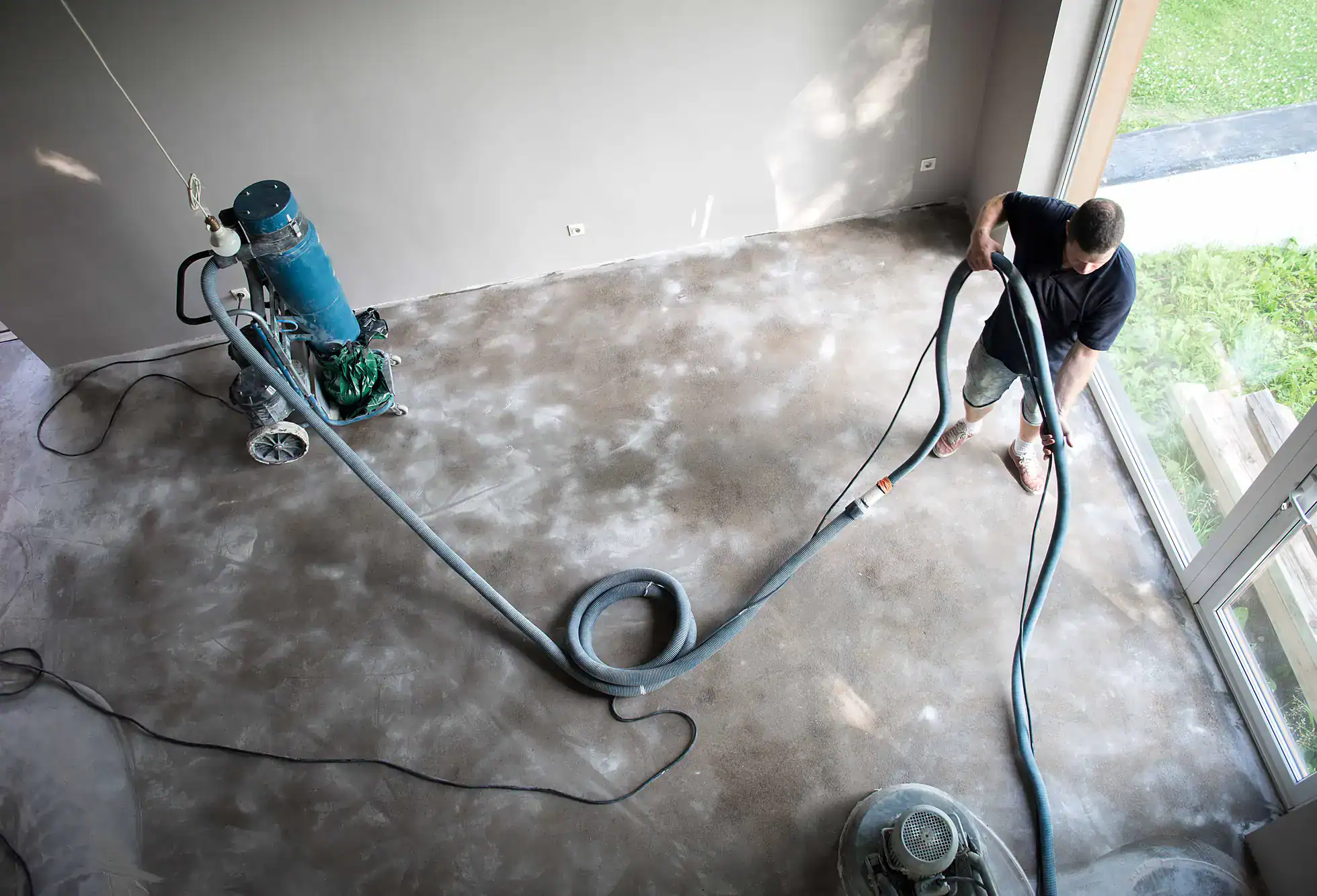
Every concrete polishing project starts with a slab assessment not a sales pitch. Before any equipment touches your floor, we need to understand the condition of the concrete: existing coatings, surface hardness, moisture vapor transmission, high and low spots, cracks, and contamination. In Huntington Station’s older commercial buildings, this step matters more than it does in new construction. A slab from 1955 has a story, and reading it correctly determines everything that comes after.
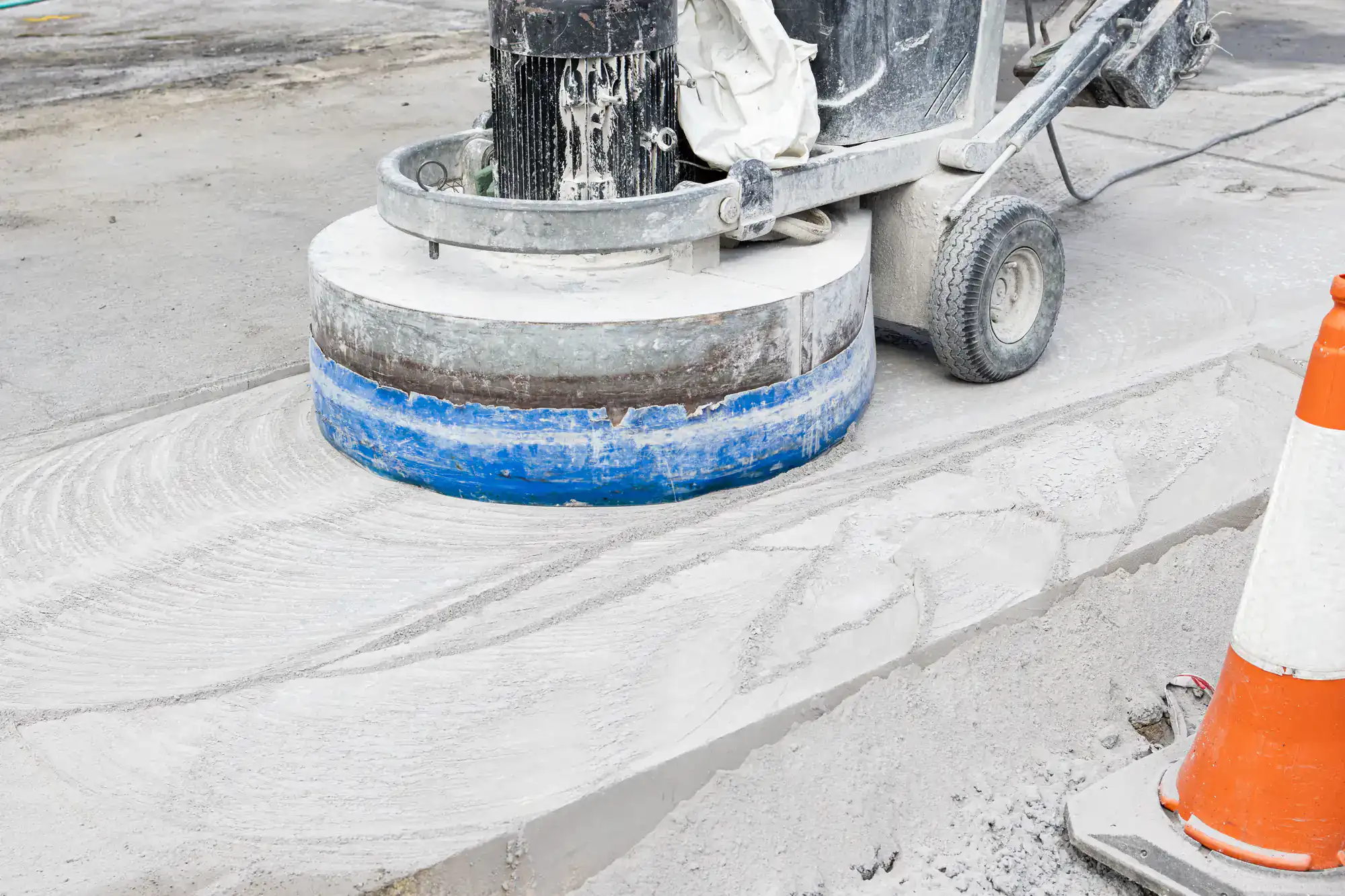
Surface preparation comes next. Depending on what the assessment finds, that means grinding down high spots, removing existing coatings, and opening the concrete to the correct surface profile for the specified finish system. This is where concrete grinding and leveling in Huntington Station does the heavy lifting and where shortcuts taken by less experienced contractors show up as failures six months later.
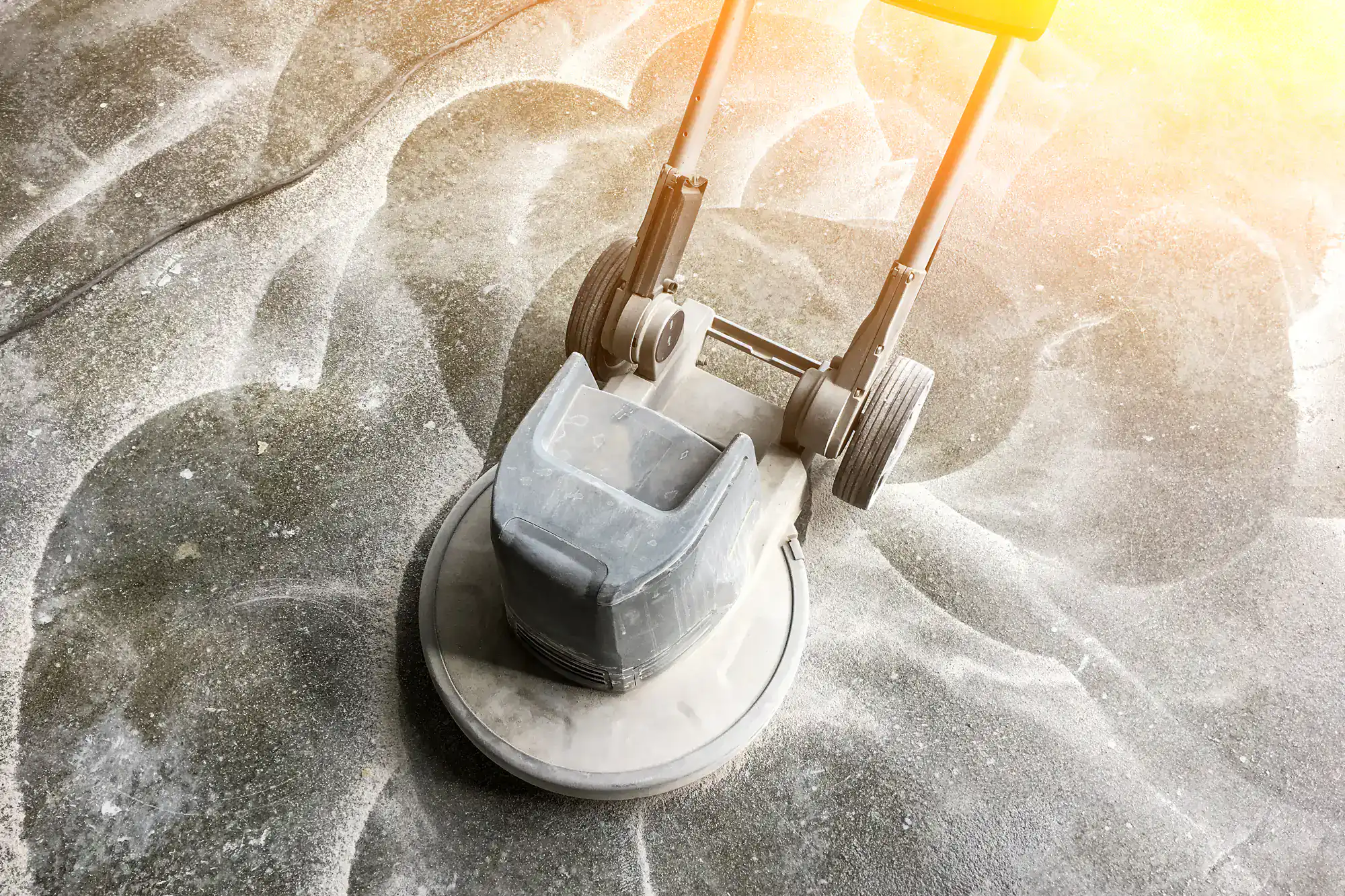
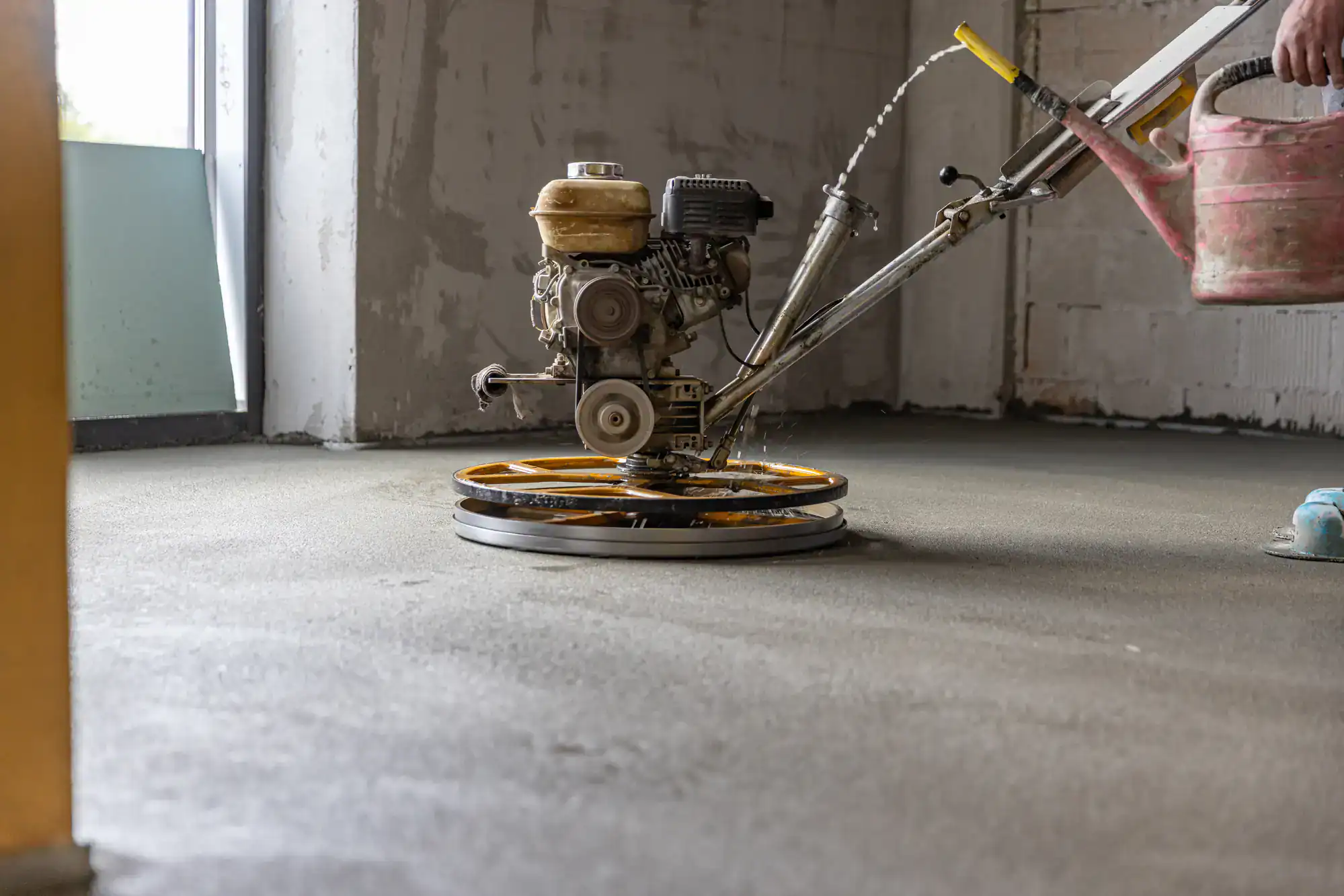
Once the slab is properly prepared, the polishing sequence begins. Diamond tooling progresses through increasingly fine grits, refining the surface in stages. Lithium silicate densifier is applied at the right point in that sequence not at the end, not as an afterthought so it penetrates and reacts with the concrete matrix while the surface is still open enough to absorb it. The result is a mechanically refined, chemically hardened floor. Sealer or stain guard is applied last, based on the environment and the finish class specified. The ambient temperature in your facility needs to stay above 50°F during densifier application for the chemistry to work correctly relevant if you are scheduling work in a Huntington Station building during the colder months.
Ready to get started?
The range of commercial and industrial spaces in Huntington Station is wide and the flooring demands that come with them are just as varied. A warehouse off Route 110 with forklift traffic needs densified commercial concrete floors that resist abrasion and eliminate dusting. A retail space being fitted out as part of the New York Avenue Downtown Revitalization Initiative needs a high gloss polished concrete finish that looks intentional and holds up under daily foot traffic. Those are different outcomes, and they require different specifications.
For industrial and warehouse environments, the focus is on surface hardness, abrasion resistance, and low maintenance. Densification is not optional in these spaces it is what separates a floor that performs for 20 years from one that starts dusting again within 18 months. For retail and commercial tenant spaces, finish class matters. A Class 2 finish works for back-of-house or utility areas. Class 3 and Class 4 finishes delivering 36 to 61-plus Gloss Units are what retail showroom concrete finishes in Huntington Station actually require to compete visually with the spaces customers are used to seeing.
Slip resistance is addressed directly, not glossed over. Polished concrete meets OSHA’s minimum 0.5 coefficient of friction standard for level commercial surfaces. For restaurants, food service, or high-moisture entry areas in Huntington Station commercial buildings, anti-slip additives can be incorporated into the stain guard application without changing the appearance of the finish. Every project is scoped based on your actual space, your actual slab, and your actual operational needs not a package that gets applied the same way regardless of what is underneath it.
In most cases, yes and this is one of the most common misconceptions we run into. A lot of commercial building owners along New York Avenue or the Route 110 corridor assume their slab is too old, too damaged, or too coated to be a candidate for polishing. The reality is that surface condition determines the preparation required, not whether polishing is possible at all.
Huntington Station’s mid-century commercial building stock most of it constructed between the 1930s and 1960s contains slabs that have experienced decades of freeze-thaw cycling, moisture intrusion, and surface wear. That history shows up as existing coatings, micro-cracking, and surface contamination. All of that can be addressed through proper surface preparation: grinding down existing coatings, filling structural cracks with appropriate filler, and opening the concrete to the correct surface profile before the polishing sequence begins. We assess your slab to determine exactly what preparation it needs and what finish class is achievable given its condition. The answer is almost always that the floor can be worked with it just needs to be read correctly first.
A properly installed polished and densified concrete floor in a commercial or industrial setting typically lasts 15 to 25 years without requiring recoating. That range depends on traffic volume, the finish class specified, and whether the floor receives basic maintenance primarily dust mopping and occasional damp mopping with a pH-neutral cleaner. There is no wax cycle, no annual recoating, and no stripping required.
Compare that to VCT, which requires waxing and buffing on a regular cycle to maintain its appearance, or to epoxy coatings, which carry a real delamination risk in older Long Island commercial buildings where moisture vapor transmission through aging slabs is a documented issue. Polished concrete does not rely on a topical bond to the slab surface the way coatings do the surface has been mechanically and chemically transformed, not just covered. For a Huntington Station business owner or property manager making a long-term asset decision, that distinction has real financial implications over a 10- to 20-year horizon.
Gloss and friction are not the same thing. A high-gloss polished concrete floor can look like a mirror and still meet or exceed OSHA’s minimum coefficient of friction standard of 0.5 COF for level commercial surfaces. The shine comes from the mechanical refinement of the surface it does not make the floor more slippery than a matte finish would be under dry conditions.
For spaces with frequent wet traffic restaurant entries, food service areas, or retail storefronts in Huntington Station that see rain and snow tracked in from New York Avenue during the winter months we can incorporate anti-slip additives into the stain guard application. This is done at the final stage of the process and does not change the visual appearance of the finish. If you are fitting out a customer-facing space and slip resistance is a concern, we address it in the specification before the project starts not as an afterthought once the floor is done.
Commercial concrete polishing in the Huntington Station area typically ranges from $3 to $12 per square foot, and that range is wide for a reason. The price reflects the condition of your existing slab, the finish class you are specifying, the square footage of the project, and the amount of surface preparation required before polishing can begin.
A warehouse floor on the Route 110 corridor that needs coating removal and significant surface preparation before a Class 2 industrial finish is a different scope than a 2,000-square-foot retail space being fitted out with a Class 4 high gloss finish for a New York Avenue storefront. Both are legitimate projects they just cost differently because the work involved is different. The most useful thing you can do before budgeting is get a proper slab assessment, because the condition of the concrete is the single biggest variable in what the project will actually cost. Square footage alone does not tell the whole story.
Densification is the chemical hardening step that separates a polished floor that performs from one that just looks polished for a few months. During the polishing sequence, lithium silicate densifier is applied to the open concrete surface, where it penetrates the slab and reacts with calcium hydroxide a natural byproduct of concrete curing to form calcium silicate hydrate. That compound is what gives concrete its structural strength, and adding more of it to the surface layer makes the floor significantly harder, more abrasion-resistant, and more resistant to dusting.
For a warehouse or industrial facility in Huntington Station with forklift traffic, pallet jack loads, and constant operational activity, densification is not optional it is what makes the floor viable for that environment. Without it, you have a polished surface that will start dusting again under heavy use and require attention much sooner than it should. For retail and commercial spaces, densification is equally important because it determines how well the floor holds its finish over time. It is not an upsell it is a standard part of doing the job correctly.
Long Island’s climate is actually one of the strongest arguments for polished and densified concrete over coated alternatives in commercial and industrial buildings. The freeze-thaw cycling that Huntington Station experiences through late fall and winter is hard on topical coatings temperature fluctuations cause concrete slabs to expand and contract, and coatings that rely on a surface bond can crack, lift, or delaminate over time, especially in older buildings without adequate vapor barriers.
Polished concrete does not rely on a surface bond. The floor has been mechanically refined and chemically hardened from within, which means it moves with the slab rather than fighting it. The one timing consideration worth noting is that densifier application requires ambient temperatures above 50°F for the chemical reaction to complete correctly. If you are scheduling a project during the colder months in a Huntington Station building that is not climate-controlled, that factor gets built into the project plan. It is manageable it just needs to be accounted for up front rather than discovered on installation day.
Other Services we provide in Huntington Station