


Your warehouse floor takes a beating every single day. Forklifts carving ruts into concrete. Pallet jacks catching on expansion joints. Chemical spills eating through unprotected surfaces. And that concrete dust settling on everything, clogging equipment, creating cleanup headaches you don’t have time for.
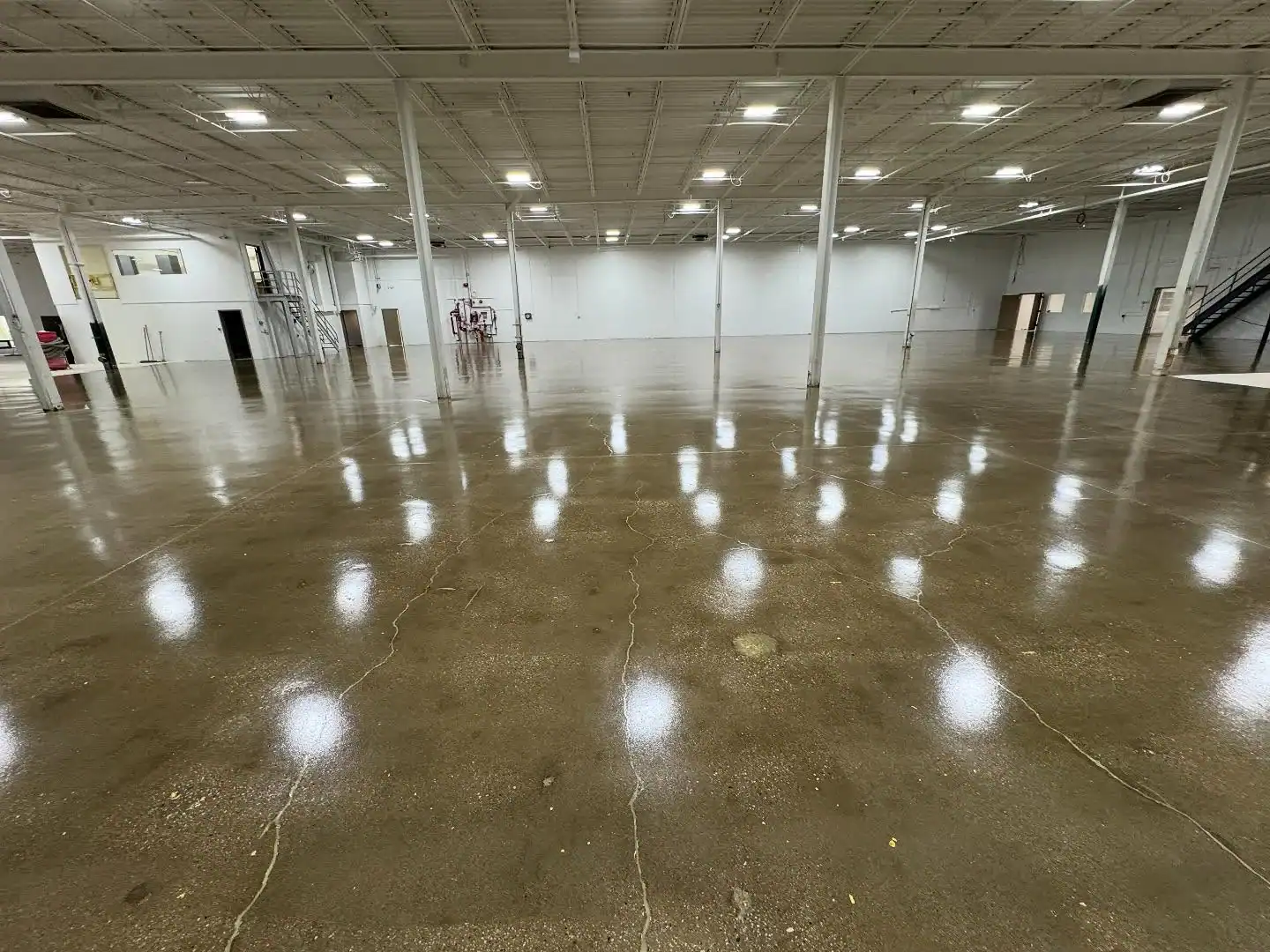
A proper industrial warehouse floor epoxy in Huntington Station changes all that. You get a monolithic surface—virtually seamless, no joints to crack or spall. Forklift traffic resistant coating that actually holds up to the constant movement of heavy equipment without breaking down. Chemical resistance that stops oil, grease, and harsh cleaners from penetrating and damaging your floor.
The result? Equipment rolls smoothly. Maintenance drops. Safety improves because you’re not dealing with tripping hazards or uneven surfaces. Your facility looks professional, and you’re not throwing money at constant concrete repairs.
When your floor can handle the load, your entire operation runs better. Less downtime. Fewer equipment repairs. No more explaining to clients why your facility looks worn down.
We’ve been handling industrial and commercial flooring across Long Island for over three decades. We’ve installed floors in facilities from the White House kitchen to warehouses across the United States, the Bahamas, and Moscow. That’s not name-dropping—it’s proof that when the stakes are high, our work holds up.
Our installation teams are OSHA 40 certified, and most have been with us for over a decade. That matters because warehouse floors in Huntington Station aren’t a one-size-fits-all situation. Your facility’s proximity to major transportation corridors means you’re likely running higher volumes than average. You need someone who understands load requirements, traffic patterns, and how to prep concrete properly the first time.
We’re based in Bohemia, so we’re local. We know the Long Island industrial market. And we’re not interested in selling you something that’ll need replacing in five years.

First, we test your concrete for moisture. Sounds basic, but it’s the most common reason epoxy fails. If moisture’s present, we address it before any coating goes down.
Next comes surface prep—usually diamond grinding for warehouses in Huntington Station. This isn’t optional. We’re removing contaminants, opening the concrete’s pores, and creating the profile needed for proper adhesion. If there are cracks, spalls, or joint damage, we repair those now.
Then we apply your customized epoxy system. This isn’t a single coat. It’s a build-up: primer, body coats, and a high-traffic concrete sealer topcoat designed specifically for the loads you’re running. If you need anti-slip additives for certain zones, we add those. If chemical resistance is critical, we adjust the formulation.
Cure times vary based on the system, but we work with you to minimize downtime. Most warehouse floors are ready for light traffic within 24 hours and full operations within a few days. You’re not shut down for weeks.

Ready to get started?
You’re getting a USDA-approved floor system built to handle forklift traffic, pallet jacks, and the kind of daily abuse that comes with running a distribution or logistics operation. The coating is formulated to resist oil, grease, gasoline, salt, and strong detergents—basically everything that ends up on a warehouse floor.
The surface is smooth, so your equipment rolls without catching on joints or rough patches. That reduces wear on wheels and suspensions, which means fewer expensive repairs to your material handling equipment. And because the floor is sealed, you’re not dealing with concrete dusting anymore. No more particles floating into the air or settling on inventory.
Huntington Station’s location near major transportation hubs means your facility is likely handling serious volume. You need a floor that won’t slow you down. This system is designed for exactly that—high-traffic concrete sealer technology that stands up to round-the-clock operations without constant maintenance.
Cleaning is simple: sweep regularly, mop occasionally. No waxing, no stripping, no special treatments. The floor creates a barrier that contaminants can’t penetrate, so spills wipe up instead of soaking in.
If it’s installed correctly, you’re looking at 10 to 20 years, sometimes longer depending on your traffic levels and maintenance. The key word there is “installed correctly.”
A lot of epoxy failures happen because someone skipped proper surface prep or didn’t test for moisture. When we say we’re doing diamond grinding and moisture testing, that’s not upselling—it’s the difference between a floor that lasts two decades and one that starts peeling in two years.
Your traffic matters too. If you’re running forklifts 24/7 with heavy loads, that’s different than occasional pallet jack use. We adjust the system thickness and topcoat based on your actual operations, not a generic spec sheet. The floors we install in Huntington Station warehouses are built for the real-world loads you’re dealing with, which is why they hold up.
Yes, but not all epoxy is created equal. Standard garage-grade epoxy will break down fast under harsh chemicals. Industrial warehouse floor epoxy in Huntington Station is formulated specifically for chemical resistance.
We’re talking about protection against oil, grease, gasoline, strong detergents, salt, and even some acids depending on your needs. The coating creates a non-porous barrier, so when spills happen, they sit on the surface instead of soaking into your concrete and causing long-term damage.
That said, you still need to clean up spills in a reasonable timeframe. This isn’t indestructible—it’s highly resistant. But compared to bare concrete, which absorbs everything and stains permanently, a proper epoxy system gives you actual protection. If your operation involves specific chemicals, tell us upfront so we can adjust the formulation if needed.
Most warehouse floors are ready for light traffic within 24 hours and full operations within 72 to 96 hours. That’s not a shutdown that cripples your business, but it does require some planning.
The timeline depends on a few factors: the size of your space, the condition of your existing concrete, and whether we’re doing the whole floor at once or in phases. If you can’t afford to shut down completely, we can section off areas and work in stages so part of your warehouse stays operational.
Surface prep takes the most time—diamond grinding, repairs, and cleaning have to be done right. The actual coating application is faster than most people expect. We use fast-curing systems specifically designed to minimize downtime for facilities like yours in Huntington Station, where every hour of operation counts. We’ll walk through scheduling options during the estimate so you know exactly what to expect.
Preparation is the most critical part, and it’s where a lot of contractors cut corners. We start with moisture testing because if there’s hydrostatic pressure or high moisture content, the epoxy won’t bond properly no matter what else you do.
Next is diamond grinding for warehouses in Huntington Station. This mechanically abrades the concrete surface, removing any existing sealers, contaminants, oils, or weak surface material. It also opens up the concrete’s pores so the epoxy can penetrate and create a mechanical bond. If your floor has cracks, spalling, or damaged joints, we repair those before any coating goes down.
Then we clean everything—thoroughly. Dust, debris, and residue will prevent adhesion, so we’re not skipping this step. Only after the surface is properly profiled, repaired, and cleaned do we start applying coatings. It’s more labor-intensive than just slapping down epoxy, but it’s why our floors last 15+ years instead of peeling in 18 months.
It can be if you don’t specify the right topcoat. A standard glossy epoxy finish is slick, especially when wet. That’s a safety problem in a warehouse environment where you’ve got foot traffic, spills, and equipment moving constantly.
That’s why we use a high-traction topcoat that meets National Floor Safety Institute standards. We can add anti-slip additives to create texture without making the floor rough enough to damage equipment wheels or make cleaning difficult. You get slip resistance where you need it without sacrificing the smooth surface that your forklifts and pallet jacks require.
The key is balancing safety with functionality. Too much texture and you’re creating a floor that’s hard to clean and tough on equipment. Too little and you’re creating liability. We dial in the right level based on your specific operations, traffic patterns, and any areas where water or other liquids are present.
Concrete repairs add up fast. Patching cracks, fixing spalls, grinding down uneven joints—you’re looking at a few thousand dollars each time, and if your floor is deteriorating, you’re doing it repeatedly. Then there’s the hidden cost: equipment damage from rough surfaces, downtime during repairs, and the safety liability of a floor that’s falling apart.
A proper forklift traffic resistant coating in Huntington Station is a bigger upfront investment, but you’re done. You’re not calling someone out twice a year to patch the same problem areas. You’re not replacing forklift wheels prematurely because they’re getting chewed up on spalled concrete. And you’re not dealing with the dust, staining, and appearance issues that come with bare concrete.
Most warehouse operators find the epoxy pays for itself within a few years just in avoided repair costs and reduced equipment maintenance. After that, you’re ahead. And you’ve got a floor that actually looks professional when clients or inspectors walk through, which matters more than people admit.
Other Services we provide in Huntington Station