
When your concrete floor is uneven, nothing installed on top of it stays right for long. Tile cracks. LVT lifts at the edges. Grout lines fail. And if moisture is involved which it almost always is in Glen Cove the damage compounds quietly until it becomes expensive. A properly leveled substrate stops all of that before it starts.
Glen Cove’s North Shore clay soils don’t drain the way South Shore sandy ground does. They hold moisture, shift with the seasons, and put steady pressure on foundations and slabs over decades. When you factor in nearly half the city’s homes being built between the 1940s and 1960s, you’ve got concrete that has been through sixty-plus years of freeze-thaw cycling, settling, and moisture exposure. That’s not a minor inconvenience that’s a floor that needs real assessment before anything goes on top of it.
Getting this right means your finished floor performs the way it should whether that’s large-format tile in a kitchen renovation, LVT in a basement finish, or a commercial surface in one of the new Garvies Point retail spaces. A flat, tested, properly prepared substrate is what makes the difference between a floor that lasts and one you’re redoing in three years.
We’ve been doing this work on Long Island for over thirty years. Our president brings more than forty years of personal installation experience and most of our crew has been with us for over a decade. That kind of tenure doesn’t happen by accident. It happens when the work is consistent and the standards don’t slip job to job.
Being rooted in Glen Cove and the surrounding North Shore matters here. The clay soils, the moisture dynamics near Hempstead Harbor, and the specific challenges of older Nassau County construction are not abstract concepts to us we’ve been working through those conditions for decades. From homes along Pratt Boulevard to commercial buildouts in Nassau County, our approach is the same: assess the substrate honestly, test for moisture, and install a system that’s actually matched to what’s there.
We hold an A+ BBB accreditation, OSHA 40 certification across our installation crew, and factory training in the cementitious and resinous systems that commercial and residential projects in Glen Cove and the surrounding area actually require.
The first thing that happens on any self leveling job in Glen Cove is moisture testing not as an optional step, but as a non-negotiable one. ASTM F2170 relative humidity testing and moisture vapor emission rate measurement tell you what the slab is actually doing. In a city where clay soils retain water and homes from the 1940s and 1950s were built without the vapor barriers that newer construction includes, skipping this step is how floors fail. The ASTM standard requires relative humidity below 80% before installation proceeds. If it’s above that threshold, we address the moisture issue first.
Once the substrate is cleared, surface preparation comes next. That means grinding, scarifying, or shot-blasting the concrete to open the surface and create a proper bond profile and repairing any cracks, spalls, or low spots that need attention before the self leveling pour. The primer goes down after prep, matched specifically to the substrate type. Old concrete, adhesive residue, and existing sealers all respond differently, and the primer selection matters.
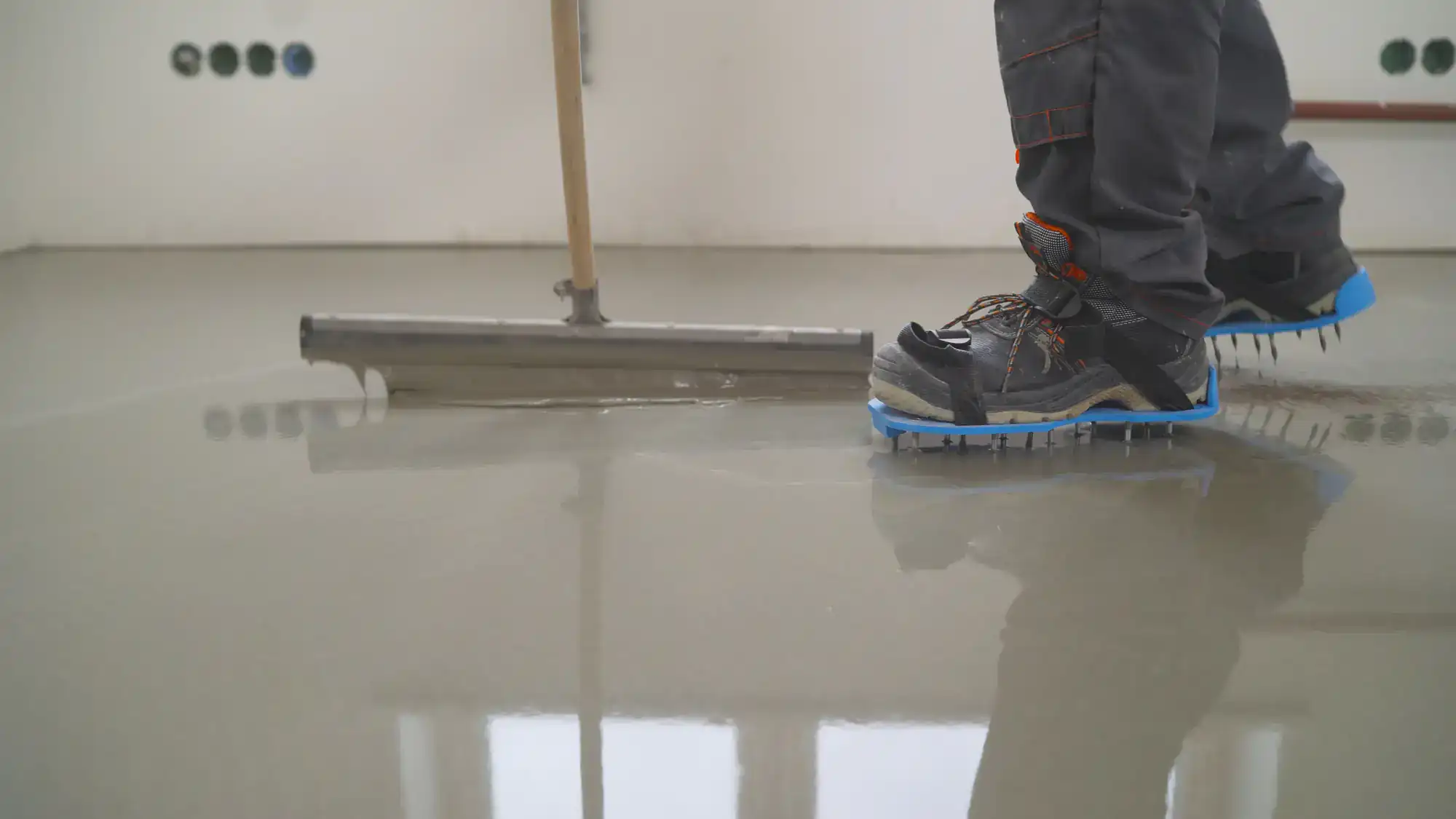
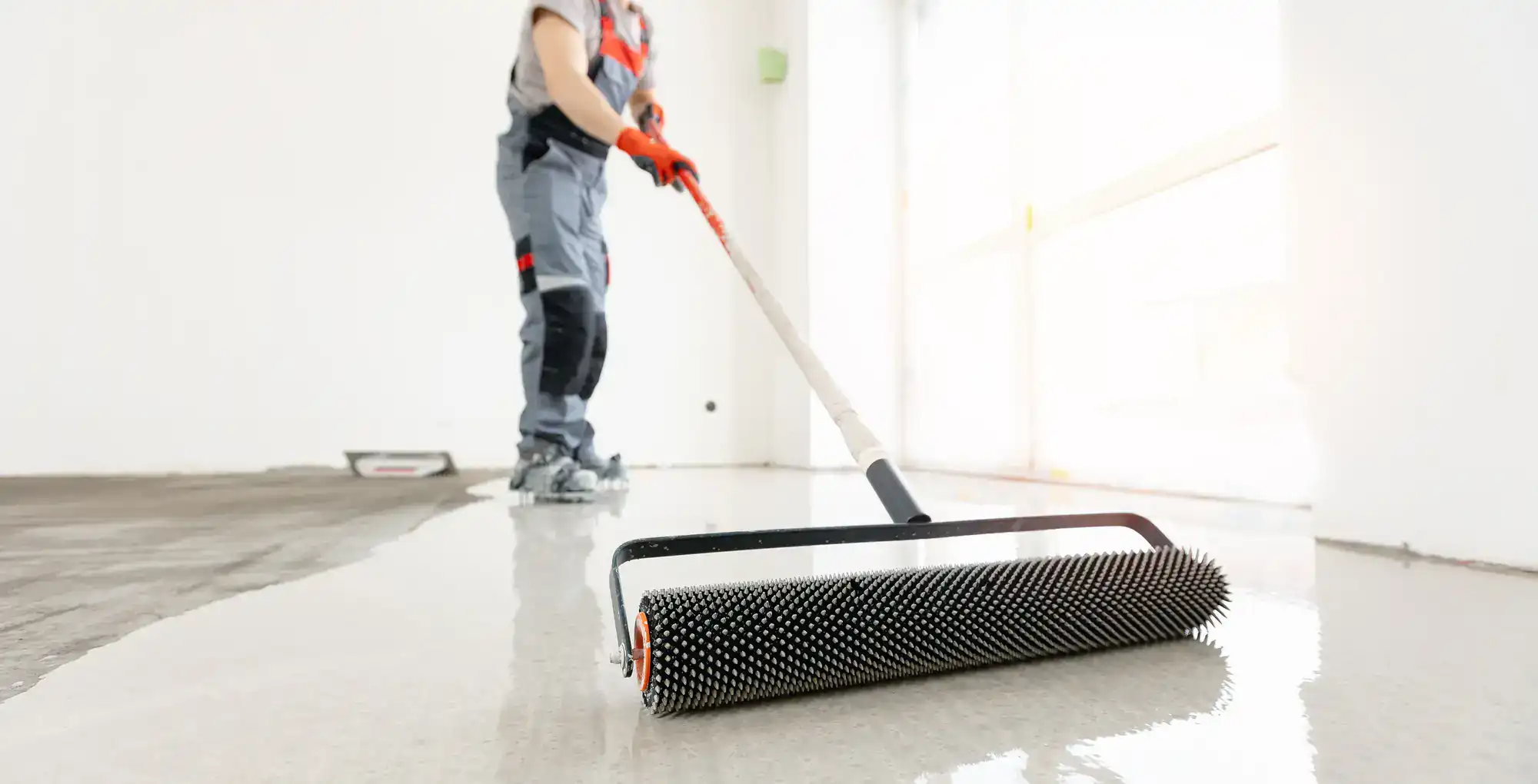
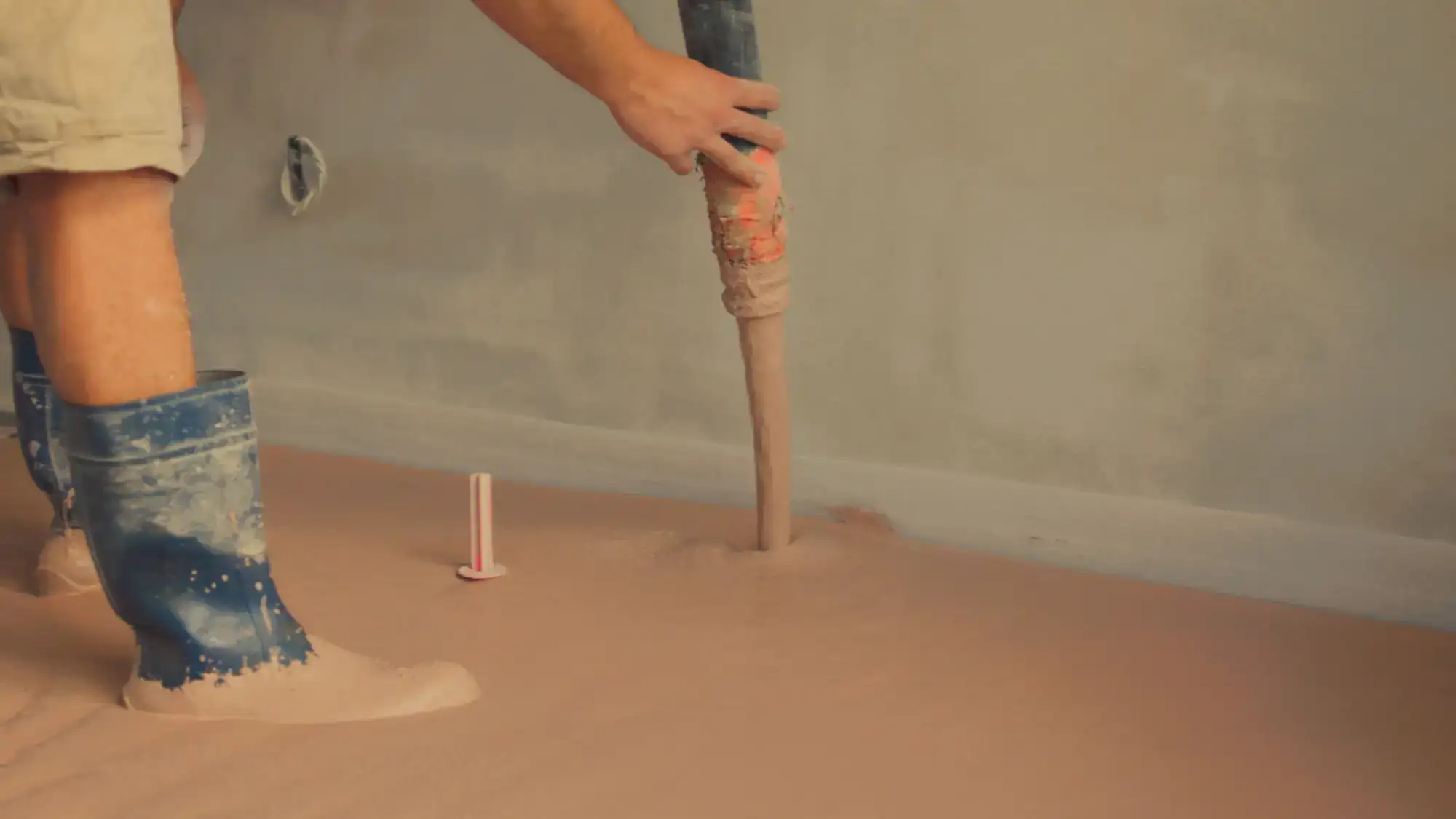
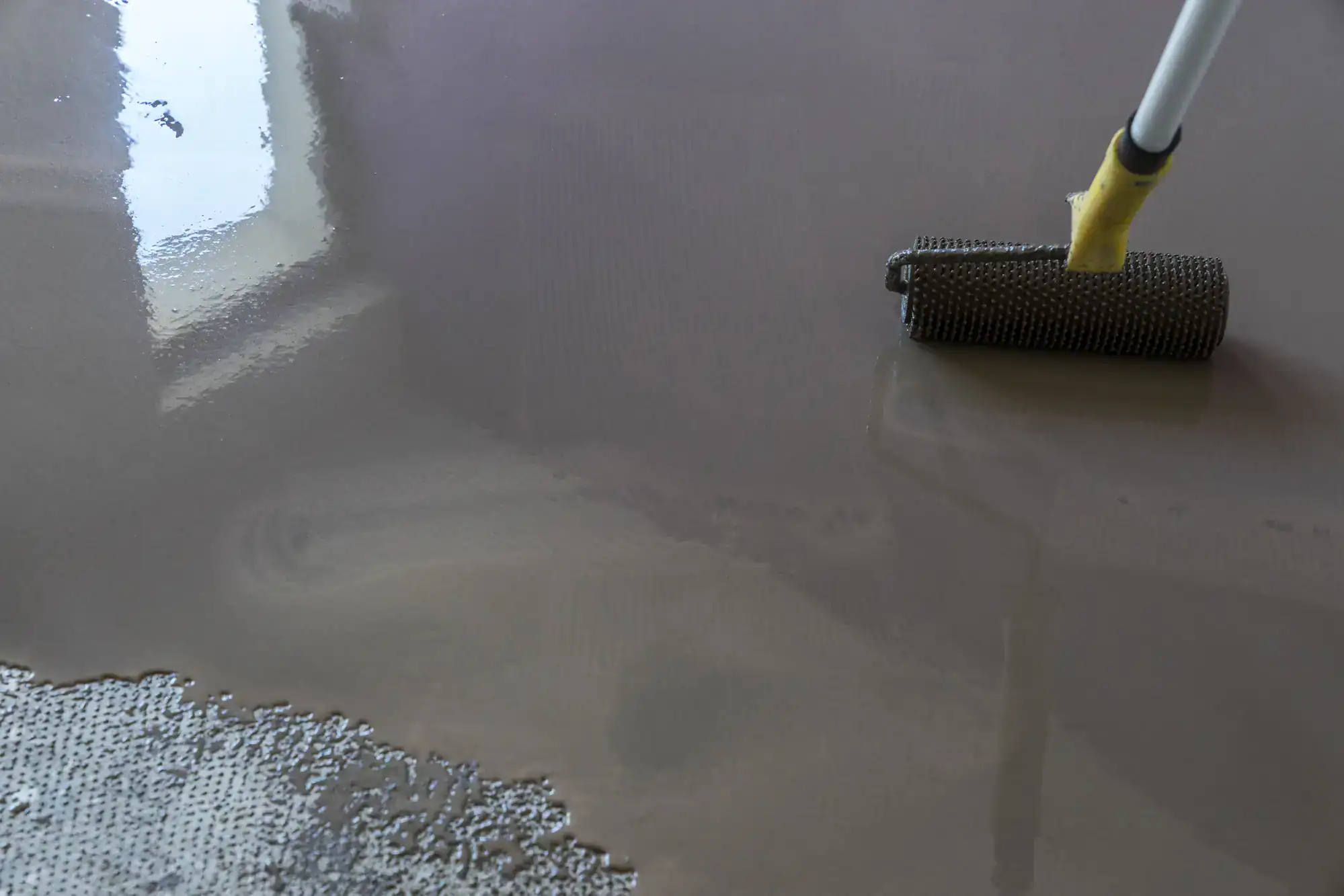
The self leveling compound is then mixed and poured. The systems we use can be installed from a quarter inch to over two inches neat and up to five inches with aggregate addition so one mobilization handles the full correction range, whether the job is a minor residential leveling or a large commercial pour. Foot traffic is typically possible within four to six hours. Heavy commercial loads within twenty-four to forty-eight hours.
Ready to get started?
What we deliver here is a full-scope process not just the pour. Moisture testing, concrete surface preparation, crack and spall repair, primer application, self leveling underlayment installation, and the finished floor coating are all handled under one roof. For a Glen Cove homeowner renovating a kitchen in an older colonial or a commercial tenant finishing a space at Garvies Point, that means no handoff between contractors, no coordination gaps, and one point of accountability if anything needs attention afterward.
The self leveling systems we use are commercial-grade, polymer-modified cementitious underlayments not the consumer bag products you find at a hardware store. The difference is in flow characteristics, shrinkage control, and bond strength. A commercial-grade system has a longer working time, lower shrinkage during cure, and superior adhesion to aged concrete surfaces. That matters a lot when you’re working on a 1950s slab in Nassau County that has seen decades of movement and moisture.
For commercial projects retail buildouts along the Glen Street corridor, hospitality spaces in the Garvies Point mixed-use development, healthcare or office renovations in Glen Cove the fast return-to-service timeline is built into the process. The City of Glen Cove Building Department enforces New York State Uniform Fire Prevention and Building Codes, and all work is performed in compliance with applicable permit requirements. You get documentation, a crew that meets OSHA 40 standards, and a finished substrate that holds up to what goes on top of it.
The most common signs are visible doors that drag, tile that cracks along grout lines, or LVT that lifts at the edges or feels soft underfoot in certain spots. But some of the most important signs are less obvious. If you’re planning to install large-format tile (anything over twelve inches), new LVT, or a polished concrete finish, the substrate flatness requirements are tighter than most homeowners expect. A floor that looks passably flat to the eye can still have enough variation to cause problems once a rigid floor covering goes down.
In Glen Cove specifically, the combination of older housing stock and North Shore clay soils means settling and unevenness are common especially in homes built in the 1940s through 1960s. The best way to know for certain is to have the floor assessed by someone who will actually measure it, not just eyeball it. A straightedge test across multiple points in the room gives you real data. If the gap exceeds three-sixteenths of an inch over a ten-foot span, self leveling underlayment is typically the right call before any new floor covering is installed.
The short answer is that they are not the same product, and the gap in performance is significant. Consumer-grade self leveling compounds sold at hardware stores are formulated for small patches and minor corrections typically a quarter inch or less. They have shorter working times, higher shrinkage rates during cure, and weaker bond strength to aged or contaminated concrete surfaces. On a 1950s slab in a Glen Cove home that has adhesive residue, old sealer, or moisture history, a consumer product is likely to delaminate or crack within a year.
Commercial-grade, polymer-modified cementitious underlayments are engineered for full-room pours, deeper corrections, and long-term performance under real floor traffic. They flow more consistently, shrink less as they cure, and bond more reliably to the kinds of substrates that older Nassau County construction produces. The primer selection also matters and with a commercial system, the primer is matched to the specific substrate, not applied generically. If you’re putting a finished floor covering on top of the underlayment, the substrate quality directly determines how long that covering performs.
Moisture is the most common reason self leveling floors fail and it’s the one that’s easiest to miss because you can’t always see it. When moisture vapor moves up through a concrete slab and gets trapped under a self leveling underlayment or a finished floor covering, it breaks down the adhesive bond between layers. The result is delamination, bubbling, or floor covering failure sometimes within months of installation. The damage isn’t always dramatic at first, which is part of why it gets missed until it’s expensive to fix.
In Glen Cove, this is a particularly relevant concern. The city’s North Shore clay soils retain moisture differently than the sandy soils on the South Shore, and many homes in the city were built before vapor barriers were standard practice. Properties near Hempstead Harbor carry elevated ambient humidity as well. ASTM F2170 relative humidity testing involves drilling into the slab and inserting probes to measure the actual moisture content within the concrete not just on the surface. If the reading comes back above the 80% threshold, we address the moisture source before the self leveling system goes down. Skipping that step is not a shortcut it’s a guarantee of a callback.
The return-to-service timeline depends on the specific system used, the thickness of the pour, and the ambient conditions in the space during cure. As a general guideline, most commercial-grade self leveling underlayments allow foot traffic within four to six hours of installation. Light floor covering installation vinyl goods, carpet can typically begin within twenty-four hours. Heavy commercial loads and ceramic or stone tile installations generally require twenty-four to forty-eight hours before the underlayment is ready. Full compressive strength is reached at twenty-eight days, but the floor is functional well before that.
Temperature and humidity in the space affect cure time meaningfully. Glen Cove’s winters can push ambient temperatures below 50 degrees Fahrenheit, and cold-weather pours require attention to temperature management the flow characteristics and cure rate of cementitious underlayments are affected by cold. If a project is being planned in late fall or winter, that’s worth discussing upfront so the installation conditions can be managed correctly. For commercial projects in the Garvies Point development or along the Glen Street corridor, the fast return-to-service timeline is built into the schedule from the start.
Yes and it’s actually a common application, particularly in older Glen Cove homes where radiant heat is being added as part of a renovation. Self leveling underlayment can be poured over in-floor radiant heat tubing to encapsulate the system and create a flat, thermally conductive substrate for the finished floor covering. The key is using the right product not all self leveling compounds are formulated for radiant heat applications, and using the wrong one can create thermal stress cracking as the system cycles on and off.
The process requires the radiant tubing to be properly secured before the pour so it doesn’t float or shift when the compound is introduced. The pour thickness also needs to account for the tubing diameter to ensure full encapsulation and consistent heat distribution. For homes in Glen Cove that are upgrading to radiant heat under tile or stone particularly in kitchens and bathrooms where the floor covering is heavy and rigid getting the underlayment right is critical. A properly installed self leveling system over radiant heat gives you a flat, stable surface and protects the tubing from the kind of point-load stress that a poorly prepared substrate would allow.
The most important question is whether moisture testing is part of their standard process not an add-on. Any contractor who skips that step on a Nassau County job, especially in a city with Glen Cove’s soil conditions and housing stock age, is cutting a corner that will cost you later. Ask specifically whether they perform ASTM F2170 relative humidity testing and whether they address moisture issues before installation or simply proceed regardless of the reading.
Beyond that, ask about the product they’re using and whether it’s a commercial-grade system or a consumer bag product. Ask about surface preparation whether they grind or shot-blast the concrete, or just clean it and pour. Ask about primer selection and how they handle existing adhesive residue or old sealers, which are common in Glen Cove’s older homes. And ask whether they handle the full scope prep, leveling, and finished coating or whether you’ll need to coordinate a second contractor for the final floor. The City of Glen Cove has its own building department and permit requirements, so it’s also worth confirming that the contractor is familiar with local compliance expectations and pulls permits where required.