
Jet fuel hits the floor. Skydrol drips from hydraulic lines. Your maintenance crew is moving around equipment in a space that needs to be safe, bright, and easy to clean every single day. A floor that can’t handle that chemistry isn’t a minor inconvenience. It’s a liability.
Glen Cove sits on Hempstead Harbor, and that coastal position means your concrete slab is dealing with something most inland facilities never face: year-round humidity hovering in the mid-70s, salt air accelerating surface degradation, and freeze-thaw cycles every winter that push moisture through the slab from below. That combination destroys coatings that weren’t installed with those conditions in mind. You end up with delamination, peeling edges, and a floor that looks worse than what you started with usually within a few years.
The right aviation-grade system handles all of it. Chemical resistance to Skydrol and fuel. A moisture-mitigated base layer that accounts for Long Island’s coastal slab conditions. A non-slip, high-reflectivity finish that makes dropped tools and fluid spills visible before they become a problem. That’s what a properly installed aircraft hangar floor coating in Glen Cove, NY actually delivers and it’s a meaningful difference from what most contractors in this area are offering.
We’re based in Bohemia, NY about 35 miles from Glen Cove and have been installing industrial and aviation-grade floor systems on Long Island for over 30 years. The company was built by Danny Harmer, who has more than 40 years of personal, hands-on installation experience. That’s not a management background. That’s a craft background. When something looks wrong on a job site, he knows it because he’s seen it thousands of times.
Our crew reflects the same standard. Most installers have been with us for over a decade, which means the team showing up to your Glen Cove hangar isn’t a rotating group of subcontractors it’s the same experienced hands that have been doing this work consistently. Every installer carries OSHA 40 certification, which matters in a commercial aviation environment where workplace safety compliance isn’t optional.
We hold dual elite certifications Sherwin-Williams High Performance Flooring and Res Tech and our work has been trusted in environments ranging from commercial kitchens to firehouses to a White House installation in 1996. That track record carries real weight when you’re deciding who gets access to your facility.
The first thing that happens on any hangar floor project in Glen Cove isn’t coating it’s concrete evaluation. The slab gets inspected for existing damage, surface contamination, and moisture vapor transmission. In a coastal environment like Glen Cove’s, that moisture test isn’t a formality. Hempstead Harbor’s proximity and the area’s persistently high humidity mean that slab moisture levels here can be elevated even in a facility that looks dry. Skipping that step is one of the most common reasons floors fail early, and it’s a step that gets skipped more often than you’d think.
Once the slab passes evaluation, the surface is diamond-ground to the correct adhesion profile. This is what actually makes the coating bond not the chemistry alone, but the mechanical grip created by proper surface preparation. After grinding, a moisture-mitigating primer goes down before any coating layer is applied.
From there, the system builds up in layers: base coat, broadcast aggregate for texture and slip resistance, and a topcoat that meets NFSI non-slip certification standards. For active hangar operations, polyaspartic systems are available that cure fast enough to have aircraft back on the floor within 24 hours. Glen Cove’s building department handles commercial permits independently from the surrounding Town of Oyster Bay, so if your project requires any permit documentation, that’s factored into the planning process from the start not discovered at the end.
Ready to get started?
Every aircraft hangar floor coating system we install is formulated specifically for aviation environments not adapted from a commercial garage product. That means full chemical resistance to Skydrol, jet fuel, hydraulic fluid, and the solvents used in routine aviation maintenance. It means NFPA 409 compliance, which is the federal standard that requires hangar floor surfaces to be noncombustible. And it means a finish that reflects light well enough to make FOD, fluid spills, and dropped hardware visible in a working maintenance environment.
For Glen Cove facilities, the coastal climate adds another layer of consideration. Salt air, high ambient humidity, and winter freeze-thaw cycles all affect how a coating performs over time. The systems we install here are selected with those Long Island-specific conditions in mind not just the chemistry of the coating, but the primer selection, the cure window, and the seasonal timing of the installation itself. Polyaspartic options are available for operations that can’t afford extended downtime, and standard multi-layer epoxy systems are available for facilities where cure time is less of a constraint.
The finish options include high-gloss white and light gray the colors that working aviation facilities actually use, because they make the floor functional, not just attractive. If you’re operating or managing a hangar in Glen Cove, NY or the surrounding Nassau County area, the system gets specified to match your actual environment and operational requirements.
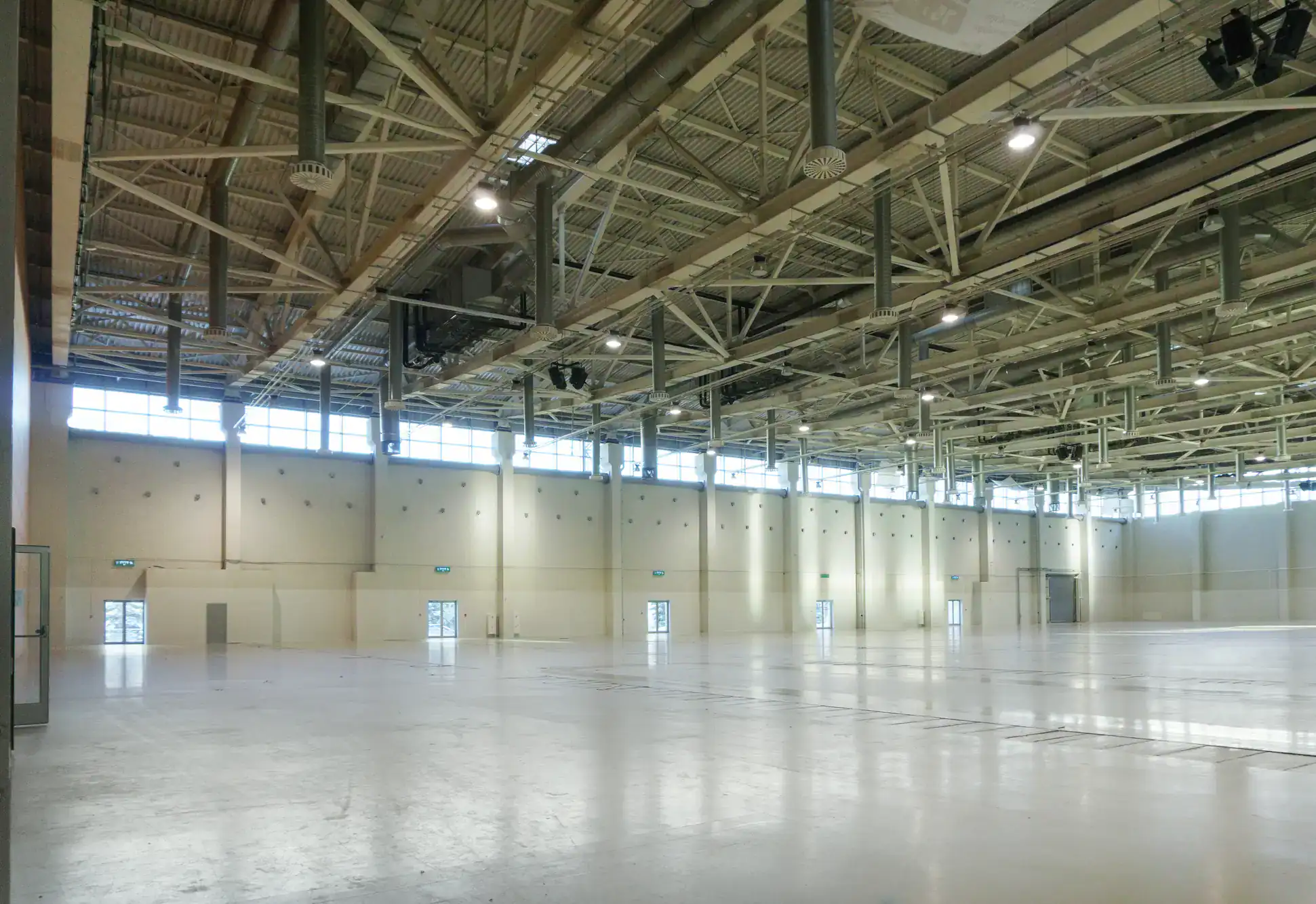
Yes and this is one of the most commonly overlooked requirements when facility managers in Glen Cove and Nassau County start getting quotes for hangar floor work. NFPA 409 is the national standard governing aircraft hangars, and it specifically requires that hangar floor surfaces be noncombustible. That eliminates a large number of standard commercial epoxy products from consideration, including many of the coatings that general flooring contractors in the Glen Cove area would default to.
The practical implication is that you need a contractor who actually knows this standard exists and can document that the system they’re installing meets it. If your insurance carrier or building department ever asks for compliance documentation and in a commercial aviation facility, that’s a reasonable expectation you need to be able to produce it. We install systems that meet NFPA 409 requirements and can provide the documentation to back it up. It’s not an upgrade. It’s the baseline for any properly installed hangar floor in this environment.
The most common reason is moisture specifically, moisture vapor transmission through the concrete slab. Glen Cove’s position on Hempstead Harbor means the soil conditions here carry elevated moisture, and the city’s coastal climate keeps relative humidity in the mid-70s year-round. When a coating gets applied to a slab without proper moisture testing and a moisture-mitigating primer layer, the vapor pressure building beneath the coating eventually breaks the bond. The floor peels, bubbles, or delaminates sometimes within a year or two of installation.
The second most common reason is inadequate surface preparation. A coating that gets rolled onto a slab that hasn’t been diamond-ground to the correct adhesion profile is relying entirely on chemistry to bond. That’s not enough, especially in a freeze-thaw environment like Long Island’s winters, where the concrete itself is expanding and contracting seasonally. Proper prep grinding, moisture testing, primer is what separates a floor that lasts 15 to 20 years from one that needs to be redone in three.
For most hangar floor projects in the Glen Cove area, the installation itself takes one to three days depending on square footage, slab condition, and the system being installed. The bigger variable is the cure window how long before aircraft can be moved back onto the floor. Standard multi-layer epoxy systems typically require 48 to 72 hours before the floor can handle vehicle and aircraft traffic. Polyaspartic systems cure significantly faster and can return the facility to service within 24 hours, which matters considerably for active operations that can’t relocate aircraft for multiple days.
One thing worth planning for in Glen Cove is seasonal timing. Epoxy and polyaspartic coatings both have temperature requirements for proper adhesion and cure application in temperatures below 50°F creates real adhesion problems. Glen Cove’s winters regularly push below freezing, which means late spring through early fall is the optimal window for hangar floor installations here. If you’re planning a project, building that timing into your facility calendar early gives you more flexibility on scheduling and crew availability.
Both systems can perform well in aviation environments the right choice depends on your specific priorities. Polyaspartic systems cure faster, which means less operational disruption. For an active hangar near Glen Cove where aircraft movements can’t be suspended for multiple days, that cure speed is a real operational advantage. Polyaspartic also handles temperature variation well, which matters in a coastal Long Island environment where hangar temperatures can swing significantly between seasons.
Standard multi-layer epoxy systems offer a thicker build and can be more cost-effective for very large square footages. They’re a solid choice for facilities where cure time is less of a constraint and the priority is maximum coating thickness and chemical resistance. In practice, many aviation facility installations in Nassau County use a hybrid approach an epoxy base for build and chemical resistance, with a polyaspartic topcoat for faster cure and enhanced durability. The right system for your hangar depends on its size, usage pattern, and how much downtime you can absorb. That’s a conversation worth having before any product gets specified.
Skydrol is a phosphate ester-based hydraulic fluid used in commercial and business aircraft. It’s highly effective as a hydraulic fluid and highly destructive to coatings that weren’t formulated to resist it. Standard epoxy floor coatings including most of the products used in residential garages and light commercial spaces will soften, stain, or delaminate when exposed to Skydrol over time. In a working aviation maintenance environment, that’s not a hypothetical scenario. Hydraulic fluid ends up on the floor regularly, and if your coating can’t handle it, you’re looking at accelerated deterioration and eventual failure.
Aviation-specific coating systems are formulated with the chemistry to resist Skydrol, jet fuel, and the cleaning solvents used in aircraft maintenance without breaking down. This is one of the clearest dividing lines between a coating that belongs in an aircraft hangar and one that doesn’t. If a contractor can’t tell you specifically that their system is Skydrol-resistant and show you the product data sheet to confirm it, that’s a meaningful gap especially for facilities in Glen Cove’s corporate and private aviation market, where the aircraft being maintained are high-value and the maintenance standards are exacting.
Aviation-grade hangar floor coating in the Glen Cove area typically runs between $6 and $12 per square foot, depending on the system specified, the condition of the existing slab, and the square footage of the project. A standard single-bay private hangar might come in toward the lower end of that range. A larger corporate or FBO facility with significant surface prep requirements or a slab that needs concrete repair before coating can begin will move toward the higher end.
The cost comparison that matters most for Glen Cove hangar owners isn’t the upfront price per square foot it’s what the floor costs over time. A less expensive coating that fails in three to four years, requires removal, and needs to be reinstalled costs significantly more over a 15-year period than a properly installed aviation-grade system that performs for the long term. Glen Cove’s coastal climate the humidity, the salt air, the freeze-thaw cycling accelerates failure in systems that weren’t built for these conditions. Getting the installation right the first time, with proper surface prep and a system matched to this environment, is where the real value is. A detailed quote based on your specific facility is the most accurate way to understand what your project will actually cost.