
When you’re renovating a Commack home built in 1964, the slab underneath has been through a lot. Decades of Long Island freeze-thaw cycles, Commack’s above-average rainfall nearly 50 inches a year and aging construction that predates modern moisture barriers all add up to floors that have shifted, settled, and cracked in ways that show the moment you lay new flooring over them.
Self leveling concrete fixes that. Not by hiding the problem, but by creating a genuinely flat, stable surface that modern flooring materials can actually bond to. Large-format tile, luxury vinyl plank, engineered hardwood all of them have tight flatness tolerances. If the slab underneath isn’t right, the finished floor won’t be either. You’ll see it in lippage, cracking, and movement within the first year.
The other thing worth knowing: moisture is the variable that determines whether a self leveling pour lasts or fails. In Commack where homes sit on aging slab-on-grade construction and the ground stays wet for much of the year skipping moisture testing before the pour isn’t just cutting corners, it’s setting up a callback. We start with testing, not pouring.
We’ve been operating out of Bohemia, NY for over 30 years about 20 miles east of Commack on the LIE. That’s not a commute from the city. We’re a Suffolk County operation that has spent three decades working on the exact type of post-WWII slab construction that defines most of Commack’s housing stock.
Our president and CEO brings more than 40 years of personal installation experience to every project, and most crew members have been with us for over a decade. That kind of tenure matters when you’re dealing with a 60-year-old slab because the person pouring your Commack floor has seen hundreds of them and knows what to look for before anything goes down.
We hold an A+ BBB rating and operate as a fully independent company not a franchise, not a rotating crew. The same experienced hands that handled the last Commack job will handle yours.
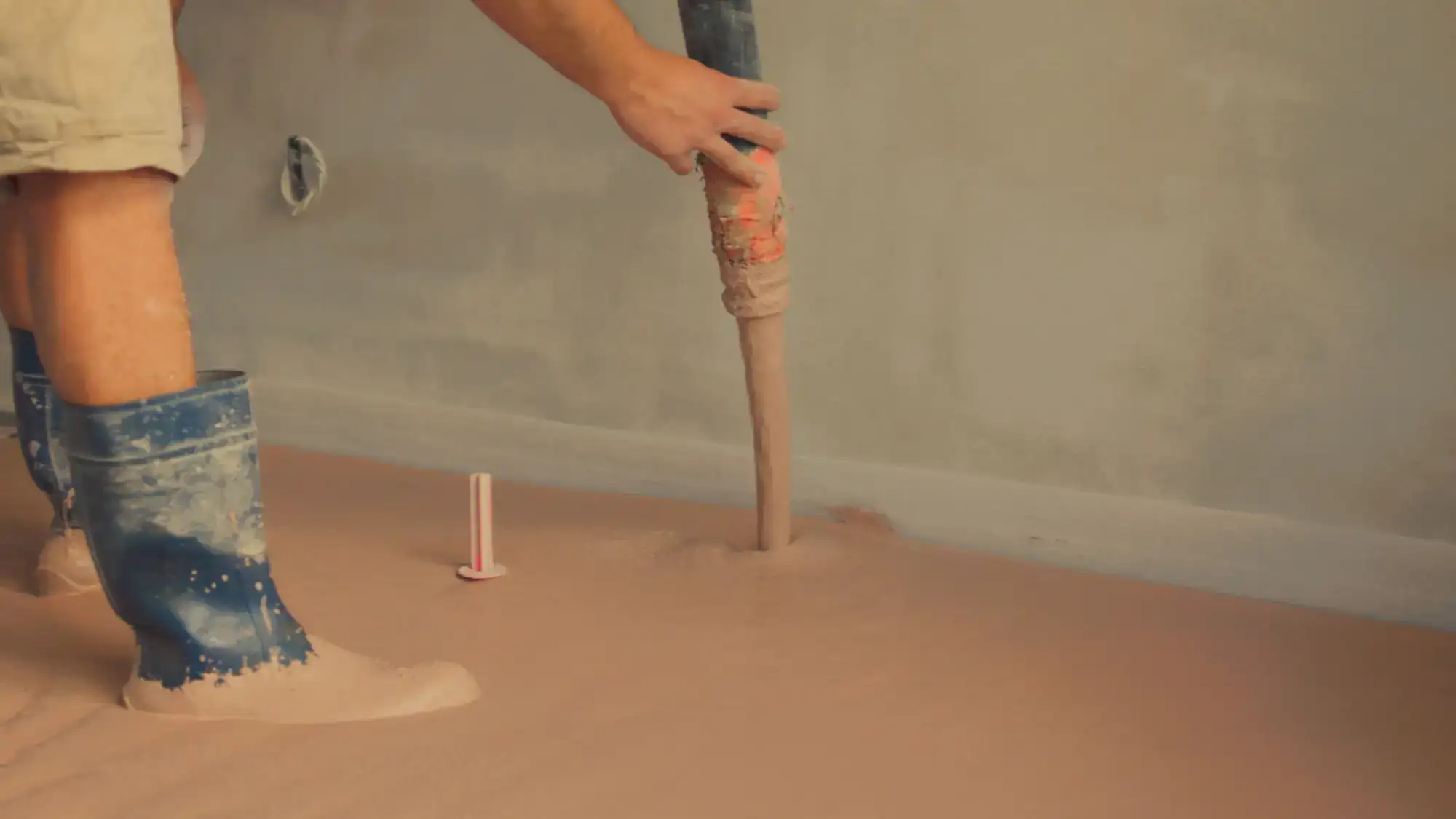
The first thing that happens on any Commack job is moisture testing not pouring. ASTM F2170 relative humidity testing and moisture vapor emission rate testing are built into our standard process. Given that Commack receives close to 50 inches of rain annually and most homes sit on aging slab-on-grade foundations, elevated moisture readings are common. If the slab doesn’t clear the threshold, we address that before anything else moves forward.
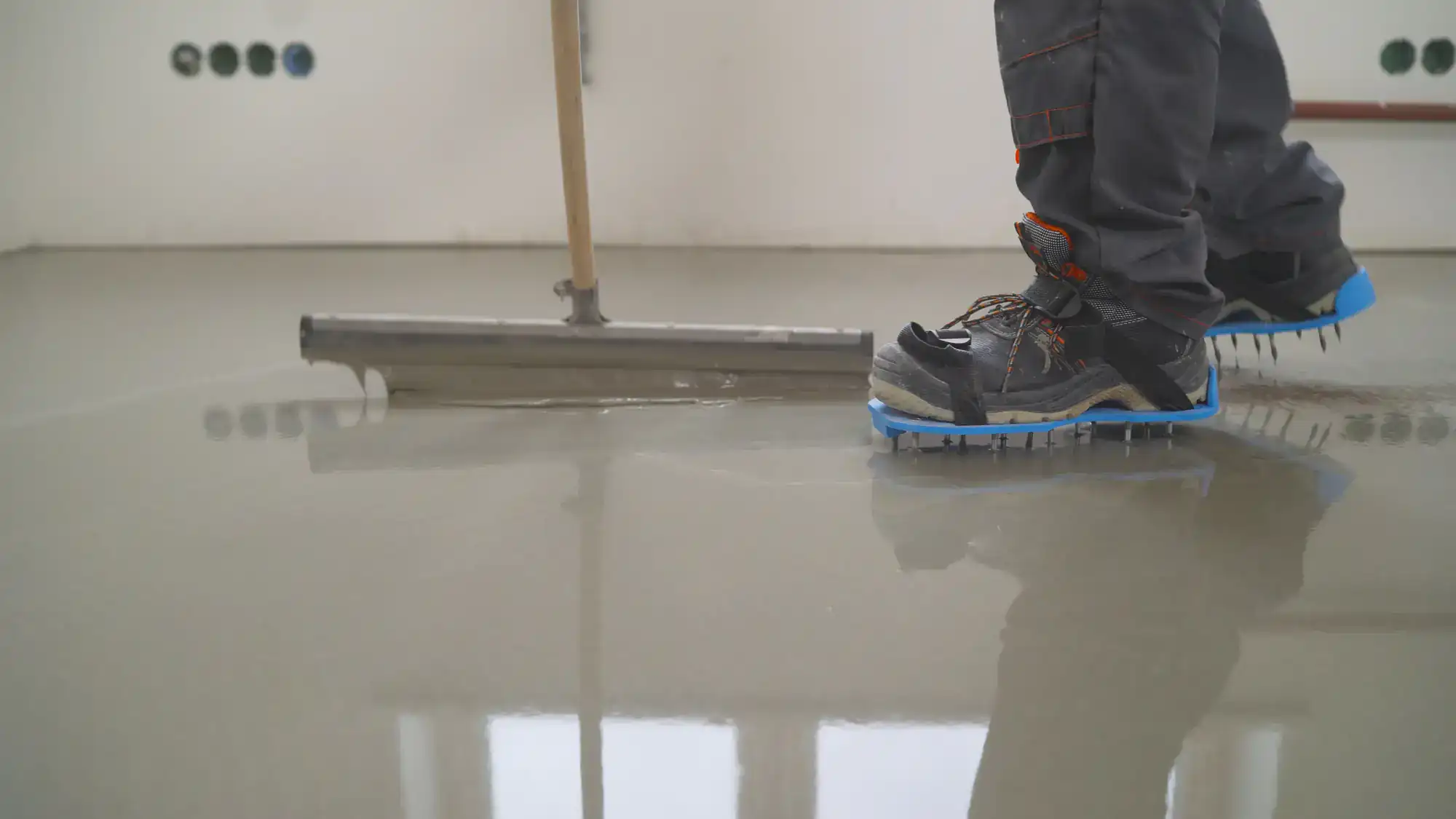
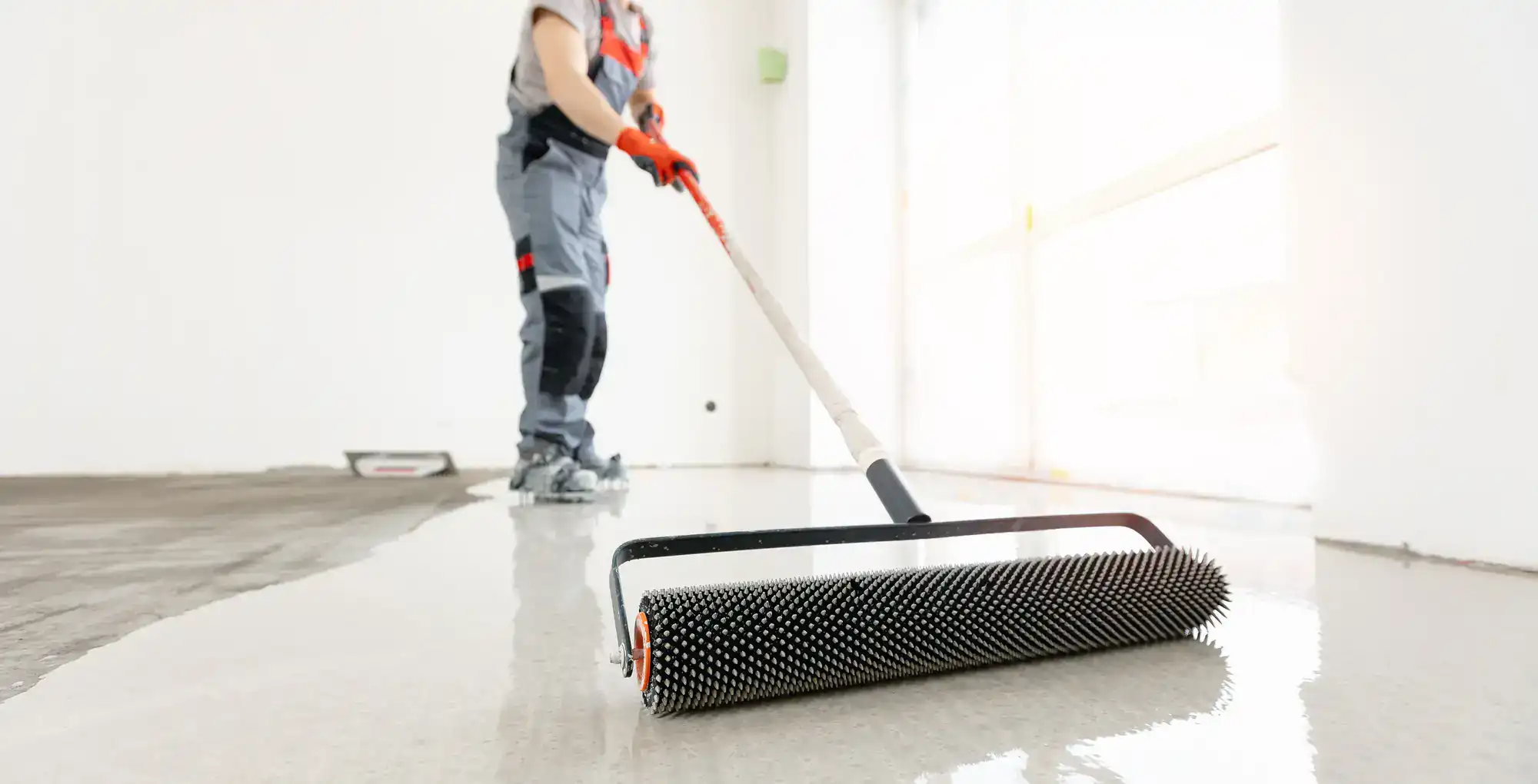
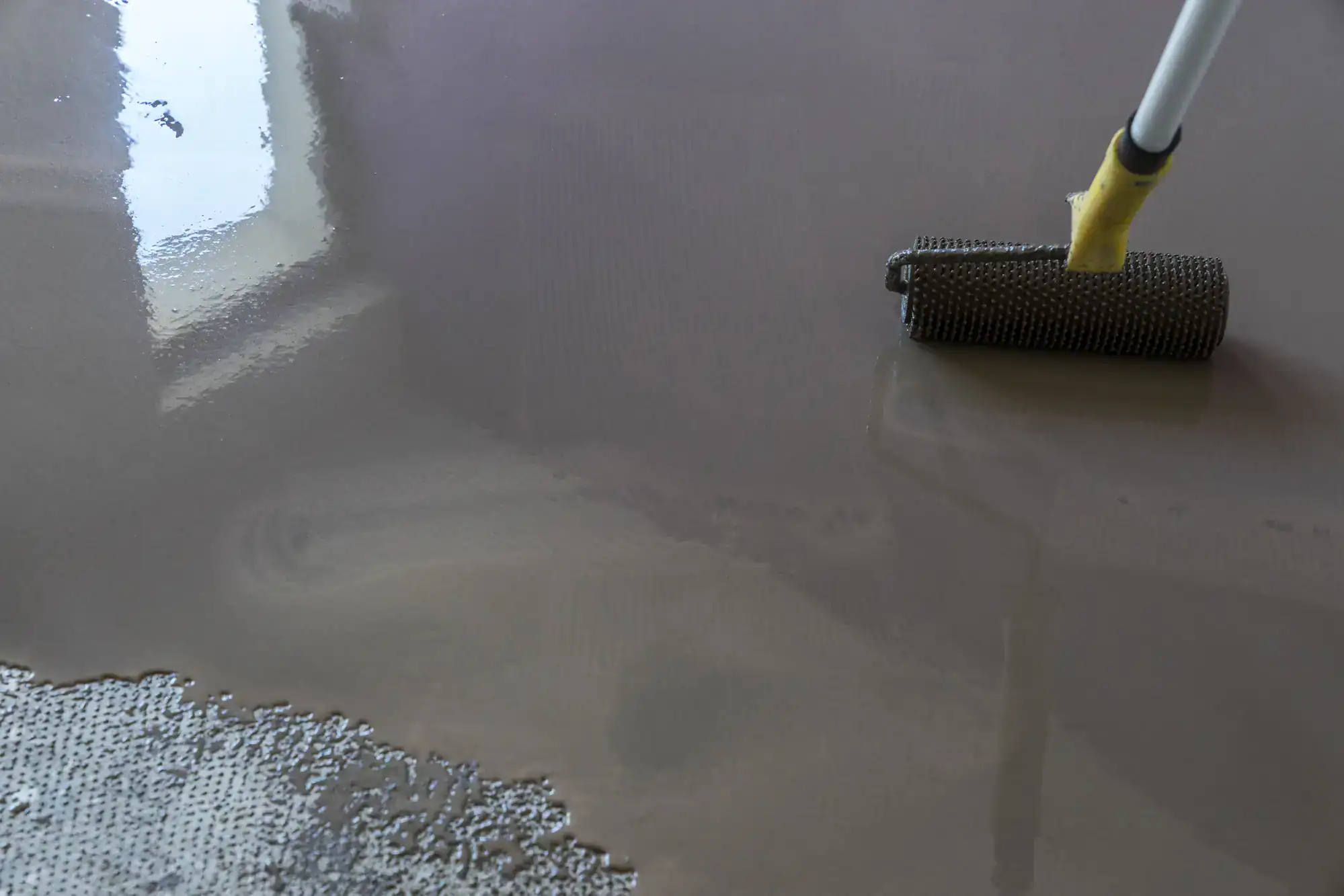
Once the slab passes, we prepare the surface cleaning, grinding, and priming as needed to ensure proper adhesion. Then the self leveling material goes down. The system we use is a high-strength, cement-based, polymer-modified compound with high flow characteristics. It can be installed from a quarter inch to over two inches neat, and up to five inches with aggregates so whether your Commack slab needs a light skim coat before tile or a significant depth correction after years of moisture damage, the same system handles it.
From there, the material self-levels and begins curing. It’s walkable within four to six hours. For most residential projects, it’s ready for flooring installation within 24 hours. For commercial spaces along Jericho Turnpike or Veterans Memorial Highway medical offices, retail suites, food service spaces that fast return-to-use timeline means you’re not shutting down your operation for days to get the floor right.
Ready to get started?
The self leveling underlayment we use on Commack jobs is a cementitious, polymer-modified system not a gypsum product. That distinction matters in a moisture-heavy environment like Suffolk County, where gypsum-based underlayments can be vulnerable to the kind of humidity and groundwater intrusion that aging slabs in Commack are prone to. The cementitious system is moisture-resistant, high-strength, and compatible with the full range of final floor coverings: tile, LVP, hardwood, epoxy coatings, and more.
For residential projects in Commack, this typically means correcting the uneven slab conditions that are almost universal in the community’s post-WWII housing stock before new flooring goes in. For commercial clients medical offices near Veterans Memorial Highway, retail spaces along Jericho Turnpike, or industrial tenants adjacent to the Hauppauge Industrial Park the scope often includes thicker pours, tighter flatness tolerances, and ASTM-compliant documentation that satisfies lease or code requirements.
Our crew is OSHA 40 certified, which matters for healthcare and institutional facilities that require safety compliance as a condition of access. Factory training in advanced resinous systems including cementitious urethanes and polyaspartic coatings means we understand the full picture: not just the underlayment pour, but how it interacts with whatever final system goes on top. That’s the kind of technical depth that protects your investment long after the job is done.
Nearly three-quarters of Commack’s homes were built between the 1940s and 1960s, and the concrete slabs poured during that era were done under very different standards than what exists today. There were no modern moisture barriers, no reinforcement requirements for flatness, and no anticipation of the flooring materials those slabs would eventually need to support six decades later.
After 55 to 80 years of Long Island’s freeze-thaw cycles, seasonal temperature swings, and close to 50 inches of annual rainfall, those slabs have shifted, settled, and deteriorated in ways that become very obvious the moment you try to install large-format tile or luxury vinyl plank over them. The new flooring exposes every imperfection. Self leveling concrete is the professional solution that bridges the gap between what those old Commack slabs are and what today’s flooring materials require.
The system we use can be installed from a quarter inch up to over two inches neat meaning without any added aggregate. If the correction depth needed is greater than that, we add aggregates to extend the pour up to five inches in a single application.
That range matters in Commack more than you might expect. Some slabs just need a thin skim coat to flatten out minor surface irregularities before tile installation. Others particularly in older Commack homes that have experienced significant moisture damage or settlement need considerably more material to bring them back to a workable plane. The ability to handle both ends of that spectrum with one system, one crew, and one visit is a practical advantage that saves time and eliminates the coordination risk of bringing in multiple contractors.
For most residential self leveling projects where you’re correcting an interior floor surface before installing new flooring a building permit is typically not required in New York State. The work is considered interior surface preparation, not structural modification.
That said, Commack has a unique administrative situation worth being aware of: the community straddles both the Town of Huntington and the Town of Smithtown. Depending on where your property sits, permit requirements and building code oversight fall under one municipality or the other. For commercial projects particularly in medical offices or spaces with specific lease requirements for floor flatness and moisture compliance ASTM documentation may be required regardless of permit status. If there’s any question about your specific project, it’s worth confirming with the relevant town building department before work begins.
In Commack, it’s not optional it’s the most important step in the entire process. The combination of aging slab-on-grade construction, nearly 50 inches of annual rainfall, and Long Island’s seasonal groundwater fluctuations means elevated moisture vapor emission is a realistic condition on a large percentage of Commack jobs.
When self leveling material is poured over a slab with moisture levels above the acceptable threshold, the bond between the underlayment and the concrete is compromised. The result is delamination the poured layer separates from the slab, and the floor fails. That failure typically shows up within the first year, often after the finished flooring is already installed on top. ASTM F2170 relative humidity testing and moisture vapor emission rate testing are built into our standard process on every Commack job. If the slab doesn’t pass, we address the moisture issue before the pour happens not after.
The material is walkable within four to six hours of application under normal conditions. For most residential projects, flooring installation can begin within 24 hours. Commercial spaces that need to return to operation quickly retail and medical tenants along Jericho Turnpike and Veterans Memorial Highway, for example are typically back to full use within 24 to 48 hours.
A few variables affect that timeline. Ambient temperature and humidity play a role, and in Commack’s colder months when slab temperatures can drop below the 50°F threshold that most self leveling compounds require for proper cure interior temperature management becomes part of the job. Experienced crews know to verify slab temperature, not just air temperature, before pouring in winter. Rushing that step in January or February is how you get a pour that looks fine on day one and starts failing by spring.
Yes and commercial applications are actually where the system’s performance characteristics matter most. Medical offices, urgent care facilities, retail spaces, and food service environments all require floors that are genuinely flat, not just close enough. Equipment mobility in healthcare settings, tile integrity in high-traffic retail, and moisture resistance in food service prep areas all depend on a properly prepared substrate underneath the finished floor.
The cementitious underlayment system we use on commercial jobs in Commack meets ASTM standards and can be documented for lease compliance or building code purposes which matters for tenants in professional office parks or healthcare facilities where those requirements are written into the lease. For larger commercial projects near the Hauppauge Industrial Park corridor or within Commack’s retail strips, our crew’s OSHA 40 certification is also a requirement for site access at many institutional and healthcare properties. Both the technical capability and the safety credentials are in place for commercial work at any scale.