
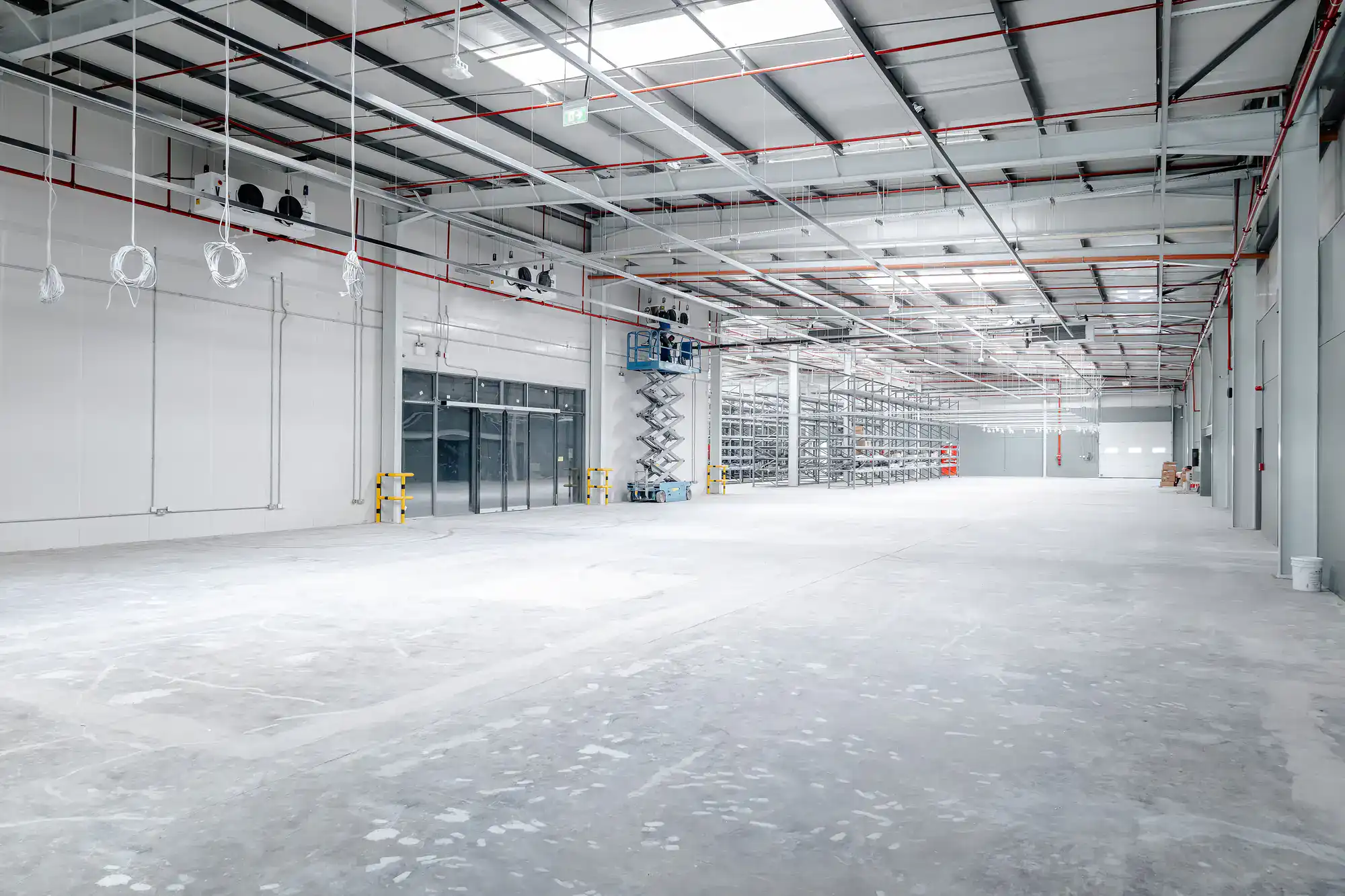
Long Island humidity doesn’t stop at your hangar door. Commack summers regularly push humidity above 65%, and that moisture works its way through large concrete slabs over time especially in hangars with overhead doors that open directly to outdoor air. When a contractor skips moisture assessment before coating, that’s exactly how you end up with a floor that bubbles, peels, and fails within a few years. We start every installation with a full moisture evaluation, because we’ve seen what this specific climate does to a slab that wasn’t properly prepared.
Winter adds a second layer of stress. Freeze-thaw cycling water infiltrating micro-cracks, freezing, expanding, and widening those cracks with every cold snap is an ongoing reality for any uncoated or poorly coated hangar slab in Suffolk County. A high-build, properly prepared floor seals the concrete against that cycle rather than letting it continue underneath a coating that looks fine on the surface.
The result is a floor that holds up under aircraft weight, resists the hydraulic fluids and fuels that are part of daily hangar life, reflects enough light to make FOD and spills visible at a glance, and stays intact through the kind of winters Commack actually gets.
We’ve been installing floors on Long Island for over 30 years, operating out of Bohemia roughly 15 miles from Commack on the same LIE corridor that connects this area to MacArthur Airport and the Hauppauge industrial corridor. That proximity isn’t marketing. It means we work in the same coastal climate, on the same types of slabs, under the same conditions as every facility we coat in western Suffolk County, including the hangars and maintenance bays around Commack.
Danny Harmer, our founder and CEO, has over 40 years of hands-on installation experience. We built this business on the work itself, and that shows in how we operate the same crews, the same process, the same standards on every job. Our installers carry OSHA 40 certification, and we hold dual elite credentials from Sherwin-Williams High Performance Flooring and Res Tech. Those aren’t decorative badges. They represent the kind of training and accountability that matters when you’re coating a floor that has to meet code, handle real chemical exposure, and last.
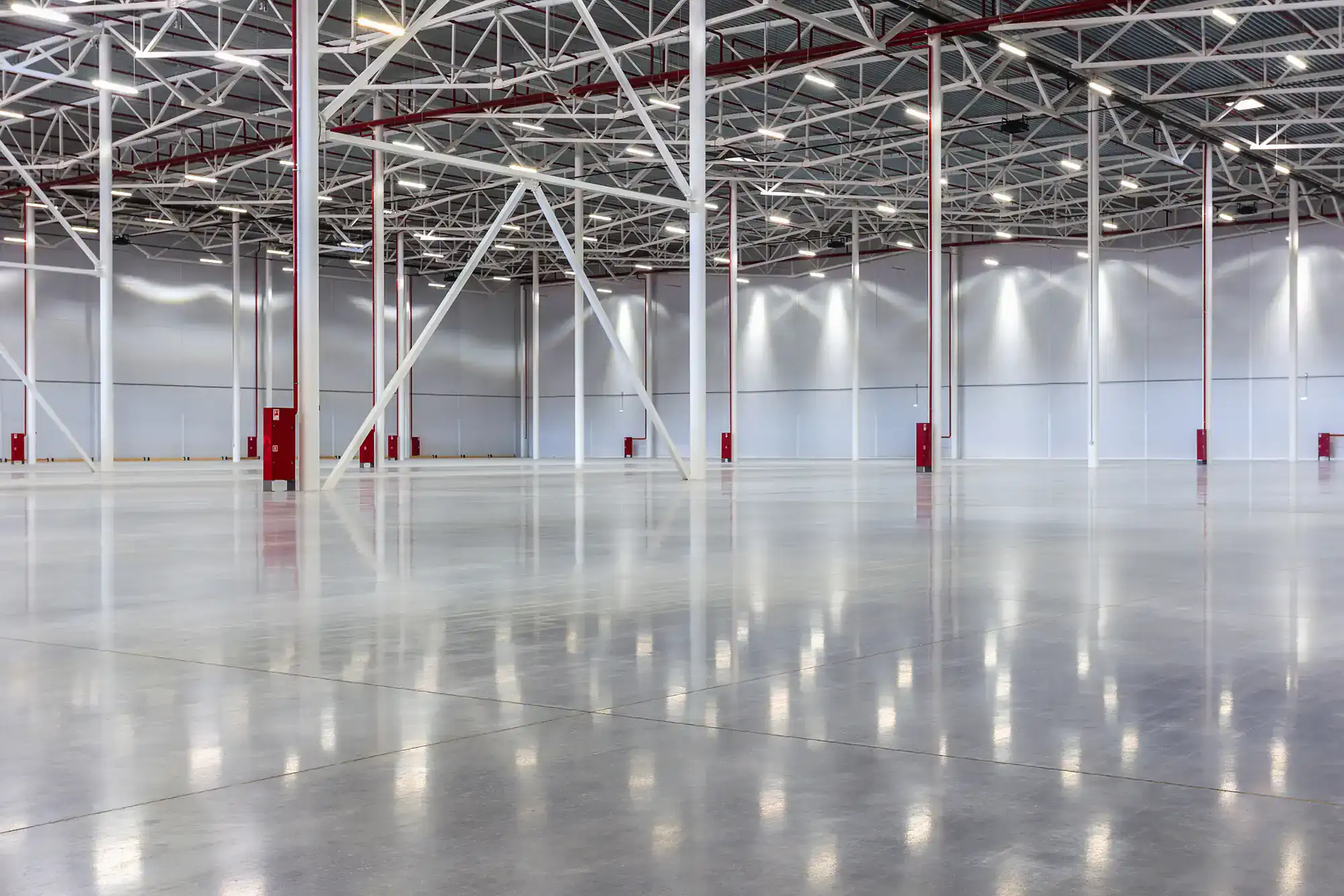
It starts with the slab. Before any coating goes down, we diamond-grind the concrete to create the adhesion profile the system needs to bond properly. This step gets skipped more than any other in this industry, and it’s the most common reason floors fail early. If there are cracks or moisture issues both common in Commack’s climate and in the large, uninsulated slabs typical of hangars near the Hauppauge corridor we address those before a single coat is applied.
From there, the system goes down in layers: primer, base coat, topcoat. Each layer gets its full cure time before the next one follows. The topcoat includes a non-slip finish that meets NFSI certification standards not just a texture additive, but a tested, verifiable slip-resistance rating. For hangars where Skydrol, jet fuel, and hydraulic fluid are part of daily operations, we match the chemistry of each layer to that specific exposure environment.
If your timeline is tight and in aviation, it usually is we offer polyaspartic systems with a 24-hour return-to-service window. That means aircraft back in the hangar the next day, not after a week of waiting. For FBO operators and corporate flight departments near MacArthur Airport, that kind of turnaround isn’t a luxury. It’s an operational requirement.
Ready to get started?
Aircraft hangar floor coatings in Commack, NY aren’t just about appearance. NFPA 409 the national standard governing aircraft hangar construction requires that hangar floor surfaces be noncombustible. That eliminates a wide range of standard residential and light commercial epoxy products from consideration entirely, including most of what general contractors install. We install systems that meet this standard, which matters whether you’re operating a commercial hangar, an FBO, or a maintenance facility in the Hauppauge industrial corridor adjacent to Commack.
The aviation facility epoxy flooring systems we use are formulated to resist Skydrol the phosphate ester hydraulic fluid used in commercial aircraft that is corrosive enough to destroy standard coatings over time. If your floor handles aircraft maintenance, Skydrol resistance isn’t optional. The high-gloss finish options we offer also serve a practical purpose: light-colored, reflective floors make spills, dropped tools, and foreign object debris visible in a way that dark or matte surfaces simply don’t.
For facilities in the Commack area that need aircraft maintenance bay flooring across large square footage the kind of industrial scale common near the Hauppauge Innovation Park we scale the system accordingly, with moisture mitigation, crack repair, and full surface preparation included as part of the process, not as add-ons.
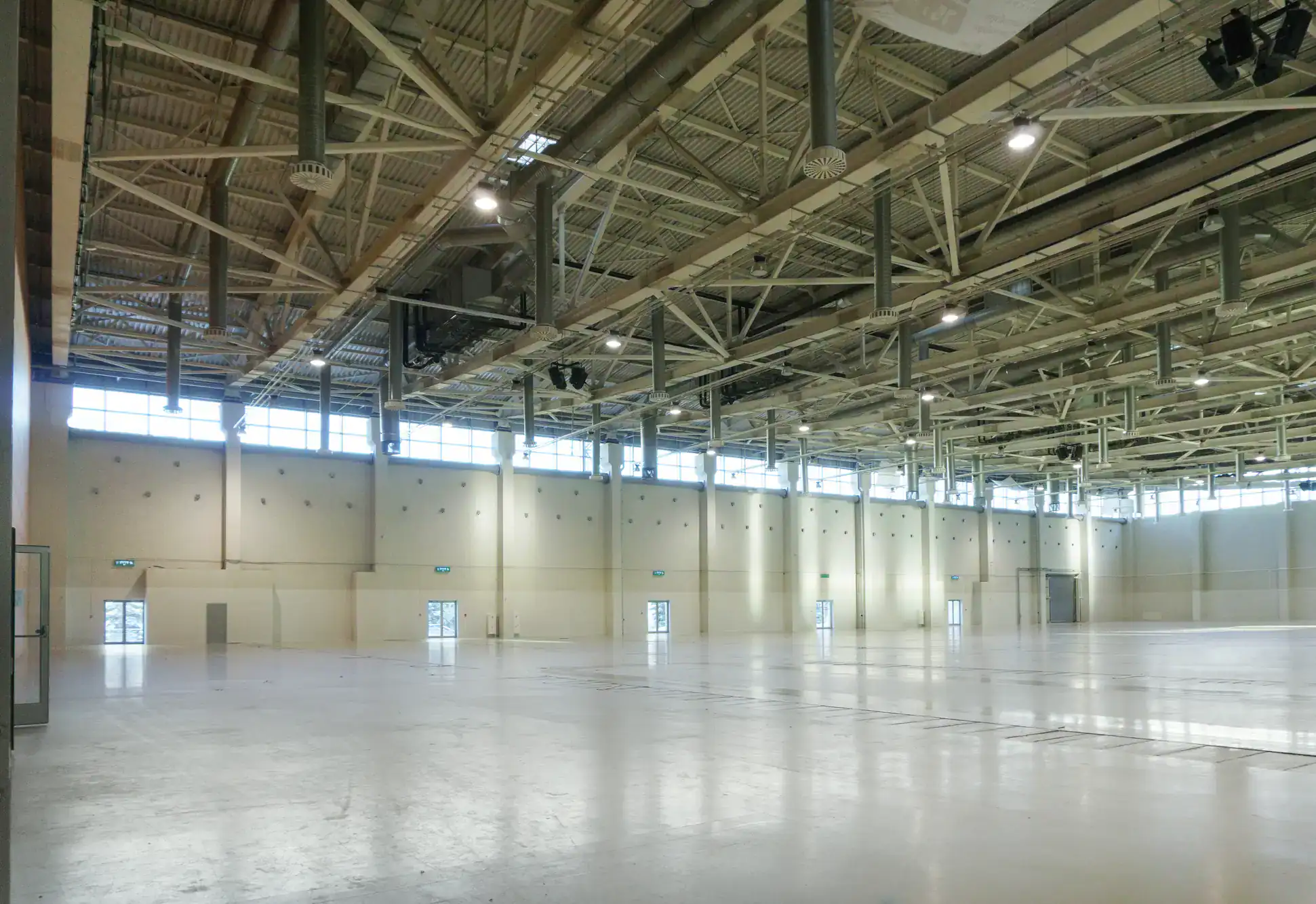
If you’re operating a commercial hangar, FBO, or aviation maintenance facility in Commack or anywhere in Suffolk County, NFPA 409 applies. This standard requires that the floor surface in aircraft storage and servicing areas be noncombustible a requirement that rules out a significant portion of the standard epoxy products most general contractors use. It’s enforced through local building codes and fire marshal inspections, so it’s not something you can overlook.
The practical implication is that your floor coating needs to be specified correctly from the start. We install systems that meet NFPA 409 requirements, and we can document that compliance for inspection purposes. If you’re unsure whether your current floor meets the standard or if you’re planning a new installation and want to make sure it does that’s exactly the kind of question we can walk you through before any work begins.
The most common cause of early coating failure in Commack hangars is moisture vapor transmission and it’s almost always the result of skipping the moisture assessment before installation. Large concrete slabs, especially in hangars with overhead doors that open to outdoor air, allow moisture to migrate upward through the slab. In Commack’s coastal climate, where summer humidity regularly exceeds 65%, that vapor pressure is significant. When a coating is applied over a slab with unaddressed moisture, it eventually delaminates sometimes within a year or two.
The second most common cause is inadequate surface preparation. Diamond grinding the concrete to the correct adhesion profile is a non-negotiable step, but it adds time and cost, so some contractors skip it. We don’t. Every installation we do includes full slab prep, moisture evaluation, and any necessary crack repair before the first coat goes down. That’s what separates a floor that lasts 15 to 20 years from one that looks fine for the first season and fails by the third.
Both can work well in a hangar environment, but they perform differently depending on your priorities. Epoxy systems are high-build, extremely durable, and excellent for chemical resistance including Skydrol and jet fuel exposure common in aviation facilities near MacArthur Airport. The tradeoff is cure time: standard epoxy systems require several days before you can return aircraft to the floor, which creates real operational disruption for working hangars.
Polyaspartic systems cure significantly faster often within 24 hours which makes them a strong choice for FBO operators, corporate flight departments, and maintenance shops where downtime is a direct cost. Polyaspartic also performs better in cold temperatures, which matters during Commack winters when hangar temperatures can drop significantly. The right answer depends on your specific facility, your timeline, and your chemical exposure environment. We install both systems and can help you determine which one fits your situation before you commit to anything.
A properly installed aviation-grade coating on a well-prepared slab should last 15 to 20 years in a Suffolk County environment but that lifespan depends heavily on what happened before the first coat went down. If the concrete wasn’t ground to the correct adhesion profile, if moisture wasn’t assessed and mitigated, or if the wrong chemistry was used for the chemical exposure the floor actually sees, you’re looking at a much shorter lifespan regardless of what the product spec sheet says.
Long Island’s climate is harder on floor coatings than many contractors account for. The combination of coastal humidity in summer and freeze-thaw cycling in winter creates ongoing stress on any coating that isn’t properly bonded to a prepared slab. Facilities near the Hauppauge corridor with large, uninsulated slabs are particularly exposed to these conditions. The way to get the full lifespan out of a floor coating is to do the preparation correctly the first time which costs more upfront and saves significantly more over the life of the floor.
Skydrol is a phosphate ester hydraulic fluid used in commercial and corporate aircraft. It’s highly effective as a hydraulic fluid and highly corrosive to standard floor coatings and bare concrete. Standard epoxy products including the kind marketed as “industrial grade” for warehouse or garage use are not formulated to resist Skydrol. Repeated exposure will degrade the coating and eventually attack the concrete underneath it.
If your hangar or maintenance facility in Commack handles commercial aircraft, corporate jets, or any aircraft that uses phosphate ester hydraulic fluid, Skydrol resistance is not optional it’s a baseline requirement. Aviation facility epoxy flooring systems specified for Skydrol exposure use chemistry that is matched to that specific chemical environment, not repurposed from a different application. If you’re not sure whether your current or planned coating is Skydrol-resistant, that’s a straightforward question to ask before installation, not after your floor starts showing chemical damage.
For aviation-grade hangar floor coatings in the Commack and western Suffolk County area, most projects fall in the range of $4 to $8 per square foot depending on the system specified, the condition of the existing slab, and the scope of preparation work required. A hangar in the 5,000 to 10,000 square foot range typical for private or small corporate hangars near MacArthur Airport would generally run between $20,000 and $80,000 fully installed. Larger facilities in the Hauppauge industrial corridor scale accordingly.
The variables that move cost most significantly are slab condition and prep requirements. A floor that needs crack repair, moisture mitigation, and full diamond grinding before coating will cost more than a slab in good condition but those steps are what determine whether the coating lasts 15 years or 3. Skipping them to lower the upfront number is a false economy. When you factor in the cost of recoating a failed floor, the disruption to operations, and the potential compliance exposure from a non-NFPA 409-compliant surface, the investment in doing it correctly the first time is straightforward to justify.