
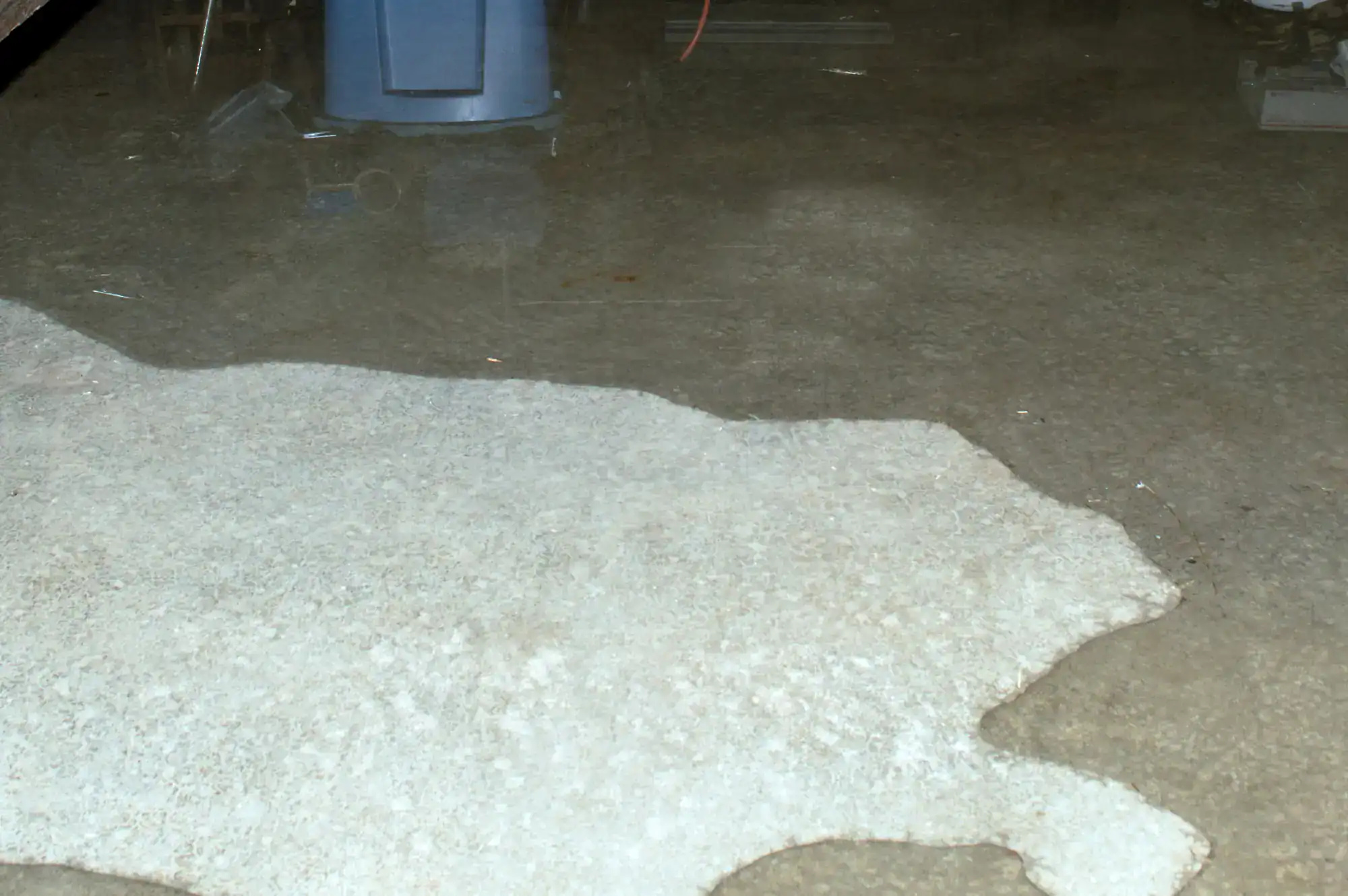
Every time a Commack apparatus returns from a winter call on the LIE or Jericho Turnpike, it’s tracking road salt, chloride brine, and snowmelt straight into the bay. On bare or inadequately coated concrete, that brine doesn’t just sit there it soaks in, freezes, expands, and starts cracking the floor from the inside out. Suffolk County’s freeze-thaw cycles do the rest. What starts as a hairline crack becomes a spalling, deteriorating surface that no amount of patching will fix long-term.
The right apparatus bay flooring stops that cycle entirely. A seamless, non-porous polyaspartic system creates a complete barrier between the concrete and everything the trucks bring in. Spills, brine, and hydraulic fluid sit on top and wipe clean. The floor doesn’t absorb it. That alone extends the life of the slab dramatically and in a department with four stations and a fleet that includes a 2023 Pierce Enforcer ladder truck, protecting that concrete is protecting a serious public investment.
There’s also the contamination side of this. Apparatus bays are classified as hot zones under NFPA standards areas where carcinogens from fire scenes get tracked in on tires, boots, and gear. A seamless floor is power-washable and supports the kind of decontamination protocols that actually protect your firefighters. That’s not a bonus feature. In New York State, where firefighter cancer presumption has been an active legislative issue, it’s an operational priority.
We’re based in Bohemia about 20 minutes from Commack down the LIE. This isn’t a national brand dispatching crews from out of state. We’re a Suffolk County company that has been doing commercial and industrial resinous flooring for over 30 years, in this climate, on this island, for facilities that can’t afford a floor to fail.
Our CEO Danny Harmer has 40-plus years of hands-on installation experience. Our field supervisors Javier, Eduardo, and Fredith bring another 40-plus years combined, and most of our crew has been with us for over a decade. That kind of continuity matters when you’re trusting someone with four active fire stations in Commack and a multi-million-dollar apparatus fleet.
The credentials back it up. We hold the Sherwin-Williams High Performance Flooring certification one of the most rigorous manufacturer-approved applicator credentials in the industry along with Res Tech certification. Every installer is OSHA 40 certified. Our portfolio includes the White House kitchen, international installations, and decades of commercial and industrial work across the region.
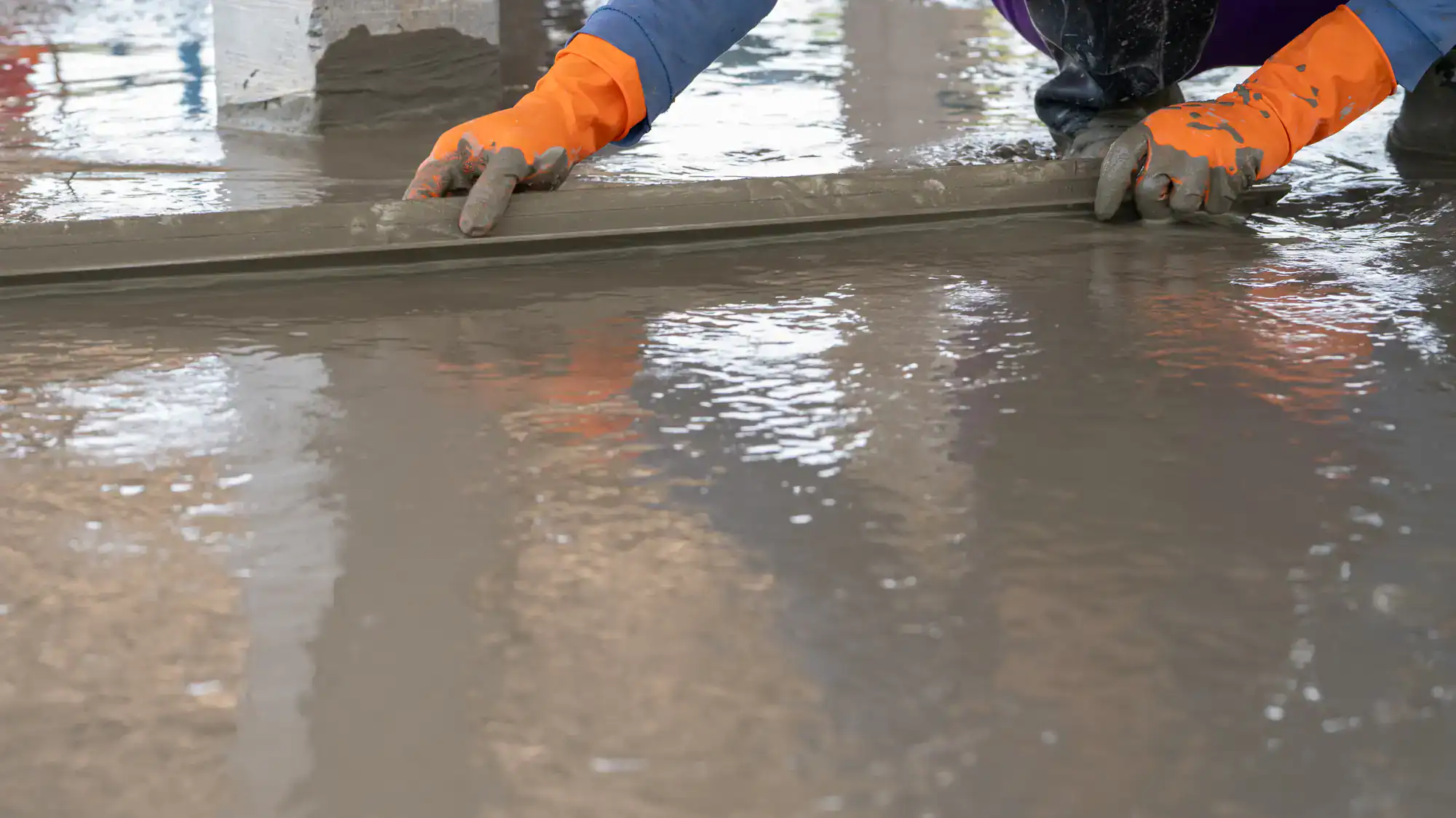
The most common reason firehouse floor coatings fail on Long Island isn’t the product it’s the prep. Contractors who acid-etch instead of diamond-grind leave behind a surface that looks ready but isn’t. Contractors who skip moisture testing apply coatings over substrates that will delaminate within months, especially in Suffolk County’s humid summers. By the time the bubbles show up, the damage is done.
Every project we do starts with diamond grinding not acid etching. Diamond grinding creates a true mechanical bond between the coating and the concrete, which is the only kind of bond that survives 40,000-pound apparatus, thermal cycling from bay doors opening in January, and the constant chemical exposure of an active fire station. After grinding, moisture testing happens before anything else goes on the floor. If there’s a moisture issue, we address it. Cracks and surface damage get repaired. The concrete is ready before the first coat touches it.
From there, the system goes down in layers: a penetrating primer, a high-build epoxy base coat with aggregate broadcast for compressive strength and slip resistance, and a polyaspartic topcoat. That topcoat cures in 24 hours. Apparatus can return to the bay the next day not three to seven days later. For a four-station department serving a community of 36,000-plus residents across portions of Huntington and Smithtown, that turnaround isn’t a selling point. It’s the reason this system works for a fire department at all.
Ready to get started?
The system we install in a Commack apparatus bay isn’t a painted surface or a residential garage kit. It’s a multi-layer industrial resinous floor system engineered for the specific demands of fire and emergency services. The polyaspartic topcoat goes on at 15 mils and is four times more flexible than standard epoxy which matters in a bay where thermal shock is a real, recurring condition every time cold air rolls in through an open apparatus door in February and warm apparatus rolls back in from a call.
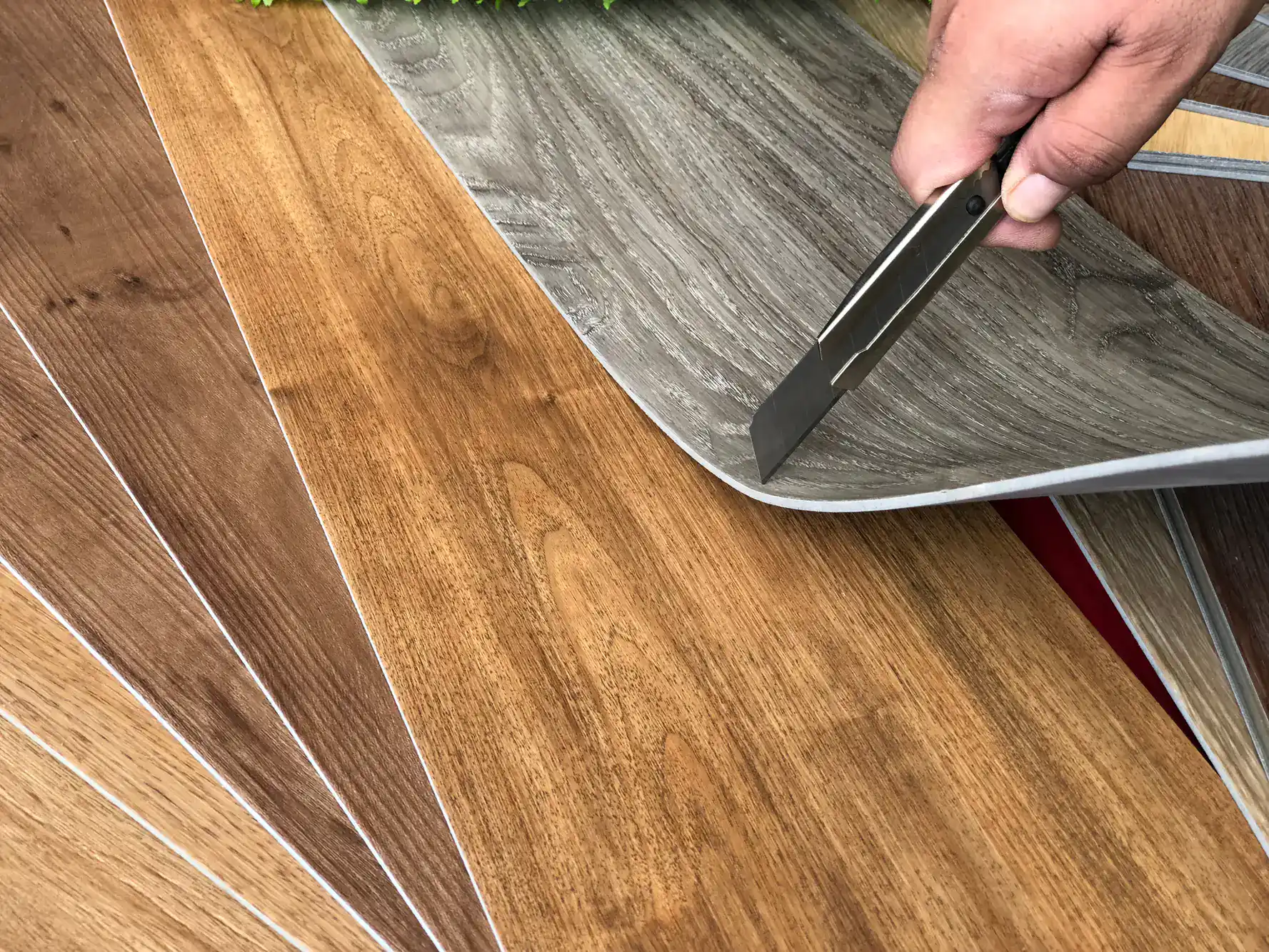
The aggregate broadcast in the base coat gives the floor genuine compressive strength and a slip-resistant surface that holds up under firefighter boots, equipment drops, and the constant movement of a working apparatus bay. The entire system is seamless no grout lines, no seams, no places for chloride brine or contaminants to pool and penetrate. It’s chemical-resistant, power-washable, and designed to last 20-plus years under real working conditions.
For a fire district board in Commack that has to justify every capital expenditure to taxpayers, that lifespan matters. A system that lasts 20 years is a fundamentally different financial decision than one that needs grinding off and replacing in five. The cost of a failed floor isn’t just the reinstallation it’s the disruption to an active fire station, the apparatus displaced, and the labor of doing the whole job twice. Getting it right the first time is the only approach that makes sense for a public department.
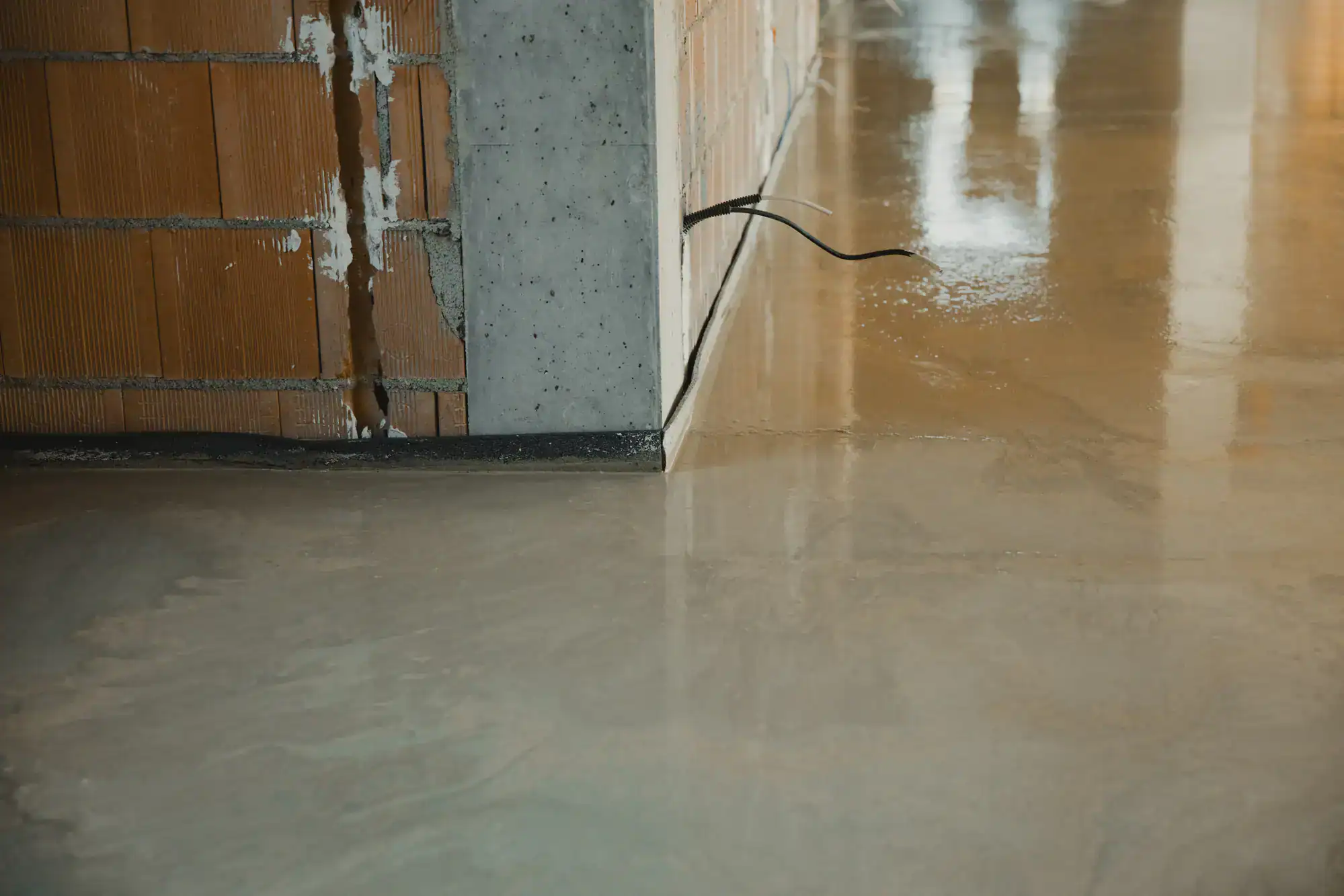
With a polyaspartic topcoat system, apparatus can return to the bay within 24 hours of the final coat going down. That’s not a rough estimate it’s one of the primary reasons polyaspartic is the right choice for fire department applications over traditional epoxy, which requires three to seven days of cure time before vehicle traffic.
For a four-station department like Commack’s, our approach is to stage the work so that not all bays are down at the same time. The specific schedule depends on the number of bays, the condition of the existing concrete, and how the department wants to sequence things operationally. That conversation happens before any work starts, so the department knows exactly what to expect and can plan around it.
The overwhelming majority of coating failures come down to surface preparation specifically, contractors who skip diamond grinding or rush through moisture testing. Acid etching leaves behind a surface that feels solid but doesn’t have the mechanical bond profile that holds up under heavy apparatus and thermal cycling. In Suffolk County’s climate, where temperatures swing repeatedly through the freeze-thaw threshold in winter and humidity spikes in summer, a poorly bonded coating doesn’t last long. Delamination bubbles are usually the first sign, and once they start, the floor is done.
Moisture is the other major culprit. Long Island’s soil conditions and seasonal water table fluctuations mean concrete slabs in apparatus bays can have elevated moisture vapor emission rates especially in spring and after heavy rain. If a contractor applies a coating without testing first, that moisture has nowhere to go and pushes the coating off the slab from underneath. Diamond grinding, proper moisture testing, and a penetrating primer that addresses vapor before the base coat goes down are what prevent this. It requires doing the job correctly.
In New York State, fire districts are independent taxing authorities governed by elected boards of fire commissioners. That means capital improvement projects including apparatus bay floor resurfacing typically require formal approval from the board before work can be contracted. The fire chief or facilities lead generally identifies the need and brings the project to the board with a justification, and the board votes on whether to authorize the expenditure.
This is worth understanding early in the process because it affects the timeline. If you’re working toward a spring installation window which is generally the most favorable season in Suffolk County for concrete coating work, with stable temperatures and lower humidity than summer you want to have the board approval process underway well before that window opens. We can help you put together the information you need to make the case to your Commack board: system specs, expected lifespan, cost comparison against a replacement cycle, and NFPA compliance alignment. That documentation exists, and it’s useful.
The honest answer is that for an apparatus bay, polyaspartic isn’t a premium upgrade it’s the appropriate product for the application. Standard epoxy systems aren’t engineered for the thermal cycling, chemical exposure, and compressive loads that a working fire station generates. They also cure in three to seven days, which means apparatus out of the bay for nearly a week. In a community like Commack, where the fire department serves 36,000-plus residents across portions of two towns, that’s a real operational cost.
Polyaspartic systems cure in 24 hours, are four times more flexible than standard epoxy, and are rated for 20-plus years under heavy commercial use. When you compare the total cost installation, expected lifespan, and the avoided cost of grinding off and reinstalling a failed system in five years the polyaspartic system is the less expensive choice over time. The upfront number looks different, but the math over a 20-year horizon is straightforward. A fire district board justifying the expenditure to Commack taxpayers has a much easier case to make with a 20-year system than a five-year one.
NFPA 1500 and NFPA 1581 don’t specify a particular brand or product, but they establish requirements for fire station design and infection control that directly point toward seamless, non-porous floor systems. Apparatus bays are designated as hot zones areas where carcinogens and contaminants from fire scenes are tracked in on apparatus, gear, and boots. The flooring standard that supports those contamination control requirements is one that can be effectively decontaminated: no grout lines, no seams, no porous surface where residue can accumulate.
A properly installed polyaspartic resinous system meets that standard. It’s seamless, chemical-resistant, and power-washable. In New York State, where firefighter cancer presumption legislation has been an active area of attention, fire departments across Suffolk County are increasingly treating the apparatus bay floor as an occupational health decision, not just a maintenance one. The floor is the first surface that gets contaminated after every call. Getting it right has a direct connection to firefighter health.
Professional commercial apparatus bay flooring systems typically run between $5 and $15 per square foot, depending on the size of the bay, the condition of the existing concrete, and the complexity of the system specified. For a standard single apparatus bay, that generally puts the project somewhere in the $3,000 to $8,000 range. A larger bay or one requiring significant crack repair and surface preparation work will be toward the higher end.
For a four-station department like Commack’s, the total scope depends on how many bays are being addressed and whether the work is phased or done as a single project. Doing all four stations under one contract typically produces better consistency and allows for more efficient scheduling around the department’s operational calendar. The best way to get an accurate number is a site visit concrete condition varies significantly from station to station, and a quote built on an actual assessment of the slab is more useful than a ballpark. There’s no cost for that assessment.