
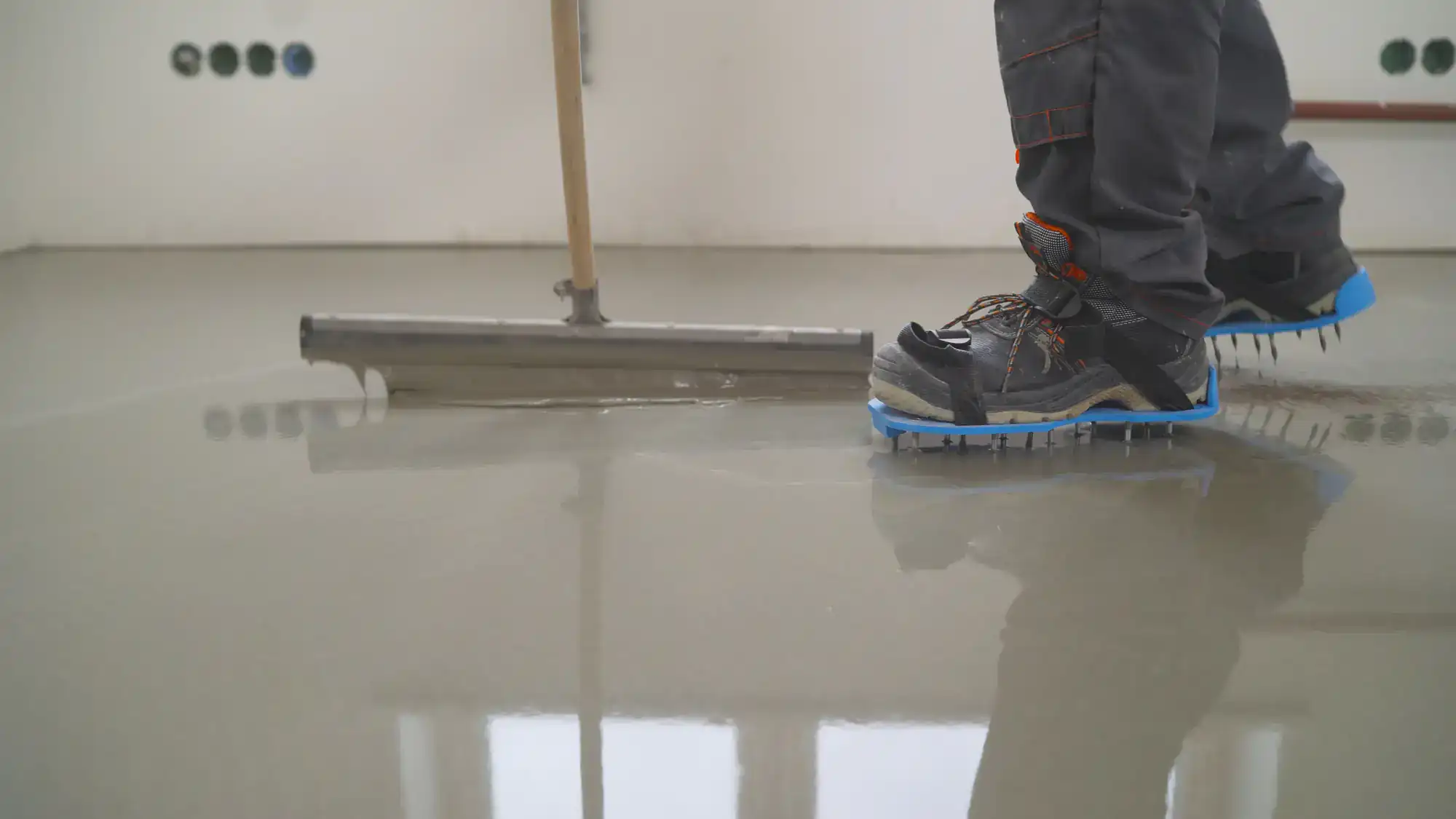
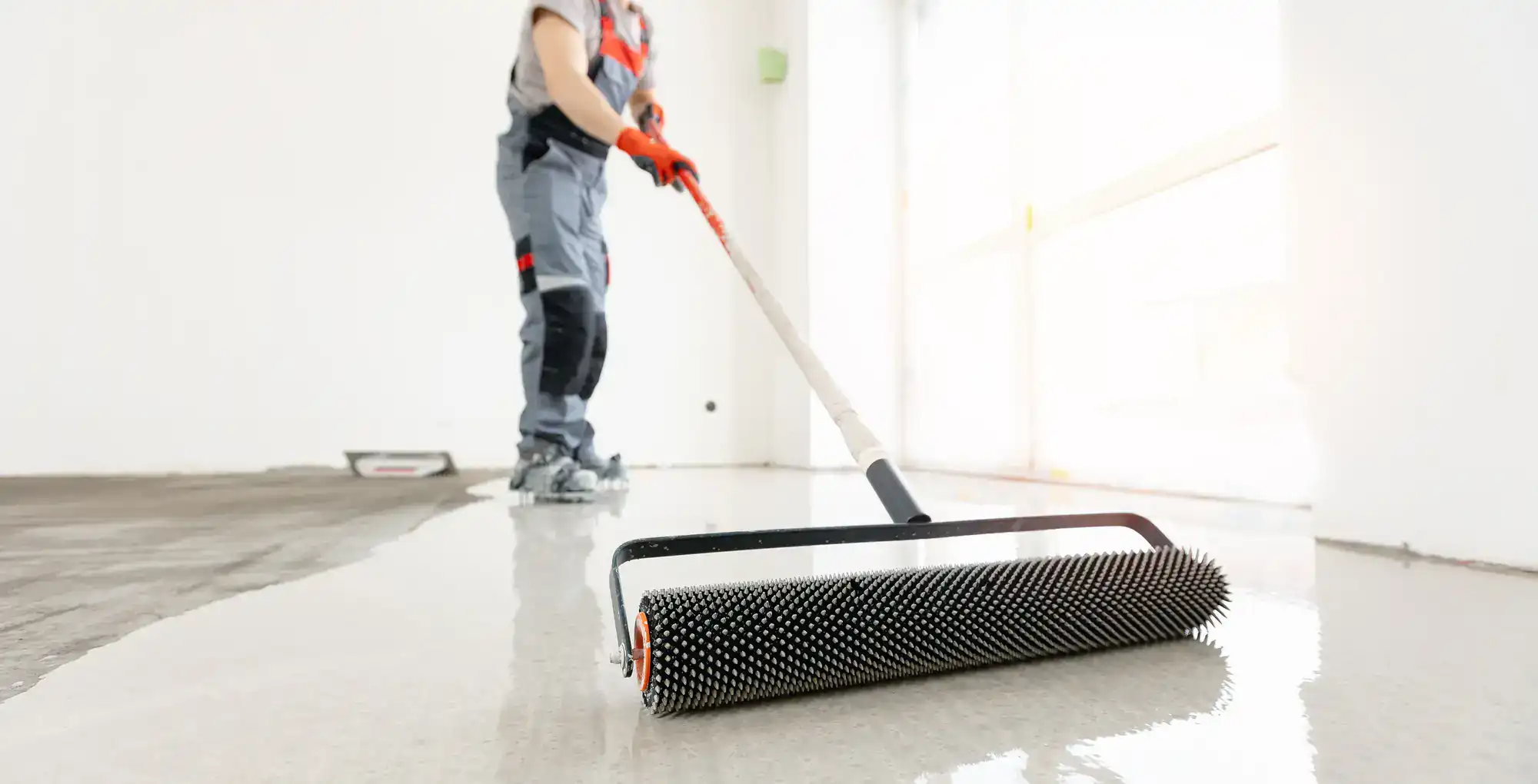
When self leveling concrete is done correctly, the difference is immediate. Floors that rocked and shifted under foot feel solid. Tile that used to crack along the grout lines stays intact. Luxury vinyl plank lays flat without edges lifting within the first year. That’s what proper preparation delivers.
In Centereach, the conditions that cause subfloor problems are built into the landscape. Long Island’s glacially deposited soils a mix of sand, clay, and silt left behind by the Wisconsin Glacier shift under older foundations in ways that flat, stable bedrock regions don’t experience. Combine that with Suffolk County’s freeze-thaw cycles hammering concrete from November through March, and the post-war slabs in neighborhoods like Dawn Estates and Eastwood Village have had decades of stress working against them. A properly applied high-strength self leveling concrete system corrects what time and geology have done to your subfloor.
On the commercial side, businesses along Middle Country Road that are renovating or turning over tenant space need a floor that’s flat, fast-curing, and ready for commercial traffic. Downtime is money. The right cementitious self leveling underlayment gets you back in operation in 24 to 48 hours without cutting corners on the substrate work that determines whether it holds.
We’ve been working on concrete floors across Long Island and beyond since the mid-1990s. That’s not a marketing number it means the crew that shows up to your Centereach home has seen what happens to a 1962 slab after sixty years of freeze-thaw cycling, moisture intrusion, and glacial soil movement. We know what to look for, what to test, and what not to skip.
We’re based in Bohemia, NY about ten to twelve miles south of Centereach on Nicolls Road, the same road that runs straight through the heart of the hamlet. This isn’t a regional franchise dispatching from Nassau County. We’re a local operation with OSHA 40-certified installers, most of whom have been with us for over a decade, and a president with more than 40 years of hands-on installation experience. We hold an A+ BBB rating and have completed projects across the U.S., the Bahamas, and internationally including a floor installation at the White House in 1996.
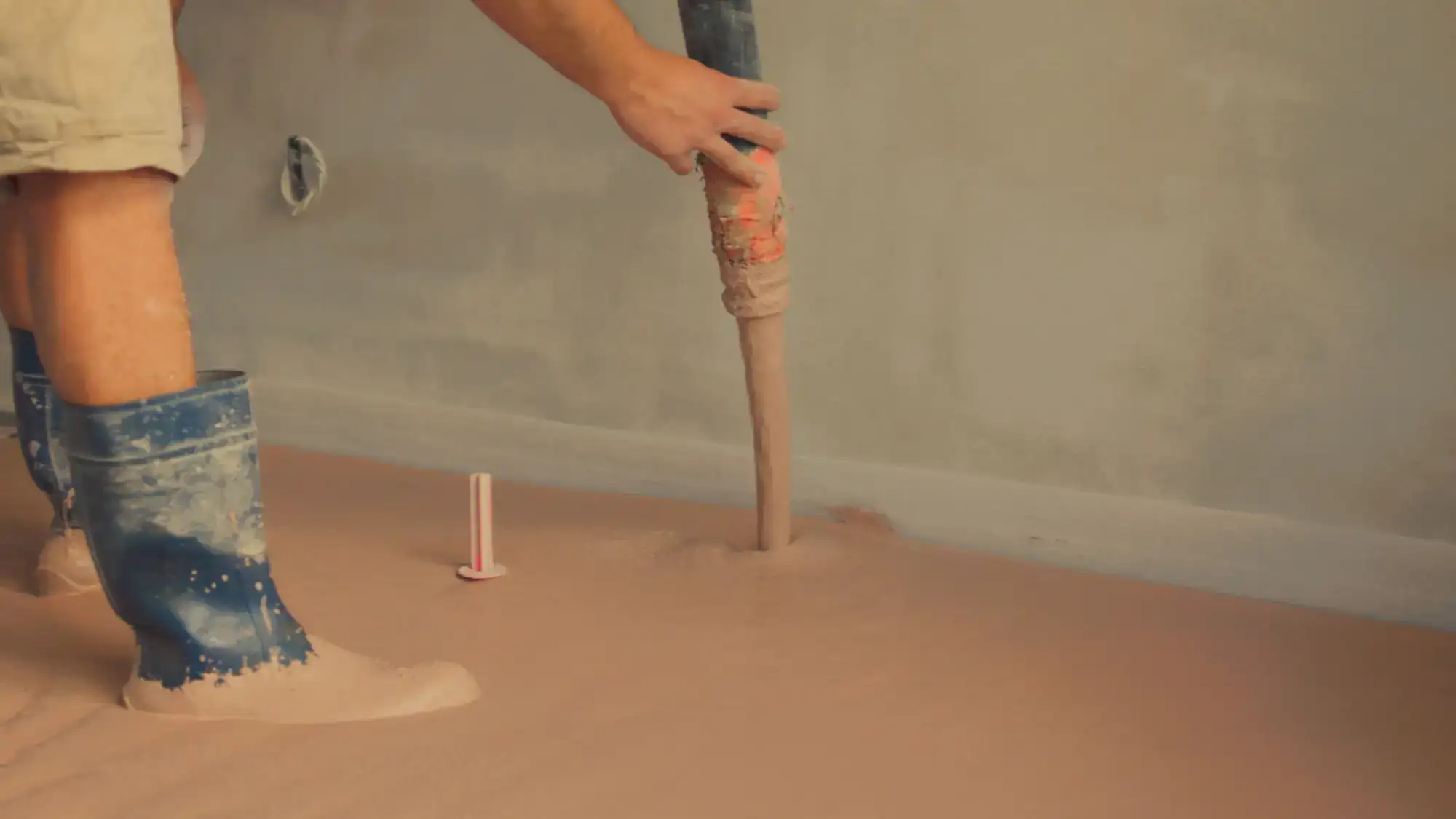
The first thing that happens isn’t mixing it’s testing. Before any product touches your floor, we measure moisture vapor emission against ASTM F2170 standards. The substrate has to be below 5 lbs. per 1,000 square feet per 24 hours and relative humidity below 80% before anything proceeds. In Suffolk County’s climate, especially in spring when ground thaw pushes moisture upward through older slabs, this step is what separates a floor that bonds from one that delaminates six months later. We get it done every time, not when it seems necessary.
From there, we prepare the concrete clean it, repair where needed, and prime it for the specific product being applied. Product selection matters more than most people realize. The right cementitious self leveling underlayment for a quarter-inch correction in a Centereach kitchen is a different product than what we use for a two-inch depression in a commercial space on Middle Country Road. Depth, traffic load, substrate condition, and what’s going on top all factor into that call. Our system can be installed from a quarter inch to over two inches neat, and up to five inches with aggregate so the full range of correction is handled in one engagement, not pieced together.
Once the pour is complete, the floor is walkable in four to six hours. Commercial spaces can typically handle heavy traffic within 24 to 48 hours. If you’re coordinating tile setters or LVP installers to follow the leveling work, we build the timeline around your schedule not the other way around.
Ready to get started?
Self leveling is always a precursor to something else tile, LVP, hardwood, epoxy, polished concrete. The problem with using a separate leveling subcontractor and a separate flooring installer is the gap between them. If the leveling work isn’t matched to the flooring system going on top, neither contractor takes responsibility when something goes wrong. We eliminate that gap. Moisture testing, concrete prep, crack repair, self leveling underlayment, and the final floor system are all handled under one roof one crew, one point of accountability.
For Centereach homeowners in the middle of a renovation replacing carpet or old 12×12 ceramic tile with large-format porcelain or wide-plank LVP this matters because modern floor coverings have flatness tolerances that a 1960s slab almost never meets on its own. The correction has to happen before installation, and it has to be done by someone who understands what the finished floor actually requires. For commercial floor leveling solutions along the Middle Country Road corridor, the same principle applies at a higher stakes level: the wrong product, the wrong depth, or a skipped moisture test can mean a failed floor in a retail or food service environment that can’t afford to close again.
Every project starts with an honest assessment. If self leveling is the right fix, you’ll know why. If there’s a structural or drainage issue that needs to be addressed first, we’ll say so upfront not after the pour.
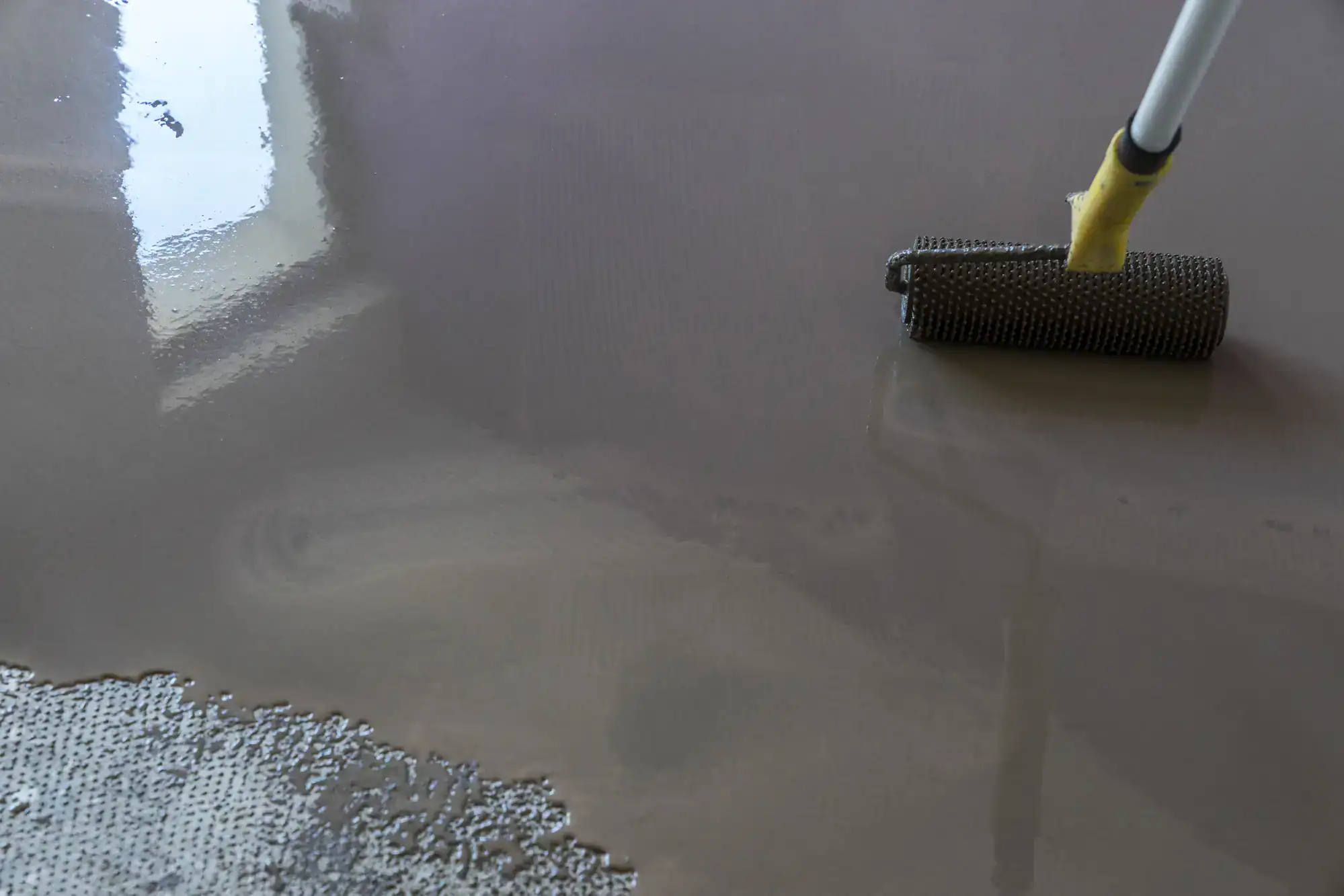
Not every floor does but most homes in Centereach that were built before 1980 have subfloors that don’t meet the flatness tolerances required by today’s floor coverings. Large-format tile (anything over 15×15 inches), luxury vinyl plank, and engineered hardwood all require a much flatter surface than what most post-war slabs in this area can offer on their own. If your installer is telling you the floor needs prep, they’re not padding the bill they’re protecting their own work.
The way to know for certain is a straightforward assessment. A long straightedge or level placed across the slab will reveal high and low spots. Industry standard for most floor coverings is no more than 3/16 of an inch of variance over a 10-foot span. If you’re seeing more than that and in Centereach homes from the 1950s and 60s, it’s common self leveling concrete is typically the most efficient and cost-effective correction method available.
Concrete floor leveling on Long Island generally falls somewhere between $750 and $6,000 or more depending on the square footage, the depth of correction needed, and the condition of the existing substrate. Suffolk County labor costs push prices toward the higher end of national ranges, and that’s before factoring in any concrete repair or priming work that needs to happen before the pour.
The biggest variable is depth. A quarter-inch correction over 400 square feet is a very different project than a two-inch correction across a 1,200-square-foot commercial space. The substrate condition also matters if there’s adhesive residue from old vinyl tile, active cracks, or moisture issues that need to be addressed first, that adds to the scope. Getting an honest assessment of your specific floor is the only way to get a number that actually means something.
The most common causes are over-watering the mix, skipping or rushing the primer coat, and applying the product over a substrate with unresolved moisture issues. Each of these failures is avoidable they happen when a contractor is moving too fast, using the wrong product for the application, or skipping the testing steps that slow a job down but determine whether it holds.
In Suffolk County specifically, moisture vapor emission from older concrete slabs is a persistent issue that catches contractors off guard. A slab that feels dry to the touch can still be emitting moisture vapor at levels that will prevent a self leveling underlayment from bonding correctly. That’s why ASTM F2170 moisture testing isn’t optional it’s the step that tells you whether the substrate is actually ready. Contractors who skip it are gambling with your floor, and the result usually shows up within the first year as cracking, bubbling, or delamination.
It depends on the temperature. Most cementitious self leveling products require both the ambient air and the substrate to be above 50°F throughout the application and curing period. In an unheated Centereach garage during January or February, that threshold is almost never met without supplemental heat. Applying below that temperature causes the product to cure too slowly, which affects its final strength and bond.
Heated interior spaces finished basements, kitchens, living areas can be done year-round without issue as long as the space is climate-controlled. If you’re planning a garage floor project and want it done in colder months, the conversation usually comes down to whether temporary heating is practical for the space. For most Centereach homeowners, the better move is to schedule garage and unheated crawlspace work in late spring through early fall when ambient conditions are naturally within range. Fall is particularly good lower humidity, stable temperatures, and no freeze risk during the cure window.
Most self leveling systems are walkable within four to six hours of application. That said, walkable and ready for your next floor covering are two different things. Light foot traffic after four to six hours is fine. Installing tile, LVP, or another floor covering system typically requires waiting until the underlayment has reached sufficient hardness usually 24 hours at minimum for residential applications, though the specific product and pour depth affect that window.
For commercial floor leveling projects on Middle Country Road or in retail spaces along the Centereach corridor, the 24 to 48-hour return-to-traffic timeline is generally accurate for heavy use. Full cure to maximum compressive strength takes 28 days, but the floor doesn’t need to reach that point before it’s functional. If you’re coordinating a flooring installation crew to follow the leveling work, we build the schedule around a 24-hour buffer enough time to be confident in the surface without holding up the rest of the renovation.
Concrete patching compounds are designed to fill discrete voids, cracks, and localized damage not to correct broad surface irregularities across a slab. If you use a patching compound to try to bring a low area up to level across a large surface, you’ll typically end up with an inconsistent result that still doesn’t meet flatness tolerances. The product isn’t formulated for that kind of application, and it usually shows.
Self leveling underlayment is a flow-applied system specifically engineered to find and fill low spots across an entire surface simultaneously. When mixed and poured correctly, it self-distributes to a flat plane without requiring manual screeding across the whole area. For Centereach homes where the unevenness is the result of decades of differential settlement across a full slab not just a single crack or damaged area self leveling concrete is the appropriate tool. It’s not a premium upgrade over patching; it’s a fundamentally different product designed for a different problem. Using the wrong one doesn’t save money it just means doing the job twice.