
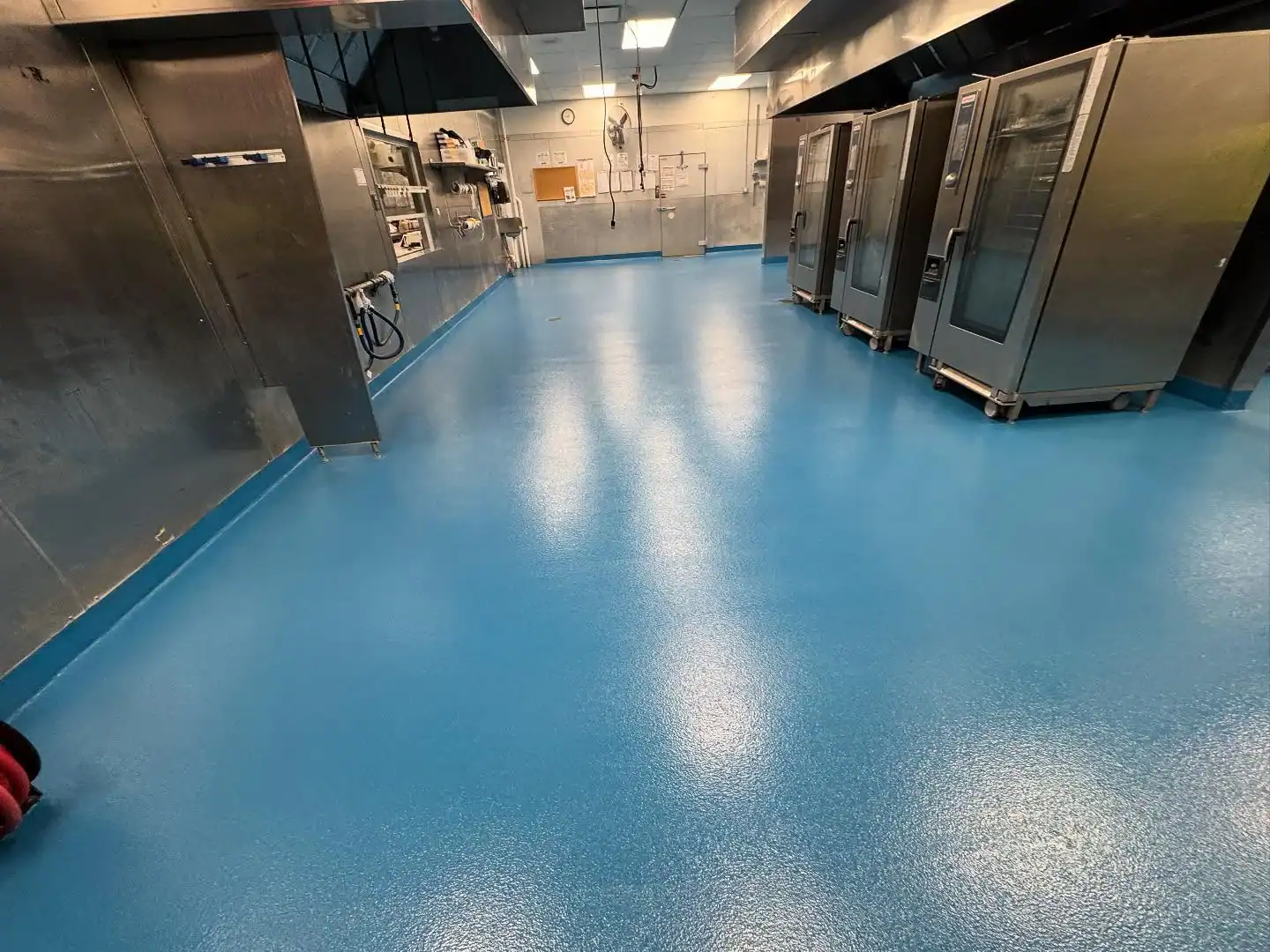
Most commercial kitchen floors along Centereach’s Middle Country Road don’t fail because of bad luck. They fail because the contractor skipped the steps that actually matter moisture testing, proper surface prep, and matching the coating system to what that specific kitchen puts it through every day. When those steps are done right, you get a floor that holds up under steam cleaning, grease exposure, and daily foot traffic without peeling, cracking, or creating the kind of surface violations that get you cited.
Centereach’s older commercial buildings are a real factor here. A significant portion of the structures along Middle Country Road were built between the 1940s and 1970s, and the concrete slabs underneath those kitchens are aging accordingly. That means higher moisture vapor levels, more settlement cracking, and a substrate that punishes any contractor who treats it like a brand-new pour. A floor installed without accounting for those conditions won’t last it doesn’t matter how good the product is on paper.
The other thing that changes when a floor is done correctly is the inspection conversation. The Suffolk County Department of Health Services enforces strict standards for commercial kitchen surfaces smooth, non-porous, free of cracks and gaps, with coved bases at the wall junctions. A seamless epoxy system, properly installed, satisfies every one of those requirements. You stop patching. You stop worrying about the next walk-through. You move on.
Advanced Epoxy Flooring has been based in Bohemia, NY right here in Suffolk County for 35 years. That’s not a marketing number. It means we’ve worked on the same aging slabs in Centereach, the same Long Island humidity conditions, and the same buildings that line the commercial corridors from Centereach to Coram to Selden. We know what these substrates look like before the coating goes down, and we know exactly what happens when someone skips the prep.
We hold dual manufacturer certifications Sherwin-Williams High Performance Flooring ATP and Res Tech which are credentials backed by the manufacturers themselves, not self-issued. Sherwin-Williams has been a leader in seamless floor systems for over 60 years, and their ATP program covers everything from concrete assessment to full system application. That level of training is uncommon among Long Island flooring contractors, and it shows in the floors we install.
We’re BBB accredited with no complaints on file. Our portfolio covers commercial and industrial projects across the United States and the Bahamas. We started this company specifically because too many floors were failing not from bad products, but from contractors who didn’t understand what they were putting them on.
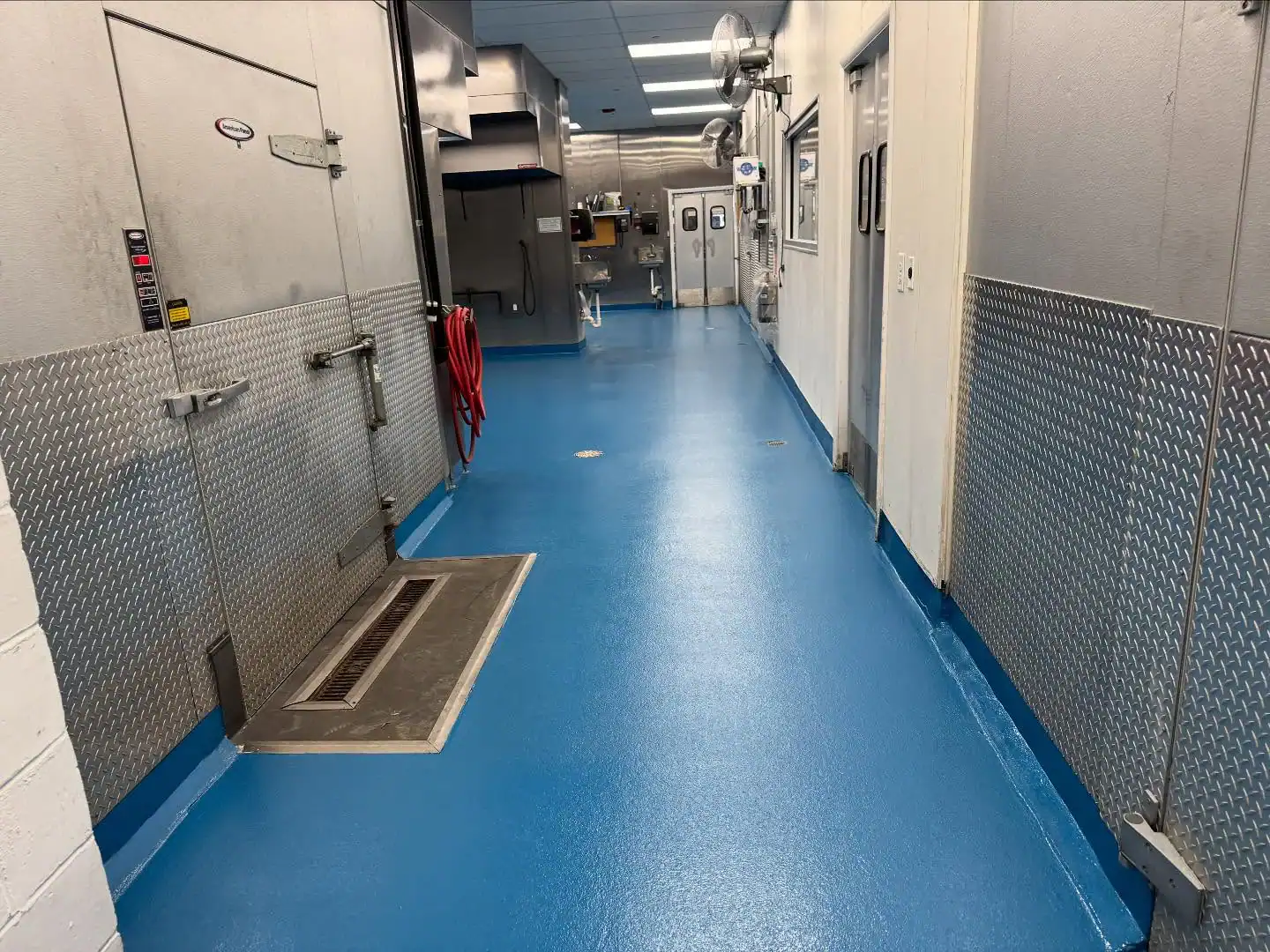
The first thing we do on every commercial kitchen project in Centereach is test the concrete for moisture. This is the step most contractors skip, and it’s the reason most epoxy floors in older Suffolk County buildings fail within a year or two. Moisture vapor transmitting through an aging slab will break the bond between the coating and the concrete it doesn’t matter what product you use on top. We test first, every time, before anything else happens.
Once we know what we’re working with, we grind the concrete to the correct surface profile for adhesion, fill any cracks or settlement damage, and level out uneven areas. The buildings along Centereach’s Middle Country Road have been settling for decades, and the slabs show it. That prep work isn’t optional it’s the difference between a floor that bonds correctly and one that starts lifting at the edges six months later.
From there, we select the coating system based on your kitchen’s specific zones. The area in front of your cooking line needs a urethane cement mortar that handles thermal shock standard epoxy can’t take the temperature swings near fryers and steam equipment. Walk-in coolers need moisture-tolerant formulations. Prep lines need chemical resistance. Each zone gets the right system. After the build coats are applied and fully cured we don’t rush that a slip-resistant topcoat goes down and the floor is ready for inspection and service. With fast-cure systems, you can typically return to light use within hours and full kitchen operations within 24 to 36 hours.
Ready to get started?
Commercial kitchen flooring isn’t one product applied to one surface. A Centereach restaurant running full dinner service, steam cleaning nightly, and running a walk-in cooler at 35 degrees has at least three distinct flooring environments under one roof and each one needs a system built for what it actually faces. That’s how we approach every installation.
In high-heat cooking zones, we use urethane cement mortar systems designed to handle the thermal cycling that happens when hot grease hits a cold floor or a steam cleaner runs across a surface that’s been absorbing heat all night. In cooler and refrigerated areas, we use formulations that account for condensation and the moisture conditions that come with temperature differentials. Throughout the prep and service areas, the focus is on chemical resistance, slip resistance, and a seamless surface that satisfies the Suffolk County Department of Health Services requirements for food preparation environments no grout lines, no gaps, no places for bacteria to accumulate.
We also install integral cove base at the floor-to-wall junctions, which is a requirement under the FDA Food Code and something inspectors look for specifically. If you’re currently running on quarry tile, that transition to a seamless system eliminates the grout lines that are almost impossible to fully sanitize and that health inspectors routinely cite. For Centereach food service operators in older buildings along Middle Country Road, this upgrade alone often resolves recurring inspection issues that patching and regrouting never fully fixed.
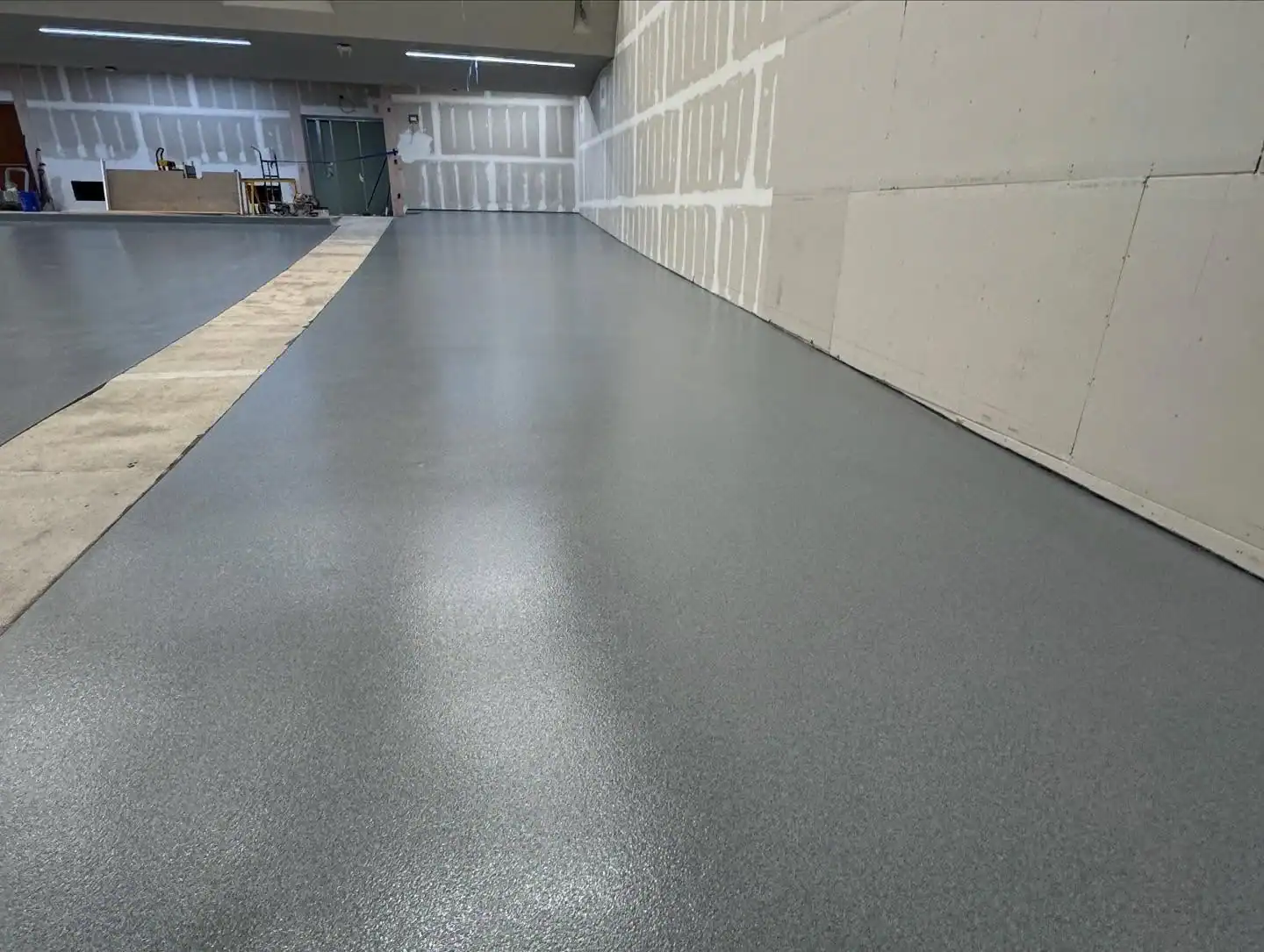
The Suffolk County Department of Health Services enforces the New York State Sanitary Code, which incorporates FDA Food Code standards for commercial kitchen surfaces. Inspectors are specifically looking for floors that are smooth, non-porous, non-absorbent, and easily cleanable that’s Section 6-201.11. They’re also checking that floors are free of cracks, chips, and gaps under Section 6-501.11, and that floor-to-wall junctions have coved bases to eliminate the crevices where bacteria accumulate. A compliant material in poor condition is still a violation, so even a floor that was correctly installed years ago can generate a citation if it’s cracking or lifting.
Seamless epoxy systems, when properly installed, satisfy every one of these requirements. There are no grout lines, no seams, and no gaps for contaminants to hide in. The coved base is integrated into the system rather than added as an afterthought. If you’ve received a floor-related citation from a Suffolk County inspector, or if you’re trying to get ahead of one, a properly installed seamless floor is the most direct path to compliance.
For most commercial kitchen installations in Centereach, the actual installation work runs one to two days depending on the size of the space and the condition of the existing slab. The bigger variable is prep if the concrete has significant cracking, moisture issues, or surface damage that needs to be addressed, that adds time before any coating goes down. We assess all of that before we give you a timeline so there are no surprises mid-job.
On the scheduling side, we work around your operation. That means overnight installs, weekend work, or phased approaches that keep part of your kitchen running while we work on another section. With fast-cure polyaspartic topcoat systems, light foot traffic is typically possible within a few hours and full commercial kitchen service within 24 to 36 hours. For a Centereach restaurant that can’t afford to go dark for three days, that turnaround matters. We plan the job around your revenue, not our convenience.
The most common reason is moisture vapor transmission and it’s almost always the result of skipping the moisture test before application. Concrete slabs in Centereach’s older commercial buildings, many of which were poured in the 1950s, 1960s, and 1970s, have had decades to develop porosity, micro-cracking, and moisture pathways. Long Island’s humidity adds to that. When moisture vapor is transmitting through the slab at levels above the coating’s tolerance, it breaks the adhesive bond from underneath and the floor starts lifting, bubbling, or delaminating, sometimes within months.
The second most common reason is inadequate surface preparation. Grinding the concrete to the correct surface profile, filling cracks, and leveling uneven areas isn’t optional it’s the foundation the entire system bonds to. A contractor who skips prep to save time is handing you a floor that looks fine for six months and then starts failing at the edges. We test for moisture first, prep the slab correctly, and select a system that’s rated for the actual conditions in your kitchen. That’s what makes the difference between a floor that lasts two years and one that lasts twenty.
Centereach is an unincorporated hamlet within the Town of Brookhaven, so building permits for commercial renovations including flooring replacement in food service facilities are issued through the Town of Brookhaven Building Department. Whether a permit is required for a flooring replacement specifically depends on the scope of the project and whether it involves any structural work or changes to the space. For a straightforward floor resurfacing or coating installation, a permit is often not required, but it’s worth confirming with the Town of Brookhaven directly before work begins.
On the health compliance side, the Suffolk County Department of Health Services may require documentation that the new floor meets food service surface standards, particularly if the installation is being done in response to a citation or as part of a broader renovation. We’re familiar with both the Town of Brookhaven and Suffolk County requirements, and we can help you understand what documentation or approvals apply to your specific project before we start.
Standard epoxy is a strong, chemical-resistant coating that works well in many commercial environments but it has a limitation in high-heat kitchen zones. Epoxy is rigid, and when it’s exposed to the rapid temperature swings that happen near fryers, steam equipment, and cooking lines what’s called thermal shock it can crack or delaminate over time. That’s not a product defect. It’s just what happens when a rigid material is asked to perform in an environment it wasn’t designed for.
Urethane cement mortar is a different system. It’s more flexible, handles thermal cycling significantly better, and is specifically designed for commercial kitchen environments where heat, steam, and chemical cleaning are daily realities. It also bonds well to damp concrete, which matters in the older slabs common to Centereach’s commercial buildings. For most full-service restaurant kitchens, we use urethane cement in the cooking and dishwashing zones and epoxy-based systems in the lower-heat prep and storage areas. The right system depends on what your kitchen actually does which is why we assess the space before recommending anything.
Commercial kitchen flooring in Centereach typically runs between $7 and $15 per square foot installed, depending on the condition of the existing slab, the system selected, and the complexity of the space. A kitchen with significant cracking, moisture issues, or multiple zones requiring different systems will sit toward the higher end of that range. A smaller, straightforward space in reasonable condition will come in lower. Most restaurant kitchens in the 500 to 1,000 square foot range land somewhere between $4,000 and $12,000 for a complete installation.
The more useful number for most Centereach operators is the cost per year over the life of the floor. A properly installed food-grade system lasts 15 to 20 years with normal maintenance. A cheap installation that fails in two years and needs to be redone plus the kitchen downtime, the health inspection pressure, and the repeat contractor costs adds up to significantly more than doing it right the first time. We give you a specific, itemized quote before any work begins, with no hidden fees and no vague ranges. You’ll know exactly what you’re getting and what it costs before we schedule anything.