
Most commercial floors along the Middle Country Road corridor in Centereach weren’t built to last forever they were built to be replaced. Wax, strip, recoat, repeat. It’s a cycle that eats into your budget and your time, and at some point you start wondering if there’s a better way. There is.
Polished concrete breaks that cycle. Once we properly grind, densify, and finish your slab, you’re looking at a surface that doesn’t need waxing, doesn’t dull under foot traffic, and doesn’t show wear the way softer floor coverings do. For retail stores, showrooms, service businesses, and light industrial spaces in Centereach, that translates directly into lower maintenance costs and a floor that looks sharp years from now.
Here’s something that doesn’t get talked about enough in Suffolk County: the freeze-thaw cycles this area goes through every winter are genuinely hard on concrete. Water gets into the pores, freezes, expands, and contracts and over time, that breaks down the surface from the inside. Proper densification, where a lithium silicate compound is worked into the slab to chemically harden the surface matrix, makes the floor dramatically more resistant to that process. It’s not a cosmetic upgrade. It’s structural protection that matters specifically here, in this climate, on Long Island.
Danny Harmer has been working concrete floors for over 40 years. That’s not a company founding date that’s one person’s accumulated hands-on experience across every slab condition that exists. In 1996, he completed flooring work at the White House kitchen. No contractor currently serving the Centereach market can point to a credential like that, and it’s not something you earn by cutting corners.
We hold a Sherwin-Williams High Performance Flooring certification and a Res Tech certification both named, manufacturer-issued credentials that require demonstrated competency to earn. These aren’t participation certificates. They mean the work meets a verified standard.
Centereach sits in the heart of Suffolk County’s Town of Brookhaven, and the commercial building stock along NY-25 reflects decades of Long Island’s suburban growth. We’ve worked the slabs that define this market the aging commercial pours, the coated and re-coated floors, the mid-century strip mall concrete that’s been through more winters than most people remember. That familiarity with Centereach’s specific commercial real estate isn’t something you can fake.
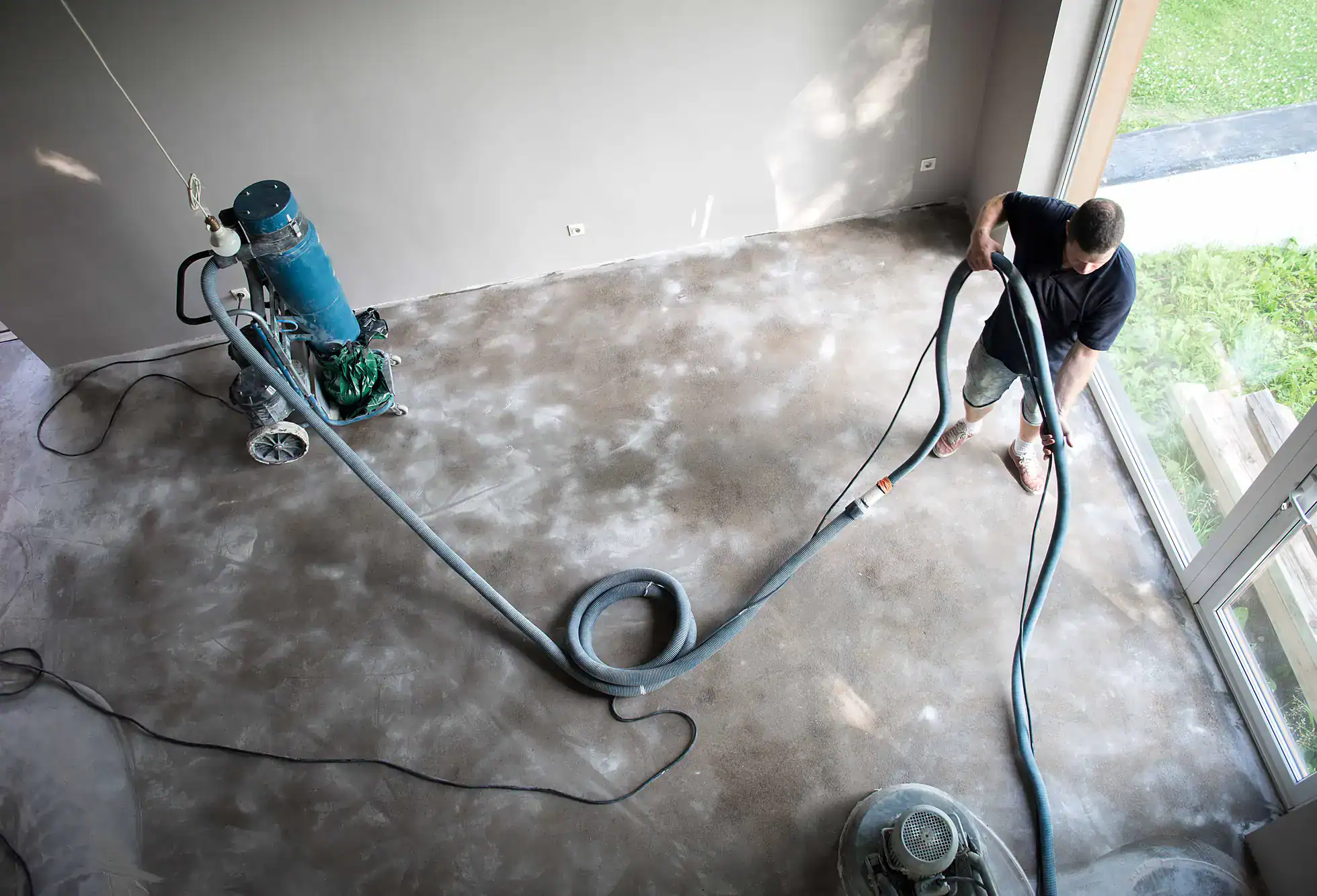
It starts with an honest assessment. Before any equipment hits your floor, we evaluate the slab existing coatings, surface condition, wear patterns, any damage from years of use or Long Island winters. For a lot of Centereach commercial spaces, especially along the older stretches of Middle Country Road, that first look tells us exactly what the floor needs and what finish level it can realistically achieve. Most slabs are workable. Very few aren’t.
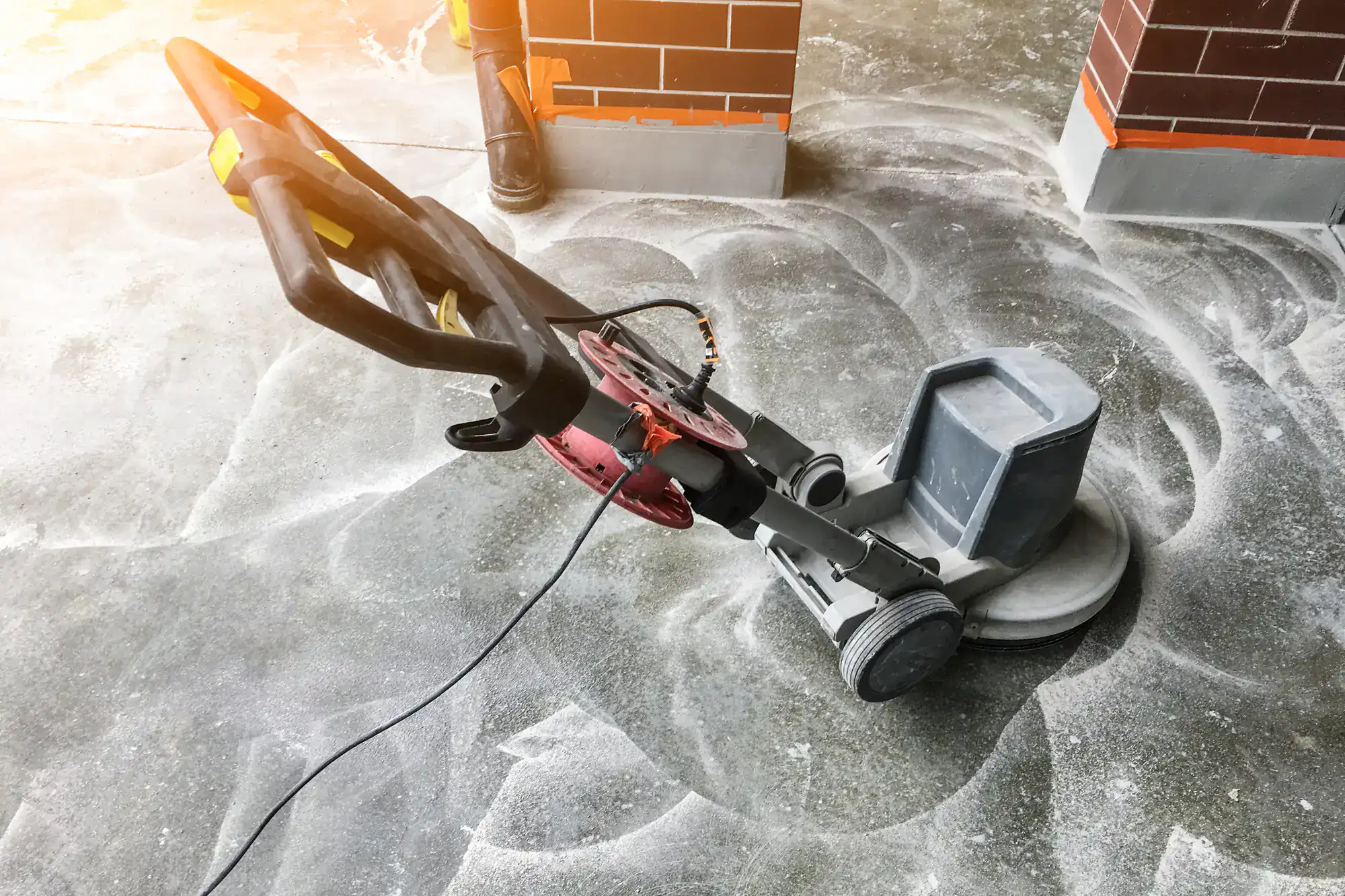
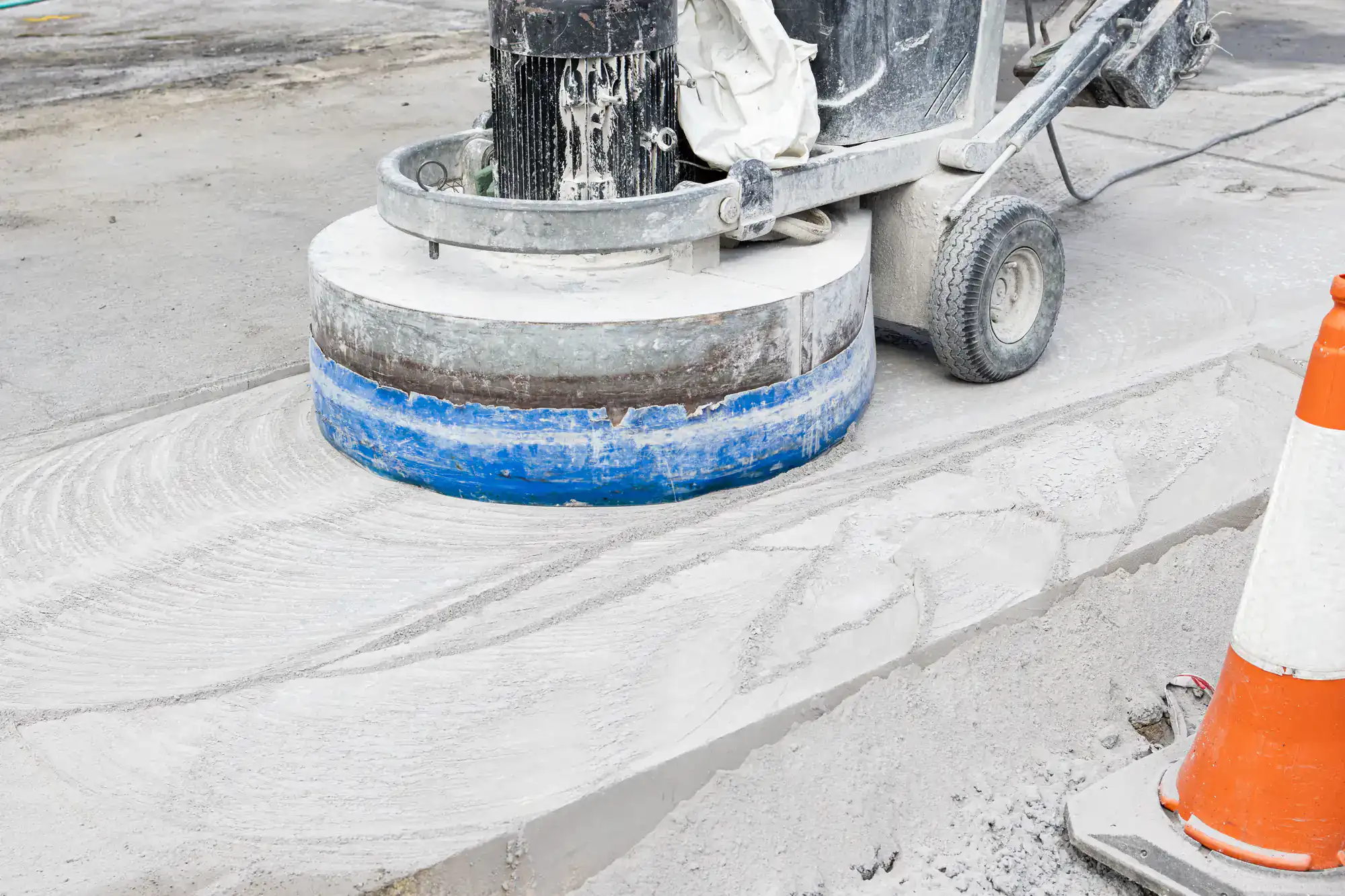
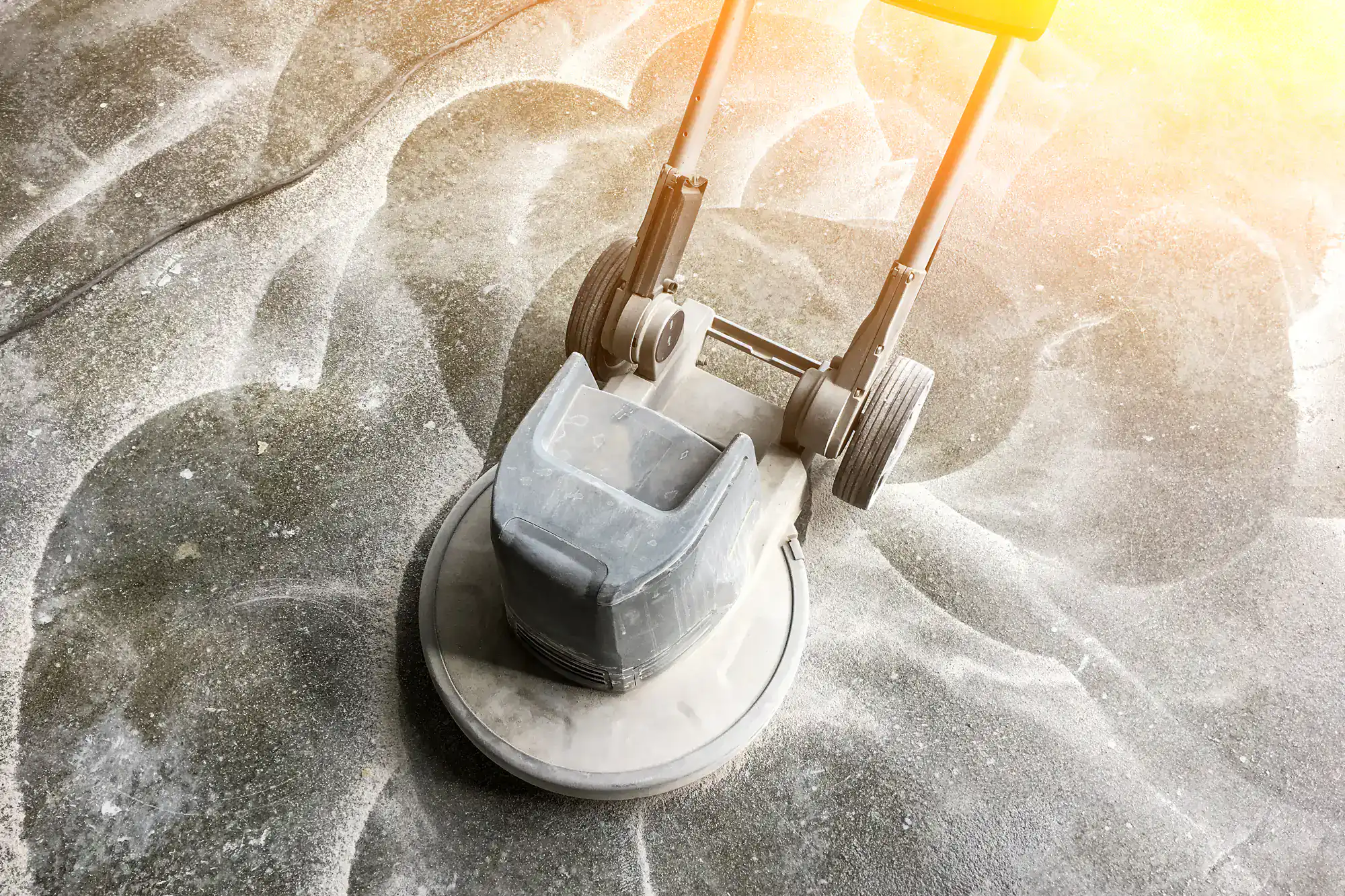
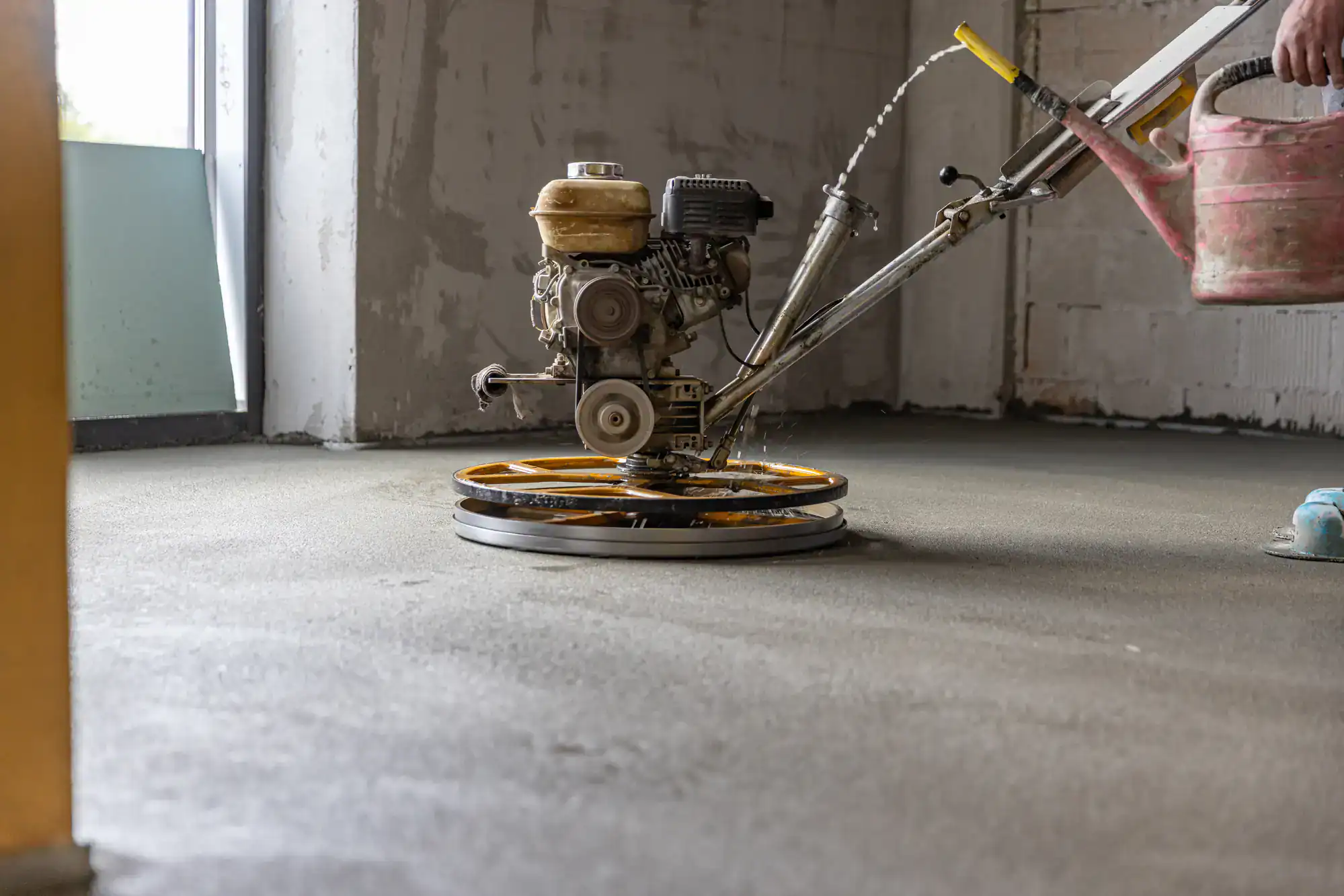
From there, the process moves through coarse diamond grinding to remove surface contamination and open the concrete, followed by progressively finer grit stages to refine the surface. Densifier is applied at the right point in the sequence not before, not after so it penetrates correctly and chemically hardens the slab. Then the finishing passes bring the floor to the specified gloss level, from a clean matte industrial finish up to a high-gloss showroom surface, depending on what your space actually needs.
For businesses that can’t afford extended downtime and most along a working commercial corridor can’t we sequence the job to minimize disruption. Work can be staged in sections, scheduled after hours, or timed around your operational calendar. Once the floor is done, maintenance is straightforward: routine cleaning, no stripping, no waxing. The floor holds.
Ready to get started?
Not every commercial floor needs the same finish, and applying a high-gloss surface to a warehouse or a matte finish to a retail showroom is the kind of mismatch that happens when a contractor isn’t actually thinking about your use case. The American Concrete Institute’s ACI 310.1-20 standard defines four finish classes from flat matte at the low end to highly polished at 61 or more Gloss Units at the high end. The right class depends on your traffic, your environment, and what you’re asking the floor to do.
For retail and showroom spaces along the Centereach commercial corridor, a Class 3 or Class 4 finish delivers the reflective, clean look that makes a space feel intentional and well-maintained. For light industrial and warehouse environments in the area, a Class 1 or Class 2 finish prioritizes durability and dust control without the high-gloss maintenance considerations. Healthcare-adjacent and institutional facilities and there’s a significant cluster of those in the Stony Brook University corridor just a few miles northwest often need a densified surface with stain guard that can handle chemical cleaning without degrading.
Slip resistance is also addressed directly, not treated as an afterthought. OSHA requires a minimum coefficient of friction of 0.5 for level commercial surfaces, and properly polished concrete meets that standard. For restaurants, gyms, or any space with frequent wet traffic, anti-slip additives can be incorporated into the finish without affecting appearance. Every detail of what you receive is matched to what your specific Centereach space actually requires.
This is one of the most common questions we get from business owners along Middle Country Road, and the honest answer is: usually yes. A lot of commercial spaces in Centereach are working with slabs that have decades of history old coatings, surface contamination, visible wear, maybe some cracking. That kind of condition doesn’t automatically disqualify a floor from polishing. It just means the preparation phase is more involved.
The assessment is where this gets determined. We grind off coatings, address surface damage, and can fill and stabilize cracks before the polishing sequence begins. After 40 years of evaluating slab conditions across Long Island, Danny can tell you quickly what your Centereach floor is capable of and what finish class makes sense given its current state. The answer is almost always that the floor can be worked with it just needs someone who knows how to read it.
Timeline depends on square footage, slab condition, and the finish class you’re going for. A straightforward retail or commercial space in good condition can often be completed in one to three days. A larger space with existing coatings to remove, surface damage to address, or multiple finish zones will take longer sometimes a week or more for a phased project.
For businesses in Centereach that need to stay operational during the work, we sequence the job in sections so you’re not shutting down the entire space at once. This is a common approach for retail and service businesses along the commercial corridor where closing completely isn’t realistic. The honest answer is that a proper assessment gives you a real timeline not a guess before any work begins.
The concern makes sense, but the premise isn’t quite right. Gloss and slip resistance are separate properties a floor can be highly reflective and still meet safety standards. OSHA requires a minimum coefficient of friction of 0.5 for level commercial surfaces, and properly polished concrete meets that threshold. The surface isn’t inherently more slippery than other commercial flooring options.
For environments where wet conditions are a regular reality a restaurant, a gym, a food service space anti-slip additives can be worked into the stain guard application without changing the appearance of the floor. This is a straightforward specification decision, not a workaround. If you’re running a customer-facing business in Centereach and slip resistance is a real operational concern, we address it in the finish spec before the job starts, not after.
Commercial concrete polishing in the Northeast generally runs between $3 and $12 per square foot, depending on the finish class, the condition of the slab going in, and the total square footage of the project. Larger projects tend to come in at the lower end of that range on a per-square-foot basis. Spaces that need significant prep work coating removal, crack repair, leveling will be toward the higher end.
The more useful number to think about is total cost of ownership over time. A polished concrete floor eliminates the recurring expense of waxing, stripping, and replacing softer floor coverings costs that compound significantly over a 10 or 20-year commercial lease. For property owners and business operators in Centereach’s active commercial real estate market, that lifecycle math often makes polished concrete the more economical choice over time, even when the upfront investment is higher than a coated or covered alternative.
Suffolk County winters are genuinely hard on concrete. The freeze-thaw cycle where water infiltrates the surface, freezes, expands, and then contracts as it thaws creates internal stress that breaks down untreated or improperly sealed concrete over time. You see it as surface scaling, dusting, and pitting. It’s not cosmetic damage; it’s the slab degrading from the inside out.
Densification is what addresses this directly. When lithium silicate is applied correctly during the polishing process, it penetrates the concrete and reacts chemically with the calcium hydroxide in the slab to form a harder, denser surface matrix. That hardened surface is significantly less porous, which means less water infiltration and less freeze-thaw damage over time. For a Centereach commercial floor that needs to hold up through Long Island winters for 15 or 20 years, proper densification isn’t optional it’s the difference between a floor that ages well and one that starts showing stress within a few seasons.
Because it means someone other than the contractor has verified that they know what they’re doing. A Sherwin-Williams High Performance Flooring certification isn’t handed out to anyone who asks it requires demonstrated knowledge of product chemistry, application standards, and quality benchmarks. When we specify a product system for your project, we’ve been trained and approved by the manufacturer to apply it correctly. That’s a layer of accountability that a contractor without that credential simply can’t offer.
In practical terms, it matters most when something could go wrong. Densifiers applied at the wrong stage of the polishing sequence don’t penetrate correctly. Sealers applied over a contaminated surface fail early. These aren’t rare edge cases they’re common outcomes when the person doing the work doesn’t fully understand the chemistry behind it. For a Centereach business investing in a floor that’s supposed to last decades, knowing the contractor holds verified credentials from the manufacturers whose products are going on your slab is a meaningful data point in that decision.