
Most business owners along Merrick Road don’t realize how much their floor is costing them until they do the math. Waxing cycles, recoating, patching it adds up fast. A properly polished and densified concrete floor eliminates most of that. No wax, no recoating, no annual maintenance contracts. Just a hard, clean surface that holds up.
The South Shore climate is genuinely tough on floors. Merrick sits close enough to the bay that salt air is a real factor, and the humidity from June through August regularly pushes into the high seventies and low eighties percentage-wise. Topical coatings that weren’t specified for those conditions bubble, peel, and fail. A densified polished floor hardens from within the chemistry happens inside the slab, not on top of it so moisture and salt air don’t have the same foothold.
Then there’s winter. Merrick gets hard freezes, and concrete that hasn’t been properly sealed is vulnerable to freeze-thaw damage. Water gets into the micro-pores, freezes, expands, and the surface starts to deteriorate. Densification closes those pores before that cycle starts. The result is a floor that actually gets stronger over time, not one that needs to be redone every few years.
We’re a Long Island-based, owner-operated flooring company. Danny Harmer has been working hands-on with concrete floors for over 40 years not managing crews from an office, but actually on the job. When you hire Advanced Epoxy Flooring, that’s who shows up.
The credential that tends to stop people mid-sentence: in 1996, we completed flooring work at the White House kitchen. That’s not a marketing line it’s a verifiable fact. The most scrutinized commercial kitchen in the country trusted this work. If that level of accountability and quality was good enough there, it’s more than enough for your space on Merrick Road or anywhere else in Nassau County.
We also hold Sherwin-Williams High Performance Flooring certification and Res Tech certification two independently issued credentials that reflect real technical training, not just years in business. Merrick’s building stock is predominantly mid-century construction, and those older slabs come with their own history. We’ve seen every condition they present. That experience is what makes the assessment accurate and the result predictable.
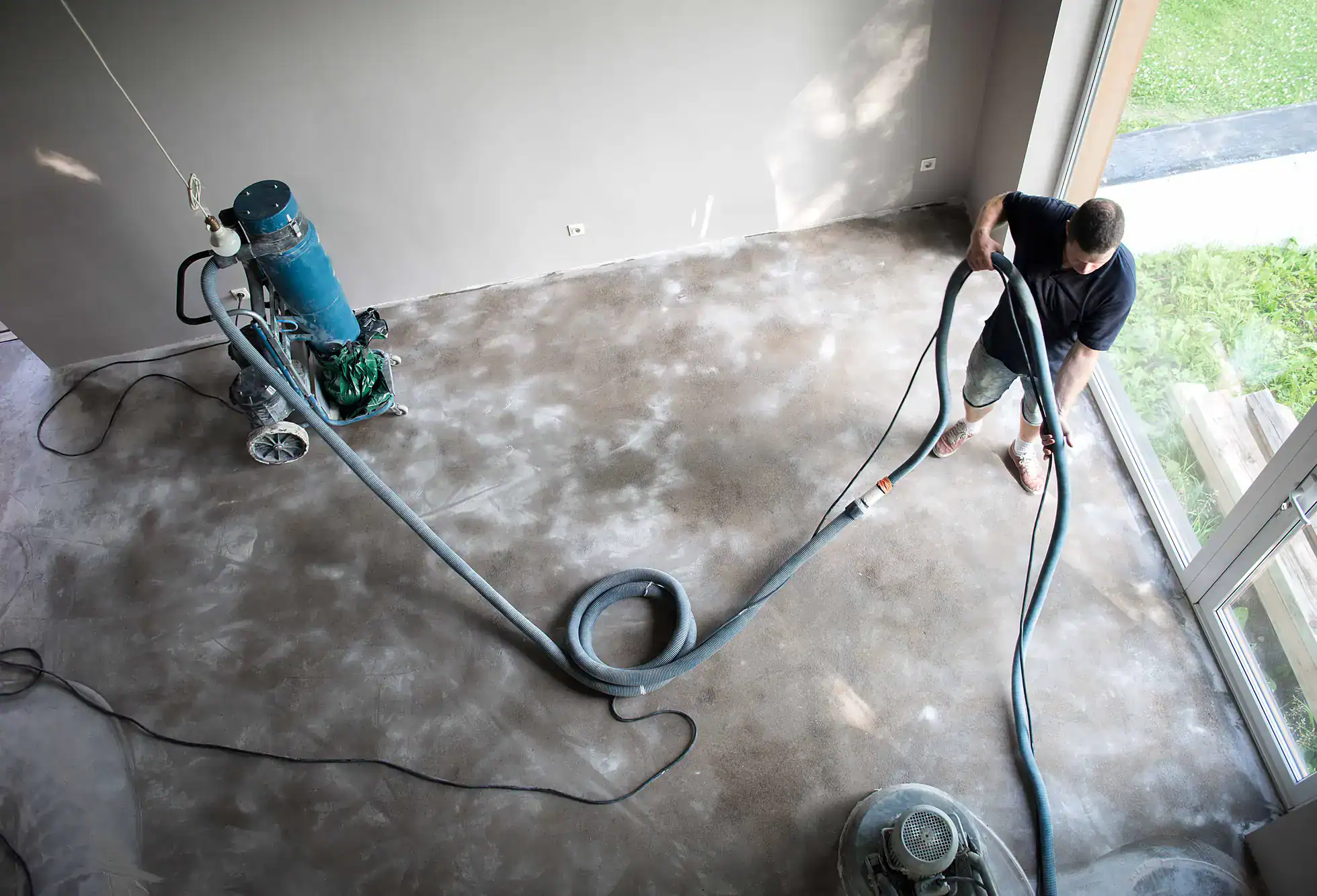
It starts with a proper assessment of the slab. Before any equipment comes out, we evaluate the concrete its age, condition, any previous coatings or treatments, and how it’s responding to the current environment. For a lot of Merrick commercial properties, that means working with slabs that are 50 to 70 years old, possibly coated multiple times over the decades. That history matters. Skipping this step is how floors fail.
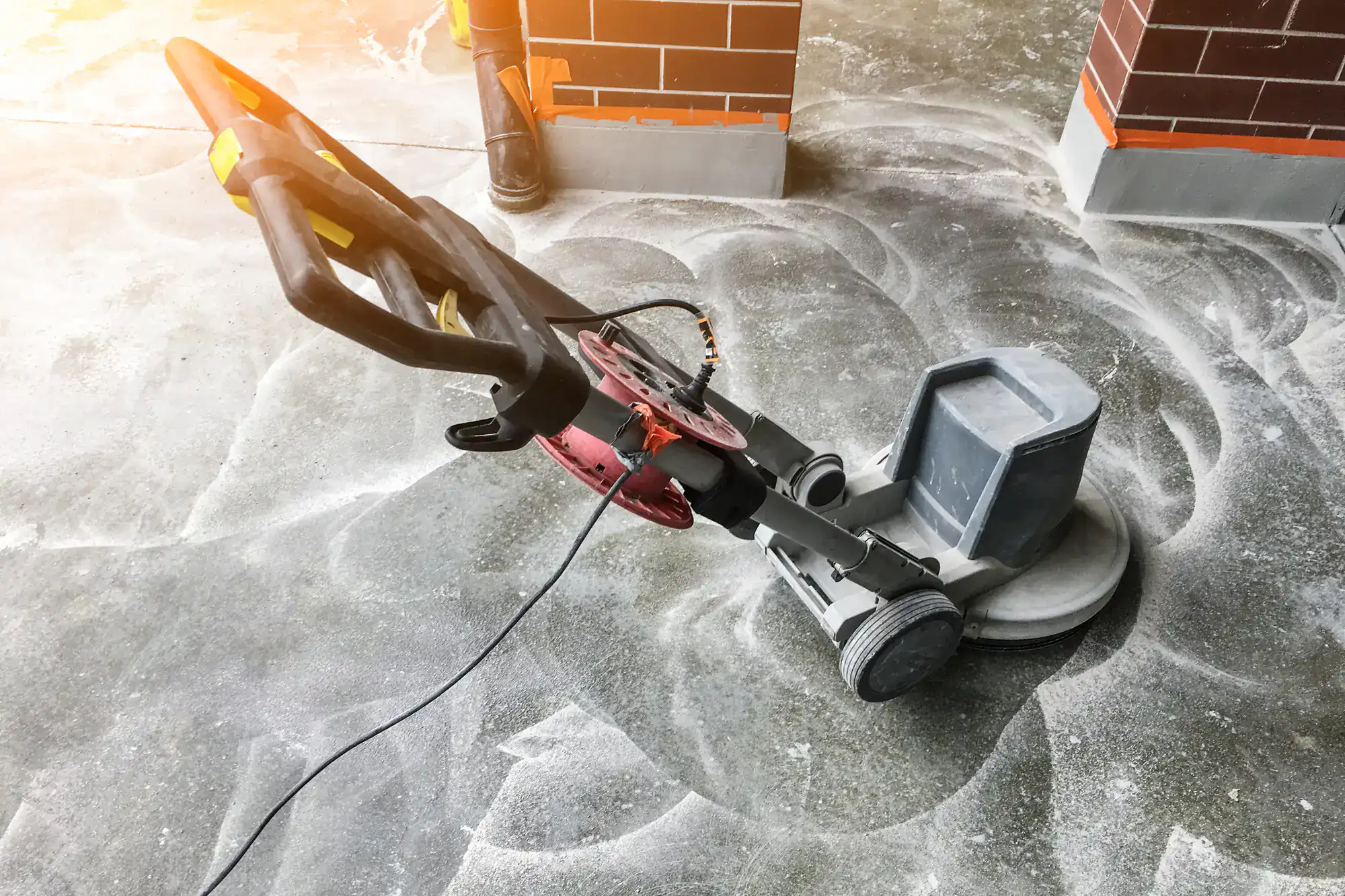
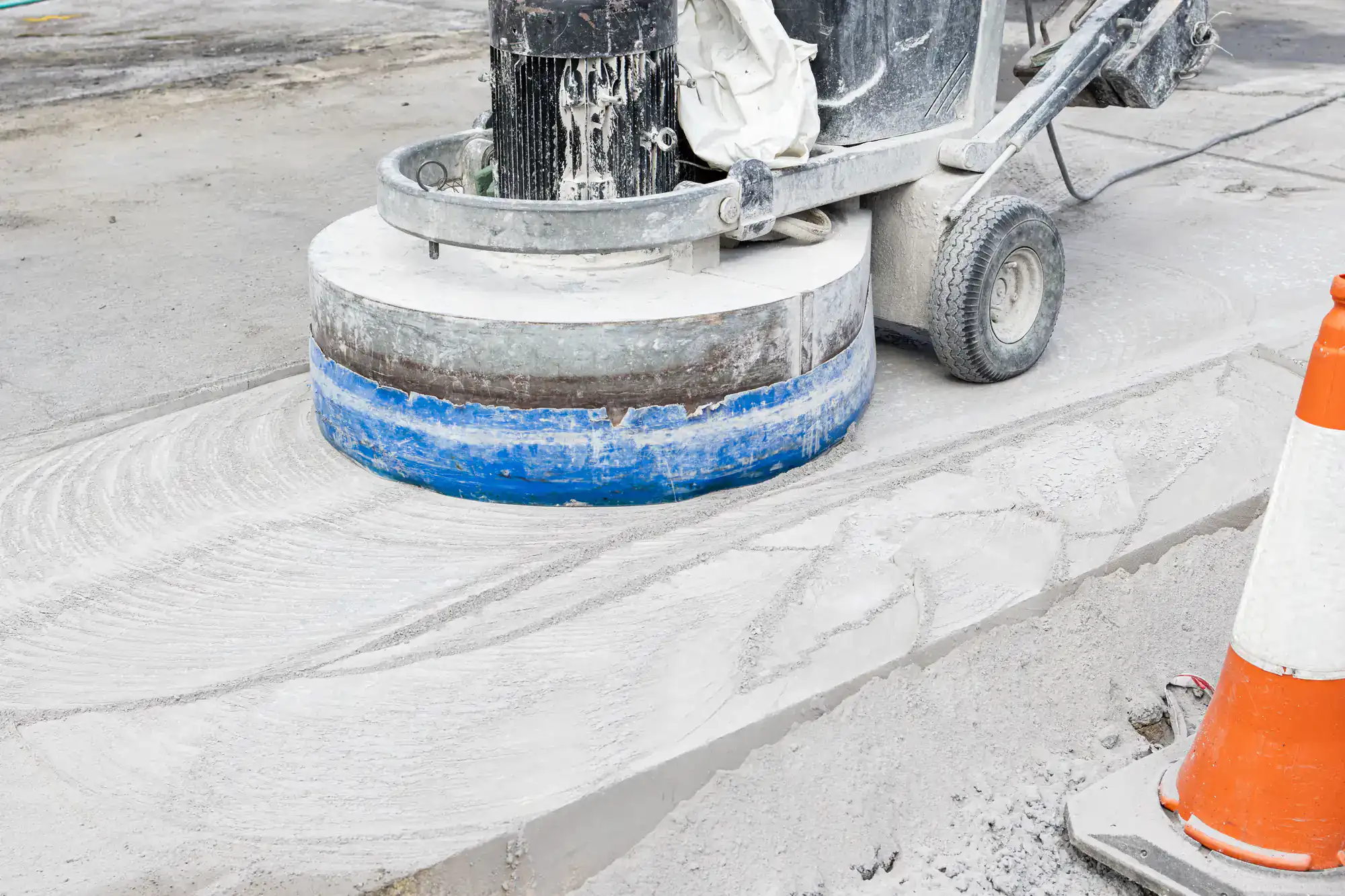
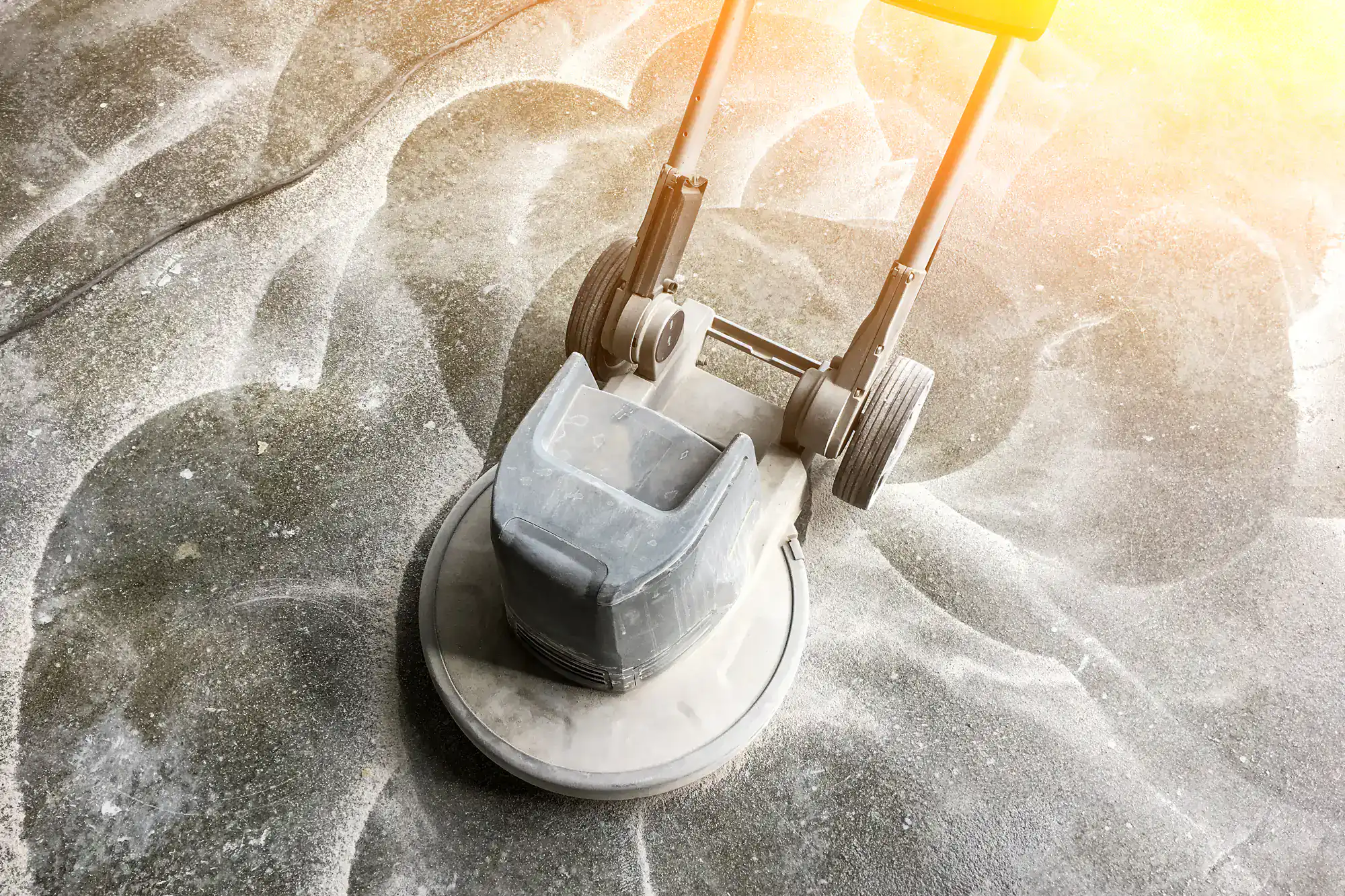
Once the slab is assessed, surface preparation begins. That means grinding down to a clean, consistent surface removing old coatings, leveling high spots, filling cracks or voids where needed. The diamond grit progression starts coarser and works finer in stages, which is what actually creates the polish. There’s no shortcut in this sequence. Each pass builds on the last, and cutting corners at any stage shows up in the final result.
After the surface is prepared and the right grit level is reached, we apply densifier. This is where the chemistry happens the lithium silicate reacts with the calcium hydroxide in the concrete and forms calcium silicate hydrate, which fills the micro-pores and hardens the surface from within. Given Merrick’s coastal humidity and the moisture vapor conditions common in South Shore Nassau County slabs, this step is especially important. A stain guard is applied last to protect the finish. The whole process is designed to work around your business hours phased sections, overnight scheduling, whatever keeps your operation running.
Ready to get started?
The businesses we work with are the ones operating in real commercial environments the restaurants and cafés along Merrick Road, the retail showrooms, the medical and professional offices, the light industrial spaces in the broader Nassau County market. Each of those environments has different demands, and we specify the floor system accordingly.
For customer-facing spaces retail, food service, healthcare finish class matters. The American Concrete Institute’s ACI 310.1-20 standard defines four finish classes based on measurable Gloss Units, from a flat matte finish up through a highly polished surface above 61 GU. You get to know what class you’re getting before work begins, and it can be verified with a gloss meter when the job is done. There’s no ambiguity about what “high gloss” means on this job. For environments with regular wet foot traffic, we can incorporate anti-slip additives into the stain guard without affecting the appearance which directly addresses the slip-and-fall liability concern that comes up for any Merrick business owner serving the public.
For industrial and warehouse-type spaces, the priority shifts toward durability and ease of maintenance. Either way, the specification is driven by what the space actually needs the use, the traffic volume, the existing slab condition, and the local environmental factors that affect long-term performance in this part of Nassau County. The assessment at the start of the job is what makes that specification accurate.
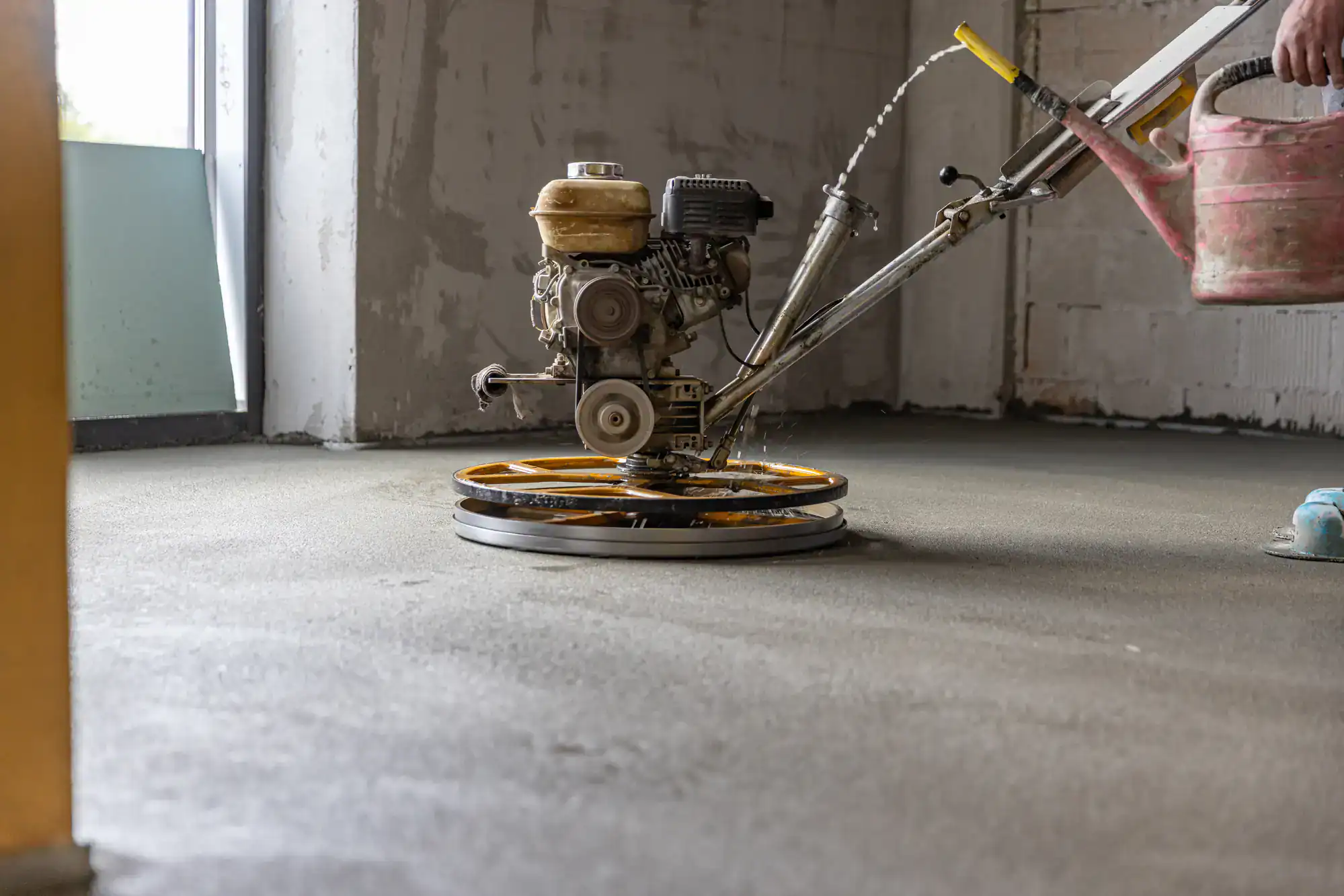
In most cases, yes. The concern most property owners have is that their slab is too old, too damaged, or too contaminated from previous coatings to be a good candidate. That’s rarely the case. Surface preparation grinding, crack filling, coating removal can bring most existing slabs to a point where polishing is not only possible but produces a great result.
Merrick’s commercial building stock is predominantly post-war construction, which means a lot of slabs out there are 50 to 70 years old. Those older slabs often have more character and variation than newer pours, but they’re workable. The assessment at the start of the job is what determines exactly what preparation is needed and what finish is achievable on that specific slab. The answer to “can my floor be polished?” is almost always yes the real question is just what it takes to get there, and that’s what the evaluation is for.
This is probably the most common concern, and it’s based on a misunderstanding of how polished concrete actually works. Gloss and friction are two separate properties. A floor can be highly reflective and still meet or exceed OSHA’s minimum coefficient of friction standard of 0.5 for level commercial surfaces and properly polished concrete does exactly that.
For environments where wet traffic is regular a café or restaurant along Merrick Road, for example we can blend anti-slip additives into the stain guard during installation. This doesn’t change the appearance of the floor in any meaningful way, but it gives you a measurable increase in traction when the surface is wet. The specification is adjusted for the environment. A showroom floor and a restaurant floor aren’t treated identically, and they shouldn’t be. The right system for your specific space is determined during the assessment, not assumed.
It’s a real factor, and it’s one that contractors without local experience in South Shore Nassau County tend to underestimate. Merrick’s proximity to Merrick Bay and the Great South Bay means average humidity during warmer months frequently runs between 71 and 82 percent. That level of ambient moisture affects both how chemical applications behave during installation and how the slab performs over time.
High moisture vapor transmission which is common in older slabs in coastal environments is one of the primary reasons floor coatings fail prematurely. When moisture vapor moves up through a slab and hits a topical coating that wasn’t specified for those conditions, it creates pressure that eventually causes delamination, bubbling, or peeling. Densified polished concrete handles this differently because the hardening process happens within the slab itself, not on top of it. The densifier fills the micro-pores, which reduces permeability and gives moisture vapor less of a pathway. It doesn’t eliminate the physics of vapor transmission, but it significantly reduces the vulnerability. Specifying the right system for a coastal Long Island slab is something that requires actual familiarity with these conditions not just a standard installation protocol.
For commercial polished concrete in the Northeast, pricing typically ranges from around $3 to $12 per square foot. Where a specific project lands within that range depends on a few variables: the size of the space, the current condition of the slab, how much surface preparation is needed, and what finish class you’re specifying. A Class 4 highly polished finish on a well-prepped slab in a 5,000-square-foot showroom is a different scope than a Class 2 satin finish on a slab that needs significant coating removal and crack repair first.
The more useful way to think about cost in Merrick’s commercial market is total cost of ownership over the life of your lease or property hold. A properly installed polished concrete floor requires no waxing, no stripping, no recoating for 15 to 25 years with basic maintenance. VCT needs annual wax-and-strip cycles. Carpet in a commercial environment needs full replacement every 7 to 10 years. The upfront investment in polished concrete is higher than either of those but the lifecycle math consistently favors it, especially for business owners managing long-term commercial leases on Merrick Road or elsewhere in Nassau County. The assessment gives you a specific number for your space before any commitment is made.
The timeline depends on the square footage, the slab condition, and what finish class is being installed. A straightforward 2,000-square-foot retail or office space with a slab in reasonable condition can typically be completed in one to two days. Larger spaces or slabs that need significant preparation work take longer. The honest answer is that the assessment gives you the real timeline not a guess.
What most Merrick business owners care about more than the total timeline is whether they have to close. In most cases, we can phase the work and schedule it around your operation. That means working in sections so part of the space stays open, or scheduling installation during evening and overnight hours when your business is closed. The businesses along Merrick Road are serving an active, loyal local customer base, and losing a week of revenue isn’t an acceptable trade-off for a floor upgrade. That’s a scheduling conversation that happens upfront, before work begins, so there are no surprises on either side.
This is genuinely the hardest part of the process for most buyers, and it’s a fair question to ask. The flooring industry has a lot of contractors who can apply a product far fewer who understand why a specific product or process will perform well on a specific slab in a specific environment. The difference shows up 12 to 18 months after installation, not at the ribbon cutting.
A few things worth looking for: named manufacturer certifications from companies like Sherwin-Williams, not generic “certified” badges that don’t trace back to anything verifiable. Direct owner involvement, so the person accountable for the result is the same person doing the work. A willingness to assess your specific slab before quoting, rather than giving you a per-square-foot number over the phone without seeing the floor. And a track record that’s specific enough to verify not just years in business, but actual projects with real scope. We completed flooring work at the White House kitchen in 1996. That’s the kind of credential that answers the question directly. If you’re evaluating contractors in Merrick or anywhere in Nassau County, ask them what their most demanding project was. The answer tells you a lot.