
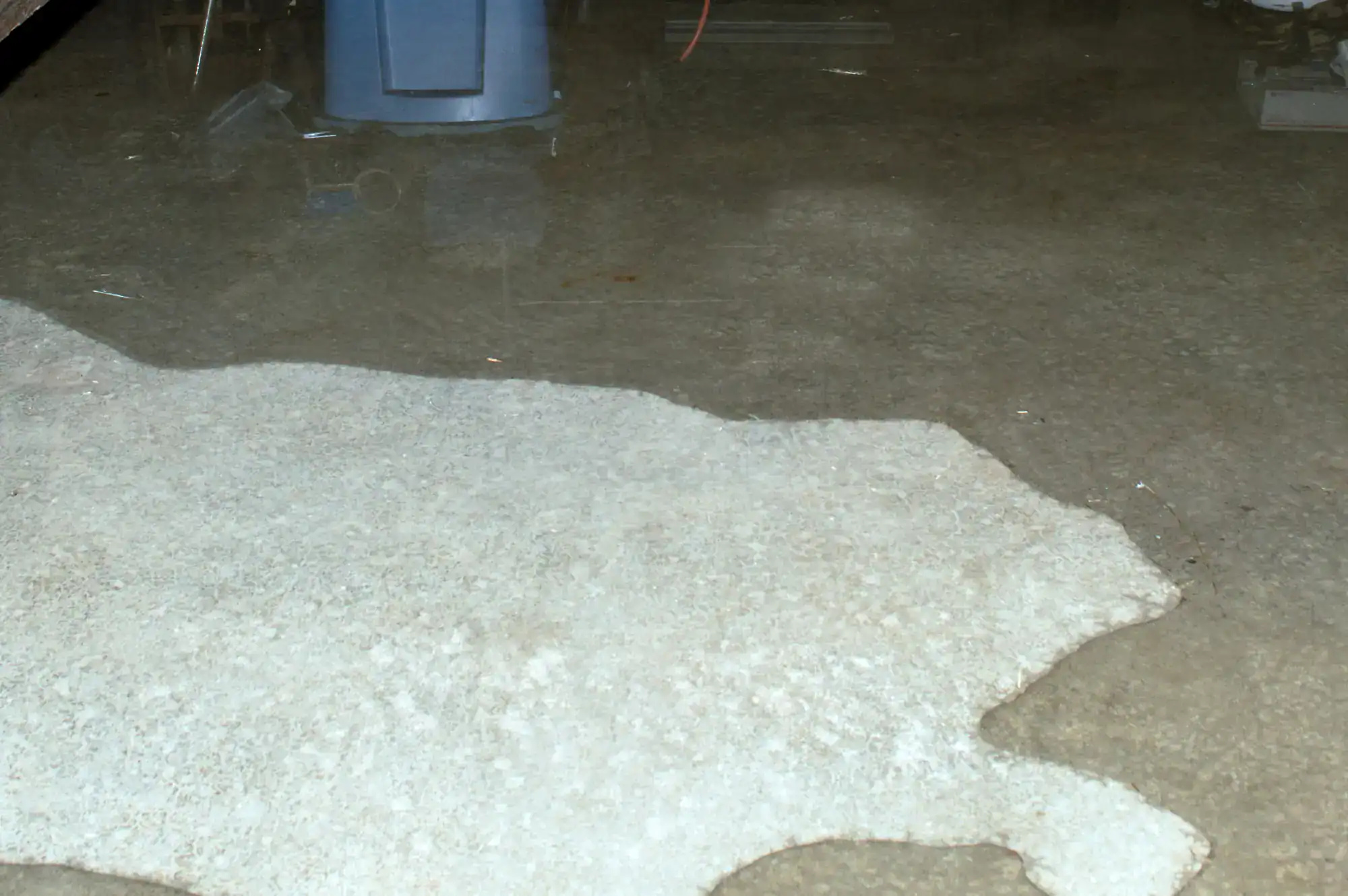
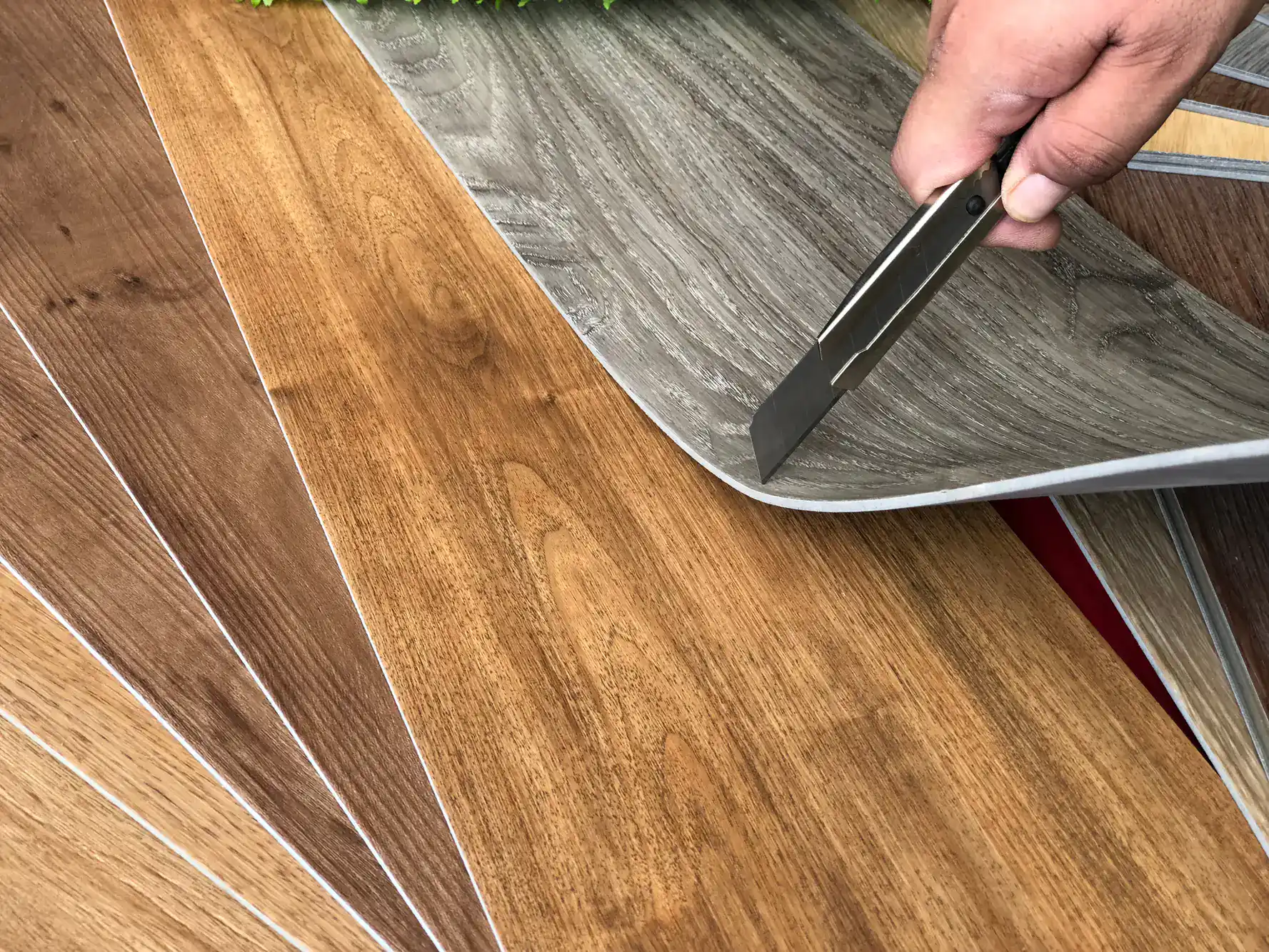
Salt air off Merrick Bay doesn’t just affect your apparatus it works on your concrete too. Elevated marine humidity accelerates moisture vapor transmission through the slab, and that’s the number one reason epoxy floors bubble, peel, and fail in South Shore fire stations. A properly installed polyaspartic system seals out that moisture at the capillary level, so the floor stays bonded even when the humidity doesn’t let up.
Winter adds another layer. Every time your apparatus doors open in January, cold air rushes across a floor that’s been warmed by idling trucks. That thermal shock cracks standard coatings over time. Polyaspartic is four times more flexible than standard epoxy, which means it moves with the slab instead of breaking against it. Road salt tracked in from Sunrise Highway and Merrick Road adds chemical stress on top of that and polyaspartic’s chemical resistance handles it without degrading.
The result is a floor that looks sharp, cleans easily, and actually lasts. For a department that just invested in top-tier Seagrave aerials, the floor beneath those trucks deserves the same level of engineering. A professionally installed system lasts 20-plus years. That’s not a sales pitch that’s the math on what you’re protecting.
We’re based in Bohemia a straight shot east on Sunrise Highway from Merrick. We’ve been installing commercial and industrial resinous floors across Long Island for over 30 years, and our CEO Danny Harmer has been doing this work hands-on for over 40. That’s not background filler it means when something unexpected comes up on a job, it’s been seen before.
Our field team reflects the same stability. Supervisors Javier, Eduardo, and Fredith bring a combined 40-plus years of installation experience between them, and most of our crew has been with us for over a decade. No rotating subcontractors, no learning curve on your floor.
We hold the Sherwin-Williams High Performance Flooring certification and Res Tech certification two of the most rigorous manufacturer-approved applicator credentials in the resinous flooring industry. Every installer on our team is OSHA 40 certified, which matters when work is being done inside an active fire station in Nassau County like those serving Merrick.
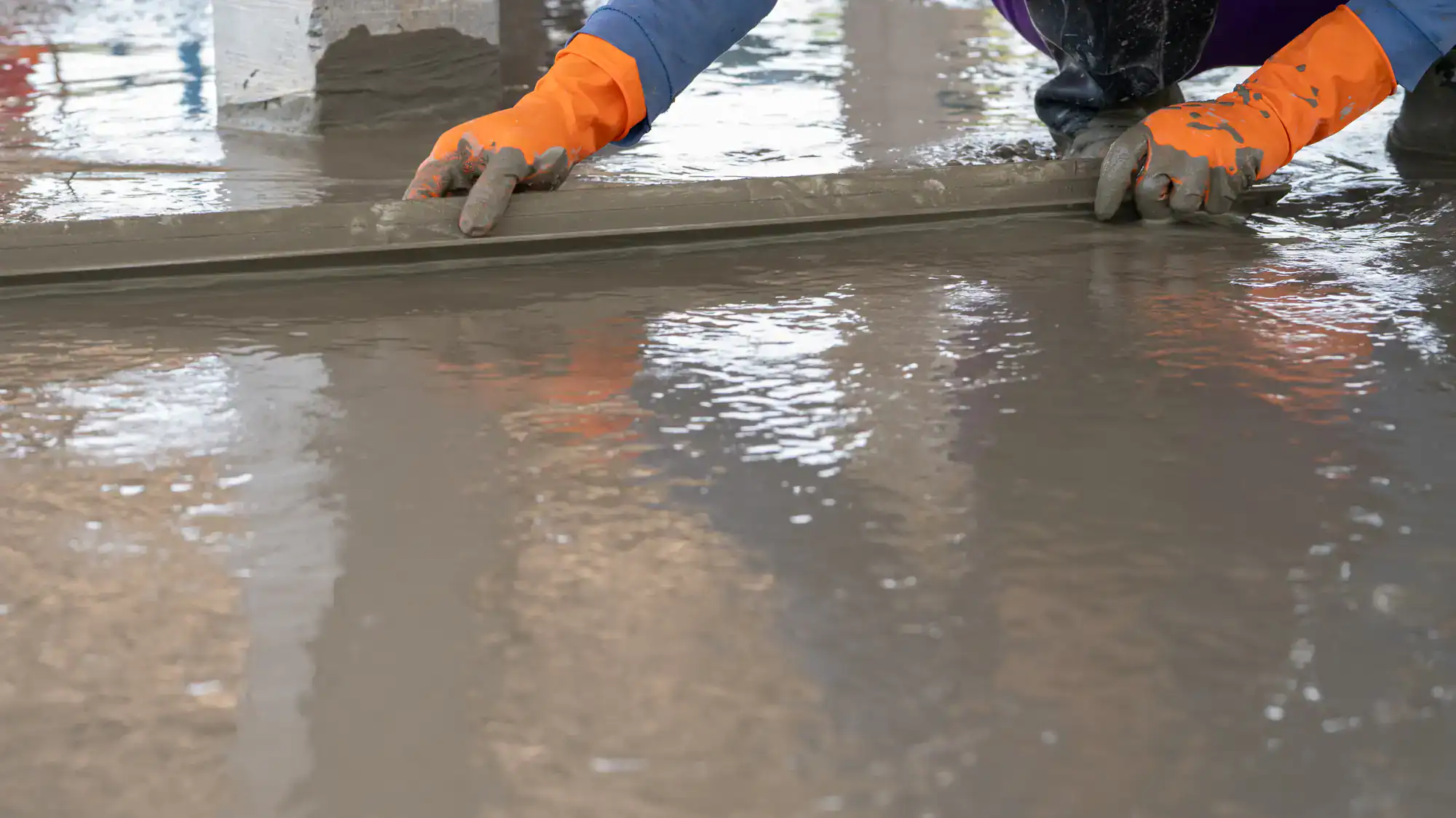
The first thing that happens on a Merrick job isn’t coating it’s testing. Because of the South Shore’s proximity to Merrick Bay and the elevated moisture content that comes with coastal concrete, we test every slab for moisture vapor transmission before anything else. Skipping that step in a coastal community is how you end up with a floor that looks fine for six months and then starts lifting.
Once the slab is assessed, we prepare the surface using multi-head diamond grinding not acid etching. Diamond grinding opens the concrete capillaries mechanically and creates a true bonding surface without introducing water into the slab. We repair any cracks or damaged areas at this stage. Then a penetrating primer goes down, followed by a high-build epoxy base coat, an aggregate broadcast for texture and slip resistance, and a polyaspartic topcoat engineered for chemical resistance and thermal flexibility.
The full system cures in 24 hours. That means your apparatus is back in the bay the next morning not a week later. For a department answering roughly 1,400 calls a year across three stations, that turnaround isn’t a convenience. It’s a requirement. The Town of Hempstead funds Merrick FD’s apparatus, and the last thing anyone wants is aerial trucks sitting outside while a floor cures.
Ready to get started?
The system we install in Merrick apparatus bays is a multi-layer commercial-grade build not a residential garage kit, not a single-coat rollover. It starts with a penetrating primer that bonds at the concrete level, followed by a high-build epoxy base coat that fills surface imperfections and creates a solid foundation. A color quartz or solid color aggregate is broadcast into the wet coat for texture, then sealed with a polyaspartic topcoat that handles chemical exposure, thermal cycling, and the concentrated loads that come with aerial apparatus.
That topcoat is specifically what handles the road salt, bay humidity, and freeze-thaw conditions that are part of daily life in a South Shore Nassau County station. It’s also seamless and non-porous, which supports the contamination control protocols that NFPA 1500 calls for a floor that can be fully decontaminated after a structure fire, protecting the roughly 140 volunteer firefighters who work out of Merrick’s stations.
Every job we quote in Merrick is based on actual slab condition, square footage, and use requirements not a generic price list. We assess the scope and spec on-site.
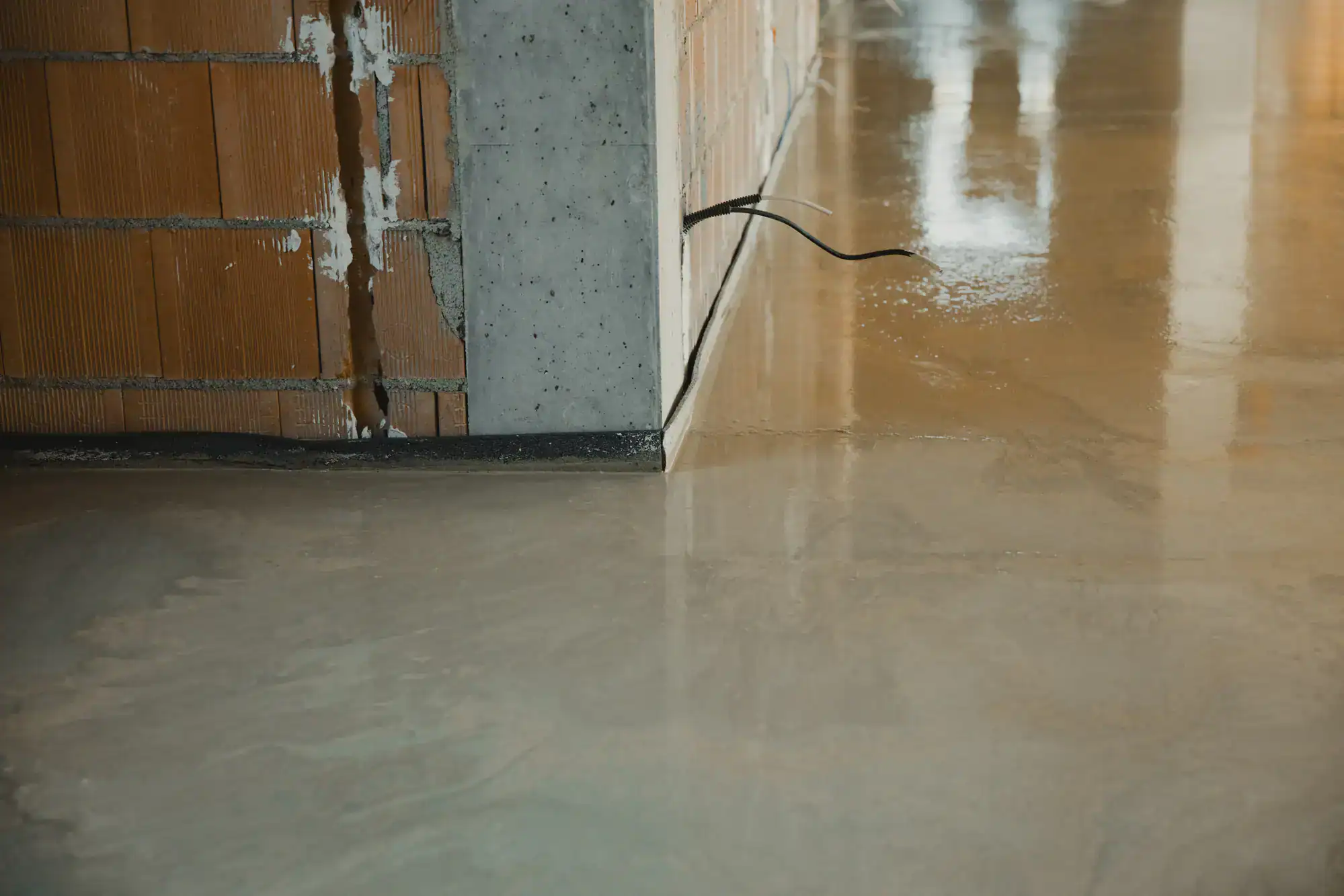
In a South Shore community like Merrick, the honest answer depends almost entirely on how the floor was installed not just what product was used. A professionally installed polyaspartic system with proper surface preparation, moisture testing, and a multi-layer build will last 20-plus years even with salt air, marine humidity, and seasonal road salt exposure. Standard epoxy without that preparation process typically lasts five to ten years in ideal inland conditions and noticeably less in a coastal environment where moisture vapor is constantly working on the slab from below.
The biggest variable is what happens before the first coat goes down. Concrete near Merrick Bay tends to carry elevated moisture content, and if that’s not tested and accounted for before coating, you’ll see delamination bubbles and peeling within the first year or two regardless of which product was used. The prep work is what determines longevity, not the label on the bucket.
Yes and for a department like Merrick FD that answers around 1,400 calls annually, that’s the only realistic option. The polyaspartic systems we install cure in 24 hours, which means trucks can return to the bay the next morning. Traditional epoxy systems require three to seven days of full cure before heavy apparatus can park on them which essentially means staging trucks outside or at another facility for the better part of a week.
For Merrick’s three-station operation, a 24-hour cure window is workable. A seven-day window isn’t. The rapid-cure approach doesn’t cut corners on the system itself the same multi-layer build and surface preparation process applies. The difference is in the topcoat chemistry, which is engineered to cure faster without sacrificing the durability or chemical resistance that an apparatus bay demands.
The most common cause is moisture vapor transmission and it’s especially relevant in coastal communities like Merrick. When concrete sits close to a high water table or in a salt-air environment, moisture moves upward through the slab. If a coating is applied without first testing for moisture content and addressing it properly, that vapor pressure builds up beneath the coating and eventually pushes it off the concrete. It shows up as bubbles first, then peeling, usually within the first year.
The second most common cause is inadequate surface preparation. Acid etching which some contractors still use doesn’t create a strong enough mechanical bond and actually introduces water into the slab right before sealing. Diamond grinding is the correct approach because it opens the concrete capillaries without adding moisture. If you’ve had a floor fail before and want to understand why, those two factors moisture testing and prep method are almost always where the answer is.
In most cases, a floor coating installation in an existing fire station does not require a separate building permit under Town of Hempstead jurisdiction. The coating work itself grinding, priming, and applying the resinous system is typically treated as a maintenance or improvement activity rather than structural work. That said, if the project involves concrete repair, drainage modification, or any work that changes the structure of the bay, permit requirements may apply and should be confirmed with the Town of Hempstead building department before work begins.
For Merrick FD specifically, the Town of Hempstead funds and provides apparatus and equipment, which means capital improvement projects at department facilities may involve an additional layer of town-level review depending on how the project is budgeted and approved. We recommend confirming the approval pathway with your department’s leadership and the Town before finalizing a project scope something we can help you think through based on our prior Nassau County experience.
Road salt and the de-icing chemicals Nassau County applies to Sunrise Highway, Merrick Road, and local streets throughout winter gets tracked directly into the apparatus bay on tires, undercarriages, and wheel wells every time a truck responds to a call. On bare concrete or a thin standard epoxy coating, that chloride exposure causes gradual surface degradation: discoloration, softening, and eventually delamination, especially in areas where the coating is thinnest or where moisture is already present.
Polyaspartic topcoats are specifically formulated for chemical resistance, including chloride salts. The topcoat layer in a properly installed system doesn’t absorb road salt it resists it at the surface, so regular cleaning removes the contamination before it has a chance to work on the floor. For a South Shore department where winter road salt is a constant, that chemical resistance isn’t a bonus feature. It’s a baseline requirement for any coating that’s going to hold up season after season.
The cost comparison that matters most isn’t the upfront price it’s what you spend over time. A professionally installed polyaspartic system runs more than a standard epoxy job or a DIY kit, but it lasts 20-plus years. Standard epoxy lasts five to ten years under normal conditions and less in a coastal environment like Merrick’s. A consumer-grade kit typically fails in three to five. When you run the math on cost per year of service life, the professional system is almost always the more cost-effective choice and that’s before you factor in the labor and downtime cost of grinding off a failed coating and starting over.
For a volunteer department making the case to a budget committee or fire district board, that total cost of ownership framing is the most straightforward argument. A floor that protects six-figure Seagrave apparatus, supports NFPA contamination control protocols, and doesn’t need replacement for two decades is a capital investment not a maintenance line item. The departments that have been through one failed floor already tend to understand this immediately.