
When a floor is off even by a quarter inch it affects everything that goes on top of it. Tile cracks at the grout lines. Vinyl planks separate at the seams. Hardwood shifts and squeaks. You end up replacing the finish floor when the real problem was always what was underneath it. Getting the substrate right the first time is what prevents that cycle from repeating.
For Merrick homeowners, this matters more than most people realize. The South Shore water table is shallow, and properties near Merrick Bay and the canal system deal with chronic slab moisture. That moisture works its way up through concrete over time, softening adhesives and breaking down whatever’s bonded to it. A properly assessed and leveled slab one that’s been moisture-tested before anything is poured holds up in ways that a rushed fix simply won’t.
The housing stock here also plays a role. Homes built in the 1940s and 50s which make up the majority of Merrick’s neighborhoods have original concrete that has been settling, shifting, and absorbing decades of freeze-thaw cycles. That’s not a flaw in the construction. It’s just time doing what time does. The right self leveling underlayment corrects that history and gives your new floor a foundation it can actually rely on.
We’ve been installing floors across Long Island for over 30 years. We’re based in Bohemia, NY not a franchise, not a national chain and the crew that shows up to your job in Merrick has been doing this work for a decade or more. Our president and CEO, Danny Harmer, brings over 40 years of personal installation experience to every project we take on. That kind of tenure means we’ve seen the specific challenges that Nassau County homes present, and we don’t need to figure it out on your floor.
Our project history goes well beyond residential work. In 1996, we installed a floor in the White House kitchen which, if you think about the standards required for that job, tells you something about what we’re capable of. We hold an A+ BBB rating, and every installer on our crew is OSHA 40 certified.
For Merrick specifically whether you’re renovating a mid-century cape in Briarcliff Manor, a historic home in Merrick Gables, or a commercial space along Merrick Road we know this area’s housing stock and what it takes to get the substrate right before a single bag of underlayment is mixed.
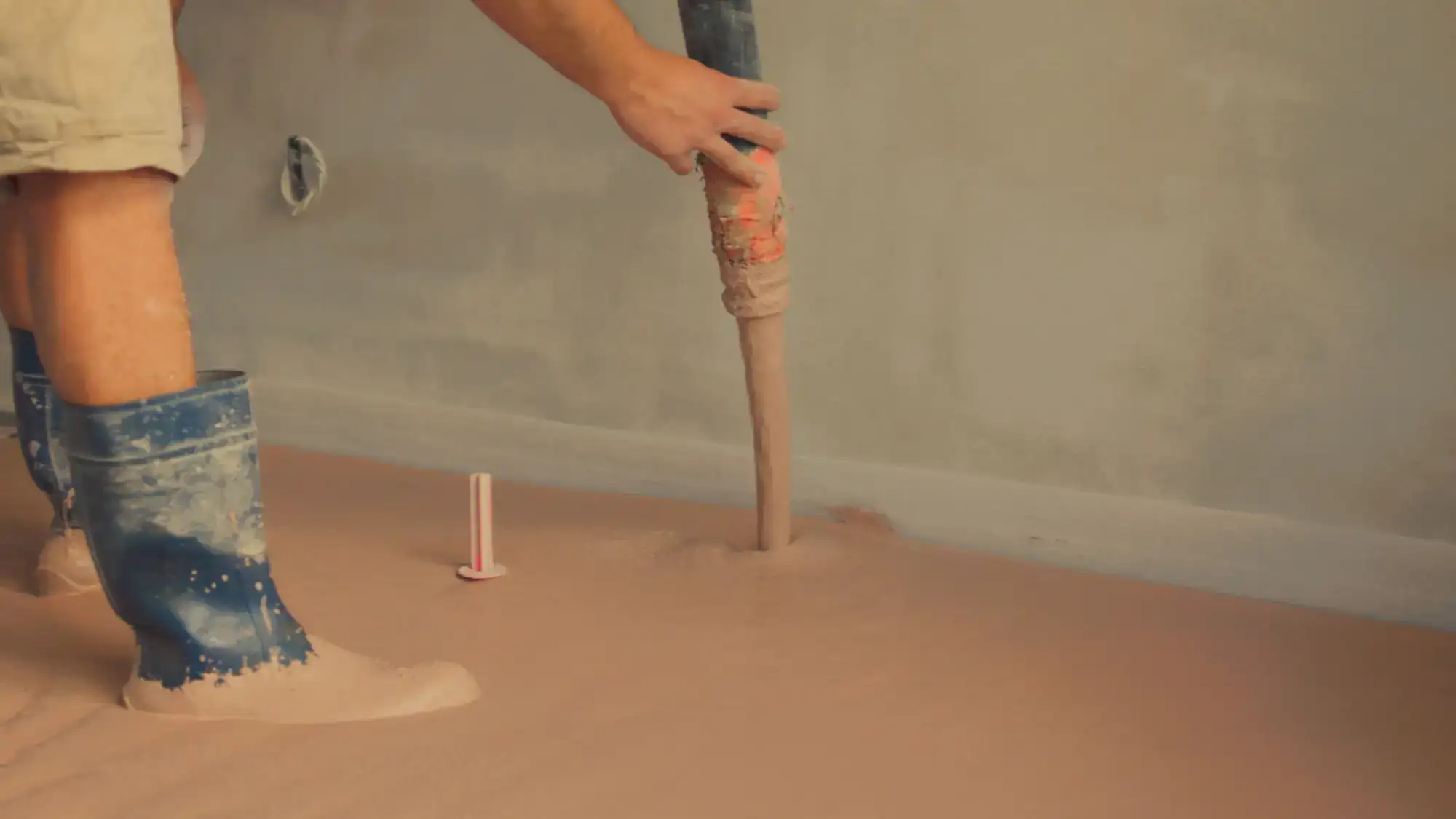
The first thing that happens on any self leveling job in Merrick isn’t mixing or pouring it’s testing. We perform ASTM F2170 relative humidity testing and Moisture Vapor Emission Rate evaluation on your slab before any material is introduced. Given Merrick’s position on the South Shore, at roughly 16 feet above sea level and adjacent to tidal waterways, moisture vapor transmission through concrete is a real and recurring issue. Skipping that step is how underlayment delaminates within two years. We don’t skip it.
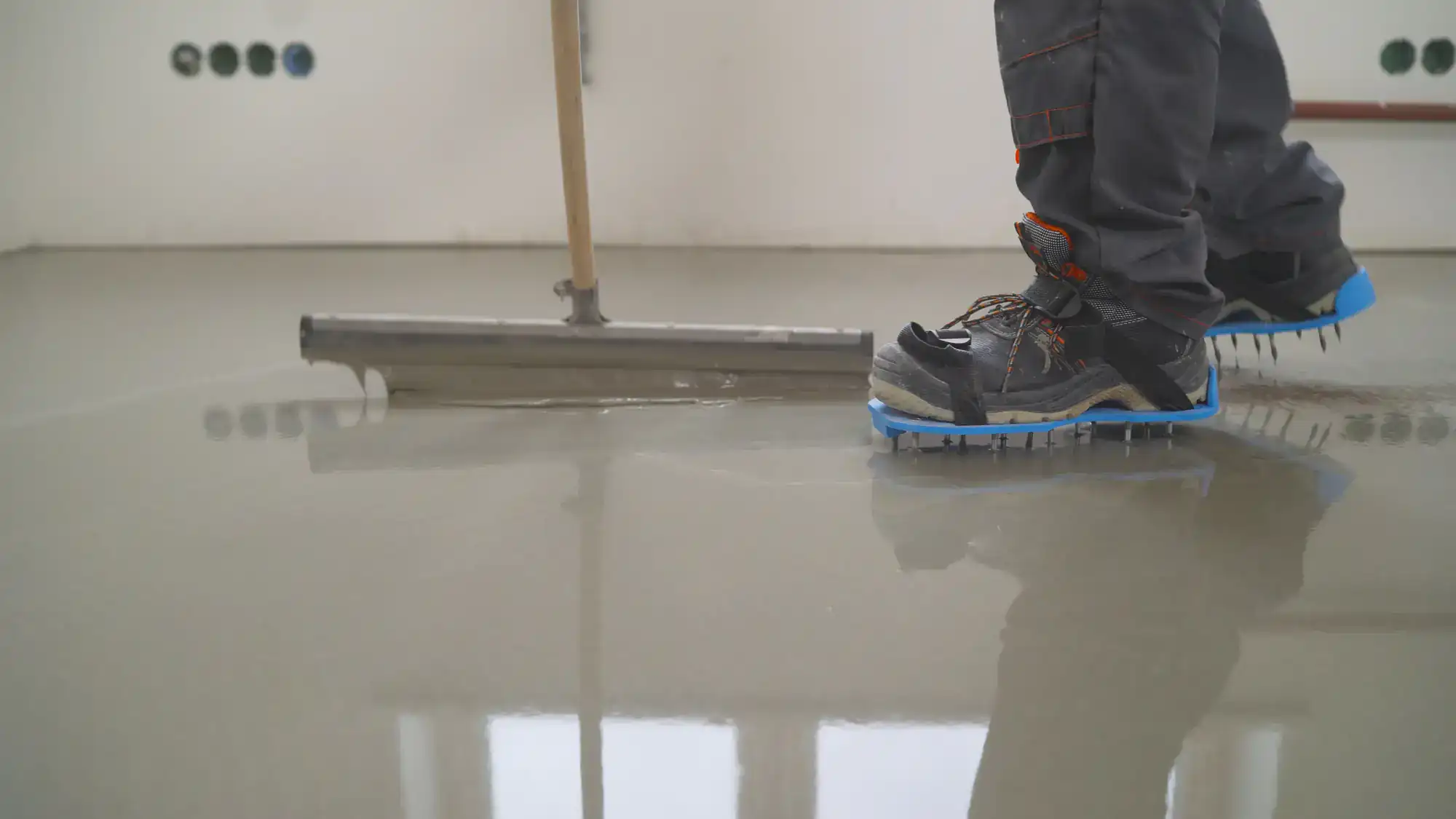
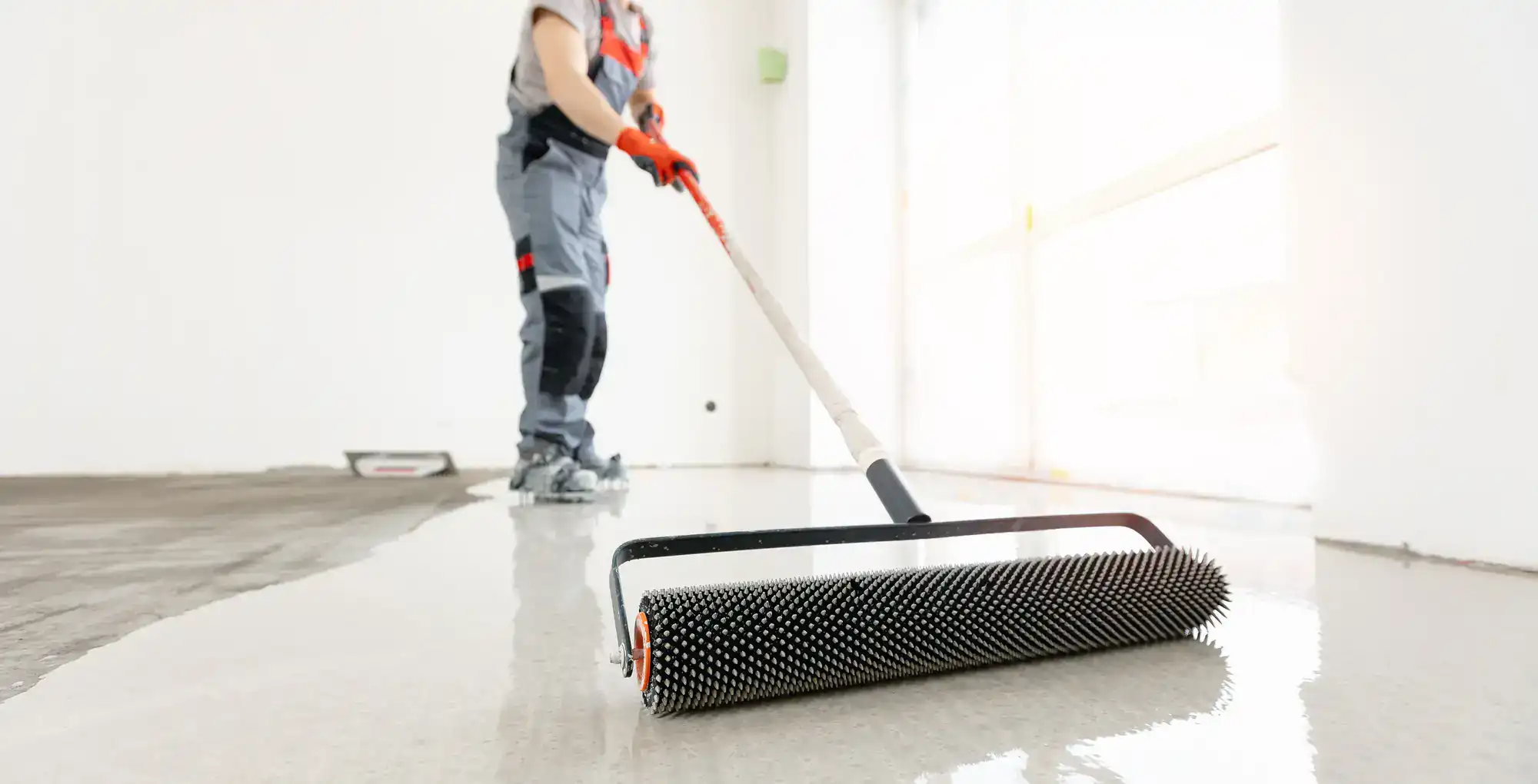
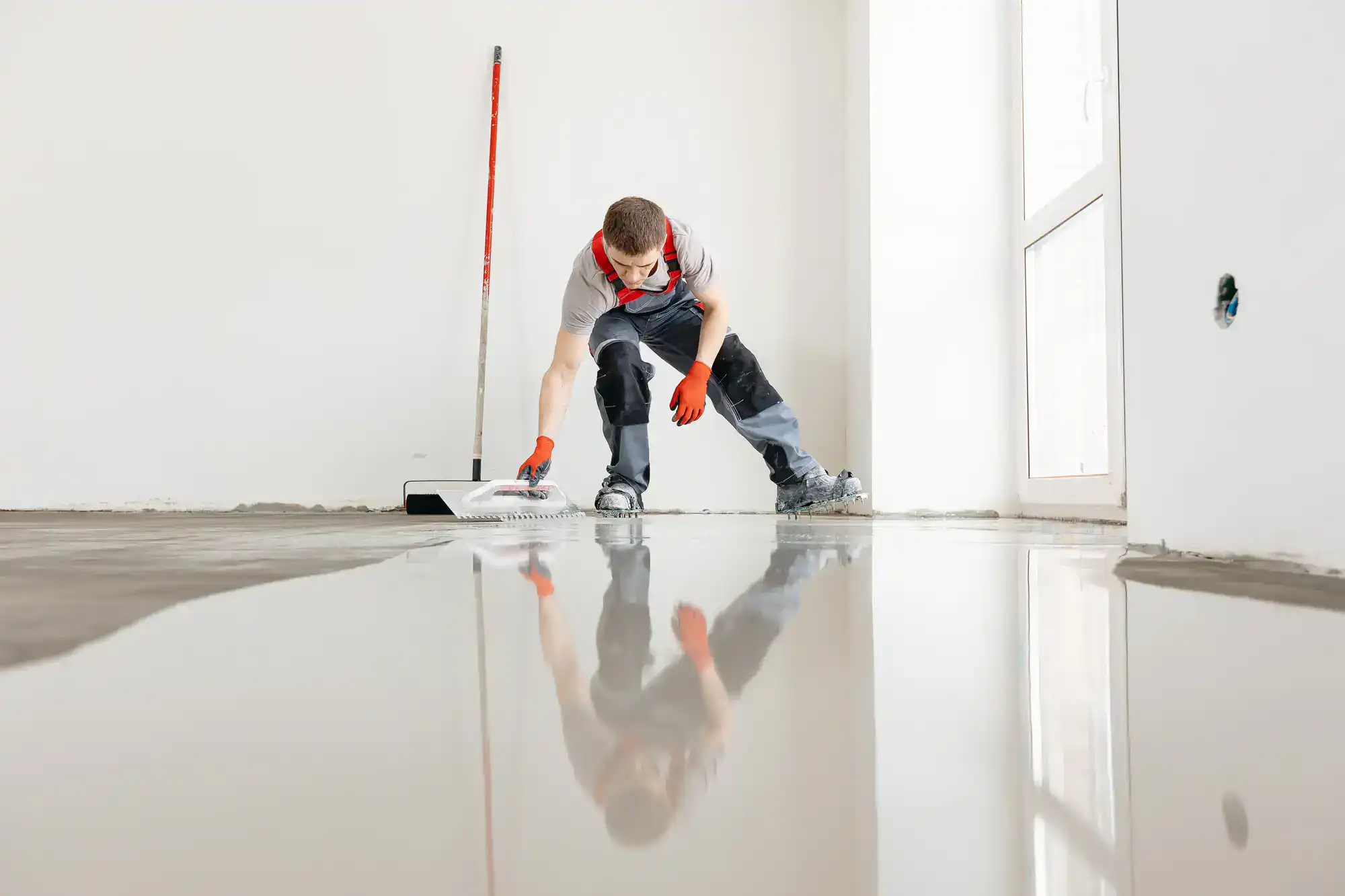
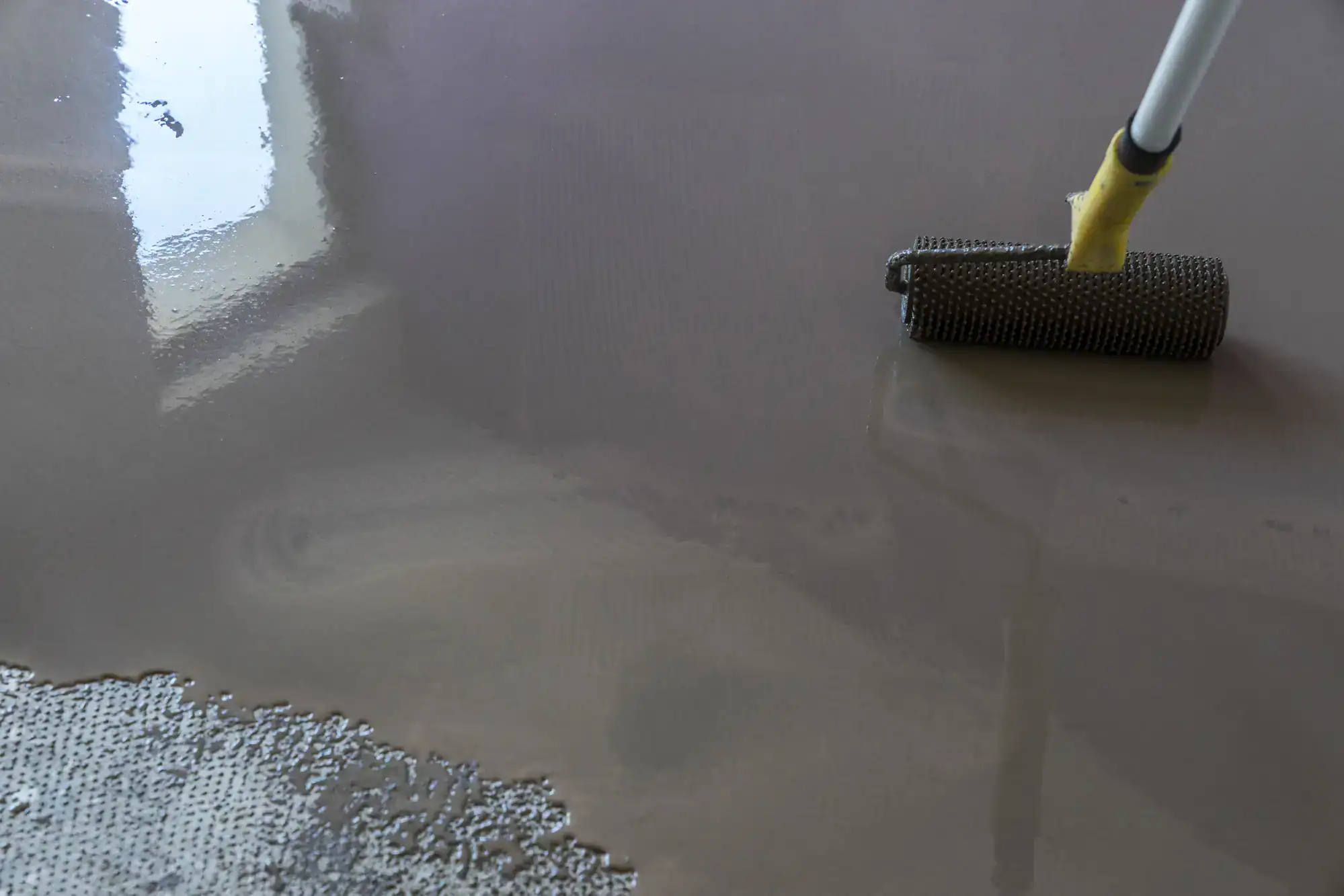
Once moisture readings confirm the slab is within acceptable range, the surface is prepared ground, cleaned, and evaluated for depth of correction needed. Our cementitious self leveling underlayment in Merrick, NY handles everything from a quarter inch of correction up to two inches neat, and up to five inches with aggregate added. That range covers virtually every scenario you’ll encounter in a mid-century home or aging commercial building.
After the pour, foot traffic is typically possible within four to six hours. Heavy commercial traffic within 24 to 48 hours. For homeowners managing an active renovation and business operators on Merrick Road who can’t afford a week of downtime, those timelines matter. The full cure runs to 28 days, but your project moves forward well before that. The process is straightforward, and the timeline is real no vague estimates, no surprises.
Ready to get started?
We use a high-strength, regular-setting, cement-based polymer-modified material with high flow characteristics. It’s designed for interior concrete, plywood, and other approved substrates which covers the range of floor types you’ll find in Merrick’s housing stock, from original post-war slabs to plywood subfloors over crawl spaces. The system is factory-trained and installer-certified, not something assembled from a big-box kit and hoped for the best.
For commercial floor leveling solutions in Merrick, NY restaurants and food service operations, medical and dental offices, retail spaces along the Merrick Road corridor we apply the same high-strength system, with the added benefit of fast return-to-service timelines that keep your business running. Commercial spaces in older Nassau County buildings often have concrete that’s been patched, repaired, and built on top of over decades. Our self leveling system bonds to that history and creates a flat, stable working surface that modern commercial flooring can actually be installed on without failing prematurely.
For residential projects, this is especially relevant in split-level homes common in Merrick’s Lea section where floor transitions between levels create correction challenges that a standard pour can’t handle without the right depth range and product selection. Whether the correction is minor or significant, we match the material and the process to what your specific floor actually needs, not a one-size approach applied to every job.
This is one of the most important questions to ask before any self leveling project on the South Shore. Merrick sits at roughly 16 feet above sea level, bordered by Merrick Bay and the canal system, and the water table in this area is shallow. Slab moisture is not a hypothetical it’s a condition that exists in a significant number of homes and commercial buildings in Merrick, particularly in South Merrick waterfront properties and any structure with a below-grade or on-grade slab.
The answer to whether underlayment holds up here depends almost entirely on whether moisture was properly tested and addressed before installation. ASTM F2170 relative humidity testing and Moisture Vapor Emission Rate evaluation are the professional standards for this and they’re non-negotiable on any South Shore project. When those readings confirm the slab is within acceptable limits, a properly installed cementitious self leveling underlayment will bond correctly and hold up for the long term. When those steps are skipped, delamination and failure are almost inevitable. The moisture testing step is what separates a floor that lasts from one that needs to be redone in two years.
The clearest signs are things you’ve probably already noticed. Tile that keeps cracking at the grout lines not from impact, but seemingly on its own. Vinyl plank flooring that buckles or gaps at the seams. A door that used to close fine and now sticks or drags. A visible dip or rise in the floor that you can see or feel when you walk across it. Any of these are symptoms of an uneven substrate, and a surface fix patching the finish floor without addressing what’s underneath won’t resolve them.
In Merrick, where more than 80% of homes were built before 1960, subfloor irregularities are common. Decades of soil settlement, freeze-thaw cycling, and moisture movement beneath the slab produce unevenness that compounds over time. The threshold for self leveling underlayment is generally any variation of a quarter inch or more over a 10-foot span which is a standard measurement used during professional assessment. If you’re planning a kitchen renovation, a bathroom update, or a full first-floor flooring replacement in a mid-century home, a professional assessment of the substrate before you commit to a finish floor is worth doing. It’s a lot cheaper than tearing up new tile six months later.
For most self leveling underlayment systems, light foot traffic is possible within four to six hours of the pour. That’s not a marketing claim it’s a function of the material’s chemistry. The polymer-modified cementitious system we use is specifically designed for fast return-to-service timelines, which matters whether you’re a homeowner managing an active renovation or a business operator on Merrick Road who can’t shut down for a week.
For heavier commercial traffic think restaurant kitchens, retail floors, or medical office spaces the standard guideline is 24 to 48 hours before that level of use. Full cure runs to 28 days, but the floor is functional and ready for finish flooring installation well before that point. Timing can be affected by ambient temperature and humidity conditions, which is worth noting for projects scheduled during Merrick’s colder months when interior conditions need to stay above the minimum temperature thresholds for the material to cure correctly. Your installer will confirm the specific timeline based on the conditions at your job site.
Yes and this is actually one of the most common applications for self leveling underlayment in Merrick’s housing stock. The mid-century homes built throughout Merrick in the 1940s and 50s have original concrete slabs that have been in place for 60 to 80 years. Those slabs are structurally sound in most cases, but they’ve moved. Soil settlement, freeze-thaw cycles, and decades of moisture exposure produce unevenness that ranges from minor to significant depending on the home and its specific location.
The key requirement before pouring self leveling underlayment over old concrete is surface preparation. The slab needs to be ground, cleaned, and free of any materials that would prevent bonding old adhesive residue, paint, sealers, or contamination from prior flooring. Moisture testing is also essential, as older slabs in Merrick’s South Shore environment often have elevated moisture vapor readings. Once the surface is properly prepared and moisture is confirmed within acceptable limits, the self leveling system bonds to old concrete effectively and creates a flat, stable substrate for whatever finish floor goes on top. The age of the slab itself is generally not the limiting factor preparation and moisture management are.
These are two different processes addressing two different problems, and it’s worth understanding the distinction before you decide which one applies to your situation. Mudjacking also called slab lifting or concrete leveling is an exterior process. It involves drilling holes through a settled concrete slab (a driveway, sidewalk, patio, or porch) and pumping a cement slurry beneath it to lift it back to grade. It’s designed for outdoor slabs that have sunk due to soil erosion or settlement beneath them.
Self leveling underlayment is an interior process. It’s poured directly onto an existing interior floor surface concrete, plywood, or another approved substrate and flows to fill low spots, correct unevenness, and create a flat working surface for finish flooring installation. It doesn’t lift a slab; it corrects the surface of one. If you’re renovating a kitchen, bathroom, or living space in a Merrick home and the floor is uneven, self leveling underlayment is the correct application. If your driveway or front walk has sunk, mudjacking is what addresses that. They’re not interchangeable, and using the wrong one for the wrong problem is how you end up with a result that doesn’t hold.
For large-format tile anything 12×24 or larger, which has become a standard choice in kitchen and bathroom renovations across Merrick a flat substrate isn’t a preference, it’s a requirement. Large tiles have less tolerance for variation in the substrate than smaller tiles do. Industry standards call for no more than 3/16 of an inch of variation over a 10-foot span for large-format tile installation. In a mid-century Merrick home with an original concrete slab, that standard is rarely met without self leveling underlayment.
When large-format tile is installed over an uneven substrate, the tiles crack not from impact, but from the stress of spanning a hollow or a high spot in the floor beneath them. It typically doesn’t happen immediately, which makes it worse: you get through the installation, everything looks fine, and then six months later you’re pulling up cracked tile and starting over. Self leveling underlayment applied before tile installation eliminates that failure mode. It’s also the right step before hardwood and engineered wood installations, where unevenness causes squeaking, movement, and long-term structural issues with the flooring system. If you’re investing in a quality finish floor for a Merrick home worth over a million dollars, the substrate preparation is not where you cut corners.