
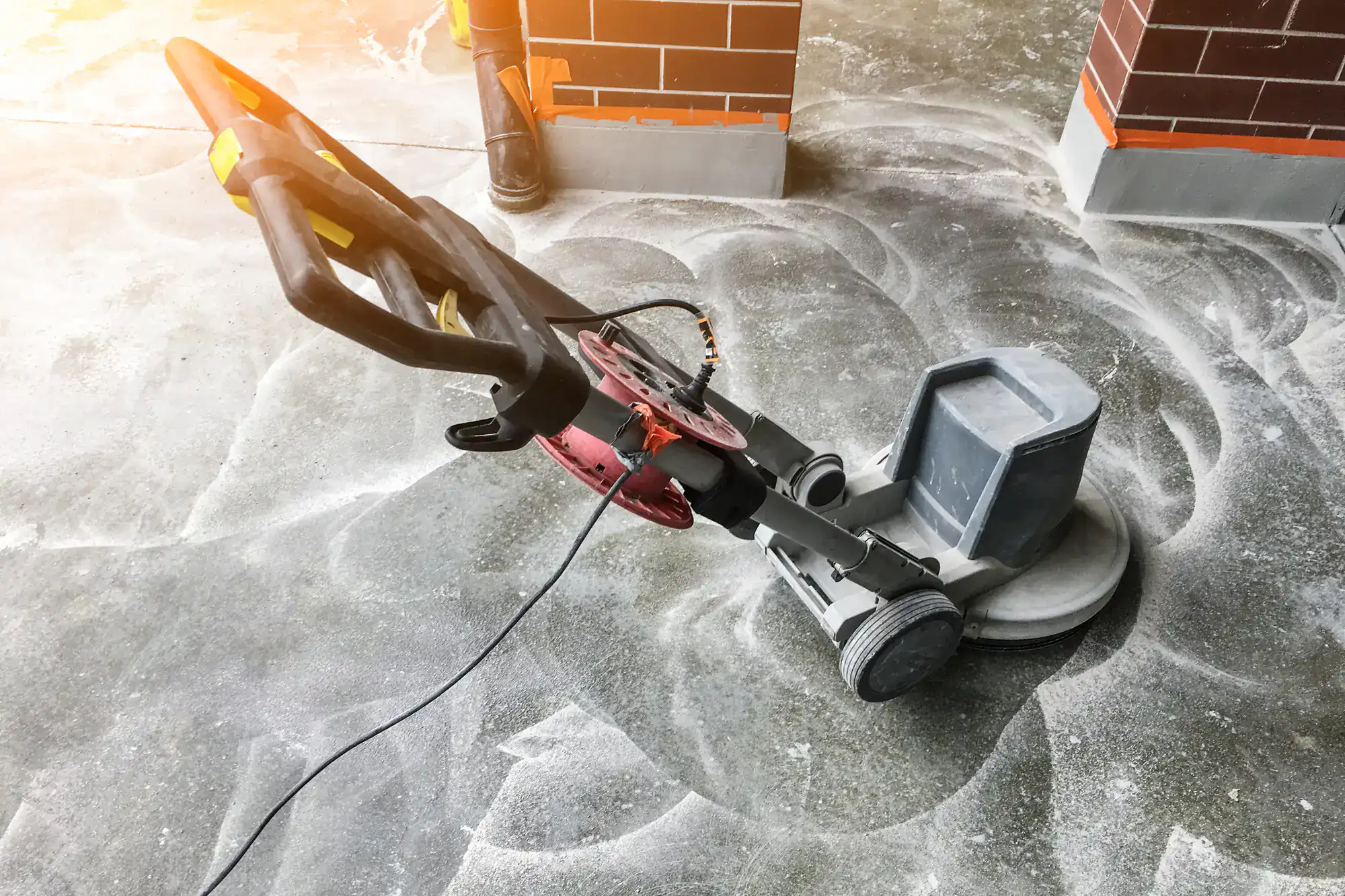
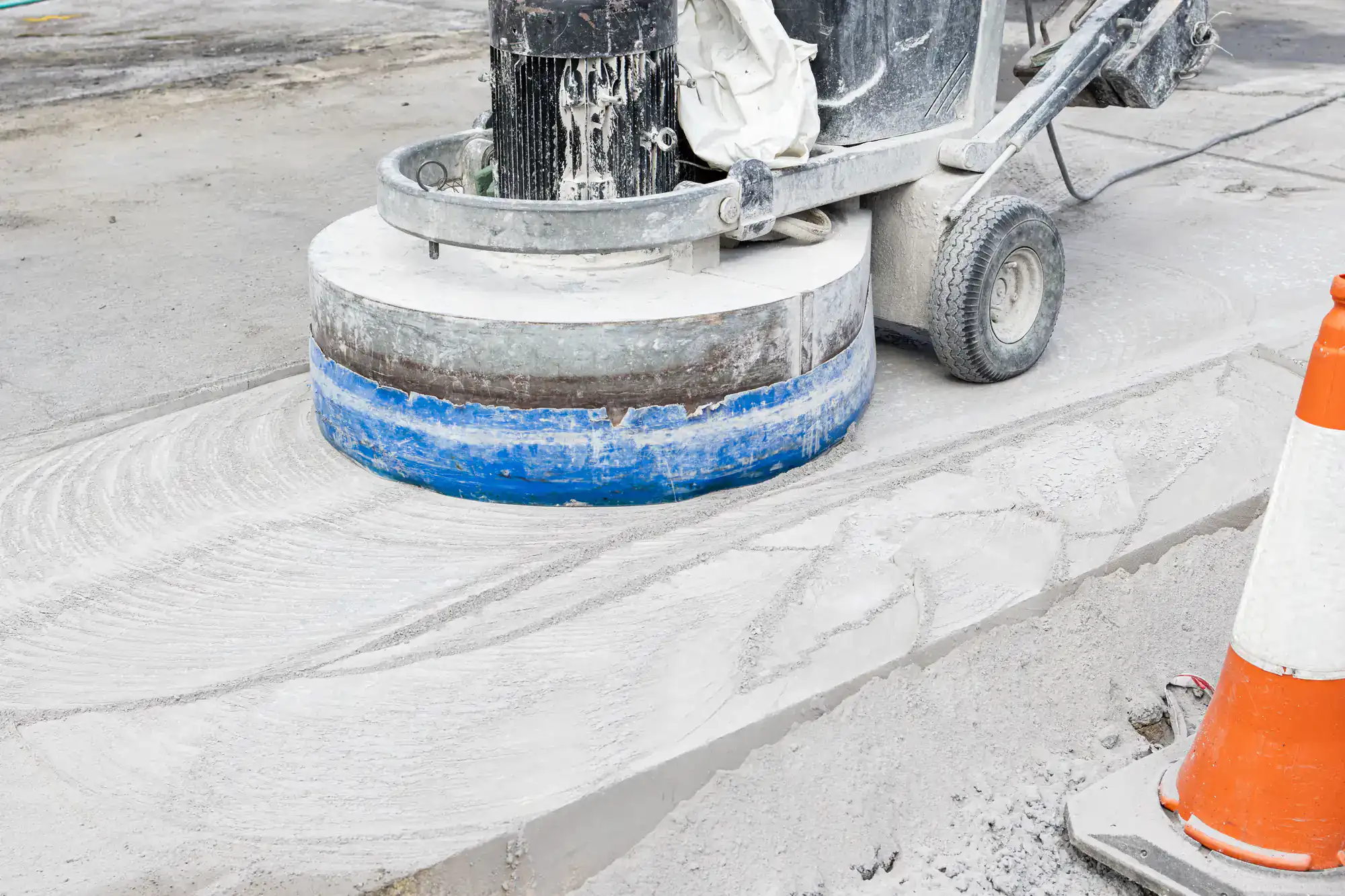
Most commercial floors in Glen Cove aren’t failing because of heavy traffic. They’re failing because whoever installed them didn’t understand what was happening beneath the surface. Coatings delaminate. Finishes dull out. And the building owner ends up back at square one spending money they already spent.
Polished and densified concrete works differently. The densifier doesn’t sit on top of your slab it penetrates it and chemically hardens it from within. That matters especially in Glen Cove, where the coastal air off Hempstead Harbor and the humidity that comes with it create real moisture vapor pressure in older slabs. Topical coatings can’t always hold up to that. A properly densified floor can.
For the legacy industrial buildings along Glen Cove Creek and the Western Gateway corridor some of those slabs are 50 or 60 years old grinding, densifying, and polishing can bring a floor back without pouring new concrete. And for the commercial and retail spaces coming online at Garvies Point, a polished concrete floor done right on a new slab will hold its finish for 20 years with basic maintenance. Either way, you’re not doing this again in three years.
Danny Harmer has been working on commercial and industrial concrete floors on Long Island for over 40 years, with deep roots in Glen Cove and the surrounding North Shore communities. He holds Sherwin-Williams High Performance Flooring (HPF) Certification and Res Tech Certification both independently issued, both earned through demonstrated technical knowledge, not just attendance. In 1996, his work was trusted for the White House kitchen. That’s not a throwaway line it’s the clearest proof that the standard here isn’t average.
When you hire Advanced Epoxy Flooring, Danny is the one showing up. Not a subcontracted crew, not a laborer sent out to follow instructions. The person who understands the chemistry behind the process is the one doing the work.
That’s relevant in a market like Glen Cove where you’ve got everything from brand-new Garvies Point construction slabs to mid-century floors in the downtown BID, and the difference between a floor that lasts and one that doesn’t comes down to who’s actually reading the slab before they start grinding.
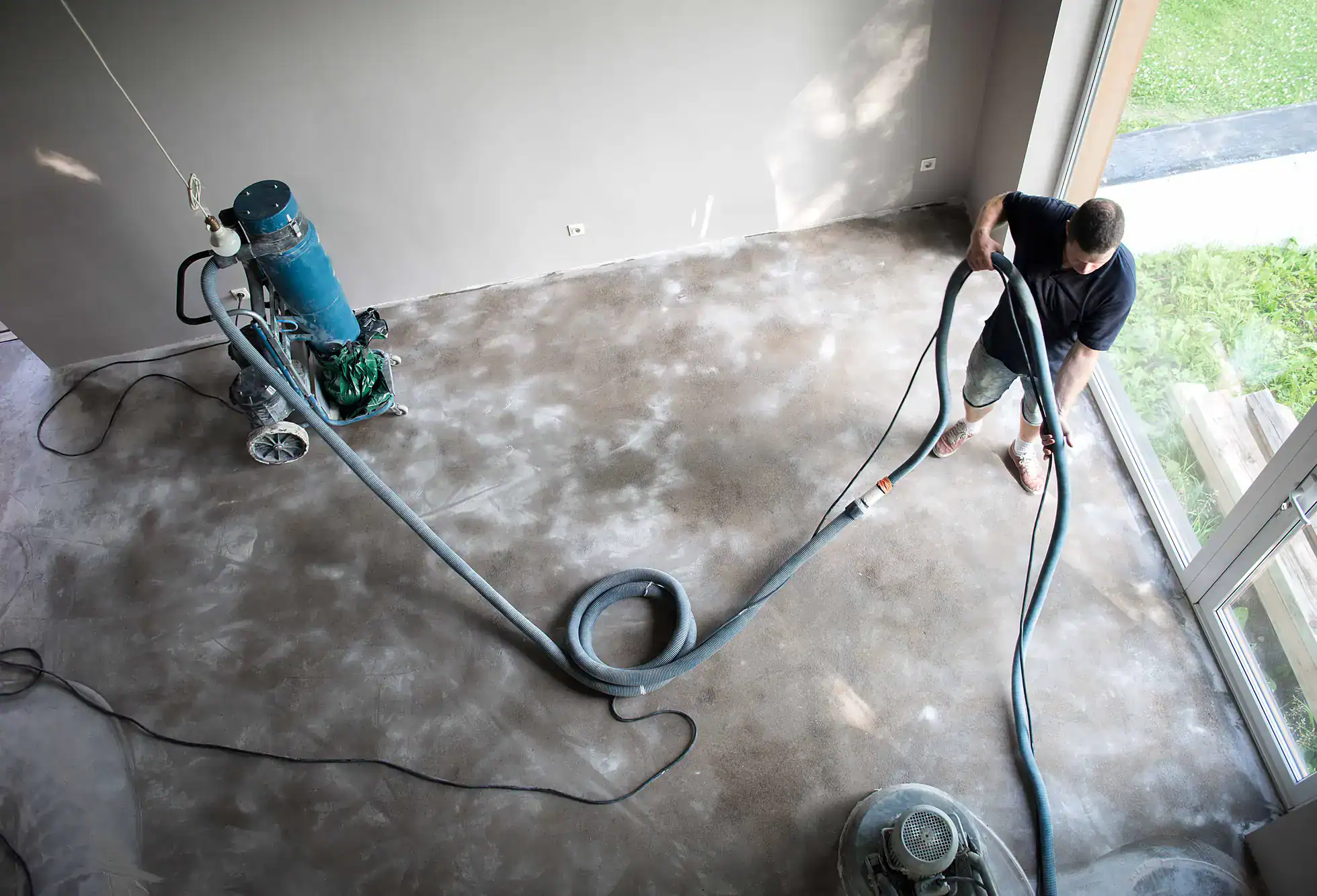
We start with a real assessment of your slab. Not a sales call an actual evaluation of what you’re working with. Slab age, surface condition, existing coatings, moisture levels, crack history all of it gets looked at before anything else happens. In Glen Cove’s older commercial buildings, especially those near the waterfront or in the Creek zone, that assessment step is what determines whether you’re looking at a straightforward polish or a more involved prep process first.
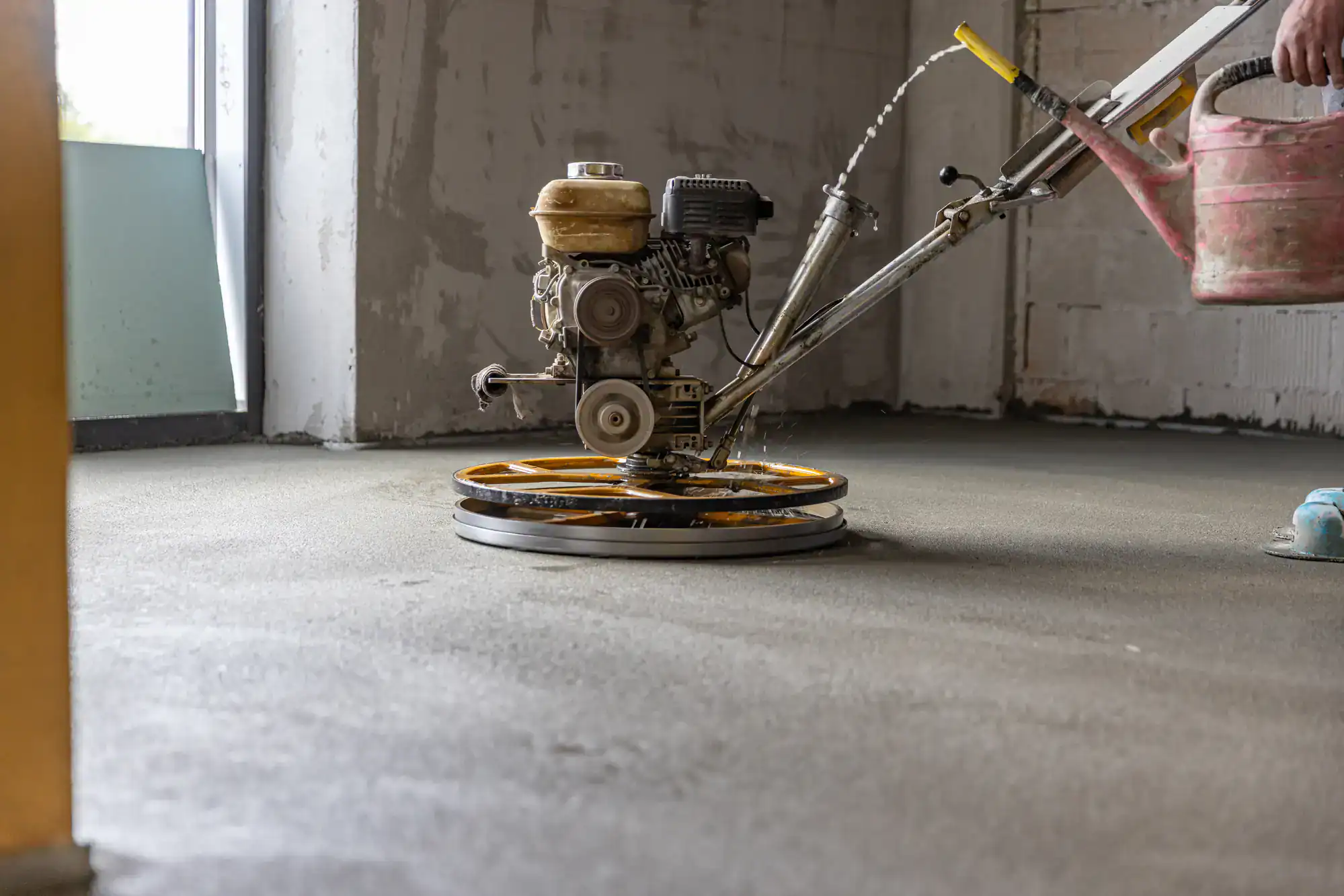
From there, the work moves through surface preparation grinding down high spots, removing old coatings, filling cracks followed by densification, and then the polishing sequence itself. Each pass uses progressively finer tooling to build the finish level you’re after, whether that’s a functional matte for an industrial space or a high-gloss showroom finish for a retail tenant at Garvies Point. HEPA-filtered vacuum systems run throughout, which matters in occupied or partially occupied buildings where dust control isn’t optional.
Because Glen Cove operates as an independent city with its own Building Department, commercial renovation work here goes through city-level review not a town authority. For larger projects, especially in designated redevelopment zones like Garvies Point or the Western Gateway, it’s worth confirming permit requirements upfront. That’s part of the conversation from the start.
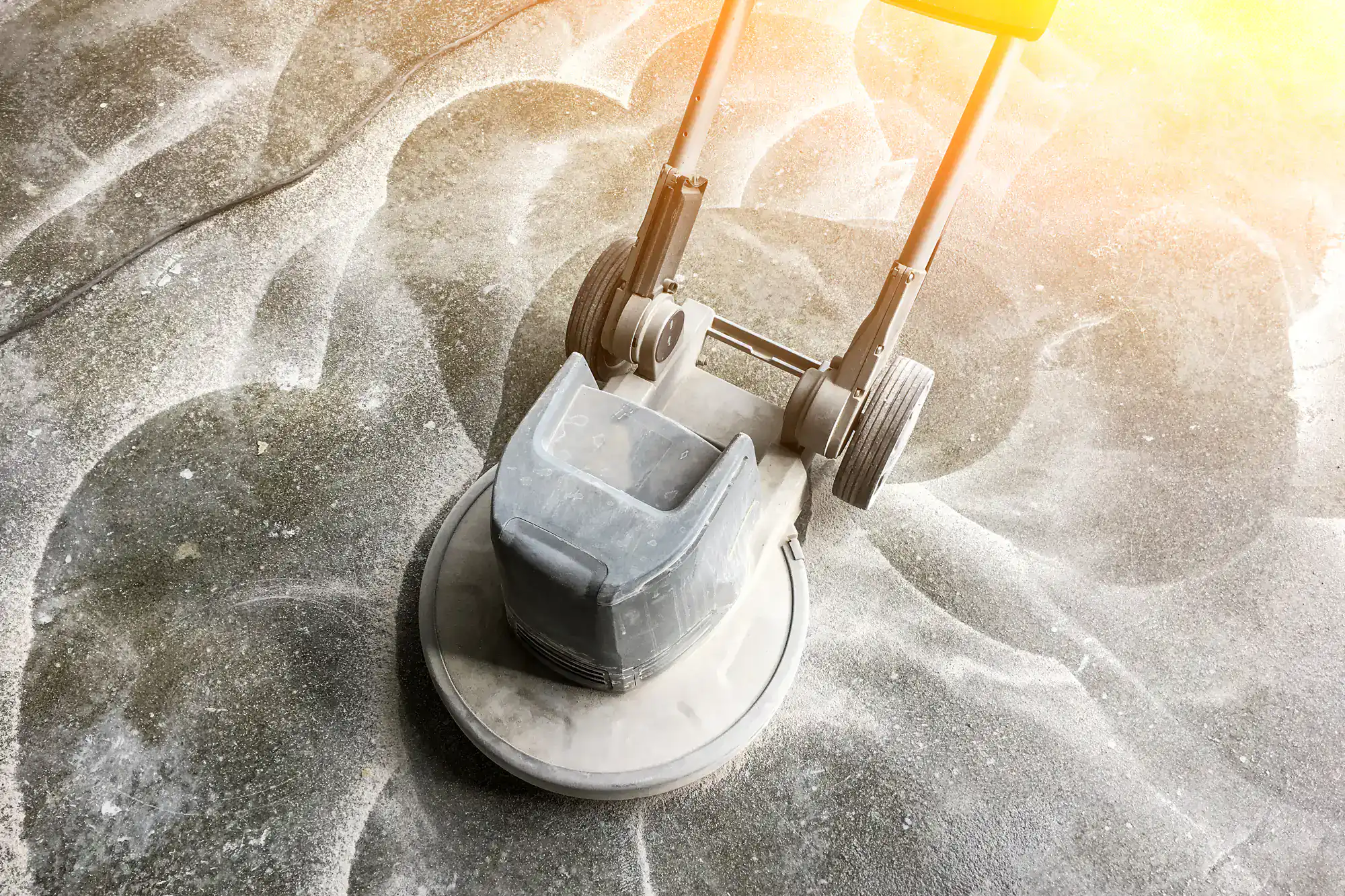
Ready to get started?
Commercial polished concrete in Glen Cove covers a wide range of applications retail showroom floors in the downtown BID, institutional floors at healthcare facilities like Glen Cove Hospital, warehouse and industrial spaces in the Creek corridor, and new construction finishes in the Garvies Point development. We build the scope of work around what your slab actually needs, not a one-size package.
Surface preparation is included where required that means coating removal, crack filling, and leveling before any polishing begins. Densification is standard, not an upsell. The finish level is specified upfront: from a functional low-sheen grind for industrial environments to a Class 3 or Class 4 high-gloss finish for retail and hospitality spaces. A stain guard is applied at the end to protect the surface and, where needed for restaurant or food service environments, anti-slip additives can be incorporated without changing the appearance of the finish.
For healthcare and institutional clients and Glen Cove has a meaningful concentration of them we can phase the work section by section to keep operations running. After-hours scheduling is available. The goal is to get the floor done without shutting your business down to do it. If you’re working on a LEED-targeted build in the Garvies Point commercial zone, polished concrete contributes to Materials and Indoor Environmental Quality credits and we provide the documentation support for that with the job.
In most cases, yes and the age of the slab is rarely the deciding factor. What matters more is the surface condition: whether there are existing coatings that need to be removed, how significant the cracking or unevenness is, and what the moisture situation looks like. Older slabs in Glen Cove’s commercial and industrial buildings particularly those in the Glen Cove Creek corridor and the Western Gateway zone often have complicated histories. Previous coatings, chemical exposure, repairs, and years of traffic all leave a mark.
The assessment process is what determines what’s possible. Grinding can remove old coatings and level uneven surfaces. Cracks can be filled and stabilized before polishing begins. Densification chemically hardens a slab that’s been dusting or degrading for decades. After 40 years of working on Long Island slabs in every condition imaginable, the answer to “can this floor be polished?” is almost always yes the real question is what preparation it needs first.
Polished concrete is a surface treatment, not a coating. The process works by mechanically refining the concrete itself grinding it progressively finer and then densifying it so the surface hardens from within. There’s nothing applied on top that can peel, chip, or delaminate. Epoxy coatings, by contrast, sit on the surface of the slab and rely on adhesion to stay there.
In a coastal environment like Glen Cove where humidity off Hempstead Harbor and the Long Island Sound creates real moisture vapor pressure in concrete slabs that distinction matters. When moisture vapor pushes up through a slab and the coating above can’t release it, you get bubbling and delamination. It’s one of the most common reasons commercial epoxy floors fail on the North Shore. Polished and densified concrete doesn’t have this problem because there’s no coating to fail. The hardened surface is the floor and it stays that way for 15 to 25 years with basic upkeep.
This is probably the most common concern, and it’s worth addressing directly: gloss and slip resistance are not the same thing. A floor can be highly polished and still meet or exceed OSHA’s minimum coefficient of friction standard of 0.5 for level commercial surfaces. The finish level affects how the floor looks not how much traction it provides.
For environments in Glen Cove where wet traffic is a regular reality restaurants on Glen Street, food prep areas, hospital corridors at Glen Cove Hospital we can incorporate anti-slip additives into the stain guard at the end of the polishing process. They don’t change the appearance of the finish. What you end up with is a floor that looks exactly the way you want it to look and performs safely under the conditions your space actually sees. The decision to add that protection should be based on your specific use case, not a blanket assumption that polished means slippery.
Timeline depends on two things: the size of the space and the condition of the slab going in. For a straightforward commercial polish on a clean, newer slab like the kind you’d find in the Garvies Point retail and commercial spaces a few thousand square feet can typically be completed in two to three days. When surface preparation is more involved coating removal, crack repair, leveling on an older slab add time accordingly.
For occupied businesses in the downtown BID or institutional facilities like Glen Cove Hospital that can’t go dark for a week, we can phase the work. You section off part of the floor, complete it, and move to the next section while the rest of the space stays operational. After-hours scheduling is also available. The goal is to work around your operation, not the other way around. Timeline specifics get nailed down during the initial assessment once the actual slab conditions are known.
For commercial polished concrete floors in Glen Cove, pricing generally falls in the range of $3 to $12 per square foot depending on the finish level, the condition of the slab, and the scope of surface preparation required. A functional low-sheen industrial finish on a clean slab sits at the lower end. A Class 3 or Class 4 high-gloss showroom finish the kind appropriate for a Garvies Point retail space or a downtown BID storefront sits higher, especially if prep work is involved.
The more useful number to think about is the lifecycle cost. A properly polished and densified floor eliminates the recurring expense of waxing, stripping, and recoating that vinyl composition tile requires. Over 10 years, the total cost of ownership for polished concrete is typically lower than VCT even when the upfront installation cost is higher. For Glen Cove’s commercial and institutional buyers, that’s the calculation that actually matters. Exact pricing is determined after a slab assessment, not before.
Yes and in many ways, industrial environments are where polished and densified concrete performs best. The densification process significantly increases the surface hardness and abrasion resistance of the concrete, which is exactly what a floor needs to hold up under forklifts, pallet jacks, and heavy foot traffic over years of use. It also eliminates concrete dusting, which is a persistent problem in older industrial spaces and a real operational issue for any facility running machinery or storing inventory.
For the industrial and legacy commercial buildings in Glen Cove’s Creek corridor and Western Gateway zone many of which are being repositioned for new uses this is particularly relevant. Those slabs have often been through decades of industrial use, chemical exposure, and deferred maintenance. Grinding and densifying them doesn’t just make them look better; it structurally improves the surface so it can handle whatever the next chapter of that building’s life demands. The result is a floor that’s easier to clean, harder to damage, and doesn’t require ongoing coating maintenance to stay functional.