
If your commercial floor is waxed, stripped, and rewaxed on a cycle or if it’s already showing the wear of a Long Island winter you already know what a poorly chosen floor covering actually costs over time. Polished concrete ends that cycle. No wax. No stripping. No recoating. Just a surface that holds up and keeps looking right with basic maintenance.
Commack’s winters are particularly hard on commercial floors. Every season, deicing salts and calcium chloride get tracked in from parking lots along Veterans Memorial Highway and Commack Road, working their way into untreated or improperly sealed concrete and causing pitting, scaling, and surface breakdown over time. A properly densified concrete floor is chemically resistant to that intrusion in a way that topical coatings simply aren’t and that matters when you’re looking at a floor that needs to perform for the next 15 to 25 years, not just the next two.
For the retail showrooms, medical offices, and industrial facilities that define Commack’s commercial corridors, polished concrete also does something softer surfaces can’t: it reflects light, signals quality to anyone who walks through the door, and holds that appearance without ongoing maintenance spend. That’s not a small thing in a market where your customers already have high expectations.
Danny Harmer has been doing this work hands-on for over 40 years, with deep roots in the Commack and greater Long Island commercial market. We built Advanced Epoxy Flooring around one straightforward idea: most contractors follow the steps without understanding the chemistry behind them and that’s why so many commercial floors fail within a couple of years. We understand the difference, and that difference shows up in floors that are still performing a decade after installation.
Commack’s commercial building stock is largely postwar construction. Many of the slabs along Jericho Turnpike and near the Long Island Expressway interchange have decades of coatings, contamination, and surface wear layered into them. That’s not a problem it’s just a slab that needs to be read correctly before any work begins. After 40 years working in Commack and throughout Suffolk County, we’ve seen every version of that slab, and we know exactly what it takes to bring it to a finish that holds.
We also hold a Sherwin-Williams High Performance Flooring certification and a Res Tech certification named, manufacturer-issued credentials that most contractors in Suffolk County can’t put on the table. In 1996, we completed flooring work at the White House kitchen. If that standard of quality is what you’re after, you’re in the right place.
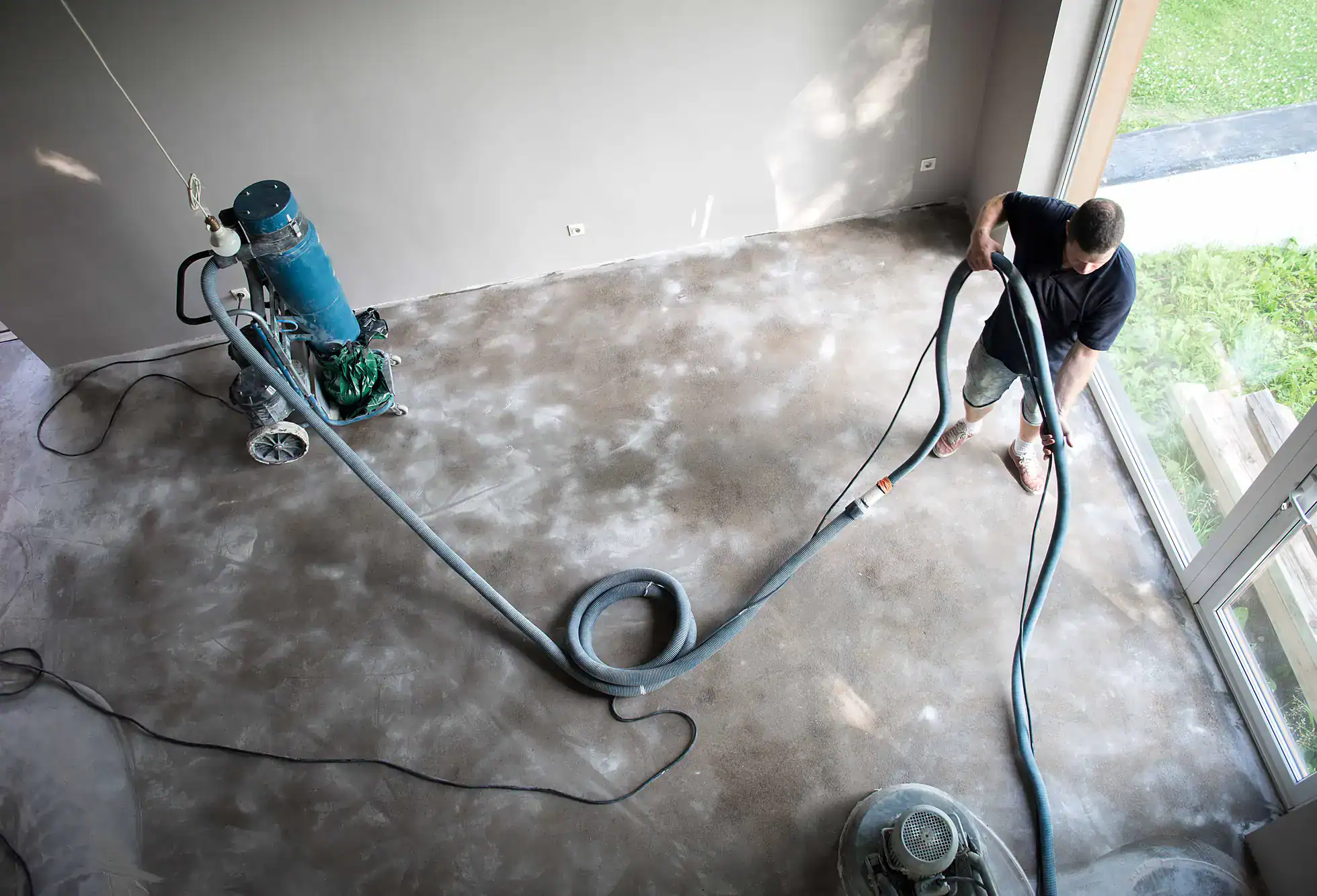
It starts with a slab assessment. Before any equipment comes out, we evaluate the condition of your concrete hardness, existing coatings, contamination, cracks, and surface profile. For older commercial buildings in Commack, this step matters more than most contractors acknowledge. A slab that’s been coated with VCT adhesive, paint, or previous sealers for 40 years needs a different approach than a fresh pour, and skipping that assessment is usually where problems start.
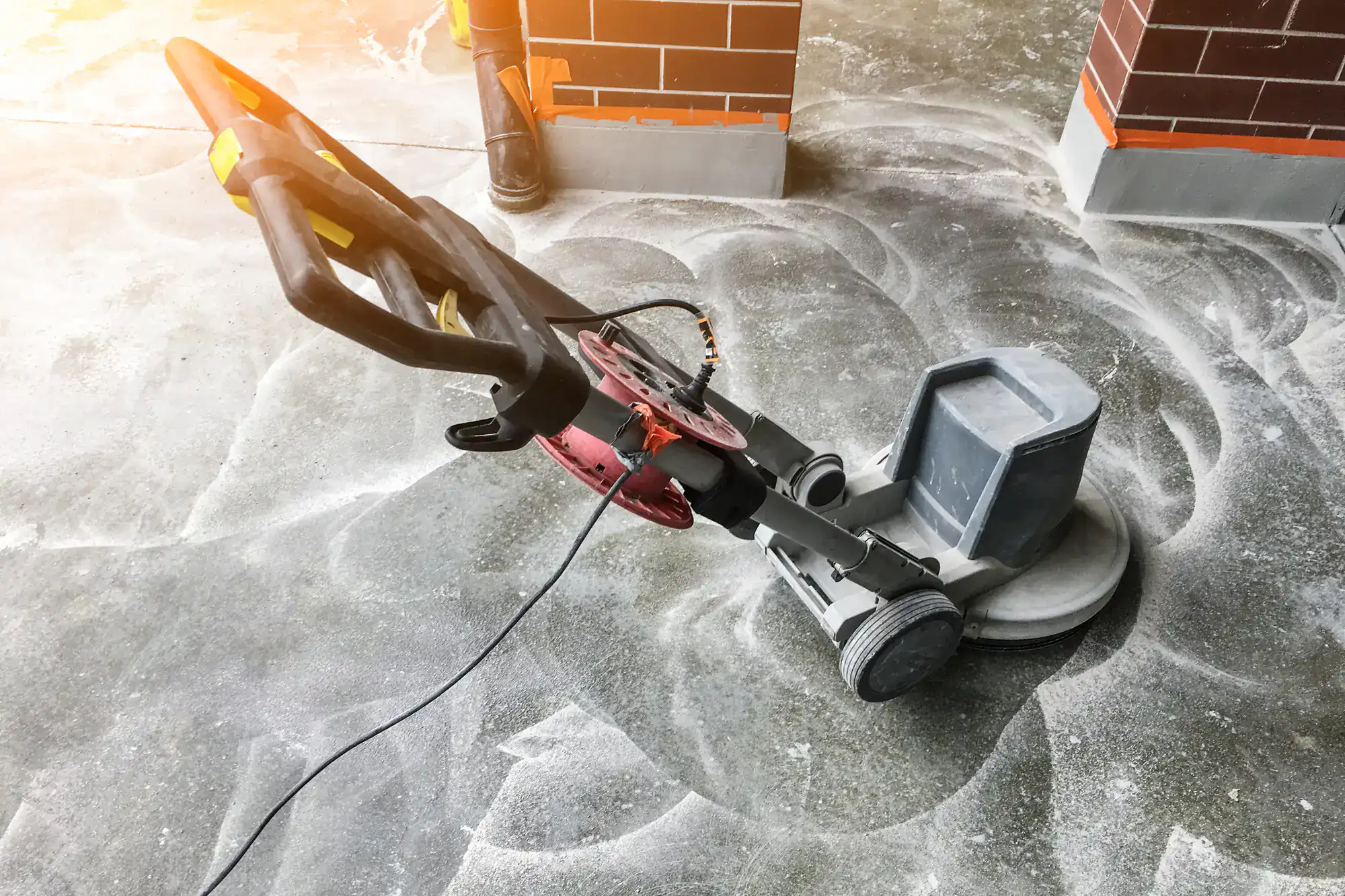
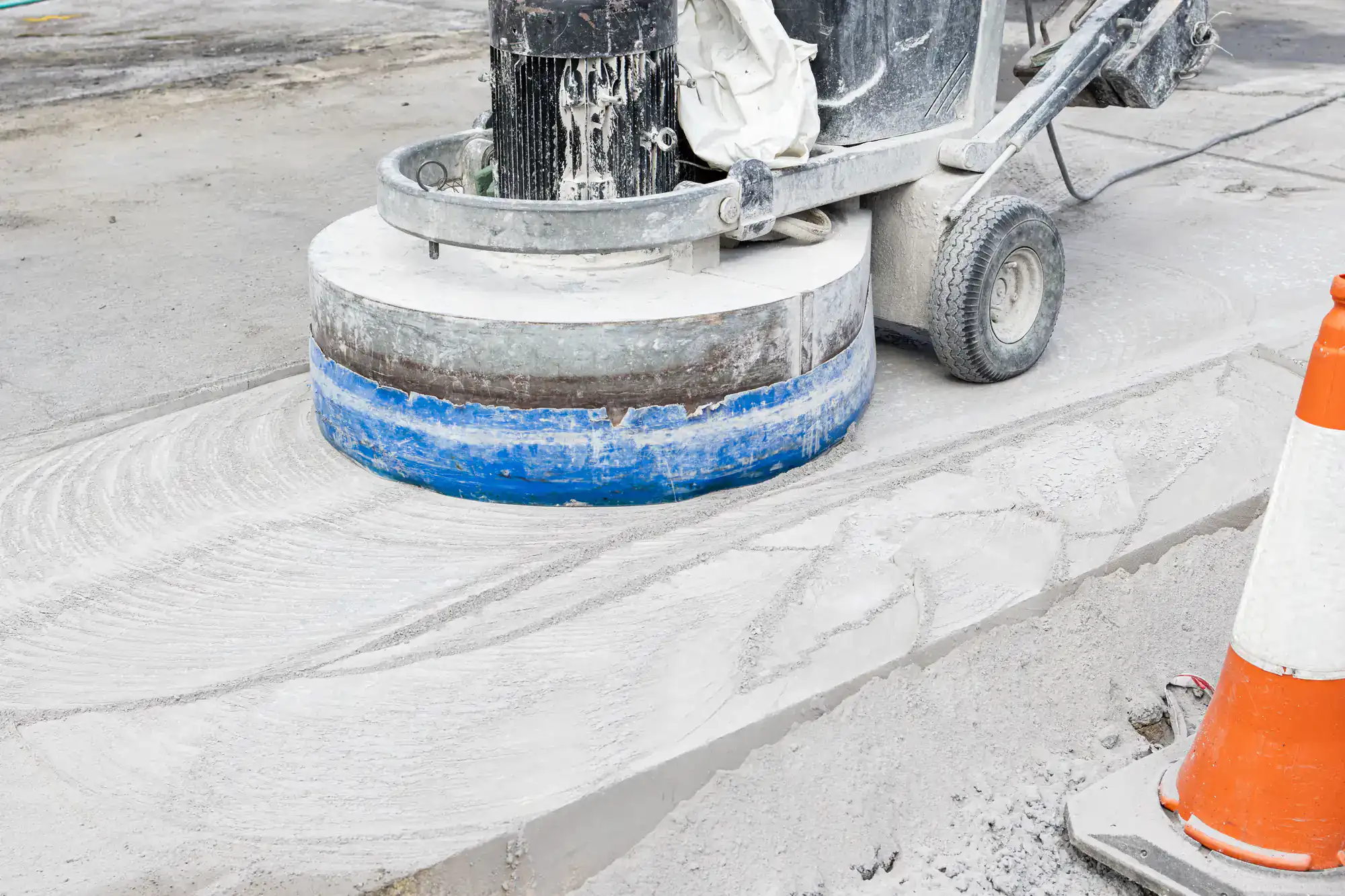
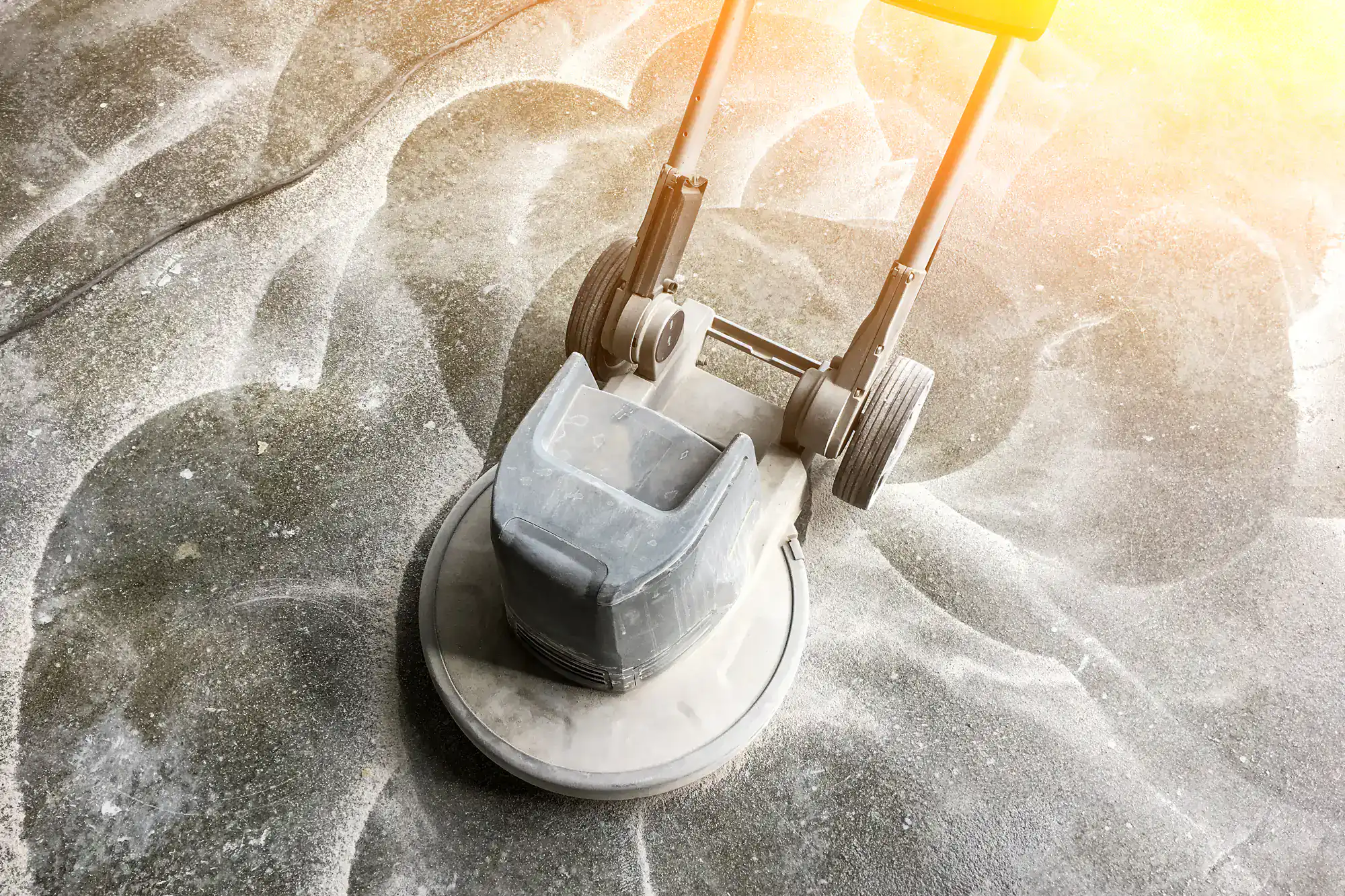
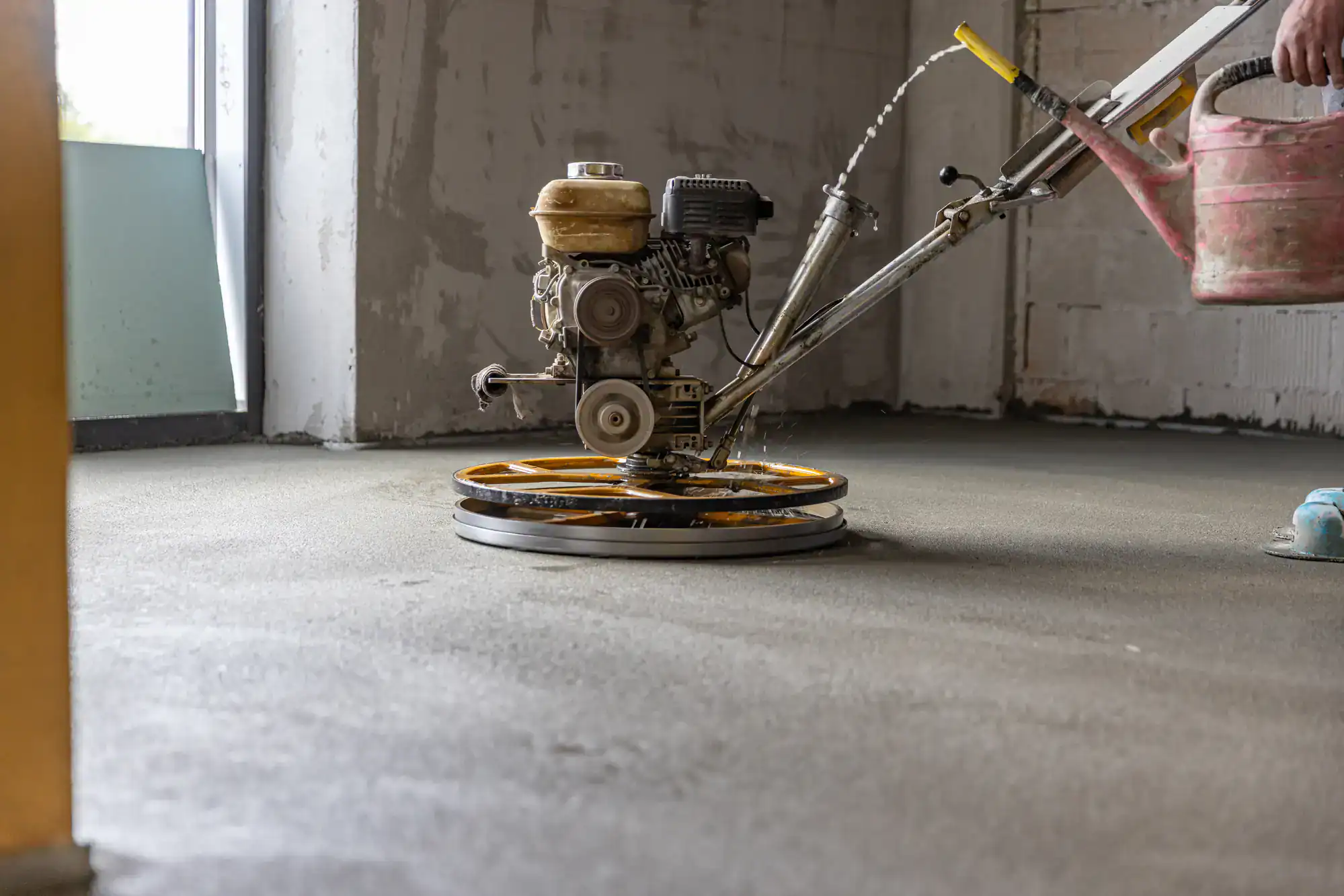
From there, concrete grinding removes the existing surface layer and any coatings down to clean, workable concrete. If there are cracks or low spots, we address those with color-matched cementitious fillers before the polishing sequence begins. The polishing itself progresses through a series of diamond-tooled passes each one refining the surface further until the specified finish level is reached. A densifier is applied during this process, penetrating the concrete matrix and chemically hardening the slab from within rather than sitting on top of it like a coating would.
The final step is a stain guard application, which protects the surface from spills, chemical exposure, and the deicing salt intrusion that’s a real seasonal concern for any Commack business operating through a Long Island winter. Most commercial projects can be staged in sections to keep your operation running full shutdowns are rarely necessary, and we map out the timeline before work begins so there are no surprises.
Ready to get started?
Whether you’re running a retail showroom on Jericho Turnpike, managing a warehouse near the LIE, or overseeing a medical or professional office on Veterans Memorial Highway, we tailor the scope of work to what your slab actually needs and what your operation requires. That means finish level, downtime tolerance, slab condition, and traffic demands all factor into how we structure the project not a one-size package applied the same way regardless of context.
For industrial and warehouse facilities, the priority is usually dust elimination, chemical resistance, and forklift compatibility. Densified commercial concrete floors handle all three. The hardened surface stops concrete dusting at the source, resists chemical penetration, and holds up under heavy equipment without the delamination risk that comes with topical coatings. For retail showroom concrete finishes, the focus shifts toward gloss level and light reflectivity high gloss polished concrete at the upper finish range creates a surface that genuinely elevates how a space looks and feels to customers walking in.
Commack’s proximity to the Long Island Innovation Park at Hauppauge the second-largest industrial park in the country means there’s consistent demand for large-scale industrial flooring work in this corridor. We’re equipped to handle that scale, with the credentials and hands-on experience to back it up. New construction, renovation, or remediation of a failed previous install all of it is within scope.
In most cases, yes and the age of the slab is rarely the limiting factor. The more relevant questions are what’s on the surface and what condition the concrete is in underneath. Many commercial buildings along Jericho Turnpike and Veterans Memorial Highway were built in the 1950s and 60s, and their slabs often have layers of old coatings, adhesive residue, or contamination from decades of use. That doesn’t disqualify them from polishing it just means the prep work is more involved.
The process starts with grinding down to clean, workable concrete, which removes existing coatings and surface damage in the same pass. Cracks and low spots get addressed before the polishing sequence begins. The result is a finished surface that performs just as well as a new-pour slab sometimes better, because older concrete has had more time to cure and harden. We’ll conduct a slab assessment before any commitment is made, which will tell you exactly what you’re working with.
This is one of the most practical questions for any Commack business owner, and it’s worth a real answer. Untreated or improperly sealed concrete absorbs moisture and the chloride compounds in deicing salts, which causes surface scaling, pitting, and aggregate exposure over time. You see it on sidewalks and parking decks all over Suffolk County every spring and it happens to interior floors too, when those salts get tracked in through high-traffic entrances.
A properly densified concrete floor is a different material in terms of porosity. The densification process causes a chemical reaction within the concrete matrix that fills the pore structure from the inside, making the surface significantly more resistant to moisture infiltration and salt intrusion. When we apply a quality stain guard over that densified surface, you have a floor that handles Commack’s seasonal conditions without degrading the way a coated or untreated slab would. It’s not impervious to everything, but it’s dramatically more durable in this climate than the alternatives most commercial buildings in Commack are currently running.
This comes up constantly, and the short answer is no polished concrete is not inherently slippery, and the concern is based on a misconception about how gloss and traction relate to each other. OSHA requires a minimum coefficient of friction of 0.5 for level commercial surfaces. Properly polished concrete meets or exceeds that standard. Gloss level and slip resistance are independent properties a floor can be highly reflective and fully compliant at the same time.
For environments where wet traffic is a consistent factor restaurant entrances, medical offices, retail spaces near exterior doors we can incorporate anti-slip additives into the stain guard without affecting the appearance of the finished surface. This is a common specification for businesses along Commack’s commercial corridors where customers are coming in from rainy or snowy parking lots. If slip resistance is a specific concern for your space, we address it in the specification stage, not as an afterthought.
Pricing for commercial polished concrete in the Commack area typically ranges from around $3 to $12 per square foot, depending on a few key variables: the current condition of the slab, the finish level you’re specifying, the square footage of the project, and how much surface preparation is required before polishing can begin. Older slabs with existing coatings or significant contamination will fall toward the higher end of that range because the prep work is more labor-intensive.
The more useful way to think about the cost is against what you’re currently spending. If your floor is on an annual wax-and-strip cycle, that maintenance cost compounds over time and it never ends. Polished concrete eliminates that line item entirely. For most commercial operations in Commack, the floor pays for itself within a few years when you factor in avoided maintenance costs, and it keeps performing for 15 to 25 years with nothing more than routine dust mopping and occasional damp mopping. The upfront number looks different when you do that math.
Yes, and this is something we plan for specifically before any work begins. Most commercial operations in Commack retail stores, medical offices, restaurants, service businesses can’t afford to close for multiple days, and we account for that from the start rather than treating it as your problem to solve.
For most projects, we stage the work in sections. One area of the floor is completed while the rest of the space stays operational, then we move to the next section. Depending on the layout and the hours your business runs, work can also be scheduled for nights or weekends to minimize any disruption during operating hours. We map out the timeline and sequencing clearly before the job starts, so you know exactly what to expect and when. Industrial and warehouse facilities near the LIE interchange often have more flexibility on scheduling, but even for high-traffic retail environments, operational continuity is a standard part of our project plan not an upgrade.
They’re fundamentally different systems, and the right choice depends on what your floor actually needs. Epoxy is a topical coating it sits on top of the concrete surface and bonds to it. Polished concrete is the slab itself, refined and hardened through a mechanical and chemical process. That distinction matters a lot in terms of long-term performance.
Topical coatings, including epoxy, can delaminate over time especially in environments with moisture vapor transmission from below the slab, heavy forklift traffic, or significant temperature swings. When a coating fails, you’re looking at remediation costs on top of the original installation. Polished and densified concrete doesn’t delaminate because there’s no coating to separate from the substrate. The hardened surface is the floor. For high-traffic commercial and industrial environments in Commack particularly those near the Long Island Expressway corridor where heavy equipment use is common polished concrete tends to be the more durable long-term choice. Epoxy has its place, particularly for chemical-resistance applications or spaces where color and design flexibility are priorities. We’ll help you determine the right answer based on your specific slab, your traffic profile, and what you need the floor to do.