
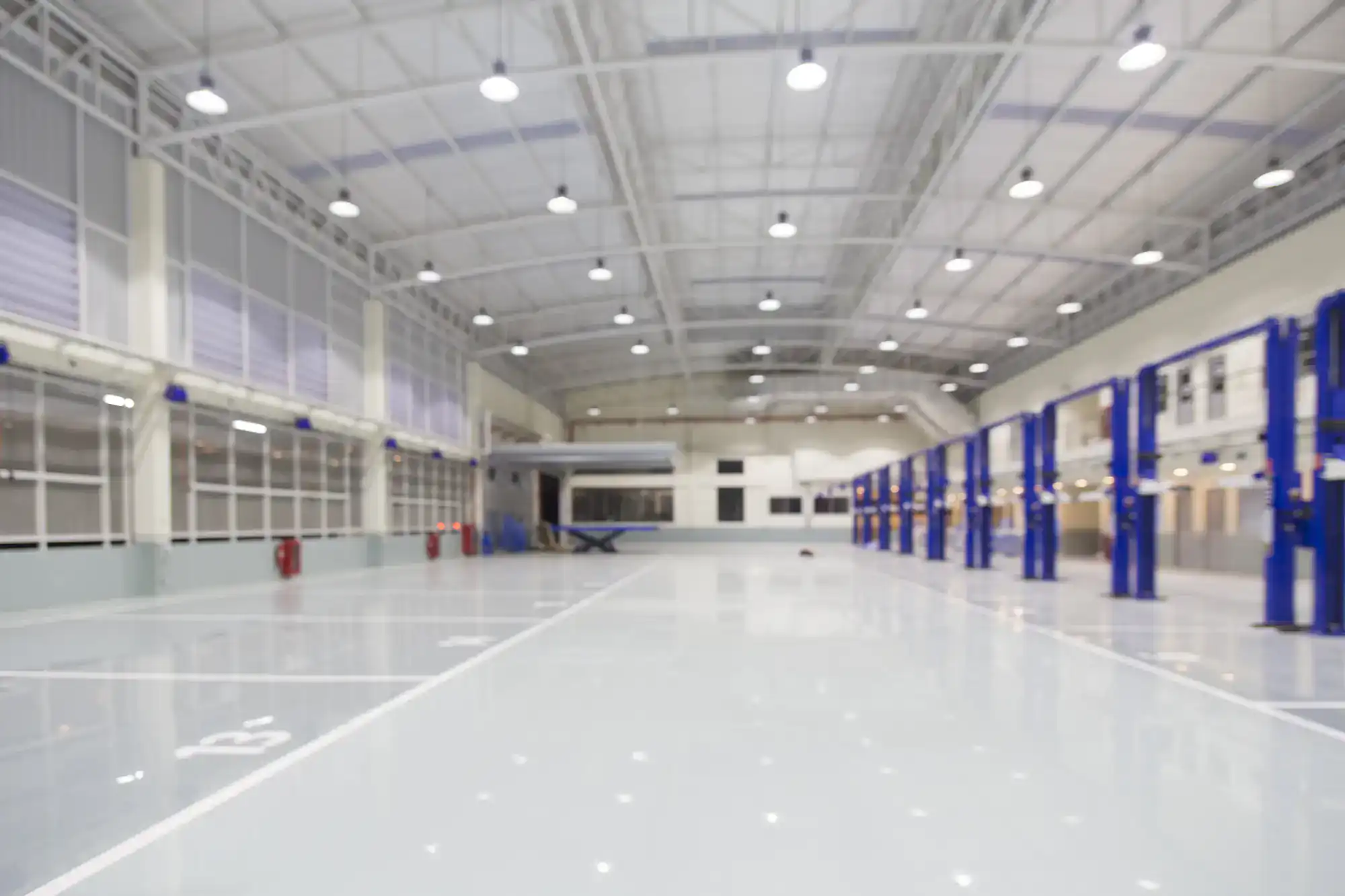
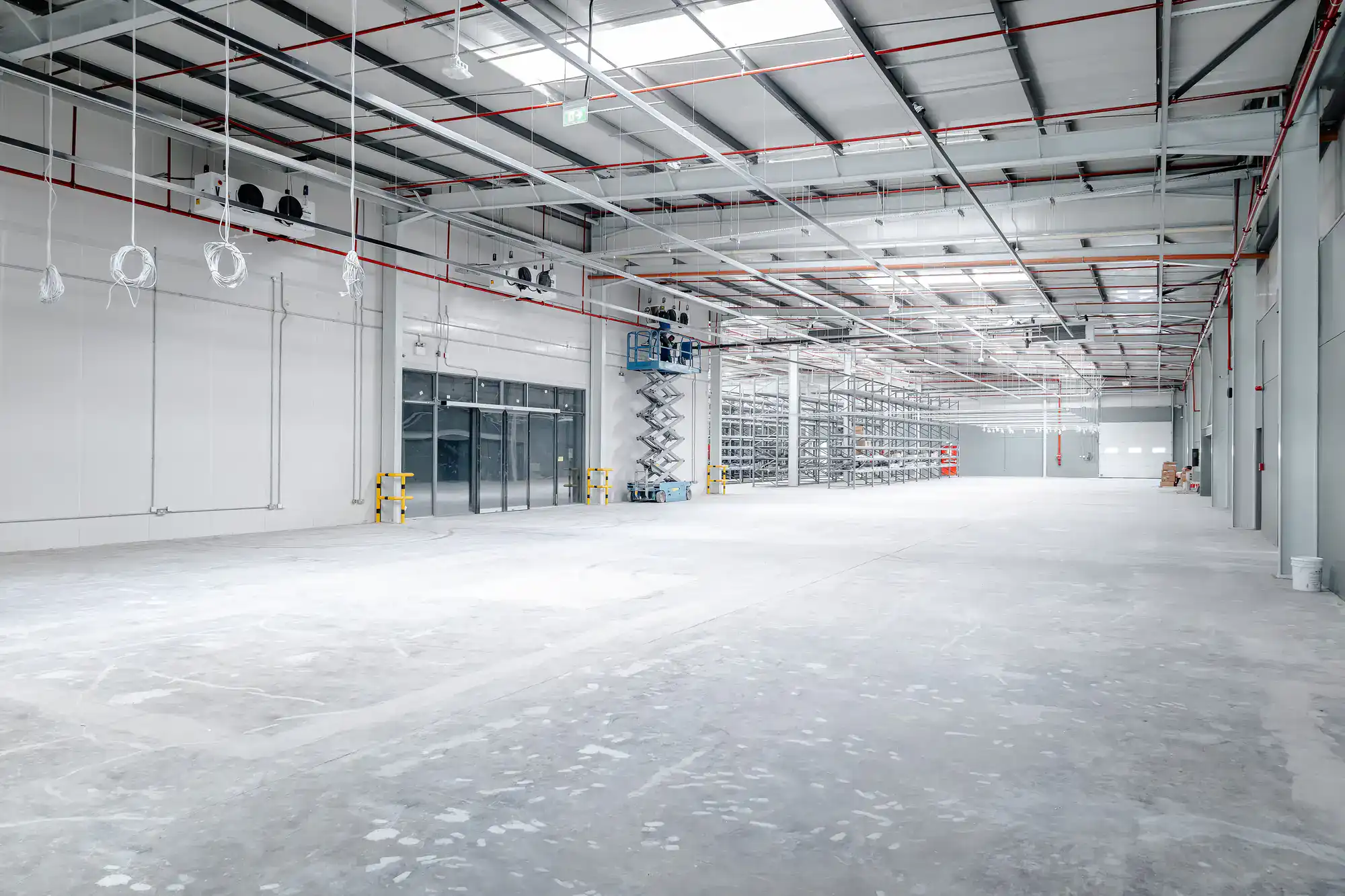
Most hangar floors on Long Island don’t fail because of heavy aircraft or ground equipment they fail because of moisture. Nassau County’s South Shore, where North Bellmore sits, experiences relative humidity regularly pushing past 90%. That moisture works its way up through concrete slabs, and if a coating wasn’t installed over a properly tested and prepared surface, it bubbles, peels, and delaminates sometimes within two or three years. You end up paying twice: once for the original floor, and again to grind it out and start over.
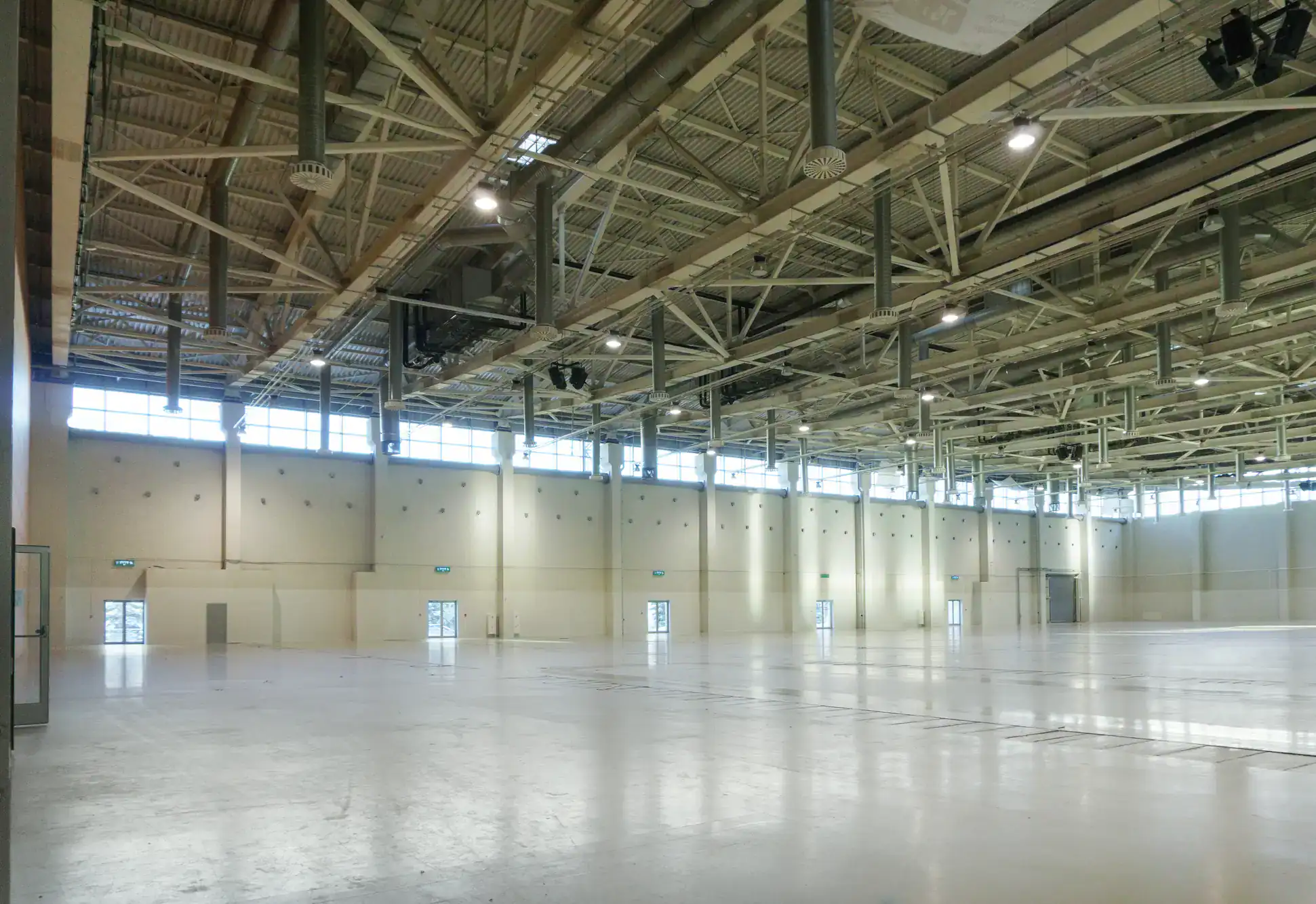
A correctly installed aviation floor coating changes the whole picture. You get a surface that’s easy to clean, requires no waxing, and holds up to jet fuel, hydraulic fluid, and the daily abuse of a working hangar. Spills stop soaking in. FOD and fluid pooling become visible immediately on a high-gloss, light-reflective surface which matters in any space where aircraft are moving. The floor stops being a liability and starts being an asset.
Nassau County also cycles through real winters. Freeze-thaw events expand and contract your slab repeatedly, and coatings that weren’t engineered for that kind of movement will crack along with it. The systems we install are built with the bond strength and flexibility to handle Long Island’s full seasonal range not just the mild days.
We’re based in Bohemia, NY on Long Island, not in a national call center somewhere routing jobs to whoever’s available. Our president, Danny Harmer, has over 40 years of hands-on installation experience. We built this company around one standard: do the job right the first time, because a floor that fails early costs you more than the original project ever should have.
Most of our crew has been with us for over a decade. Field supervisors Javier, Eduardo, and Fredith collectively bring more than 40 years of installation experience between them. That kind of retention means you’re getting the same experienced professionals on your job not a rotating cast of subcontractors. For hangar operators near North Bellmore managing facilities in the Republic Airport corridor or closer to JFK, that consistency matters.
We hold Sherwin-Williams High Performance Flooring and Res Tech certifications two of the most rigorous credentials in the resinous flooring industry. Every installer on every crew carries OSHA 40 certification. That combination of local presence, documented credentials, and long-term expertise is difficult to find anywhere else in Nassau County.
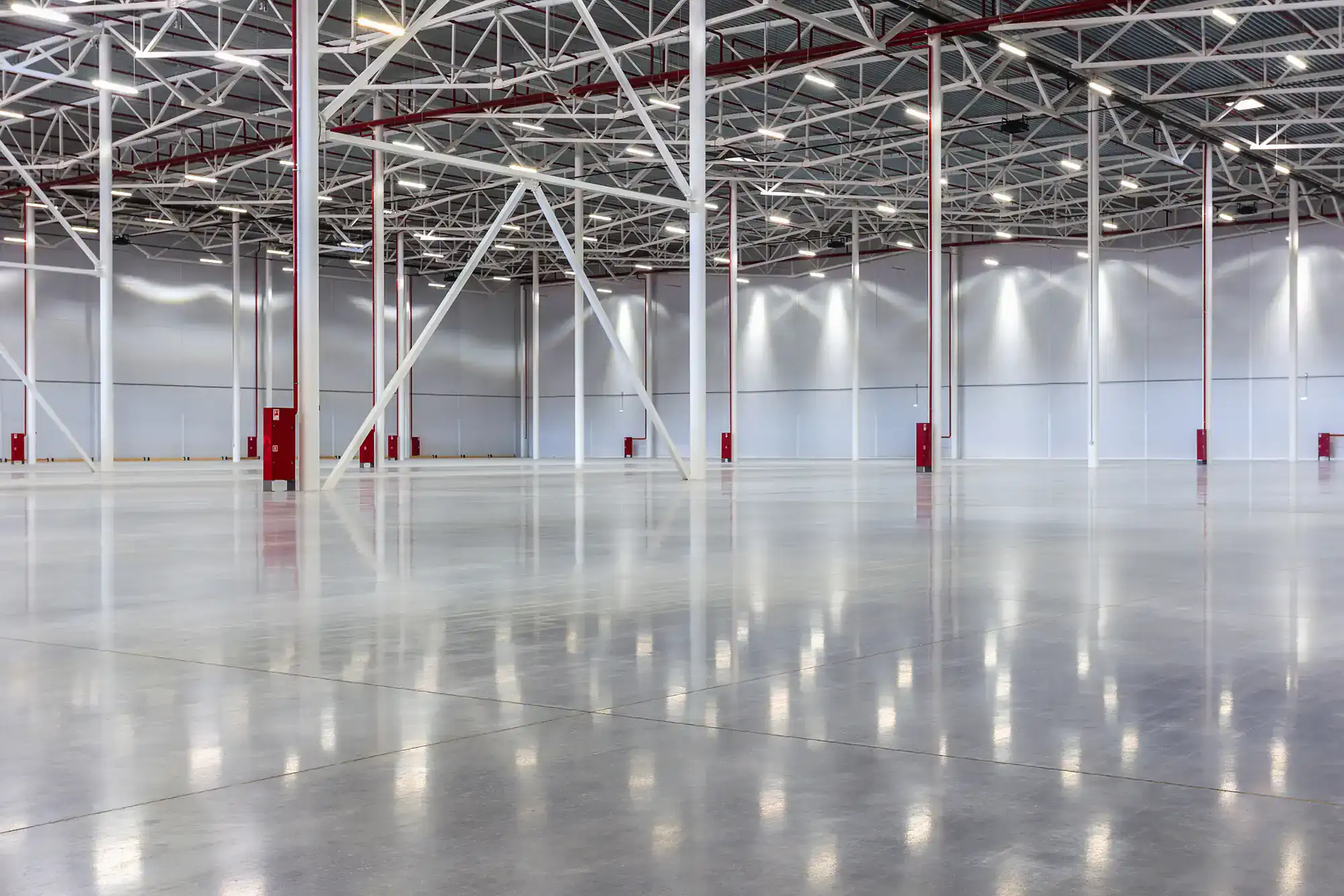
Every project starts with moisture testing. This isn’t optional on Long Island it’s the step that determines which system goes down and how the surface needs to be prepared. Nassau County’s South Shore environment means moisture vapor transmission is a real factor in nearly every concrete slab, especially in older structures. Skipping this step is the single most common reason hangar floor coatings fail early, and it’s why we treat it as non-negotiable before anything else happens.
Once moisture levels are assessed, the surface gets diamond ground to create the adhesion profile the coating system needs to bond correctly. Any concrete damage cracks, spalls, surface voids gets repaired before a single drop of coating goes down. From there, the system is applied in matched layers: primer, build coat, and a non-slip topcoat that meets the National Flooring Safety Institute’s requirements. The system is selected based on your specific facility the traffic load, chemical exposure, and how the space actually gets used.
Cure time depends on the system. Polyaspartic coatings return a hangar to service significantly faster than traditional epoxy often within 24 hours which matters if you’re managing an active flight operation and can’t afford a week of downtime. For facilities operating under NFPA 409 requirements, which mandate noncombustible floor surfaces in aircraft storage and servicing areas, the systems we install meet that standard. That’s not a bonus in New York, it’s a code requirement.
Ready to get started?
There’s a real difference between a floor coating that looks like it belongs in a hangar and one that was actually engineered for aviation use. The systems we install are formulated to resist Skydrol hydraulic fluid, jet fuel, lubricants, de-icing agents, and the industrial cleaning solvents used in active maintenance environments. That’s not a feature list it’s the baseline for any floor that’s going to hold up in a working hangar near the Republic Airport corridor.
For private aircraft owners, the focus is usually on a floor that reflects well, cleans easily, and holds up to occasional maintenance use. For corporate flight departments and FBO operators managing higher-traffic facilities, the system needs to handle daily ground support equipment loads, shift-change cleaning cycles, and the kind of chemical exposure that comes with continuous aircraft servicing. Both applications are covered the system is matched to how the space actually gets used, not applied one-size-fits-all.
The non-slip topcoat applied to every hangar floor is NFSI-certified a third-party safety standard, not a product claim. In Nassau County, where commercial aviation facilities operate under OSHA workplace safety standards, that certification is a documented compliance asset. The high-gloss finish also works in your favor: spills, tools, and debris show up immediately on a light-reflective surface, which keeps the floor functional and safe rather than just clean-looking.
It does and it’s the most important factor to account for before any coating goes down. Nassau County’s South Shore location means concrete slabs are regularly exposed to high ambient humidity, and moisture vapor transmission through the slab itself is a genuine concern in this region. When a coating is applied over concrete that hasn’t been properly tested for moisture, the vapor pushes up through the slab and breaks the bond between the coating and the surface. That’s what causes the bubbling and peeling you see on floors that were installed without proper prep.
Before any installation, we conduct moisture vapor emission testing to determine what the slab is actually doing. That result drives both the system selection and the prep approach. In some cases, a moisture-mitigating primer is part of the system. In others, the slab simply needs additional prep time. Either way, the testing happens first because skipping it in a coastal environment like North Bellmore is how floors fail inside of three years.
Both are legitimate options for hangar floors, but they perform differently depending on your priorities. Traditional epoxy systems are highly durable and chemically resistant, but they require longer cure windows typically several days before the floor can handle full aircraft and equipment loads. In a high-humidity environment like Long Island’s South Shore, epoxy also needs careful application conditions, because moisture in the air during installation can affect the cure and the final bond.
Polyaspartic coatings cure significantly faster often returning a hangar to service within 24 hours and they’re less sensitive to temperature and humidity during application, which makes them a strong choice for facilities that can’t afford extended downtime. They also hold up well under UV exposure, which matters for hangars with large door openings that let in direct sunlight. The right choice depends on your facility’s traffic load, how much downtime you can absorb, and the specific chemical exposure the floor will see. We assess all of that before recommending a system not after.
Yes. NFPA 409 the Standard on Aircraft Hangars requires that floor surfaces in aircraft storage and servicing areas be noncombustible. This standard is incorporated by reference into New York State Building Code, which means it applies to hangars throughout Nassau County, including facilities near Republic Airport in Farmingdale and commercial operations connected to JFK. It’s not a guideline it’s a code requirement, and it eliminates many standard residential or light commercial epoxy products from consideration.
For FBO operators and corporate flight departments, compliance with NFPA 409 also intersects with FAA oversight and insurance requirements. A floor that doesn’t meet the standard can create real exposure on both fronts. The systems we install are engineered to meet this requirement and the documentation is available if you need it for a permit application, an insurance review, or a facility inspection. If you’re not sure whether your current floor meets code, that’s worth a conversation before your next renewal cycle.
A correctly installed aviation-grade system proper moisture testing, diamond grinding, matched primer, build coat, and topcoat can realistically last 15 to 20 years in an active hangar environment. That assumes the surface prep was done right and the system was matched to the actual use of the facility. Where floors fall short of that range, it’s almost always a prep issue or a product mismatch, not a failure of the coating chemistry itself.
On Long Island, the combination of coastal humidity, freeze-thaw cycling, and aviation chemical exposure puts more stress on a floor than most inland locations. That’s why system selection matters here more than it might in a drier climate. A floor installed with the right primer chemistry for moisture mitigation, the right build coat thickness for chemical resistance, and an NFSI-certified non-slip topcoat is going to hold up through Nassau County’s full seasonal range in a way that a repurposed commercial epoxy product simply won’t. The upfront investment in a properly specified system is almost always less expensive than a replacement project four or five years down the road.
It can, if the coating wasn’t formulated for the environment. Salt air accelerates surface degradation in coatings that weren’t designed for coastal exposure it compounds the chemical stress that aviation fluids already put on a hangar floor. For facilities near North Bellmore and the broader Nassau County South Shore, this is an ambient condition that’s present year-round, not just during storms or high-humidity months.
The systems we install are high-build, chemically resistant coatings that hold up to both aviation fluid exposure and the broader environmental conditions of a coastal Long Island location. The topcoat chemistry is specifically selected to resist surface breakdown from the combination of chemical exposure and ambient salt air not just one or the other. If you’ve had a previous floor coating that started showing surface degradation within a few years, the coastal environment is likely a contributing factor, and the system specification needs to account for it from the start.
The most important question is about surface preparation specifically, whether they conduct moisture vapor emission testing before installation. In Nassau County’s coastal climate, this is the step that separates a floor that lasts from one that peels within a few years. If a contractor can’t explain their moisture testing protocol in detail, that’s a significant red flag regardless of what products they’re using.
Beyond prep, ask whether the system they’re proposing meets NFPA 409 requirements for noncombustible hangar floor surfaces because in New York, that’s a code requirement, not an option. Ask whether their non-slip topcoat carries any third-party safety certification, like NFSI. Ask about their chemical resistance specs, specifically for Skydrol hydraulic fluid if your facility services aircraft. And ask how long their crews have been doing this kind of work. Aviation flooring is a specific discipline not every contractor who does commercial epoxy has the experience or the system knowledge to do it correctly in an active hangar environment near a facility like Republic Airport.
Other Services we provide in North Bellmore