
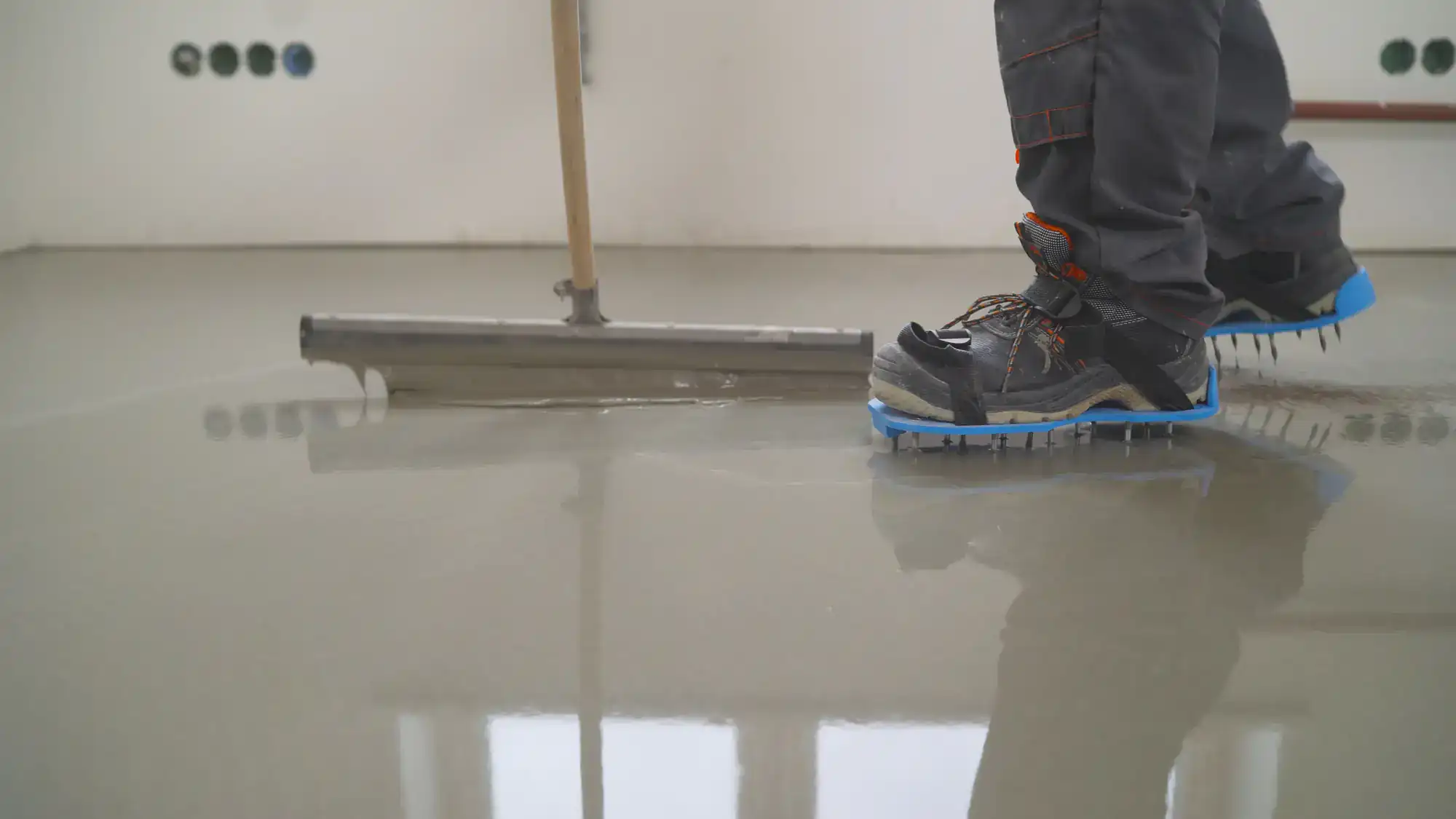
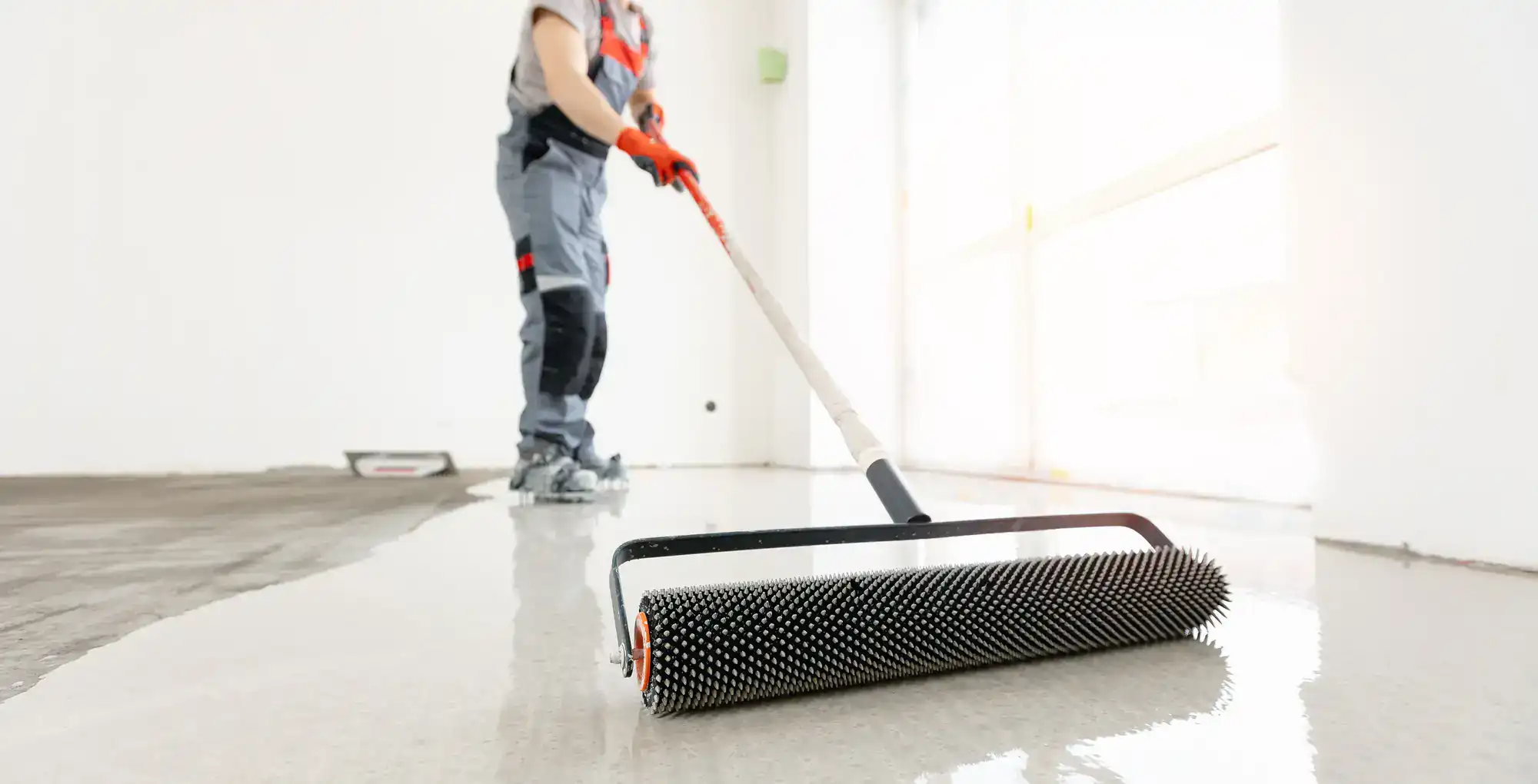
When you install new tile, luxury vinyl plank, or engineered hardwood over an uneven slab, the floor fails not because of the material, but because of what’s underneath. Grout cracks. Planks separate. Edges lift. The fix isn’t replacing the floor covering again. It’s correcting the substrate before anything goes down.
North Bellmore’s housing stock tells the story clearly. The median construction year here is 1958, and the vast majority of homes were built between 1940 and 1969. Those slabs have had 60 to 80 years of freeze-thaw cycling, moisture movement, and gradual settlement to develop the kind of surface irregularities that modern flooring simply can’t tolerate. Large-format tile the 24×24 sizes that are standard in today’s kitchen renovations requires a substrate flat to within 3/16″ over a 10-foot span. Most mid-century slabs in North Bellmore don’t come close without professional leveling work.
The other factor that gets overlooked is moisture. North Bellmore sits on Long Island’s South Shore with a high water table and a documented history of storm flooding, including the August 2024 rainfall events that triggered state emergency repair programs for Nassau County homeowners. That moisture doesn’t disappear after a storm it transmits through slab-on-grade construction year-round. A properly installed self leveling underlayment, placed only after moisture testing confirms the slab is ready, gives your new floor covering a stable, dry, flat surface that’s built to last.
We’re based in Bohemia, NY a Long Island contractor serving North Bellmore and surrounding Nassau County communities for over three decades. Our company president has more than 40 years of hands-on installation experience, and most of our crew has been with us for over ten years. You’re not getting a rotating team of subcontractors. You’re getting the same experienced people who’ve worked across Nassau and Suffolk counties, in homes and commercial spaces throughout North Bellmore and beyond, through every condition Long Island throws at a concrete floor.
The credentials back it up: A+ BBB rating, OSHA 40-certified installers, and factory training in cementitious and advanced resinous systems. In 1996, we installed a floor in the White House kitchen. We’ve completed projects across the country, the Bahamas, and internationally. The point isn’t to impress you with the résumé it’s to show you that the technical standards we apply to a North Bellmore ranch home or a business on Jerusalem Avenue are the same ones we apply to the most demanding installations in the world.
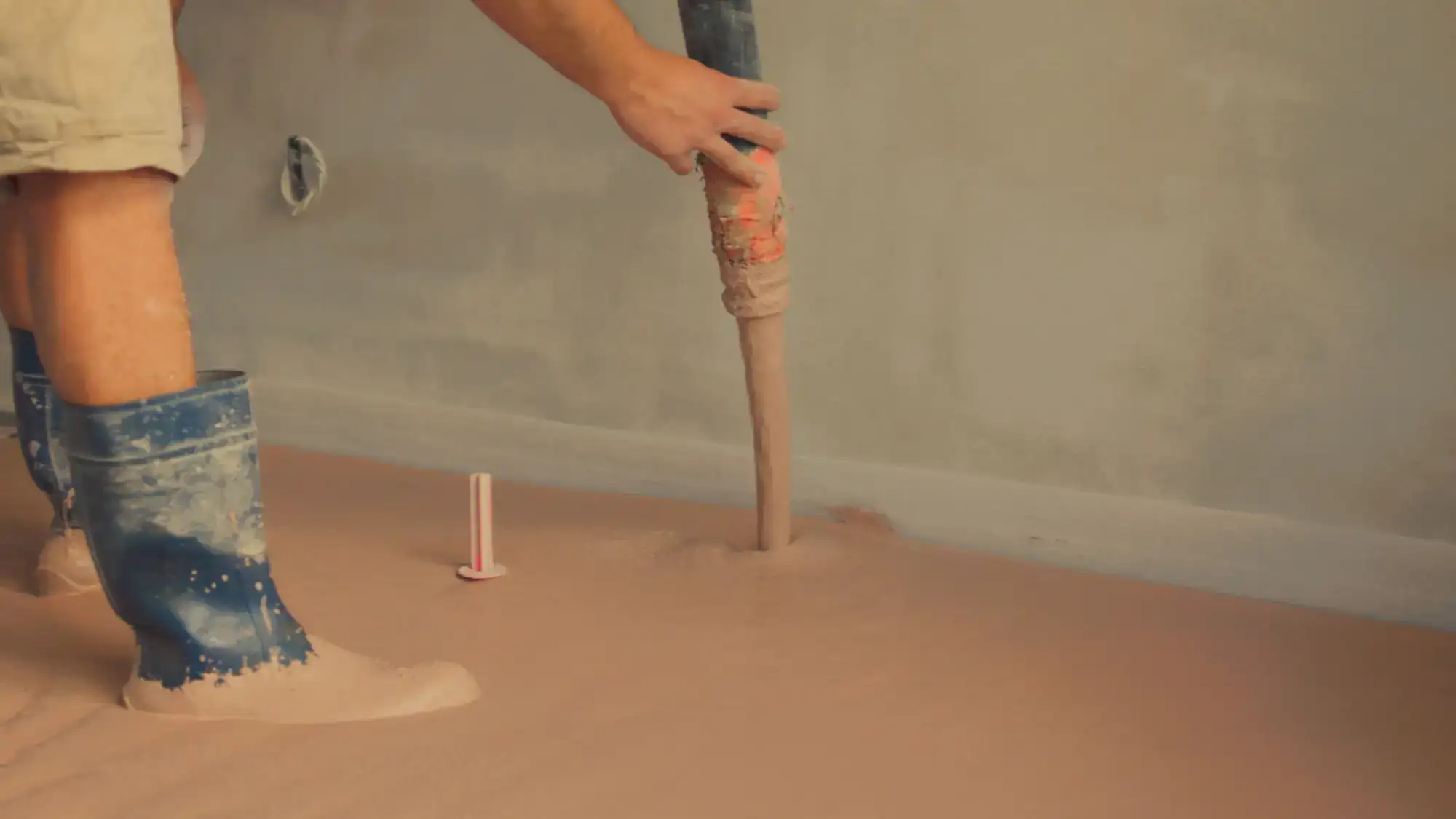
The first thing that happens on any self leveling job in North Bellmore isn’t mixing or pouring it’s testing. Before any material goes down, we measure moisture levels in your slab using ASTM F2170 relative humidity testing and MVER assessment. Given the South Shore’s high water table and the flood history of this area, skipping this step is how self leveling fails. If moisture is present at levels that will cause delamination or failure, we address that before the pour. This isn’t optional it’s the difference between a floor that lasts and one that needs to be redone in 18 months.
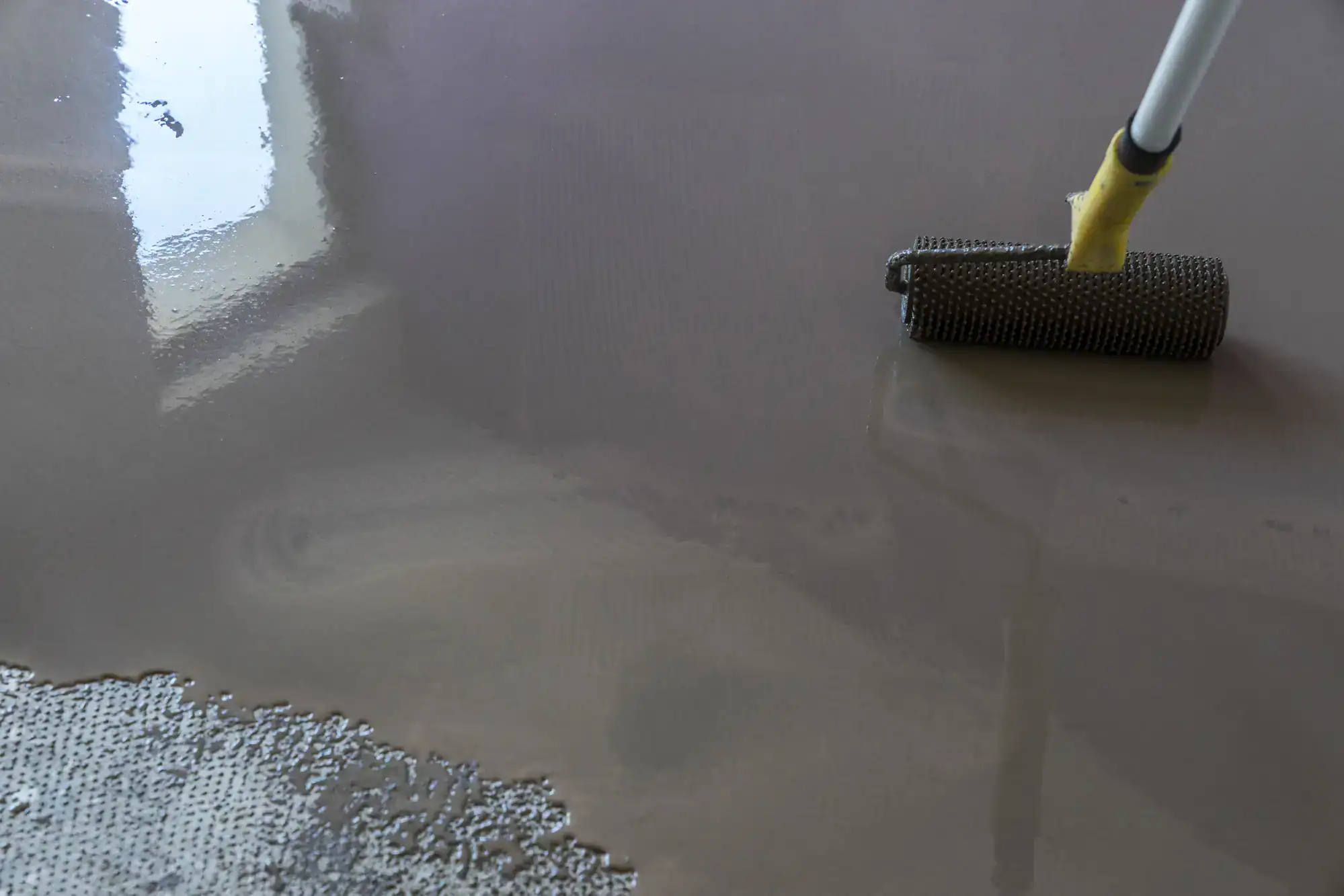
Once the slab is confirmed ready, surface preparation comes next. That means grinding, cleaning, and priming the concrete so the self leveling compound bonds properly rather than sitting on top of a contaminated surface. The material we use is a high-strength, polymer-modified cementitious underlayment with high flow characteristics not the bag-mix product from a hardware store. It can be installed from ¼” to over 2″ neat, and up to 5″ with aggregates, which covers the full range of correction depths common in North Bellmore’s mid-century homes.
After the pour, foot traffic is typically possible within 4 to 6 hours. Heavy use and floor covering installation can follow within 24 to 48 hours. Full cure to maximum compressive strength takes 28 days, but your daily life doesn’t have to stop while that happens. For work done in colder months and Nassau County winters regularly push below 40°F we manage the installation environment to ensure the compound cures correctly. Temperature matters with these materials, and that’s not something you want to leave to chance.
Ready to get started?
The self leveling work we do for a North Bellmore homeowner finishing a basement or renovating a kitchen uses the same material standards and testing protocols as the commercial floor leveling solutions we deliver to businesses along Jerusalem Avenue and the Merrick Road corridor. The product is a high-strength, fast curing concrete leveler a cementitious self leveling underlayment rated for real loads, not just light foot traffic. Whether the correction depth is a quarter inch or several inches, the process doesn’t change: test first, prep thoroughly, pour correctly.
For residential projects in North Bellmore, the most common scenarios are kitchen and bathroom renovations where large-format tile is going down, basement finishing projects in split-level and ranch homes where decades of settlement have left the slab noticeably uneven, and whole-room flooring replacements where the existing substrate simply isn’t flat enough for the new material. These are the homes that make up North Bellmore owner-occupied, well-maintained, and worth protecting with work that’s done right.
For commercial clients in the area, the fast-cure timeline is a meaningful factor. A business that needs its floor corrected before new covering goes down can’t afford days of downtime. The high strength self leveling concrete we use allows for a quick return to service without sacrificing the compressive strength or flatness that a commercial environment demands. One crew, one process, one standard regardless of whether the job is a kitchen in a Newbridge Road home or a retail space off Sunrise Highway.
More often than you’d expect yes. The homes in North Bellmore were built primarily between 1940 and 1969, and those concrete slabs have had decades to shift, settle, and develop surface irregularities. The issue is that modern floor coverings are less forgiving than older ones. Luxury vinyl plank, large-format porcelain tile, and engineered hardwood all have tighter flatness tolerances than the linoleum and thin-set tile they’re replacing. When those materials go down over an uneven slab, the result is cracking grout, clicking planks, and edges that lift usually within the first year.
The honest answer is that not every floor needs leveling. Some slabs are in decent shape. But in North Bellmore, where the housing stock is overwhelmingly slab-on-grade or shallow-basement construction from the mid-20th century, the odds that your concrete needs some degree of correction before a quality installation are high. A proper assessment before the project starts saves you from discovering the problem after you’ve already paid for the new flooring.
Moisture is the number one reason self leveling fails in North Bellmore and across this area and it’s the step most contractors skip. Long Island’s South Shore has a naturally high water table, and North Bellmore specifically has experienced significant flooding events, including the August 2024 storms that triggered Nassau County emergency repair programs. That moisture doesn’t just affect your slab during a flood event. It transmits through concrete year-round, and if a self leveling compound is poured over a slab with elevated moisture levels, the bond fails. The compound delaminates, cracks, or lifts and so does everything installed on top of it.
The right process starts with ASTM F2170 relative humidity testing and MVER assessment before any material is mixed. If the slab reads above safe thresholds, we handle moisture mitigation first. This adds a step, but it’s the step that determines whether your floor lasts five years or twenty. In a community with North Bellmore’s water table and storm history, treating moisture testing as optional isn’t a shortcut it’s a setup for failure.
It depends on what your slab actually looks like, which is why a proper assessment matters before any product decisions are made. Self leveling underlayment can be installed from as little as ¼” for minor surface corrections the kind needed to bring a nearly flat slab into spec for large-format tile up to over 2″ neat, and up to 5″ when aggregates are added for deeper fills. That range covers almost every scenario you’d encounter in a North Bellmore home renovation.
A kitchen remodel in a 1960s ranch might need a ¼” skim coat to correct slight unevenness before new tile goes down. A basement finishing project in a split-level home that’s experienced decades of differential settlement might need 2″ or more to bring the floor to a consistent elevation. The depth isn’t something to guess at it’s measured during the assessment phase. Getting it wrong in either direction causes problems: too thin and the compound won’t flow to fill low spots; too thick without proper aggregate addition and the material can crack during cure.
For most polymer-modified cementitious underlayment systems, foot traffic is possible within 4 to 6 hours of installation. Light floor covering installation can typically begin within 24 to 48 hours. Full cure to maximum compressive strength takes 28 days, but that doesn’t mean you’re waiting a month to use the room it just means the material is still building strength during that window, which is normal and expected.
One factor that matters in Nassau County is temperature. Self leveling compounds are sensitive to both ambient and substrate temperature during installation and the early cure period. When temperatures drop below 40°F which happens regularly during Long Island winters we manage the installation environment to ensure the compound cures correctly. Cold substrates slow the chemical reaction, which can affect flow, surface finish, and bond strength. This is one of the reasons fall and early winter jobs require more attention to conditions than spring or summer work. It’s manageable, but it’s not something to ignore.
In most cases, yes but the condition of the existing concrete determines what prep work is required before the pour. Self leveling underlayment bonds to the existing slab, so the surface needs to be clean, structurally sound, and properly primed. Contamination from old adhesive, paint, oils, or surface sealers prevents bonding and needs to be removed through grinding or shot blasting before anything goes down. Cracks in the existing slab also need to be evaluated active cracks that are still moving need to be addressed differently than dormant surface cracks.
In North Bellmore, where most concrete slabs are 60 to 80 years old, it’s common to find some combination of surface contamination, minor cracking, and residual adhesive from previous floor coverings. None of that automatically disqualifies the slab from receiving self leveling underlayment it just means the prep phase is more involved. Skipping proper surface preparation is one of the most common reasons self leveling jobs fail, and it’s also one of the easiest problems to prevent when the work is done correctly from the start.
Concrete floor leveling services in North Bellmore, NY generally range from $750 on the low end for a small, straightforward correction to $6,000 or more for larger areas, greater correction depths, or projects that require moisture mitigation before the pour. Long Island pricing typically runs higher than national averages due to labor and material costs in the New York metro market, so if you’re comparing quotes to national cost guides, expect the local range to reflect that.
What affects the number most is square footage, correction depth, the condition of the existing slab, and whether moisture issues need to be addressed first. A ¼” skim coat over a clean, dry 200-square-foot kitchen slab is a very different scope than a 2″ correction across a 600-square-foot basement that’s had water intrusion. In a community where homes are worth $600,000 to well over $1 million and new flooring installations run thousands of dollars, the substrate preparation cost is a small fraction of what a failed floor covering will cost to replace. Getting the foundation right the first time is the less expensive path it just doesn’t always feel that way until you’ve had to redo it.
Other Services we provide in North Bellmore